




Wind-Driven Kinetic Facade: How Buildings Move on Breeze Alone, With No Power Bill
30-10-26 | Facade Innovations
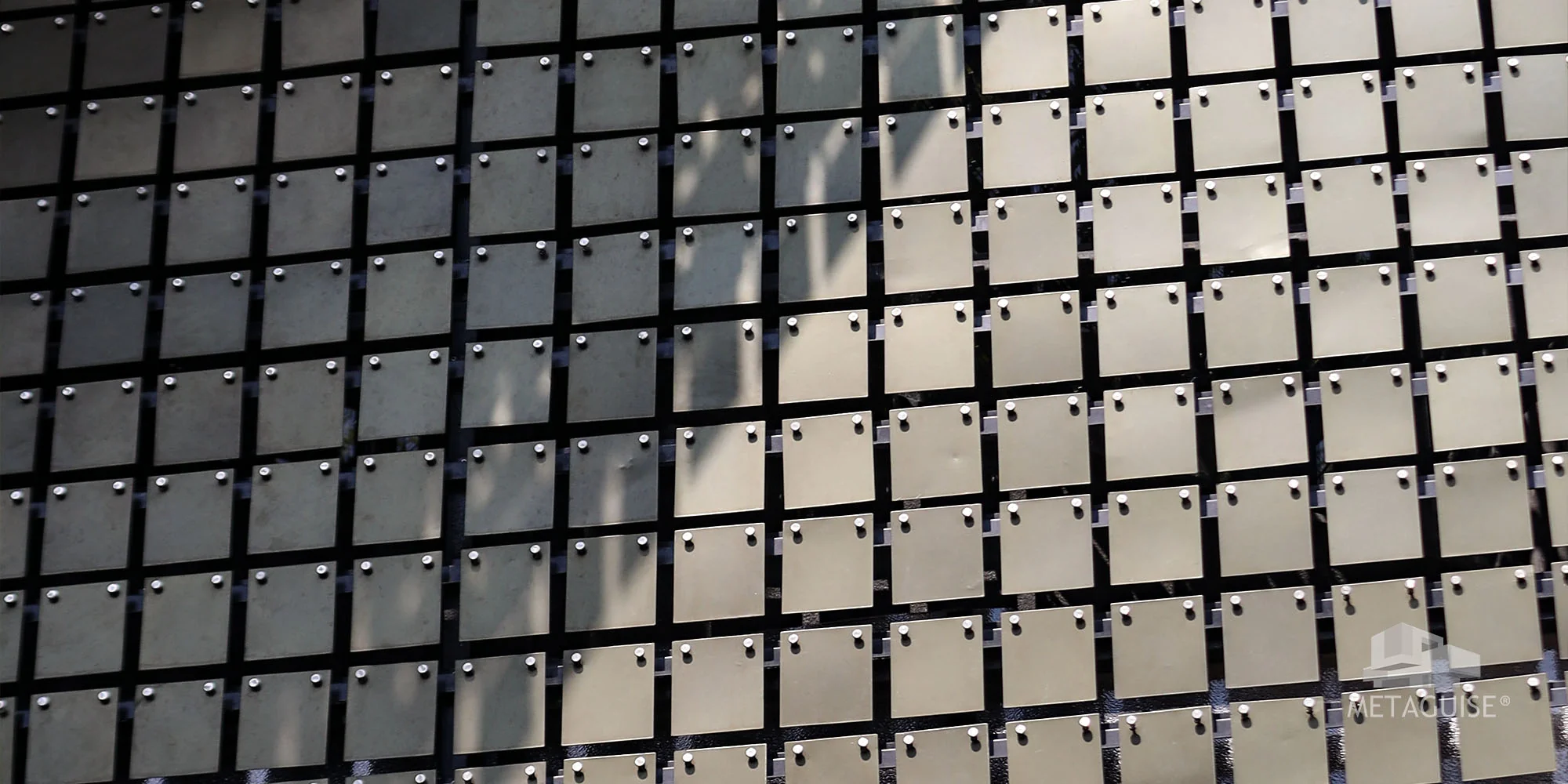
Imagine a building wall that moves like the surface of a lake. No motors, no wiring, no electricity bill. The breeze arrives, thousands of small panels tilt and flutter, and the facade shimmers. When the wind drops, the wall goes quiet again. That is a wind-driven kinetic facade. It is one of the simplest ideas in moving architecture and one of the most beautiful. But it also has real engineering limits, especially in India, where the air can carry monsoon gusts, dust and heat. This guide explains how wind-driven facades work, what they need to survive and where they make sense.
What Is a Wind-Driven Kinetic Facade?
A wind-driven kinetic facade is a facade made of many lightweight panels or elements mounted so that they can move freely in the wind. There is no motor and no electrical supply. The only energy source is air movement. Our introduction to what a kinetic facade is covers the wider family. Wind-driven is the simplest type, because the trigger and the power are the same thing: the wind. Well known examples around the world include installations by the artist Ned Kahn, who has used thousands of small panels that respond to the breeze on large building surfaces.How Does It Work?
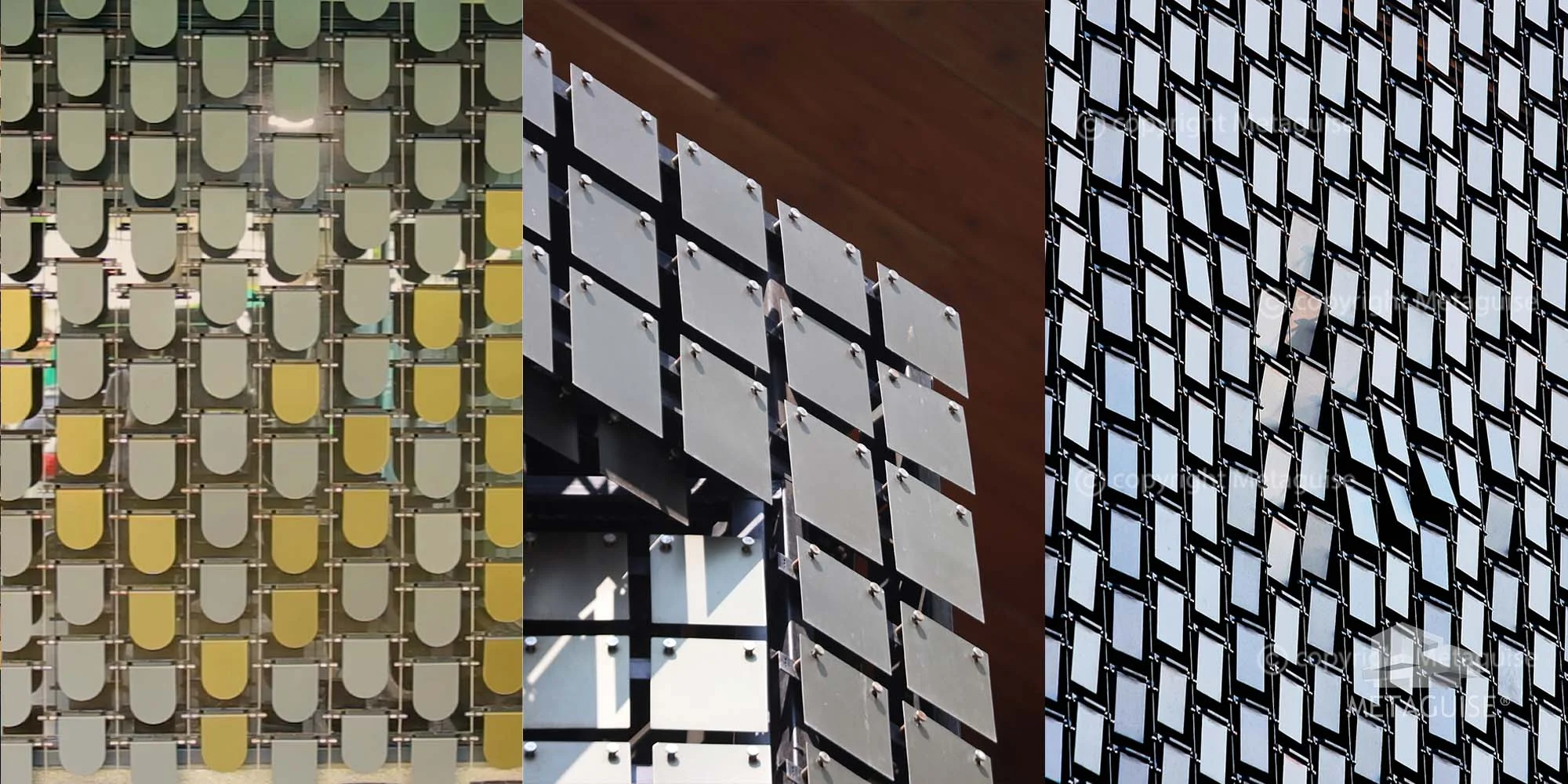
The principle is simple.- Lightweight panels are hung from a fixed frame or rail on pivots, hinges or flexible mounts.
- Wind pressure pushes each panel. Because the panels are light and free to pivot, they tilt, swing or flutter.
- Gravity or a spring effect returns each panel to rest when the wind drops.
- Many small movements add up. Because each panel responds slightly differently, the whole surface ripples like a wave.
The effect depends on panel weight, panel shape, pivot design and wind speed. Heavier panels move less. Very light panels move a lot but must be built to survive strong gusts.
Benefits
- No power bill. There are no motors, controls or electrical connections.
- Few failure points. No electronics to fail.
- Visual drama. The facade is never the same twice, because it reflects the wind and light of that moment.
- Natural feel. The motion looks organic, like leaves or water.
- A story to tell. It makes wind visible, which is a strong brand and design idea.
The Challenges You Must Plan For
Wind-driven does not mean maintenance free. Moving parts still wear out.Wear on Pivots and Hinges
Every movement is a small amount of friction. Over millions of cycles, pivots, bearings and hinges wear. Choose materials and bearing details meant for outdoor, long life use, and plan for inspection and replacement.Dust and Grit
Indian cities carry a lot of dust. Dust gets into pivots and increases wear or makes panels stick. Sealed or self clearing detailing helps, and cleaning access is essential.Storm and Gust Loads
A facade that moves gently in a breeze must also survive a monsoon storm. Panels need to handle high wind speeds without tearing off, locking up or hitting each other. Structural design should follow the wind loads required by the building code for your location, and your engineer must check them.Noise
Moving panels can click, rattle or hum. Good detailing, soft stops and suitable materials keep noise at an acceptable level, which matters near bedrooms, hotels and offices.Calm Days
On still days, nothing moves. If the effect is central to your design, think about how the facade looks when there is no wind, and how often your site is calm.Heat and Expansion
Indian summer heat expands metal and can change clearances in pivots. Tolerances must allow for it.Material Choices
Light weight and corrosion resistance matter most. Aluminium is the common choice because it is light and resists corrosion. Finishes must handle sun, rain and dust without flaking, since coating chips near moving joints can start corrosion. See our guide to kinetic facade materials and the MetaSurface finish guide.Wind-Driven vs Other Kinetic Systems
| Factor | Wind-driven | Motorised | Static kinetic look |
|---|---|---|---|
| Power needed | None | Yes | None |
| Control | None, depends on wind | Full | None |
| Visual effect | Real, random movement | Real, planned movement | Optical effect from light |
| Shading control | Little | High | Fixed |
| Upkeep | Pivot and bearing wear | Motors, controls, sensors | Washing only |
| Calm day look | Static | Can still move | Same as always |
| Best for | Art, branding, landmark effect | Performance shading | Most buildings |
If you want the feeling of motion without any moving part, read our guide to kinetic looks without moving parts. For more on moving systems, see kinetic wall panels explained.
What Does It Cost?
Cost depends on panel count, panel material, pivot design, structure, testing and building height. Many small moving parts can mean a lot of fabrication and installation work, and custom pivot design adds engineering effort. Because every project is different, ask for a design and cost study rather than a single price per square foot. Our article on what drives kinetic facade price in India explains the main factors.Where Wind-Driven Facades Suit Indian Buildings
- Airports, stadiums and public buildings where a visible landmark effect matters
- Car parks and service structures, where a moving screen can also give ventilation
- Hospitality and retail, where an eye catching facade brings footfall
- Coastal and open sites with steady breezes
- Experience centres and brand buildings that want a memorable face
They suit less well on very sheltered sites, narrow lanes with little airflow, or buildings where noise is a concern.
8 Questions to Ask Before You Commit
- How many movement cycles is each pivot rated for?
- How does the system behave in storm winds?
- What happens to dust and grit in the pivots?
- How loud is it in light and strong wind?
- How is a single panel replaced, and who does it?
- What does the facade look like on a calm day?
- Can you show a mock-up moving in real wind?
- What does the warranty cover?
A full scale test is essential here. See our guide on facade mock-up and testing and how metal facade engineering works.
Common Mistakes
- Choosing wind-driven movement without checking local wind patterns
- Using panels too heavy to move in normal breeze
- Using panels too light to survive storms
- Ignoring dust, noise and replacement access
- Skipping the mock-up
- Promising a constant effect when the wind is not constant
Frequently Asked Questions
Does a wind-driven facade need electricity?
No. The movement comes only from the wind.Will it work on calm days?
No. Panels stay still when there is no wind, so design the facade to look good at rest too.Can it survive monsoon storms?
It can, if the structure, pivots and panels are designed for the required wind loads and tested.Is it noisy?
It can be if poorly detailed. Good detailing and materials reduce noise.Is a wind-driven facade low maintenance?
It has no motors, but pivots and hinges wear, so inspection and replacement should be planned.Explore Kinetic Ideas With Metaguise
We have explored moving facades through projects such as Kinetic Grid and Zoee Nails kinetic facade. Visit Metaland, our experience centre in Gurugram, or talk to our team about whether a wind-driven, motorised or static kinetic look suits your building.Related reads: Kinetic Look Without Moving Parts; Kinetic, Dynamic, Responsive or Motorised; Kinetic Facade Materials Compared.
30-10-26 | Facade Innovations
Imagine a building wall that moves like the surface of a lake. No motors, no wiring, no electricity bill. The breeze arrives, thousands of small panels tilt and flutter, and the facade shimmers. When the wind drops, the wall goes quiet again. That is a wind-driven kinetic facade. It is one of the simplest ideas in moving architecture and one of the most beautiful. But it also has real engineering limits, especially in India, where the air can carry monsoon gusts, dust and heat. This guide explains how wind-driven facades work, what they need to survive and where they make sense.
What Is a Wind-Driven Kinetic Facade?
A wind-driven kinetic facade is a facade made of many lightweight panels or elements mounted so that they can move freely in the wind. There is no motor and no electrical supply. The only energy source is air movement. Our introduction to what a kinetic facade is covers the wider family. Wind-driven is the simplest type, because the trigger and the power are the same thing: the wind. Well known examples around the world include installations by the artist Ned Kahn, who has used thousands of small panels that respond to the breeze on large building surfaces.How Does It Work?
The principle is simple.- Lightweight panels are hung from a fixed frame or rail on pivots, hinges or flexible mounts.
- Wind pressure pushes each panel. Because the panels are light and free to pivot, they tilt, swing or flutter.
- Gravity or a spring effect returns each panel to rest when the wind drops.
- Many small movements add up. Because each panel responds slightly differently, the whole surface ripples like a wave.
The effect depends on panel weight, panel shape, pivot design and wind speed. Heavier panels move less. Very light panels move a lot but must be built to survive strong gusts.
Benefits
- No power bill. There are no motors, controls or electrical connections.
- Few failure points. No electronics to fail.
- Visual drama. The facade is never the same twice, because it reflects the wind and light of that moment.
- Natural feel. The motion looks organic, like leaves or water.
- A story to tell. It makes wind visible, which is a strong brand and design idea.
The Challenges You Must Plan For
Wind-driven does not mean maintenance free. Moving parts still wear out.Wear on Pivots and Hinges
Every movement is a small amount of friction. Over millions of cycles, pivots, bearings and hinges wear. Choose materials and bearing details meant for outdoor, long life use, and plan for inspection and replacement.Dust and Grit
Indian cities carry a lot of dust. Dust gets into pivots and increases wear or makes panels stick. Sealed or self clearing detailing helps, and cleaning access is essential.Storm and Gust Loads
A facade that moves gently in a breeze must also survive a monsoon storm. Panels need to handle high wind speeds without tearing off, locking up or hitting each other. Structural design should follow the wind loads required by the building code for your location, and your engineer must check them.Noise
Moving panels can click, rattle or hum. Good detailing, soft stops and suitable materials keep noise at an acceptable level, which matters near bedrooms, hotels and offices.Calm Days
On still days, nothing moves. If the effect is central to your design, think about how the facade looks when there is no wind, and how often your site is calm.Heat and Expansion
Indian summer heat expands metal and can change clearances in pivots. Tolerances must allow for it.Material Choices
Light weight and corrosion resistance matter most. Aluminium is the common choice because it is light and resists corrosion. Finishes must handle sun, rain and dust without flaking, since coating chips near moving joints can start corrosion. See our guide to kinetic facade materials and the MetaSurface finish guide.Wind-Driven vs Other Kinetic Systems
| Factor | Wind-driven | Motorised | Static kinetic look |
|---|---|---|---|
| Power needed | None | Yes | None |
| Control | None, depends on wind | Full | None |
| Visual effect | Real, random movement | Real, planned movement | Optical effect from light |
| Shading control | Little | High | Fixed |
| Upkeep | Pivot and bearing wear | Motors, controls, sensors | Washing only |
| Calm day look | Static | Can still move | Same as always |
| Best for | Art, branding, landmark effect | Performance shading | Most buildings |
If you want the feeling of motion without any moving part, read our guide to kinetic looks without moving parts. For more on moving systems, see kinetic wall panels explained.
What Does It Cost?
Cost depends on panel count, panel material, pivot design, structure, testing and building height. Many small moving parts can mean a lot of fabrication and installation work, and custom pivot design adds engineering effort. Because every project is different, ask for a design and cost study rather than a single price per square foot. Our article on what drives kinetic facade price in India explains the main factors.Where Wind-Driven Facades Suit Indian Buildings
- Airports, stadiums and public buildings where a visible landmark effect matters
- Car parks and service structures, where a moving screen can also give ventilation
- Hospitality and retail, where an eye catching facade brings footfall
- Coastal and open sites with steady breezes
- Experience centres and brand buildings that want a memorable face
They suit less well on very sheltered sites, narrow lanes with little airflow, or buildings where noise is a concern.
8 Questions to Ask Before You Commit
- How many movement cycles is each pivot rated for?
- How does the system behave in storm winds?
- What happens to dust and grit in the pivots?
- How loud is it in light and strong wind?
- How is a single panel replaced, and who does it?
- What does the facade look like on a calm day?
- Can you show a mock-up moving in real wind?
- What does the warranty cover?
A full scale test is essential here. See our guide on facade mock-up and testing and how metal facade engineering works.
Common Mistakes
- Choosing wind-driven movement without checking local wind patterns
- Using panels too heavy to move in normal breeze
- Using panels too light to survive storms
- Ignoring dust, noise and replacement access
- Skipping the mock-up
- Promising a constant effect when the wind is not constant
Frequently Asked Questions
Does a wind-driven facade need electricity?
No. The movement comes only from the wind.Will it work on calm days?
No. Panels stay still when there is no wind, so design the facade to look good at rest too.Can it survive monsoon storms?
It can, if the structure, pivots and panels are designed for the required wind loads and tested.Is it noisy?
It can be if poorly detailed. Good detailing and materials reduce noise.Is a wind-driven facade low maintenance?
It has no motors, but pivots and hinges wear, so inspection and replacement should be planned.Explore Kinetic Ideas With Metaguise
We have explored moving facades through projects such as Kinetic Grid and Zoee Nails kinetic facade. Visit Metaland, our experience centre in Gurugram, or talk to our team about whether a wind-driven, motorised or static kinetic look suits your building.Related reads: Kinetic Look Without Moving Parts; Kinetic, Dynamic, Responsive or Motorised; Kinetic Facade Materials Compared.
Related Articles
The Rise of Parametric facades: Designing with Algorithmic Elegance
A revolutionary parametric facade system designed to elevate architectural aesthetics. Crafted with premium metals and enhanced with MetaSurface finishes, MetaCoin offers unparalleled customizability, from the shape and size of each element to its color and arrangement. Its dynamic design reacts to light and perspective, creating ever-changing visual effects. Ideal for contemporary and iconic structures, MetaCoin transforms facades into captivating works of art that are sustainable, durable, and visually stunning.
01-04-25 | Facade Innovations
METABLOX™ by Metaguise: A Breakthrough in Parametric Facade Design
At the intersection of culture, craftsmanship, and cutting-edge geometry, METABLOX™ emerges as a bold new direction in architectural innovation. Introduced by Metaguise, this first-of-its-kind parametric facade technology makes its striking debut at the RJ Jewellers flagship store in Jaipur - setting a new benchmark in the world of metal design and modern Indian architecture.
09-04-25 | Facade Innovations
5 Landmark Projects That Used MetaCoin to Transform Facades
When it comes to parametric architecture, MetaCoin stands out as a revolutionary metal coin facade system. Crafted with precision, it offers dynamic aesthetics, adaptability, and a unique identity to structures. Let's delve into five notable projects where MetaCoin has redefined architectural facades.
13-05-25 | Facade Innovations
From Code to Construction: How Parametric Facades Are Built
Some buildings just make you look twice. Maybe it’s the way the facade curves. Or how the surface catches the light at different times of day. Often, what you’re seeing is more than just a design, it’s a parametric facade.
10-06-25 | Facade Innovations
Social
Legal
Privacy Policy|Terms & Conditions