





Facade Materials Compared: Aluminium, Steel, Copper and Corten
14-08-26 | Material Spotlight
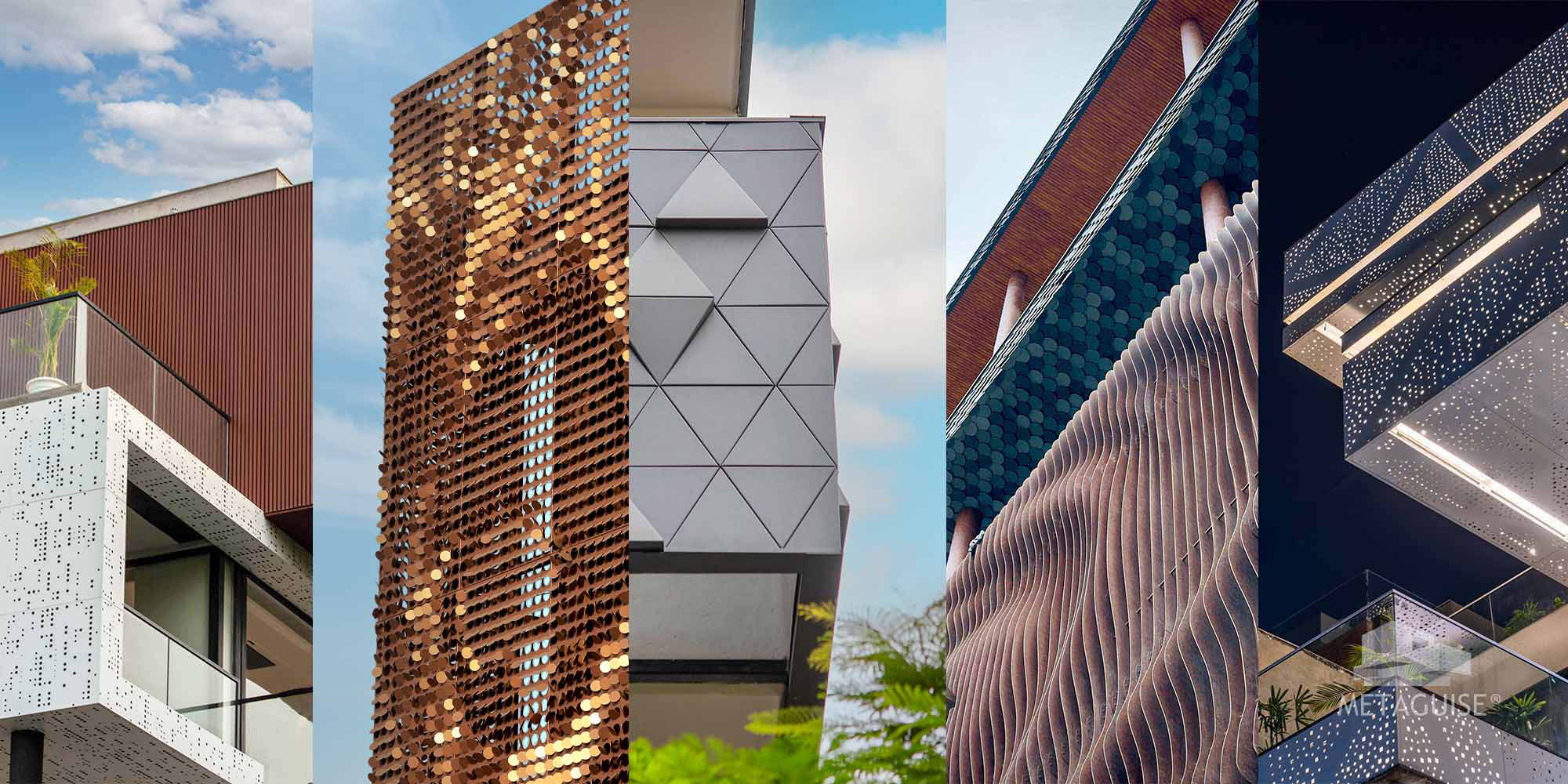
Choosing a facade material is often treated as a colour and finish decision, when it’s really a performance decision that happens to also determine the look. Each of the common facade metals behaves differently in terms of weight, cost, maintenance and how it ages, and getting this choice wrong shows up years later, not on installation day. Here’s a practical comparison of the four materials we work with most.
Aluminium
Aluminium is the default choice for most metal facade work, and for good reason. It’s light relative to its strength, which reduces the load on the building structure and substructure, it resists corrosion naturally through its own oxide layer, and it takes a wide range of finishes well, from powder coat to anodising to PVDF coatings. It’s also the most cost-effective option for large-scale coverage, which is why the majority of our parametric and cladding systems, including Cascading Keys and Meta Coin, are built primarily from aluminium. The trade-off is that aluminium is a fairly neutral material aesthetically until a finish is applied. It doesn’t have an inherent character the way copper or corten does, which is actually an advantage for designs that want precise, consistent colour control rather than natural weathering.
Steel
Structural steel offers higher strength than aluminium at a given thickness, which matters for facades with unusual structural demands, very tall buildings, or elements that need to cantilever significantly from the building face. Standard steel needs a protective coating or galvanising to resist corrosion, since raw steel rusts readily, which adds a maintenance consideration aluminium doesn’t have. Steel tends to be specified when a project’s structural requirements genuinely call for it, rather than as a first choice for standard facade cladding, since aluminium usually delivers comparable visual results at lower weight and cost for typical applications.
Corten steel
Corten is a specific weathering steel alloy, and it deserves separate mention from standard steel because it’s chosen for the opposite reason most steel gets rejected. Corten is designed to rust, developing a stable, rust-orange protective oxide layer within its first couple of years of exposure, after which the oxidation rate slows dramatically and the layer protects the steel underneath. Our MetaCorten range uses this material specifically for its warm, natural, aged aesthetic, popular on cultural buildings, hospitality projects and facades that want a grounded, organic presence rather than a polished, manufactured look. The consideration to plan for with corten is runoff staining during the initial weathering period, since rust-coloured water can mark adjacent light-coloured materials if drainage isn’t detailed correctly.
Copper
Copper takes the weathering concept even further than corten, moving through several visible colour stages over years before settling into its final blue-green patina. We’ve covered copper’s specific characteristics in more depth in our guide to copper facade cladding, but in the context of this comparison, copper generally costs more than aluminium or standard steel, and is chosen specifically by clients who want a facade with a distinctive, slow-changing character rather than a fixed appearance from day one.
A quick side-by-side view
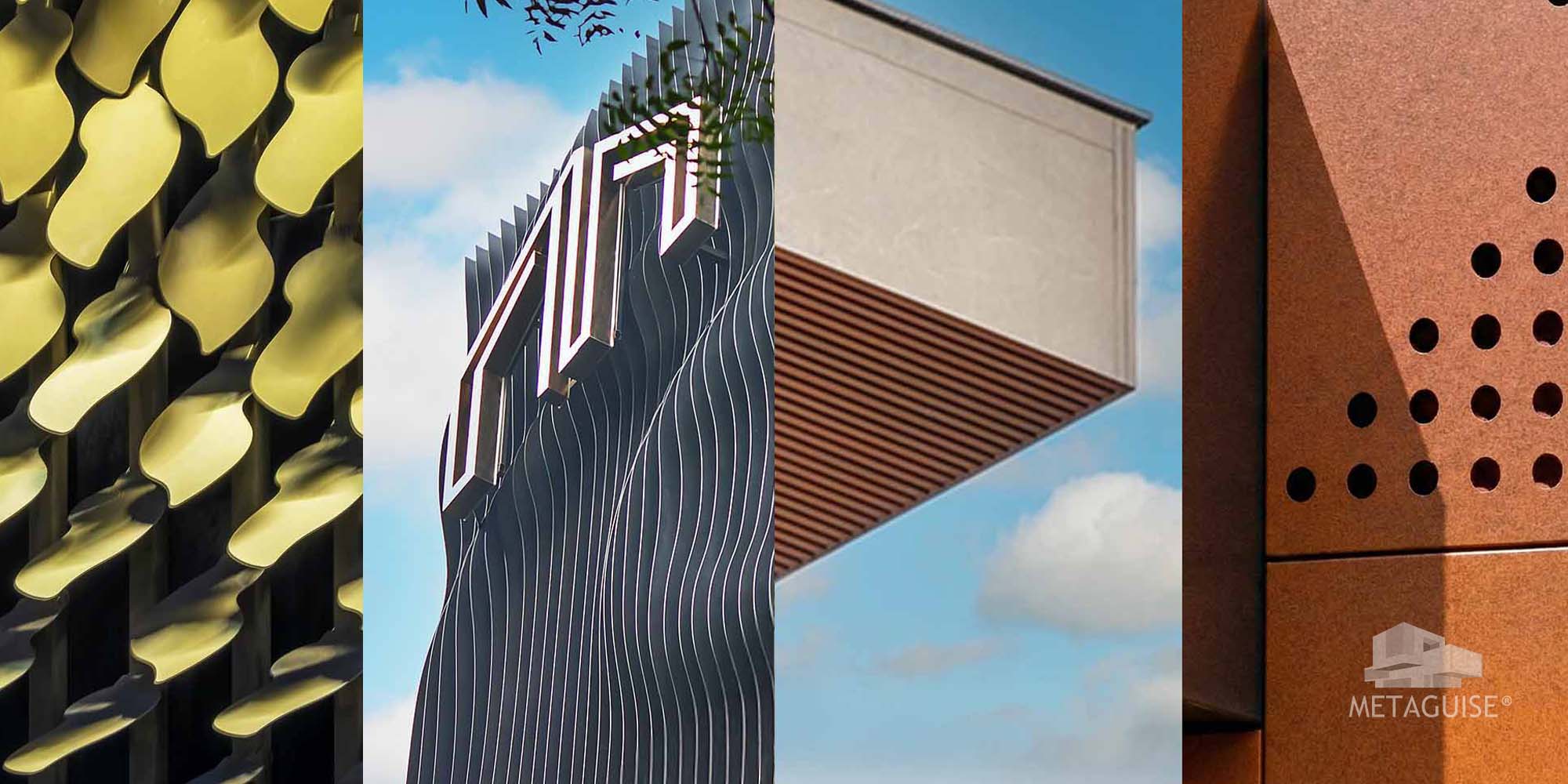
Weight. Aluminium is lightest, followed by corten and standard steel, with copper generally comparable to steel depending on gauge. Corrosion resistance. Aluminium and corten are both naturally self-protecting once their respective oxide layers form. Copper is also self-protecting through its patina. Standard uncoated steel is the outlier and needs an applied protective finish. Cost. Aluminium is typically the most economical for large-scale coverage. Corten sits above standard aluminium cladding. Copper generally costs the most of the four due to raw material pricing. Aesthetic character. Aluminium is the most neutral and finish-controllable. Corten and copper both age visibly and are chosen specifically for that quality, with corten settling into a warm rust tone and copper into a cooler blue-green. Maintenance. All four are low maintenance once correctly specified for their climate, though standard steel requires the most active protective maintenance of the group due to its reliance on an applied coating rather than natural self-protection.
How to choose
Start with what the material needs to do structurally, then layer in the aesthetic decision. If the project doesn’t have unusual structural demands, aluminium is very often the right default, both for cost and finish flexibility. If the design brief specifically calls for a facade that visibly weathers and matures, corten or copper are worth exploring, with the choice between them coming down to warm rust tones versus cool patina tones and the client’s patience for the weathering timeline.
Frequently Asked Questions
1.Which facade material is cheapest for a large building?
Aluminium is generally the most cost-effective material for large-scale facade coverage, combining lower material cost with lighter weight, which also reduces substructure requirements.2.Does corten steel need a protective coating?
No, corten is specifically engineered to develop its own protective rust layer through natural weathering, which is different from standard steel that needs an applied coating or galvanising.3.Is copper facade cladding suitable for humid or coastal climates?
Yes, copper’s natural patina layer is inherently corrosion resistant and performs well in coastal conditions, though drainage detailing should be planned to avoid staining adjacent materials.4.Can different facade materials be combined on one building?
Yes, many projects combine materials deliberately, such as aluminium for the primary cladding and corten or copper as an accent on a feature wall or entrance, to balance cost with visual character.5.How do I know which material is right for my project?
Start by identifying any unusual structural demands your building has, then consider whether you want a fixed appearance or a facade that weathers over time. A facade designer can model options against your actual building before you commit.Get material-specific guidance
Every project has a different combination of budget, climate and design intent, which makes material choice worth a proper conversation rather than a default decision. Talk to our design team about which material fits your building.
14-08-26 | Material Spotlight
Choosing a facade material is often treated as a colour and finish decision, when it’s really a performance decision that happens to also determine the look. Each of the common facade metals behaves differently in terms of weight, cost, maintenance and how it ages, and getting this choice wrong shows up years later, not on installation day. Here’s a practical comparison of the four materials we work with most.
Aluminium
Aluminium is the default choice for most metal facade work, and for good reason. It’s light relative to its strength, which reduces the load on the building structure and substructure, it resists corrosion naturally through its own oxide layer, and it takes a wide range of finishes well, from powder coat to anodising to PVDF coatings. It’s also the most cost-effective option for large-scale coverage, which is why the majority of our parametric and cladding systems, including Cascading Keys and Meta Coin, are built primarily from aluminium. The trade-off is that aluminium is a fairly neutral material aesthetically until a finish is applied. It doesn’t have an inherent character the way copper or corten does, which is actually an advantage for designs that want precise, consistent colour control rather than natural weathering.
Steel
Structural steel offers higher strength than aluminium at a given thickness, which matters for facades with unusual structural demands, very tall buildings, or elements that need to cantilever significantly from the building face. Standard steel needs a protective coating or galvanising to resist corrosion, since raw steel rusts readily, which adds a maintenance consideration aluminium doesn’t have. Steel tends to be specified when a project’s structural requirements genuinely call for it, rather than as a first choice for standard facade cladding, since aluminium usually delivers comparable visual results at lower weight and cost for typical applications.
Corten steel
Corten is a specific weathering steel alloy, and it deserves separate mention from standard steel because it’s chosen for the opposite reason most steel gets rejected. Corten is designed to rust, developing a stable, rust-orange protective oxide layer within its first couple of years of exposure, after which the oxidation rate slows dramatically and the layer protects the steel underneath. Our MetaCorten range uses this material specifically for its warm, natural, aged aesthetic, popular on cultural buildings, hospitality projects and facades that want a grounded, organic presence rather than a polished, manufactured look. The consideration to plan for with corten is runoff staining during the initial weathering period, since rust-coloured water can mark adjacent light-coloured materials if drainage isn’t detailed correctly.
Copper
Copper takes the weathering concept even further than corten, moving through several visible colour stages over years before settling into its final blue-green patina. We’ve covered copper’s specific characteristics in more depth in our guide to copper facade cladding, but in the context of this comparison, copper generally costs more than aluminium or standard steel, and is chosen specifically by clients who want a facade with a distinctive, slow-changing character rather than a fixed appearance from day one.
A quick side-by-side view
Weight. Aluminium is lightest, followed by corten and standard steel, with copper generally comparable to steel depending on gauge. Corrosion resistance. Aluminium and corten are both naturally self-protecting once their respective oxide layers form. Copper is also self-protecting through its patina. Standard uncoated steel is the outlier and needs an applied protective finish. Cost. Aluminium is typically the most economical for large-scale coverage. Corten sits above standard aluminium cladding. Copper generally costs the most of the four due to raw material pricing. Aesthetic character. Aluminium is the most neutral and finish-controllable. Corten and copper both age visibly and are chosen specifically for that quality, with corten settling into a warm rust tone and copper into a cooler blue-green. Maintenance. All four are low maintenance once correctly specified for their climate, though standard steel requires the most active protective maintenance of the group due to its reliance on an applied coating rather than natural self-protection.
How to choose
Start with what the material needs to do structurally, then layer in the aesthetic decision. If the project doesn’t have unusual structural demands, aluminium is very often the right default, both for cost and finish flexibility. If the design brief specifically calls for a facade that visibly weathers and matures, corten or copper are worth exploring, with the choice between them coming down to warm rust tones versus cool patina tones and the client’s patience for the weathering timeline.
Frequently Asked Questions
1.Which facade material is cheapest for a large building?
Aluminium is generally the most cost-effective material for large-scale facade coverage, combining lower material cost with lighter weight, which also reduces substructure requirements.2.Does corten steel need a protective coating?
No, corten is specifically engineered to develop its own protective rust layer through natural weathering, which is different from standard steel that needs an applied coating or galvanising.3.Is copper facade cladding suitable for humid or coastal climates?
Yes, copper’s natural patina layer is inherently corrosion resistant and performs well in coastal conditions, though drainage detailing should be planned to avoid staining adjacent materials.4.Can different facade materials be combined on one building?
Yes, many projects combine materials deliberately, such as aluminium for the primary cladding and corten or copper as an accent on a feature wall or entrance, to balance cost with visual character.5.How do I know which material is right for my project?
Start by identifying any unusual structural demands your building has, then consider whether you want a fixed appearance or a facade that weathers over time. A facade designer can model options against your actual building before you commit.Get material-specific guidance
Every project has a different combination of budget, climate and design intent, which makes material choice worth a proper conversation rather than a default decision. Talk to our design team about which material fits your building.
Related Articles
Living, Breathing Facades: The Science and Soul of MetaPatina
There’s something poetic about materials that age with grace. That shift color with time, deepen with exposure, and reveal new layers of beauty as they weather. MetaPatina, our living metal facade surface, is a tribute to that very idea - a facade that doesn’t just protect a building, but brings it to life...
06-04-25 | Material Spotlight
5 Reasons to Choose MetaSequin for Your Facade
At Metaguise, we believe the facade of a building isn’t just its outer layer - it’s its identity. And in today’s design landscape
10-11-25 | Material Spotlight
The Power of Perforation: Breathing Life, Light & Luxury into Metal Facades
At Metaguise, we believe the facade of a building isn’t just its outer layer - it’s its identity. And in today’s design landscape
17-11-25 | Material Spotlight
Perforated Metal Facade panels in 2026: Benefits, Design uses & Architectural Guide
Perforated metal facade panels are architectural cladding systems made from aluminium or steel sheets with precision-cut patterns.
09-12-25 | Material Spotlight
Social
Legal
Privacy Policy|Terms & Conditions