



Kinetic Facade Materials Compared: What Survives Indian Summers and Monsoon
12-10-26 | Material Spotlight
A kinetic facade is only as good as the material it moves on. In India, that material faces 45 degree summer heat, months of monsoon, dust and, in coastal cities, salt in the air. A panel that looks perfect in a render can seize, corrode or sag within a few seasons if the wrong metal is chosen.
This guide compares the materials architects use most for kinetic facades, and tells you which ones suit which conditions.
What a Kinetic Material Must Do
Moving panels have a harder job than fixed cladding. A good kinetic material needs to:
- Stay light, so motors, bearings and hinges are not overloaded
- Resist corrosion, because moving joints trap water and dust
- Handle heat expansion without warping or binding
- Hold its finish through thousands of movement cycles
- Be easy to replace panel by panel
Weight matters more here than in any other facade type. Every extra kilo is load on a mechanism you will want to run for years.
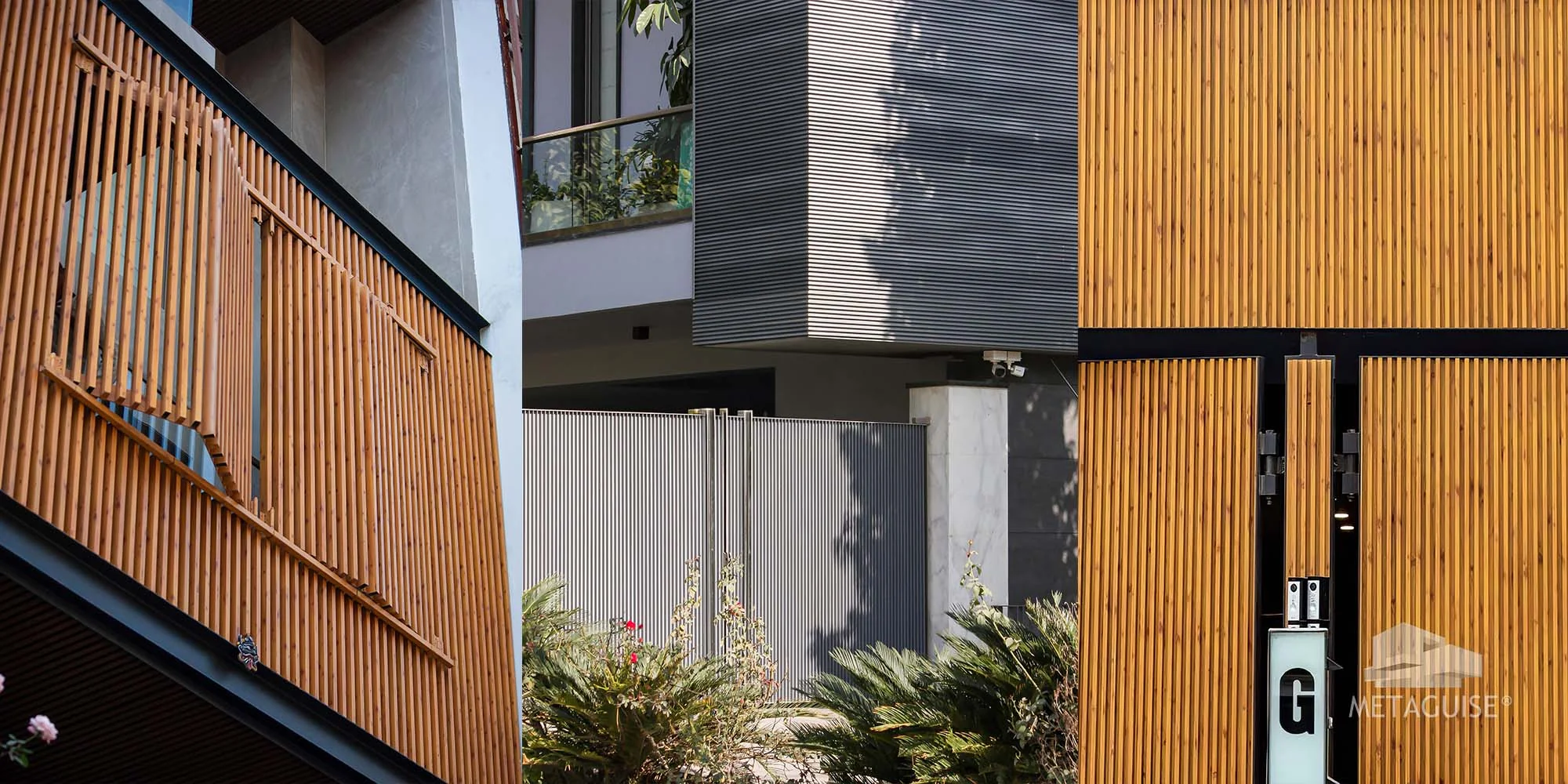
Aluminium
Aluminium is the default choice for kinetic facades, and for good reason.
Strengths: It is light, naturally corrosion resistant, easy to cut, bend and form, and takes powder coat or PVDF finishes well. It also recycles easily.
Limits: It expands noticeably with heat, so joints and fixings need room to move. Thin sheet can dent or flutter in strong wind if the panel is not stiffened.
Best for: Most kinetic applications, from wind-driven panels to motorised louvers, in almost every Indian climate.
Stainless Steel
Strengths: Very strong, with excellent corrosion resistance, especially in marine grades. It holds a premium, mirror or brushed look for decades.
Limits: Much heavier than aluminium and more costly. Heavy panels demand stronger mechanisms. Mirror finishes show dust, water marks and fingerprints.
Best for: Coastal sites, small high-value moving elements, and pivots, pins and fixings where strength matters more than weight.
Mild Steel With Protective Coating
Strengths: Strong and low in material cost.
Limits: It rusts if the coating is damaged, and moving parts are exactly where coatings wear first. Heavy weight again strains mechanisms. It needs a proper multi-layer coating system and regular inspection.
Best for: Fixed structural frames behind a kinetic skin, rather than the moving panels themselves.
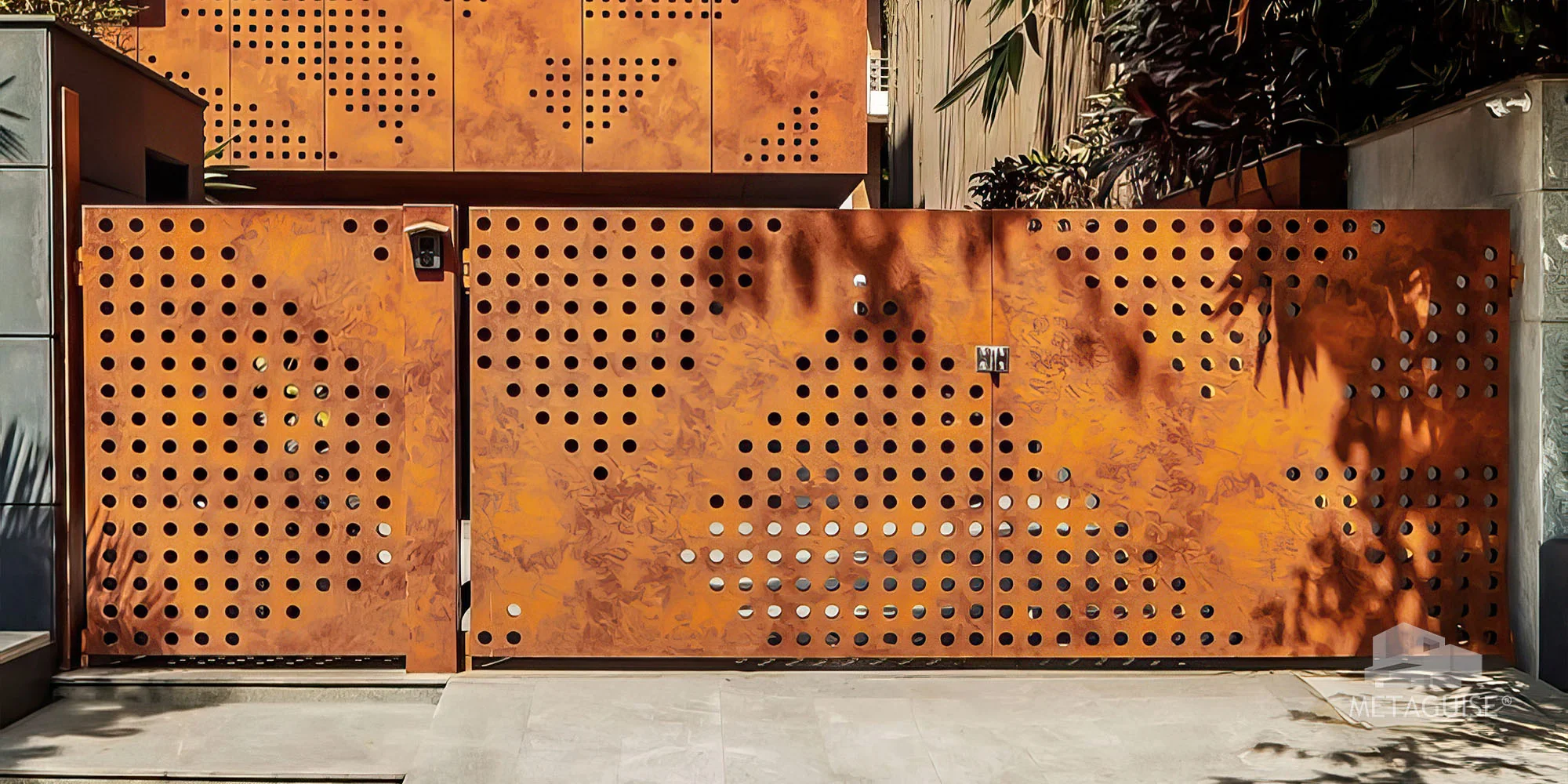
Corten (Weathering) Steel
Strengths: Develops a stable rust-like surface that many designers love.
Limits: Heavy, and the weathering process can run-off rust stains onto surfaces below. Not ideal for fine-tolerance moving joints, where rust build-up can cause friction.
Best for: Large, slow-moving or fixed screens where a rustic look is the aim. See MetaCorten and our guide to the corten steel facade.
Brass, Bronze and Copper
Strengths: Rich colour, and they age into natural patinas.
Limits: High cost, high weight and colour change that is hard to control. Different metals touching each other can also cause galvanic corrosion.
Best for: Small feature elements and luxury entrances, not full facades.
Composite Materials
Some kinetic systems use lightweight composites, such as aluminium composite panels or fibre reinforced products, to reduce weight even more. Check fire performance carefully, as some composite cores do not meet non-combustible requirements for tall buildings. Our guide on ACP versus solid aluminium explains the gap.
Comparison Table
| Material | Weight | Corrosion resistance | Cost level | Best use |
|---|---|---|---|---|
| Aluminium | Light | High | Medium | Most kinetic panels |
| Stainless steel | Heavy | Very high | High | Coastal sites, pins and fixings |
| Mild steel, coated | Heavy | Low if coating fails | Low | Support frames |
| Corten steel | Heavy | Self-protecting surface | Medium to high | Large, slow or fixed screens |
| Brass and bronze | Heavy | Medium | Very high | Small feature elements |
Finish Matters as Much as Metal
The coating is the first line of defence. For outdoor use in India, look for:
- PVDF coating for strong colour and UV stability
- Anodising for a hard, natural metal look
- Quality powder coat with proper pre-treatment, for a wide colour range
Ask for the coating thickness, the pre-treatment process and the warranty period in writing. A good finish on a poor metal still fails early, and a good metal with a poor finish does too.
Climate Checklist
Hot and dry (Delhi, Jaipur, Ahmedabad): Allow for heat expansion. Use light colours or finishes that reflect heat, and check that bearings are rated for high temperature.
Humid and monsoon heavy (Mumbai, Kolkata, Kerala): Choose corrosion resistant metals and drainage paths so water does not sit in joints.
Coastal (Chennai, Mumbai, Goa, Vizag): Use marine grade fixings and higher spec finishes. Avoid mixing metals.
Dusty sites (construction heavy zones): Use sealed bearings and plan regular cleaning.
Questions to Ask Your Supplier
- What is the weight per square metre of the moving panel?
- How many movement cycles has this mechanism been tested for?
- Which fasteners and bearings are used, and what are they made of?
- Is there a sample or mock-up I can test in sun and water?
- How will a single panel be replaced?
Plan Your Kinetic Facade With Metaguise
Want to see how finishes hold up before you decide? Visit the Metaland experience centre in Gurugram to see metal cladding samples, or share your project details and we will suggest suitable materials and finishes.
Related reads: Kinetic, Dynamic, Responsive or Motorised; Wind-Driven Kinetic Facade; Kinetic Look Without Moving Parts.
12-10-26 | Material Spotlight
A kinetic facade is only as good as the material it moves on. In India, that material faces 45 degree summer heat, months of monsoon, dust and, in coastal cities, salt in the air. A panel that looks perfect in a render can seize, corrode or sag within a few seasons if the wrong metal is chosen.
This guide compares the materials architects use most for kinetic facades, and tells you which ones suit which conditions.
What a Kinetic Material Must Do
Moving panels have a harder job than fixed cladding. A good kinetic material needs to:
- Stay light, so motors, bearings and hinges are not overloaded
- Resist corrosion, because moving joints trap water and dust
- Handle heat expansion without warping or binding
- Hold its finish through thousands of movement cycles
- Be easy to replace panel by panel
Weight matters more here than in any other facade type. Every extra kilo is load on a mechanism you will want to run for years.
Aluminium
Aluminium is the default choice for kinetic facades, and for good reason.
Strengths: It is light, naturally corrosion resistant, easy to cut, bend and form, and takes powder coat or PVDF finishes well. It also recycles easily.
Limits: It expands noticeably with heat, so joints and fixings need room to move. Thin sheet can dent or flutter in strong wind if the panel is not stiffened.
Best for: Most kinetic applications, from wind-driven panels to motorised louvers, in almost every Indian climate.
Stainless Steel
Strengths: Very strong, with excellent corrosion resistance, especially in marine grades. It holds a premium, mirror or brushed look for decades.
Limits: Much heavier than aluminium and more costly. Heavy panels demand stronger mechanisms. Mirror finishes show dust, water marks and fingerprints.
Best for: Coastal sites, small high-value moving elements, and pivots, pins and fixings where strength matters more than weight.
Mild Steel With Protective Coating
Strengths: Strong and low in material cost.
Limits: It rusts if the coating is damaged, and moving parts are exactly where coatings wear first. Heavy weight again strains mechanisms. It needs a proper multi-layer coating system and regular inspection.
Best for: Fixed structural frames behind a kinetic skin, rather than the moving panels themselves.
Corten (Weathering) Steel
Strengths: Develops a stable rust-like surface that many designers love.
Limits: Heavy, and the weathering process can run-off rust stains onto surfaces below. Not ideal for fine-tolerance moving joints, where rust build-up can cause friction.
Best for: Large, slow-moving or fixed screens where a rustic look is the aim. See MetaCorten and our guide to the corten steel facade.
Brass, Bronze and Copper
Strengths: Rich colour, and they age into natural patinas.
Limits: High cost, high weight and colour change that is hard to control. Different metals touching each other can also cause galvanic corrosion.
Best for: Small feature elements and luxury entrances, not full facades.
Composite Materials
Some kinetic systems use lightweight composites, such as aluminium composite panels or fibre reinforced products, to reduce weight even more. Check fire performance carefully, as some composite cores do not meet non-combustible requirements for tall buildings. Our guide on ACP versus solid aluminium explains the gap.
Comparison Table
| Material | Weight | Corrosion resistance | Cost level | Best use |
|---|---|---|---|---|
| Aluminium | Light | High | Medium | Most kinetic panels |
| Stainless steel | Heavy | Very high | High | Coastal sites, pins and fixings |
| Mild steel, coated | Heavy | Low if coating fails | Low | Support frames |
| Corten steel | Heavy | Self-protecting surface | Medium to high | Large, slow or fixed screens |
| Brass and bronze | Heavy | Medium | Very high | Small feature elements |
Finish Matters as Much as Metal
The coating is the first line of defence. For outdoor use in India, look for:
- PVDF coating for strong colour and UV stability
- Anodising for a hard, natural metal look
- Quality powder coat with proper pre-treatment, for a wide colour range
Ask for the coating thickness, the pre-treatment process and the warranty period in writing. A good finish on a poor metal still fails early, and a good metal with a poor finish does too.
Climate Checklist
Hot and dry (Delhi, Jaipur, Ahmedabad): Allow for heat expansion. Use light colours or finishes that reflect heat, and check that bearings are rated for high temperature.
Humid and monsoon heavy (Mumbai, Kolkata, Kerala): Choose corrosion resistant metals and drainage paths so water does not sit in joints.
Coastal (Chennai, Mumbai, Goa, Vizag): Use marine grade fixings and higher spec finishes. Avoid mixing metals.
Dusty sites (construction heavy zones): Use sealed bearings and plan regular cleaning.
Questions to Ask Your Supplier
- What is the weight per square metre of the moving panel?
- How many movement cycles has this mechanism been tested for?
- Which fasteners and bearings are used, and what are they made of?
- Is there a sample or mock-up I can test in sun and water?
- How will a single panel be replaced?
Plan Your Kinetic Facade With Metaguise
Want to see how finishes hold up before you decide? Visit the Metaland experience centre in Gurugram to see metal cladding samples, or share your project details and we will suggest suitable materials and finishes.
Related reads: Kinetic, Dynamic, Responsive or Motorised; Wind-Driven Kinetic Facade; Kinetic Look Without Moving Parts.
Related Articles
Living, Breathing Facades: The Science and Soul of MetaPatina
There’s something poetic about materials that age with grace. That shift color with time, deepen with exposure, and reveal new layers of beauty as they weather. MetaPatina, our living metal facade surface, is a tribute to that very idea - a facade that doesn’t just protect a building, but brings it to life...
06-04-25 | Material Spotlight
5 Reasons to Choose MetaSequin for Your Facade
At Metaguise, we believe the facade of a building isn’t just its outer layer - it’s its identity. And in today’s design landscape
10-11-25 | Material Spotlight
The Power of Perforation: Breathing Life, Light & Luxury into Metal Facades
At Metaguise, we believe the facade of a building isn’t just its outer layer - it’s its identity. And in today’s design landscape
17-11-25 | Material Spotlight
Perforated Metal Facade panels in 2026: Benefits, Design uses & Architectural Guide
Perforated metal facade panels are architectural cladding systems made from aluminium or steel sheets with precision-cut patterns.
09-12-25 | Material Spotlight
Social
Legal
Privacy Policy|Terms & Conditions