



Corten Steel Facade: The Material That's Designed to Rust, on Purpose
03-09-26 | Material Spotlight
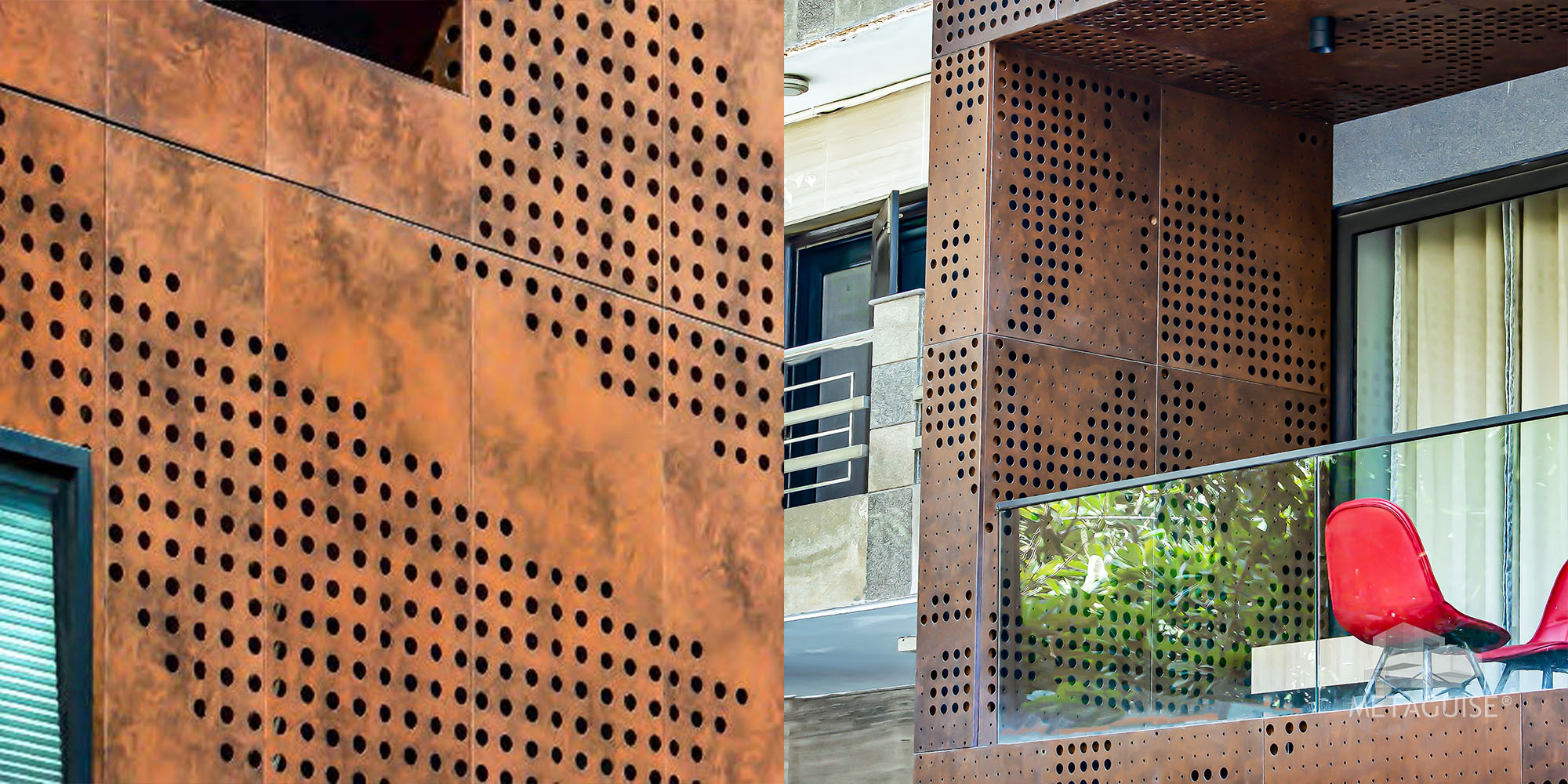
Corten steel does something almost no other facade material does. It's designed to rust, deliberately, and that rusting is exactly what protects it. Where most metal facades are engineered to resist corrosion entirely, Corten uses controlled oxidation to build its own protective layer, developing a distinctive rust orange finish that architects increasingly specify for that exact natural, aged character. Here's why Corten has earned such a specific and growing place in Indian facade design, and what it actually takes to specify it correctly.
How Corten Steel Actually Protects Itself
Corten, more formally known as weathering steel, contains small additions of copper, chromium, and nickel that change how the steel oxidizes compared to standard mild steel. Rather than flaking and continuing to rust indefinitely the way untreated steel does, Corten forms a dense, adherent oxide layer within its first one to two years of weather exposure. Once that layer forms, it significantly slows further oxidation, effectively becoming the material's own permanent protective coating, with no paint and no separate applied finish involved. This is fundamentally different from how aluminium or standard coated steel protect themselves. Aluminium relies on a naturally forming, essentially invisible oxide layer. Corten's protective layer is the visible, defining feature of the material itself, the rust orange colour genuinely is the protection, not a coating applied over it afterward.Why Architects Keep Coming Back to This One Material
A material that visibly matures rather than staying static. Corten gives a building genuine character that develops over its first couple of years, appealing directly to clients who want their building to feel considered and organic rather than frozen in exactly the same state from day one to year twenty. Warmth that suits India's landscape and light. Corten's rust orange tone pairs distinctively well with natural settings, farmhouses, cultural buildings, and hospitality projects surrounded by greenery or landscape, offering a warmer, more grounded presence than the cooler tones most metal cladding carries. Genuinely low maintenance once fully weathered. Once the protective oxide layer stabilises, Corten requires minimal ongoing maintenance, no repainting cycle, no coating renewal, which appeals directly to clients specifically looking for a low-intervention material over the building's entire lifetime. A distinctive look that photographs differently from anything else on the street. In a market where aluminium cladding in grey, white, and bronze tones dominates most commercial and residential elevations, a Corten facade stands out immediately, simply by looking like nothing else nearby.What You Genuinely Need to Plan for Before Specifying Corten
Runoff staining during the weathering period. During the initial weathering phase, rainwater carrying rust particles can stain adjacent light-coloured materials, stone, plaster, or paving, if drainage isn't detailed correctly from the start. A designer experienced with Corten plans drainage paths specifically to direct this runoff away from surfaces where staining would become a genuine problem. The weathering timeline isn't instant, and clients need to know that upfront. Corten's full, stable colour takes real time to develop, generally one to two years depending on local climate and rainfall intensity. A Corten facade installed today won't look like a mature, fully weathered one immediately, and setting that expectation clearly before installation avoids disappointment when the building doesn't look "finished" on handover day. Coastal exposure needs a more careful conversation. In heavy salt air environments, Corten's weathering behaviour can be less predictable than in a drier inland climate, and it's genuinely worth discussing with your facade designer whether Corten or a different material suits a truly coastal project better before committing to it.Corten Versus Copper: The Comparison Everyone Eventually Asks About
Corten is often compared to copper, another material chosen specifically for how it ages, though the two behave quite differently in practice. Copper's patina process moves through several distinct colour stages over years before settling into a final blue-green finish, while Corten reaches a fairly stable rust orange appearance within its first couple of years and holds that tone going forward without further dramatic change. The choice between them usually comes down to which final colour palette, warm rust orange or cool blue-green, better suits the project's overall design intent and the materials it needs to sit alongside.Where Corten Actually Earns Its Place on a Building
Corten works particularly well as a feature material rather than a material covering an entire large elevation, an entrance wall, a boundary screen, a signature architectural element that benefits from standing apart from the rest of the building's material palette. It's also a strong choice for standalone structures, gates, pergolas, and freestanding walls, where its weathering can be appreciated as a genuine sculptural quality rather than competing with glazing or other facade elements nearby. Corten pairs particularly well with our farmhouse elevation projects, where its natural, earthy tone sits comfortably against landscaping and open plots in a way a polished, reflective metal finish often doesn't. If you're planning a rural or semi-rural property, our guide to designing an elevation for a Delhi NCR farmhouse covers material choices suited to that specific setting in more depth.How Corten Compares to Aluminium on a Practical Level
Beyond copper, it's worth briefly comparing Corten to the more common default choice of aluminium. Aluminium offers far greater finish flexibility, since it can be powder coated, anodised, or PVDF finished in essentially any colour, while Corten's entire appeal rests on accepting its one natural, evolving rust tone rather than choosing a colour at all. Aluminium is also considerably lighter, which matters for larger elevation coverage where structural load becomes a genuine consideration. Corten's advantage is character and a complete absence of ongoing coating maintenance, a genuine tradeoff worth discussing honestly with your designer rather than assuming one material is simply better than the other in every situation.What Corten Steel Facades Typically Cost
Corten steel generally costs somewhat more than standard aluminium cladding, reflecting both the material itself and the specific weathering steel specification required for genuine performance, though it remains more accessible than copper for most Indian projects. As with any facade material, total project cost depends heavily on total coverage area and panel complexity, alongside the base material cost itself, so a small Corten feature wall costs considerably less than covering an entire building elevation in the material.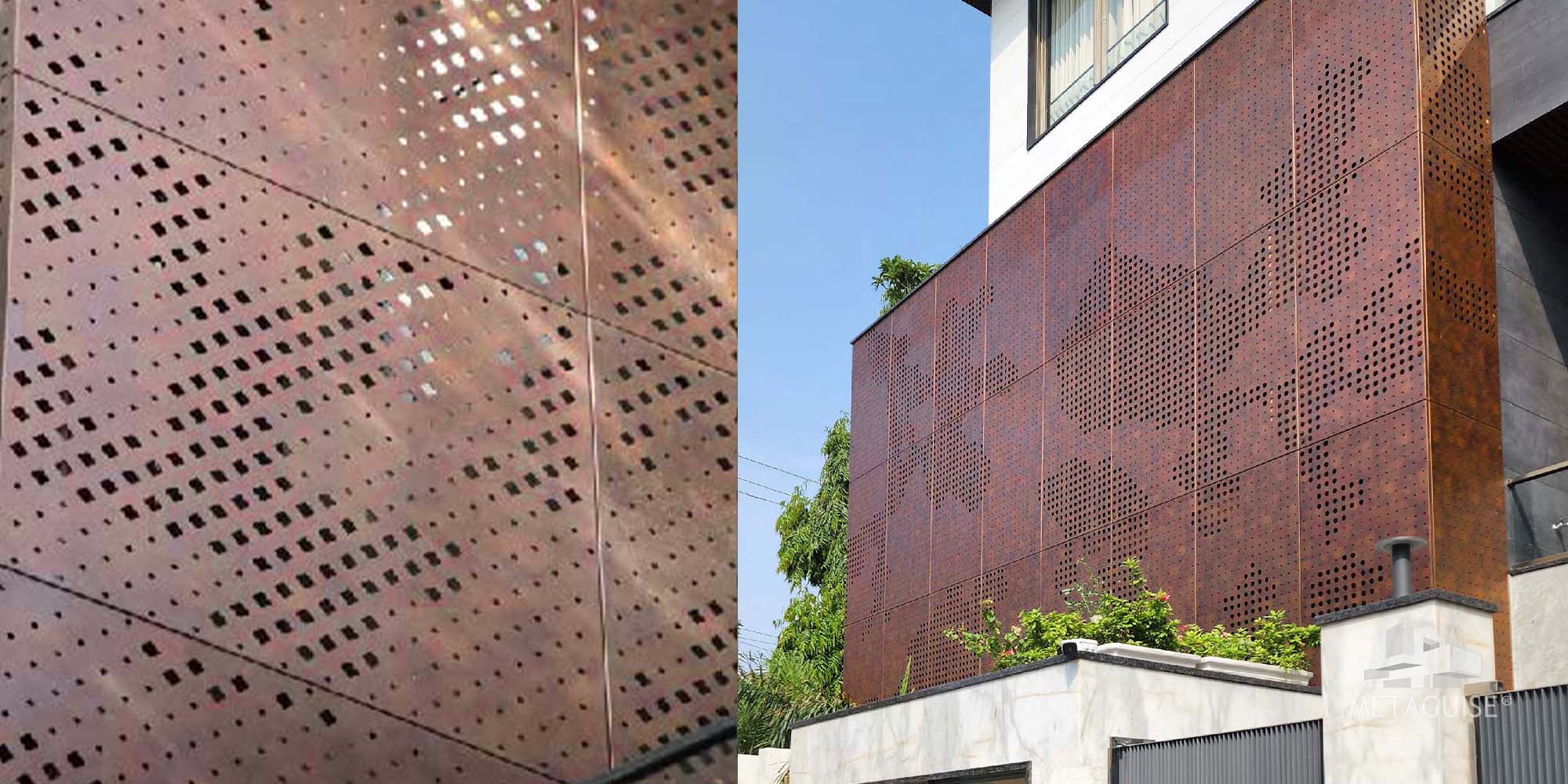
Frequently Asked Questions
Does Corten steel need to be painted or coated?
No, Corten is specifically designed to develop its own protective oxide layer through natural weathering, which is the opposite approach to standard steel that requires an applied protective coating to resist corrosion.How long does it take for Corten to reach its final colour?
The protective rust orange layer typically stabilises within one to two years of weather exposure, depending on local climate and rainfall, after which the oxidation rate slows down significantly and the colour stays relatively stable.Does Corten stain nearby surfaces during weathering?
It can during the initial weathering period if drainage isn't detailed correctly, since rainwater carrying rust particles can mark adjacent light-coloured materials. Proper drainage planning at the design stage genuinely prevents this from becoming a problem.Is Corten suitable for coastal buildings in India?
Corten can be used in coastal environments, but its weathering behaviour is less predictable in heavy salt air than in drier climates, and it's worth discussing this specifically with your facade designer for genuinely coastal projects before committing.Is Corten more expensive than standard aluminium?
Yes, Corten generally costs more than standard aluminium cladding, though it's typically more accessible than copper, with the exact difference depending heavily on coverage area and overall project complexity.Explore Corten for Your Next Project
If Corten's warm, weathered character suits your project's design intent, get drainage and specification guidance from our designers so you know exactly how your Corten facade will look as it weathers over the first two years.03-09-26 | Material Spotlight
Corten steel does something almost no other facade material does. It's designed to rust, deliberately, and that rusting is exactly what protects it. Where most metal facades are engineered to resist corrosion entirely, Corten uses controlled oxidation to build its own protective layer, developing a distinctive rust orange finish that architects increasingly specify for that exact natural, aged character. Here's why Corten has earned such a specific and growing place in Indian facade design, and what it actually takes to specify it correctly.
How Corten Steel Actually Protects Itself
Corten, more formally known as weathering steel, contains small additions of copper, chromium, and nickel that change how the steel oxidizes compared to standard mild steel. Rather than flaking and continuing to rust indefinitely the way untreated steel does, Corten forms a dense, adherent oxide layer within its first one to two years of weather exposure. Once that layer forms, it significantly slows further oxidation, effectively becoming the material's own permanent protective coating, with no paint and no separate applied finish involved. This is fundamentally different from how aluminium or standard coated steel protect themselves. Aluminium relies on a naturally forming, essentially invisible oxide layer. Corten's protective layer is the visible, defining feature of the material itself, the rust orange colour genuinely is the protection, not a coating applied over it afterward.Why Architects Keep Coming Back to This One Material
A material that visibly matures rather than staying static. Corten gives a building genuine character that develops over its first couple of years, appealing directly to clients who want their building to feel considered and organic rather than frozen in exactly the same state from day one to year twenty. Warmth that suits India's landscape and light. Corten's rust orange tone pairs distinctively well with natural settings, farmhouses, cultural buildings, and hospitality projects surrounded by greenery or landscape, offering a warmer, more grounded presence than the cooler tones most metal cladding carries. Genuinely low maintenance once fully weathered. Once the protective oxide layer stabilises, Corten requires minimal ongoing maintenance, no repainting cycle, no coating renewal, which appeals directly to clients specifically looking for a low-intervention material over the building's entire lifetime. A distinctive look that photographs differently from anything else on the street. In a market where aluminium cladding in grey, white, and bronze tones dominates most commercial and residential elevations, a Corten facade stands out immediately, simply by looking like nothing else nearby.What You Genuinely Need to Plan for Before Specifying Corten
Runoff staining during the weathering period. During the initial weathering phase, rainwater carrying rust particles can stain adjacent light-coloured materials, stone, plaster, or paving, if drainage isn't detailed correctly from the start. A designer experienced with Corten plans drainage paths specifically to direct this runoff away from surfaces where staining would become a genuine problem. The weathering timeline isn't instant, and clients need to know that upfront. Corten's full, stable colour takes real time to develop, generally one to two years depending on local climate and rainfall intensity. A Corten facade installed today won't look like a mature, fully weathered one immediately, and setting that expectation clearly before installation avoids disappointment when the building doesn't look "finished" on handover day. Coastal exposure needs a more careful conversation. In heavy salt air environments, Corten's weathering behaviour can be less predictable than in a drier inland climate, and it's genuinely worth discussing with your facade designer whether Corten or a different material suits a truly coastal project better before committing to it.Corten Versus Copper: The Comparison Everyone Eventually Asks About
Corten is often compared to copper, another material chosen specifically for how it ages, though the two behave quite differently in practice. Copper's patina process moves through several distinct colour stages over years before settling into a final blue-green finish, while Corten reaches a fairly stable rust orange appearance within its first couple of years and holds that tone going forward without further dramatic change. The choice between them usually comes down to which final colour palette, warm rust orange or cool blue-green, better suits the project's overall design intent and the materials it needs to sit alongside.Where Corten Actually Earns Its Place on a Building
Corten works particularly well as a feature material rather than a material covering an entire large elevation, an entrance wall, a boundary screen, a signature architectural element that benefits from standing apart from the rest of the building's material palette. It's also a strong choice for standalone structures, gates, pergolas, and freestanding walls, where its weathering can be appreciated as a genuine sculptural quality rather than competing with glazing or other facade elements nearby. Corten pairs particularly well with our farmhouse elevation projects, where its natural, earthy tone sits comfortably against landscaping and open plots in a way a polished, reflective metal finish often doesn't. If you're planning a rural or semi-rural property, our guide to designing an elevation for a Delhi NCR farmhouse covers material choices suited to that specific setting in more depth.How Corten Compares to Aluminium on a Practical Level
Beyond copper, it's worth briefly comparing Corten to the more common default choice of aluminium. Aluminium offers far greater finish flexibility, since it can be powder coated, anodised, or PVDF finished in essentially any colour, while Corten's entire appeal rests on accepting its one natural, evolving rust tone rather than choosing a colour at all. Aluminium is also considerably lighter, which matters for larger elevation coverage where structural load becomes a genuine consideration. Corten's advantage is character and a complete absence of ongoing coating maintenance, a genuine tradeoff worth discussing honestly with your designer rather than assuming one material is simply better than the other in every situation.What Corten Steel Facades Typically Cost
Corten steel generally costs somewhat more than standard aluminium cladding, reflecting both the material itself and the specific weathering steel specification required for genuine performance, though it remains more accessible than copper for most Indian projects. As with any facade material, total project cost depends heavily on total coverage area and panel complexity, alongside the base material cost itself, so a small Corten feature wall costs considerably less than covering an entire building elevation in the material.Frequently Asked Questions
Does Corten steel need to be painted or coated?
No, Corten is specifically designed to develop its own protective oxide layer through natural weathering, which is the opposite approach to standard steel that requires an applied protective coating to resist corrosion.How long does it take for Corten to reach its final colour?
The protective rust orange layer typically stabilises within one to two years of weather exposure, depending on local climate and rainfall, after which the oxidation rate slows down significantly and the colour stays relatively stable.Does Corten stain nearby surfaces during weathering?
It can during the initial weathering period if drainage isn't detailed correctly, since rainwater carrying rust particles can mark adjacent light-coloured materials. Proper drainage planning at the design stage genuinely prevents this from becoming a problem.Is Corten suitable for coastal buildings in India?
Corten can be used in coastal environments, but its weathering behaviour is less predictable in heavy salt air than in drier climates, and it's worth discussing this specifically with your facade designer for genuinely coastal projects before committing.Is Corten more expensive than standard aluminium?
Yes, Corten generally costs more than standard aluminium cladding, though it's typically more accessible than copper, with the exact difference depending heavily on coverage area and overall project complexity.Explore Corten for Your Next Project
If Corten's warm, weathered character suits your project's design intent, get drainage and specification guidance from our designers so you know exactly how your Corten facade will look as it weathers over the first two years.Related Articles
Living, Breathing Facades: The Science and Soul of MetaPatina
There’s something poetic about materials that age with grace. That shift color with time, deepen with exposure, and reveal new layers of beauty as they weather. MetaPatina, our living metal facade surface, is a tribute to that very idea - a facade that doesn’t just protect a building, but brings it to life...
06-04-25 | Material Spotlight
5 Reasons to Choose MetaSequin for Your Facade
At Metaguise, we believe the facade of a building isn’t just its outer layer - it’s its identity. And in today’s design landscape
10-11-25 | Material Spotlight
The Power of Perforation: Breathing Life, Light & Luxury into Metal Facades
At Metaguise, we believe the facade of a building isn’t just its outer layer - it’s its identity. And in today’s design landscape
17-11-25 | Material Spotlight
Perforated Metal Facade panels in 2026: Benefits, Design uses & Architectural Guide
Perforated metal facade panels are architectural cladding systems made from aluminium or steel sheets with precision-cut patterns.
09-12-25 | Material Spotlight
Social
Legal
Privacy Policy|Terms & Conditions