



Solar Shading Facades in India: Fins, Louvers and Screens That Cut Cooling Load
21-10-26 | Architectural Insights
In most of India, the sun is not a guest, it is the main design problem. A west wall in Delhi in May, an unshaded glass front in Ahmedabad, a south facing office in Hyderabad: each one turns into a heat trap that your air conditioning has to fight all day. A solar shading facade stops sunlight before it reaches the glass or wall, so the heat never enters. This guide explains how shading works, compares fins, louvers and screens, and helps you choose the right system for your building.
Why Shade the Facade, Not Just the Room?
Blinds and curtains inside a room block light, but the heat has already entered the building. Shading on the outside stops the heat at the source. That is why external shading is one of the most effective ways to reduce cooling load, glare and discomfort. Good solar shading can:- Reduce heat gain through glass and walls
- Lower air conditioning load and energy use
- Cut glare on screens and workspaces
- Keep daylight while blocking direct sun
- Give the building a distinct visual identity
Know Your Sun Before You Choose a System
Shading design starts with orientation, because the sun hits each side differently.| Orientation | Sun behaviour | Best shading approach |
|---|---|---|
| North | Low direct sun in most of India | Light shading or none |
| East | Low morning sun at a steep side angle | Vertical fins |
| South | High sun in summer, lower in winter | Horizontal projections, louvers |
| West | Low, hot afternoon sun | Vertical fins, dense screens, or both |
For more on this, see our guide on facade options for south facing homes. West faces need special attention, and we cover them in a separate guide.
5 Shading Systems Compared
1. Vertical Fins
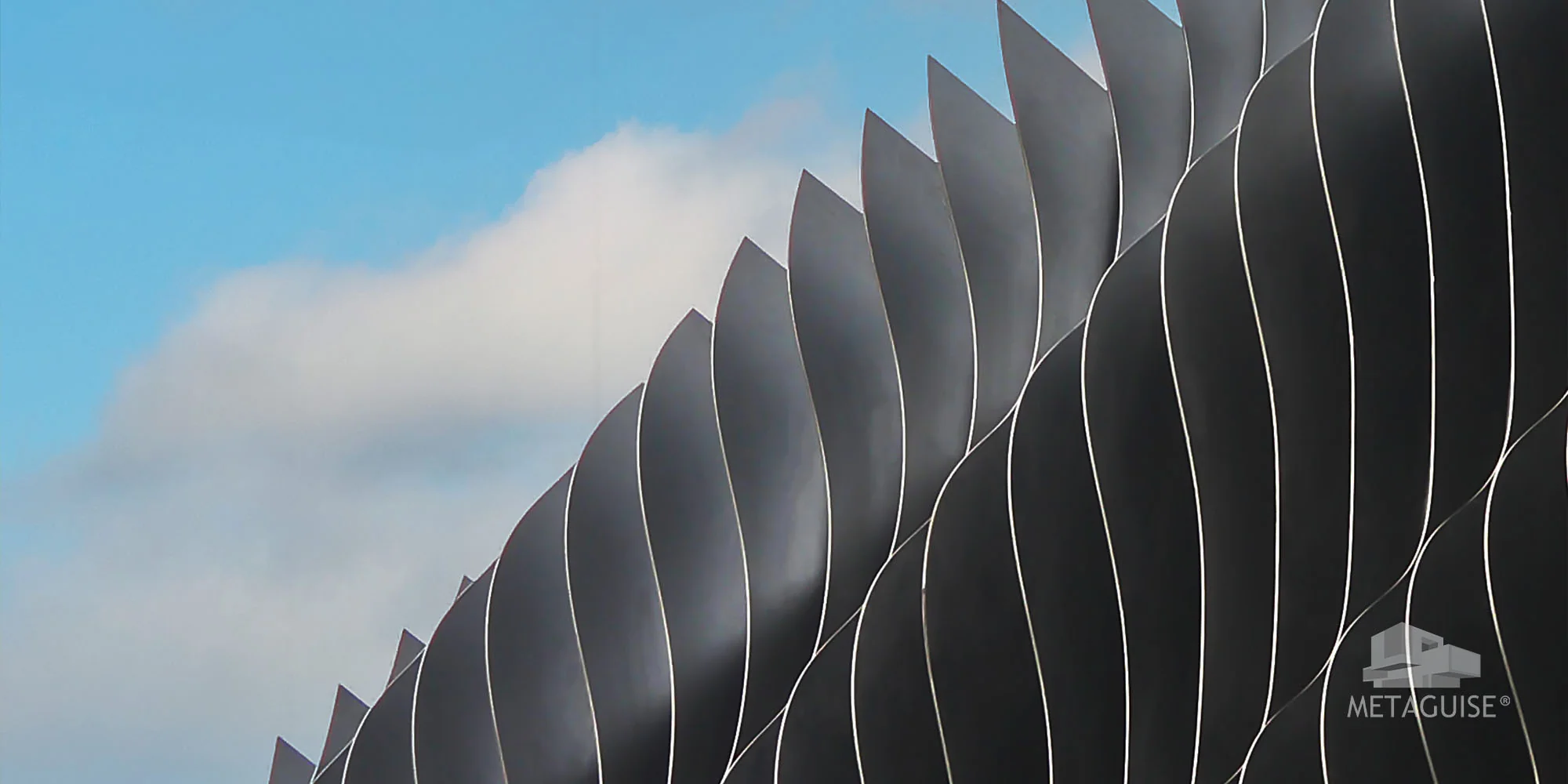
Tall blades placed side by side, fixed at an angle. They work best on east and west faces, where the sun comes in low from the side. Fins also give a strong vertical rhythm to a building. Our guide on architectural fins design shows how one element can define a facade, and the MetaFin system is built for this purpose.2. Horizontal Louvers and Brise Soleil
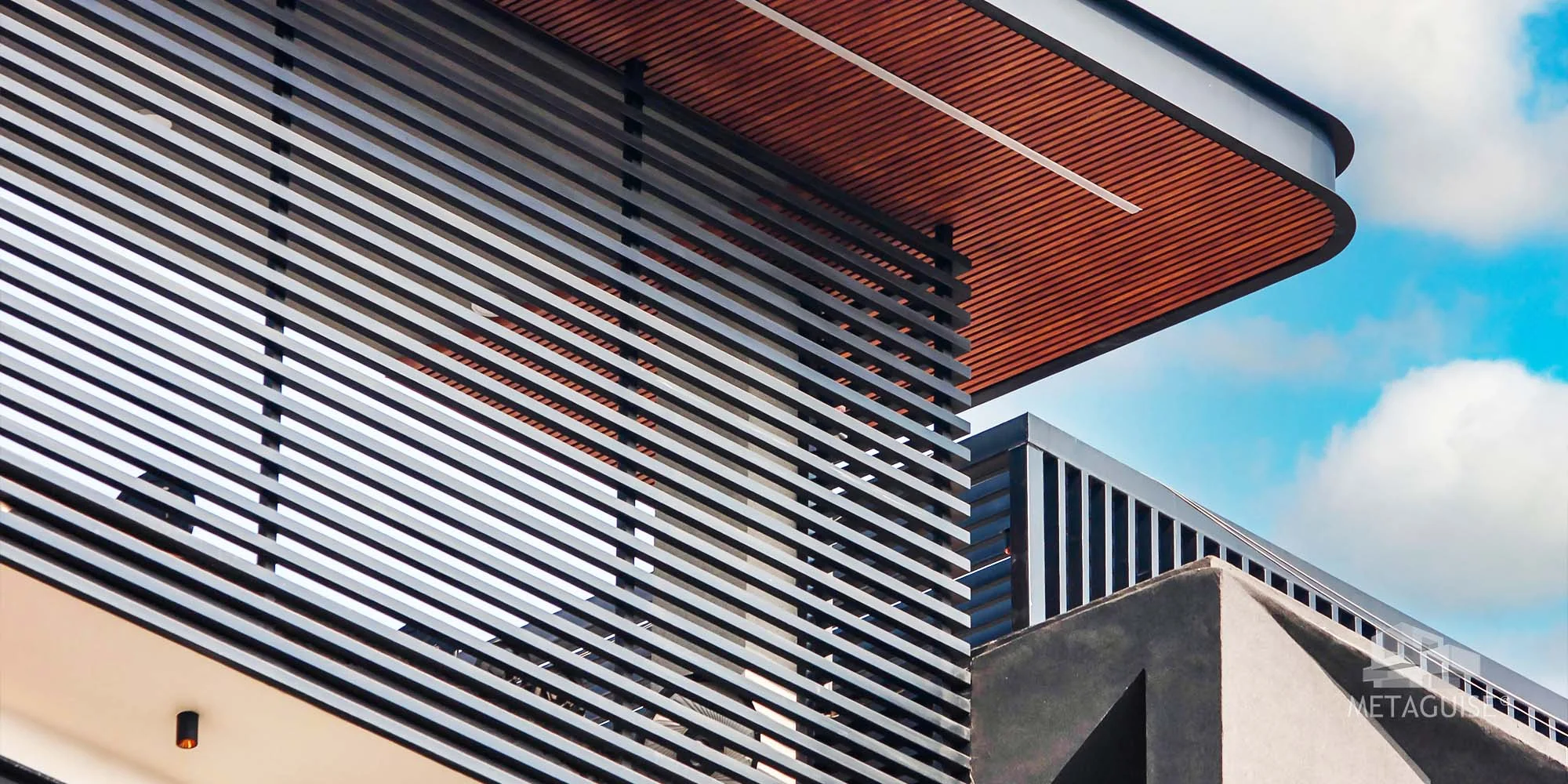
Horizontal blades block high sun from above, which suits south facing walls and windows. Spacing and depth are set by the sun angle you want to cut. See the MetaLouver range for louver options.3. Perforated Metal Screens
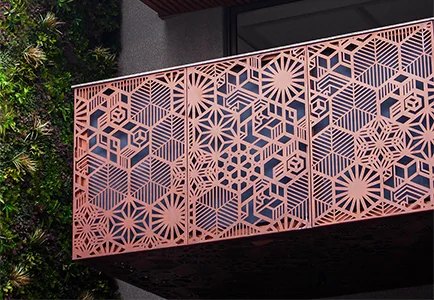
A perforated panel filters light through holes of a chosen size and pattern. It cuts heat and glare while keeping some view and airflow, and creates beautiful patterns of light and shadow. Read more in our article on the power of perforation.4. Expanded Mesh and Woven Screens
Light, flexible screens that hang a short distance off the facade. They soften sun and add texture, and suit parking, staircases and double skin facades.5. Movable and Adjustable Shading
Fins or louvers that rotate or slide change their angle through the day or season. They give more control but need motors, controls and upkeep, so use them where the benefit justifies the cost.Fixed vs Adjustable Shading
| Factor | Fixed shading | Adjustable shading |
|---|---|---|
| Cost | Lower | Higher |
| Upkeep | Very low | Regular servicing |
| Control | Set by design | Changes with conditions |
| Reliability | High, no moving parts | Depends on mechanism |
| Best for | Most Indian projects | Showpiece and high performance buildings |
For most buildings, a well designed fixed system gives the best balance of performance and simplicity.
Design Details That Make Shading Work
- Depth and spacing. Deeper blades block more sun but also more view and light. Set depth by the sun angle for your latitude.
- Blade angle. A slight tilt can block direct sun while letting diffuse daylight in.
- Distance from the wall. A gap lets hot air escape instead of trapping it behind the screen.
- Colour and finish. Light colours reflect more heat. Quality finishes keep their colour in strong sun.
- Structure and wind load. Large shading elements catch wind, so fixings and sub-frames must be designed for it.
- Cleaning access. Plan for safe cleaning of both sides of the shading.
Natural airflow behind the screen is a big benefit. Our article on ventilated metal facade systems explains how this works.
Light and Shadow as a Design Tool
Shading does not have to be plain. The interplay of light and shadow through fins and screens changes through the day and makes the facade feel alive. We go deeper in the science of light and shadow in metal facade design.Choosing the Right Material
Aluminium is the most common material for shading elements because it is light, resists corrosion and takes many finishes. Steel suits heavy duty or long span elements and needs proper coating. Whatever you choose, ask for finish and warranty details. See our guide on facade materials compared.Green Building Benefits
Shading lowers energy use, which supports green building goals. Read how sustainability goals influence metal panel selection for more on this link.Common Mistakes
- Using the same shading on every side of the building
- Choosing looks over sun angle
- Blocking too much daylight, which raises lighting use
- Forgetting wind load on large screens
- Ignoring cleaning and upkeep access
Frequently Asked Questions
Does external shading really reduce AC bills?
Yes. Stopping sun before it reaches glass or walls cuts heat gain, which reduces cooling load. The saving depends on orientation, glass area and the shading design.Which shading is best for west facing walls?
Vertical fins, dense perforated screens or a combination, since the sun is low and hot in the afternoon.Are fixed or adjustable fins better?
Fixed fins are simpler and need almost no upkeep. Adjustable fins give more control but cost more and need servicing.Will shading block my view?
Good design keeps views by controlling blade depth, angle and spacing, or by using perforated or mesh screens.Which material is best for shading fins?
Aluminium is the most popular choice because of its light weight, corrosion resistance and finish options.Design Shading With Metaguise
Want to see fins, louvers and perforated screens in person? Visit Metaland, our experience centre in Gurugram, or send us your elevation drawings and we will suggest suitable systems.Related reads: West-Facing Building Facade Fixes; Backlit Metal Facades; Metal Mesh Facade Design.
21-10-26 | Architectural Insights
In most of India, the sun is not a guest, it is the main design problem. A west wall in Delhi in May, an unshaded glass front in Ahmedabad, a south facing office in Hyderabad: each one turns into a heat trap that your air conditioning has to fight all day. A solar shading facade stops sunlight before it reaches the glass or wall, so the heat never enters. This guide explains how shading works, compares fins, louvers and screens, and helps you choose the right system for your building.
Why Shade the Facade, Not Just the Room?
Blinds and curtains inside a room block light, but the heat has already entered the building. Shading on the outside stops the heat at the source. That is why external shading is one of the most effective ways to reduce cooling load, glare and discomfort. Good solar shading can:- Reduce heat gain through glass and walls
- Lower air conditioning load and energy use
- Cut glare on screens and workspaces
- Keep daylight while blocking direct sun
- Give the building a distinct visual identity
Know Your Sun Before You Choose a System
Shading design starts with orientation, because the sun hits each side differently.| Orientation | Sun behaviour | Best shading approach |
|---|---|---|
| North | Low direct sun in most of India | Light shading or none |
| East | Low morning sun at a steep side angle | Vertical fins |
| South | High sun in summer, lower in winter | Horizontal projections, louvers |
| West | Low, hot afternoon sun | Vertical fins, dense screens, or both |
For more on this, see our guide on facade options for south facing homes. West faces need special attention, and we cover them in a separate guide.
5 Shading Systems Compared
1. Vertical Fins
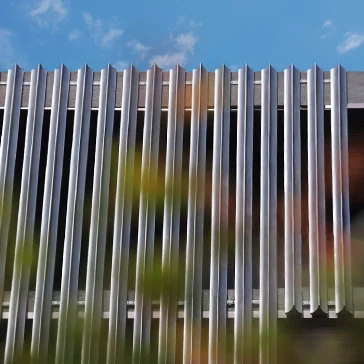
Tall blades placed side by side, fixed at an angle. They work best on east and west faces, where the sun comes in low from the side. Fins also give a strong vertical rhythm to a building. Our guide on architectural fins design shows how one element can define a facade, and the MetaFin system is built for this purpose.2. Horizontal Louvers and Brise Soleil
Horizontal blades block high sun from above, which suits south facing walls and windows. Spacing and depth are set by the sun angle you want to cut. See the MetaLouver range for louver options.3. Perforated Metal Screens
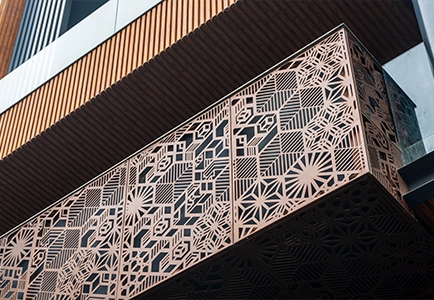
A perforated panel filters light through holes of a chosen size and pattern. It cuts heat and glare while keeping some view and airflow, and creates beautiful patterns of light and shadow. Read more in our article on the power of perforation.4. Expanded Mesh and Woven Screens
Light, flexible screens that hang a short distance off the facade. They soften sun and add texture, and suit parking, staircases and double skin facades.5. Movable and Adjustable Shading
Fins or louvers that rotate or slide change their angle through the day or season. They give more control but need motors, controls and upkeep, so use them where the benefit justifies the cost.Fixed vs Adjustable Shading
| Factor | Fixed shading | Adjustable shading |
|---|---|---|
| Cost | Lower | Higher |
| Upkeep | Very low | Regular servicing |
| Control | Set by design | Changes with conditions |
| Reliability | High, no moving parts | Depends on mechanism |
| Best for | Most Indian projects | Showpiece and high performance buildings |
For most buildings, a well designed fixed system gives the best balance of performance and simplicity.
Design Details That Make Shading Work
- Depth and spacing. Deeper blades block more sun but also more view and light. Set depth by the sun angle for your latitude.
- Blade angle. A slight tilt can block direct sun while letting diffuse daylight in.
- Distance from the wall. A gap lets hot air escape instead of trapping it behind the screen.
- Colour and finish. Light colours reflect more heat. Quality finishes keep their colour in strong sun.
- Structure and wind load. Large shading elements catch wind, so fixings and sub-frames must be designed for it.
- Cleaning access. Plan for safe cleaning of both sides of the shading.
Natural airflow behind the screen is a big benefit. Our article on ventilated metal facade systems explains how this works.
Light and Shadow as a Design Tool
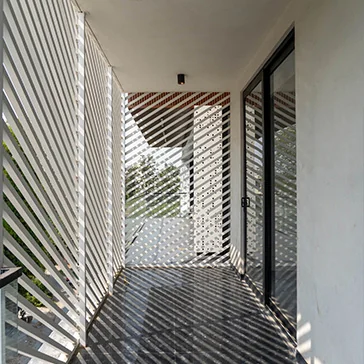
Shading does not have to be plain. The interplay of light and shadow through fins and screens changes through the day and makes the facade feel alive. We go deeper in the science of light and shadow in metal facade design.Choosing the Right Material
Aluminium is the most common material for shading elements because it is light, resists corrosion and takes many finishes. Steel suits heavy duty or long span elements and needs proper coating. Whatever you choose, ask for finish and warranty details. See our guide on facade materials compared.Green Building Benefits
Shading lowers energy use, which supports green building goals. Read how sustainability goals influence metal panel selection for more on this link.Common Mistakes
- Using the same shading on every side of the building
- Choosing looks over sun angle
- Blocking too much daylight, which raises lighting use
- Forgetting wind load on large screens
- Ignoring cleaning and upkeep access
Frequently Asked Questions
Does external shading really reduce AC bills?
Yes. Stopping sun before it reaches glass or walls cuts heat gain, which reduces cooling load. The saving depends on orientation, glass area and the shading design.Which shading is best for west facing walls?
Vertical fins, dense perforated screens or a combination, since the sun is low and hot in the afternoon.Are fixed or adjustable fins better?
Fixed fins are simpler and need almost no upkeep. Adjustable fins give more control but cost more and need servicing.Will shading block my view?
Good design keeps views by controlling blade depth, angle and spacing, or by using perforated or mesh screens.Which material is best for shading fins?
Aluminium is the most popular choice because of its light weight, corrosion resistance and finish options.Design Shading With Metaguise
Want to see fins, louvers and perforated screens in person? Visit Metaland, our experience centre in Gurugram, or send us your elevation drawings and we will suggest suitable systems.Related reads: West-Facing Building Facade Fixes; Backlit Metal Facades; Metal Mesh Facade Design.
Related Articles
Architectural Luxury, Within Reach: Why MetaFlutes and MetaLouvers Are the Smartest Investment in Metal Facades
In today’s built environment, luxury is no longer defined by extravagance - it’s defined by intention. It’s about refined details, enduring finishes, and design that performs as beautifully as it looks. At Metaguise, our metal facade systems - MetaFlutes, MetaLouvers, and MetaCassette Perforated - are crafted to bring that standard of architectural luxury within reach...
07-04-25 | Architectural Insights
Why Architects Are Turning to Custom Metal Louvers in 2025
There’s something quietly brilliant happening in architecture right now. As buildings become more responsive and designers look for ways to merge aesthetics with performance, one feature is making a serious comeback, custom metal louvers.
03-06-25 | Architectural Insights
The Science of Shadows: How Facade Design Shapes Light and Mood
Architecture has always been about more than structure - it’s about rhythm, reflection, and the way light interacts with space.At Metaguise, we see every innovative facade as a living canvas, one that transforms not just how a building looks, but how it feels. Light becomes our material, and shadow becomes our tool.This is the art and the science behind MetaLouvers, MetaCassette, and the entire Metaguise facade family.
13-10-25 | Architectural Insights
Custom Metal Facade Cladding in 2026: Design, Cost, Materials & Architect Guide
Explore how commercial spaces are using Metaguise facades to express identity and elevate perception.
24-11-25 | Architectural Insights
Social
Legal
Privacy Policy|Terms & Conditions