



Facade Manufacturers in India: 7 Signs You Are Talking to a Real Factory
06-10-26 | Architectural Insights
Search for facade manufacturers in India and you will find hundreds of websites that all say the same thing. Every one claims a modern factory, advanced machines and years of experience. Very few of them let you walk the floor.
That matters, because the word "manufacturer" is doing a lot of work. Some companies fabricate every panel themselves. Some outsource cutting and coating and only assemble. Some are traders who place an order with someone else and add a margin. All three can quote you the same panel. Only one is accountable when it goes wrong.
This guide shows you how to tell a genuine metal facade manufacturer from an intermediary, using seven signs you can check in a single visit or a single video call.
Quick Answer: How Do You Know If a Facade Company Is a Real Manufacturer?
A real facade manufacturer owns or directly controls cutting, bending, welding and coating processes, has an in-house design and engineering team, shows you the production floor, tests its work, and installs through its own trained crews. It can explain every stage from drawing to dispatch without calling someone else.
The seven signs:
- Visible machines and a real production floor
- In-house design and engineering
- Traceable materials
- Controlled coating and finishing
- Documented quality checks
- Prototyping and mock-ups
- Its own installation teams
Trader, Fabricator, Manufacturer or Contractor: What Is the Difference?
These terms get mixed up. Here is how they differ.
| Type | What they do | Who you can hold accountable |
|---|---|---|
| Trader or dealer | Buys standard panels and resells | Only for supply, not design or fit |
| Fabricator | Cuts and forms metal to drawings | For fabrication quality only |
| Manufacturer | Designs, makes and finishes its own systems | For product quality and performance |
| Facade contractor | Installs panels, often made by others | For installation only |
| Integrated facade company | Designs, engineers, fabricates and installs | For the whole result |
Many projects need more than one of these. The risk comes when responsibility is split between three parties and nobody owns the final outcome. If a joint leaks, the fabricator blames the installer, the installer blames the drawing, and the designer blames the site.
For a deeper look at the roles, read our guide to facade contractor versus facade designer.
Sign 1: You Can See Machines, Not Just Photos
Ask to visit the factory. If that is not possible, ask for a live video walk-through, not an edited reel.
What to look for:
- Cutting equipment such as laser, CNC or punching machines
- Bending and forming equipment such as press brakes
- Welding stations and finishing areas
- Panels at different stages of completion
- Workers actually working, not an empty hall
Green flag: The company is relaxed about visits and can explain what each machine does.
Red flag: Visits are "not allowed because of confidentiality" or the factory is always "under renovation".
Sign 2: Design and Engineering Sit in the Same Building
A manufacturer that only receives drawings and cuts what it is told is a fabricator. A real facade manufacturer has people who can develop the design, detail the system and solve problems before production.
Ask:
- Do you prepare shop drawings in-house?
- Can your team change a detail if site conditions differ?
- Who checks wind load, fixing strength and expansion allowances?
For parametric and custom work, engineering is not optional. Each panel may be different, so the model, the cutting files and the installation sequence all have to talk to each other. Our article on how parametric metal facades are built in India walks through that chain.
Sign 3: Materials Can Be Traced to a Source
Metal grade and thickness decide how a facade performs over 20 years. A real manufacturer knows exactly what it buys and can prove it.
Ask for:
- The alloy and temper of aluminium sheet used, for example commonly used facade grades such as 5052
- Mill test certificates or supplier certificates for batches
- Thickness tolerance checks on incoming sheet
- A written specification you can compare against the quotation
Green flag: The company shares documents and explains why a given grade suits your project.
Red flag: "Standard aluminium" and a reluctance to name grade or thickness.
If you want to compare metals before you speak to anyone, see our guide to facade materials compared: aluminium, steel, copper and corten.
Sign 4: Coating and Finishing Are Controlled
A facade's colour and long-term durability depend heavily on its coating. This is where many low-cost suppliers cut corners, because the damage does not show up for years.
Ask:
- Which coating system do you use: PVDF, powder coat, anodising or another?
- Who applies it, and how is it controlled?
- How is coating thickness measured?
- How are cut edges and fold lines protected?
- What written warranty backs the finish?
Premium finishes can carry long warranties. Metaguise coating systems, for instance, carry 15 to 30 year warranties depending on finish, using VOC-free European grade PVDF as well as anodised and powder coat options. Read more on the MetaSurface page.
Red flag: A manufacturer that cannot tell you who coats the panels or what the warranty covers.
Sign 5: There Is a Documented Quality Process
Good manufacturers do not rely on "we check everything". They have a process, and they can show you its paper trail.
Look for evidence of:
- Dimensional checks on finished panels
- Visual checks under controlled light for colour matching
- Coating thickness and adhesion checks
- Batch labelling so a panel can be traced back to its production lot
- Packing methods that protect finish during transport
Ask to see a quality check sheet from a recent job. Even a redacted copy tells you whether the process exists.
Sign 6: They Build Prototypes and Mock-Ups
Real manufacturers are comfortable building a sample before production, because they trust their process. Intermediaries often avoid it because they would have to pay a supplier for something that is not yet sold.
What a good mock-up covers:
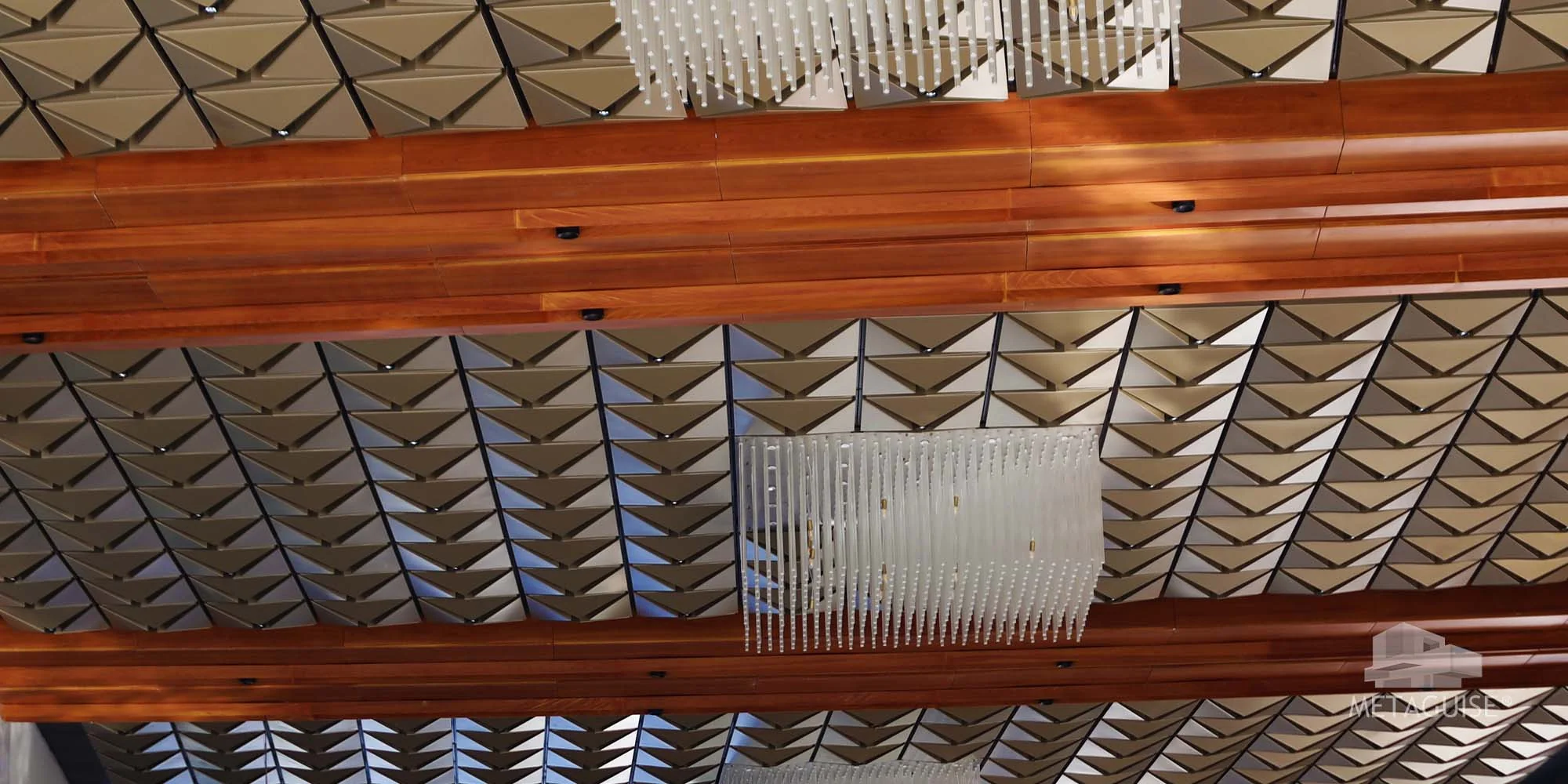
- Panel geometry and edge details
- Final colour in real daylight
- Fixing system and joint spacing
- How the panel behaves when installed on a frame
Green flag: The company proposes a mock-up before you ask.
Red flag: "The sample in the catalogue is the same thing."
Sign 7: Installation Is Handled by Their Own Trained Crews
A beautiful panel installed badly is a bad facade. Companies that outsource installation to the lowest bidder lose control of the final result.
Ask:
- Who installs, and are they your employees or sub-contractors?
- What training do they have for your specific system?
- Who supervises on site?
- How do you manage safety, access and working at height?
Green flag: the company introduces the site supervisor, shows its safety practices and explains the installation sequence.
Red flag: "The contractor will handle it." A facade company that does not take installation responsibility is telling you something about confidence in its own product.
Our article on what a good facade process looks like explains how we handle this at Metaguise.
10 Questions to Ask During a Factory Visit
Take this list with you or keep it open on a video call.
- Which of these steps happen in-house, and which are outsourced?
- Can you show a project in production right now?
- How many people work on the production floor, and how many are engineers?
- What is the alloy grade and thickness for my project, and why?
- Who applies the coating, and what does the warranty cover?
- How do you control colour consistency across thousands of panels?
- What is the lead time from design approval to delivery?
- How do you pack and transport finished panels?
- Can I see a recently completed site?
- Who is my single point of contact if something goes wrong?
What Does "Custom Facade Manufacturer" Really Mean?
Custom does not mean "we will paint it your colour". A genuine custom facade manufacturer can develop new geometry, tool or program new patterns, and engineer the system around your building.
At Metaguise, we offer 23 named facade systems, including MetaCoin, MetaHive and MetaCryst, plus fully bespoke facades engineered for individual projects. Materials include aluminium, stainless steel, brass, copper and zinc.
If you are weighing a standard system against something unique, our article on what bespoke actually means in facade design will help you decide.
How Much Do Facade Manufacturers Charge in India?
Rates depend on system, material, finish, complexity and location. For reference, Metaguise installed systems typically fall between INR 800 and INR 2,500 per sq ft, depending on the system and project.
Do not compare headline rates alone. Compare:
- Sheet thickness and alloy
- Coating system and warranty
- Whether scaffolding, sub-frame and sealants are included
- Whether installation is in-house
- What the mock-up and testing plan is
A manufacturer that quotes very low usually does so by adjusting one of these quietly. Our metal facade cost guide lists what to watch.
Finding a Facade Manufacturer Near You
"Facade manufacturer near me" searches return a mix of real factories and lead generation sites. A few practical filters help.
Check the address. A real manufacturer has a verifiable workshop location, not just a co-working address.
Check regional presence. Many serious manufacturers serve the whole country from one or two bases, supported by site teams. Metaguise is headquartered in Gurugram, with experience centres in Gurugram and Kolkata, and has delivered projects across India.
Ask for a local reference. Visiting a completed building in your city is the best proof of capability.
If you are in the Delhi NCR region, you can see samples at Metaland in Gurugram.
Why Integrated Manufacturing Matters
When one company designs, makes and installs, three things improve.
Accountability. If something goes wrong, you have one phone number.
Speed. Design changes do not need to travel through three offices.
Consistency. The person who designed the detail is the person who sees it built.
This is the model we follow at Metaguise. We are a facade company founded in 2019 with 150 or more team members, including 70+ specialists, and more than 1,800 projects delivered. You can learn more about our approach on the About page.
Frequently Asked Questions
What is the difference between a facade manufacturer and a facade contractor?
A manufacturer designs and produces the facade system. A contractor mainly installs systems, often made by others. An integrated company does both, which gives you one point of accountability.
How do I verify a facade manufacturer in India?
Visit the factory or request a live video tour, ask for material and coating documents, check completed projects in person and speak to past clients. Verify registration details and address as well.
Which materials do aluminium facade manufacturers commonly use?
Aluminium sheet in grades suited to cladding is the most common, finished with PVDF, anodising or powder coat. Stainless steel, copper, brass and zinc are used for specific looks and performance needs.
Do facade manufacturers offer custom designs?
Many do, but depth varies. Ask whether the company can develop new geometry, program cutting files, produce a mock-up and engineer the fixing system for your building.
How long does it take to manufacture a facade?
It depends on panel count, complexity and finish. Standard systems move faster than custom parametric designs. Ask for a written schedule linked to approval of the mock-up.
Can I buy panels without installation?
Some suppliers sell panels only, but for custom or high-rise work this is risky. Responsibility for fit and performance is easier to enforce when the maker also installs.
Want to See How a Real Facade Is Made?
Reading about it is one thing, standing next to a finished panel is another. Book a visit to see our samples, finishes and fabrication approach in person.
Reach us on +91 98116 04449 or through the Metaguise contact page, and browse our product range before you come.
06-10-26 | Architectural Insights
Search for facade manufacturers in India and you will find hundreds of websites that all say the same thing. Every one claims a modern factory, advanced machines and years of experience. Very few of them let you walk the floor.
That matters, because the word "manufacturer" is doing a lot of work. Some companies fabricate every panel themselves. Some outsource cutting and coating and only assemble. Some are traders who place an order with someone else and add a margin. All three can quote you the same panel. Only one is accountable when it goes wrong.
This guide shows you how to tell a genuine metal facade manufacturer from an intermediary, using seven signs you can check in a single visit or a single video call.
Quick Answer: How Do You Know If a Facade Company Is a Real Manufacturer?
A real facade manufacturer owns or directly controls cutting, bending, welding and coating processes, has an in-house design and engineering team, shows you the production floor, tests its work, and installs through its own trained crews. It can explain every stage from drawing to dispatch without calling someone else.
The seven signs:
- Visible machines and a real production floor
- In-house design and engineering
- Traceable materials
- Controlled coating and finishing
- Documented quality checks
- Prototyping and mock-ups
- Its own installation teams
Trader, Fabricator, Manufacturer or Contractor: What Is the Difference?
These terms get mixed up. Here is how they differ.
| Type | What they do | Who you can hold accountable |
|---|---|---|
| Trader or dealer | Buys standard panels and resells | Only for supply, not design or fit |
| Fabricator | Cuts and forms metal to drawings | For fabrication quality only |
| Manufacturer | Designs, makes and finishes its own systems | For product quality and performance |
| Facade contractor | Installs panels, often made by others | For installation only |
| Integrated facade company | Designs, engineers, fabricates and installs | For the whole result |
Many projects need more than one of these. The risk comes when responsibility is split between three parties and nobody owns the final outcome. If a joint leaks, the fabricator blames the installer, the installer blames the drawing, and the designer blames the site.
For a deeper look at the roles, read our guide to facade contractor versus facade designer.
Sign 1: You Can See Machines, Not Just Photos
Ask to visit the factory. If that is not possible, ask for a live video walk-through, not an edited reel.
What to look for:
- Cutting equipment such as laser, CNC or punching machines
- Bending and forming equipment such as press brakes
- Welding stations and finishing areas
- Panels at different stages of completion
- Workers actually working, not an empty hall
Green flag: The company is relaxed about visits and can explain what each machine does.
Red flag: Visits are "not allowed because of confidentiality" or the factory is always "under renovation".
Sign 2: Design and Engineering Sit in the Same Building
A manufacturer that only receives drawings and cuts what it is told is a fabricator. A real facade manufacturer has people who can develop the design, detail the system and solve problems before production.
Ask:
- Do you prepare shop drawings in-house?
- Can your team change a detail if site conditions differ?
- Who checks wind load, fixing strength and expansion allowances?
For parametric and custom work, engineering is not optional. Each panel may be different, so the model, the cutting files and the installation sequence all have to talk to each other. Our article on how parametric metal facades are built in India walks through that chain.
Sign 3: Materials Can Be Traced to a Source
Metal grade and thickness decide how a facade performs over 20 years. A real manufacturer knows exactly what it buys and can prove it.
Ask for:
- The alloy and temper of aluminium sheet used, for example commonly used facade grades such as 5052
- Mill test certificates or supplier certificates for batches
- Thickness tolerance checks on incoming sheet
- A written specification you can compare against the quotation
Green flag: The company shares documents and explains why a given grade suits your project.
Red flag: "Standard aluminium" and a reluctance to name grade or thickness.
If you want to compare metals before you speak to anyone, see our guide to facade materials compared: aluminium, steel, copper and corten.
Sign 4: Coating and Finishing Are Controlled
A facade's colour and long-term durability depend heavily on its coating. This is where many low-cost suppliers cut corners, because the damage does not show up for years.
Ask:
- Which coating system do you use: PVDF, powder coat, anodising or another?
- Who applies it, and how is it controlled?
- How is coating thickness measured?
- How are cut edges and fold lines protected?
- What written warranty backs the finish?
Premium finishes can carry long warranties. Metaguise coating systems, for instance, carry 15 to 30 year warranties depending on finish, using VOC-free European grade PVDF as well as anodised and powder coat options. Read more on the MetaSurface page.
Red flag: A manufacturer that cannot tell you who coats the panels or what the warranty covers.
Sign 5: There Is a Documented Quality Process
Good manufacturers do not rely on "we check everything". They have a process, and they can show you its paper trail.
Look for evidence of:
- Dimensional checks on finished panels
- Visual checks under controlled light for colour matching
- Coating thickness and adhesion checks
- Batch labelling so a panel can be traced back to its production lot
- Packing methods that protect finish during transport
Ask to see a quality check sheet from a recent job. Even a redacted copy tells you whether the process exists.
Sign 6: They Build Prototypes and Mock-Ups
Real manufacturers are comfortable building a sample before production, because they trust their process. Intermediaries often avoid it because they would have to pay a supplier for something that is not yet sold.
What a good mock-up covers:
- Panel geometry and edge details
- Final colour in real daylight
- Fixing system and joint spacing
- How the panel behaves when installed on a frame
Green flag: The company proposes a mock-up before you ask.
Red flag: "The sample in the catalogue is the same thing."
Sign 7: Installation Is Handled by Their Own Trained Crews
A beautiful panel installed badly is a bad facade. Companies that outsource installation to the lowest bidder lose control of the final result.
Ask:
- Who installs, and are they your employees or sub-contractors?
- What training do they have for your specific system?
- Who supervises on site?
- How do you manage safety, access and working at height?
Green flag: the company introduces the site supervisor, shows its safety practices and explains the installation sequence.
Red flag: "The contractor will handle it." A facade company that does not take installation responsibility is telling you something about confidence in its own product.
Our article on what a good facade process looks like explains how we handle this at Metaguise.
10 Questions to Ask During a Factory Visit
Take this list with you or keep it open on a video call.
- Which of these steps happen in-house, and which are outsourced?
- Can you show a project in production right now?
- How many people work on the production floor, and how many are engineers?
- What is the alloy grade and thickness for my project, and why?
- Who applies the coating, and what does the warranty cover?
- How do you control colour consistency across thousands of panels?
- What is the lead time from design approval to delivery?
- How do you pack and transport finished panels?
- Can I see a recently completed site?
- Who is my single point of contact if something goes wrong?
What Does "Custom Facade Manufacturer" Really Mean?
Custom does not mean "we will paint it your colour". A genuine custom facade manufacturer can develop new geometry, tool or program new patterns, and engineer the system around your building.
At Metaguise, we offer 23 named facade systems, including MetaCoin, MetaHive and MetaCryst, plus fully bespoke facades engineered for individual projects. Materials include aluminium, stainless steel, brass, copper and zinc.
If you are weighing a standard system against something unique, our article on what bespoke actually means in facade design will help you decide.
How Much Do Facade Manufacturers Charge in India?
Rates depend on system, material, finish, complexity and location. For reference, Metaguise installed systems typically fall between INR 800 and INR 2,500 per sq ft, depending on the system and project.
Do not compare headline rates alone. Compare:
- Sheet thickness and alloy
- Coating system and warranty
- Whether scaffolding, sub-frame and sealants are included
- Whether installation is in-house
- What the mock-up and testing plan is
A manufacturer that quotes very low usually does so by adjusting one of these quietly. Our metal facade cost guide lists what to watch.
Finding a Facade Manufacturer Near You
"Facade manufacturer near me" searches return a mix of real factories and lead generation sites. A few practical filters help.
Check the address. A real manufacturer has a verifiable workshop location, not just a co-working address.
Check regional presence. Many serious manufacturers serve the whole country from one or two bases, supported by site teams. Metaguise is headquartered in Gurugram, with experience centres in Gurugram and Kolkata, and has delivered projects across India.
Ask for a local reference. Visiting a completed building in your city is the best proof of capability.
If you are in the Delhi NCR region, you can see samples at Metaland in Gurugram.
Why Integrated Manufacturing Matters
When one company designs, makes and installs, three things improve.
Accountability. If something goes wrong, you have one phone number.
Speed. Design changes do not need to travel through three offices.
Consistency. The person who designed the detail is the person who sees it built.
This is the model we follow at Metaguise. We are a facade company founded in 2019 with 150 or more team members, including 70+ specialists, and more than 1,800 projects delivered. You can learn more about our approach on the About page.
Frequently Asked Questions
What is the difference between a facade manufacturer and a facade contractor?
A manufacturer designs and produces the facade system. A contractor mainly installs systems, often made by others. An integrated company does both, which gives you one point of accountability.
How do I verify a facade manufacturer in India?
Visit the factory or request a live video tour, ask for material and coating documents, check completed projects in person and speak to past clients. Verify registration details and address as well.
Which materials do aluminium facade manufacturers commonly use?
Aluminium sheet in grades suited to cladding is the most common, finished with PVDF, anodising or powder coat. Stainless steel, copper, brass and zinc are used for specific looks and performance needs.
Do facade manufacturers offer custom designs?
Many do, but depth varies. Ask whether the company can develop new geometry, program cutting files, produce a mock-up and engineer the fixing system for your building.
How long does it take to manufacture a facade?
It depends on panel count, complexity and finish. Standard systems move faster than custom parametric designs. Ask for a written schedule linked to approval of the mock-up.
Can I buy panels without installation?
Some suppliers sell panels only, but for custom or high-rise work this is risky. Responsibility for fit and performance is easier to enforce when the maker also installs.
Want to See How a Real Facade Is Made?
Reading about it is one thing, standing next to a finished panel is another. Book a visit to see our samples, finishes and fabrication approach in person.
Reach us on +91 98116 04449 or through the Metaguise contact page, and browse our product range before you come.
Related Articles
Architectural Luxury, Within Reach: Why MetaFlutes and MetaLouvers Are the Smartest Investment in Metal Facades
In today’s built environment, luxury is no longer defined by extravagance - it’s defined by intention. It’s about refined details, enduring finishes, and design that performs as beautifully as it looks. At Metaguise, our metal facade systems - MetaFlutes, MetaLouvers, and MetaCassette Perforated - are crafted to bring that standard of architectural luxury within reach...
07-04-25 | Architectural Insights
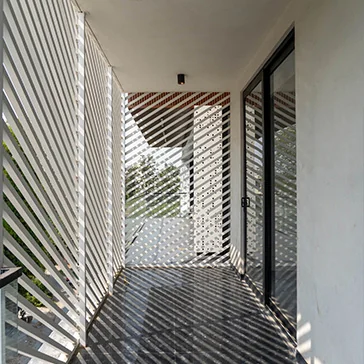
Why Architects Are Turning to Custom Metal Louvers in 2025
There’s something quietly brilliant happening in architecture right now. As buildings become more responsive and designers look for ways to merge aesthetics with performance, one feature is making a serious comeback, custom metal louvers.
03-06-25 | Architectural Insights
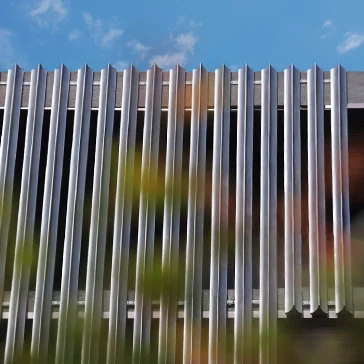
The Science of Shadows: How Facade Design Shapes Light and Mood
Architecture has always been about more than structure - it’s about rhythm, reflection, and the way light interacts with space.At Metaguise, we see every innovative facade as a living canvas, one that transforms not just how a building looks, but how it feels. Light becomes our material, and shadow becomes our tool.This is the art and the science behind MetaLouvers, MetaCassette, and the entire Metaguise facade family.
13-10-25 | Architectural Insights
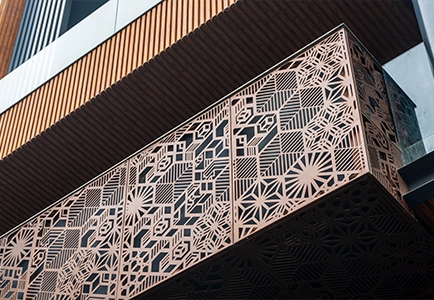
Custom Metal Facade Cladding in 2026: Design, Cost, Materials & Architect Guide
Explore how commercial spaces are using Metaguise facades to express identity and elevate perception.
24-11-25 | Architectural Insights
Social
Legal
Privacy Policy|Terms & Conditions