






Why Top Developers Are Rethinking Metal Facades And You Should Too
22-04-26 | Industry Trends
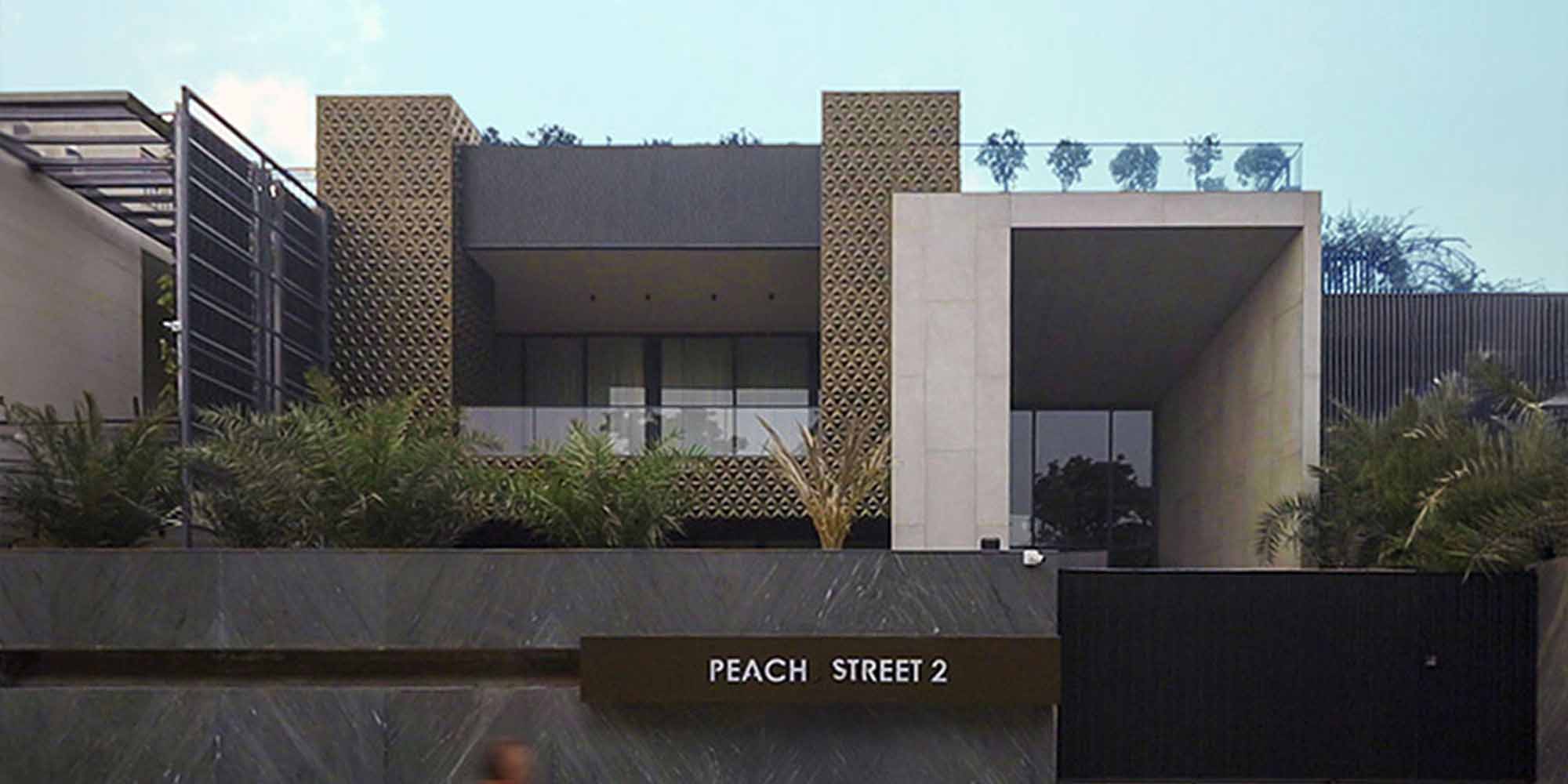
The Line Between Building and Monument
Stand outside the Tanishq flagship in any Indian metro, and you'll witness something most real estate developers spend their careers chasing: pedestrians stopping mid-stride, phones rising, strangers photographing a building they'll never enter. The facade doesn't just announce the brand - it is the brand, rendered in metal and mathematics. This is the difference between construction and contribution to the skyline. For high-end developers operating in India's increasingly sophisticated luxury real estate market, the facade selection represents one of the most consequential decisions in the entire development timeline. Get it right, and you create a landmark that appreciates in cultural value alongside financial returns. Get it wrong, and you've wrapped a premium product in packaging that undermines everything your interiors, location, and amenities promise. Yet most developers approach facade specification the way they might select elevator systems - as a technical procurement exercise handled late in the design development phase, after the architectural concept is essentially frozen. This sequence is precisely backward for projects aiming to compete at the true luxury tier. "In luxury real estate, differentiation is no longer about square footage or marble grades - it's about creating irreplicable experiences that embed themselves in buyers' identity narratives." - McKinsey & Company, The New Luxury Playbook: India's Next Frontier The building envelope is where that narrative becomes visible, where architectural ambition either materializes or dissolves into contractor-grade compromise. And increasingly, the envelope that delivers on that promise is algorithmic, three-dimensional, and fabricated in metal.
What the Market Shift Looks Like on the Ground
Five years ago, parametric facades in India were effectively the domain of government-funded stadiums and corporate vanity projects - budgets where cost-per-square-meter conversations happened in a different atmosphere than residential or commercial real estate. Today, we're seeing parametric metal facade systems specced into luxury residences in South Delhi, commercial landmarks in Ahmedabad, mixed-use towers in Gurgaon and Pune, university campuses in tier-two cities. The shift isn't about architecture becoming more experimental - it's about buyers becoming more literate. The same client commissioning a ₹10-crore bungalow has likely traveled through Singapore, Dubai, Copenhagen. They've seen what contemporary architecture looks like when it's executed without compromise. They expect that vocabulary at home. For developers, this creates both opportunity and exposure. The opportunity: differentiation in a market where luxury residential projects increasingly blur together in marketing collateral, distinguished only by developer brand name and location coordinates. The exposure: sophisticated buyers can now spot the difference between genuine design innovation and cost-engineered approximation from across the street. The Three Performance Dimensions That Matter When we strip away the architectural photography and marketing language, metal facade system selection comes down to performance across three non-negotiable dimensions: Design capability: Can the system deliver the architectural expression your project requires, or will you be modifying your design to fit the system's limitations? Environmental resilience: Will the facade maintain its aesthetic and structural integrity across Indian climate extremes - 45°C summer heat, monsoon deluges, coastal salt exposure - without costly intervention? Execution fidelity: How closely will the installed facade match the design intent, and what organizational structure ensures that translation? Most procurement conversations obsess over the first dimension while treating the latter two as assumed. This is where luxury projects hemorrhage value.
The Parametric Advantage: Why Algorithms Matter in Architecture
The term "parametric" gets thrown around in architecture the way "artisanal" does in food - often signaling aspiration rather than describing method. But in facade systems, parametric design represents a fundamental capability difference, not a stylistic choice. Traditional facade systems are catalogs: you select from predetermined panel sizes, patterns, and assembly configurations. Customization means choosing between Option A and Option B. Parametric systems like MetaSequin, MetaFin, or MetaCoin operate differently - they're algorithms that generate unique solutions based on your specific design inputs. This matters most when your architecture demands non-repetitive pattern gradients, curved surfaces, or three-dimensional depth variation - the very moves that make a facade photographable. With catalog systems, these ambitions get value-engineered away during the "design development" phase (which really means design reduction). With parametric capability, they become the starting point. What Early Engagement Actually Means The most successful luxury facade projects share a common timeline characteristic: the facade specialist enters the conversation at concept stage, not at tender stage. This isn't about locking in a vendor early - it's about unlocking design possibilities that only emerge through collaborative exploration between architect and fabricator. Picture the difference: An architect presents a finished facade design to three metal cladding contractors, asking for competitive bids to execute the documented vision. Versus: An architect sketches an elevation concept, then sits with a parametric facade partner to explore what's possible - what if the panel density varied to create light gradients? What if the system could curve in two directions? What if each floor expressed differently while maintaining visual coherence? The first scenario produces competitive pricing on a compromised design. The second produces architectural possibilities.
The Integration Question: Why Fragmentation Kills Fidelity
Here's the uncomfortable truth about how most facade projects execute in India: the entity that designs the system rarely fabricates it, the fabricator rarely installs it, and nobody takes end-to-end responsibility for whether the built result matches the architectural intent. This fragmentation model works adequately for straightforward curtain wall systems where panels are genuinely interchangeable and repetitive. It fails spectacularly for complex facades where every panel may be unique, where tolerances matter in millimeters, where the relationship between adjacent elements creates the visual effect. Developers accustomed to construction management models where you orchestrate multiple specialist contractors often assume facade execution works the same way. It doesn't - or rather, it shouldn't, not at the luxury tier. The computational logic that generates a parametric facade design must flow unbroken into the fabrication process, which must inform the installation sequence. Break that chain anywhere, and you're playing telephone with your architectural vision. What In-House Integration Delivers When design scripting, engineering, fabrication, and installation all happen under one organizational roof, you're not just streamlining logistics - you're preserving design intelligence through the execution chain. The parametric script that defines panel variations informs the CNC cutting program directly. The fabrication team understands the design intent because they've been part of design development. The installation crew isn't decoding someone else's shop drawings - they're executing a system they helped engineer. This integration model is why projects like the Miraj Stadium facade - thousands of gold-toned metal coins choreographed into sporting iconography - can be executed at all. Attempt that through a fragmented procurement model, and you'd spend your entire contingency budget on coordination meetings and RFIs.
The Climate Reality: Why Indian Conditions Demand Different Engineering
International facade systems are engineered for the climates where their manufacturers are headquartered - central European temperature ranges, Mediterranean coastal conditions, North American freeze-thaw cycles. India's building envelopes face a different assault: sustained 45°C heat that expands metal beyond many systems' thermal movement tolerances, monsoon-driven water intrusion that finds every gasket weakness, coastal humidity that corrodes inadequately-treated surfaces, and UV exposure that degrades inferior coatings within seasons. This isn't theoretical. Drive through any Indian metro and you'll see evidence on building facades less than five years old: fastener staining from corrosion bleed, panel warping from thermal stress, coating failure creating blotchy degradation. These aren't installation errors - they're specification failures, systems designed for conditions they're not experiencing. For a luxury developer, facade degradation represents brand damage that compounds annually. Your building becomes the case study for why not to use that system, that finish, that approach. And remediation at height is exponentially more expensive than speccing correctly from the start. What Climate Engineering Looks Like Proper climate engineering for Indian metal facades addresses multiple performance vectors simultaneously: Thermal movement accommodation: Panel and fastening systems designed for the actual expansion/contraction ranges they'll experience, not European datasheet assumptions Monsoon water management: Drainage pathways and gasket systems proven against horizontal rain driven by 60+ km/h winds, not just vertical precipitation Coastal corrosion resistance: Metal treatment and coating systems tested in salt-spray environments, particularly critical for projects within 50km of coastline UV stability: Surface finishes that maintain color and gloss under subcontinental solar exposure, verified through accelerated weathering protocols Thermal performance: For inhabited buildings, insulation integration that addresses both heat gain and potential condensation issues Critically, these performance requirements must coexist with aesthetic sophistication - climate engineering that delivers building-science performance while compromising the visual effect is just expensive failure shifted into a different category.
The Portfolio Evidence: Why Project Diversity Signals Capability
When evaluating facade partners, developers often focus on finding specialists with deep experience in their specific building typology - residential developers seeking residential portfolio examples, retail developers wanting flagship store credentials. This logic is backward for complex facade systems. What truly signals organizational capability is diversity of successfully executed typologies. A facade specialist who's delivered stadiums, luxury retail flagships, university campuses, and high-end residences has proven they can adapt their systems and approach to radically different performance requirements, aesthetic languages, and stakeholder expectations. That adaptability - that organizational muscle memory for translating different architectural visions into metal and mathematics - is exactly what your unique project needs. Consider what different typologies prove: Stadium facades demonstrate capability with large-scale uninterrupted surfaces and structural integration. Flagship retail proves brand translation into architectural expression and urban visibility. Residential validates detail-scale finish quality and occupant-focused environmental performance. Institutional work shows navigation of complex approval processes and long lifecycle durability requirements. A facade partner who's succeeded across these domains brings cross-pollinated solutions to your project - retail-level finish quality applied to residential scale, stadium-proven structural logic adapted for mid-rise applications, institutional durability thinking protecting luxury aesthetics.
The Metaguise Approach: Where Capability Meets Craft
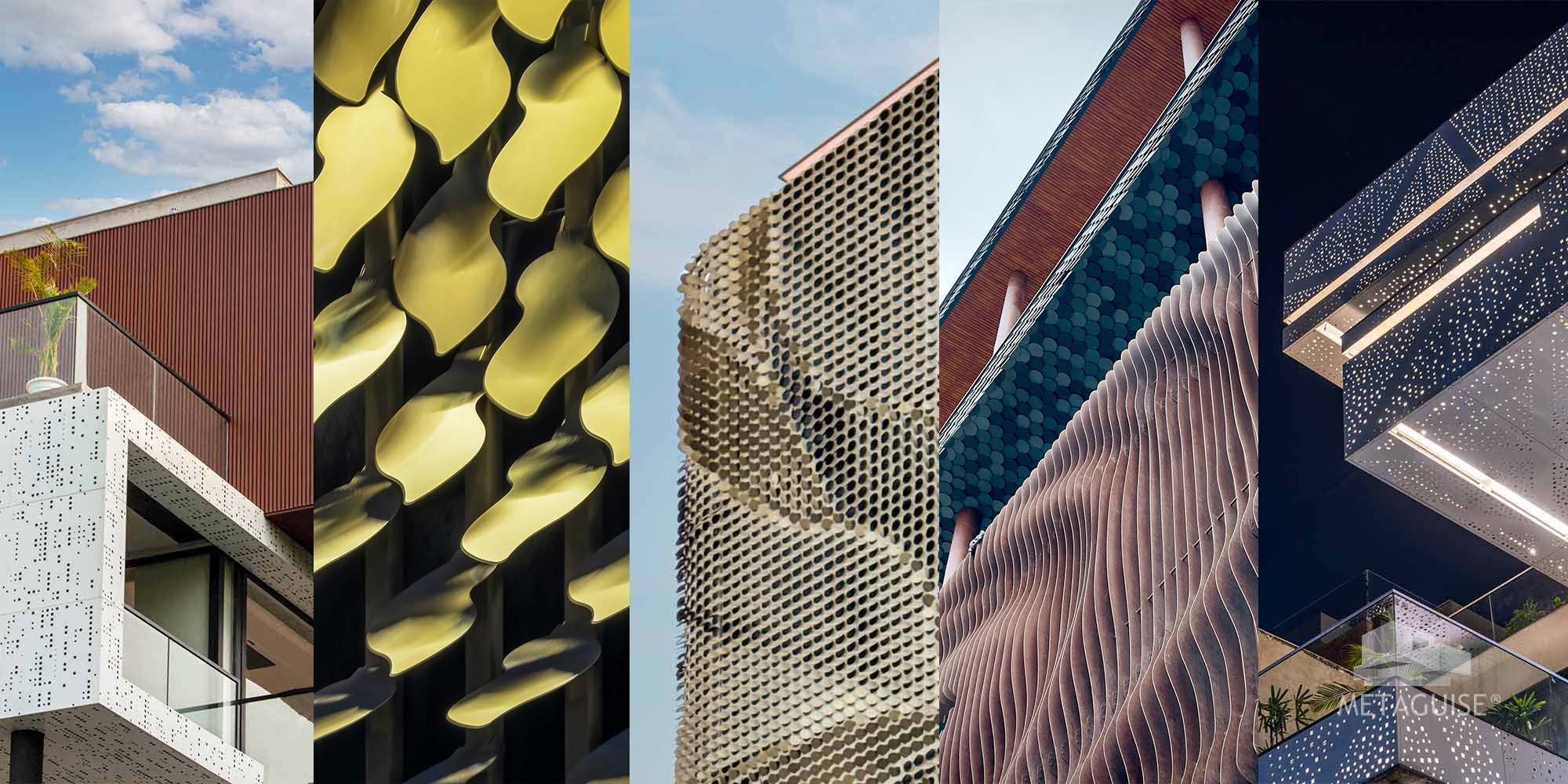
At Metaguise, we've spent over a decade becoming the answer to the question luxury developers shouldn't have to ask: "Who can actually build what my architect has designed?" With 1800+ projects across every building typology - from the gold-coin facade of Miraj Stadium encoding sporting heritage into metal, to Tanishq flagships where jewelry-brand precision translates into architectural expression, to private residences where a ₹10-crore investment demands nothing less than skyline signature - we've built not just facades but the organizational capabilities that make ambitious facades possible in Indian conditions. Our parametric facade systems - MetaSequin, MetaFin, MetaCoin, MetaBlox, MetaHydra, MetaHive - aren't catalog selections but algorithmic frameworks that say "yes" to the unbuildable. When your architect sketches curves that seem to defy fabrication logic, our computational design team translates those gestures into panel geometries, structural support logic, and installation sequencing before anyone discusses budget. This is the design-stage partnership that turns "can we?" into "here's how." What sets us apart isn't any single technical capability - it's the integration of them all under one organizational roof. The same team that scripts your parametric facade logic engineers the structural interface, programs the CNC fabrication, applies our proprietary MetaSurface finishes, and installs the system on your building. There are no handoffs where design intent gets lost in translation, no finger-pointing when installed reality doesn't match renderings. End-to-end responsibility means end-to-end fidelity. And because we engineer specifically for Indian climate realities - systems proven across Rajasthan heat, Mumbai monsoons, Chennai coastal exposure - your facade won't just launch beautifully; it will endure beautifully, aging with the grace that separates investment from expense. The Systems That Shape Skylines Our signature systems represent different aesthetic languages, each offering the customization depth that luxury projects demand: MetaSequin: Overlapping panel systems creating shimmer and depth variation, ideal for facades that need to shift expression with viewing angle and light conditions MetaFin: Vertical blade systems offering solar shading performance alongside linear rhythm, perfect for balancing environmental control with visual drama MetaCoin: Circular element compositions enabling pattern storytelling, as demonstrated at Miraj Stadium's sporting iconography facade MetaBlox: Three-dimensional volumetric systems creating pronounced shadow play and textural depth across the elevation MetaHive: A 3D interconnected facade system, nspired by natural geometries, bringing rhythmic repetition, structural harmony, and a sense of organic order to large-scale elevations. MetaHydra: A fluid, copper-crafted parametric system that captures movement and transformation, creating living facades that evolve visually with light and time. These aren't competing products you choose between - they're architectural vocabularies we help you compose into your specific design language, often combining multiple systems across a single elevation to create zoned expression or gradient transitions.
Making the Decision That Outlasts the Development Cycle
Here’s what we’ve learned across nearly two decades and 1800+ facades: the developers who create buildings people remember decades later, the ones that appreciate beyond inflation and location fundamentals, are the ones who treat the facade not as a finish, but as a long-term asset. They understand that architecture is experienced before it is occupied. That the skin of a building is what anchors its identity in the minds of people who pass it every day. And more importantly, they recognise that materials, systems, and detailing decisions made today will either age with dignity, or demand replacement tomorrow. At Metaguise, this belief shapes everything we do. Whether it’s the dimensional precision of parametric systems or the enduring strength of engineered cladding solutions developed by us, each system is designed not just for visual impact on day one, but for performance across decades. Because the real return on a facade isn’t measured at handover. It’s measured in how the building is perceived five, ten, twenty years later - when it still looks intentional, still performs effortlessly, and still holds its place in the skyline with quiet confidence. The decision, then, isn’t just about what looks right today. It’s about what continues to feel right long after the development cycle ends.
Why Top Developers Are Rethinking Metal Facades And You Should Too
22-04-26 | Industry Trends
The Line Between Building and Monument
Stand outside the Tanishq flagship in any Indian metro, and you'll witness something most real estate developers spend their careers chasing: pedestrians stopping mid-stride, phones rising, strangers photographing a building they'll never enter. The facade doesn't just announce the brand - it is the brand, rendered in metal and mathematics. This is the difference between construction and contribution to the skyline. For high-end developers operating in India's increasingly sophisticated luxury real estate market, the facade selection represents one of the most consequential decisions in the entire development timeline. Get it right, and you create a landmark that appreciates in cultural value alongside financial returns. Get it wrong, and you've wrapped a premium product in packaging that undermines everything your interiors, location, and amenities promise. Yet most developers approach facade specification the way they might select elevator systems - as a technical procurement exercise handled late in the design development phase, after the architectural concept is essentially frozen. This sequence is precisely backward for projects aiming to compete at the true luxury tier. "In luxury real estate, differentiation is no longer about square footage or marble grades - it's about creating irreplicable experiences that embed themselves in buyers' identity narratives." - McKinsey & Company, The New Luxury Playbook: India's Next Frontier The building envelope is where that narrative becomes visible, where architectural ambition either materializes or dissolves into contractor-grade compromise. And increasingly, the envelope that delivers on that promise is algorithmic, three-dimensional, and fabricated in metal.
What the Market Shift Looks Like on the Ground
Five years ago, parametric facades in India were effectively the domain of government-funded stadiums and corporate vanity projects - budgets where cost-per-square-meter conversations happened in a different atmosphere than residential or commercial real estate. Today, we're seeing parametric metal facade systems specced into luxury residences in South Delhi, commercial landmarks in Ahmedabad, mixed-use towers in Gurgaon and Pune, university campuses in tier-two cities. The shift isn't about architecture becoming more experimental - it's about buyers becoming more literate. The same client commissioning a ₹10-crore bungalow has likely traveled through Singapore, Dubai, Copenhagen. They've seen what contemporary architecture looks like when it's executed without compromise. They expect that vocabulary at home. For developers, this creates both opportunity and exposure. The opportunity: differentiation in a market where luxury residential projects increasingly blur together in marketing collateral, distinguished only by developer brand name and location coordinates. The exposure: sophisticated buyers can now spot the difference between genuine design innovation and cost-engineered approximation from across the street. The Three Performance Dimensions That Matter When we strip away the architectural photography and marketing language, metal facade system selection comes down to performance across three non-negotiable dimensions: Design capability: Can the system deliver the architectural expression your project requires, or will you be modifying your design to fit the system's limitations? Environmental resilience: Will the facade maintain its aesthetic and structural integrity across Indian climate extremes - 45°C summer heat, monsoon deluges, coastal salt exposure - without costly intervention? Execution fidelity: How closely will the installed facade match the design intent, and what organizational structure ensures that translation? Most procurement conversations obsess over the first dimension while treating the latter two as assumed. This is where luxury projects hemorrhage value.
The Parametric Advantage: Why Algorithms Matter in Architecture
The term "parametric" gets thrown around in architecture the way "artisanal" does in food - often signaling aspiration rather than describing method. But in facade systems, parametric design represents a fundamental capability difference, not a stylistic choice. Traditional facade systems are catalogs: you select from predetermined panel sizes, patterns, and assembly configurations. Customization means choosing between Option A and Option B. Parametric systems like MetaSequin, MetaFin, or MetaCoin operate differently - they're algorithms that generate unique solutions based on your specific design inputs. This matters most when your architecture demands non-repetitive pattern gradients, curved surfaces, or three-dimensional depth variation - the very moves that make a facade photographable. With catalog systems, these ambitions get value-engineered away during the "design development" phase (which really means design reduction). With parametric capability, they become the starting point. What Early Engagement Actually Means The most successful luxury facade projects share a common timeline characteristic: the facade specialist enters the conversation at concept stage, not at tender stage. This isn't about locking in a vendor early - it's about unlocking design possibilities that only emerge through collaborative exploration between architect and fabricator. Picture the difference: An architect presents a finished facade design to three metal cladding contractors, asking for competitive bids to execute the documented vision. Versus: An architect sketches an elevation concept, then sits with a parametric facade partner to explore what's possible - what if the panel density varied to create light gradients? What if the system could curve in two directions? What if each floor expressed differently while maintaining visual coherence? The first scenario produces competitive pricing on a compromised design. The second produces architectural possibilities.
The Integration Question: Why Fragmentation Kills Fidelity
Here's the uncomfortable truth about how most facade projects execute in India: the entity that designs the system rarely fabricates it, the fabricator rarely installs it, and nobody takes end-to-end responsibility for whether the built result matches the architectural intent. This fragmentation model works adequately for straightforward curtain wall systems where panels are genuinely interchangeable and repetitive. It fails spectacularly for complex facades where every panel may be unique, where tolerances matter in millimeters, where the relationship between adjacent elements creates the visual effect. Developers accustomed to construction management models where you orchestrate multiple specialist contractors often assume facade execution works the same way. It doesn't - or rather, it shouldn't, not at the luxury tier. The computational logic that generates a parametric facade design must flow unbroken into the fabrication process, which must inform the installation sequence. Break that chain anywhere, and you're playing telephone with your architectural vision. What In-House Integration Delivers When design scripting, engineering, fabrication, and installation all happen under one organizational roof, you're not just streamlining logistics - you're preserving design intelligence through the execution chain. The parametric script that defines panel variations informs the CNC cutting program directly. The fabrication team understands the design intent because they've been part of design development. The installation crew isn't decoding someone else's shop drawings - they're executing a system they helped engineer. This integration model is why projects like the Miraj Stadium facade - thousands of gold-toned metal coins choreographed into sporting iconography - can be executed at all. Attempt that through a fragmented procurement model, and you'd spend your entire contingency budget on coordination meetings and RFIs.
The Climate Reality: Why Indian Conditions Demand Different Engineering
International facade systems are engineered for the climates where their manufacturers are headquartered - central European temperature ranges, Mediterranean coastal conditions, North American freeze-thaw cycles. India's building envelopes face a different assault: sustained 45°C heat that expands metal beyond many systems' thermal movement tolerances, monsoon-driven water intrusion that finds every gasket weakness, coastal humidity that corrodes inadequately-treated surfaces, and UV exposure that degrades inferior coatings within seasons. This isn't theoretical. Drive through any Indian metro and you'll see evidence on building facades less than five years old: fastener staining from corrosion bleed, panel warping from thermal stress, coating failure creating blotchy degradation. These aren't installation errors - they're specification failures, systems designed for conditions they're not experiencing. For a luxury developer, facade degradation represents brand damage that compounds annually. Your building becomes the case study for why not to use that system, that finish, that approach. And remediation at height is exponentially more expensive than speccing correctly from the start. What Climate Engineering Looks Like Proper climate engineering for Indian metal facades addresses multiple performance vectors simultaneously: Thermal movement accommodation: Panel and fastening systems designed for the actual expansion/contraction ranges they'll experience, not European datasheet assumptions Monsoon water management: Drainage pathways and gasket systems proven against horizontal rain driven by 60+ km/h winds, not just vertical precipitation Coastal corrosion resistance: Metal treatment and coating systems tested in salt-spray environments, particularly critical for projects within 50km of coastline UV stability: Surface finishes that maintain color and gloss under subcontinental solar exposure, verified through accelerated weathering protocols Thermal performance: For inhabited buildings, insulation integration that addresses both heat gain and potential condensation issues Critically, these performance requirements must coexist with aesthetic sophistication - climate engineering that delivers building-science performance while compromising the visual effect is just expensive failure shifted into a different category.
The Portfolio Evidence: Why Project Diversity Signals Capability
When evaluating facade partners, developers often focus on finding specialists with deep experience in their specific building typology - residential developers seeking residential portfolio examples, retail developers wanting flagship store credentials. This logic is backward for complex facade systems. What truly signals organizational capability is diversity of successfully executed typologies. A facade specialist who's delivered stadiums, luxury retail flagships, university campuses, and high-end residences has proven they can adapt their systems and approach to radically different performance requirements, aesthetic languages, and stakeholder expectations. That adaptability - that organizational muscle memory for translating different architectural visions into metal and mathematics - is exactly what your unique project needs. Consider what different typologies prove: Stadium facades demonstrate capability with large-scale uninterrupted surfaces and structural integration. Flagship retail proves brand translation into architectural expression and urban visibility. Residential validates detail-scale finish quality and occupant-focused environmental performance. Institutional work shows navigation of complex approval processes and long lifecycle durability requirements. A facade partner who's succeeded across these domains brings cross-pollinated solutions to your project - retail-level finish quality applied to residential scale, stadium-proven structural logic adapted for mid-rise applications, institutional durability thinking protecting luxury aesthetics.
The Metaguise Approach: Where Capability Meets Craft
At Metaguise, we've spent over a decade becoming the answer to the question luxury developers shouldn't have to ask: "Who can actually build what my architect has designed?" With 1800+ projects across every building typology - from the gold-coin facade of Miraj Stadium encoding sporting heritage into metal, to Tanishq flagships where jewelry-brand precision translates into architectural expression, to private residences where a ₹10-crore investment demands nothing less than skyline signature - we've built not just facades but the organizational capabilities that make ambitious facades possible in Indian conditions. Our parametric facade systems - MetaSequin, MetaFin, MetaCoin, MetaBlox, MetaHydra, MetaHive - aren't catalog selections but algorithmic frameworks that say "yes" to the unbuildable. When your architect sketches curves that seem to defy fabrication logic, our computational design team translates those gestures into panel geometries, structural support logic, and installation sequencing before anyone discusses budget. This is the design-stage partnership that turns "can we?" into "here's how." What sets us apart isn't any single technical capability - it's the integration of them all under one organizational roof. The same team that scripts your parametric facade logic engineers the structural interface, programs the CNC fabrication, applies our proprietary MetaSurface finishes, and installs the system on your building. There are no handoffs where design intent gets lost in translation, no finger-pointing when installed reality doesn't match renderings. End-to-end responsibility means end-to-end fidelity. And because we engineer specifically for Indian climate realities - systems proven across Rajasthan heat, Mumbai monsoons, Chennai coastal exposure - your facade won't just launch beautifully; it will endure beautifully, aging with the grace that separates investment from expense. The Systems That Shape Skylines Our signature systems represent different aesthetic languages, each offering the customization depth that luxury projects demand: MetaSequin: Overlapping panel systems creating shimmer and depth variation, ideal for facades that need to shift expression with viewing angle and light conditions MetaFin: Vertical blade systems offering solar shading performance alongside linear rhythm, perfect for balancing environmental control with visual drama MetaCoin: Circular element compositions enabling pattern storytelling, as demonstrated at Miraj Stadium's sporting iconography facade MetaBlox: Three-dimensional volumetric systems creating pronounced shadow play and textural depth across the elevation MetaHive: A 3D interconnected facade system, nspired by natural geometries, bringing rhythmic repetition, structural harmony, and a sense of organic order to large-scale elevations. MetaHydra: A fluid, copper-crafted parametric system that captures movement and transformation, creating living facades that evolve visually with light and time. These aren't competing products you choose between - they're architectural vocabularies we help you compose into your specific design language, often combining multiple systems across a single elevation to create zoned expression or gradient transitions.
Making the Decision That Outlasts the Development Cycle
Here’s what we’ve learned across nearly two decades and 1800+ facades: the developers who create buildings people remember decades later, the ones that appreciate beyond inflation and location fundamentals, are the ones who treat the facade not as a finish, but as a long-term asset. They understand that architecture is experienced before it is occupied. That the skin of a building is what anchors its identity in the minds of people who pass it every day. And more importantly, they recognise that materials, systems, and detailing decisions made today will either age with dignity, or demand replacement tomorrow. At Metaguise, this belief shapes everything we do. Whether it’s the dimensional precision of parametric systems or the enduring strength of engineered cladding solutions developed by us, each system is designed not just for visual impact on day one, but for performance across decades. Because the real return on a facade isn’t measured at handover. It’s measured in how the building is perceived five, ten, twenty years later - when it still looks intentional, still performs effortlessly, and still holds its place in the skyline with quiet confidence. The decision, then, isn’t just about what looks right today. It’s about what continues to feel right long after the development cycle ends.
Related Articles
Related Articles
Why Aluminium Cladding Is the Future of Facade Design in Indian Architecture
India’s architecture is evolving - faster, smarter, and more performance-driven than ever before. As cities grow and climates shift, the facade is no longer just an exterior skin. It’s a functional envelope that must adapt, protect, and express.
12-09-25 | Industry Trends
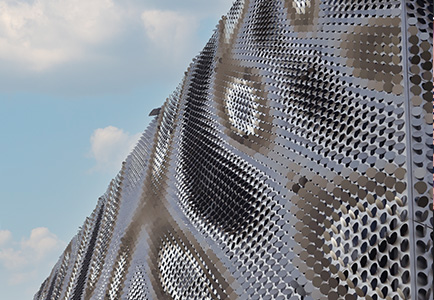
Parametric Architecture in India: Why It’s Shaping the Future of Facade Design
Architecture is evolving - and with it, the language of the façade. At the heart of this evolution lies a powerful design philosophy: parametric architecture.
03-11-25 | Industry Trends
Top Facade Architecture Trends 2026 Tech Sustainability and Aesthetic Breakthroughs
The building envelope is undergoing a radical transformation. No longer just a 'skin,' it is now a performance-driven asset that breathes and adapts
12-02-26 | Industry Trends
Facade Design Trends 2026 Smart Sustainable and High-Performance Building Exteriors
The building envelope is undergoing a radical transformation. No longer just a 'skin,' it is now a performance-driven asset that breathes and adapts
23-02-26 | Industry Trends
Social
Legal
Privacy Policy|Terms & Conditions