






What Is a Kinetic Facade? A Plain-English Guide to How It Works
03-08-26 | Facade Innovations
Key Takeaways
Most building exteriors do one job. They stay put and keep the weather out. A kinetic facade does something different. Parts of it move, rotate, fold or shift, either on their own or in response to something outside the building, and that movement changes how the structure looks, breathes and performs through the day. The word “kinetic” simply means relating to motion. Apply that to architecture and you get a facade that is never quite static. It might be a wall of aluminium fins that rotate to track the sun, a grid of panels that opens and closes with the wind, or a surface where individual modules shift just enough to throw a different shadow pattern every hour. The building still has a fixed structural skin underneath. The kinetic layer sits on top of it, doing the work that a flat wall can’t.
How a kinetic facade actually works
A kinetic system is built from three parts working together. The Moving Element. This is usually a metal panel, fin, louver or module, engineered to be light enough to move without straining its mounting hardware, and durable enough to keep moving for years without fatigue. Aluminium is the common choice here because it’s strong for its weight and resists corrosion. The Mechanism. Some kinetic facades move manually, adjusted by a building operator a few times a season. Most modern installations use a motorised or pneumatic drive connected to a small number of actuation points, so a handful of motors can move dozens or hundreds of panels together. The Trigger. This is what decides when and how much the facade moves. It could be a simple timer, a solar sensor that tracks the sun’s position, a wind sensor that closes the system in a storm, or in the more advanced installations, a building management system that reads several inputs at once and calculates the ideal position. Put those three together and you get a wall that responds to its environment instead of just enduring it.
Why architects and developers are specifying kinetic facades
Solar control that adjusts through the day. A fixed shading fin is a compromise. It’s angled for one average condition, so it either blocks too much light in winter or lets in too much heat in summer. A kinetic fin can change its angle as the sun moves, cutting heat gain during peak hours and opening back up when the sun is low, without permanently darkening the interior. Energy performance. Buildings lose a large share of their cooling load through glazing and exposed walls. A kinetic shading layer that responds to real solar intensity, rather than a fixed average, measurably reduces the air conditioning load on the most exposed faces of a building, particularly south and west elevations in the Indian climate. A facade that photographs differently every time. For commercial and retail architecture, a static facade is seen once and then ignored. A kinetic one changes through the day, which means the building keeps generating fresh visual interest, and fresh reasons for people to photograph and share it. That’s a real driver for landmark and branding-led projects. Wind and weather adaptability. In regions that see strong seasonal winds or monsoon gusts, a kinetic system can be programmed to flatten or close automatically once wind speed crosses a threshold, protecting both the facade and the building envelope behind it.
Where kinetic facades make sense, and where they don’t
Kinetic systems earn their cost on buildings where the facade does real environmental work: office towers with large glazed elevations, hospitality projects that want a signature entrance experience, stadiums and cultural buildings where the facade is part of the brand, and commercial flagships that want a landmark presence on a busy street. They make less sense on small residential elevations where a well-designed static fin or louver system, angled correctly for the site’s orientation, delivers most of the shading benefit without the ongoing mechanical maintenance a moving system needs. This is worth discussing honestly with your facade partner before committing to kinetic, because a good designer will tell you when a simpler system solves the same problem.
What maintenance actually looks like
A kinetic facade has moving parts, and moving parts need periodic checks, in the same way a lift or an escalator does. In practice this means a scheduled inspection of the actuators and drive mechanisms, corrosion checks on the metal components (which is why the choice of finish and alloy matters as much as the mechanism), and occasional recalibration of the sensors. A well-engineered system, installed with the right tolerances from the start, needs far less intervention than people assume. The failures that give kinetic facades a bad reputation almost always trace back to underspecified motors or panels that were too heavy for their drive system, not the concept itself.
Kinetic facades in India
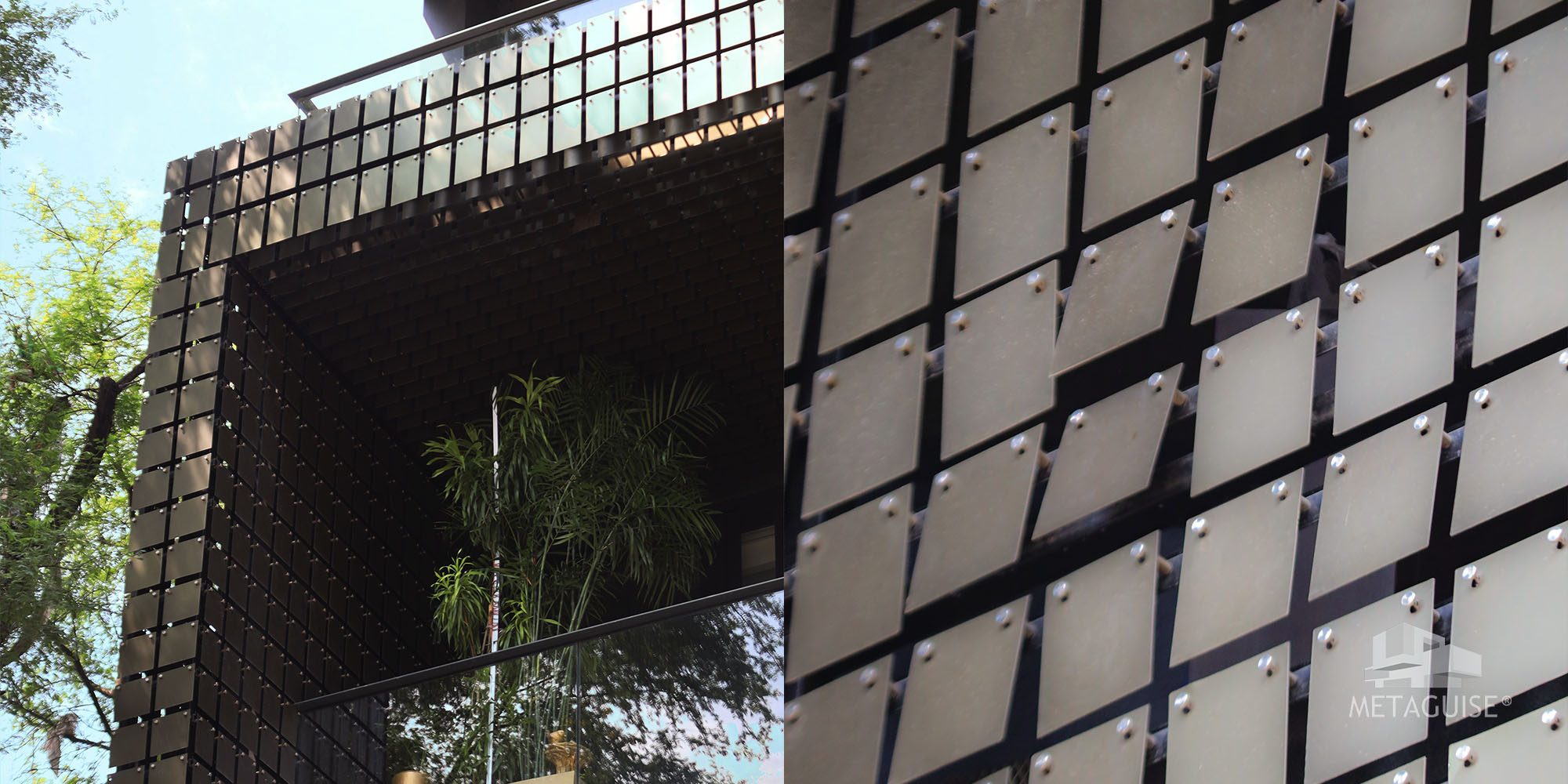
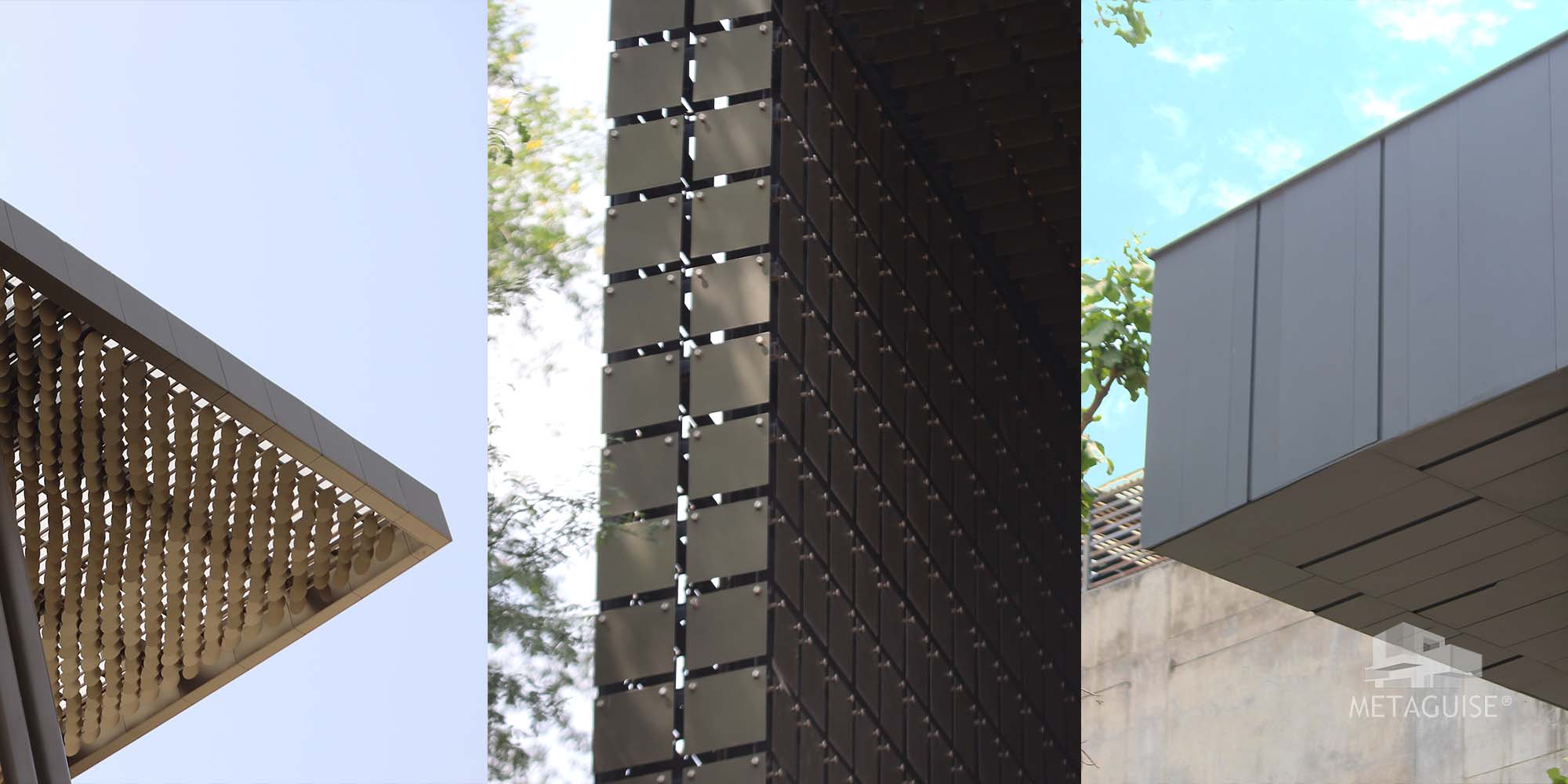
India’s climate makes a strong case for kinetic systems specifically because solar intensity and angle change so much between seasons. A shading strategy that’s correct for a Delhi summer afternoon is wrong for a Delhi winter morning. A kinetic system designed around the building’s real solar geometry, rather than one fixed angle, can hold performance across both extremes. At Metaguise, our own Kinetic Grid installation is a working example of this: a parametric metal grid engineered to respond to its site conditions rather than sit as a fixed decorative layer. If you want to go deeper into what that means for actual building performance, our earlier piece on how kinetic facades improve building performance and user experience covers the energy and comfort side in more detail.
A quick way to know if your project needs one
Ask three questions. Does the elevation get significant direct sun for more than four hours a day. Does the project have a brand or landmark identity riding on the exterior. Is there budget for a facade that performs differently across seasons rather than a single fixed compromise. If the answer to two or more of these is yes, a kinetic facade is worth a proper feasibility conversation with your design team.
Talk to a facade specialist before you decide
Kinetic facade design sits at the intersection of structural engineering, mechanical actuation and architectural intent, so it’s not something to spec from a brochure. If you’re evaluating whether a kinetic, semi-kinetic or static parametric system is right for your project, get in touch with our design team for a feasibility review based on your building’s orientation and climate exposure.
What Is a Kinetic Facade? A Plain-English Guide to How It Works
03-08-26 | Facade Innovations
Key Takeaways
Most building exteriors do one job. They stay put and keep the weather out. A kinetic facade does something different. Parts of it move, rotate, fold or shift, either on their own or in response to something outside the building, and that movement changes how the structure looks, breathes and performs through the day. The word “kinetic” simply means relating to motion. Apply that to architecture and you get a facade that is never quite static. It might be a wall of aluminium fins that rotate to track the sun, a grid of panels that opens and closes with the wind, or a surface where individual modules shift just enough to throw a different shadow pattern every hour. The building still has a fixed structural skin underneath. The kinetic layer sits on top of it, doing the work that a flat wall can’t.
How a kinetic facade actually works
A kinetic system is built from three parts working together. The Moving Element. This is usually a metal panel, fin, louver or module, engineered to be light enough to move without straining its mounting hardware, and durable enough to keep moving for years without fatigue. Aluminium is the common choice here because it’s strong for its weight and resists corrosion. The Mechanism. Some kinetic facades move manually, adjusted by a building operator a few times a season. Most modern installations use a motorised or pneumatic drive connected to a small number of actuation points, so a handful of motors can move dozens or hundreds of panels together. The Trigger. This is what decides when and how much the facade moves. It could be a simple timer, a solar sensor that tracks the sun’s position, a wind sensor that closes the system in a storm, or in the more advanced installations, a building management system that reads several inputs at once and calculates the ideal position. Put those three together and you get a wall that responds to its environment instead of just enduring it.
Why architects and developers are specifying kinetic facades
Solar control that adjusts through the day. A fixed shading fin is a compromise. It’s angled for one average condition, so it either blocks too much light in winter or lets in too much heat in summer. A kinetic fin can change its angle as the sun moves, cutting heat gain during peak hours and opening back up when the sun is low, without permanently darkening the interior. Energy performance. Buildings lose a large share of their cooling load through glazing and exposed walls. A kinetic shading layer that responds to real solar intensity, rather than a fixed average, measurably reduces the air conditioning load on the most exposed faces of a building, particularly south and west elevations in the Indian climate. A facade that photographs differently every time. For commercial and retail architecture, a static facade is seen once and then ignored. A kinetic one changes through the day, which means the building keeps generating fresh visual interest, and fresh reasons for people to photograph and share it. That’s a real driver for landmark and branding-led projects. Wind and weather adaptability. In regions that see strong seasonal winds or monsoon gusts, a kinetic system can be programmed to flatten or close automatically once wind speed crosses a threshold, protecting both the facade and the building envelope behind it.
Where kinetic facades make sense, and where they don’t
Kinetic systems earn their cost on buildings where the facade does real environmental work: office towers with large glazed elevations, hospitality projects that want a signature entrance experience, stadiums and cultural buildings where the facade is part of the brand, and commercial flagships that want a landmark presence on a busy street. They make less sense on small residential elevations where a well-designed static fin or louver system, angled correctly for the site’s orientation, delivers most of the shading benefit without the ongoing mechanical maintenance a moving system needs. This is worth discussing honestly with your facade partner before committing to kinetic, because a good designer will tell you when a simpler system solves the same problem.
What maintenance actually looks like
A kinetic facade has moving parts, and moving parts need periodic checks, in the same way a lift or an escalator does. In practice this means a scheduled inspection of the actuators and drive mechanisms, corrosion checks on the metal components (which is why the choice of finish and alloy matters as much as the mechanism), and occasional recalibration of the sensors. A well-engineered system, installed with the right tolerances from the start, needs far less intervention than people assume. The failures that give kinetic facades a bad reputation almost always trace back to underspecified motors or panels that were too heavy for their drive system, not the concept itself.
Kinetic facades in India
India’s climate makes a strong case for kinetic systems specifically because solar intensity and angle change so much between seasons. A shading strategy that’s correct for a Delhi summer afternoon is wrong for a Delhi winter morning. A kinetic system designed around the building’s real solar geometry, rather than one fixed angle, can hold performance across both extremes. At Metaguise, our own Kinetic Grid installation is a working example of this: a parametric metal grid engineered to respond to its site conditions rather than sit as a fixed decorative layer. If you want to go deeper into what that means for actual building performance, our earlier piece on how kinetic facades improve building performance and user experience covers the energy and comfort side in more detail.
A quick way to know if your project needs one
Ask three questions. Does the elevation get significant direct sun for more than four hours a day. Does the project have a brand or landmark identity riding on the exterior. Is there budget for a facade that performs differently across seasons rather than a single fixed compromise. If the answer to two or more of these is yes, a kinetic facade is worth a proper feasibility conversation with your design team.
Talk to a facade specialist before you decide
Kinetic facade design sits at the intersection of structural engineering, mechanical actuation and architectural intent, so it’s not something to spec from a brochure. If you’re evaluating whether a kinetic, semi-kinetic or static parametric system is right for your project, get in touch with our design team for a feasibility review based on your building’s orientation and climate exposure.
Related Articles
Related Articles
The Rise of Parametric facades: Designing with Algorithmic Elegance
A revolutionary parametric facade system designed to elevate architectural aesthetics. Crafted with premium metals and enhanced with MetaSurface finishes, MetaCoin offers unparalleled customizability, from the shape and size of each element to its color and arrangement. Its dynamic design reacts to light and perspective, creating ever-changing visual effects. Ideal for contemporary and iconic structures, MetaCoin transforms facades into captivating works of art that are sustainable, durable, and visually stunning.
01-04-25 | Facade Innovations
METABLOX™ by Metaguise: A Breakthrough in Parametric Facade Design
At the intersection of culture, craftsmanship, and cutting-edge geometry, METABLOX™ emerges as a bold new direction in architectural innovation. Introduced by Metaguise, this first-of-its-kind parametric facade technology makes its striking debut at the RJ Jewellers flagship store in Jaipur - setting a new benchmark in the world of metal design and modern Indian architecture.
09-04-25 | Facade Innovations
5 Landmark Projects That Used MetaCoin to Transform Facades
When it comes to parametric architecture, MetaCoin stands out as a revolutionary metal coin facade system. Crafted with precision, it offers dynamic aesthetics, adaptability, and a unique identity to structures. Let's delve into five notable projects where MetaCoin has redefined architectural facades.
13-05-25 | Facade Innovations
From Code to Construction: How Parametric Facades Are Built
Some buildings just make you look twice. Maybe it’s the way the facade curves. Or how the surface catches the light at different times of day. Often, what you’re seeing is more than just a design, it’s a parametric facade.
10-06-25 | Facade Innovations
Social
Legal
Privacy Policy|Terms & Conditions