





Vastu-Compliant Facade Design for Indian Homes: Myths vs Facts (2026)
06-07-26 | Facade Innovations
Key Takeaways
• Vastu Shastra addresses building orientation, material properties, and directional energy in ways that are more compatible with contemporary metal facade design than most homeowners or architects realise. The resistance to metal among some Vastu practitioners is cultural, not textual. • The National Institute of Advanced Studies in Bangalore (2024) notes that Vastu Shastra's directional prescriptions for building materials and colours have coherent environmental logic. Prescribing light reflective finishes on south-facing facades and warm materials on north and east aligns closely with contemporary solar design principles. • Metal facades can be fully Vastu-compliant. Metaguise has delivered projects with explicit Vastu briefs across Ahmedabad, Ludhiana, Jaipur, and Delhi NCR, working alongside Vastu practitioners at every stage of design. • This guide separates Vastu facade myths from facts, explains the directional guidance most relevant to metal facades, and shows how Metaguise develops Vastu-aware specifications.
What Vastu Shastra Says About Building Exteriors
Most homeowners who care about Vastu approach a metal facade brief with some version of the same hesitation. Is metal auspicious? Will the practitioner approve it? Will a dark finish create problems on the south wall? These are real questions, and they deserve real answers rather than either dismissal or vague reassurance. Vastu Shastra is a 5,000-year-old system of design principles derived from the Vedas. The word combines Vastu, meaning dwelling, with Shastra, meaning science or knowledge. Its application to building exteriors covers four primary domains: orientation and directional alignment, material selection and element association, colour and reflectivity guidance, and openings including doors, windows, and gates. Understood properly, its directional logic is more compatible with a well-specified metal facade than with most conventional materials, for reasons this guide explains in detail.
Common Vastu Rules for Facades: Separated Into Myths and Facts
Myth: Metal is inauspicious for building exteriors Fact: Vastu Shastra does not prescribe against metal as a building material. The classical texts reference five elements (Pancha Bhutas) — earth, water, fire, air, and space — and associate materials with these elements based on their properties. Aluminium, as a conductive, reflective material associated with the air and space elements, is not classified as inauspicious in any Vastu text. The 'metal is inauspicious' claim typically originates from practitioners conflating Vastu with traditional building material customs of specific regions — not from the classical literature. Myth: Black or dark facades are always Vastu-negative Fact: Vastu colour guidance is directional, not absolute. Dark colours (associated with the water element) are considered appropriate on north-facing walls — which receive less direct solar radiation and are associated with the water element's qualities of flow and receptivity. A dark charcoal MetaCassette or SolidPanel specification on a north-facing elevation is directionally Vastu-consistent, not inauspicious. The prescription against dark colours applies to south-facing and south-west-facing walls, where the fire element's energy should not be amplified. Myth: Vastu requires terracotta or natural stone for building exteriors Fact: Vastu prescribes material qualities (warmth, weight, reflectivity, natural resonance) rather than specific materials. Warm earth tones in MetaCorten, terracotta PVDF, or ochre PVDF on south-west walls fulfil the earth element prescription that some practitioners associate with natural stone or terracotta — in a material that performs significantly better in India's climate over the building's lifetime. Fact: Vastu is more nuanced about entrance orientation than most practitioners convey The classical Vastu texts do not prescribe a universal east entrance for every building — they prescribe entrance placement within the Vastu Pada (energy grid) of the specific plot, which varies by plot dimensions, orientation, and the householder's birth star (nakshatra). A Vastu-aware architect considers the full Pada analysis rather than applying a generic 'east entrance' rule. Metaguise's design team has worked with Vastu practitioners on several residential commissions and can design entrance feature architecture within the Pada-specific brief.
Can Metal Facades Be Vastu-Compliant? Expert Perspectives
The question of whether a metal facade is Vastu-compatible is best answered by examining whether the material's properties — not the material itself — align with the Vastu prescriptions for each facade orientation. Aluminium's relevant properties from a Vastu perspective are: it is lightweight (suitable for north-east applications where heavy materials are prescribed against); it is reflective (its high Solar Reflectance Index mirrors the Vastu prescription for reflective surfaces on south and west walls that protect against excess solar energy — the fire element); it is durable and non-porous (consistent with Vastu's prescription for stable, protective materials on south and south-west walls); and it is available in the full spectrum of Vastu-associated colours through the MetaSurface PVDF range. Several Vastu practitioners consulted by Metaguise's design team in recent years have noted that a well-specified aluminium facade — directionally appropriate in colour, materially consistent in weight distribution, and designed with an architecturally framed east or north-east entrance — satisfies the Vastu brief at least as well as conventional materials, and often better. The resistance to metal facades among some Vastu practitioners is cultural rather than textual — a preference for traditional materials that is not grounded in the classical Vastu literature.
Metaguise Projects With Vastu Brief
Ludhiana Business Family Residence: Vastu-Directed Entrance and Colour A Ludhiana business family commissioned Metaguise with an explicit Vastu brief: a gold tone for the entrance feature in the south-east fire element zone, a warm earth tone for the south-west wall in the earth element zone, and no dark colours on the north-east corner. The result was MetaSequin gold anodised on the south-east entrance tower, MetaFlute champagne PVDF on the south-west body wall, and MetaCassette warm white PVDF on the north-east corner. The colour composition was simultaneously Vastu-directed and architecturally coherent. Ahmedabad HNI Compound: Vastu-Aware Material Weight Distribution An Ahmedabad HNI family's compound brief required heavier, more solid material on the south and south-west boundary walls to create the prescribed protective weight in those directions. Lighter material was specified on the north and north-east. Metaguise used MetaPyramid deep-relief panels on the south and south-west walls and MetaCoin perforated panels on the north face, achieving the Vastu weight distribution in a contemporary metal material palette. Jaipur Family Home: Vastu Practitioner Consultation Integration A Jaipur family home project involved active consultation between the homeowner's Vastu practitioner and Metaguise's design team throughout the design development phase. The practitioner specified the entrance Pada position, directional colour palette, and the prescription that the north-east corner carry no heavy metalwork. Metaguise designed the entrance feature, cladding zones, and material selection around these prescriptions, demonstrating that Vastu and contemporary metal facade design can be integrated when both parties engage substantively with each other's expertise.
How to Brief Metaguise With a Vastu Requirement
If your residential facade project has a Vastu brief, communicating it to Metaguise's design team is straightforward. Share the Vastu practitioner's directional prescription. Which directions require which element colours? Are there specific prescriptions for the entrance feature orientation? Are any directions prescribed against heavy materials? Identify your Vastu practitioner's contact. For complex Vastu briefs, Metaguise's design team may wish to speak directly with the practitioner to ensure the design interpretation is accurate. Allow the colour palette to be derived from the Vastu brief. Metaguise's MetaSurface range covers every directional colour that Vastu prescribes. Earth tones include MetaCorten, terracotta PVDF, and champagne. Fire tones include gold anodised and warm orange PVDF. Water tones include dark anodised and grey-blue PVDF. Air tones include forest green PVDF and silver anodised. Trust the material. Aluminium is not Vastu-inauspicious. Its material properties align with multiple Vastu prescriptions, and its weight, reflectivity, and durability make it suitable for every directional application that Vastu requires.
Frequently Asked Questions
1.Is there a specific Vastu direction for the entrance gate that Metaguise should design around?
The most common Vastu prescriptions for the entrance gate are: east or north-east for the primary gate (auspicious entry directions); south-east for secondary or service entrances (fire energy zone, suitable for active entry). The Pada analysis of your specific plot — based on its dimensions and precise orientation — determines the exact gate position within the east or north-east zones. Share your Vastu practitioner's Pada analysis with Metaguise's design team and the gate design will be developed around it.2. Can I use a dark or black metal facade if my Vastu practitioner approves it?
Yes. If your Vastu practitioner has approved dark colours for the specific orientation in question — typically north-facing or north-west-facing walls, where dark tones are directionally appropriate — Metaguise can specify any dark finish in the MetaSurface range for those elevations. Deep charcoal, anthracite, dark anodised, and matte black are all available. The key is that the colour direction has been assessed by the practitioner for the specific directional zone, not applied generically across the entire building.3.My Vastu practitioner says no metal on the north-east corner — what are my options?
If the north-east corner prescription specifically excludes metal cladding, Metaguise can design the facade to place natural stone, render, or glass at the north-east corner while using metal cladding on all other elevations — creating a material transition at the north-east that satisfies the Vastu prescription without compromising the overall architectural design language. This hybrid approach is technically straightforward and can be detailed to look intentional rather than compromised.4.Are there Vastu prescriptions for facade lighting that affect the metal system design?
Some Vastu practitioners prescribe that the entrance be well-lit (associated with auspicious energy and clarity) and that south-facing facades avoid very warm lighting (which amplifies fire energy). For Metaguise installations with integrated lighting — particularly MetaSequin entrance features, which are particularly responsive to uplighting — the lighting specification can be developed to align with the Vastu practitioner's guidance on colour temperature and directionality. Metaguise's design team regularly integrates architectural lighting design into facade commissions where the brief requires it.Vastu-Compliant Facade Design for Indian Homes: Myths vs Facts (2026)
06-07-26 | Facade Innovations
Key Takeaways
• Vastu Shastra addresses building orientation, material properties, and directional energy in ways that are more compatible with contemporary metal facade design than most homeowners or architects realise. The resistance to metal among some Vastu practitioners is cultural, not textual. • The National Institute of Advanced Studies in Bangalore (2024) notes that Vastu Shastra's directional prescriptions for building materials and colours have coherent environmental logic. Prescribing light reflective finishes on south-facing facades and warm materials on north and east aligns closely with contemporary solar design principles. • Metal facades can be fully Vastu-compliant. Metaguise has delivered projects with explicit Vastu briefs across Ahmedabad, Ludhiana, Jaipur, and Delhi NCR, working alongside Vastu practitioners at every stage of design. • This guide separates Vastu facade myths from facts, explains the directional guidance most relevant to metal facades, and shows how Metaguise develops Vastu-aware specifications.
What Vastu Shastra Says About Building Exteriors
Most homeowners who care about Vastu approach a metal facade brief with some version of the same hesitation. Is metal auspicious? Will the practitioner approve it? Will a dark finish create problems on the south wall? These are real questions, and they deserve real answers rather than either dismissal or vague reassurance. Vastu Shastra is a 5,000-year-old system of design principles derived from the Vedas. The word combines Vastu, meaning dwelling, with Shastra, meaning science or knowledge. Its application to building exteriors covers four primary domains: orientation and directional alignment, material selection and element association, colour and reflectivity guidance, and openings including doors, windows, and gates. Understood properly, its directional logic is more compatible with a well-specified metal facade than with most conventional materials, for reasons this guide explains in detail.
Common Vastu Rules for Facades: Separated Into Myths and Facts
Myth: Metal is inauspicious for building exteriors Fact: Vastu Shastra does not prescribe against metal as a building material. The classical texts reference five elements (Pancha Bhutas) — earth, water, fire, air, and space — and associate materials with these elements based on their properties. Aluminium, as a conductive, reflective material associated with the air and space elements, is not classified as inauspicious in any Vastu text. The 'metal is inauspicious' claim typically originates from practitioners conflating Vastu with traditional building material customs of specific regions — not from the classical literature. Myth: Black or dark facades are always Vastu-negative Fact: Vastu colour guidance is directional, not absolute. Dark colours (associated with the water element) are considered appropriate on north-facing walls — which receive less direct solar radiation and are associated with the water element's qualities of flow and receptivity. A dark charcoal MetaCassette or SolidPanel specification on a north-facing elevation is directionally Vastu-consistent, not inauspicious. The prescription against dark colours applies to south-facing and south-west-facing walls, where the fire element's energy should not be amplified. Myth: Vastu requires terracotta or natural stone for building exteriors Fact: Vastu prescribes material qualities (warmth, weight, reflectivity, natural resonance) rather than specific materials. Warm earth tones in MetaCorten, terracotta PVDF, or ochre PVDF on south-west walls fulfil the earth element prescription that some practitioners associate with natural stone or terracotta — in a material that performs significantly better in India's climate over the building's lifetime. Fact: Vastu is more nuanced about entrance orientation than most practitioners convey The classical Vastu texts do not prescribe a universal east entrance for every building — they prescribe entrance placement within the Vastu Pada (energy grid) of the specific plot, which varies by plot dimensions, orientation, and the householder's birth star (nakshatra). A Vastu-aware architect considers the full Pada analysis rather than applying a generic 'east entrance' rule. Metaguise's design team has worked with Vastu practitioners on several residential commissions and can design entrance feature architecture within the Pada-specific brief.
Can Metal Facades Be Vastu-Compliant? Expert Perspectives
The question of whether a metal facade is Vastu-compatible is best answered by examining whether the material's properties — not the material itself — align with the Vastu prescriptions for each facade orientation. Aluminium's relevant properties from a Vastu perspective are: it is lightweight (suitable for north-east applications where heavy materials are prescribed against); it is reflective (its high Solar Reflectance Index mirrors the Vastu prescription for reflective surfaces on south and west walls that protect against excess solar energy — the fire element); it is durable and non-porous (consistent with Vastu's prescription for stable, protective materials on south and south-west walls); and it is available in the full spectrum of Vastu-associated colours through the MetaSurface PVDF range. Several Vastu practitioners consulted by Metaguise's design team in recent years have noted that a well-specified aluminium facade — directionally appropriate in colour, materially consistent in weight distribution, and designed with an architecturally framed east or north-east entrance — satisfies the Vastu brief at least as well as conventional materials, and often better. The resistance to metal facades among some Vastu practitioners is cultural rather than textual — a preference for traditional materials that is not grounded in the classical Vastu literature.
Metaguise Projects With Vastu Brief
Ludhiana Business Family Residence: Vastu-Directed Entrance and Colour A Ludhiana business family commissioned Metaguise with an explicit Vastu brief: a gold tone for the entrance feature in the south-east fire element zone, a warm earth tone for the south-west wall in the earth element zone, and no dark colours on the north-east corner. The result was MetaSequin gold anodised on the south-east entrance tower, MetaFlute champagne PVDF on the south-west body wall, and MetaCassette warm white PVDF on the north-east corner. The colour composition was simultaneously Vastu-directed and architecturally coherent. Ahmedabad HNI Compound: Vastu-Aware Material Weight Distribution An Ahmedabad HNI family's compound brief required heavier, more solid material on the south and south-west boundary walls to create the prescribed protective weight in those directions. Lighter material was specified on the north and north-east. Metaguise used MetaPyramid deep-relief panels on the south and south-west walls and MetaCoin perforated panels on the north face, achieving the Vastu weight distribution in a contemporary metal material palette. Jaipur Family Home: Vastu Practitioner Consultation Integration A Jaipur family home project involved active consultation between the homeowner's Vastu practitioner and Metaguise's design team throughout the design development phase. The practitioner specified the entrance Pada position, directional colour palette, and the prescription that the north-east corner carry no heavy metalwork. Metaguise designed the entrance feature, cladding zones, and material selection around these prescriptions, demonstrating that Vastu and contemporary metal facade design can be integrated when both parties engage substantively with each other's expertise.
How to Brief Metaguise With a Vastu Requirement
If your residential facade project has a Vastu brief, communicating it to Metaguise's design team is straightforward. Share the Vastu practitioner's directional prescription. Which directions require which element colours? Are there specific prescriptions for the entrance feature orientation? Are any directions prescribed against heavy materials? Identify your Vastu practitioner's contact. For complex Vastu briefs, Metaguise's design team may wish to speak directly with the practitioner to ensure the design interpretation is accurate. Allow the colour palette to be derived from the Vastu brief. Metaguise's MetaSurface range covers every directional colour that Vastu prescribes. Earth tones include MetaCorten, terracotta PVDF, and champagne. Fire tones include gold anodised and warm orange PVDF. Water tones include dark anodised and grey-blue PVDF. Air tones include forest green PVDF and silver anodised. Trust the material. Aluminium is not Vastu-inauspicious. Its material properties align with multiple Vastu prescriptions, and its weight, reflectivity, and durability make it suitable for every directional application that Vastu requires.
Frequently Asked Questions
1.Is there a specific Vastu direction for the entrance gate that Metaguise should design around?
The most common Vastu prescriptions for the entrance gate are: east or north-east for the primary gate (auspicious entry directions); south-east for secondary or service entrances (fire energy zone, suitable for active entry). The Pada analysis of your specific plot — based on its dimensions and precise orientation — determines the exact gate position within the east or north-east zones. Share your Vastu practitioner's Pada analysis with Metaguise's design team and the gate design will be developed around it.2. Can I use a dark or black metal facade if my Vastu practitioner approves it?
Yes. If your Vastu practitioner has approved dark colours for the specific orientation in question — typically north-facing or north-west-facing walls, where dark tones are directionally appropriate — Metaguise can specify any dark finish in the MetaSurface range for those elevations. Deep charcoal, anthracite, dark anodised, and matte black are all available. The key is that the colour direction has been assessed by the practitioner for the specific directional zone, not applied generically across the entire building.3.My Vastu practitioner says no metal on the north-east corner — what are my options?
If the north-east corner prescription specifically excludes metal cladding, Metaguise can design the facade to place natural stone, render, or glass at the north-east corner while using metal cladding on all other elevations — creating a material transition at the north-east that satisfies the Vastu prescription without compromising the overall architectural design language. This hybrid approach is technically straightforward and can be detailed to look intentional rather than compromised.4.Are there Vastu prescriptions for facade lighting that affect the metal system design?
Some Vastu practitioners prescribe that the entrance be well-lit (associated with auspicious energy and clarity) and that south-facing facades avoid very warm lighting (which amplifies fire energy). For Metaguise installations with integrated lighting — particularly MetaSequin entrance features, which are particularly responsive to uplighting — the lighting specification can be developed to align with the Vastu practitioner's guidance on colour temperature and directionality. Metaguise's design team regularly integrates architectural lighting design into facade commissions where the brief requires it.Related Articles
Related Articles
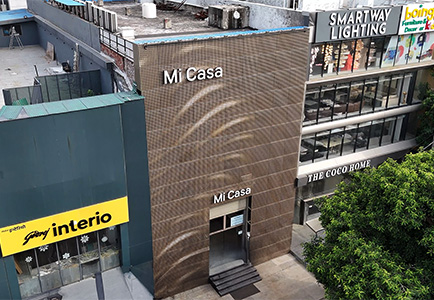
The Rise of Parametric facades: Designing with Algorithmic Elegance
A revolutionary parametric facade system designed to elevate architectural aesthetics. Crafted with premium metals and enhanced with MetaSurface finishes, MetaCoin offers unparalleled customizability, from the shape and size of each element to its color and arrangement. Its dynamic design reacts to light and perspective, creating ever-changing visual effects. Ideal for contemporary and iconic structures, MetaCoin transforms facades into captivating works of art that are sustainable, durable, and visually stunning.
01-04-25 | Facade Innovations
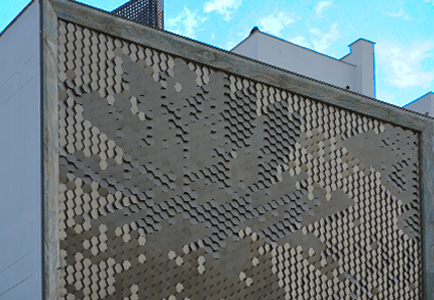
METABLOX™ by Metaguise: A Breakthrough in Parametric Facade Design
At the intersection of culture, craftsmanship, and cutting-edge geometry, METABLOX™ emerges as a bold new direction in architectural innovation. Introduced by Metaguise, this first-of-its-kind parametric facade technology makes its striking debut at the RJ Jewellers flagship store in Jaipur - setting a new benchmark in the world of metal design and modern Indian architecture.
09-04-25 | Facade Innovations
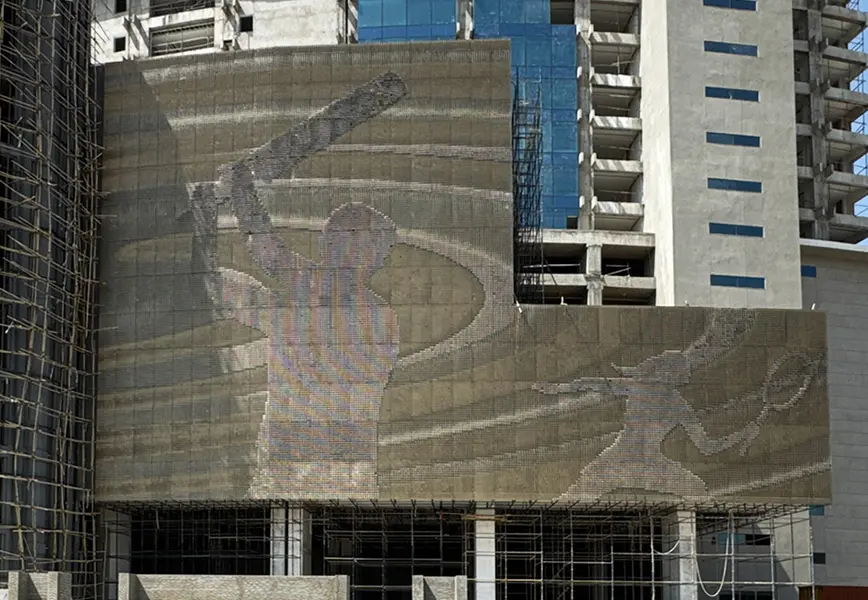
5 Landmark Projects That Used MetaCoin to Transform Facades
When it comes to parametric architecture, MetaCoin stands out as a revolutionary metal coin facade system. Crafted with precision, it offers dynamic aesthetics, adaptability, and a unique identity to structures. Let's delve into five notable projects where MetaCoin has redefined architectural facades.
13-05-25 | Facade Innovations
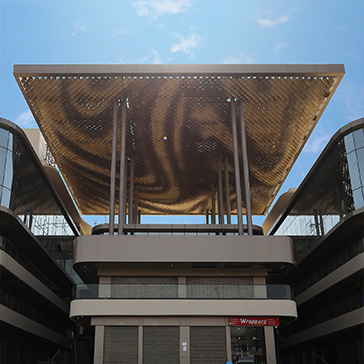
From Code to Construction: How Parametric Facades Are Built
Some buildings just make you look twice. Maybe it’s the way the facade curves. Or how the surface catches the light at different times of day. Often, what you’re seeing is more than just a design, it’s a parametric facade.
10-06-25 | Facade Innovations
Social
Legal
Privacy Policy|Terms & Conditions