.png)




.png)
The Wedding Season Inauguration: How South Delhi's Elite Are Timing Luxury Home Reveals to Match Shaadi Calendar
20-04-26 | Industry Trends
Key Takeaways
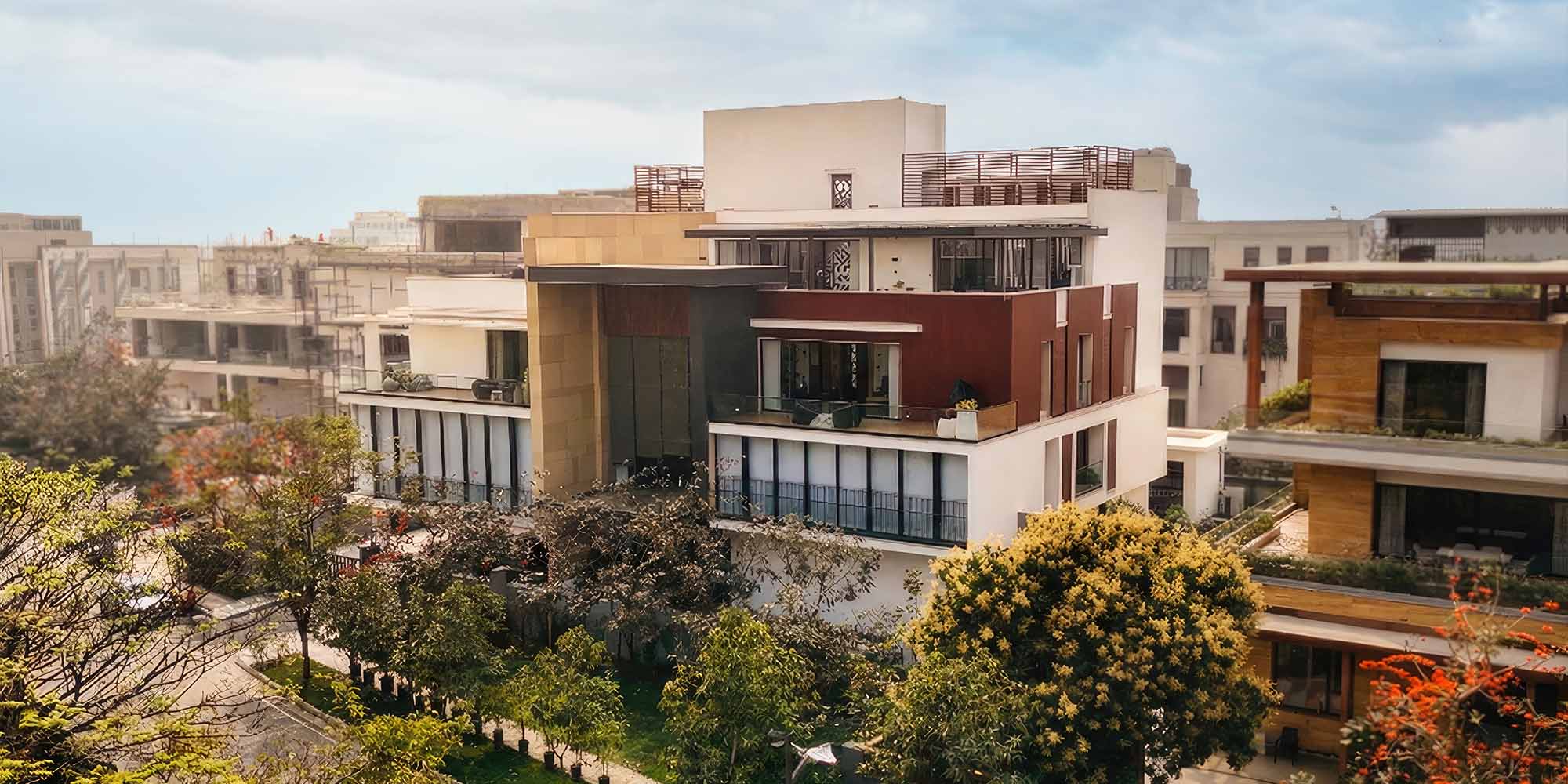
South Delhi's ultra-high-net-worth families are strategically timing luxury bungalow completions to coincide with winter wedding season - October through February - to maximise social visibility and status signalling Wedding season home inaugurations serve a dual purpose: they function as pre-wedding events while establishing the family's architectural taste and financial standing within their social circle Parametric metal facades are becoming the signature element for these reveals, offering the dramatic visual impact that photographs exceptionally well for wedding documentation and social media The trend has created a 6-8 month lead-time bottleneck for premium facade installations, with families booking design consultations as early as March-April for November-December completions Architects and developers report that families are increasingly treating the bungalow facade as a "statement piece" analogous to the wedding venue itself. A carefully curated backdrop for multi-generational photographs This timing strategy reflects a broader shift in how India's wealthy perceive residential architecture: not as shelter, but as social infrastructure that supports and amplifies life's milestone moments Vikram Malhotra's phone buzzed at 11:47 PM on a Tuesday in March. The message was from his wife: "The Kapoors just announced their daughter's December wedding. We need the house done by October. Can we move faster?" The house in question was a ₹14-crore, 8,500-square-foot bungalow in South Delhi's Jor Bagh - a project that had been moving at the considered, unhurried pace typical of luxury residential construction. But that single wedding announcement had just rewritten the entire timeline. Because in the social ecosystem of India's elite, a new home isn't truly inaugurated until it has hosted a wedding-season event, and the Malhotras had just realised they were in a race they hadn't known they'd entered.
When Architecture Becomes Part of the Shaadi Trousseau
This isn't an isolated story. Across South Delhi, Gurgaon's Golf Course Road, Mumbai's Malabar Hill, and Ahmedabad's satellite townships, a peculiar pattern has emerged over the past three years: luxury bungalow completions spike dramatically between October and January. Precisely mirroring India's peak wedding season calendar. The correlation isn't accidental. For families commissioning ₹8-crore-plus residences, the home's public debut has become inseparable from the family's social calendar, particularly weddings. The bungalow facade - that first, lasting impression visible from the street - has evolved into something beyond architectural specification. It's become a participant in the wedding narrative itself. Consider the mechanics of a modern Indian wedding among the upper echelons: The mehendi ceremony photographs need a backdrop that signals taste, not just wealth The pre-wedding cocktail party at home establishes the family's aesthetic sensibility before guests arrive at the main venue Instagram documentation of the "bride's home" or "groom's mansion" circulates for months, often garnering more engagement than venue photos Multi-generational family portraits taken on the inauguration day become heirlooms, the facade literally frames the family legacy As one Gurgaon-based architect who requested anonymity told us: "I now receive briefs that explicitly state: 'The house must be photo-ready by October because our son is getting married in December.' The facade isn't described in terms of materials or maintenance. It's described in terms of how it will look in wedding albums and Instagram Stories."
The Parametric Advantage: Why Metal Facades Photograph Like Nothing Else
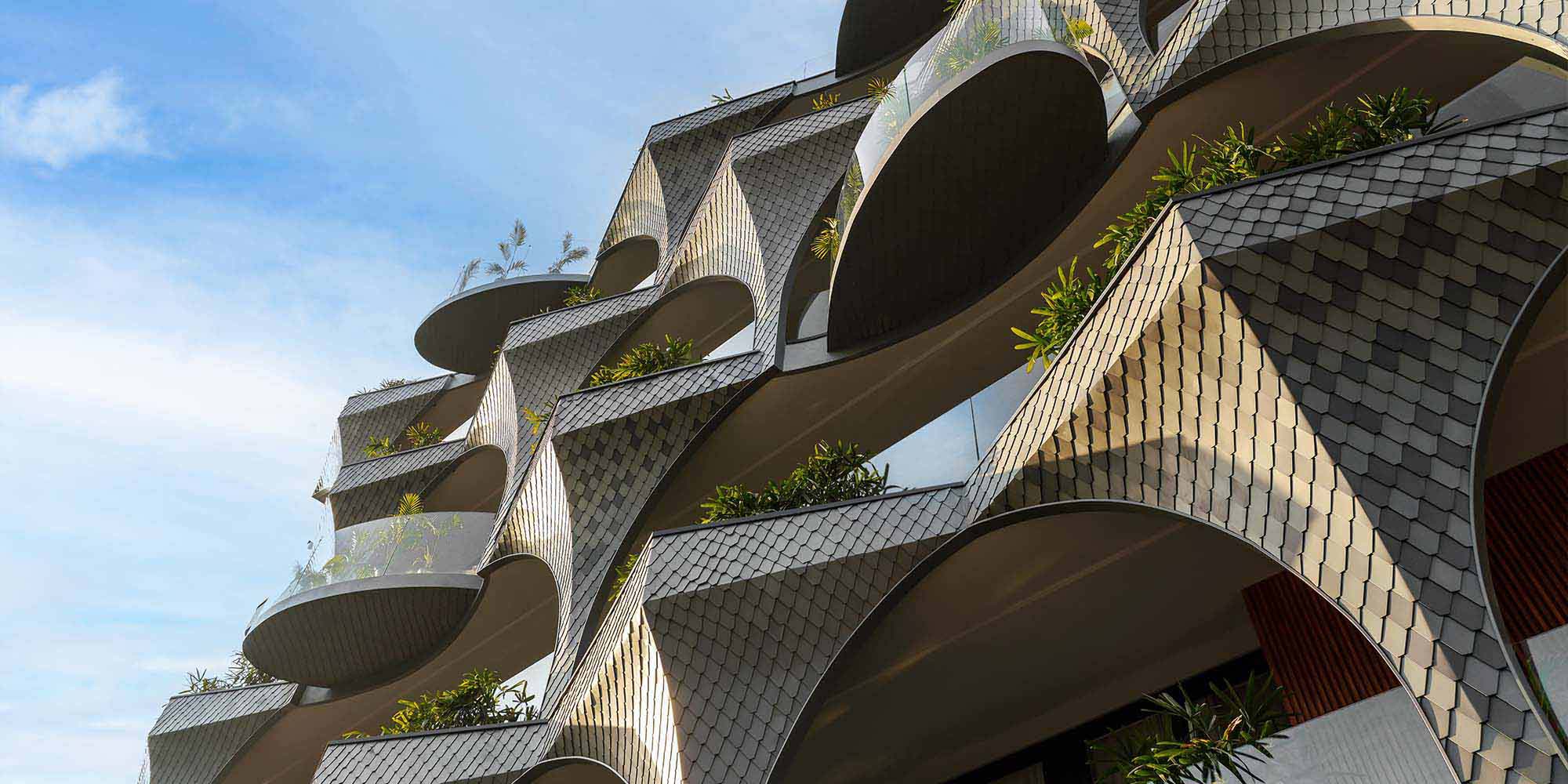
This shift in how families perceive residential architecture has created an unexpected beneficiary: parametric metal facade systems. Unlike traditional stone cladding or painted surfaces, three-dimensional metal facades like MetaSequin and MetaFin offer something uniquely valuable in the age of visual social currency - they change with light, time, and viewing angle. At golden hour, when wedding photographers typically shoot exterior family portraits, a parametric facade doesn't just sit there, it performs. Sunlight catches the edges of individually-angled panels, creating depth and luminosity that flat surfaces simply cannot achieve. As guests arrive for an evening ceremony, the facade shifts again, with uplighting revealing textures invisible during daylight hours. The Sharma family's Jaipur bungalow, completed in November 2024 just weeks before their daughter's wedding, featured a MetaCassette facade in champagne gold. The family's wedding photographer later reported that the bungalow exterior shots received 40% more engagement than venue photographs when posted to social media, despite the venue being a heritage palace. "India hosts approximately 10 million weddings annually, with the premium wedding segment (budgets above ₹50 lakh) growing at 25-30% year-on-year. Urban families are increasingly viewing all wedding-related investments, including residential real estate, through a lens of social visibility and photographic documentation." — Statista, Wedding Industry Statistics India 2024
The Six-Month Scramble: What Wedding-Driven Timelines Mean for Design
The wedding-season inauguration trend has compressed what used to be leisurely, multi-year bungalow projects into sprint-finish campaigns. Families who break ground in March are now demanding move-in readiness by October, a timeline that leaves little room for design indecision or procurement delays. This has had a curious effect on facade selection. Families are gravitating toward systems that offer both customisation and predictability, they want their home to look unlike their neighbours', but they can't afford the risk of experimental materials or untested fabrication techniques when a December wedding looms. Parametric metal systems meet this dual requirement uniquely well: Algorithmic customisation ensures no two facades are identical, even when using the same system. This is crucial for families in tight-knit social circles where visible differentiation matters Factory-controlled fabrication reduces on-site variables and installation time, compressing what might be a 4-month traditional cladding job into 6-8 weeks Pre-engineered systems like MetaBlox or MetaCoin eliminate the design-to-fabrication lag that plagues bespoke stone or glass facades Weather resistance ensures the facade looks pristine from October through February - India's wedding season coincides with relatively stable weather, but any system must survive monsoon tail-ends and winter fog The result is a planning calendar that looks nothing like traditional residential construction. Savvy families now work backward from the wedding date: a December wedding means facade installation must complete by mid-October to allow for landscaping and interior finishing touches. That pushes facade fabrication to July-August, which means design freeze needs to happen by May-June, which means initial consultations with architects and facade specialists like Metaguise need to begin in March or April, sometimes before the wedding date is even finalised.
Social Proof, Rendered in Metal: The Neighbour Effect
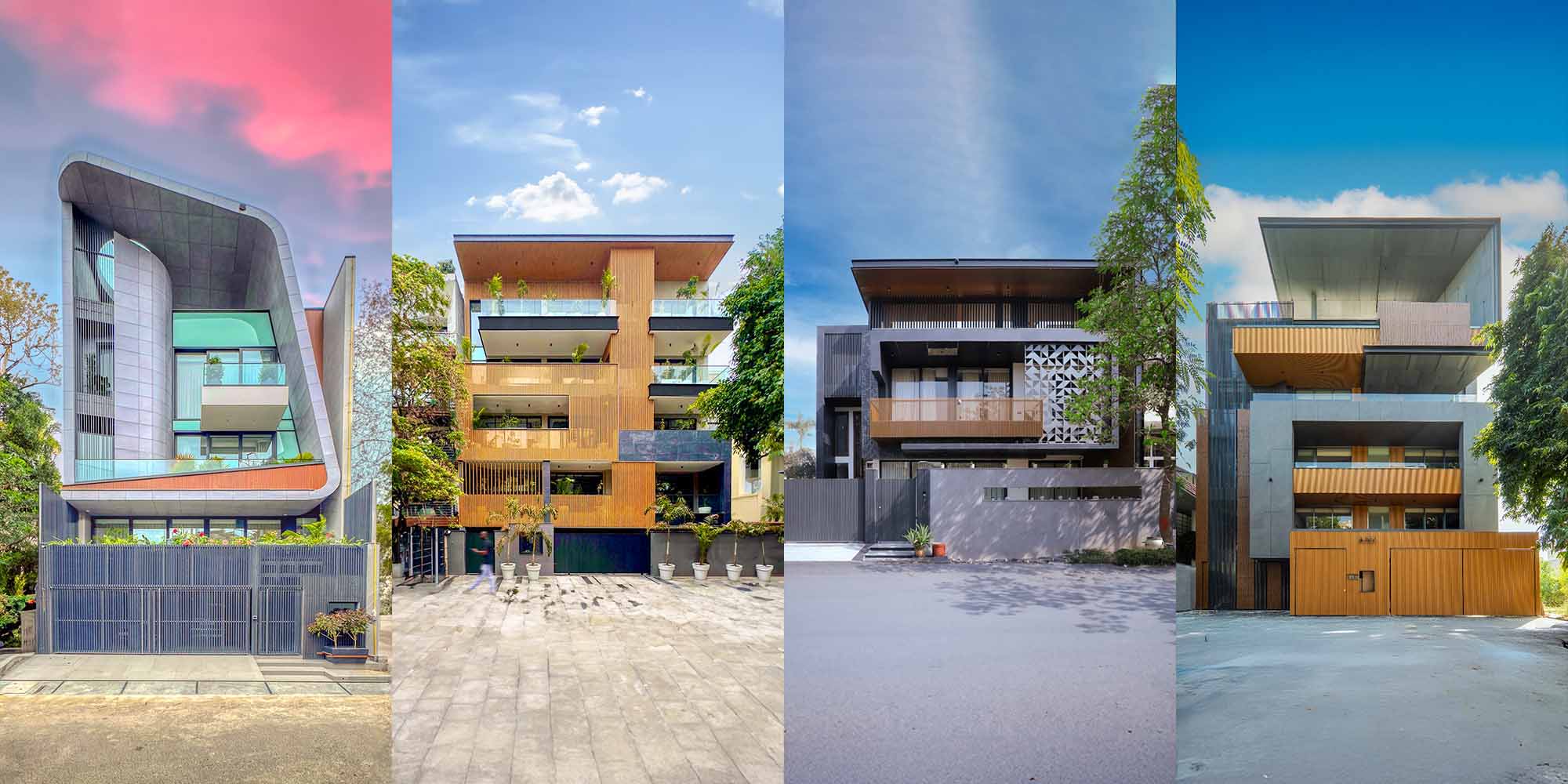
Once one family in a social cluster successfully debuts their home during wedding season, the pressure on others intensifies. In South Delhi's Gulmohar Park, four bungalows within a 500-meter radius all installed parametric metal facades between October 2023 and February 2024 - each family hosting pre-wedding events at home, each trying to outdo the previous installation in visual drama. This isn't keeping-up-with-the-Joneses in the traditional sense. It's more nuanced. Families aren't trying to replicate what their peers have done; they're trying to differentiate while staying within the same architectural language that signals "we belong to this world." A MetaSequin facade in brushed bronze says something different from a MetaFold installation in graphite, but both communicate membership in the same cultural-economic tribe. The wedding-season timing amplifies this social proof mechanism exponentially. When a home is inaugurated during the wedding season, it's not a private family affair, it's a semi-public event where 200-500 guests from the family's social and business network pass through the property over multiple functions. Each guest becomes a potential future client, noting the facade's visual impact, asking the architect's name, and photographing details for their own "someday" Pinterest boards.
What This Means If You're Planning a 2026-27 Build
If you're reading this in 2026 and contemplating a luxury residence with a wedding (or significant family event) on the horizon in late 2026 or 2027, the strategic implications are clear: Start facade conversations now - the design-to-installation cycle for parametric systems runs 6-8 months minimum, and that's before accounting for any customisation complexity Treat your facade as a wedding vendor, not just a construction material - it needs the same advance booking, deposit, and timeline protection you'd give your venue or caterer Budget for lighting design - A parametric facade's full impact emerges only when properly lit, and evening events demand sophisticated uplighting that showcases depth and texture Plan your Instagram strategy - work with your photographer to identify optimal shooting times and angles that make the facade an asset, not an afterthought, in your wedding documentation Consider the neighbour context - if you're in an established luxury enclave, your facade choice is a social statement; parametric systems offer differentiation without alienation The Malhotras, whose midnight timeline panic opened this story? They didn't slow down their wedding. They accelerated their facade. By April, they'd finalized a MetaFin system in an industrial grey finish, with installation scheduled for September. The house was ready by October 15th. The pre-wedding functions began October 22nd. And when the December wedding arrived, the bungalow had already done its work - establishing the family's architectural narrative in the minds of everyone who mattered, before the baraat even assembled. If your family is planning a significant event in the next 12-18 months and your residence needs to be part of that story, the time to begin facade conversations is now! Not after other decisions are made, but now. Explore how Metaguise's parametric facade systems can transform your home's exterior from a backdrop into a participant in your most important moments. Because the best architecture doesn't wait for life to happen; it helps life unfold more beautifully.
The Wedding Season Inauguration: How South Delhi's Elite Are Timing Luxury Home Reveals to Match Shaadi Calendar
20-04-26 | Industry Trends
Key Takeaways
South Delhi's ultra-high-net-worth families are strategically timing luxury bungalow completions to coincide with winter wedding season - October through February - to maximise social visibility and status signalling Wedding season home inaugurations serve a dual purpose: they function as pre-wedding events while establishing the family's architectural taste and financial standing within their social circle Parametric metal facades are becoming the signature element for these reveals, offering the dramatic visual impact that photographs exceptionally well for wedding documentation and social media The trend has created a 6-8 month lead-time bottleneck for premium facade installations, with families booking design consultations as early as March-April for November-December completions Architects and developers report that families are increasingly treating the bungalow facade as a "statement piece" analogous to the wedding venue itself. A carefully curated backdrop for multi-generational photographs This timing strategy reflects a broader shift in how India's wealthy perceive residential architecture: not as shelter, but as social infrastructure that supports and amplifies life's milestone moments Vikram Malhotra's phone buzzed at 11:47 PM on a Tuesday in March. The message was from his wife: "The Kapoors just announced their daughter's December wedding. We need the house done by October. Can we move faster?" The house in question was a ₹14-crore, 8,500-square-foot bungalow in South Delhi's Jor Bagh - a project that had been moving at the considered, unhurried pace typical of luxury residential construction. But that single wedding announcement had just rewritten the entire timeline. Because in the social ecosystem of India's elite, a new home isn't truly inaugurated until it has hosted a wedding-season event, and the Malhotras had just realised they were in a race they hadn't known they'd entered.
When Architecture Becomes Part of the Shaadi Trousseau
This isn't an isolated story. Across South Delhi, Gurgaon's Golf Course Road, Mumbai's Malabar Hill, and Ahmedabad's satellite townships, a peculiar pattern has emerged over the past three years: luxury bungalow completions spike dramatically between October and January. Precisely mirroring India's peak wedding season calendar. The correlation isn't accidental. For families commissioning ₹8-crore-plus residences, the home's public debut has become inseparable from the family's social calendar, particularly weddings. The bungalow facade - that first, lasting impression visible from the street - has evolved into something beyond architectural specification. It's become a participant in the wedding narrative itself. Consider the mechanics of a modern Indian wedding among the upper echelons: The mehendi ceremony photographs need a backdrop that signals taste, not just wealth The pre-wedding cocktail party at home establishes the family's aesthetic sensibility before guests arrive at the main venue Instagram documentation of the "bride's home" or "groom's mansion" circulates for months, often garnering more engagement than venue photos Multi-generational family portraits taken on the inauguration day become heirlooms, the facade literally frames the family legacy As one Gurgaon-based architect who requested anonymity told us: "I now receive briefs that explicitly state: 'The house must be photo-ready by October because our son is getting married in December.' The facade isn't described in terms of materials or maintenance. It's described in terms of how it will look in wedding albums and Instagram Stories."
The Parametric Advantage: Why Metal Facades Photograph Like Nothing Else
This shift in how families perceive residential architecture has created an unexpected beneficiary: parametric metal facade systems. Unlike traditional stone cladding or painted surfaces, three-dimensional metal facades like MetaSequin and MetaFin offer something uniquely valuable in the age of visual social currency - they change with light, time, and viewing angle. At golden hour, when wedding photographers typically shoot exterior family portraits, a parametric facade doesn't just sit there, it performs. Sunlight catches the edges of individually-angled panels, creating depth and luminosity that flat surfaces simply cannot achieve. As guests arrive for an evening ceremony, the facade shifts again, with uplighting revealing textures invisible during daylight hours. The Sharma family's Jaipur bungalow, completed in November 2024 just weeks before their daughter's wedding, featured a MetaCassette facade in champagne gold. The family's wedding photographer later reported that the bungalow exterior shots received 40% more engagement than venue photographs when posted to social media, despite the venue being a heritage palace. "India hosts approximately 10 million weddings annually, with the premium wedding segment (budgets above ₹50 lakh) growing at 25-30% year-on-year. Urban families are increasingly viewing all wedding-related investments, including residential real estate, through a lens of social visibility and photographic documentation." — Statista, Wedding Industry Statistics India 2024
The Six-Month Scramble: What Wedding-Driven Timelines Mean for Design
The wedding-season inauguration trend has compressed what used to be leisurely, multi-year bungalow projects into sprint-finish campaigns. Families who break ground in March are now demanding move-in readiness by October, a timeline that leaves little room for design indecision or procurement delays. This has had a curious effect on facade selection. Families are gravitating toward systems that offer both customisation and predictability, they want their home to look unlike their neighbours', but they can't afford the risk of experimental materials or untested fabrication techniques when a December wedding looms. Parametric metal systems meet this dual requirement uniquely well: Algorithmic customisation ensures no two facades are identical, even when using the same system. This is crucial for families in tight-knit social circles where visible differentiation matters Factory-controlled fabrication reduces on-site variables and installation time, compressing what might be a 4-month traditional cladding job into 6-8 weeks Pre-engineered systems like MetaBlox or MetaCoin eliminate the design-to-fabrication lag that plagues bespoke stone or glass facades Weather resistance ensures the facade looks pristine from October through February - India's wedding season coincides with relatively stable weather, but any system must survive monsoon tail-ends and winter fog The result is a planning calendar that looks nothing like traditional residential construction. Savvy families now work backward from the wedding date: a December wedding means facade installation must complete by mid-October to allow for landscaping and interior finishing touches. That pushes facade fabrication to July-August, which means design freeze needs to happen by May-June, which means initial consultations with architects and facade specialists like Metaguise need to begin in March or April, sometimes before the wedding date is even finalised.
Social Proof, Rendered in Metal: The Neighbour Effect
Once one family in a social cluster successfully debuts their home during wedding season, the pressure on others intensifies. In South Delhi's Gulmohar Park, four bungalows within a 500-meter radius all installed parametric metal facades between October 2023 and February 2024 - each family hosting pre-wedding events at home, each trying to outdo the previous installation in visual drama. This isn't keeping-up-with-the-Joneses in the traditional sense. It's more nuanced. Families aren't trying to replicate what their peers have done; they're trying to differentiate while staying within the same architectural language that signals "we belong to this world." A MetaSequin facade in brushed bronze says something different from a MetaFold installation in graphite, but both communicate membership in the same cultural-economic tribe. The wedding-season timing amplifies this social proof mechanism exponentially. When a home is inaugurated during the wedding season, it's not a private family affair, it's a semi-public event where 200-500 guests from the family's social and business network pass through the property over multiple functions. Each guest becomes a potential future client, noting the facade's visual impact, asking the architect's name, and photographing details for their own "someday" Pinterest boards.
What This Means If You're Planning a 2026-27 Build
If you're reading this in 2026 and contemplating a luxury residence with a wedding (or significant family event) on the horizon in late 2026 or 2027, the strategic implications are clear: Start facade conversations now - the design-to-installation cycle for parametric systems runs 6-8 months minimum, and that's before accounting for any customisation complexity Treat your facade as a wedding vendor, not just a construction material - it needs the same advance booking, deposit, and timeline protection you'd give your venue or caterer Budget for lighting design - A parametric facade's full impact emerges only when properly lit, and evening events demand sophisticated uplighting that showcases depth and texture Plan your Instagram strategy - work with your photographer to identify optimal shooting times and angles that make the facade an asset, not an afterthought, in your wedding documentation Consider the neighbour context - if you're in an established luxury enclave, your facade choice is a social statement; parametric systems offer differentiation without alienation The Malhotras, whose midnight timeline panic opened this story? They didn't slow down their wedding. They accelerated their facade. By April, they'd finalized a MetaFin system in an industrial grey finish, with installation scheduled for September. The house was ready by October 15th. The pre-wedding functions began October 22nd. And when the December wedding arrived, the bungalow had already done its work - establishing the family's architectural narrative in the minds of everyone who mattered, before the baraat even assembled. If your family is planning a significant event in the next 12-18 months and your residence needs to be part of that story, the time to begin facade conversations is now! Not after other decisions are made, but now. Explore how Metaguise's parametric facade systems can transform your home's exterior from a backdrop into a participant in your most important moments. Because the best architecture doesn't wait for life to happen; it helps life unfold more beautifully.
Related Articles
Related Articles
Why Aluminium Cladding Is the Future of Facade Design in Indian Architecture
India’s architecture is evolving - faster, smarter, and more performance-driven than ever before. As cities grow and climates shift, the facade is no longer just an exterior skin. It’s a functional envelope that must adapt, protect, and express.
12-09-25 | Industry Trends
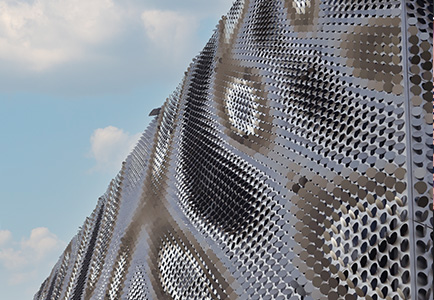
Parametric Architecture in India: Why It’s Shaping the Future of Facade Design
Architecture is evolving - and with it, the language of the façade. At the heart of this evolution lies a powerful design philosophy: parametric architecture.
03-11-25 | Industry Trends
Top Facade Architecture Trends 2026 Tech Sustainability and Aesthetic Breakthroughs
The building envelope is undergoing a radical transformation. No longer just a 'skin,' it is now a performance-driven asset that breathes and adapts
12-02-26 | Industry Trends
Facade Design Trends 2026 Smart Sustainable and High-Performance Building Exteriors
The building envelope is undergoing a radical transformation. No longer just a 'skin,' it is now a performance-driven asset that breathes and adapts
23-02-26 | Industry Trends
Social
Legal
Privacy Policy|Terms & Conditions