





The Metaguise Map: 10 Iconic Facade Moments in Indian Architecture (2026)
04-07-26 | Facade Innovations
Key Takeaways
• India's architectural identity is being reshaped in real time — not by AI renders or concept studies, but by buildings that have been designed, fabricated, installed, and photographed. The facades on this list exist. You can visit most of them. • Iconic facades share five characteristics regardless of building type: material specificity, compositional clarity, site responsiveness, temporal performance (changing with light), and irreproducibility. Most facades achieve one or two. The best achieve all five simultaneously. • Metaguise's portfolio includes several of India's most celebrated contemporary facade installations — from the Miraj Cricket Stadium in Rajasthan to GLS University in Ahmedabad to luxury residential projects across the country's premium markets. • This guide analyses what makes a facade truly iconic, profiles 10 landmark facade types with the material intelligence behind each, and explains how Metaguise brings the same design thinking to projects of every scale — from a stadium to a gate pier.
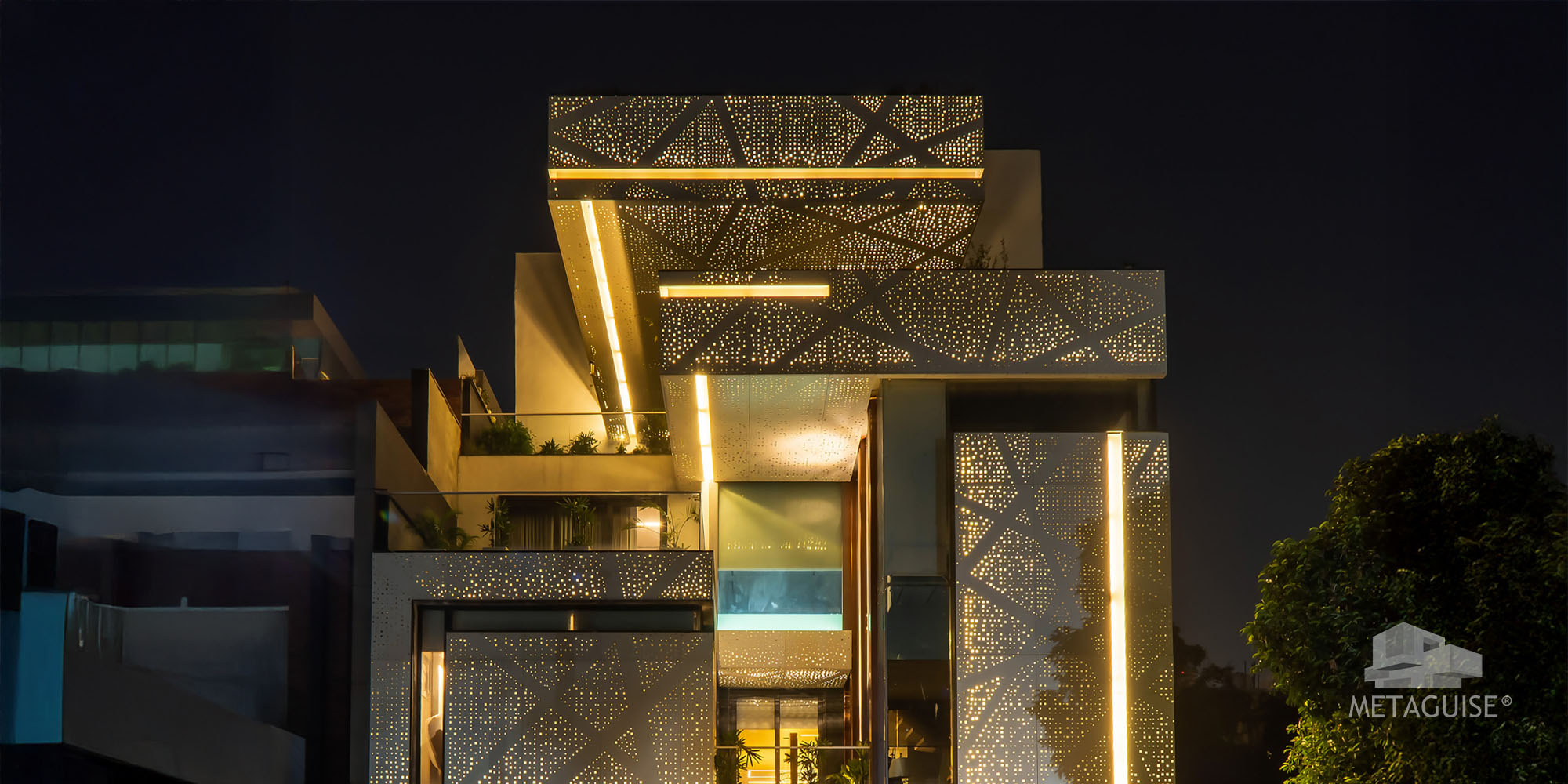
What Makes a Facade Iconic? The Five Characteristics
The word gets thrown around constantly. Every new apartment complex has an iconic entrance. Every retail brand's flagship store is iconic. Every farmhouse on Instagram is iconic. At some point the word stopped meaning anything — which is exactly why it is worth being precise about what, in architectural terms, actually makes a facade memorable rather than merely expensive. It is not budget. Some of India's most celebrated recent facades were not the most expensive commissions in their micro-markets. It is not complexity. A flat SolidPanel in warm grey PVDF can be iconic; a parametric surface that no one can read or remember cannot. What makes a facade genuinely iconic is a combination of five qualities — and the facades in this list were chosen because they demonstrate most or all of them in built reality, not in a render.
10 Iconic Facade Types and the Material Intelligence Behind Them
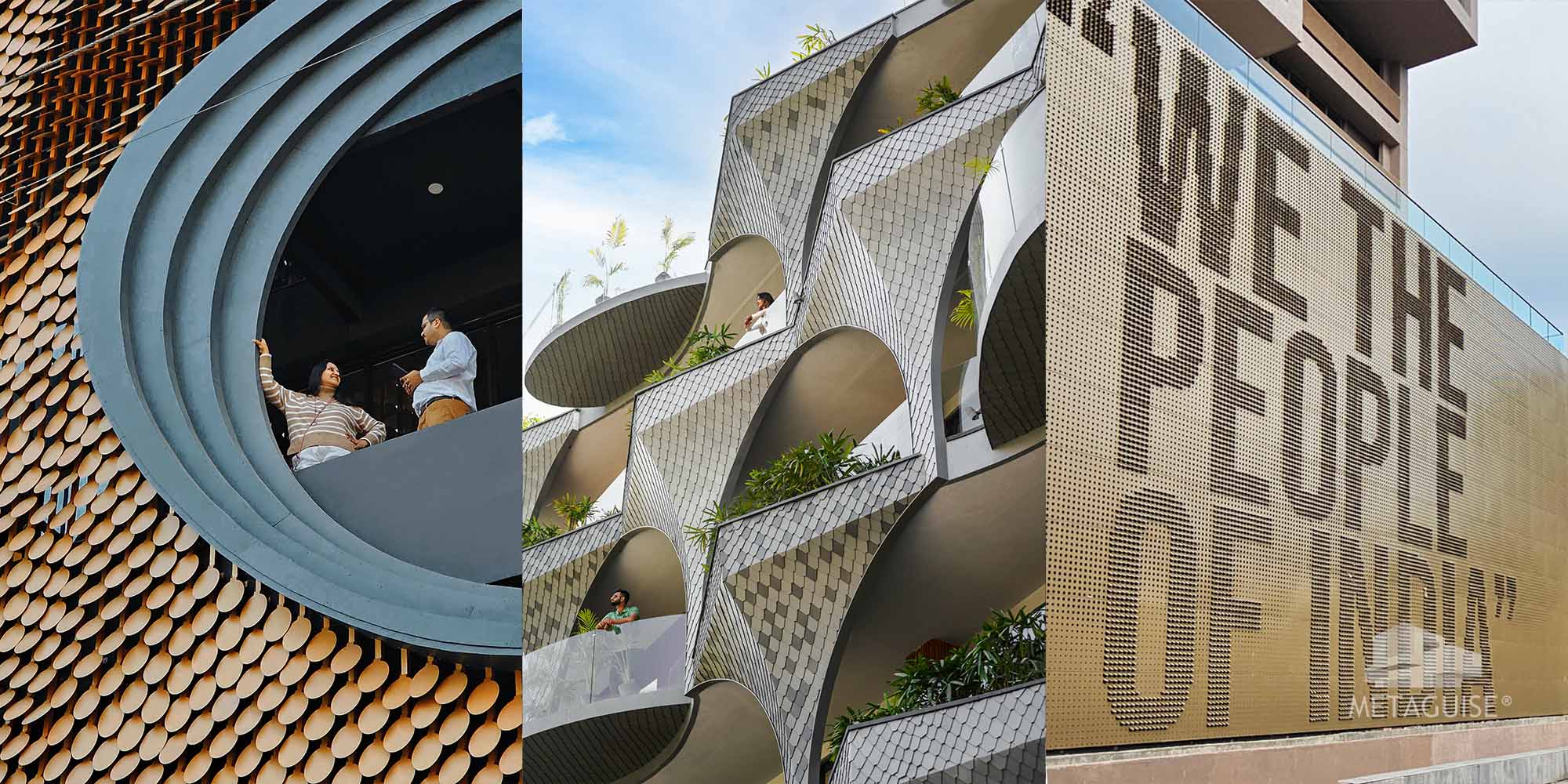
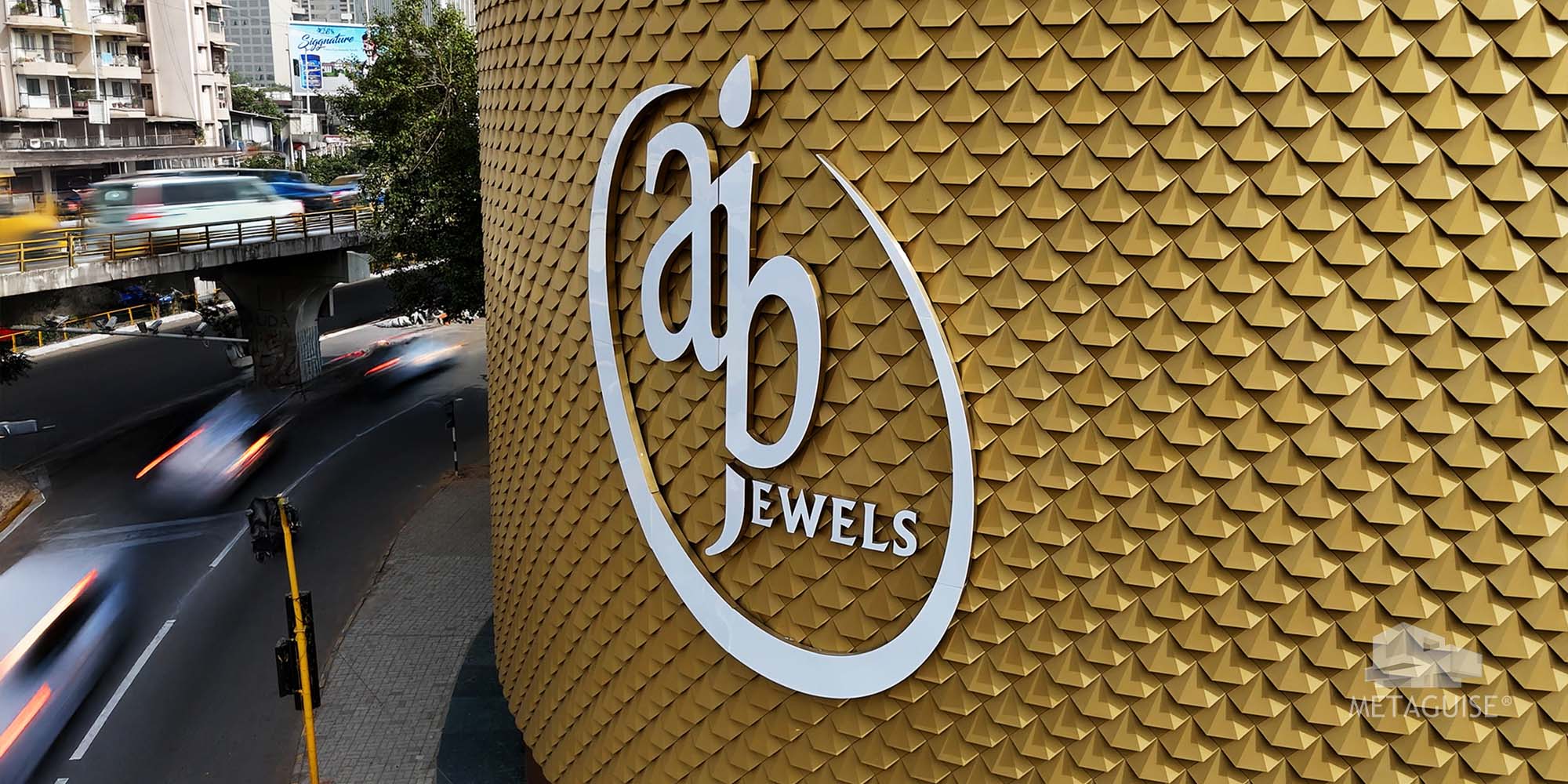
1. The Parametric Stadium Facade (Miraj Cricket Stadium, Rajasthan) Metaguise's landmark installation at Miraj Cricket Stadium — thousands of gold MetaSequin modules parametrically choreographed to depict cricketing narrative across the elevation — is India's most celebrated contemporary parametric facade. The MetaSequin gold anodised module composition reads as a shimmering cinematic image from the approach road and as mathematically precise individual module geometry at close range. The material: anodised aluminium — the only material that can deliver both the shimmer intensity and the coastal/outdoor durability this application demands. 2. The Institutional Parametric Campus (GLS University, Ahmedabad) GLS University's primary academic building facade — a MetaSequin silver anodised installation that changes expression through the Ahmedabad day — has become one of India's most photographed educational building facades. The parametric script was designed to respond to the campus's solar geometry: the shimmer is most intense in the morning when students arrive, softer and more contemplative in the afternoon study hours. 3. The Corporate Identity Facade India's IT corridors — HITEC City, Whitefield, ORR Bangalore — have produced a generation of corporate facades that use MetaCassette or SolidPanel in deep charcoal or dark anodised as a primary brand identity tool. The flat, seamless precision of these systems reads as corporate authority at the scale of the approach road — communicating through material quality what signage can only suggest. 4. The Biophilic Residential Screen In Koramangala Bangalore, Koregaon Park Pune, and Bandra Mumbai, MetaCoin perforated screens in forest green PVDF integrated with climbing plants have created a category of residential facade that is now being referenced across India's premium bungalow market. The material intelligence: a perforated aluminium face that provides privacy and solar control while creating an armature for living architecture. 5. The Corten Farmhouse Boundary The MetaCorten weathering steel tone facade on farmhouse boundary walls across the Mehrauli-Gurgaon corridor, Maharashtra's Western Ghats retreat belt, and Rajasthan's rural villa landscape has created India's most compelling contemporary vernacular architecture. The MetaCorten tone PVDF on aluminium delivers the warm rust-brown patina of Corten without Corten's coastal limitations — making the farmhouse boundary wall the most successful landscape-integrated facade moment in Indian residential architecture. 6. The Luxury Jewellery Flagship Gold anodised MetaSequin or MetaCoin on a jewellery retail flagship creates the most direct material-to-merchandise resonance in Indian retail architecture — the coin module form referencing the medallions and coins that are the jewellery category's primary visual language. These installations have become the most photographed retail facades in their respective developments. 7. The Chandigarh Sector Bungalow Transformation The transformation of a 1980s sector bungalow with MetaFlute champagne PVDF — from painted rendered masonry to a precision metal facade — is India's most commercially impactful facade renovation category. The before-and-after on a wide Chandigarh sector frontage is the most dramatic per-square-foot visual upgrade in Indian residential architecture. 8. The Coastal Hotel Arrival Feature A gold anodised MetaSequin entrance canopy on a beachfront hotel in Goa or Kerala — catching the coastal evening light as guests arrive — has become one of India's most distinctive hospitality architecture moments. The material: anodised aluminium for coastal durability, gold tone for warm precious-metal resonance with the seaside luxury experience. 9. The Pharmaceutical Precision Campus Hyderabad's pharma corridor has established a facade type as recognisable as the industry it serves: MetaCassette pure matte white PVDF on institutional campus buildings — immaculate, clinical, and authoritative. The material logic: a non-combustible solid aluminium surface that extends the clean-room quality standard of the interior to the building's exterior. 10. The Punjab Mega-Bungalow Statement The gold anodised MetaSequin or MetaFold entrance tower on a Ludhiana or Amritsar mega-bungalow — visible from the arterial road, carrying the warm precious-metal tone that Punjab's material culture demands, and shimmering through the Punjab afternoon light — has emerged as India's most culturally specific facade landmark type. These buildings are neighbourhood signatures from the moment of installation.
Can Your Building Be Next? What Makes a Project Ready for an Iconic Facade
Not every building is a candidate for an iconic facade — and the honest answer to 'can my building be iconic?' is that it depends on the brief, the site, and the investment in design quality. The buildings in this list became landmarks because their homeowners or developers made a specific decision: to invest in design quality rather than defaulting to specification adequacy; to trust the designer's parametric judgment rather than constraining the brief to a catalogue choice; and to allow the facade to be the primary architectural statement of the project rather than a finishing decision. If your brief is 'I want a facade that reads as architecturally serious, that is specific to my building and cannot be replicated by a neighbour, and that will still look as designed in 2040' — your project is ready for an iconic facade. The next step is a Metaguise design consultation.
Start With Metaguise
Every project in this guide began with a conversation — a homeowner, a developer, or an architect describing what they wanted the building to say, and Metaguise's design team developing a parametric composition that said it. Whether the brief is a MetaSequin stadium installation or a MetaFlute bungalow renovation, the process is the same: design consultation, parametric development, physical sample review, engineering validation, fabrication, and installation. Contact Metaguise to begin.
Frequently Asked Questions
1.How do I know if my building is well-suited to a parametric facade?
Parametric facades deliver their strongest results on buildings with clear primary viewing axes — a wide street-facing elevation, a landmark approach road, or a prominent corner site. Buildings where the facade is experienced from multiple distances (from the road, from the entrance path, at the door) benefit most from the triple-scale reading that parametric systems achieve. Metaguise's site assessment evaluates the building's viewing conditions and recommends the system tier — parametric or modular — that creates the strongest architectural result for the specific site.2.Does an iconic facade require a large building?
No. Some of the most successful Metaguise parametric installations are on residential entrance features of 200–400 sq ft — a single gate pier or entrance tower where the composition is focused and concentrated. The parametric logic that makes a MetaCoin array iconic does not require a large surface area; it requires precision in the panel proportions, the module gradient, and the finish specification. A small facade that is perfectly designed is more iconic than a large facade that is averagely specified.3.How long does it take to design and install an iconic facade?
For parametric systems (MetaSequin, MetaCoin, MetaFold), the design development phase is 4–6 weeks, fabrication 6–10 weeks, and installation 2–4 weeks depending on scale — total 12–20 weeks from initial consultation to completed installation. For modular MetaForm systems (MetaFlute, MetaCassette, SolidPanel), the timeline is shorter: 2–3 weeks design, 4–6 weeks fabrication, 1–3 weeks installation — total 8–12 weeks.4.Is it possible to visit a completed Metaguise installation before commissioning?
Yes. Metaguise regularly facilitates client site visits to completed project references — particularly for first-time clients commissioning parametric systems who want to see the material quality, the shadow performance, and the installation precision of a completed installation before committing. Contact Metaguise to discuss which completed installations in your region are accessible for a reference visit.The Metaguise Map: 10 Iconic Facade Moments in Indian Architecture (2026)
04-07-26 | Facade Innovations
Key Takeaways
• India's architectural identity is being reshaped in real time — not by AI renders or concept studies, but by buildings that have been designed, fabricated, installed, and photographed. The facades on this list exist. You can visit most of them. • Iconic facades share five characteristics regardless of building type: material specificity, compositional clarity, site responsiveness, temporal performance (changing with light), and irreproducibility. Most facades achieve one or two. The best achieve all five simultaneously. • Metaguise's portfolio includes several of India's most celebrated contemporary facade installations — from the Miraj Cricket Stadium in Rajasthan to GLS University in Ahmedabad to luxury residential projects across the country's premium markets. • This guide analyses what makes a facade truly iconic, profiles 10 landmark facade types with the material intelligence behind each, and explains how Metaguise brings the same design thinking to projects of every scale — from a stadium to a gate pier.
What Makes a Facade Iconic? The Five Characteristics
The word gets thrown around constantly. Every new apartment complex has an iconic entrance. Every retail brand's flagship store is iconic. Every farmhouse on Instagram is iconic. At some point the word stopped meaning anything — which is exactly why it is worth being precise about what, in architectural terms, actually makes a facade memorable rather than merely expensive. It is not budget. Some of India's most celebrated recent facades were not the most expensive commissions in their micro-markets. It is not complexity. A flat SolidPanel in warm grey PVDF can be iconic; a parametric surface that no one can read or remember cannot. What makes a facade genuinely iconic is a combination of five qualities — and the facades in this list were chosen because they demonstrate most or all of them in built reality, not in a render.
10 Iconic Facade Types and the Material Intelligence Behind Them
1. The Parametric Stadium Facade (Miraj Cricket Stadium, Rajasthan) Metaguise's landmark installation at Miraj Cricket Stadium — thousands of gold MetaSequin modules parametrically choreographed to depict cricketing narrative across the elevation — is India's most celebrated contemporary parametric facade. The MetaSequin gold anodised module composition reads as a shimmering cinematic image from the approach road and as mathematically precise individual module geometry at close range. The material: anodised aluminium — the only material that can deliver both the shimmer intensity and the coastal/outdoor durability this application demands. 2. The Institutional Parametric Campus (GLS University, Ahmedabad) GLS University's primary academic building facade — a MetaSequin silver anodised installation that changes expression through the Ahmedabad day — has become one of India's most photographed educational building facades. The parametric script was designed to respond to the campus's solar geometry: the shimmer is most intense in the morning when students arrive, softer and more contemplative in the afternoon study hours. 3. The Corporate Identity Facade India's IT corridors — HITEC City, Whitefield, ORR Bangalore — have produced a generation of corporate facades that use MetaCassette or SolidPanel in deep charcoal or dark anodised as a primary brand identity tool. The flat, seamless precision of these systems reads as corporate authority at the scale of the approach road — communicating through material quality what signage can only suggest. 4. The Biophilic Residential Screen In Koramangala Bangalore, Koregaon Park Pune, and Bandra Mumbai, MetaCoin perforated screens in forest green PVDF integrated with climbing plants have created a category of residential facade that is now being referenced across India's premium bungalow market. The material intelligence: a perforated aluminium face that provides privacy and solar control while creating an armature for living architecture. 5. The Corten Farmhouse Boundary The MetaCorten weathering steel tone facade on farmhouse boundary walls across the Mehrauli-Gurgaon corridor, Maharashtra's Western Ghats retreat belt, and Rajasthan's rural villa landscape has created India's most compelling contemporary vernacular architecture. The MetaCorten tone PVDF on aluminium delivers the warm rust-brown patina of Corten without Corten's coastal limitations — making the farmhouse boundary wall the most successful landscape-integrated facade moment in Indian residential architecture. 6. The Luxury Jewellery Flagship Gold anodised MetaSequin or MetaCoin on a jewellery retail flagship creates the most direct material-to-merchandise resonance in Indian retail architecture — the coin module form referencing the medallions and coins that are the jewellery category's primary visual language. These installations have become the most photographed retail facades in their respective developments. 7. The Chandigarh Sector Bungalow Transformation The transformation of a 1980s sector bungalow with MetaFlute champagne PVDF — from painted rendered masonry to a precision metal facade — is India's most commercially impactful facade renovation category. The before-and-after on a wide Chandigarh sector frontage is the most dramatic per-square-foot visual upgrade in Indian residential architecture. 8. The Coastal Hotel Arrival Feature A gold anodised MetaSequin entrance canopy on a beachfront hotel in Goa or Kerala — catching the coastal evening light as guests arrive — has become one of India's most distinctive hospitality architecture moments. The material: anodised aluminium for coastal durability, gold tone for warm precious-metal resonance with the seaside luxury experience. 9. The Pharmaceutical Precision Campus Hyderabad's pharma corridor has established a facade type as recognisable as the industry it serves: MetaCassette pure matte white PVDF on institutional campus buildings — immaculate, clinical, and authoritative. The material logic: a non-combustible solid aluminium surface that extends the clean-room quality standard of the interior to the building's exterior. 10. The Punjab Mega-Bungalow Statement The gold anodised MetaSequin or MetaFold entrance tower on a Ludhiana or Amritsar mega-bungalow — visible from the arterial road, carrying the warm precious-metal tone that Punjab's material culture demands, and shimmering through the Punjab afternoon light — has emerged as India's most culturally specific facade landmark type. These buildings are neighbourhood signatures from the moment of installation.
Can Your Building Be Next? What Makes a Project Ready for an Iconic Facade
Not every building is a candidate for an iconic facade — and the honest answer to 'can my building be iconic?' is that it depends on the brief, the site, and the investment in design quality. The buildings in this list became landmarks because their homeowners or developers made a specific decision: to invest in design quality rather than defaulting to specification adequacy; to trust the designer's parametric judgment rather than constraining the brief to a catalogue choice; and to allow the facade to be the primary architectural statement of the project rather than a finishing decision. If your brief is 'I want a facade that reads as architecturally serious, that is specific to my building and cannot be replicated by a neighbour, and that will still look as designed in 2040' — your project is ready for an iconic facade. The next step is a Metaguise design consultation.
Start With Metaguise
Every project in this guide began with a conversation — a homeowner, a developer, or an architect describing what they wanted the building to say, and Metaguise's design team developing a parametric composition that said it. Whether the brief is a MetaSequin stadium installation or a MetaFlute bungalow renovation, the process is the same: design consultation, parametric development, physical sample review, engineering validation, fabrication, and installation. Contact Metaguise to begin.
Frequently Asked Questions
1.How do I know if my building is well-suited to a parametric facade?
Parametric facades deliver their strongest results on buildings with clear primary viewing axes — a wide street-facing elevation, a landmark approach road, or a prominent corner site. Buildings where the facade is experienced from multiple distances (from the road, from the entrance path, at the door) benefit most from the triple-scale reading that parametric systems achieve. Metaguise's site assessment evaluates the building's viewing conditions and recommends the system tier — parametric or modular — that creates the strongest architectural result for the specific site.2.Does an iconic facade require a large building?
No. Some of the most successful Metaguise parametric installations are on residential entrance features of 200–400 sq ft — a single gate pier or entrance tower where the composition is focused and concentrated. The parametric logic that makes a MetaCoin array iconic does not require a large surface area; it requires precision in the panel proportions, the module gradient, and the finish specification. A small facade that is perfectly designed is more iconic than a large facade that is averagely specified.3.How long does it take to design and install an iconic facade?
For parametric systems (MetaSequin, MetaCoin, MetaFold), the design development phase is 4–6 weeks, fabrication 6–10 weeks, and installation 2–4 weeks depending on scale — total 12–20 weeks from initial consultation to completed installation. For modular MetaForm systems (MetaFlute, MetaCassette, SolidPanel), the timeline is shorter: 2–3 weeks design, 4–6 weeks fabrication, 1–3 weeks installation — total 8–12 weeks.4.Is it possible to visit a completed Metaguise installation before commissioning?
Yes. Metaguise regularly facilitates client site visits to completed project references — particularly for first-time clients commissioning parametric systems who want to see the material quality, the shadow performance, and the installation precision of a completed installation before committing. Contact Metaguise to discuss which completed installations in your region are accessible for a reference visit.Related Articles
Related Articles
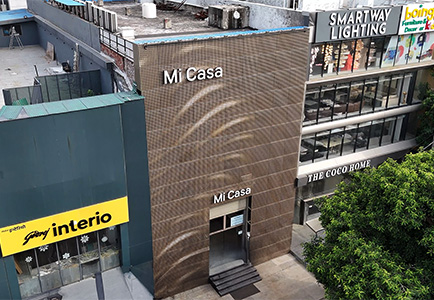
The Rise of Parametric facades: Designing with Algorithmic Elegance
A revolutionary parametric facade system designed to elevate architectural aesthetics. Crafted with premium metals and enhanced with MetaSurface finishes, MetaCoin offers unparalleled customizability, from the shape and size of each element to its color and arrangement. Its dynamic design reacts to light and perspective, creating ever-changing visual effects. Ideal for contemporary and iconic structures, MetaCoin transforms facades into captivating works of art that are sustainable, durable, and visually stunning.
01-04-25 | Facade Innovations
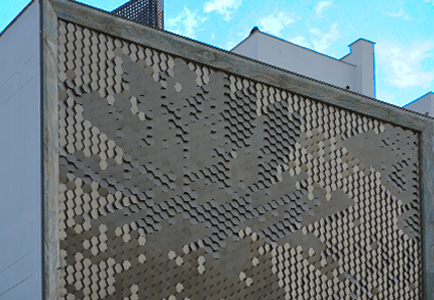
METABLOX™ by Metaguise: A Breakthrough in Parametric Facade Design
At the intersection of culture, craftsmanship, and cutting-edge geometry, METABLOX™ emerges as a bold new direction in architectural innovation. Introduced by Metaguise, this first-of-its-kind parametric facade technology makes its striking debut at the RJ Jewellers flagship store in Jaipur - setting a new benchmark in the world of metal design and modern Indian architecture.
09-04-25 | Facade Innovations
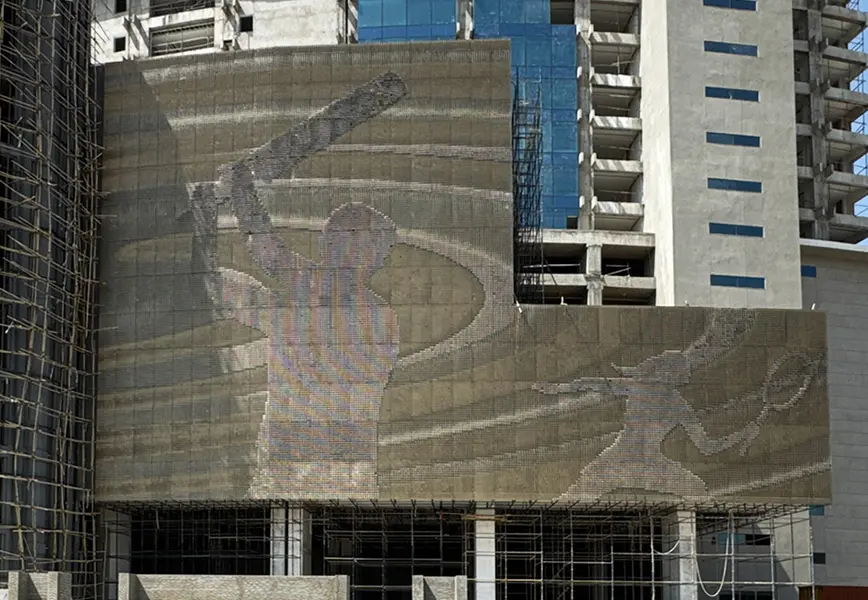
5 Landmark Projects That Used MetaCoin to Transform Facades
When it comes to parametric architecture, MetaCoin stands out as a revolutionary metal coin facade system. Crafted with precision, it offers dynamic aesthetics, adaptability, and a unique identity to structures. Let's delve into five notable projects where MetaCoin has redefined architectural facades.
13-05-25 | Facade Innovations
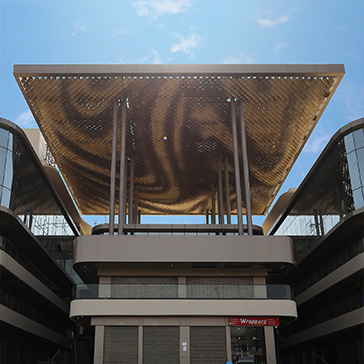
From Code to Construction: How Parametric Facades Are Built
Some buildings just make you look twice. Maybe it’s the way the facade curves. Or how the surface catches the light at different times of day. Often, what you’re seeing is more than just a design, it’s a parametric facade.
10-06-25 | Facade Innovations
Social
Legal
Privacy Policy|Terms & Conditions