.png)




.png)
The Homeowner Who Rejected Italian Marble for Indian Algorithms - A ₹10 Crore Decision Told Through WhatsApp Screenshots
20-04-26 | Behind the Design
The Marble Empire No Longer Holds Court
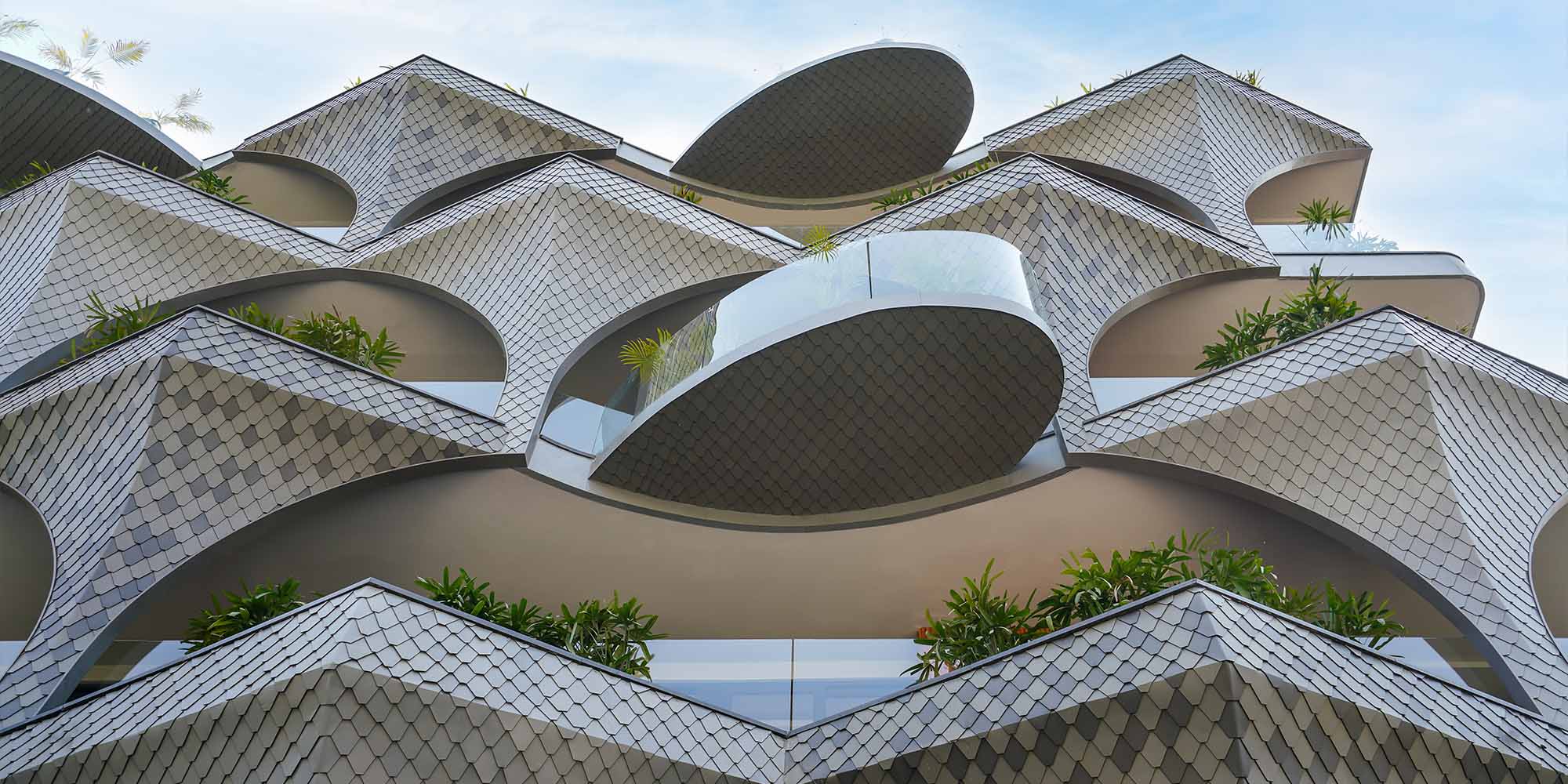
For generations, the language of Indian luxury real estate has been written in stone. Italian marble. Imported granite. Onyx from Iran. The shinier, the rarer, the more expensive per square foot, the better. Your home's exterior wasn't just shelter, it was a ledger of wealth, readable from the street. Rajiv's original brief to his architect had followed this script perfectly: Statuario marble for the facade, backlit onyx panels for the entrance, carved stone jali screens as a nod to heritage. Budget: no object. Timeline: eighteen months. The only instruction that mattered: "I want people to stop their cars." But somewhere between the third Italian stone vendor meeting and a business trip to Singapore, Rajiv saw a building that made him question everything. It was the facade of a boutique hotel - not marble, not glass, but metal. Thousands of bronze-toned panels arranged in what looked like a mathematical poem. The surface changed as he walked past it. Shadows deepened. Highlights shifted. The building seemed to breathe. He photographed it obsessively. Sent the images to his architect, who responded with polite skepticism: "Beautiful, but this is parametric design. Very complex. We'd need to source this from Europe. Maybe a Swiss fabricator. Lead time would be 14 months, and I'm not sure about customs clearance for something this bespoke." That's when Rajiv started Googling. And that's when he found Metaguise.
The WhatsApp Briefing That Changed Everything
The early messages were cautious, exploratory. Rajiv wasn't convinced India could deliver what he'd seen abroad. The Metaguise team didn't oversell, they asked questions instead. "What feeling do you want the facade to evoke at 7 AM versus 7 PM?" "Is this home for entertaining, for legacy, or for personal retreat?" "Do you want the architecture to announce itself, or reveal itself slowly?" These weren't vendor questions. These were design partner questions. And Rajiv, who had spent his career evaluating businesses on strategic clarity, recognized the difference immediately. Within a week, the conversation had moved from skepticism to collaboration. The Metaguise design team sent parametric facade studies, not static renderings, but algorithmic variations. Each option showed how light, shadow, and viewing angle would transform the elevation throughout the day and across seasons. "Parametric design enables architects to explore thousands of design iterations in the time it would take to manually draft a few, fundamentally changing the relationship between computational intelligence and built form." — McKinsey & Company, The Next Frontier in Design-Build Technology One study caught his attention immediately: a facade inspired by the geometry of lotus petals, using the MetaSequin system. Each "sequin" was a hexagonal-shaped metal sequin, angled to catch light differently based on its position. The result was a surface that looked solid from one angle, almost transparent from another, and perpetually dynamic as the sun moved across the sky. Rajiv screenshotted it, forwarded it to his wife with a single line: "This. Not marble. This." Her reply: "It doesn't look Indian." His response: "Exactly."
The ₹10 Crore Conversation, One Screenshot at a Time
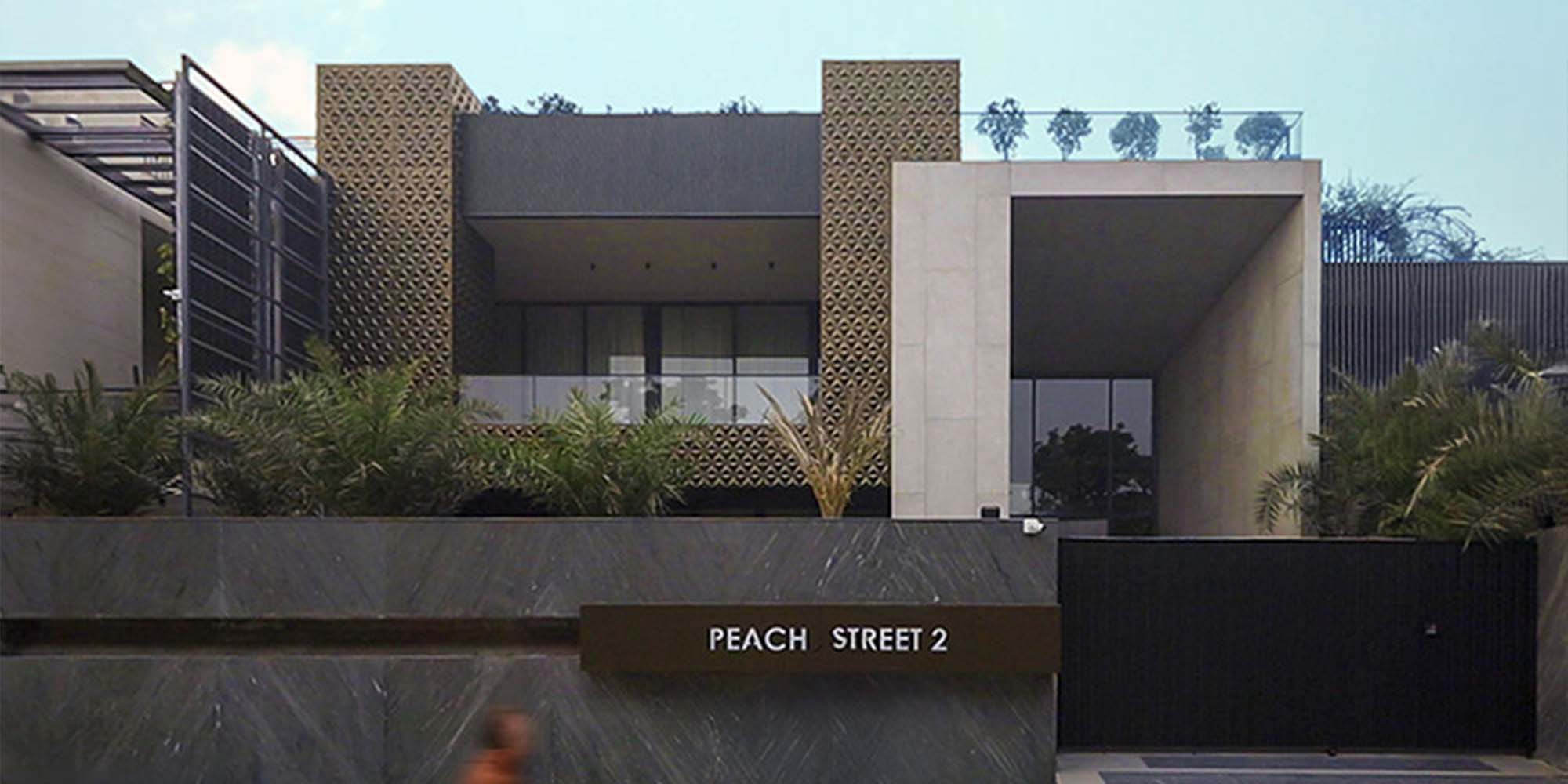
What followed was a masterclass in how India's new architectural elite makes decisions. Not in boardrooms, but in chat threads. The WhatsApp group became a living design document: Week 3: Metaguise shared a 3D walkthrough video showing how the facade would look from the street at different times of day. Rajiv forwarded it to six friends, all of whom asked for Metaguise's contact. Week 5: The architect uploaded hand-drawn sketches alongside Grasshopper screenshots - parametric modeling software that would generate every unique panel. Rajiv's teenage daughter, studying architecture in London, joined the chat to ask technical questions. Week 8: Material samples arrived at Rajiv's office. He photographed them on his desk, next to the Italian marble samples his contractor had sent. The metal had a warmth the stone didn't. It felt contemporary in a way marble, no matter how expensive, could never be. Week 12: The final design was locked. 4,200 unique panels. Zero repetition. Each one, numerically controlled, parametrically generated, fabricated in-house at Metaguise's facility. Total facade investment: ₹10.2 crore. More than the marble would have cost. But Rajiv wasn't comparing costs anymore, he was comparing outcomes. One message from that period stands out. Rajiv wrote it late at night, after his architect had expressed concern about "straying too far from established luxury language." "I didn't build this wealth to build the same house as everyone else. I want my grandchildren to walk past this building in 2050 and say, 'Nana didn't follow. He led.' Marble is beautiful. But it's a full stop. This facade is a question mark and that's exactly what legacy should be."
Installation, Iteration, and the Neighbors Who Stopped By
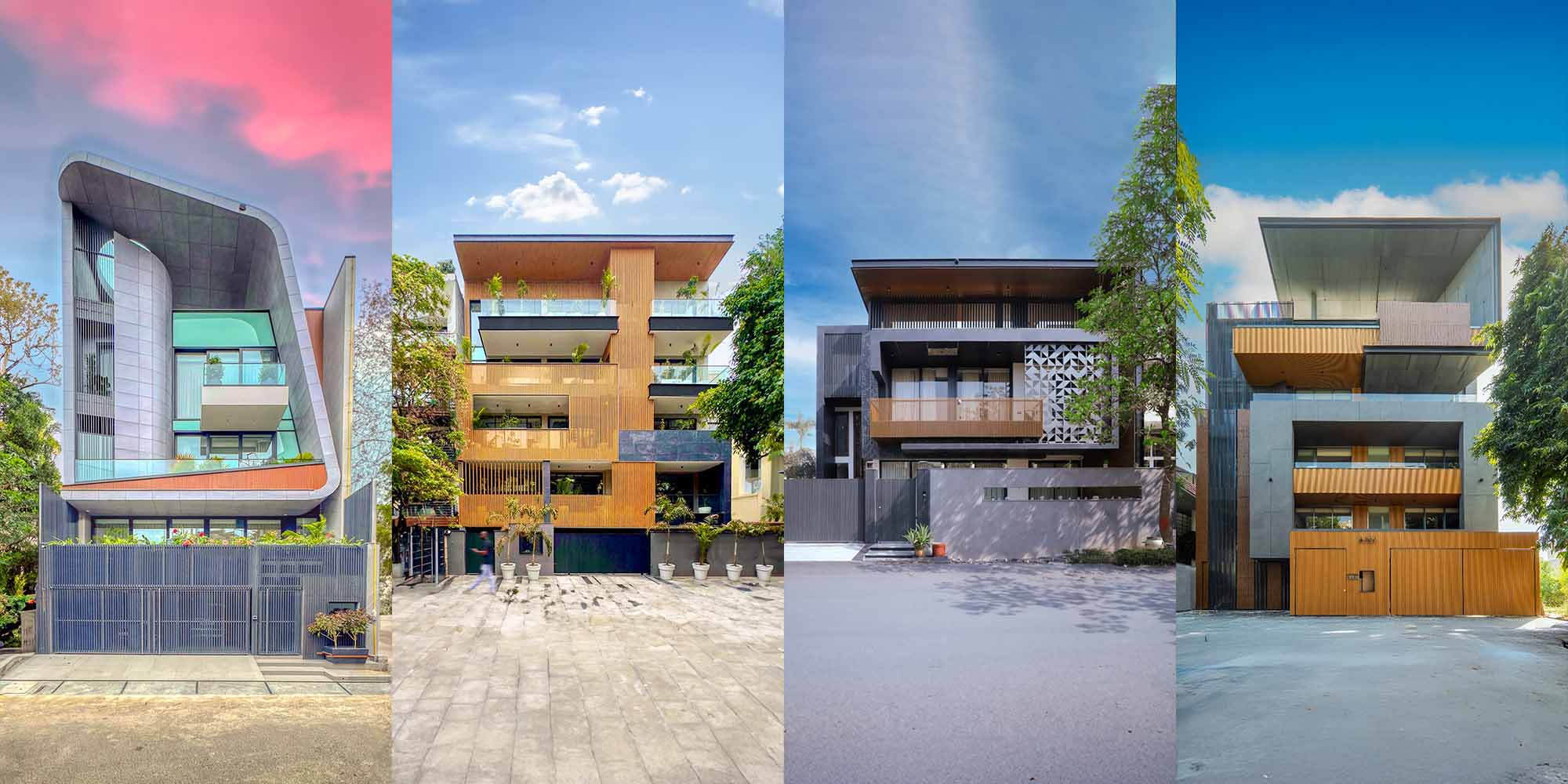
The installation took eleven weeks. Every morning, Rajiv received progress photos via WhatsApp. The panels went up row by row, and the facade began to emerge, not as a rendering come to life, but as something that exceeded the digital promise. Because here's what no rendering can fully capture: how a parametric facade performs in real atmospheric conditions. On overcast monsoon mornings, the panels read as a unified matte bronze surface, subtle and restrained. During Delhi's harsh midday sun, the angled surfaces create deep shadows that keep the facade from feeling flat or overwhelming. At dusk, when the sky turns pink and amber, the building seems to glow from within, not through lighting, but through pure geometry and material intelligence. The MetaSurface finishes played a critical role here. Metaguise's proprietary coating technology ensured the metal would age gracefully, developing a tint that adds character rather than deterioration, something marble, for all its luxury pedigree, simply cannot do. Marble stains. Marble cracks. Marble needs constant maintenance. This facade was designed to improve with time. Neighbors began stopping by during the final weeks of construction. Not to critique. To inquire. One WhatsApp message Rajiv received from a friend three houses down simply read: "Who's your architect? And what is that material? It looks like the building is listening to music." By the time the scaffolding came down, Rajiv's home had become a case study in a quiet rebellion happening across India's luxury residential sector. The rebellion isn't loud. It isn't trend-driven. It's a shift from imported opulence to indigenous intelligence, from material as status to design as signature.
What Rajiv's Decision Reveals About India's Architectural Future
Conversations we've had with homeowners reveal a recurring theme: this is likely the last house they'll build. Not the last property they'll own, but the last one they'll personally conceptualise, supervise, and inhabit as a primary residence. It's the home their grandchildren will remember. The backdrop for every family photograph for the next 30 years. In that context, ₹2 crore stops being an expense and becomes an heirloom investment. The facade is the part of the house that doesn't get renovated, doesn't go out of style, and continues to perform its function - announcing that this family valued beauty and precision - long after you're gone.
Timing the Reveal: The New Griha Pravesh Season
This wasn't just a facade. It was a referendum on what luxury means in 2026. The traditional playbook -Italian marble, French limestone, German engineering - assumes that "best" must be imported. That India's role is to install, not innovate. That computational design is too advanced, too Western, too other for Indian sensibilities. Rajiv's home proves otherwise. It demonstrates that: Parametric design is no longer theoretical - it's fabricable, installable, and maintainable within Indian supply chains and timelines. Metal facades outperform stone in dynamic expression - they capture light, create movement, and age with dignity in ways static materials cannot. Bespoke doesn't require import - India now has the design computation, fabrication infrastructure, and installation expertise to deliver world-class parametric architecture entirely in-house. The new luxury is algorithmic - it's not about the rarest material, but the most intelligent assembly. Not the most expensive stone, but the most considered system. Rajiv's WhatsApp archive, now over 2,000 messages, tells the story of how India's HNI class is beginning to commission architecture. Not through formal RFPs and lengthy proposals, but through real-time collaboration, visual iteration, and trust built one shared image at a time. The final message in the thread came three weeks after move-in. It was a photo, sent without a caption. The house at golden hour, the facade alive with light and shadow, a slight breeze moving the ashoka trees in the foreground. And then, a few minutes later, a follow-up text: "My daughter asked if we could light this for Diwali. I told her we don't need to. It already glows."
Why This Matters for Your Project
If you're reading this as an architect, developer, or homeowner considering a facade that goes beyond the conventional, Rajiv's story offers a blueprint, not for copying his design, but for approaching the decision itself. The questions aren't "marble or metal?" or "imported or local?" The questions are: What do you want your building to say in 2026, and what do you want it to say in 2046? Do you want a facade that looks the same at noon and midnight, or one that evolves with light? Are you commissioning a surface, or are you commissioning a performance? Systems like MetaSequin, MetaFold, and MetaCassette aren't just cladding options - they're design languages. Each one offers a different vocabulary for how your building speaks to the street, to the sky, and to time itself. And unlike marble, which locks you into a single aesthetic decision forever, parametric metal facades are computationally infinite. The same system can be tuned to read as bold or subtle, traditional or futuristic, warm or cool - all through adjustments in panel angle, density, finish, and layout. Rajiv's decision wasn't about rejecting marble. It was about choosing what marble could never be - dynamic, intelligent, and unmistakably his own. If you're ready to explore what a parametric facade could mean for your project, the conversation starts the same way his did: with a single message, a reference image, and the willingness to ask "is this possible here?" The answer, increasingly, is yes. And it starts with a team that doesn't just fabricate facades. They architect futures. Visit metaguise.com to begin your own conversation, or explore the systems that are redefining what Indian luxury looks like, one algorithm at a time.
The Homeowner Who Rejected Italian Marble for Indian Algorithms - A ₹10 Crore Decision Told Through WhatsApp Screenshots
20-04-26 | Behind the Design
The Marble Empire No Longer Holds Court
For generations, the language of Indian luxury real estate has been written in stone. Italian marble. Imported granite. Onyx from Iran. The shinier, the rarer, the more expensive per square foot, the better. Your home's exterior wasn't just shelter, it was a ledger of wealth, readable from the street. Rajiv's original brief to his architect had followed this script perfectly: Statuario marble for the facade, backlit onyx panels for the entrance, carved stone jali screens as a nod to heritage. Budget: no object. Timeline: eighteen months. The only instruction that mattered: "I want people to stop their cars." But somewhere between the third Italian stone vendor meeting and a business trip to Singapore, Rajiv saw a building that made him question everything. It was the facade of a boutique hotel - not marble, not glass, but metal. Thousands of bronze-toned panels arranged in what looked like a mathematical poem. The surface changed as he walked past it. Shadows deepened. Highlights shifted. The building seemed to breathe. He photographed it obsessively. Sent the images to his architect, who responded with polite skepticism: "Beautiful, but this is parametric design. Very complex. We'd need to source this from Europe. Maybe a Swiss fabricator. Lead time would be 14 months, and I'm not sure about customs clearance for something this bespoke." That's when Rajiv started Googling. And that's when he found Metaguise.
The WhatsApp Briefing That Changed Everything
The early messages were cautious, exploratory. Rajiv wasn't convinced India could deliver what he'd seen abroad. The Metaguise team didn't oversell, they asked questions instead. "What feeling do you want the facade to evoke at 7 AM versus 7 PM?" "Is this home for entertaining, for legacy, or for personal retreat?" "Do you want the architecture to announce itself, or reveal itself slowly?" These weren't vendor questions. These were design partner questions. And Rajiv, who had spent his career evaluating businesses on strategic clarity, recognized the difference immediately. Within a week, the conversation had moved from skepticism to collaboration. The Metaguise design team sent parametric facade studies, not static renderings, but algorithmic variations. Each option showed how light, shadow, and viewing angle would transform the elevation throughout the day and across seasons. "Parametric design enables architects to explore thousands of design iterations in the time it would take to manually draft a few, fundamentally changing the relationship between computational intelligence and built form." — McKinsey & Company, The Next Frontier in Design-Build Technology One study caught his attention immediately: a facade inspired by the geometry of lotus petals, using the MetaSequin system. Each "sequin" was a hexagonal-shaped metal sequin, angled to catch light differently based on its position. The result was a surface that looked solid from one angle, almost transparent from another, and perpetually dynamic as the sun moved across the sky. Rajiv screenshotted it, forwarded it to his wife with a single line: "This. Not marble. This." Her reply: "It doesn't look Indian." His response: "Exactly."
The ₹10 Crore Conversation, One Screenshot at a Time
What followed was a masterclass in how India's new architectural elite makes decisions. Not in boardrooms, but in chat threads. The WhatsApp group became a living design document: Week 3: Metaguise shared a 3D walkthrough video showing how the facade would look from the street at different times of day. Rajiv forwarded it to six friends, all of whom asked for Metaguise's contact. Week 5: The architect uploaded hand-drawn sketches alongside Grasshopper screenshots - parametric modeling software that would generate every unique panel. Rajiv's teenage daughter, studying architecture in London, joined the chat to ask technical questions. Week 8: Material samples arrived at Rajiv's office. He photographed them on his desk, next to the Italian marble samples his contractor had sent. The metal had a warmth the stone didn't. It felt contemporary in a way marble, no matter how expensive, could never be. Week 12: The final design was locked. 4,200 unique panels. Zero repetition. Each one, numerically controlled, parametrically generated, fabricated in-house at Metaguise's facility. Total facade investment: ₹10.2 crore. More than the marble would have cost. But Rajiv wasn't comparing costs anymore, he was comparing outcomes. One message from that period stands out. Rajiv wrote it late at night, after his architect had expressed concern about "straying too far from established luxury language." "I didn't build this wealth to build the same house as everyone else. I want my grandchildren to walk past this building in 2050 and say, 'Nana didn't follow. He led.' Marble is beautiful. But it's a full stop. This facade is a question mark and that's exactly what legacy should be."
Installation, Iteration, and the Neighbors Who Stopped By
The installation took eleven weeks. Every morning, Rajiv received progress photos via WhatsApp. The panels went up row by row, and the facade began to emerge, not as a rendering come to life, but as something that exceeded the digital promise. Because here's what no rendering can fully capture: how a parametric facade performs in real atmospheric conditions. On overcast monsoon mornings, the panels read as a unified matte bronze surface, subtle and restrained. During Delhi's harsh midday sun, the angled surfaces create deep shadows that keep the facade from feeling flat or overwhelming. At dusk, when the sky turns pink and amber, the building seems to glow from within, not through lighting, but through pure geometry and material intelligence. The MetaSurface finishes played a critical role here. Metaguise's proprietary coating technology ensured the metal would age gracefully, developing a tint that adds character rather than deterioration, something marble, for all its luxury pedigree, simply cannot do. Marble stains. Marble cracks. Marble needs constant maintenance. This facade was designed to improve with time. Neighbors began stopping by during the final weeks of construction. Not to critique. To inquire. One WhatsApp message Rajiv received from a friend three houses down simply read: "Who's your architect? And what is that material? It looks like the building is listening to music." By the time the scaffolding came down, Rajiv's home had become a case study in a quiet rebellion happening across India's luxury residential sector. The rebellion isn't loud. It isn't trend-driven. It's a shift from imported opulence to indigenous intelligence, from material as status to design as signature.
What Rajiv's Decision Reveals About India's Architectural Future
Conversations we've had with homeowners reveal a recurring theme: this is likely the last house they'll build. Not the last property they'll own, but the last one they'll personally conceptualise, supervise, and inhabit as a primary residence. It's the home their grandchildren will remember. The backdrop for every family photograph for the next 30 years. In that context, ₹2 crore stops being an expense and becomes an heirloom investment. The facade is the part of the house that doesn't get renovated, doesn't go out of style, and continues to perform its function - announcing that this family valued beauty and precision - long after you're gone.
Timing the Reveal: The New Griha Pravesh Season
This wasn't just a facade. It was a referendum on what luxury means in 2026. The traditional playbook -Italian marble, French limestone, German engineering - assumes that "best" must be imported. That India's role is to install, not innovate. That computational design is too advanced, too Western, too other for Indian sensibilities. Rajiv's home proves otherwise. It demonstrates that: Parametric design is no longer theoretical - it's fabricable, installable, and maintainable within Indian supply chains and timelines. Metal facades outperform stone in dynamic expression - they capture light, create movement, and age with dignity in ways static materials cannot. Bespoke doesn't require import - India now has the design computation, fabrication infrastructure, and installation expertise to deliver world-class parametric architecture entirely in-house. The new luxury is algorithmic - it's not about the rarest material, but the most intelligent assembly. Not the most expensive stone, but the most considered system. Rajiv's WhatsApp archive, now over 2,000 messages, tells the story of how India's HNI class is beginning to commission architecture. Not through formal RFPs and lengthy proposals, but through real-time collaboration, visual iteration, and trust built one shared image at a time. The final message in the thread came three weeks after move-in. It was a photo, sent without a caption. The house at golden hour, the facade alive with light and shadow, a slight breeze moving the ashoka trees in the foreground. And then, a few minutes later, a follow-up text: "My daughter asked if we could light this for Diwali. I told her we don't need to. It already glows."
Why This Matters for Your Project
If you're reading this as an architect, developer, or homeowner considering a facade that goes beyond the conventional, Rajiv's story offers a blueprint, not for copying his design, but for approaching the decision itself. The questions aren't "marble or metal?" or "imported or local?" The questions are: What do you want your building to say in 2026, and what do you want it to say in 2046? Do you want a facade that looks the same at noon and midnight, or one that evolves with light? Are you commissioning a surface, or are you commissioning a performance? Systems like MetaSequin, MetaFold, and MetaCassette aren't just cladding options - they're design languages. Each one offers a different vocabulary for how your building speaks to the street, to the sky, and to time itself. And unlike marble, which locks you into a single aesthetic decision forever, parametric metal facades are computationally infinite. The same system can be tuned to read as bold or subtle, traditional or futuristic, warm or cool - all through adjustments in panel angle, density, finish, and layout. Rajiv's decision wasn't about rejecting marble. It was about choosing what marble could never be - dynamic, intelligent, and unmistakably his own. If you're ready to explore what a parametric facade could mean for your project, the conversation starts the same way his did: with a single message, a reference image, and the willingness to ask "is this possible here?" The answer, increasingly, is yes. And it starts with a team that doesn't just fabricate facades. They architect futures. Visit metaguise.com to begin your own conversation, or explore the systems that are redefining what Indian luxury looks like, one algorithm at a time.
Related Articles
Related Articles
How our MetaFunction products Revolutionize Everyday Architecture
Not every building is a skyscraper or a museum. Most of the architecture we interact with daily - homes, offices, schools, stores - exists in a space that often prioritizes function over flair. But at Metaguise, we believe the two can and should coexist. That’s the vision behind MetaFunction - a product line that makes performance-driven design accessible to everyday architecture...
04-04-25 | Behind the Design
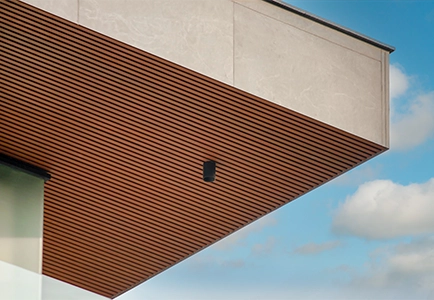
Why Facade Design Is More Than Just Aesthetic - The Role of Function, Climate, and Material
In the world of contemporary architecture, facade design is far more than a visual statement, it is a critical intersection of art, engineering, and environmental science. At Metaguise, this philosophy manifests through a dynamic portfolio of metal cladding solutions that transcend decorative appeal to deliver performance, sustainability, and contextual harmony.
15-05-25 | Behind the Design
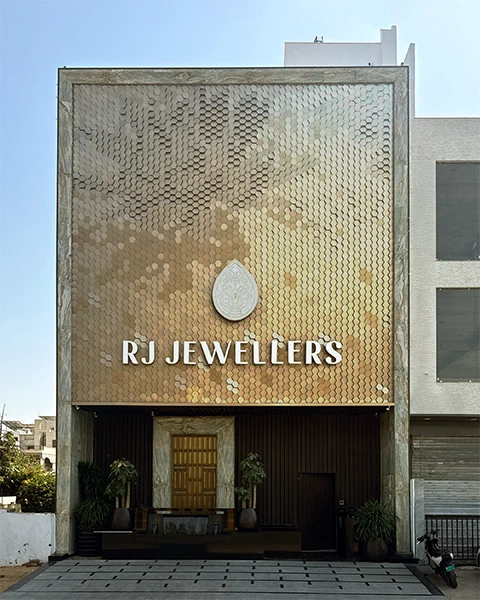
Your Facade is Your Brand: How Businesses Use Facades to Tell Their Story
In architecture, a facade is more than a face - it’s a voice. A building's elevation speaks volumesabout the brand it represents. At Metaguise, we don’t just clad buildings, we craft identities. Through metal, pattern, and parametric design, we help brands build a lasting first impression.
20-08-25 | Behind the Design
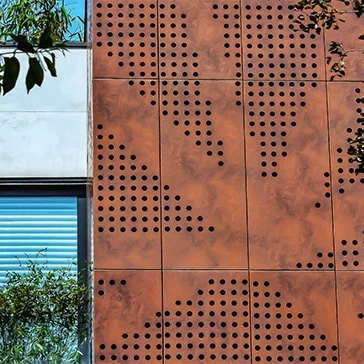
Beyond the Surface: The Emotional Intelligence of Architectural Materials
A philosophical take on how material textures — from MetaPatina’s evolving hues to MetaWood’s organic warmth — connect architecture with human emotion.
17-10-25 | Behind the Design
Social
Legal
Privacy Policy|Terms & Conditions