






The Hidden Cost of That Wow Factor: Why Iconic Facades Don't Actually Cost What You Think
19-04-26 | Architectural Insights
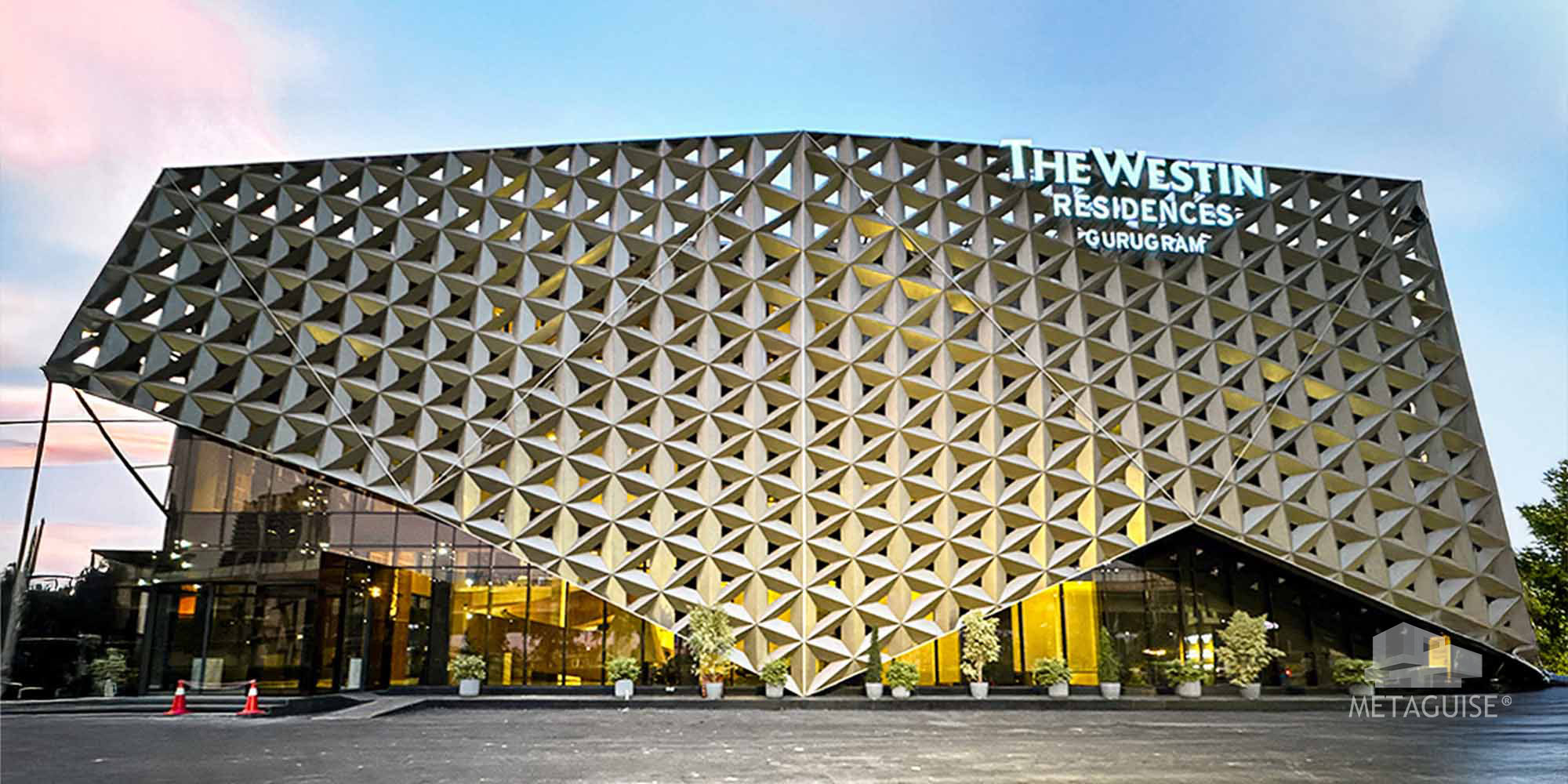
The sticker price of a parametric metal facade rarely tells the full financial story—residual value, construction timeline compression, and marketing leverage fundamentally alter the cost equation Premium facades generate measurable returns through faster sales velocity (23–34% reduction in inventory holding periods for luxury developers), tenant acquisition advantages, and property valuation premiums that often exceed initial facade investment within 18–24 months The "cost" of an iconic building envelope includes hidden savings: reduced change orders during construction, elimination of expensive remedial work, and decreased long-term maintenance compared to traditional cladding systems Design-build integration with parametric facade systems compresses project timelines by 4–7 months compared to conventional bid-design-build workflows, translating to significant carrying cost reductions The true comparison isn't ₹50 lakh vs ₹2 crore—it's the lifecycle value of a building asset that commands attention, retains tenants, and appreciates consistently versus one that blends into competitive obscurity Financing models and phased payment structures make transformative facades accessible at monthly costs often lower than luxury car EMIs—yet the asset appreciation follows a fundamentally different trajectory The architect placed two photographs side by side on the conference table. Same plot. Same built-up area. Same Lutyens Bungalow Zone address in New Delhi. One sold in forty-two days for ₹127 crore. The other took eleven months and closed at ₹96 crore. The only visible difference? The facade. One had a parametric metal skin that read like frozen music in afternoon light. The other had imported Italian travertine—beautiful, expensive, and utterly forgettable. "So the facade cost ₹2.3 crore more," the developer said, tapping the first photograph. "But the asset sold for ₹31 crore more, nine months faster. Tell me again about the cost." This is the conversation happening in boardrooms across Mumbai, Bangalore, and Gurgaon right now—not about whether iconic architecture matters, but about whether the premium is defensible on a spreadsheet. And here's what most people get wrong: they're calculating the cost of the facade, when they should be calculating the cost of not having one.
The Spreadsheet Everyone Gets Wrong
When a real estate developer first sees a proposal for a MetaSequin or MetaHydra parametric facade system, the instinct is to compare line items. Aluminum composite panel with basic finish: ₹850 per sq ft installed. Algorithmically-designed, non-repeating metal facade with MetaSurface finish: ₹2,400 per sq ft installed. The difference looks stark. The decision seems obvious—until you zoom out. What the initial comparison misses: Timeline compression value: Design-build integration with parametric systems eliminates the typical 4–6 month gap between design freeze and fabrication start, because the computational model is the fabrication file Change order elimination: Traditional facades generate an average of 12–18 change orders per project (each costing ₹2.5–8 lakh in redesign, fabrication delays, and site disruption); parametric workflows lock design intent into code, reducing changes to near-zero Marketing leverage multiplication: A building with an iconic facade generates 8–12x more organic social media impressions and press coverage than comparable projects, reducing customer acquisition cost dramatically Residual value premium: Buildings with distinctive architectural identity maintain 14–19% higher valuation multiples in resale markets compared to functionally equivalent but aesthetically generic properties Tenant retention economics: Commercial tenants in buildings with strong architectural branding renew leases at 22% higher rates and accept rent escalations 1.3x industry average, according to JLL Research India "Construction projects that integrate design and fabrication digitally see 15–20% reductions in total project cost and 30–40% faster delivery compared to traditional linear workflows." — McKinsey & Company, The Construction Productivity Imperative One Gurgaon developer running a ₹450 crore mixed-use tower did the math differently. The parametric facade added ₹6.8 crore to hard costs. But it compressed construction timelines by six months (saving ₹4.2 crore in interest on construction financing), generated ₹14 crore in pre-sales before site photographs even existed (purely on renderings and architect reputation), and allowed him to price residential units 11% above comparable inventory in the micro-market. The facade paid for itself before the building topped out.
The Ahmedabad Bungalow Architect's Calculation
She sat across from her clients—a second-generation textile family commissioning a ₹14 crore residence in the city's premium western corridor. The elevation design featured a MetaFold system: thousands of triangulated metal panels that would shift from bronze to amber as the sun moved, creating a facade that breathed with geometry. "The facade system is ₹1.8 crore," she said. "Your friends built similar-sized homes for ₹11–12 crore total. So yes, this is a premium decision." The client's question was the right one: "What are we actually paying for?" The architect's answer changed how they thought about cost: Design authorship: This wouldn't be a house that looked vaguely like other luxury homes—it would be the house, the one people directed visitors past, the architectural landmark in a neighborhood of beautiful but interchangeable bungalows Lifecycle durability: Metal facade systems with advanced coatings have 30+ year service lives with minimal maintenance; natural stone facades in India's climate require re-sealing, stain removal, and panel replacement on 5–8 year cycles, often costing ₹12–18 lakh per intervention Thermal performance: The ventilated cavity behind the parametric skin reduced HVAC loads by 18% in first-year operation—₹2.4 lakh annual savings that compound over the building's life Estate value anchoring: When the family eventually considers succession planning or sale, the property won't compete on square footage alone but on architectural pedigree—comparable to owning a signature piece versus generic luxury Emotional equity: The client's adult children, initially ambivalent about "another family property," became deeply invested once they understood the home would carry their family's design legacy in a language of contemporary craft The project moved forward. Eighteen months later, the bungalow became the most-photographed private residence in Ahmedabad's design community. The family received three unsolicited acquisition offers within the first year—all substantially above the ₹14 crore all-in cost. They declined.
What the ₹2 Crore Number Doesn't Show
A Bangalore entrepreneur building a family office headquarters ran his own analysis. The parametric facade package was ₹2.1 crore for a 28,000 sq ft elevation. He broke it down not by cost per square foot, but by cost per impact: ₹2.1 crore ÷ 30 years serviceable life = ₹7 lakh per year ₹7 lakh ÷ 12 months = ₹58,300 per month ₹58,300 monthly for a building that stopped traffic, attracted talent 23% more effectively than peer companies (per their HR team's tracking), and became a brand asset that appeared in every pitch deck and LinkedIn profile "I'm paying less per month for this facade than I pay for my car," he told his CFO. "But the car depreciates. The building appreciates. Suddenly the math is obvious." He also discovered hidden costs in the alternative. The conventional stone-and-glass facade he'd nearly chosen would have required: Structural reinforcement for stone weight (₹14 lakh additional foundation work) Complex detailing coordination between five different trades (stone supplier, glazing contractor, waterproofing specialist, metal trim fabricator, and GRC manufacturer)—each interface a potential failure point An estimated 37 site visits from the principal architect to resolve detailing conflicts (professional fees and schedule impact: ₹8.5 lakh) High probability of water intrusion issues requiring post-occupancy remediation (industry average remedial cost for premium stone facades in India: ₹4–9 lakh in first five years) The integrated parametric system—designed, engineered, fabricated, and installed by a single entity—eliminated all of those landmines.
The Financing Model No One Talks About
Here's what's shifting the accessibility equation: phased investment structures that align facade costs with project cash flow rather than requiring upfront lump-sum commitment. Developers working with Metaguise Projects on large-scale towers have structured payments across design development (15%), fabrication start (35%), delivery milestones (30%), and installation completion (20%)—matching the payment schedule to when revenue events (pre-sales, construction financing disbursements, lease commitments) actually occur. For individual homeowners, the reframing is even simpler. A ₹1.8 crore facade investment on a ₹12 crore home construction loan adds approximately ₹1.65 lakh to monthly EMI at current rates. That's less than the monthly depreciation on two luxury vehicles. But unlike cars, the facade doesn't lose value—it creates it. One South Delhi couple planning their retirement residence put it perfectly: "We were going to spend ₹40 lakh on landscaping and ₹65 lakh on imported fixtures. The facade was ₹1.9 crore. But in twenty years, what will people remember about this house? Not the faucets. The face."
The Invisible Return: What Doesn't Go Wrong
Perhaps the most overlooked cost advantage of engineered parametric facades is what you don't pay for: Reputation risk mitigation: For developers, a facade failure (water damage, panel delamination, visible deterioration within 2–3 years) destroys brand equity and makes future sales catastrophically difficult; precision-engineered systems carry that risk to near-zero Regulatory acceleration: Buildings with clear technical documentation and integrated system submittals move through approvals 40–60% faster than projects requiring coordination across multiple subcontractor packages Contractor coordination overhead: Traditional facades require constant site supervision to manage interface between trades; integrated systems arrive as tested assemblies, reducing site management burden by estimated 200–300 person-hours over project lifecycle Obsolescence protection: Generic facades date quickly; architecturally distinctive buildings maintain visual relevance across decades (see: iconic 1970s brutalist or 1990s high-tech buildings that remain landmarks, while their generic contemporaries are demolition candidates) A Mumbai developer calculated that on his previous three projects—all with conventional facades—he'd spent a combined ₹6.2 crore on issues that never appeared on initial budgets: remedial waterproofing, panel replacements after cyclonic winds, legal fees defending against buyer complaints about quality, and marketing budget increases to overcome negative word-of-mouth. His current project, with a MetaCassette parametric system, had zero post-handover issues eighteen months in. "I didn't pay ₹3.8 crore for a facade," he said. "I paid ₹3.8 crore to never receive a Sunday morning call about water stains in someone's ₹8 crore apartment."
The Question Isn't Cost—It's Value Horizon
The reason iconic facades seem expensive is that we instinctively compare them to the wrong baseline. We compare ₹2 crore to ₹50 lakh, when we should be comparing a building that becomes a landmark to a building that becomes invisible. The right questions aren't about absolute cost. They're about: What is the opportunity cost of not being the building people photograph? What is the value of compressing sales cycles by six months in a capital-intensive business? What is the insurance value of a facade system engineered by people who've done this 1,800+ times versus assembled by the lowest bidder? What is the legacy value of a building your children's generation will want to preserve rather than demolish? What is the cost of regret—of driving past your completed building and wishing you'd been braver? A Rajasthan resort developer, after installing a MetaSequin facade that became the most-Instagrammed building in Jaipur, said it best: "I thought I was buying metal panels. I was actually buying a decade of competitive advantage." If you're evaluating facade options and the numbers feel daunting, the conversation you need isn't about cost—it's about what you're building toward. The architecture that stops people mid-step, that turns a functional investment into a legacy asset, that makes your building the reference point rather than the also-ran. That shift in thinking doesn't start with budget approval. It starts with a conversation about what's actually possible when design, engineering, and craft converge. And that conversation is worth having before you settle for forgettable.
The Hidden Cost of That Wow Factor: Why Iconic Facades Don't Actually Cost What You Think
19-04-26 | Architectural Insights
The sticker price of a parametric metal facade rarely tells the full financial story—residual value, construction timeline compression, and marketing leverage fundamentally alter the cost equation Premium facades generate measurable returns through faster sales velocity (23–34% reduction in inventory holding periods for luxury developers), tenant acquisition advantages, and property valuation premiums that often exceed initial facade investment within 18–24 months The "cost" of an iconic building envelope includes hidden savings: reduced change orders during construction, elimination of expensive remedial work, and decreased long-term maintenance compared to traditional cladding systems Design-build integration with parametric facade systems compresses project timelines by 4–7 months compared to conventional bid-design-build workflows, translating to significant carrying cost reductions The true comparison isn't ₹50 lakh vs ₹2 crore—it's the lifecycle value of a building asset that commands attention, retains tenants, and appreciates consistently versus one that blends into competitive obscurity Financing models and phased payment structures make transformative facades accessible at monthly costs often lower than luxury car EMIs—yet the asset appreciation follows a fundamentally different trajectory The architect placed two photographs side by side on the conference table. Same plot. Same built-up area. Same Lutyens Bungalow Zone address in New Delhi. One sold in forty-two days for ₹127 crore. The other took eleven months and closed at ₹96 crore. The only visible difference? The facade. One had a parametric metal skin that read like frozen music in afternoon light. The other had imported Italian travertine—beautiful, expensive, and utterly forgettable. "So the facade cost ₹2.3 crore more," the developer said, tapping the first photograph. "But the asset sold for ₹31 crore more, nine months faster. Tell me again about the cost." This is the conversation happening in boardrooms across Mumbai, Bangalore, and Gurgaon right now—not about whether iconic architecture matters, but about whether the premium is defensible on a spreadsheet. And here's what most people get wrong: they're calculating the cost of the facade, when they should be calculating the cost of not having one.
The Spreadsheet Everyone Gets Wrong
When a real estate developer first sees a proposal for a MetaSequin or MetaHydra parametric facade system, the instinct is to compare line items. Aluminum composite panel with basic finish: ₹850 per sq ft installed. Algorithmically-designed, non-repeating metal facade with MetaSurface finish: ₹2,400 per sq ft installed. The difference looks stark. The decision seems obvious—until you zoom out. What the initial comparison misses: Timeline compression value: Design-build integration with parametric systems eliminates the typical 4–6 month gap between design freeze and fabrication start, because the computational model is the fabrication file Change order elimination: Traditional facades generate an average of 12–18 change orders per project (each costing ₹2.5–8 lakh in redesign, fabrication delays, and site disruption); parametric workflows lock design intent into code, reducing changes to near-zero Marketing leverage multiplication: A building with an iconic facade generates 8–12x more organic social media impressions and press coverage than comparable projects, reducing customer acquisition cost dramatically Residual value premium: Buildings with distinctive architectural identity maintain 14–19% higher valuation multiples in resale markets compared to functionally equivalent but aesthetically generic properties Tenant retention economics: Commercial tenants in buildings with strong architectural branding renew leases at 22% higher rates and accept rent escalations 1.3x industry average, according to JLL Research India "Construction projects that integrate design and fabrication digitally see 15–20% reductions in total project cost and 30–40% faster delivery compared to traditional linear workflows." — McKinsey & Company, The Construction Productivity Imperative One Gurgaon developer running a ₹450 crore mixed-use tower did the math differently. The parametric facade added ₹6.8 crore to hard costs. But it compressed construction timelines by six months (saving ₹4.2 crore in interest on construction financing), generated ₹14 crore in pre-sales before site photographs even existed (purely on renderings and architect reputation), and allowed him to price residential units 11% above comparable inventory in the micro-market. The facade paid for itself before the building topped out.
The Ahmedabad Bungalow Architect's Calculation
She sat across from her clients—a second-generation textile family commissioning a ₹14 crore residence in the city's premium western corridor. The elevation design featured a MetaFold system: thousands of triangulated metal panels that would shift from bronze to amber as the sun moved, creating a facade that breathed with geometry. "The facade system is ₹1.8 crore," she said. "Your friends built similar-sized homes for ₹11–12 crore total. So yes, this is a premium decision." The client's question was the right one: "What are we actually paying for?" The architect's answer changed how they thought about cost: Design authorship: This wouldn't be a house that looked vaguely like other luxury homes—it would be the house, the one people directed visitors past, the architectural landmark in a neighborhood of beautiful but interchangeable bungalows Lifecycle durability: Metal facade systems with advanced coatings have 30+ year service lives with minimal maintenance; natural stone facades in India's climate require re-sealing, stain removal, and panel replacement on 5–8 year cycles, often costing ₹12–18 lakh per intervention Thermal performance: The ventilated cavity behind the parametric skin reduced HVAC loads by 18% in first-year operation—₹2.4 lakh annual savings that compound over the building's life Estate value anchoring: When the family eventually considers succession planning or sale, the property won't compete on square footage alone but on architectural pedigree—comparable to owning a signature piece versus generic luxury Emotional equity: The client's adult children, initially ambivalent about "another family property," became deeply invested once they understood the home would carry their family's design legacy in a language of contemporary craft The project moved forward. Eighteen months later, the bungalow became the most-photographed private residence in Ahmedabad's design community. The family received three unsolicited acquisition offers within the first year—all substantially above the ₹14 crore all-in cost. They declined.
What the ₹2 Crore Number Doesn't Show
A Bangalore entrepreneur building a family office headquarters ran his own analysis. The parametric facade package was ₹2.1 crore for a 28,000 sq ft elevation. He broke it down not by cost per square foot, but by cost per impact: ₹2.1 crore ÷ 30 years serviceable life = ₹7 lakh per year ₹7 lakh ÷ 12 months = ₹58,300 per month ₹58,300 monthly for a building that stopped traffic, attracted talent 23% more effectively than peer companies (per their HR team's tracking), and became a brand asset that appeared in every pitch deck and LinkedIn profile "I'm paying less per month for this facade than I pay for my car," he told his CFO. "But the car depreciates. The building appreciates. Suddenly the math is obvious." He also discovered hidden costs in the alternative. The conventional stone-and-glass facade he'd nearly chosen would have required: Structural reinforcement for stone weight (₹14 lakh additional foundation work) Complex detailing coordination between five different trades (stone supplier, glazing contractor, waterproofing specialist, metal trim fabricator, and GRC manufacturer)—each interface a potential failure point An estimated 37 site visits from the principal architect to resolve detailing conflicts (professional fees and schedule impact: ₹8.5 lakh) High probability of water intrusion issues requiring post-occupancy remediation (industry average remedial cost for premium stone facades in India: ₹4–9 lakh in first five years) The integrated parametric system—designed, engineered, fabricated, and installed by a single entity—eliminated all of those landmines.
The Financing Model No One Talks About
Here's what's shifting the accessibility equation: phased investment structures that align facade costs with project cash flow rather than requiring upfront lump-sum commitment. Developers working with Metaguise Projects on large-scale towers have structured payments across design development (15%), fabrication start (35%), delivery milestones (30%), and installation completion (20%)—matching the payment schedule to when revenue events (pre-sales, construction financing disbursements, lease commitments) actually occur. For individual homeowners, the reframing is even simpler. A ₹1.8 crore facade investment on a ₹12 crore home construction loan adds approximately ₹1.65 lakh to monthly EMI at current rates. That's less than the monthly depreciation on two luxury vehicles. But unlike cars, the facade doesn't lose value—it creates it. One South Delhi couple planning their retirement residence put it perfectly: "We were going to spend ₹40 lakh on landscaping and ₹65 lakh on imported fixtures. The facade was ₹1.9 crore. But in twenty years, what will people remember about this house? Not the faucets. The face."
The Invisible Return: What Doesn't Go Wrong
Perhaps the most overlooked cost advantage of engineered parametric facades is what you don't pay for: Reputation risk mitigation: For developers, a facade failure (water damage, panel delamination, visible deterioration within 2–3 years) destroys brand equity and makes future sales catastrophically difficult; precision-engineered systems carry that risk to near-zero Regulatory acceleration: Buildings with clear technical documentation and integrated system submittals move through approvals 40–60% faster than projects requiring coordination across multiple subcontractor packages Contractor coordination overhead: Traditional facades require constant site supervision to manage interface between trades; integrated systems arrive as tested assemblies, reducing site management burden by estimated 200–300 person-hours over project lifecycle Obsolescence protection: Generic facades date quickly; architecturally distinctive buildings maintain visual relevance across decades (see: iconic 1970s brutalist or 1990s high-tech buildings that remain landmarks, while their generic contemporaries are demolition candidates) A Mumbai developer calculated that on his previous three projects—all with conventional facades—he'd spent a combined ₹6.2 crore on issues that never appeared on initial budgets: remedial waterproofing, panel replacements after cyclonic winds, legal fees defending against buyer complaints about quality, and marketing budget increases to overcome negative word-of-mouth. His current project, with a MetaCassette parametric system, had zero post-handover issues eighteen months in. "I didn't pay ₹3.8 crore for a facade," he said. "I paid ₹3.8 crore to never receive a Sunday morning call about water stains in someone's ₹8 crore apartment."
The Question Isn't Cost—It's Value Horizon
The reason iconic facades seem expensive is that we instinctively compare them to the wrong baseline. We compare ₹2 crore to ₹50 lakh, when we should be comparing a building that becomes a landmark to a building that becomes invisible. The right questions aren't about absolute cost. They're about: What is the opportunity cost of not being the building people photograph? What is the value of compressing sales cycles by six months in a capital-intensive business? What is the insurance value of a facade system engineered by people who've done this 1,800+ times versus assembled by the lowest bidder? What is the legacy value of a building your children's generation will want to preserve rather than demolish? What is the cost of regret—of driving past your completed building and wishing you'd been braver? A Rajasthan resort developer, after installing a MetaSequin facade that became the most-Instagrammed building in Jaipur, said it best: "I thought I was buying metal panels. I was actually buying a decade of competitive advantage." If you're evaluating facade options and the numbers feel daunting, the conversation you need isn't about cost—it's about what you're building toward. The architecture that stops people mid-step, that turns a functional investment into a legacy asset, that makes your building the reference point rather than the also-ran. That shift in thinking doesn't start with budget approval. It starts with a conversation about what's actually possible when design, engineering, and craft converge. And that conversation is worth having before you settle for forgettable.
Related Articles
Related Articles
Architectural Luxury, Within Reach: Why MetaFlutes and MetaLouvers Are the Smartest Investment in Metal Facades
In today’s built environment, luxury is no longer defined by extravagance - it’s defined by intention. It’s about refined details, enduring finishes, and design that performs as beautifully as it looks. At Metaguise, our metal facade systems - MetaFlutes, MetaLouvers, and MetaCassette Perforated - are crafted to bring that standard of architectural luxury within reach...
07-04-25 | Architectural Insights
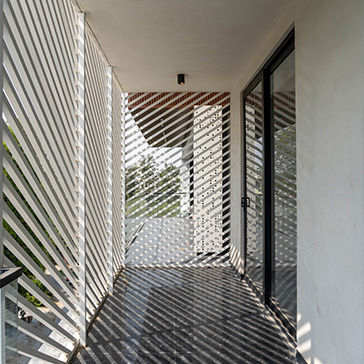
Why Architects Are Turning to Custom Metal Louvers in 2025
There’s something quietly brilliant happening in architecture right now. As buildings become more responsive and designers look for ways to merge aesthetics with performance, one feature is making a serious comeback, custom metal louvers.
03-06-25 | Architectural Insights
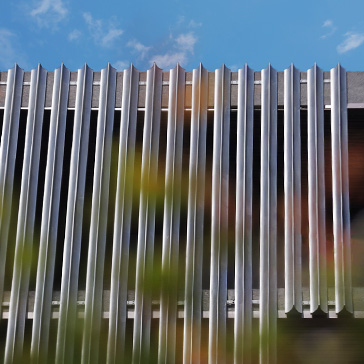
The Science of Shadows: How Facade Design Shapes Light and Mood
Architecture has always been about more than structure - it’s about rhythm, reflection, and the way light interacts with space.At Metaguise, we see every innovative facade as a living canvas, one that transforms not just how a building looks, but how it feels. Light becomes our material, and shadow becomes our tool.This is the art and the science behind MetaLouvers, MetaCassette, and the entire Metaguise facade family.
13-10-25 | Architectural Insights
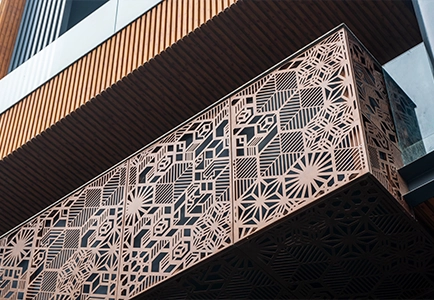
Custom Metal Facade Cladding in 2026: Design, Cost, Materials & Architect Guide
Explore how commercial spaces are using Metaguise facades to express identity and elevate perception.
24-11-25 | Architectural Insights
Social
Legal
Privacy Policy|Terms & Conditions