





The Architect's Blueprint: 7 Questions to Ask Before Commissioning a Parametric Facade in 2026
29-04-26 | Architectural Insights
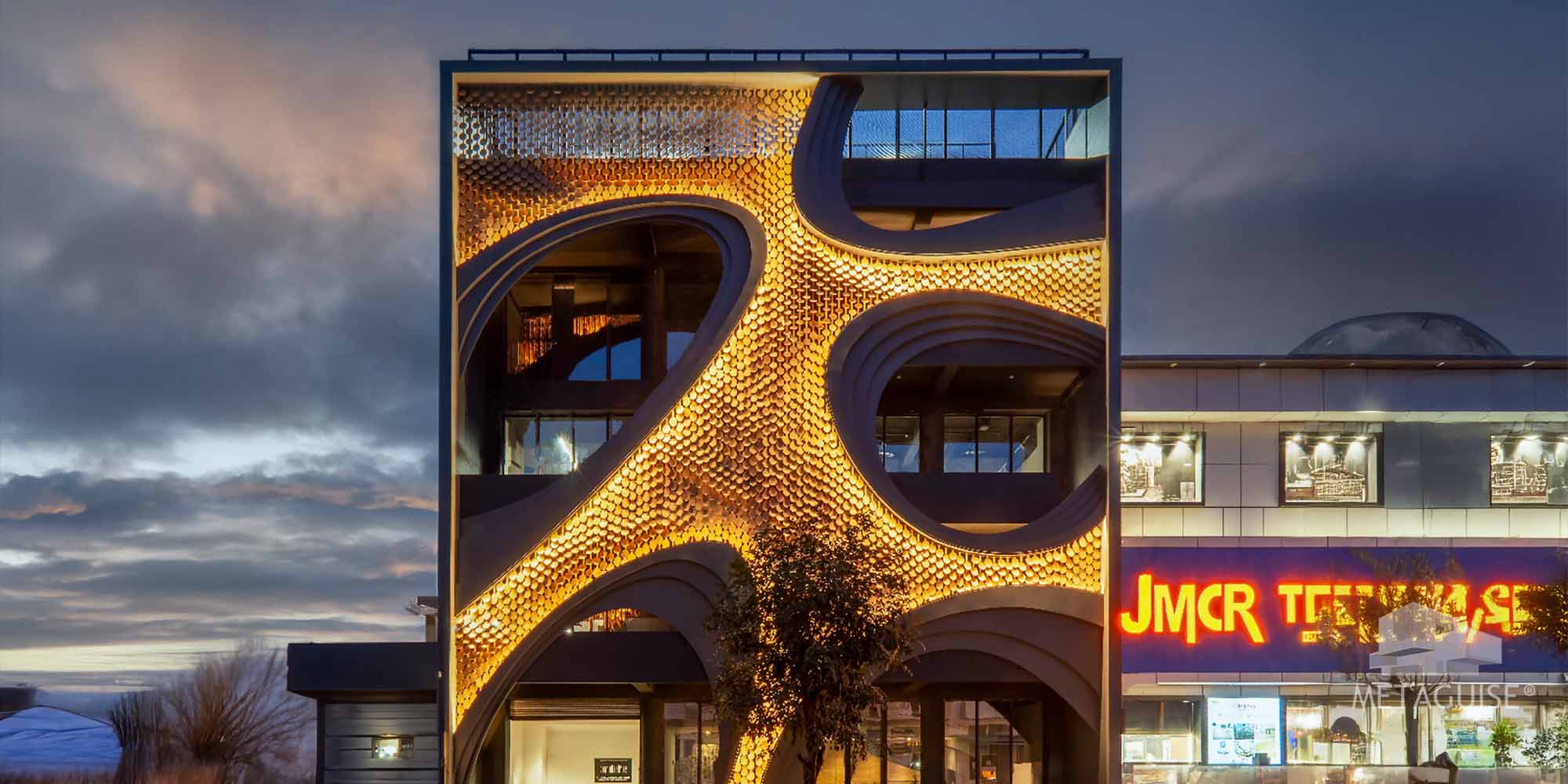
You're three weeks into design development for a luxury mixed-use tower in Gurgaon, and the client just used the word every architect both loves and dreads: iconic. Not iconic in the borrowed-from-Pinterest sense. Iconic as in "I want people to stop their cars to photograph this building." Iconic as in "this facade needs to be our brand equity made tangible." This is the moment when specification becomes choreography. When the building envelope stops being a protective skin and starts being a three-dimensional narrative that shifts with light, breathes with perspective, and announces arrival before a single person steps through the lobby doors. This is when you need a parametric facade - and when choosing the wrong partner can turn your most ambitious design into your most public compromise. India's architectural landscape in 2026 sits at a fascinating inflection point. We've moved past the era when "international-looking" meant importing everything at prohibitive cost, yet we haven't fully escaped the trap of local fabricators who can only execute the literally flat. The gap between what computational design makes possible and what most contractors can actually build remains vast - and expensive for architects who discover this gap mid-project rather than at the first sketch.
Why Parametric Facades Demand Different Questions
Traditional facade procurement follows a comfortable script: you freeze the design, release tender documents, evaluate bids on price and past projects, and award the contract. It's transactional, linear, and increasingly inadequate for buildings that need to do more than shelter. Parametric facades invert this logic entirely. The partner doesn't execute your frozen vision - they help generate it. The procurement conversation must happen when your elevation is still a conceptual sketch, not a dimensioned drawing set. You're not buying a product; you're commissioning a collaborative design process where algorithmic intelligence meets fabrication reality, where "what if the facade could respond to movement?" becomes a technical specification rather than a rhetorical flourish. "The most successful complex construction projects share a common trait: early integration of specialized partners into the design process, reducing costly late-stage modifications by up to 40%." - McKinsey & Company, Construction Productivity Report So before you add "parametric metal facade" to your next project specification, before you fall in love with that rendering of algorithmically-arranged fins catching afternoon light - pause. Ask these seven questions. Not of yourself. Of the partner you're about to trust with the most visible fifteen percent of your building budget.
Question 1: Can You Show Me Design Intent That Survived Construction?
This isn't about portfolio volume. It's about fidelity. Any fabricator can show you completed projects. The revealing question is: can they show you the original parametric model next to the as-built facade, and explain where they diverged and why? Parametric design generates complexity - thousands of unique panels, each with specific orientation, perforation density, and three-dimensional depth. The distance between that digital choreography and the physical building is where most projects hemorrhage their distinctive character. Contractors simplify. Engineers value-engineer. Installers rationalize for speed. What you need is a partner with in-house capabilities that span the entire translation process: Computational design teams who script in Grasshopper or Dynamo, not just receive Rhino files Fabrication facilities equipped for mass customization, where CNC machines can execute non-repetitive panel schedules without cost penalties Installation crews trained to read complex panel maps and verify each piece against its algorithmic position Project documentation showing design intent maintained from concept through punch-list When you see a completed stadium facade where thousands of metal elements create gradient patterns visible from a kilometer away - systems like MetaSequin that deliver this at scale - you're looking at integration that most fragmented supply chains simply cannot achieve. The partner who can show you this integration owns the entire journey from algorithm to architecture.
Question 2: When Do You Need to Be Involved in My Design Process?
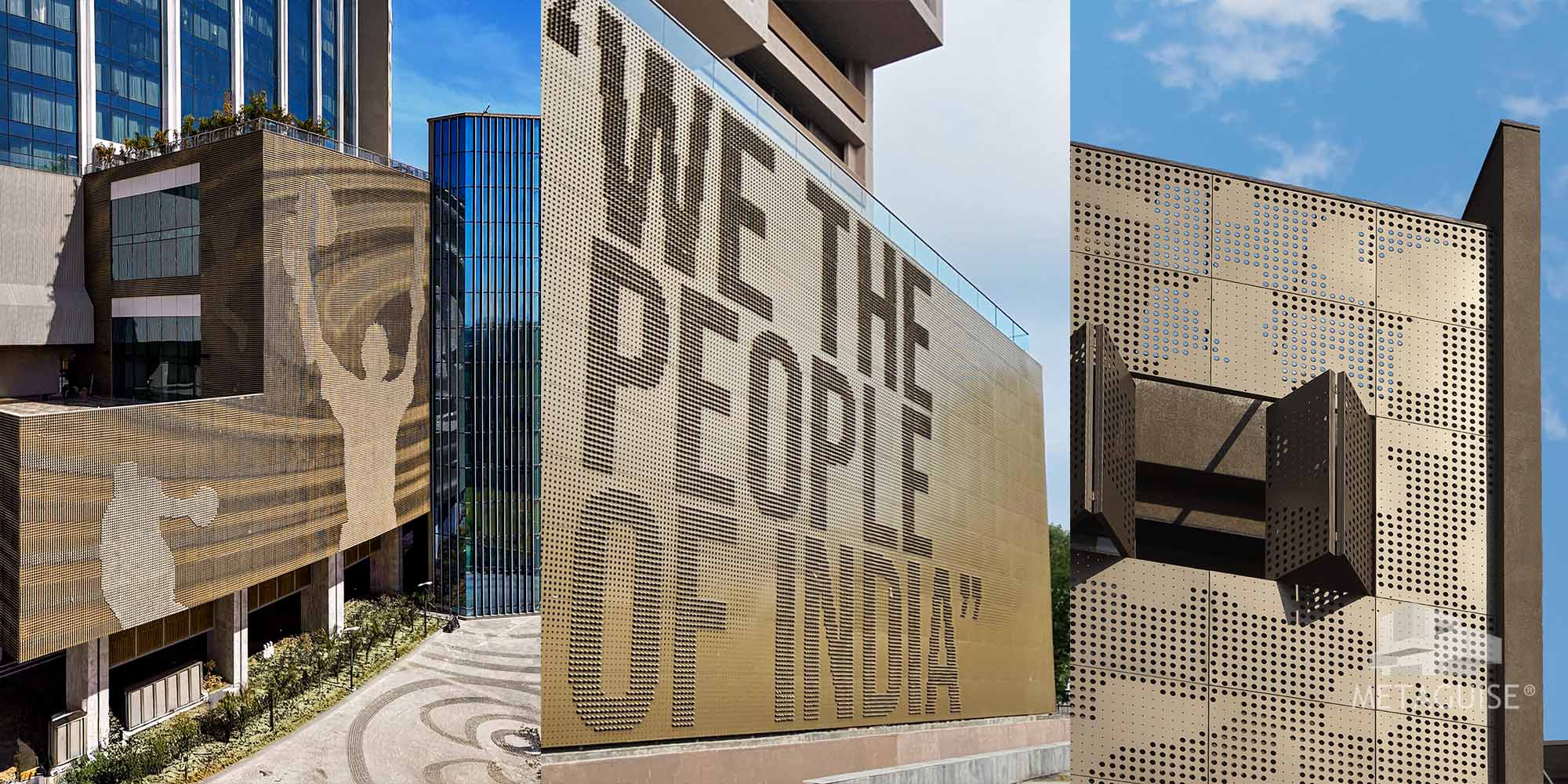
The wrong answer is "after you finalize the drawings." The right answer makes you slightly uncomfortable: "now, while you're still sketching." Parametric facades are not products you specify after design development. They are design collaborations that begin when your building massing is still evolving. The logic that generates the facade pattern - whether it's MetaFin creating vertical rhythm or MetaCoin encoding cultural narratives - needs to inform structural grid spacing, floor heights, and even interior planning. Early integration means: Your structural engineer knows the facade loads and attachment requirements before sizing columns Your MEP consultant coordinates service penetrations with panel geometry, not against it Your quantity surveyor has realistic cost guidance based on actual panel count and complexity, not placeholder assumptions Your client sees design development renderings that are buildable, not fantasy The partner who says "send us your drawings when ready" is offering fabrication. The partner who asks "what's the building trying to say?" is offering a design partnership. One delivers what you drew. The other helps you draw what you're imagining.
Question 3: How Do Your Systems Perform in Our Actual Climate?
Here's what imported facade systems don't tell you in their glossy European catalogs: that metallic finish tested in Munich's temperate drizzle responds very differently to Ahmedabad's 48°C summers and monsoon deluges. That sleek gasket system engineered for Milan's freeze-thaw cycles fails spectacularly in Mumbai's salty coastal humidity. India's climate isn't a single condition - it's a spectrum of extremes compressed into subcontinental geography. Your Bangalore campus facade faces different performance demands than your Jaipur retail flagship, which faces different challenges than your Kolkata residential tower. Generic solutions optimized for nowhere specifically perform adequately everywhere and exceptionally nowhere. Ask your potential partner: Where have your systems been tested? Not certified in labs - actually installed and monitored across India's climate zones What finish systems do you engineer specifically for subcontinental conditions? Proprietary treatments like MetaSurface finishes that maintain aesthetic integrity through thermal cycling, UV exposure, and monsoon weathering How do you handle thermal expansion in metals experiencing 40°C daily temperature swings? What's your track record on coastal projects? Salt air corrodes optimism as quickly as it corrodes poorly-specified metals Can you show me a facade you installed five years ago that still looks like it was installed five weeks ago? Climate engineering isn't sexy. It doesn't render well. But it's the difference between a facade that ages with grace and one that requires apologetic email threads with your client eighteen months after handover.
Question 4: What Happens When I Want Something You've Never Built Before?
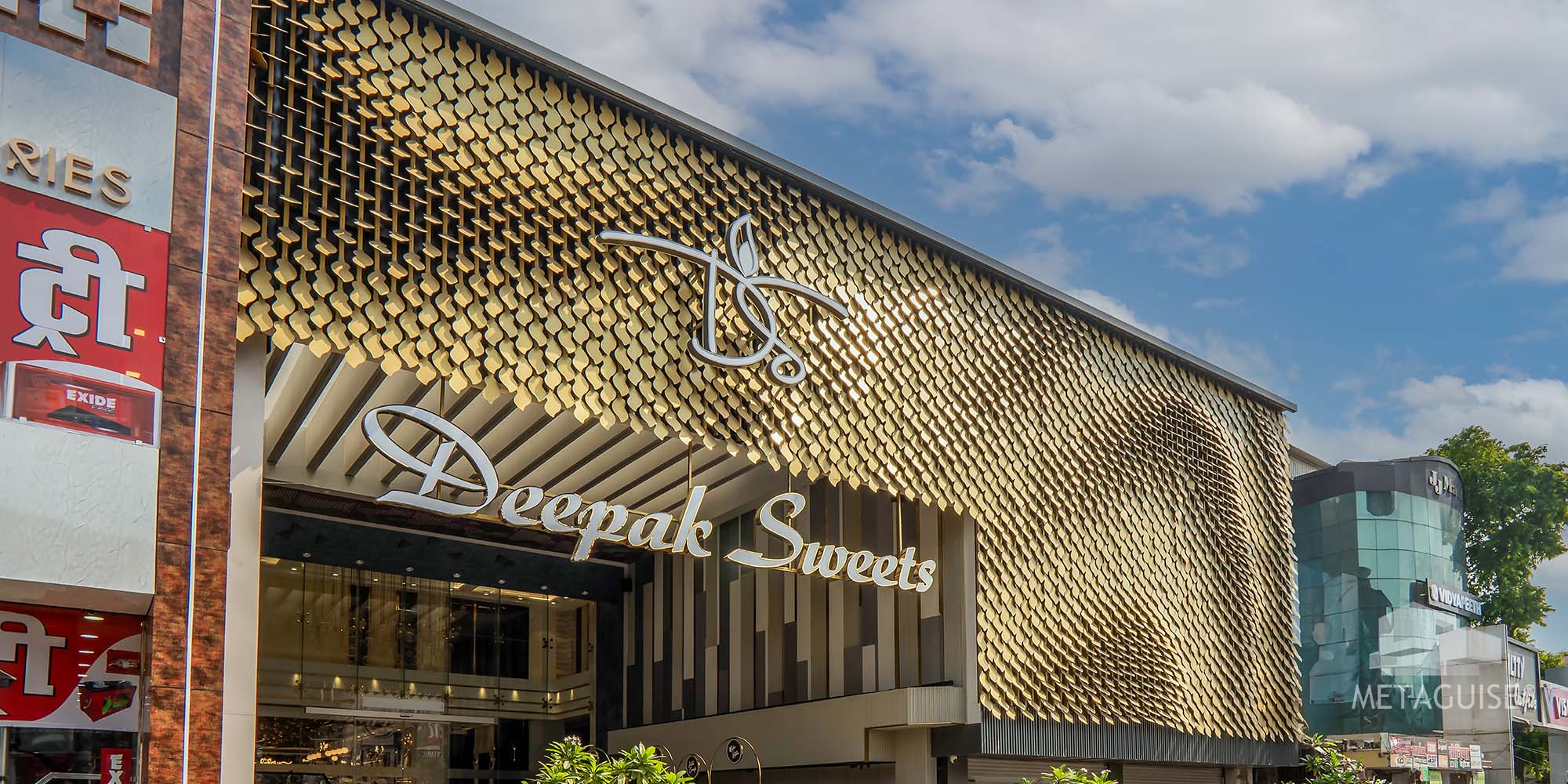
This is where you separate partners who have systems from partners who have capabilities. Systems are finite. Capabilities are generative. Every significant project contains at least one moment when the design demands something unprecedented - a tighter curve radius than the catalog allows, a perforation pattern that encodes site-specific data, a three-dimensional depth that creates specific shadow choreography at summer solstice. The question isn't whether your project will ask for something custom. The question is whether your partner's response is "we can't" or "let's solve for that." The right partner maintains a portfolio of signature systems - MetaBlox for geometric rigor, MetaHydra for organic complexity, MetaHive for modular variation - not as limitations but as starting vocabularies. Each system is a platform for customization, not a constraint. Look for evidence of: In-house R&D capacity that prototypes novel geometries and tests them to failure before your project becomes the experiment Parametric flexibility within systems where panel size, density, orientation, and depth can be continuously varied rather than selected from preset options Cross-pollination across projects where learnings from a stadium facade inform possibilities for a residential tower, where retail flagship innovations scale to institutional campuses Fabrication equipment versatility that can execute what the design scripts generate, not just what the machine was originally programmed to produce When you see a jewellery brand's flagship where the facade literally depicts craftsmanship through metal arrangement, or a cricket stadium where sporting moments are encoded in thousands of choreographed elements, you're seeing capability deployed as narrative. That's what separates execution from authorship.
Question 5: Who Actually Owns the Integration Risk?
Traditional construction conveniently fragments accountability. The architect designs. The facade consultant engineers. The fabricator manufactures. The contractor installs. When something fails to align - literally or figuratively - the meeting to assign blame is longer than the meeting to solve the problem. Parametric facades cannot afford this fragmentation. When every panel is unique and positioned according to algorithmic logic, a single misalignment cascades. The structural grid that's 50mm off specification doesn't just affect one bay - it affects the entire pattern field. The panel fabricated to outdated revision doesn't just delay one floor - it breaks the gradient logic across the elevation. You need end-to-end integration where one entity owns the complete journey: Design scripting that generates buildable geometry from day one Structural coordination ensuring attachment systems align with building grid realities Fabrication sequencing that produces panels in installation order, not production convenience Site installation by teams who understand the parametric logic, not just the panel schedule Quality verification against the digital model, not just against shop drawings This integration is rare in India's construction ecosystem, which is why most parametric ambitions get rationalized into repetitive patterns by the time value engineering concludes. The partner who can maintain design fidelity from script to scaffold commands a premium - but that premium is insurance against the far costlier scenario of a half-realized vision publicly visible for the building's lifespan.
Question 5: Who Actually Owns the Integration Risk?
Traditional construction conveniently fragments accountability. The architect designs. The facade consultant engineers. The fabricator manufactures. The contractor installs. When something fails to align - literally or figuratively - the meeting to assign blame is longer than the meeting to solve the problem. Parametric facades cannot afford this fragmentation. When every panel is unique and positioned according to algorithmic logic, a single misalignment cascades. The structural grid that's 50mm off specification doesn't just affect one bay - it affects the entire pattern field. The panel fabricated to outdated revision doesn't just delay one floor - it breaks the gradient logic across the elevation. You need end-to-end integration where one entity owns the complete journey: Design scripting that generates buildable geometry from day one Structural coordination ensuring attachment systems align with building grid realities Fabrication sequencing that produces panels in installation order, not production convenience Site installation by teams who understand the parametric logic, not just the panel schedule Quality verification against the digital model, not just against shop drawings This integration is rare in India's construction ecosystem, which is why most parametric ambitions get rationalized into repetitive patterns by the time value engineering concludes. The partner who can maintain design fidelity from script to scaffold commands a premium - but that premium is insurance against the far costlier scenario of a half-realized vision publicly visible for the building's lifespan.
Question 7: What Happens After You Install the Last Panel?
Most facade relationships end at practical completion. You get operation manuals, warranty certificates, and a hope that nothing goes wrong for the next five years. For parametric facades, this is optimistic at best, negligent at worst. These are not static surfaces. They're precision instruments with thousands of custom components, each playing a specific role in the overall composition. A single missing fastener doesn't just create a rattle - it disrupts the shadow pattern. A panel that's shifted 10mm doesn't just look slightly off - it breaks the algorithmic rhythm that the entire facade depends on for its coherence. Ask about post-installation commitment: Maintenance protocols specific to the system and finishes you've specified Replacement panel availability for components that are damaged or need replacement years after installation Performance monitoring during the first year to verify the facade performs as designed across actual climate conditions Documentation that's actually usable by facility management teams, not just archived and forgotten Responsive support when issues arise, not multi-week ticket systems The partner who stays engaged after installation is protecting their reputation as much as your building. They want their facade to age with dignity because they know architects have long memories - and because the building itself is their most visible advertisement.
The Architect's Blueprint: 7 Questions to Ask Before Commissioning a Parametric Facade in 2026
29-04-26 | Architectural Insights
You're three weeks into design development for a luxury mixed-use tower in Gurgaon, and the client just used the word every architect both loves and dreads: iconic. Not iconic in the borrowed-from-Pinterest sense. Iconic as in "I want people to stop their cars to photograph this building." Iconic as in "this facade needs to be our brand equity made tangible." This is the moment when specification becomes choreography. When the building envelope stops being a protective skin and starts being a three-dimensional narrative that shifts with light, breathes with perspective, and announces arrival before a single person steps through the lobby doors. This is when you need a parametric facade - and when choosing the wrong partner can turn your most ambitious design into your most public compromise. India's architectural landscape in 2026 sits at a fascinating inflection point. We've moved past the era when "international-looking" meant importing everything at prohibitive cost, yet we haven't fully escaped the trap of local fabricators who can only execute the literally flat. The gap between what computational design makes possible and what most contractors can actually build remains vast - and expensive for architects who discover this gap mid-project rather than at the first sketch.
Why Parametric Facades Demand Different Questions
Traditional facade procurement follows a comfortable script: you freeze the design, release tender documents, evaluate bids on price and past projects, and award the contract. It's transactional, linear, and increasingly inadequate for buildings that need to do more than shelter. Parametric facades invert this logic entirely. The partner doesn't execute your frozen vision - they help generate it. The procurement conversation must happen when your elevation is still a conceptual sketch, not a dimensioned drawing set. You're not buying a product; you're commissioning a collaborative design process where algorithmic intelligence meets fabrication reality, where "what if the facade could respond to movement?" becomes a technical specification rather than a rhetorical flourish. "The most successful complex construction projects share a common trait: early integration of specialized partners into the design process, reducing costly late-stage modifications by up to 40%." - McKinsey & Company, Construction Productivity Report So before you add "parametric metal facade" to your next project specification, before you fall in love with that rendering of algorithmically-arranged fins catching afternoon light - pause. Ask these seven questions. Not of yourself. Of the partner you're about to trust with the most visible fifteen percent of your building budget.
Question 1: Can You Show Me Design Intent That Survived Construction?
This isn't about portfolio volume. It's about fidelity. Any fabricator can show you completed projects. The revealing question is: can they show you the original parametric model next to the as-built facade, and explain where they diverged and why? Parametric design generates complexity - thousands of unique panels, each with specific orientation, perforation density, and three-dimensional depth. The distance between that digital choreography and the physical building is where most projects hemorrhage their distinctive character. Contractors simplify. Engineers value-engineer. Installers rationalize for speed. What you need is a partner with in-house capabilities that span the entire translation process: Computational design teams who script in Grasshopper or Dynamo, not just receive Rhino files Fabrication facilities equipped for mass customization, where CNC machines can execute non-repetitive panel schedules without cost penalties Installation crews trained to read complex panel maps and verify each piece against its algorithmic position Project documentation showing design intent maintained from concept through punch-list When you see a completed stadium facade where thousands of metal elements create gradient patterns visible from a kilometer away - systems like MetaSequin that deliver this at scale - you're looking at integration that most fragmented supply chains simply cannot achieve. The partner who can show you this integration owns the entire journey from algorithm to architecture.
Question 2: When Do You Need to Be Involved in My Design Process?
The wrong answer is "after you finalize the drawings." The right answer makes you slightly uncomfortable: "now, while you're still sketching." Parametric facades are not products you specify after design development. They are design collaborations that begin when your building massing is still evolving. The logic that generates the facade pattern - whether it's MetaFin creating vertical rhythm or MetaCoin encoding cultural narratives - needs to inform structural grid spacing, floor heights, and even interior planning. Early integration means: Your structural engineer knows the facade loads and attachment requirements before sizing columns Your MEP consultant coordinates service penetrations with panel geometry, not against it Your quantity surveyor has realistic cost guidance based on actual panel count and complexity, not placeholder assumptions Your client sees design development renderings that are buildable, not fantasy The partner who says "send us your drawings when ready" is offering fabrication. The partner who asks "what's the building trying to say?" is offering a design partnership. One delivers what you drew. The other helps you draw what you're imagining.
Question 3: How Do Your Systems Perform in Our Actual Climate?
Here's what imported facade systems don't tell you in their glossy European catalogs: that metallic finish tested in Munich's temperate drizzle responds very differently to Ahmedabad's 48°C summers and monsoon deluges. That sleek gasket system engineered for Milan's freeze-thaw cycles fails spectacularly in Mumbai's salty coastal humidity. India's climate isn't a single condition - it's a spectrum of extremes compressed into subcontinental geography. Your Bangalore campus facade faces different performance demands than your Jaipur retail flagship, which faces different challenges than your Kolkata residential tower. Generic solutions optimized for nowhere specifically perform adequately everywhere and exceptionally nowhere. Ask your potential partner: Where have your systems been tested? Not certified in labs - actually installed and monitored across India's climate zones What finish systems do you engineer specifically for subcontinental conditions? Proprietary treatments like MetaSurface finishes that maintain aesthetic integrity through thermal cycling, UV exposure, and monsoon weathering How do you handle thermal expansion in metals experiencing 40°C daily temperature swings? What's your track record on coastal projects? Salt air corrodes optimism as quickly as it corrodes poorly-specified metals Can you show me a facade you installed five years ago that still looks like it was installed five weeks ago? Climate engineering isn't sexy. It doesn't render well. But it's the difference between a facade that ages with grace and one that requires apologetic email threads with your client eighteen months after handover.
Question 4: What Happens When I Want Something You've Never Built Before?
This is where you separate partners who have systems from partners who have capabilities. Systems are finite. Capabilities are generative. Every significant project contains at least one moment when the design demands something unprecedented - a tighter curve radius than the catalog allows, a perforation pattern that encodes site-specific data, a three-dimensional depth that creates specific shadow choreography at summer solstice. The question isn't whether your project will ask for something custom. The question is whether your partner's response is "we can't" or "let's solve for that." The right partner maintains a portfolio of signature systems - MetaBlox for geometric rigor, MetaHydra for organic complexity, MetaHive for modular variation - not as limitations but as starting vocabularies. Each system is a platform for customization, not a constraint. Look for evidence of: In-house R&D capacity that prototypes novel geometries and tests them to failure before your project becomes the experiment Parametric flexibility within systems where panel size, density, orientation, and depth can be continuously varied rather than selected from preset options Cross-pollination across projects where learnings from a stadium facade inform possibilities for a residential tower, where retail flagship innovations scale to institutional campuses Fabrication equipment versatility that can execute what the design scripts generate, not just what the machine was originally programmed to produce When you see a jewellery brand's flagship where the facade literally depicts craftsmanship through metal arrangement, or a cricket stadium where sporting moments are encoded in thousands of choreographed elements, you're seeing capability deployed as narrative. That's what separates execution from authorship.
Question 5: Who Actually Owns the Integration Risk?
Traditional construction conveniently fragments accountability. The architect designs. The facade consultant engineers. The fabricator manufactures. The contractor installs. When something fails to align - literally or figuratively - the meeting to assign blame is longer than the meeting to solve the problem. Parametric facades cannot afford this fragmentation. When every panel is unique and positioned according to algorithmic logic, a single misalignment cascades. The structural grid that's 50mm off specification doesn't just affect one bay - it affects the entire pattern field. The panel fabricated to outdated revision doesn't just delay one floor - it breaks the gradient logic across the elevation. You need end-to-end integration where one entity owns the complete journey: Design scripting that generates buildable geometry from day one Structural coordination ensuring attachment systems align with building grid realities Fabrication sequencing that produces panels in installation order, not production convenience Site installation by teams who understand the parametric logic, not just the panel schedule Quality verification against the digital model, not just against shop drawings This integration is rare in India's construction ecosystem, which is why most parametric ambitions get rationalized into repetitive patterns by the time value engineering concludes. The partner who can maintain design fidelity from script to scaffold commands a premium - but that premium is insurance against the far costlier scenario of a half-realized vision publicly visible for the building's lifespan.
Question 5: Who Actually Owns the Integration Risk?
Traditional construction conveniently fragments accountability. The architect designs. The facade consultant engineers. The fabricator manufactures. The contractor installs. When something fails to align - literally or figuratively - the meeting to assign blame is longer than the meeting to solve the problem. Parametric facades cannot afford this fragmentation. When every panel is unique and positioned according to algorithmic logic, a single misalignment cascades. The structural grid that's 50mm off specification doesn't just affect one bay - it affects the entire pattern field. The panel fabricated to outdated revision doesn't just delay one floor - it breaks the gradient logic across the elevation. You need end-to-end integration where one entity owns the complete journey: Design scripting that generates buildable geometry from day one Structural coordination ensuring attachment systems align with building grid realities Fabrication sequencing that produces panels in installation order, not production convenience Site installation by teams who understand the parametric logic, not just the panel schedule Quality verification against the digital model, not just against shop drawings This integration is rare in India's construction ecosystem, which is why most parametric ambitions get rationalized into repetitive patterns by the time value engineering concludes. The partner who can maintain design fidelity from script to scaffold commands a premium - but that premium is insurance against the far costlier scenario of a half-realized vision publicly visible for the building's lifespan.
Question 7: What Happens After You Install the Last Panel?
Most facade relationships end at practical completion. You get operation manuals, warranty certificates, and a hope that nothing goes wrong for the next five years. For parametric facades, this is optimistic at best, negligent at worst. These are not static surfaces. They're precision instruments with thousands of custom components, each playing a specific role in the overall composition. A single missing fastener doesn't just create a rattle - it disrupts the shadow pattern. A panel that's shifted 10mm doesn't just look slightly off - it breaks the algorithmic rhythm that the entire facade depends on for its coherence. Ask about post-installation commitment: Maintenance protocols specific to the system and finishes you've specified Replacement panel availability for components that are damaged or need replacement years after installation Performance monitoring during the first year to verify the facade performs as designed across actual climate conditions Documentation that's actually usable by facility management teams, not just archived and forgotten Responsive support when issues arise, not multi-week ticket systems The partner who stays engaged after installation is protecting their reputation as much as your building. They want their facade to age with dignity because they know architects have long memories - and because the building itself is their most visible advertisement.
Related Articles
Related Articles
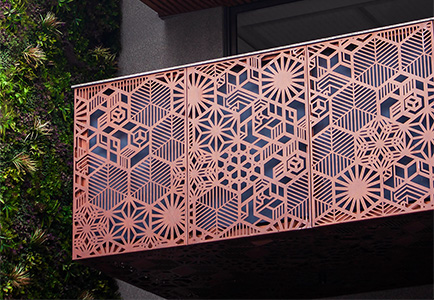
Architectural Luxury, Within Reach: Why MetaFlutes and MetaLouvers Are the Smartest Investment in Metal Facades
In today’s built environment, luxury is no longer defined by extravagance - it’s defined by intention. It’s about refined details, enduring finishes, and design that performs as beautifully as it looks. At Metaguise, our metal facade systems - MetaFlutes, MetaLouvers, and MetaCassette Perforated - are crafted to bring that standard of architectural luxury within reach...
07-04-25 | Architectural Insights
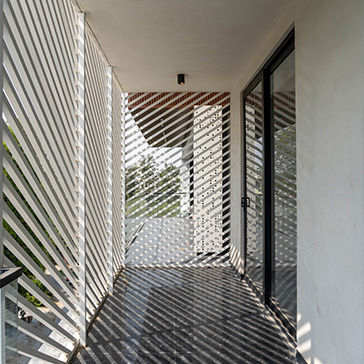
Why Architects Are Turning to Custom Metal Louvers in 2025
There’s something quietly brilliant happening in architecture right now. As buildings become more responsive and designers look for ways to merge aesthetics with performance, one feature is making a serious comeback, custom metal louvers.
03-06-25 | Architectural Insights
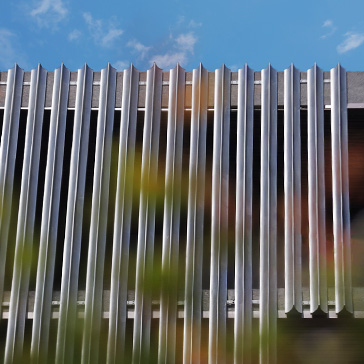
The Science of Shadows: How Facade Design Shapes Light and Mood
Architecture has always been about more than structure - it’s about rhythm, reflection, and the way light interacts with space.At Metaguise, we see every innovative facade as a living canvas, one that transforms not just how a building looks, but how it feels. Light becomes our material, and shadow becomes our tool.This is the art and the science behind MetaLouvers, MetaCassette, and the entire Metaguise facade family.
13-10-25 | Architectural Insights
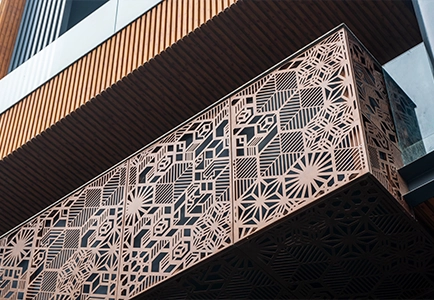
Custom Metal Facade Cladding in 2026: Design, Cost, Materials & Architect Guide
Explore how commercial spaces are using Metaguise facades to express identity and elevate perception.
24-11-25 | Architectural Insights
Social
Legal
Privacy Policy|Terms & Conditions