






Parametric Facades Demystified: How Algorithms Become Architecture
24-04-26 | Facade Innovations
The Architecture That Thinks for Itself
Walk past a building wrapped in thousands of metal panels, each one slightly different from its neighbor, yet somehow forming a coherent, breathing composition that shifts as you move. That moment when you realize the facade isn't just pretty - it's intelligent - marks your first encounter with parametric architecture. For decades, architectural facades meant one of two things: repetitive modular systems that looked efficient but soulless, or bespoke artistic visions so expensive and complex they remained confined to renderings and international starchitect projects. Parametric design has shattered this false binary, introducing a third path where algorithms generate complexity, where every panel can be unique yet part of a mathematically choreographed whole, and where buildings can finally express the kind of fluid, organic beauty we see in nature - without bankrupting the project or compromising structural performance. Yet despite their growing presence on luxury developments, flagship retail stores, and institutional buildings across India's tier-one cities, parametric facades remain mysterious to most stakeholders. Developers hear "parametric" and imagine budget overruns. Architects dream of swooping curves but worry about fabrication reality. Property owners see stunning photographs but question durability in India's punishing climate. It's time to demystify the process. Because understanding how algorithms become architecture isn't just technical knowledge - it's the key to unlocking buildings that announce rather than simply shelter, that stop traffic rather than blend into the skyline, that age with grace rather than deteriorate into maintenance nightmares.
From Mathematics to Metal: The Parametric Process Decoded
The word "parametric" sounds intimidating, conjuring images of complex equations and specialized software. In reality, the concept is beautifully simple: instead of drawing each facade panel individually, you define the rules that generate them. The Core Logic Think of it like this: traditional facade design is like painting every leaf on a tree by hand. Parametric design is like defining the growth pattern - branch angle, leaf density, size variation - and letting the algorithm generate ten thousand unique leaves that still read as a unified canopy. The architect doesn't design each panel; they design the system that produces panels. This shift from object to system unlocks extraordinary possibilities: Gradients and transitions - panel density can gradually increase from sparse to dense, creating visual movement across the elevation Responsive variation - panel orientation can respond to sun angles, view corridors, or structural grid, optimizing both aesthetics and performance Narrative encoding - patterns can emerge from data sets, whether cultural symbols, sporting moments, or brand identity elements Controlled complexity - thousands of unique components remain coordinated within fabrication tolerances and installation logic At its best, parametric design produces facades that feel simultaneously meticulously planned and organically emergent - the architectural equivalent of jazz improvisation within a composed structure. The Design-to-Fabrication Journey Where parametric facades often fail isn't in the design studio - it's in the translation to reality. This is where understanding the complete process becomes critical for anyone commissioning, designing, or approving these systems. The journey has distinct phases, each requiring specialized expertise: Conceptual scripting - architects and computational designers establish the parametric logic, defining which variables drive the design (curvature radius, panel rotation angle, perforation density) and their relationships Performance integration - the script is refined to address structural loads, thermal performance, water management, and maintenance access - beauty must coexist with building science Fabrication engineering - algorithms generate not just aesthetic surfaces but manufacturing data - cut sheets, bend angles, assembly sequences, all optimized for the specific metal fabrication equipment that will produce them Installation planning - each unique panel requires a unique position on the building; parametric systems generate installation drawings that map digital design to physical coordinates with millimeter precision On-site adaptation - even with perfect planning, buildings shift during construction; parametric systems allow real-time adjustments without redesigning the entire facade This end-to-end integration is why fragmenting the process - hiring separate consultants for design, engineering, fabrication, and installation - so often dilutes parametric projects. The algorithm's elegance gets lost in translation between disconnected vendors, and the final building resembles the design rendering only approximately. "Parametric design in architecture represents a fundamental shift from drawing what buildings look like to defining the logic of how buildings are generated and can adapt. The most successful implementations maintain continuity from conceptual parameters through to fabrication data." - Autodesk Research, The Future of Architectural Fabrication
The Indian Context: Climate, Craft, and Computational Desig
Parametric facades emerged in temperate European climates and oil-rich Gulf states with unlimited construction budgets. Bringing them to India required more than import and installation - it demanded reinvention. Climate as Design Parameter India's building envelopes face thermal stress few Western facades encounter. Summer temperatures in Rajasthan, monsoon humidity in Kerala, coastal salt spray in Mumbai, and Delhi's temperature swings from 4°C to 45°C - these aren't minor variables. They're fundamental parameters that must be encoded into the facade algorithm from day one. Smart parametric systems for Indian conditions build in: Thermal expansion joints calculated not as uniform spacing but responsive to local solar exposure, with greater allowance on sun-facing elevations Drainage choreography where panel overlaps and reveals channel monsoon water away from building envelope, preventing the moisture infiltration that plagues poorly-detailed metal facades Material selection encoded in the script - aluminum alloys that maintain finish integrity through UV bombardment, stainless steel grades that resist coastal corrosion Maintenance access where the pattern itself creates visual rhythm while accommodating cleaning equipment and human reach without disrupting the composition This is where India's parametric movement has matured beyond simply imitating international projects. The algorithms are becoming contextually intelligent, producing facades that perform as brilliantly as they photograph. Breaking the Cost Barrier The early parametric projects in India carried international price tags - ₹15,000 to ₹25,000 per square meter - limiting them to marquee developments and corporate headquarters with branding budgets. What's transformed the market is the emergence of integrated domestic providers who've invested in computational design teams, advanced fabrication equipment, and installation expertise. This integration compresses costs without compromising complexity. When the same organization handling algorithmic design also programs the CNC machines cutting the panels, inefficiencies vanish. When installation teams understand the parametric logic because they collaborated during engineering, site delays evaporate. The result: parametric facades now accessible to serious luxury residential projects, boutique retail developments, and institutional buildings - not just multinational corporations and international hotel chains.
Decoding System Types: Finding Your Parametric Language
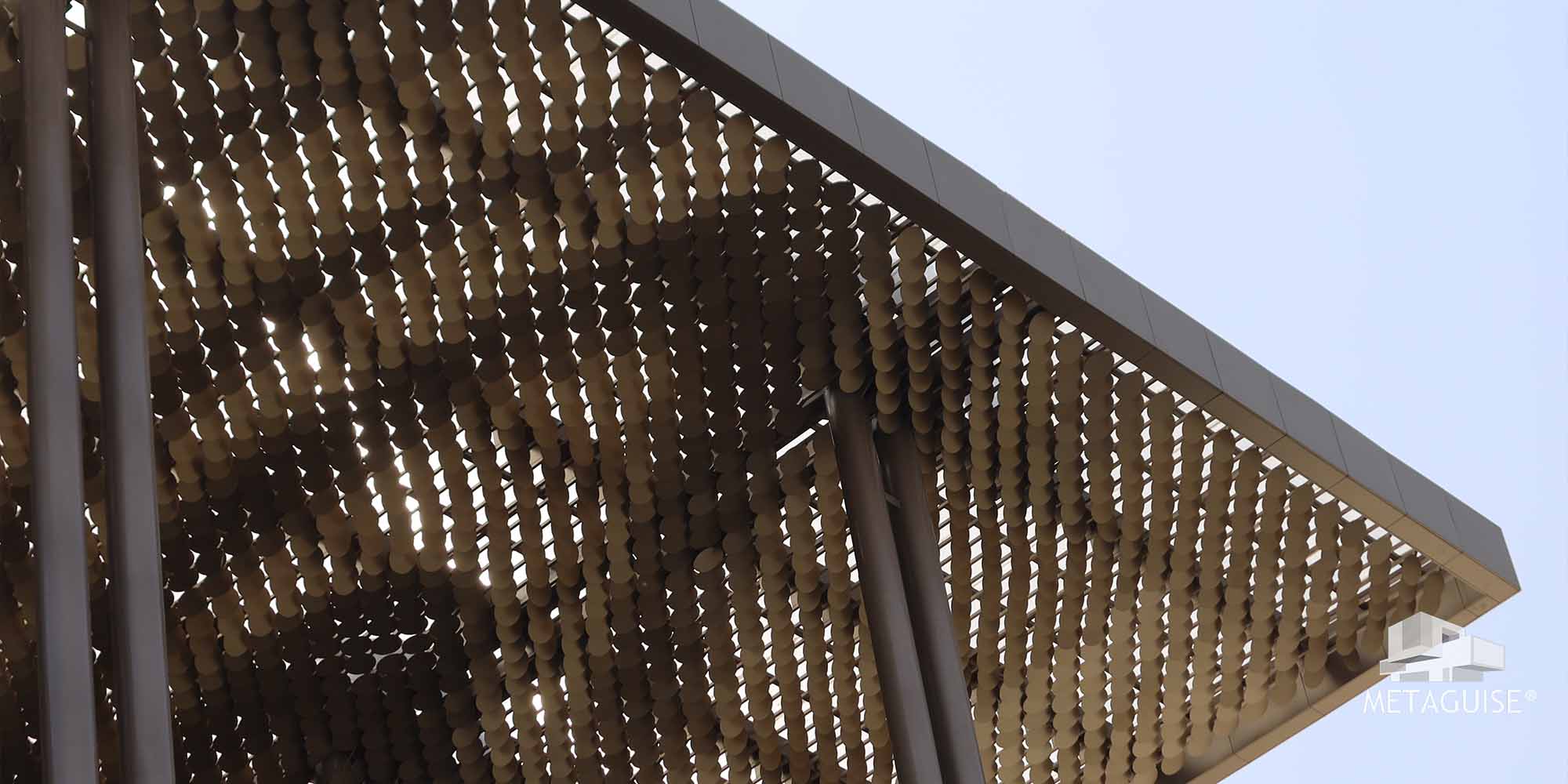
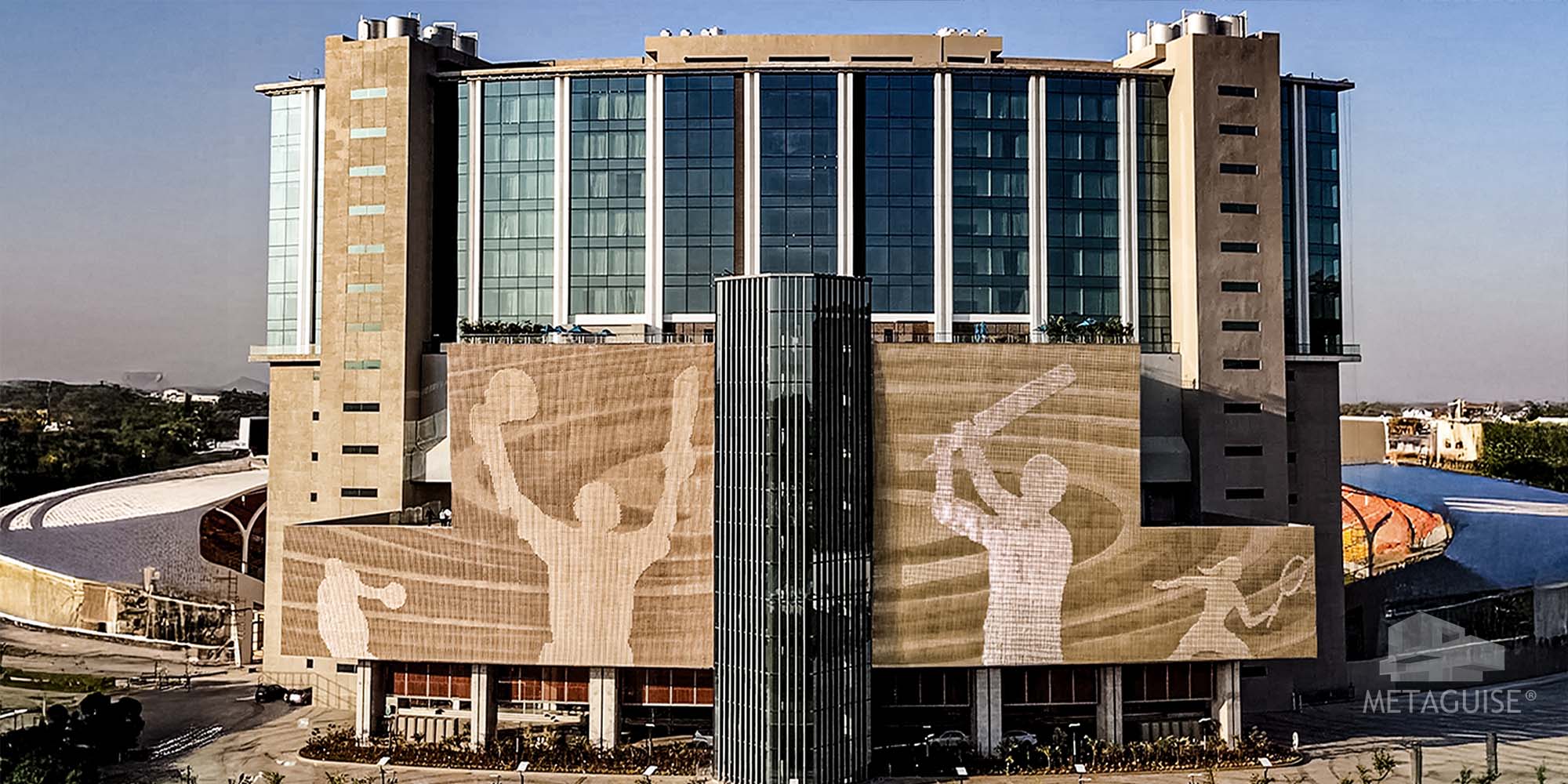
Not all parametric facades speak the same visual language. Understanding the system types helps match aesthetic ambition with project requirements. Tessellated Panel Systems Systems like MetaSequin work with overlapping elements - imagine fish scales or roof tiles reinterpreted in metal. Each "sequin" panel can vary in size, rotation, and reveal, creating shimmering surfaces that change expression with viewing angle and lighting. These excel when the brief calls for dynamic texture and depth, ideal for retail flagships, hotel lobbies, and residential towers targeting ultra-luxury buyers. The parametric advantage: algorithms can generate thousands of unique panel positions while maintaining consistent overlap for weather-tightness - something impossible to coordinate manually without errors. Blade and Fin Systems Vertical or horizontal blades - like MetaFin - project from the facade plane, creating depth through shadow and layering. Parametric control allows each blade to vary in length, angle, and spacing, producing gradient effects where the facade gradually opens or closes, becomes transparent or opaque, and responds to interior programming or sun orientation. These systems shine on larger institutional buildings, office towers, and educational campuses where solar shading meets sculptural expression. The blades perform climate control while creating architectural identity. Coined and Embossed Patterns When the brief demands cultural narrative or brand storytelling, systems like MetaCoin use thousands of embossed metal discs, each capable of carrying imagery, varying in size, and positioned according to algorithmic logic. The result reads as a continuous metallic tapestry from distance, revealing intricate detail up close. Consider Miraj Stadium, where gold-toned metal coins depict iconic sporting moments across the facade. Each coin is unique, yet together they form a luminous tribute visible from the highway - monumentality achieved through parametric multiplication rather than brute scale.
What Serious Buyers Must Evaluate
If you're an architect, developer, or property owner considering parametric facades, here's what separates successful projects from expensive disappointments: Integration Over Fragmentation Ask your facade partner: Who handles computational design? Who engineers the fabrication data? Who manufactures the panels? Who installs them? If the answer involves four different companies across three countries, prepare for design dilution, finger-pointing when problems arise, and timeline delays. The gold standard is end-to-end capability under one roof - the organization that scripts the algorithm also cuts the metal and also installs the panels. This continuity is what allows parametric systems to maintain design fidelity from concept sketch to occupied building. Climate Engineering Credentials Demand proof of thermal cycling tests, monsoon performance data, and installed projects aging gracefully through multiple Indian summers. Parametric facades that work brilliantly in Dubai's dry heat often fail catastrophically in Mumbai's humidity. Your facade partner should be encoding Indian climate realities into their algorithms, not applying European systems with minor modifications. Post-Installation Support Parametric facades are complex assemblies with hundreds of connection points and moving parts (thermal expansion, for instance, means panels literally move with temperature changes). What happens when a panel needs replacement five years in? Can your fabricator reproduce a single unique component from the original parametric model? Or was the algorithm discarded after installation, leaving you with an orphaned facade? Serious providers maintain digital twins - complete parametric models archived for the building's lifespan - enabling precise replacement, renovation, or expansion.
The Metaguise Perspective: Algorithms with Soul
At Metaguise Projects, parametric design isn't about showing off technical capability - it's about giving architects the tools to create facades that couldn't exist through traditional means. Buildings that encode cultural memory. Elevations that shift personality with the sun's movement. Towers that announce luxury without resorting to gold-plated clichés. What distinguishes the Metaguise approach is refusing the false choice between algorithmic precision and emotional resonance. Systems like MetaSequin, MetaFin, MetaCoin, MetaBlox, MetaHydra, and MetaHive are parametric in execution but poetic in expression - technology deployed not for its own sake but to unlock beauty that manual methods cannot achieve. The in-house integration - computational design team working alongside fabrication engineers who collaborate with installation specialists - means the algorithm's elegance survives translation to built form. When a principal architect sketches a curve that seems unbuildable, the Metaguise response is "let's script it" rather than "simplify it." This is the partnership that transforms "what if" into "what is." From early conversations at concept stage through final panel installation, the Metaguise process maintains singular accountability. No finger-pointing between designer and fabricator, no lost intent between engineering and execution. The same team that defined the parametric logic tests the prototypes, refines the fabrication sequence, and supervises the installation. The result is visible across India's evolving skyline: stadium facades that shimmer with sporting heritage, retail flagships where the building envelope becomes brand sculpture, university campuses that balance institutional gravitas with contemporary expression, and luxury residences where the facade is the signature - the visible proof that this isn't off-the-shelf architecture.
Parametric Facades Demystified: How Algorithms Become Architecture
24-04-26 | Facade Innovations
The Architecture That Thinks for Itself
Walk past a building wrapped in thousands of metal panels, each one slightly different from its neighbor, yet somehow forming a coherent, breathing composition that shifts as you move. That moment when you realize the facade isn't just pretty - it's intelligent - marks your first encounter with parametric architecture. For decades, architectural facades meant one of two things: repetitive modular systems that looked efficient but soulless, or bespoke artistic visions so expensive and complex they remained confined to renderings and international starchitect projects. Parametric design has shattered this false binary, introducing a third path where algorithms generate complexity, where every panel can be unique yet part of a mathematically choreographed whole, and where buildings can finally express the kind of fluid, organic beauty we see in nature - without bankrupting the project or compromising structural performance. Yet despite their growing presence on luxury developments, flagship retail stores, and institutional buildings across India's tier-one cities, parametric facades remain mysterious to most stakeholders. Developers hear "parametric" and imagine budget overruns. Architects dream of swooping curves but worry about fabrication reality. Property owners see stunning photographs but question durability in India's punishing climate. It's time to demystify the process. Because understanding how algorithms become architecture isn't just technical knowledge - it's the key to unlocking buildings that announce rather than simply shelter, that stop traffic rather than blend into the skyline, that age with grace rather than deteriorate into maintenance nightmares.
From Mathematics to Metal: The Parametric Process Decoded
The word "parametric" sounds intimidating, conjuring images of complex equations and specialized software. In reality, the concept is beautifully simple: instead of drawing each facade panel individually, you define the rules that generate them. The Core Logic Think of it like this: traditional facade design is like painting every leaf on a tree by hand. Parametric design is like defining the growth pattern - branch angle, leaf density, size variation - and letting the algorithm generate ten thousand unique leaves that still read as a unified canopy. The architect doesn't design each panel; they design the system that produces panels. This shift from object to system unlocks extraordinary possibilities: Gradients and transitions - panel density can gradually increase from sparse to dense, creating visual movement across the elevation Responsive variation - panel orientation can respond to sun angles, view corridors, or structural grid, optimizing both aesthetics and performance Narrative encoding - patterns can emerge from data sets, whether cultural symbols, sporting moments, or brand identity elements Controlled complexity - thousands of unique components remain coordinated within fabrication tolerances and installation logic At its best, parametric design produces facades that feel simultaneously meticulously planned and organically emergent - the architectural equivalent of jazz improvisation within a composed structure. The Design-to-Fabrication Journey Where parametric facades often fail isn't in the design studio - it's in the translation to reality. This is where understanding the complete process becomes critical for anyone commissioning, designing, or approving these systems. The journey has distinct phases, each requiring specialized expertise: Conceptual scripting - architects and computational designers establish the parametric logic, defining which variables drive the design (curvature radius, panel rotation angle, perforation density) and their relationships Performance integration - the script is refined to address structural loads, thermal performance, water management, and maintenance access - beauty must coexist with building science Fabrication engineering - algorithms generate not just aesthetic surfaces but manufacturing data - cut sheets, bend angles, assembly sequences, all optimized for the specific metal fabrication equipment that will produce them Installation planning - each unique panel requires a unique position on the building; parametric systems generate installation drawings that map digital design to physical coordinates with millimeter precision On-site adaptation - even with perfect planning, buildings shift during construction; parametric systems allow real-time adjustments without redesigning the entire facade This end-to-end integration is why fragmenting the process - hiring separate consultants for design, engineering, fabrication, and installation - so often dilutes parametric projects. The algorithm's elegance gets lost in translation between disconnected vendors, and the final building resembles the design rendering only approximately. "Parametric design in architecture represents a fundamental shift from drawing what buildings look like to defining the logic of how buildings are generated and can adapt. The most successful implementations maintain continuity from conceptual parameters through to fabrication data." - Autodesk Research, The Future of Architectural Fabrication
The Indian Context: Climate, Craft, and Computational Desig
Parametric facades emerged in temperate European climates and oil-rich Gulf states with unlimited construction budgets. Bringing them to India required more than import and installation - it demanded reinvention. Climate as Design Parameter India's building envelopes face thermal stress few Western facades encounter. Summer temperatures in Rajasthan, monsoon humidity in Kerala, coastal salt spray in Mumbai, and Delhi's temperature swings from 4°C to 45°C - these aren't minor variables. They're fundamental parameters that must be encoded into the facade algorithm from day one. Smart parametric systems for Indian conditions build in: Thermal expansion joints calculated not as uniform spacing but responsive to local solar exposure, with greater allowance on sun-facing elevations Drainage choreography where panel overlaps and reveals channel monsoon water away from building envelope, preventing the moisture infiltration that plagues poorly-detailed metal facades Material selection encoded in the script - aluminum alloys that maintain finish integrity through UV bombardment, stainless steel grades that resist coastal corrosion Maintenance access where the pattern itself creates visual rhythm while accommodating cleaning equipment and human reach without disrupting the composition This is where India's parametric movement has matured beyond simply imitating international projects. The algorithms are becoming contextually intelligent, producing facades that perform as brilliantly as they photograph. Breaking the Cost Barrier The early parametric projects in India carried international price tags - ₹15,000 to ₹25,000 per square meter - limiting them to marquee developments and corporate headquarters with branding budgets. What's transformed the market is the emergence of integrated domestic providers who've invested in computational design teams, advanced fabrication equipment, and installation expertise. This integration compresses costs without compromising complexity. When the same organization handling algorithmic design also programs the CNC machines cutting the panels, inefficiencies vanish. When installation teams understand the parametric logic because they collaborated during engineering, site delays evaporate. The result: parametric facades now accessible to serious luxury residential projects, boutique retail developments, and institutional buildings - not just multinational corporations and international hotel chains.
Decoding System Types: Finding Your Parametric Language
Not all parametric facades speak the same visual language. Understanding the system types helps match aesthetic ambition with project requirements. Tessellated Panel Systems Systems like MetaSequin work with overlapping elements - imagine fish scales or roof tiles reinterpreted in metal. Each "sequin" panel can vary in size, rotation, and reveal, creating shimmering surfaces that change expression with viewing angle and lighting. These excel when the brief calls for dynamic texture and depth, ideal for retail flagships, hotel lobbies, and residential towers targeting ultra-luxury buyers. The parametric advantage: algorithms can generate thousands of unique panel positions while maintaining consistent overlap for weather-tightness - something impossible to coordinate manually without errors. Blade and Fin Systems Vertical or horizontal blades - like MetaFin - project from the facade plane, creating depth through shadow and layering. Parametric control allows each blade to vary in length, angle, and spacing, producing gradient effects where the facade gradually opens or closes, becomes transparent or opaque, and responds to interior programming or sun orientation. These systems shine on larger institutional buildings, office towers, and educational campuses where solar shading meets sculptural expression. The blades perform climate control while creating architectural identity. Coined and Embossed Patterns When the brief demands cultural narrative or brand storytelling, systems like MetaCoin use thousands of embossed metal discs, each capable of carrying imagery, varying in size, and positioned according to algorithmic logic. The result reads as a continuous metallic tapestry from distance, revealing intricate detail up close. Consider Miraj Stadium, where gold-toned metal coins depict iconic sporting moments across the facade. Each coin is unique, yet together they form a luminous tribute visible from the highway - monumentality achieved through parametric multiplication rather than brute scale.
What Serious Buyers Must Evaluate
If you're an architect, developer, or property owner considering parametric facades, here's what separates successful projects from expensive disappointments: Integration Over Fragmentation Ask your facade partner: Who handles computational design? Who engineers the fabrication data? Who manufactures the panels? Who installs them? If the answer involves four different companies across three countries, prepare for design dilution, finger-pointing when problems arise, and timeline delays. The gold standard is end-to-end capability under one roof - the organization that scripts the algorithm also cuts the metal and also installs the panels. This continuity is what allows parametric systems to maintain design fidelity from concept sketch to occupied building. Climate Engineering Credentials Demand proof of thermal cycling tests, monsoon performance data, and installed projects aging gracefully through multiple Indian summers. Parametric facades that work brilliantly in Dubai's dry heat often fail catastrophically in Mumbai's humidity. Your facade partner should be encoding Indian climate realities into their algorithms, not applying European systems with minor modifications. Post-Installation Support Parametric facades are complex assemblies with hundreds of connection points and moving parts (thermal expansion, for instance, means panels literally move with temperature changes). What happens when a panel needs replacement five years in? Can your fabricator reproduce a single unique component from the original parametric model? Or was the algorithm discarded after installation, leaving you with an orphaned facade? Serious providers maintain digital twins - complete parametric models archived for the building's lifespan - enabling precise replacement, renovation, or expansion.
The Metaguise Perspective: Algorithms with Soul
At Metaguise Projects, parametric design isn't about showing off technical capability - it's about giving architects the tools to create facades that couldn't exist through traditional means. Buildings that encode cultural memory. Elevations that shift personality with the sun's movement. Towers that announce luxury without resorting to gold-plated clichés. What distinguishes the Metaguise approach is refusing the false choice between algorithmic precision and emotional resonance. Systems like MetaSequin, MetaFin, MetaCoin, MetaBlox, MetaHydra, and MetaHive are parametric in execution but poetic in expression - technology deployed not for its own sake but to unlock beauty that manual methods cannot achieve. The in-house integration - computational design team working alongside fabrication engineers who collaborate with installation specialists - means the algorithm's elegance survives translation to built form. When a principal architect sketches a curve that seems unbuildable, the Metaguise response is "let's script it" rather than "simplify it." This is the partnership that transforms "what if" into "what is." From early conversations at concept stage through final panel installation, the Metaguise process maintains singular accountability. No finger-pointing between designer and fabricator, no lost intent between engineering and execution. The same team that defined the parametric logic tests the prototypes, refines the fabrication sequence, and supervises the installation. The result is visible across India's evolving skyline: stadium facades that shimmer with sporting heritage, retail flagships where the building envelope becomes brand sculpture, university campuses that balance institutional gravitas with contemporary expression, and luxury residences where the facade is the signature - the visible proof that this isn't off-the-shelf architecture.
Related Articles
Related Articles
The Rise of Parametric facades: Designing with Algorithmic Elegance
A revolutionary parametric facade system designed to elevate architectural aesthetics. Crafted with premium metals and enhanced with MetaSurface finishes, MetaCoin offers unparalleled customizability, from the shape and size of each element to its color and arrangement. Its dynamic design reacts to light and perspective, creating ever-changing visual effects. Ideal for contemporary and iconic structures, MetaCoin transforms facades into captivating works of art that are sustainable, durable, and visually stunning.
01-04-25 | Facade Innovations
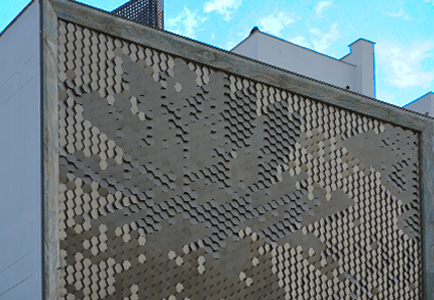
METABLOX™ by Metaguise: A Breakthrough in Parametric Facade Design
At the intersection of culture, craftsmanship, and cutting-edge geometry, METABLOX™ emerges as a bold new direction in architectural innovation. Introduced by Metaguise, this first-of-its-kind parametric facade technology makes its striking debut at the RJ Jewellers flagship store in Jaipur - setting a new benchmark in the world of metal design and modern Indian architecture.
09-04-25 | Facade Innovations
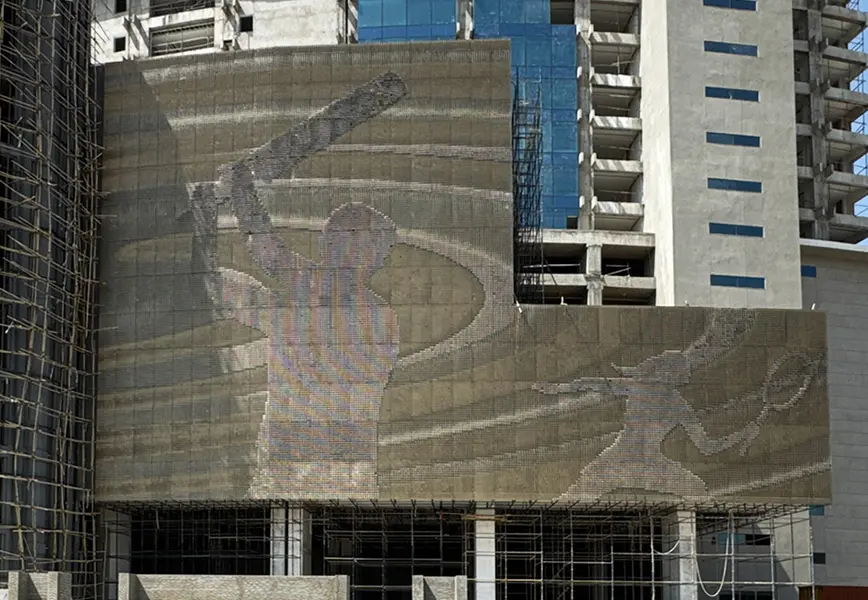
5 Landmark Projects That Used MetaCoin to Transform Facades
When it comes to parametric architecture, MetaCoin stands out as a revolutionary metal coin facade system. Crafted with precision, it offers dynamic aesthetics, adaptability, and a unique identity to structures. Let's delve into five notable projects where MetaCoin has redefined architectural facades.
13-05-25 | Facade Innovations
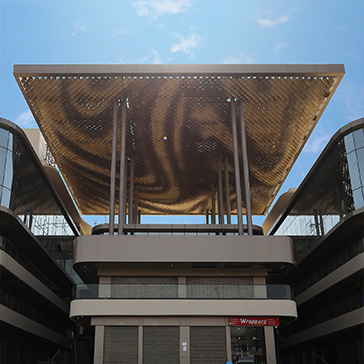
From Code to Construction: How Parametric Facades Are Built
Some buildings just make you look twice. Maybe it’s the way the facade curves. Or how the surface catches the light at different times of day. Often, what you’re seeing is more than just a design, it’s a parametric facade.
10-06-25 | Facade Innovations
Social
Legal
Privacy Policy|Terms & Conditions