





What Is Parametric Facade Design? A Simple Guide for Indian Homeowners and Architects (2026)
13-05-26 | Architectural Insights
Key Takeaways
• Parametric facade design uses mathematical algorithms — not manual drawing — to generate building exteriors that are precise, unique, and structurally coherent. • For Indian homeowners, 'parametric' is not a technical term to fear — it is the answer to the question: 'How do I get a facade that no one else has?' • Metaguise pioneered parametric facade systems in India, combining Grasshopper and Rhino computational design with in-house CNC fabrication and on-site installation — the only end-to-end parametric facade process available in the country. • This guide explains what parametric design is, how it works from software script to installed panel, why Indian architects are adopting it, whether it is right for your home, and what it costs.
Parametric Design in Plain Language — What Does It Actually Mean?
The word 'parametric' carries an air of technical complexity that often discourages the very people who would benefit most from understanding it. In reality, the concept is straightforward — and its implications for architecture are among the most exciting of any design development in the last two decades. According to the Dataintelo Parametric CAD Software Market Report, the global parametric CAD software market reached USD 6.2 billion in 2024 and is projected to grow at an 8.7% CAGR to USD 13.1 billion by 2033 — a pace of adoption that reflects just how thoroughly computation-led design has become the standard in architecture, engineering, and manufacturing globally. India is at the leading edge of this transition, and parametric facade design India is no longer a research-lab curiosity; it is the specification language of the country's most ambitious residential and commercial architecture. So what does 'parametric' actually mean in plain language? Traditional architectural design works by manually specifying each element — the architect draws a window here, a panel there, a cornice at this height. Every change requires redrawing. Parametric design works differently: instead of drawing individual elements, the designer writes a set of rules — parameters — that describe how the elements should behave. 'The panels rotate 5 degrees for every metre of height.' 'The perforation density increases as the building turns from west to south.' 'The panel size responds to the structural grid below.' Once the rules are set, the software generates the entire composition automatically — and if one rule changes, the entire composition updates instantly. For a facade, this means something extraordinary: a surface that is not manually drawn panel by panel, but generated by logic — a surface that can be 10,000 square feet of unique, non-repeating geometry, fabrication-ready, structurally validated, and visually coherent, in a fraction of the time manual design would require. And because the logic is mathematical, it can incorporate real-world data: solar angles, wind load, structural span, privacy requirements, acoustic performance. The facade does not just look sophisticated — it is sophisticated, in the engineering sense of the word.
From Software Script to Metal Panel: How Parametric Facade Design Works Step by Step
For Indian homeowners and architects encountering parametric facade design for the first time, the process from initial idea to installed panel may seem opaque. Metaguise's workflow makes it transparent — and it is more logical and less mystifying than most expect. Step 1: The Design Brief and Site Data Every parametric facade begins not with a script but with a conversation. Metaguise's design team works with the architect or homeowner to understand the building's geometry, orientation, programme, budget, and design intent. Site data — solar path, prevailing wind, structural wall layout, floor-to-floor heights — is collected and digitised. This data becomes the input for the parametric script. Step 2: Parametric Scripting in Grasshopper and Rhino Metaguise's computational designers use Grasshopper — a visual programming language that runs within the Rhino 3D modelling environment — to write the logic of the facade. Rather than typing code, designers connect visual nodes that represent geometric operations: 'divide this surface into a grid,' 'rotate each panel by this angle,' 'scale each element according to this data input.' The script generates the full facade geometry instantly, and designers can test variations in real time — changing perforation density, panel size, depth, or orientation with a single slider adjustment. Step 3: Structural and Engineering Validation Once the parametric geometry is established, Metaguise's engineering team validates it against structural and fabrication requirements. Wind load calculations, fixing point loads, panel deflection limits, and thermal movement allowances are all checked — ensuring that the facade is not just geometrically beautiful but physically sound. For complex parametric systems, physical mockup panels are fabricated at this stage and tested for fit, finish, and structural performance before full production begins. Step 4: CNC Fabrication The approved parametric geometry is exported directly to Metaguise's CNC cutting, routing, and forming machines. Each panel's unique geometry is programmed into the machine — which cuts, perforates, folds, or forms the aluminium or steel to the exact specification of the parametric script. For a 5,000-square-foot parametric facade with thousands of unique panel geometries, CNC fabrication is not just more accurate than manual fabrication — it is the only way the process is feasible at all. Step 5: Finishing, QA, and Packaging Fabricated panels move through Metaguise's in-house finishing process — powder coating, PVDF application, anodising, or MetaSurface finish application — followed by QA inspection against the parametric specification. Every panel is checked against its design geometry before leaving the facility. Panels are then packaged and labelled sequentially — so that on site, the installation team can place each panel in its exact position without confusion or error. Step 6: On-Site Installation Metaguise's installation team works from the parametric installation drawing — a site-coordinated layout that specifies every panel's exact position, orientation, and fixing detail. The sub-frame is installed first (anchored to the structural wall), followed by panel installation in the sequence specified by the parametric layout. For experienced Metaguise installation teams, a 5,000-square-foot parametric facade installation typically takes 3–6 weeks on site, depending on access conditions and site logistics. The result is a facade that matches the approved parametric design intent with submillimetre precision.
Why Indian Architects Are Adopting Computational Facade Design in 2026
The adoption of parametric design tools among India's principal architects has accelerated markedly since 2022 — driven by three converging forces. The first is client demand. India's HNI homeowners and luxury developers increasingly arrive at initial briefings with ArchDaily references, parametric facade images from global projects, and an explicit instruction: 'I want something that cannot be copied.' Parametric design is the only architectural process that can deliver this guarantee — because the geometry is generated by a unique script, it is mathematically unrepeatable. The second force is fabrication accessibility. Five years ago, Indian architects who designed parametric facades faced a painful gap between the digital model and physical execution — local fabricators lacked CNC capability and could not maintain the tolerances parametric geometry demands. Metaguise's in-house fabrication has closed this gap for the residential and commercial markets: architects can now design parametrically and trust that the fabrication will match the intent. The third force is software maturity. Grasshopper, Rhino, and associated parametric plugins have become standard tools in India's top design studios. A 2025 peer-reviewed study cited in India's architecture education landscape found that 40% of architecture education stakeholders identified the lack of technological integration — including parametric tools — as the most critical gap in Indian architecture curricula. The profession has outrun its own educational system, with practitioners learning parametric design through self-directed study and upskilling platforms, and applying it in practice before it is formalised in any curriculum.
Is Parametric Facade Design Right for My Home? A Decision Framework
Not every home needs a parametric facade — and part of Metaguise's value as a design partner is helping homeowners and architects understand when parametric is the right specification and when a modular system delivers comparable value at lower cost and complexity. Parametric is the right choice when: • The brief explicitly demands uniqueness — 'nothing else in this neighbourhood should look like this building' • The building has a curved, angled, or geometrically irregular facade that does not suit modular rectangular panels • The homeowner or architect wants to embed a personal motif, cultural pattern, or data-driven logic (solar performance, privacy gradient) into the facade surface • The project is a landmark commission — a developer's flagship building, an architect's portfolio centrepiece, or an HNI homeowner's once-in-a-lifetime residence • The budget accommodates the design development and custom fabrication premium that parametric systems require — typically ₹1,500–2,800 per sq ft installed A modular MetaForm system may be the better choice when: • The building has a regular rectangular facade that suits standard panel geometries • The timeline is constrained — MetaForm systems move from design approval to installation in 8–14 weeks, versus 16–24 weeks for parametric • The budget is ₹900–1,500 per sq ft and the priority is premium visual quality rather than geometric uniqueness • The design intent is minimalist or textural rather than geometric — MetaFlute and MetaCassette achieve powerful aesthetic results within a modular framework Metaguise's design consultation process helps every homeowner and architect make this distinction clearly — presenting both parametric and modular options in 3D visualisation before any commitment is made.
Metaguise's Parametric Facade Portfolio Across India
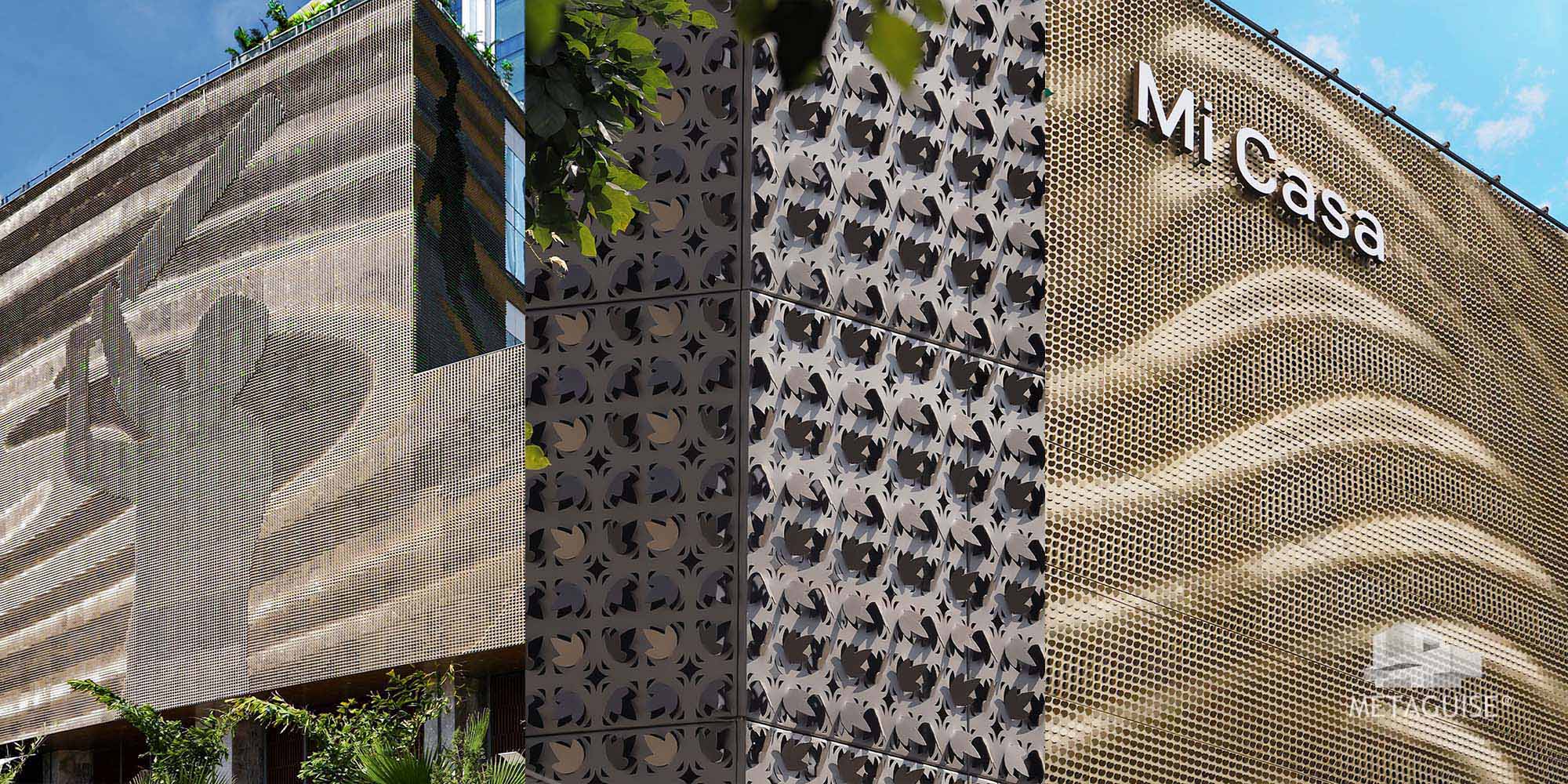
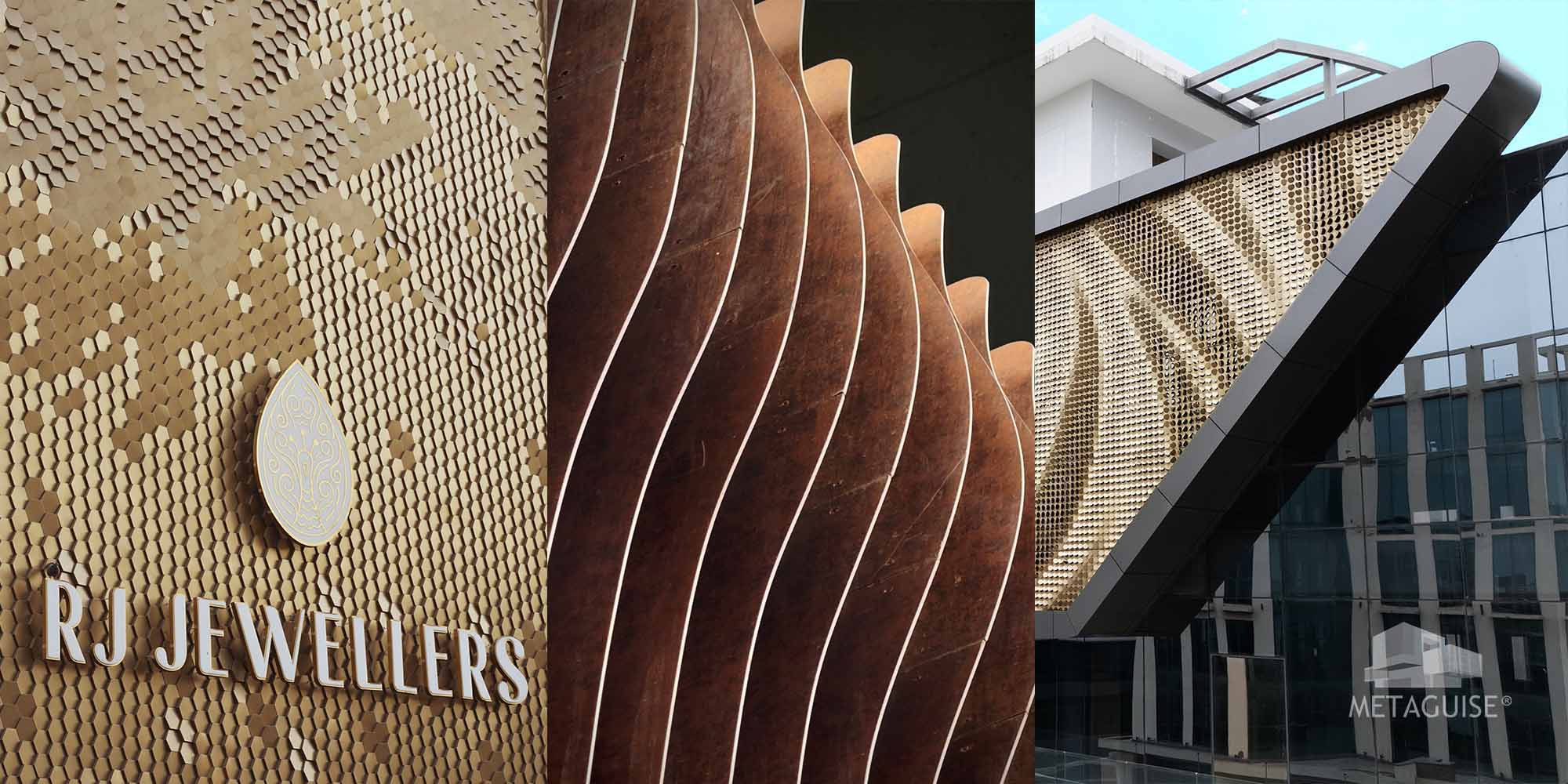
Metaguise is the pioneer of parametric facade design in India's residential and commercial sectors — the company that brought computational design out of academic exploration and into fabricated, installed, real-world architecture. At Miraj Cricket Stadium in Rajasthan, Metaguise delivered one of India's most celebrated parametric facade installations — thousands of MetaCoin gold-toned circular panels choreographed by a parametric script to depict iconic sporting moments. Viewed from the approach road, the facade reads as a shimmering, moving image; viewed from close range, the individual panel logic becomes visible — each coin positioned and angled by algorithm, no two in exactly the same orientation. At GLS University in Ahmedabad, Metaguise executed a landmark parametric facade for the institution's primary building — a MetaSequin installation that responds to the campus's orientation and creates a facade that changes character through the day as the sun angle shifts. The building has become a reference point for parametric architecture in India's educational sector. In luxury residential projects across South Delhi, Gurgaon, and Ahmedabad, Metaguise has delivered parametric facade systems for private homes — including MetaFold origami-geometry elevations, custom perforated screen facades with family-specific motifs, and MetaSequin entrance canopy systems — each the product of a unique parametric script developed specifically for the project's geometry, brief, and site conditions. Each of these projects began with a design conversation, not a product catalogue. Metaguise's parametric design process is consultative and bespoke — the script is written for the project, not adapted from a template. This is the distinction that makes Metaguise's parametric facades genuinely unrepeatable.
Frequently Asked Questions
1.Do I need to understand parametric design to commission a parametric facade?
No. Metaguise's design team manages the entire computational design process — scripting, geometry generation, engineering validation, and fabrication programming. Homeowners and architects engage with the design intent (what the facade should express, achieve, and look like), the material and finish options, and the 3D visualisations that represent the parametric outcome. The software and scripting are Metaguise's domain; the design vision is the client's. The most successful parametric projects begin with a clear brief and an open mind — not a technical understanding of Grasshopper.2.How is a parametric facade different from a decorative facade?
A decorative facade applies ornament or pattern to a surface — a jali screen, a textured render, a carved stone motif — as an addition to the building's basic geometry. A parametric facade generates the geometry itself through computational logic — the shape, size, angle, and arrangement of every element is produced by a script, not manually drawn. This distinction matters because parametric facades can encode performance: solar control, structural efficiency, acoustic management, and privacy gradients can all be embedded in the parametric logic, making the facade simultaneously aesthetic and functional in ways that decorative approaches cannot achieve.3. Can parametric facade design be applied to a small residential plot?
Yes. Metaguise has executed parametric residential commissions on plots as small as 200 sq yards and facade areas as compact as 800 sq ft. The parametric approach scales to the project: a small residential facade might use a parametric perforation pattern on a single screen element, while a large villa uses parametric geometry across the entire elevation. The design development cost for smaller parametric commissions is proportionally higher than for large projects — which is why Metaguise's design consultation helps smaller-scale homeowners determine whether a selective parametric element (a feature screen, an entrance canopy) delivers the design impact they seek within their budget, or whether a full parametric specification is warranted.4. How long does a parametric facade project take from brief to installation?
Parametric facade projects at Metaguise typically follow a 16–24 week total timeline from initial brief to completed installation: 4–6 weeks of design development and script refinement, 2–3 weeks of engineering validation and mockup approval, 6–10 weeks of CNC fabrication and finishing, and 3–6 weeks of on-site installation depending on facade area and access conditions. For homeowners commissioning as part of a new-build construction programme, Metaguise coordinates the facade design timeline to align with structural completion and waterproofing — so that the facade installation follows the building schedule without creating delay.What Is Parametric Facade Design? A Simple Guide for Indian Homeowners and Architects (2026)
13-05-26 | Architectural Insights
Key Takeaways
• Parametric facade design uses mathematical algorithms — not manual drawing — to generate building exteriors that are precise, unique, and structurally coherent. • For Indian homeowners, 'parametric' is not a technical term to fear — it is the answer to the question: 'How do I get a facade that no one else has?' • Metaguise pioneered parametric facade systems in India, combining Grasshopper and Rhino computational design with in-house CNC fabrication and on-site installation — the only end-to-end parametric facade process available in the country. • This guide explains what parametric design is, how it works from software script to installed panel, why Indian architects are adopting it, whether it is right for your home, and what it costs.
Parametric Design in Plain Language — What Does It Actually Mean?
The word 'parametric' carries an air of technical complexity that often discourages the very people who would benefit most from understanding it. In reality, the concept is straightforward — and its implications for architecture are among the most exciting of any design development in the last two decades. According to the Dataintelo Parametric CAD Software Market Report, the global parametric CAD software market reached USD 6.2 billion in 2024 and is projected to grow at an 8.7% CAGR to USD 13.1 billion by 2033 — a pace of adoption that reflects just how thoroughly computation-led design has become the standard in architecture, engineering, and manufacturing globally. India is at the leading edge of this transition, and parametric facade design India is no longer a research-lab curiosity; it is the specification language of the country's most ambitious residential and commercial architecture. So what does 'parametric' actually mean in plain language? Traditional architectural design works by manually specifying each element — the architect draws a window here, a panel there, a cornice at this height. Every change requires redrawing. Parametric design works differently: instead of drawing individual elements, the designer writes a set of rules — parameters — that describe how the elements should behave. 'The panels rotate 5 degrees for every metre of height.' 'The perforation density increases as the building turns from west to south.' 'The panel size responds to the structural grid below.' Once the rules are set, the software generates the entire composition automatically — and if one rule changes, the entire composition updates instantly. For a facade, this means something extraordinary: a surface that is not manually drawn panel by panel, but generated by logic — a surface that can be 10,000 square feet of unique, non-repeating geometry, fabrication-ready, structurally validated, and visually coherent, in a fraction of the time manual design would require. And because the logic is mathematical, it can incorporate real-world data: solar angles, wind load, structural span, privacy requirements, acoustic performance. The facade does not just look sophisticated — it is sophisticated, in the engineering sense of the word.
From Software Script to Metal Panel: How Parametric Facade Design Works Step by Step
For Indian homeowners and architects encountering parametric facade design for the first time, the process from initial idea to installed panel may seem opaque. Metaguise's workflow makes it transparent — and it is more logical and less mystifying than most expect. Step 1: The Design Brief and Site Data Every parametric facade begins not with a script but with a conversation. Metaguise's design team works with the architect or homeowner to understand the building's geometry, orientation, programme, budget, and design intent. Site data — solar path, prevailing wind, structural wall layout, floor-to-floor heights — is collected and digitised. This data becomes the input for the parametric script. Step 2: Parametric Scripting in Grasshopper and Rhino Metaguise's computational designers use Grasshopper — a visual programming language that runs within the Rhino 3D modelling environment — to write the logic of the facade. Rather than typing code, designers connect visual nodes that represent geometric operations: 'divide this surface into a grid,' 'rotate each panel by this angle,' 'scale each element according to this data input.' The script generates the full facade geometry instantly, and designers can test variations in real time — changing perforation density, panel size, depth, or orientation with a single slider adjustment. Step 3: Structural and Engineering Validation Once the parametric geometry is established, Metaguise's engineering team validates it against structural and fabrication requirements. Wind load calculations, fixing point loads, panel deflection limits, and thermal movement allowances are all checked — ensuring that the facade is not just geometrically beautiful but physically sound. For complex parametric systems, physical mockup panels are fabricated at this stage and tested for fit, finish, and structural performance before full production begins. Step 4: CNC Fabrication The approved parametric geometry is exported directly to Metaguise's CNC cutting, routing, and forming machines. Each panel's unique geometry is programmed into the machine — which cuts, perforates, folds, or forms the aluminium or steel to the exact specification of the parametric script. For a 5,000-square-foot parametric facade with thousands of unique panel geometries, CNC fabrication is not just more accurate than manual fabrication — it is the only way the process is feasible at all. Step 5: Finishing, QA, and Packaging Fabricated panels move through Metaguise's in-house finishing process — powder coating, PVDF application, anodising, or MetaSurface finish application — followed by QA inspection against the parametric specification. Every panel is checked against its design geometry before leaving the facility. Panels are then packaged and labelled sequentially — so that on site, the installation team can place each panel in its exact position without confusion or error. Step 6: On-Site Installation Metaguise's installation team works from the parametric installation drawing — a site-coordinated layout that specifies every panel's exact position, orientation, and fixing detail. The sub-frame is installed first (anchored to the structural wall), followed by panel installation in the sequence specified by the parametric layout. For experienced Metaguise installation teams, a 5,000-square-foot parametric facade installation typically takes 3–6 weeks on site, depending on access conditions and site logistics. The result is a facade that matches the approved parametric design intent with submillimetre precision.
Why Indian Architects Are Adopting Computational Facade Design in 2026
The adoption of parametric design tools among India's principal architects has accelerated markedly since 2022 — driven by three converging forces. The first is client demand. India's HNI homeowners and luxury developers increasingly arrive at initial briefings with ArchDaily references, parametric facade images from global projects, and an explicit instruction: 'I want something that cannot be copied.' Parametric design is the only architectural process that can deliver this guarantee — because the geometry is generated by a unique script, it is mathematically unrepeatable. The second force is fabrication accessibility. Five years ago, Indian architects who designed parametric facades faced a painful gap between the digital model and physical execution — local fabricators lacked CNC capability and could not maintain the tolerances parametric geometry demands. Metaguise's in-house fabrication has closed this gap for the residential and commercial markets: architects can now design parametrically and trust that the fabrication will match the intent. The third force is software maturity. Grasshopper, Rhino, and associated parametric plugins have become standard tools in India's top design studios. A 2025 peer-reviewed study cited in India's architecture education landscape found that 40% of architecture education stakeholders identified the lack of technological integration — including parametric tools — as the most critical gap in Indian architecture curricula. The profession has outrun its own educational system, with practitioners learning parametric design through self-directed study and upskilling platforms, and applying it in practice before it is formalised in any curriculum.
Is Parametric Facade Design Right for My Home? A Decision Framework
Not every home needs a parametric facade — and part of Metaguise's value as a design partner is helping homeowners and architects understand when parametric is the right specification and when a modular system delivers comparable value at lower cost and complexity. Parametric is the right choice when: • The brief explicitly demands uniqueness — 'nothing else in this neighbourhood should look like this building' • The building has a curved, angled, or geometrically irregular facade that does not suit modular rectangular panels • The homeowner or architect wants to embed a personal motif, cultural pattern, or data-driven logic (solar performance, privacy gradient) into the facade surface • The project is a landmark commission — a developer's flagship building, an architect's portfolio centrepiece, or an HNI homeowner's once-in-a-lifetime residence • The budget accommodates the design development and custom fabrication premium that parametric systems require — typically ₹1,500–2,800 per sq ft installed A modular MetaForm system may be the better choice when: • The building has a regular rectangular facade that suits standard panel geometries • The timeline is constrained — MetaForm systems move from design approval to installation in 8–14 weeks, versus 16–24 weeks for parametric • The budget is ₹900–1,500 per sq ft and the priority is premium visual quality rather than geometric uniqueness • The design intent is minimalist or textural rather than geometric — MetaFlute and MetaCassette achieve powerful aesthetic results within a modular framework Metaguise's design consultation process helps every homeowner and architect make this distinction clearly — presenting both parametric and modular options in 3D visualisation before any commitment is made.
Metaguise's Parametric Facade Portfolio Across India
Metaguise is the pioneer of parametric facade design in India's residential and commercial sectors — the company that brought computational design out of academic exploration and into fabricated, installed, real-world architecture. At Miraj Cricket Stadium in Rajasthan, Metaguise delivered one of India's most celebrated parametric facade installations — thousands of MetaCoin gold-toned circular panels choreographed by a parametric script to depict iconic sporting moments. Viewed from the approach road, the facade reads as a shimmering, moving image; viewed from close range, the individual panel logic becomes visible — each coin positioned and angled by algorithm, no two in exactly the same orientation. At GLS University in Ahmedabad, Metaguise executed a landmark parametric facade for the institution's primary building — a MetaSequin installation that responds to the campus's orientation and creates a facade that changes character through the day as the sun angle shifts. The building has become a reference point for parametric architecture in India's educational sector. In luxury residential projects across South Delhi, Gurgaon, and Ahmedabad, Metaguise has delivered parametric facade systems for private homes — including MetaFold origami-geometry elevations, custom perforated screen facades with family-specific motifs, and MetaSequin entrance canopy systems — each the product of a unique parametric script developed specifically for the project's geometry, brief, and site conditions. Each of these projects began with a design conversation, not a product catalogue. Metaguise's parametric design process is consultative and bespoke — the script is written for the project, not adapted from a template. This is the distinction that makes Metaguise's parametric facades genuinely unrepeatable.
Frequently Asked Questions
1.Do I need to understand parametric design to commission a parametric facade?
No. Metaguise's design team manages the entire computational design process — scripting, geometry generation, engineering validation, and fabrication programming. Homeowners and architects engage with the design intent (what the facade should express, achieve, and look like), the material and finish options, and the 3D visualisations that represent the parametric outcome. The software and scripting are Metaguise's domain; the design vision is the client's. The most successful parametric projects begin with a clear brief and an open mind — not a technical understanding of Grasshopper.2.How is a parametric facade different from a decorative facade?
A decorative facade applies ornament or pattern to a surface — a jali screen, a textured render, a carved stone motif — as an addition to the building's basic geometry. A parametric facade generates the geometry itself through computational logic — the shape, size, angle, and arrangement of every element is produced by a script, not manually drawn. This distinction matters because parametric facades can encode performance: solar control, structural efficiency, acoustic management, and privacy gradients can all be embedded in the parametric logic, making the facade simultaneously aesthetic and functional in ways that decorative approaches cannot achieve.3. Can parametric facade design be applied to a small residential plot?
Yes. Metaguise has executed parametric residential commissions on plots as small as 200 sq yards and facade areas as compact as 800 sq ft. The parametric approach scales to the project: a small residential facade might use a parametric perforation pattern on a single screen element, while a large villa uses parametric geometry across the entire elevation. The design development cost for smaller parametric commissions is proportionally higher than for large projects — which is why Metaguise's design consultation helps smaller-scale homeowners determine whether a selective parametric element (a feature screen, an entrance canopy) delivers the design impact they seek within their budget, or whether a full parametric specification is warranted.4. How long does a parametric facade project take from brief to installation?
Parametric facade projects at Metaguise typically follow a 16–24 week total timeline from initial brief to completed installation: 4–6 weeks of design development and script refinement, 2–3 weeks of engineering validation and mockup approval, 6–10 weeks of CNC fabrication and finishing, and 3–6 weeks of on-site installation depending on facade area and access conditions. For homeowners commissioning as part of a new-build construction programme, Metaguise coordinates the facade design timeline to align with structural completion and waterproofing — so that the facade installation follows the building schedule without creating delay.Related Articles
Related Articles
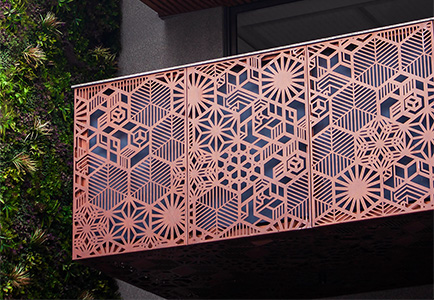
Architectural Luxury, Within Reach: Why MetaFlutes and MetaLouvers Are the Smartest Investment in Metal Facades
In today’s built environment, luxury is no longer defined by extravagance - it’s defined by intention. It’s about refined details, enduring finishes, and design that performs as beautifully as it looks. At Metaguise, our metal facade systems - MetaFlutes, MetaLouvers, and MetaCassette Perforated - are crafted to bring that standard of architectural luxury within reach...
07-04-25 | Architectural Insights
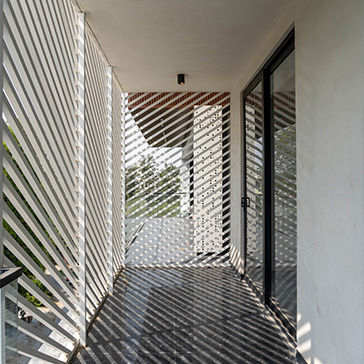
Why Architects Are Turning to Custom Metal Louvers in 2025
There’s something quietly brilliant happening in architecture right now. As buildings become more responsive and designers look for ways to merge aesthetics with performance, one feature is making a serious comeback, custom metal louvers.
03-06-25 | Architectural Insights
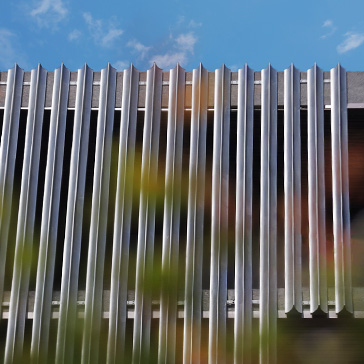
The Science of Shadows: How Facade Design Shapes Light and Mood
Architecture has always been about more than structure - it’s about rhythm, reflection, and the way light interacts with space.At Metaguise, we see every innovative facade as a living canvas, one that transforms not just how a building looks, but how it feels. Light becomes our material, and shadow becomes our tool.This is the art and the science behind MetaLouvers, MetaCassette, and the entire Metaguise facade family.
13-10-25 | Architectural Insights
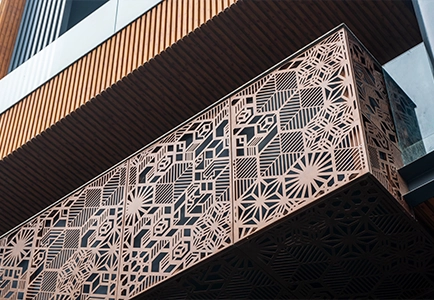
Custom Metal Facade Cladding in 2026: Design, Cost, Materials & Architect Guide
Explore how commercial spaces are using Metaguise facades to express identity and elevate perception.
24-11-25 | Architectural Insights
Social
Legal
Privacy Policy|Terms & Conditions