





MetaSurface vs Standard Finishes - A Durability and Aesthetic Comparison for Discerning Clients
23-04-26 | Material Spotlight
The Facade Finish Dilemma Facing India's Luxury Architecture
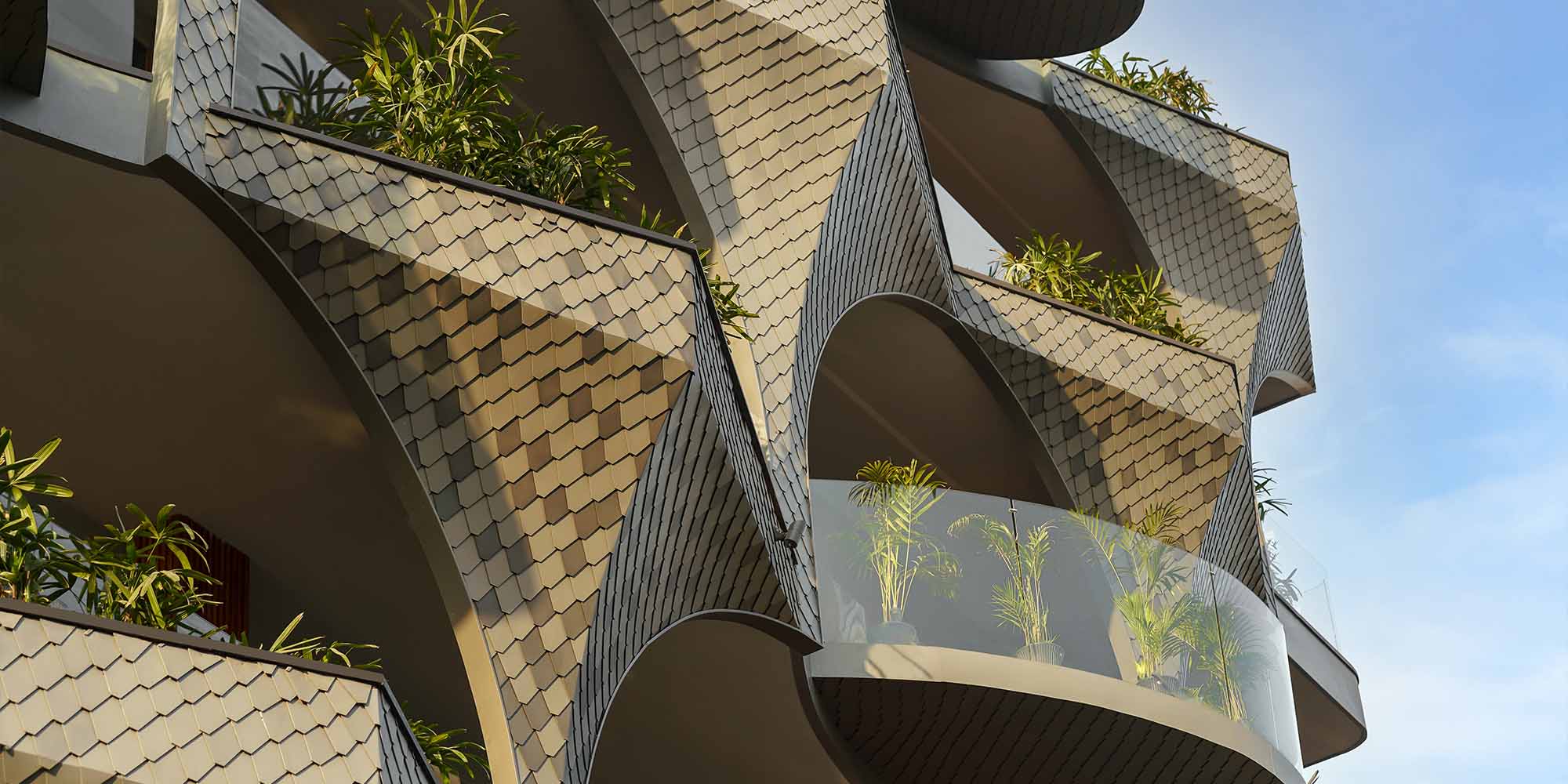
You've spent eighteen months perfecting the design. The parametric curves have been scripted, the computational models approved, the stakeholders aligned. Your ₹150-crore mixed-use tower in Gurugram or your ₹12-crore bungalow in Ahmedabad is about to make its statement on the skyline. Then comes the question that separates enduring architecture from expensive regret: what finish will protect and preserve that vision for the next two decades? This is not an academic debate. The gap between standard metal facade finishes and advanced surface technologies like MetaSurface represents the difference between a building that ages with dignity and one that begins betraying its owners within thirty-six months. It's the difference between a Tanishq flagship that gleams like jewelry a decade after opening and a commercial facade that looks tired by its first lease renewal. For architects, real estate developers, and homeowners investing in parametric facade systems, the finish is not decoration - it is insurance. It determines whether your building envelope will withstand Rajasthan's 48°C summers and Mumbai's relentless monsoons while maintaining the chromatic precision that made you choose metal in the first place.
Understanding the Finish Landscape: Where Standard Solutions Fall Short
Standard facade finishes in the Indian market typically fall into three categories: powder coating, anodizing, and basic PVD treatments. Each has been the workhorse of the commercial construction industry for decades, offering acceptable performance at accessible price points. But "acceptable" is a word that has no place in luxury architecture. The Hidden Lifecycle Costs of Conventional Finishes When you specify a standard powder-coated finish on a metal facade, you're inheriting a predictable degradation timeline. Within eighteen to thirty months of exposure to direct sunlight in cities like Pune or Jaipur, you'll observe the first signs of chalking - that powdery residue that appears when UV radiation begins breaking down the polyester resin binder. By year three, color shift becomes visible to the untrained eye. By year five, the facade that was specified as "champagne gold" now reads as washed-out beige under the afternoon sun. Standard anodizing offers better UV resistance but comes with its own constraints. The limited color palette struggles to achieve the warm metallics and deep bronzes that define contemporary luxury architecture. Coastal projects face accelerated pitting and corrosion. And once compromised, anodized surfaces cannot be refinished - only replaced. "Building facade degradation in tropical and subtropical climates occurs at accelerated rates compared to temperate zones, with UV intensity, thermal cycling, and humidity acting as primary stressors on organic coating systems." - Building and Environment Journal, Facade Performance in Extreme Climates: A Longitudinal Study What the Numbers Reveal About Finish Performance Let's translate degradation into economic reality. A standard powder-coated facade on a 50,000 square foot commercial building requires intervention around year six. The cost isn't just material - it's scaffolding, building access disruption, tenant coordination, and the reputational cost of a landmark property looking shabby during peak leasing season. Scaffolding and access systems for re-coating: ₹40-60 lakhs for a mid-rise structure Tenant business disruption during 8-12 week intervention: unquantifiable but significant in Class A office or retail Material and labor for surface preparation and reapplication: ₹180-220 per square foot Total intervention cost at year six: ₹1.2-1.8 crores for a typical project Repeat cycle: every 5-7 years for the building's operational life Now calculate that across a thirty-year holding period. You're looking at three to four major interventions, each one more disruptive than the last as the substrate shows cumulative weathering. The financial case for premium finishes isn't about paying more upfront - it's about eliminating these cyclical capital calls entirely.
MetaSurface Technology: Engineering Beyond Aesthetics
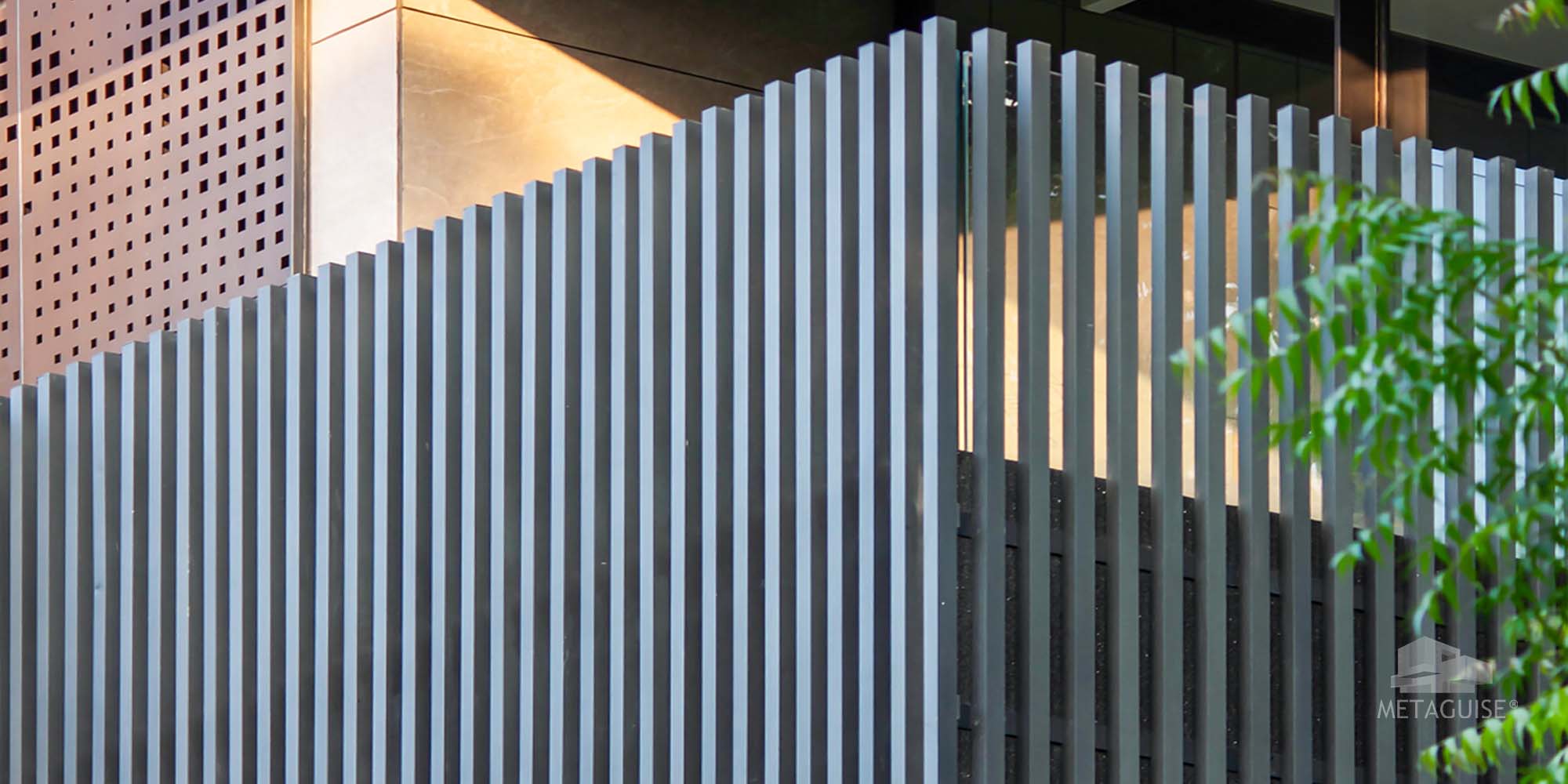
MetaSurface finishes represent a fundamentally different approach to facade protection - one developed specifically for the punishment that Indian climate conditions inflict on building envelopes. This isn't incremental improvement over powder coating; it's a material science reimagining of what metal surfaces can endure. The Climate Engineering Advantage Standard finishes are developed in European or North American laboratories, then adapted (often unsuccessfully) for subcontinental conditions. MetaSurface technology inverts that logic. Every formulation is tested under accelerated weathering protocols that simulate fifteen years of Ahmedabad summer, including: Continuous UV exposure at intensities 40% higher than temperate-zone standards Thermal cycling between 15°C night temperatures and 65°C+ surface temperatures during peak afternoon Salt spray testing exceeding marine-grade specifications for coastal applications in Mumbai, Chennai, or Visakhapatnam Humidity resistance protocols replicating monsoon saturation followed by rapid drying cycles Impact and abrasion resistance for high-traffic urban facades exposed to windborne particulates The result is a finish system with a fifteen-year warranty that actually means fifteen years - not fifteen years asterisked with exclusions for "abnormal environmental conditions" that describe normal Indian weather. Aesthetic Fidelity Over Time Here's where the conversation transcends durability and enters the realm of architectural intent. When you choose MetaSequin or MetaCoin for a signature facade, you're not just specifying a pattern - you're choreographing how light will interact with metal across thousands of unique panels. That choreography depends entirely on chromatic consistency. Standard finishes shift in unpredictable ways. A facade designed as a gradient from bronze to champagne becomes a muddy, indistinct mass as individual panels age at different rates based on orientation and exposure. The algorithmic precision that made the design extraordinary gets erased by material failure. MetaSurface finishes maintain their specified color values within ΔE < 2.0 over the warranty period - a tolerance invisible to human perception. That bronze specified in 2024 will read as the same bronze in 2039. The gradient remains a gradient. The shimmer remains a shimmer. The building remains the building you designed.
The Selection Framework: What Discerning Clients Actually Evaluate
When we work with architects on projects like the Miraj Stadium or luxury residential developments in South Delhi, the finished conversation happens early - during design development, not value engineering. Here's the framework that separates sophisticated clients from those who'll regret their specifications. Total Cost of Ownership, Not Unit Price A MetaSurface-finished MetaFin system might carry a 15-18% premium over the same geometry in standard powder coat. But amortize that premium over a thirty-year operational period and compare it against the eliminated maintenance cycles. The math becomes overwhelming: Initial premium on a ₹3.5 crore facade package: ₹52.5 lakhs Eliminated interventions over 30 years: Four recoating cycles at ₹1.5 crores each = ₹6 crores saved Net benefit: ₹5.47 crores in avoided costs, plus eliminated operational disruption ROI realization: Year six (when first standard-finish intervention would occur) This is before considering the compounding benefit of maintaining building prestige. A Class A office tower or luxury retail facade that looks new fifteen years post-completion commands premium rents and attracts quality tenants. The finish isn't a line item - it's a revenue protection strategy. Brand Alignment and Architectural Legacy If you're BMW specifying a flagship showroom facade or Tanishq creating a jewelry boutique that must embody the precision of your product, the finish becomes brand expression. Standard treatments can't deliver the visual sophistication that aligns with luxury positioning. The micro-texture, the way highlights roll across the surface, the depth of metallic tones - these aren't flourishes, they're the vocabulary of premium. For architects building their legacy projects - the university library, the personal studio, the client's dream residence - MetaSurface becomes the guarantee that your design will be experienced as intended long after you've moved on to the next commission. It's professional insurance against material betrayal. Climate Context and Project Geography Not all Indian cities punish facades equally, but all punish them severely. A project in Bangalore faces different stressors than one in Jaisalmer, but both exceed the environmental assumptions built into standard European coating systems. MetaSurface formulations are tuned to regional conditions: Coastal zones (Mumbai, Chennai, Kochi): Enhanced salt-fog resistance and anti-corrosive primer systems Desert climates (Rajasthan, Gujarat interiors): Maximum UV stabilization and thermal-shock engineering High-humidity regions (Kerala, Northeast): Fungal-growth inhibitors and moisture-barrier technologies Metropolitan pollution zones (Delhi NCR, Bangalore): Self-cleaning surface treatments and particulate-resistance The finish is specified not from a catalog but from a climate map. This level of contextual engineering simply doesn't exist in off-the-shelf coating systems.
The Metaguise Difference: Integration, Intelligence, and Integrity
What truly separates MetaSurface from standard finishes isn't just the chemistry - it's the system intelligence. Because Metaguise controls the entire value chain from computational design through fabrication to installation, the finish is never an afterthought bolted onto someone else's metalwork. Design-to-Finish Continuity When you're working with MetaHydra or MetaBlox, the finish is considered during the parametric scripting phase. Panel geometries are optimized knowing how MetaSurface will respond to curvature, how it will accentuate or soften edges, how it will behave in recessed versus proud conditions. The result is a facade where finish and form are inseparable - not a shape that's then "painted." Standard workflows fragment this integration. The architect designs, the engineer rationalizes, the fabricator builds, and the coating applicator treats whatever shows up at their facility. Each handoff is an opportunity for the finish to become generic, for the specified bronze to become "whatever bronze we have in stock." Application Precision and Quality Control MetaSurface application happens in controlled environments with tolerances measured in microns. Film thickness is monitored panel-by-panel. Cure cycles follow protocols developed specifically for each substrate and geometry. Pre-application surface preparation exceeds automotive industry standards. Standard powder coating facilities treat architectural panels with the same process used for electrical enclosures and HVAC ducts. The quality ceiling is fundamentally lower because the expectation is fundamentally lower. Your facade deserves better than repurposed industrial processes. Warranty Backed by Vertical Integration When Metaguise warranties a MetaSurface finish for fifteen years, there's no finger-pointing between the panel fabricator, the coating supplier, and the installer. The entire assembly - substrate, primer, finish, protective topcoat - comes from a single accountable entity. If something fails (and in 1800+ projects, the failure rate approaches zero), there's one phone call, one response team, one solution. Standard finish warranties are semantic labyrinths. The coating manufacturer warranties the coating chemistry but not its application. The applicator warranties their workmanship but not the coating formulation. The panel fabricator warranties the metal but not what's on it. Good luck navigating those boundaries when your facade starts chalking in year four.
Making the Decision: A Framework for Your Project
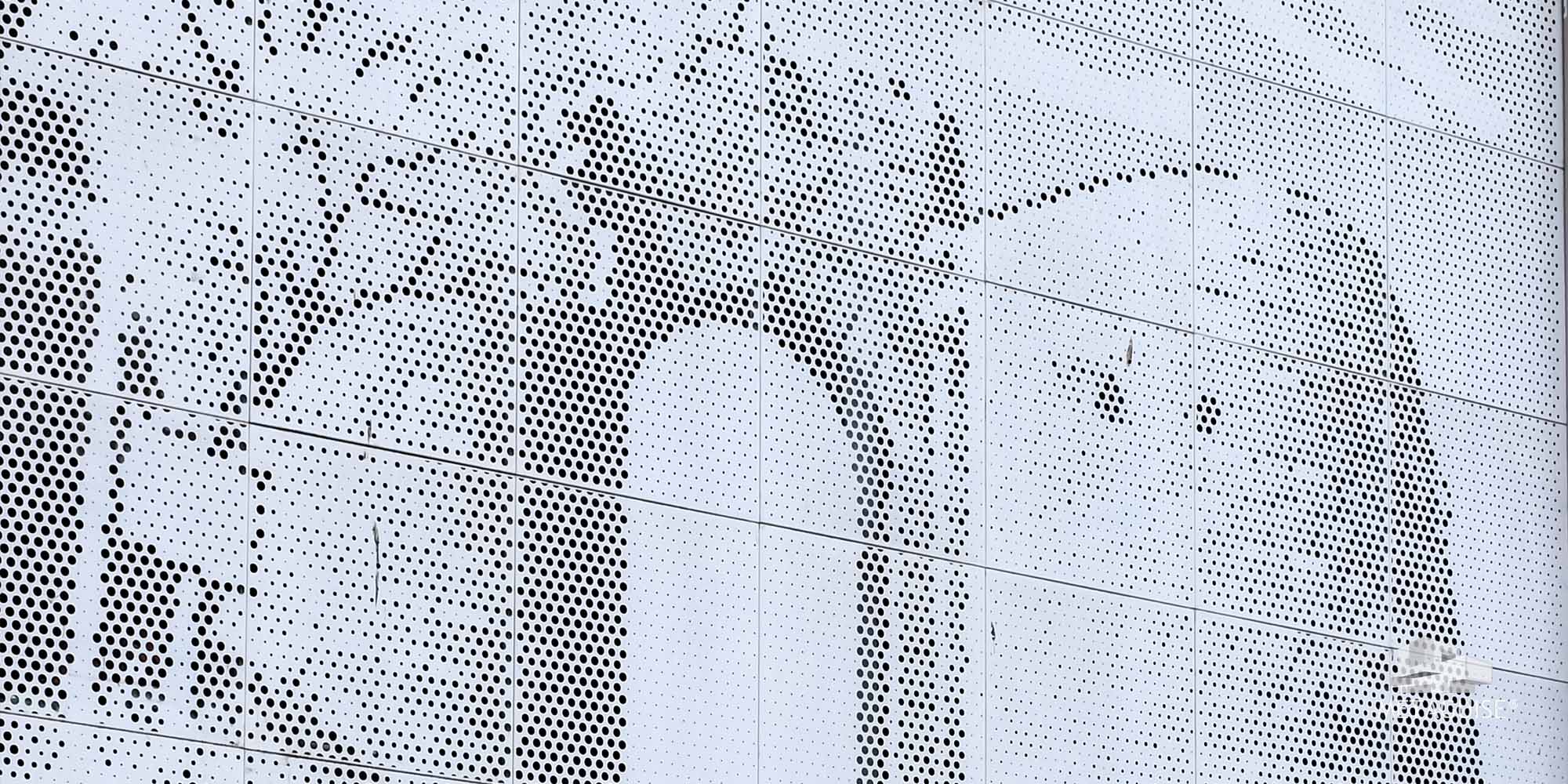
So how do you decide? The answer depends on what you're actually building and how you define value. When MetaSurface Becomes Non-Negotiable Certain project typologies simply cannot accept the risk and lifecycle burden of standard finishes. If you're developing or designing any of the following, MetaSurface isn't a luxury - it's a requirement: Flagship retail and brand showrooms where the facade is brand expression (automotive, jewelry, luxury fashion) Trophy office towers competing for multinational tenants who evaluate building quality forensically Luxury residential projects priced above ₹25,000 per square foot where buyers expect generational durability Institutional and cultural buildings designed to represent cities or universities for fifty-year horizons Coastal or extreme-climate projects where standard finishes have documented failure patterns Parametric Facades with Complex Geometries where finish consistency across thousands of unique panels is critical When Standard Finishes Might Suffice Honesty matters in specification. If you're building speculative warehousing, mid-market commercial with seven-year hold periods, or non-visible facade applications, the MetaSurface premium may not align with project economics. Standard industrial coatings, properly applied and maintained, can serve these use cases adequately.
Looking Forward: Where India's Parametric Journey Leads
We're still early in India's parametric awakening. The computational design literacy that's concentrated among leading architectural practices is beginning to diffuse more broadly. Real estate developers who initially approached parametric facades with skepticism are seeing the market response and reconsidering. Homeowners commissioning high-end residences are arriving at first meetings with reference images of parametric projects, having already decided they want non-catalog architecture. What we're witnessing is the democratization of architectural ambition - not through cheaper execution but through accessible expertise. The technical barriers that once made parametric design available only to practices with international budgets and global connections are dissolving as indigenous capability matures. An architect in Jaipur or Kochi can now specify truly sophisticated computational facades with confidence that local expertise can deliver design intent.
MetaSurface vs Standard Finishes - A Durability and Aesthetic Comparison for Discerning Clients
23-04-26 | Material Spotlight
The Facade Finish Dilemma Facing India's Luxury Architecture
You've spent eighteen months perfecting the design. The parametric curves have been scripted, the computational models approved, the stakeholders aligned. Your ₹150-crore mixed-use tower in Gurugram or your ₹12-crore bungalow in Ahmedabad is about to make its statement on the skyline. Then comes the question that separates enduring architecture from expensive regret: what finish will protect and preserve that vision for the next two decades? This is not an academic debate. The gap between standard metal facade finishes and advanced surface technologies like MetaSurface represents the difference between a building that ages with dignity and one that begins betraying its owners within thirty-six months. It's the difference between a Tanishq flagship that gleams like jewelry a decade after opening and a commercial facade that looks tired by its first lease renewal. For architects, real estate developers, and homeowners investing in parametric facade systems, the finish is not decoration - it is insurance. It determines whether your building envelope will withstand Rajasthan's 48°C summers and Mumbai's relentless monsoons while maintaining the chromatic precision that made you choose metal in the first place.
Understanding the Finish Landscape: Where Standard Solutions Fall Short
Standard facade finishes in the Indian market typically fall into three categories: powder coating, anodizing, and basic PVD treatments. Each has been the workhorse of the commercial construction industry for decades, offering acceptable performance at accessible price points. But "acceptable" is a word that has no place in luxury architecture. The Hidden Lifecycle Costs of Conventional Finishes When you specify a standard powder-coated finish on a metal facade, you're inheriting a predictable degradation timeline. Within eighteen to thirty months of exposure to direct sunlight in cities like Pune or Jaipur, you'll observe the first signs of chalking - that powdery residue that appears when UV radiation begins breaking down the polyester resin binder. By year three, color shift becomes visible to the untrained eye. By year five, the facade that was specified as "champagne gold" now reads as washed-out beige under the afternoon sun. Standard anodizing offers better UV resistance but comes with its own constraints. The limited color palette struggles to achieve the warm metallics and deep bronzes that define contemporary luxury architecture. Coastal projects face accelerated pitting and corrosion. And once compromised, anodized surfaces cannot be refinished - only replaced. "Building facade degradation in tropical and subtropical climates occurs at accelerated rates compared to temperate zones, with UV intensity, thermal cycling, and humidity acting as primary stressors on organic coating systems." - Building and Environment Journal, Facade Performance in Extreme Climates: A Longitudinal Study What the Numbers Reveal About Finish Performance Let's translate degradation into economic reality. A standard powder-coated facade on a 50,000 square foot commercial building requires intervention around year six. The cost isn't just material - it's scaffolding, building access disruption, tenant coordination, and the reputational cost of a landmark property looking shabby during peak leasing season. Scaffolding and access systems for re-coating: ₹40-60 lakhs for a mid-rise structure Tenant business disruption during 8-12 week intervention: unquantifiable but significant in Class A office or retail Material and labor for surface preparation and reapplication: ₹180-220 per square foot Total intervention cost at year six: ₹1.2-1.8 crores for a typical project Repeat cycle: every 5-7 years for the building's operational life Now calculate that across a thirty-year holding period. You're looking at three to four major interventions, each one more disruptive than the last as the substrate shows cumulative weathering. The financial case for premium finishes isn't about paying more upfront - it's about eliminating these cyclical capital calls entirely.
MetaSurface Technology: Engineering Beyond Aesthetics
MetaSurface finishes represent a fundamentally different approach to facade protection - one developed specifically for the punishment that Indian climate conditions inflict on building envelopes. This isn't incremental improvement over powder coating; it's a material science reimagining of what metal surfaces can endure. The Climate Engineering Advantage Standard finishes are developed in European or North American laboratories, then adapted (often unsuccessfully) for subcontinental conditions. MetaSurface technology inverts that logic. Every formulation is tested under accelerated weathering protocols that simulate fifteen years of Ahmedabad summer, including: Continuous UV exposure at intensities 40% higher than temperate-zone standards Thermal cycling between 15°C night temperatures and 65°C+ surface temperatures during peak afternoon Salt spray testing exceeding marine-grade specifications for coastal applications in Mumbai, Chennai, or Visakhapatnam Humidity resistance protocols replicating monsoon saturation followed by rapid drying cycles Impact and abrasion resistance for high-traffic urban facades exposed to windborne particulates The result is a finish system with a fifteen-year warranty that actually means fifteen years - not fifteen years asterisked with exclusions for "abnormal environmental conditions" that describe normal Indian weather. Aesthetic Fidelity Over Time Here's where the conversation transcends durability and enters the realm of architectural intent. When you choose MetaSequin or MetaCoin for a signature facade, you're not just specifying a pattern - you're choreographing how light will interact with metal across thousands of unique panels. That choreography depends entirely on chromatic consistency. Standard finishes shift in unpredictable ways. A facade designed as a gradient from bronze to champagne becomes a muddy, indistinct mass as individual panels age at different rates based on orientation and exposure. The algorithmic precision that made the design extraordinary gets erased by material failure. MetaSurface finishes maintain their specified color values within ΔE < 2.0 over the warranty period - a tolerance invisible to human perception. That bronze specified in 2024 will read as the same bronze in 2039. The gradient remains a gradient. The shimmer remains a shimmer. The building remains the building you designed.
The Selection Framework: What Discerning Clients Actually Evaluate
When we work with architects on projects like the Miraj Stadium or luxury residential developments in South Delhi, the finished conversation happens early - during design development, not value engineering. Here's the framework that separates sophisticated clients from those who'll regret their specifications. Total Cost of Ownership, Not Unit Price A MetaSurface-finished MetaFin system might carry a 15-18% premium over the same geometry in standard powder coat. But amortize that premium over a thirty-year operational period and compare it against the eliminated maintenance cycles. The math becomes overwhelming: Initial premium on a ₹3.5 crore facade package: ₹52.5 lakhs Eliminated interventions over 30 years: Four recoating cycles at ₹1.5 crores each = ₹6 crores saved Net benefit: ₹5.47 crores in avoided costs, plus eliminated operational disruption ROI realization: Year six (when first standard-finish intervention would occur) This is before considering the compounding benefit of maintaining building prestige. A Class A office tower or luxury retail facade that looks new fifteen years post-completion commands premium rents and attracts quality tenants. The finish isn't a line item - it's a revenue protection strategy. Brand Alignment and Architectural Legacy If you're BMW specifying a flagship showroom facade or Tanishq creating a jewelry boutique that must embody the precision of your product, the finish becomes brand expression. Standard treatments can't deliver the visual sophistication that aligns with luxury positioning. The micro-texture, the way highlights roll across the surface, the depth of metallic tones - these aren't flourishes, they're the vocabulary of premium. For architects building their legacy projects - the university library, the personal studio, the client's dream residence - MetaSurface becomes the guarantee that your design will be experienced as intended long after you've moved on to the next commission. It's professional insurance against material betrayal. Climate Context and Project Geography Not all Indian cities punish facades equally, but all punish them severely. A project in Bangalore faces different stressors than one in Jaisalmer, but both exceed the environmental assumptions built into standard European coating systems. MetaSurface formulations are tuned to regional conditions: Coastal zones (Mumbai, Chennai, Kochi): Enhanced salt-fog resistance and anti-corrosive primer systems Desert climates (Rajasthan, Gujarat interiors): Maximum UV stabilization and thermal-shock engineering High-humidity regions (Kerala, Northeast): Fungal-growth inhibitors and moisture-barrier technologies Metropolitan pollution zones (Delhi NCR, Bangalore): Self-cleaning surface treatments and particulate-resistance The finish is specified not from a catalog but from a climate map. This level of contextual engineering simply doesn't exist in off-the-shelf coating systems.
The Metaguise Difference: Integration, Intelligence, and Integrity
What truly separates MetaSurface from standard finishes isn't just the chemistry - it's the system intelligence. Because Metaguise controls the entire value chain from computational design through fabrication to installation, the finish is never an afterthought bolted onto someone else's metalwork. Design-to-Finish Continuity When you're working with MetaHydra or MetaBlox, the finish is considered during the parametric scripting phase. Panel geometries are optimized knowing how MetaSurface will respond to curvature, how it will accentuate or soften edges, how it will behave in recessed versus proud conditions. The result is a facade where finish and form are inseparable - not a shape that's then "painted." Standard workflows fragment this integration. The architect designs, the engineer rationalizes, the fabricator builds, and the coating applicator treats whatever shows up at their facility. Each handoff is an opportunity for the finish to become generic, for the specified bronze to become "whatever bronze we have in stock." Application Precision and Quality Control MetaSurface application happens in controlled environments with tolerances measured in microns. Film thickness is monitored panel-by-panel. Cure cycles follow protocols developed specifically for each substrate and geometry. Pre-application surface preparation exceeds automotive industry standards. Standard powder coating facilities treat architectural panels with the same process used for electrical enclosures and HVAC ducts. The quality ceiling is fundamentally lower because the expectation is fundamentally lower. Your facade deserves better than repurposed industrial processes. Warranty Backed by Vertical Integration When Metaguise warranties a MetaSurface finish for fifteen years, there's no finger-pointing between the panel fabricator, the coating supplier, and the installer. The entire assembly - substrate, primer, finish, protective topcoat - comes from a single accountable entity. If something fails (and in 1800+ projects, the failure rate approaches zero), there's one phone call, one response team, one solution. Standard finish warranties are semantic labyrinths. The coating manufacturer warranties the coating chemistry but not its application. The applicator warranties their workmanship but not the coating formulation. The panel fabricator warranties the metal but not what's on it. Good luck navigating those boundaries when your facade starts chalking in year four.
Making the Decision: A Framework for Your Project
So how do you decide? The answer depends on what you're actually building and how you define value. When MetaSurface Becomes Non-Negotiable Certain project typologies simply cannot accept the risk and lifecycle burden of standard finishes. If you're developing or designing any of the following, MetaSurface isn't a luxury - it's a requirement: Flagship retail and brand showrooms where the facade is brand expression (automotive, jewelry, luxury fashion) Trophy office towers competing for multinational tenants who evaluate building quality forensically Luxury residential projects priced above ₹25,000 per square foot where buyers expect generational durability Institutional and cultural buildings designed to represent cities or universities for fifty-year horizons Coastal or extreme-climate projects where standard finishes have documented failure patterns Parametric Facades with Complex Geometries where finish consistency across thousands of unique panels is critical When Standard Finishes Might Suffice Honesty matters in specification. If you're building speculative warehousing, mid-market commercial with seven-year hold periods, or non-visible facade applications, the MetaSurface premium may not align with project economics. Standard industrial coatings, properly applied and maintained, can serve these use cases adequately.
Looking Forward: Where India's Parametric Journey Leads
We're still early in India's parametric awakening. The computational design literacy that's concentrated among leading architectural practices is beginning to diffuse more broadly. Real estate developers who initially approached parametric facades with skepticism are seeing the market response and reconsidering. Homeowners commissioning high-end residences are arriving at first meetings with reference images of parametric projects, having already decided they want non-catalog architecture. What we're witnessing is the democratization of architectural ambition - not through cheaper execution but through accessible expertise. The technical barriers that once made parametric design available only to practices with international budgets and global connections are dissolving as indigenous capability matures. An architect in Jaipur or Kochi can now specify truly sophisticated computational facades with confidence that local expertise can deliver design intent.
Related Articles
Related Articles
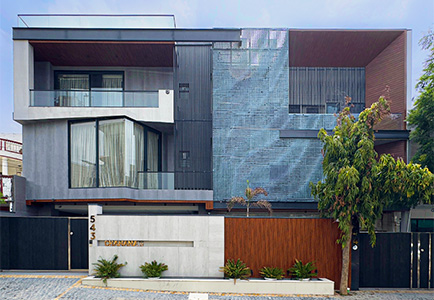
Living, Breathing Facades: The Science and Soul of MetaPatina
There’s something poetic about materials that age with grace. That shift color with time, deepen with exposure, and reveal new layers of beauty as they weather. MetaPatina, our living metal facade surface, is a tribute to that very idea - a facade that doesn’t just protect a building, but brings it to life...
06-04-25 | Material Spotlight
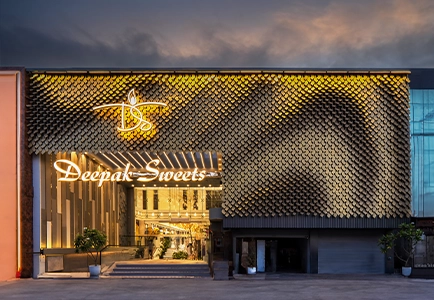
5 Reasons to Choose MetaSequin for Your Facade
At Metaguise, we believe the facade of a building isn’t just its outer layer - it’s its identity. And in today’s design landscape
10-11-25 | Material Spotlight
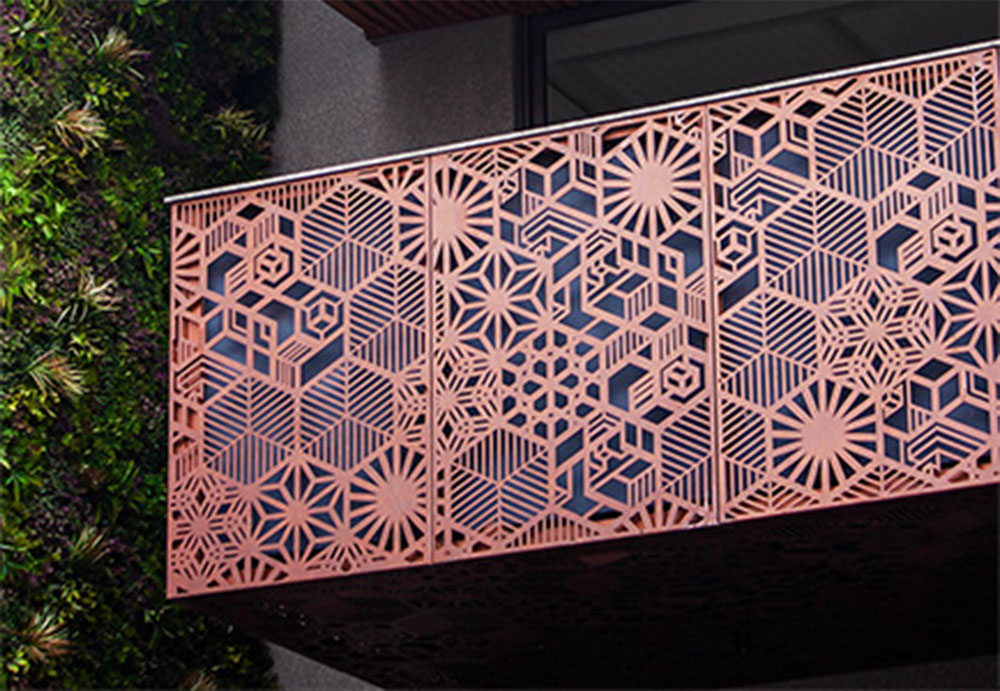
The Power of Perforation: Breathing Life, Light & Luxury into Metal Facades
At Metaguise, we believe the facade of a building isn’t just its outer layer - it’s its identity. And in today’s design landscape
17-11-25 | Material Spotlight
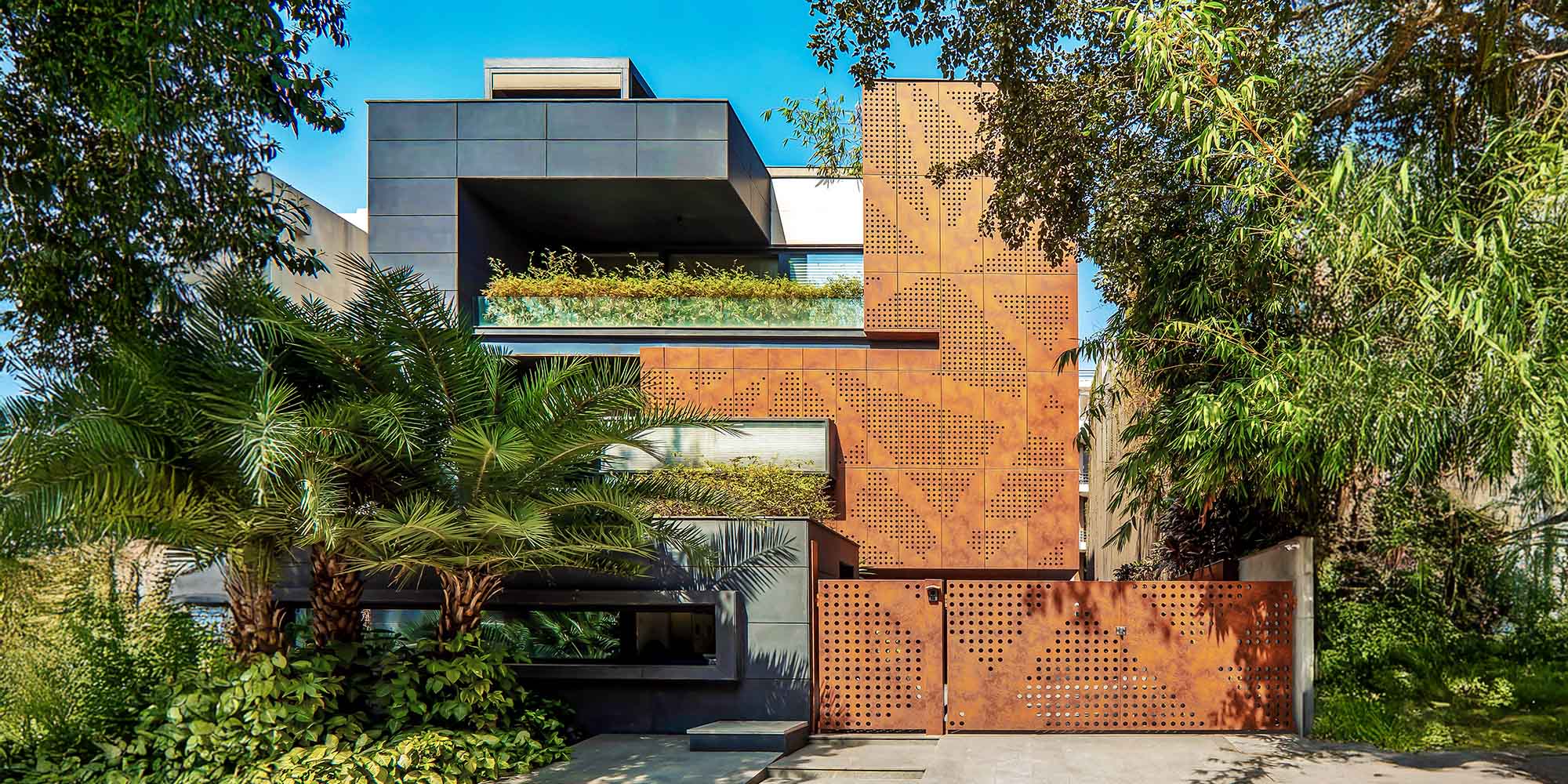
Perforated Metal Facade panels in 2026: Benefits, Design uses & Architectural Guide
Perforated metal facade panels are architectural cladding systems made from aluminium or steel sheets with precision-cut patterns.
09-12-25 | Material Spotlight
Social
Legal
Privacy Policy|Terms & Conditions