





MetaShingles: The Modern Alternative to Traditional Roof and Wall Tiles in India
25-05-26 | Material Spotlight
Key Takeaways
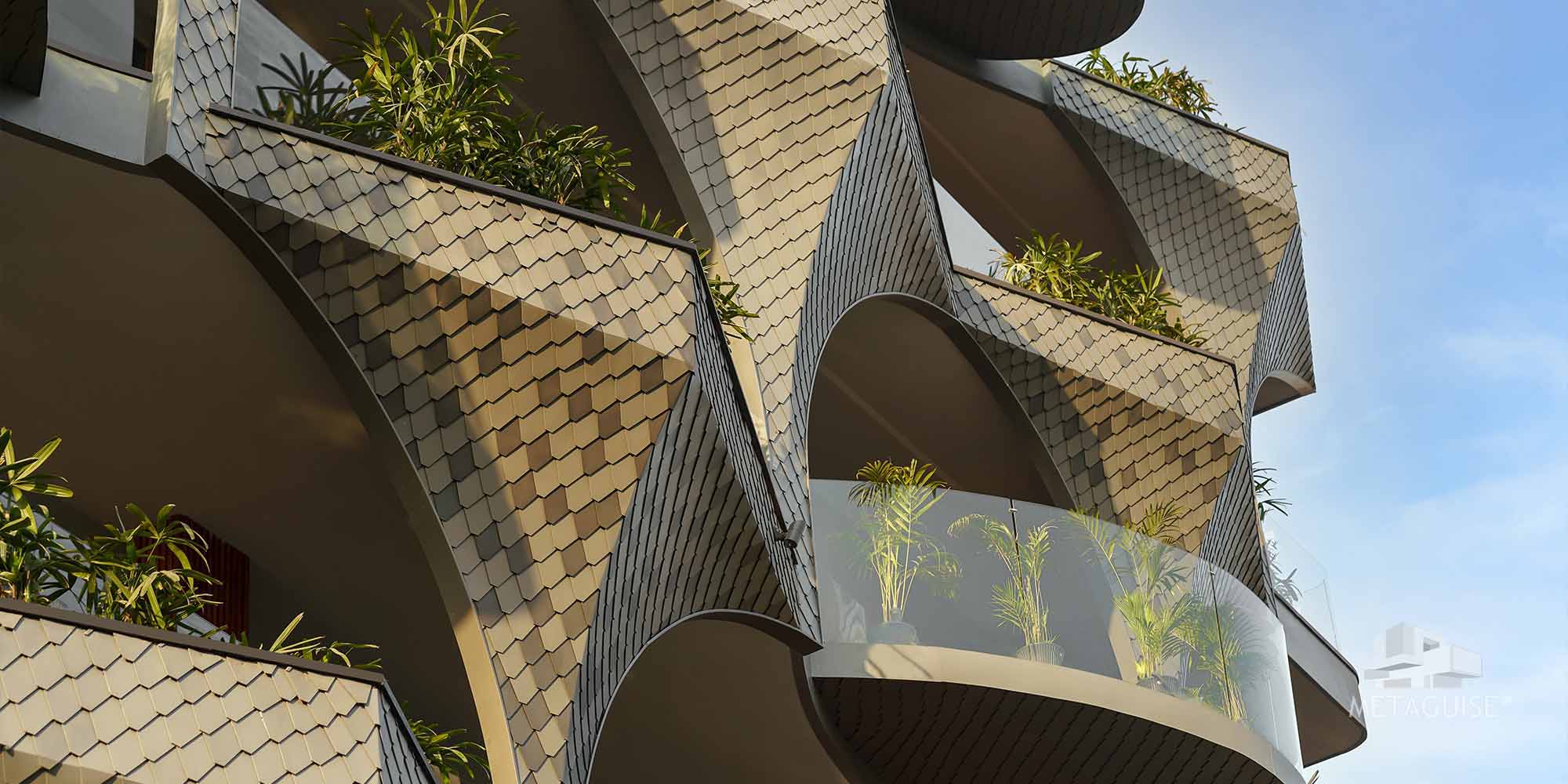
• MetaShingles is Metaguise's precision-engineered metal shingle system — overlapping aluminium modules that replicate the visual logic of traditional clay, terracotta, and slate tiles while delivering radically superior performance, longevity, and design flexibility. • Applications span sloped roof cladding, wall cladding on curved or angled surfaces, farmhouse and resort facades, heritage-context buildings, and boundary wall cappings. • This guide covers what metal shingles are, MetaShingles versus traditional tiles, performance in Indian weather, residential applications, installation overview, and a project gallery.
What Are Metal Shingles? Understanding the Product Category
The shingle is among the oldest roof covering technologies in human building history — an overlapping scale of material laid in courses from the bottom of a slope to the ridge, each layer shedding water onto the layer below and ultimately off the building. For millennia, shingles were made from whatever durable material was locally available: split timber in Scandinavia and North America, fired clay in South and East Asia, dressed slate in Britain and France, handmade terracotta in India. The visual language of the shingle — its warmth, its organic rhythm, its reference to craft and permanence — is encoded in architecture cultures across every continent. MetaShingles is Metaguise's metal shingle system — precision-engineered aluminium modules with an overlapping shingle profile that captures the visual language of traditional tiling while executing it in a material that is non-rusting, dimensionally stable across India's full thermal range, available in every MetaSurface finish colour, and fabricated to the exacting tolerances that Metaguise's in-house CNC process delivers.
MetaShingles vs Terracotta, Clay, and Slate Tiles: An Honest Comparison
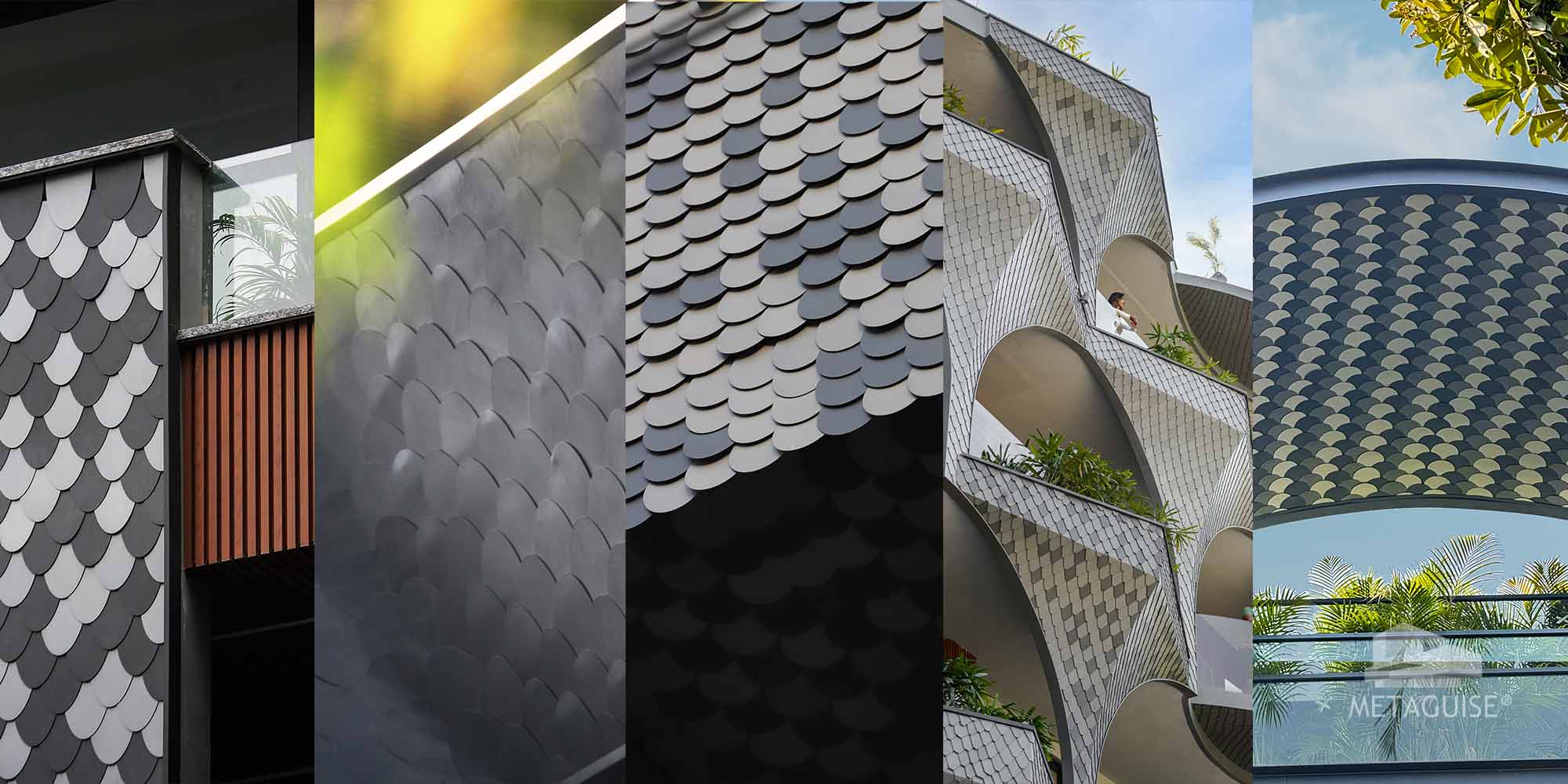
For Indian architects and homeowners considering shingle or tile cladding on a residential or hospitality project, the choice between MetaShingles and traditional tiling materials involves a genuine trade-off between cultural authenticity and material performance. Here is the honest comparison: Weight: The Structural Reality Traditional fired clay and terracotta tiles typically weigh 35–55 kg per square metre as installed — a structural load that imposes significant demands on the roof or wall structure beneath. For pitched roof applications on G+1 and G+2 residential buildings — the predominant format for premium bungalows, farmhouses, and villas in India — this load must be accounted for in structural design from the outset, and typically requires heavier rafter and purlin sections than a lightweight covering would. For wall cladding applications on existing buildings, adding traditional clay tiles to a masonry wall in a retrofit scenario can exceed the wall's safe cladding load capacity without structural reinforcement. Durability and Maintenance: 40 Years vs 15 Years Traditional clay and terracotta tiles in India's climate have a realistic service life of 15–25 years before replacement or major repair is required. The failure modes are well-documented: thermal shock cracking (India's temperature swings from near-freezing to 45°C+ stress the tile-to-mortar interface repeatedly over decades); biological growth in humid conditions (moss, lichen, and mould colonise porous clay surfaces in just a few monsoon seasons if not annually treated); colour fading from UV exposure (the warm terracotta tones that look beautiful at installation bleach and grey over 5–10 years without UV-protective sealers); and impact damage from hail, debris, and maintenance traffic (individual clay tiles are fragile under concentrated point loads). Each of these failure modes requires skilled repair or replacement of individual tiles — a labour-intensive, expensive, and often disruptive maintenance activity. Design Flexibility: MetaSurface vs Kiln Colour Traditional clay and terracotta tiles offer a colour range limited by firing chemistry — the characteristic warm reds, ochres, and earth browns of clay-fired ceramics. These are beautiful colours with deep cultural resonance in India, but the palette is inherently constrained. Non-standard colours require expensive custom kiln runs. Matching tile colours across different batches is imprecise. And the natural variation in fired clay — which some clients find charming — can read as inconsistency at scale on a large roof or wall surface. MetaShingles is available in the complete Metaguise MetaSurface finish range — over 50 PVDF colours plus special finishes including MetaWood (timber grain), MetaCorten (weathering steel tone), MetaCopper (copper and verdigris), and MetaPatina (aged copper green). Any RAL or NCS colour is available in PVDF on request. The shingle profile in forest green, deep charcoal, warm white, or terracotta is equally achievable — and the colour consistency across every module in the installation is absolute, because all panels are finished in the same coating batch under controlled conditions. Slate: The Premium Natural Alternative Natural slate is the material that most closely approximates MetaShingles in terms of prestige and architectural character — a premium, durable, and visually authoritative roof or wall covering with genuine long-term performance. Good quality natural slate from Rajasthan, Andhra Pradesh, or imported Himalayan sources has a design life of 50–100 years when properly installed. However, the weight of slate (25–40 kg/m² for standard cladding gauges) is comparable to clay tile, and the material is significantly more expensive than aluminium shingles when procured in premium grades. Skilled slate installation is also increasingly difficult to source in India's tier-1 markets. For projects where the brief genuinely calls for natural slate's visual authority and longevity, MetaShingles is not a direct substitute — but for the 85% of projects where the visual language of overlapping stone or tile is desired without the structural, cost, and sourcing constraints of natural materials, MetaShingles delivers the result.
MetaShingles Performance in Indian Weather: Monsoon, Heat, and Humidity
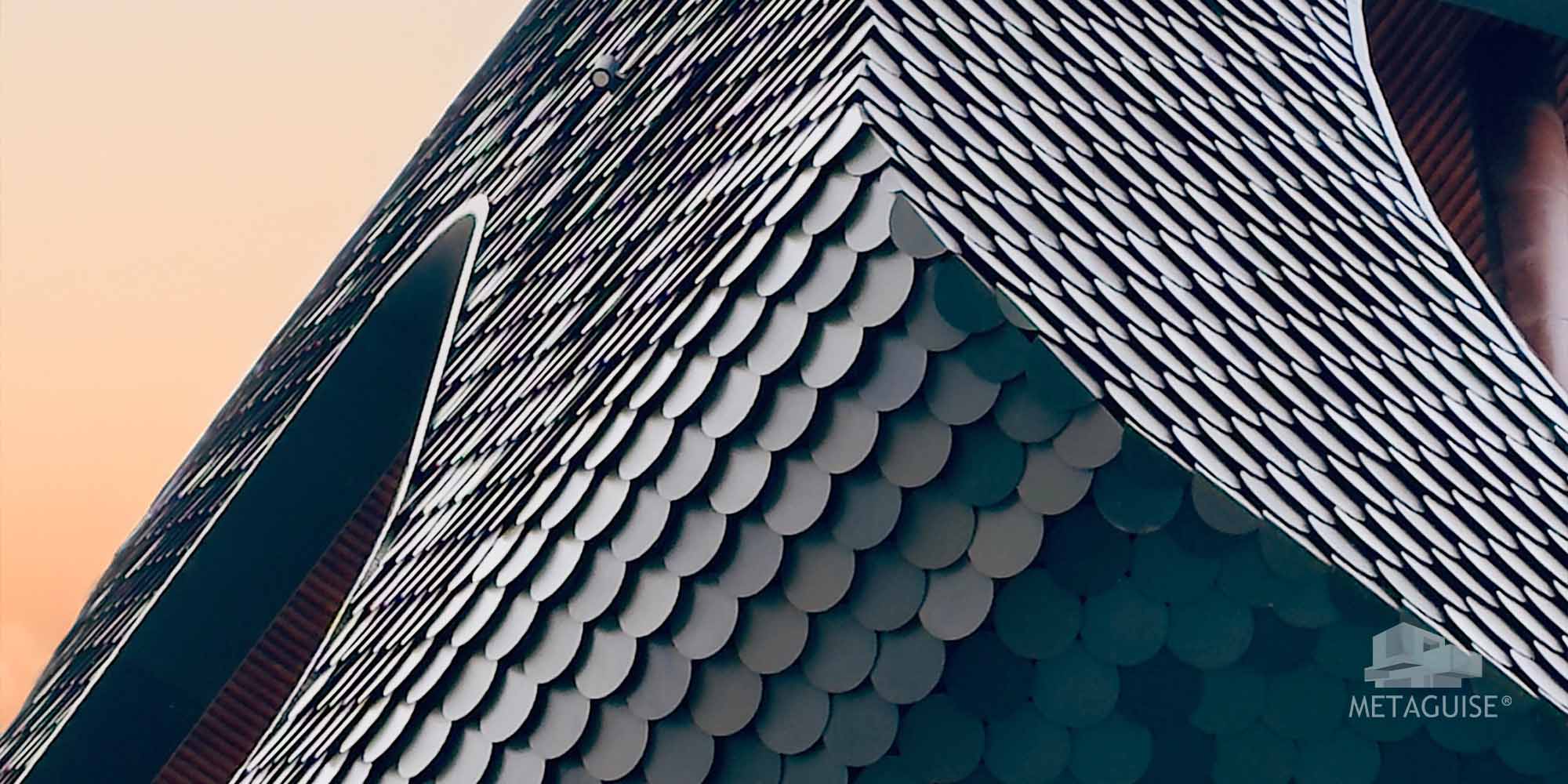
The performance of any roofing or wall cladding system in India must be evaluated against the country's extreme climatic challenges. MetaShingles addresses each of India's primary climatic stressors with material properties that are inherently well-suited to the task. Monsoon Performance: Waterproofing by Design The overlapping shingle profile is a drainage system as much as a visual form — each module's lower edge overlaps the upper edge of the module below, creating a continuous water-shedding cascade that carries rainwater from the apex of the installation to its base without penetrating behind the cladding plane. In India's monsoon season — when rainfall intensities can reach 50–100mm per hour in the Western Ghats, the Northeast, and the coastal plains — the overlapping shingle geometry performs exactly as it has for millennia: water simply runs off. MetaShingles' aluminium substrate is entirely non-absorbent, ensuring that even sustained monsoon exposure does not cause the water-logging, swelling, or biological growth that affects clay and timber shingle systems. Heat Performance: Reflectivity and Thermal Mass In India's summer peak — May and June across most of the subcontinent — roof surfaces in direct sunlight can reach 70–80°C on dark or heat-absorptive cladding materials. MetaShingles in light-coloured PVDF finishes achieves a Solar Reflectance Index (SRI) of 80–95 — among the highest values for any opaque roofing material — reflecting the majority of incident solar radiation before it can be absorbed and transmitted to the structure below. For farmhouses, resort buildings, and sloped-roof residential projects in Rajasthan, Gujarat, and the NCR belt, this reflectivity translates directly into lower interior temperatures and reduced mechanical cooling demand during peak summer months. Wind Resistance: Engineered for Indian Wind Loads MetaShingles modules are fixed to a structural sub-frame engineered to IS 875 Part 3 (Wind Loads on Buildings and Structures) — India's national standard for wind design. For pitched roof applications in cyclone-prone coastal regions (Andhra Pradesh, Odisha, Tamil Nadu), MetaShingles fixing systems are specified to enhanced wind load requirements appropriate to the local design wind speed. Aluminium's high strength-to-weight ratio ensures that modules can be fixed with adequate structural capacity without the heavy-gauge fasteners that brittle tile systems require, reducing installation complexity while maintaining wind performance. Thermal Cycling: Why Aluminium Outperforms Clay India's extreme thermal cycling — from sub-zero January nights in hill stations to 45°C+ summer peaks in the plains — causes cumulative fatigue in materials that cannot accommodate thermal expansion without constraint. Clay and terracotta tiles are dimensionally stable in themselves but are fixed in a mortar bed or with rigid fixings that prevent free thermal movement, leading to progressive cracking at the tile-to-mortar or tile-to-fixing interface. Aluminium's thermal expansion coefficient is managed in MetaShingles through designed movement gaps between modules and a sub-frame fixing system that allows each module to move independently under thermal loading without transmitting stress to adjacent modules or the underlying structure.
Residential Applications of MetaShingles in India: Where This System Belongs
MetaShingles finds its most natural residential application context in projects where the architectural language calls for warmth, craft, and material texture — but where the practical demands of Indian climate and building maintenance require the performance intelligence of precision-fabricated metal. Farmhouse and Rural Retreat Architecture The farmhouse and weekend retreat market — discussed in detail in Blog #10 of this series — is the single most consistent residential application context for MetaShingles. In the Mehrauli-Gurgaon farmhouse belt, Karjat and Lonavala retreats, Rajasthani rural compounds, and Gujarat agricultural-aesthetic residential projects, the sloped roof and angled wall surfaces that characterise farmhouse architecture create natural application zones for a shingle profile. Sloped Roof Cladding on Premium Bungalows For premium G+1 bungalows with sloped roof sections — common in the Chandigarh sector bungalow typology, the Lutyens-adjacent independent houses of South Delhi, and the pitched-roof villa developments of Gurgaon's newer sectors — MetaShingles provides a sloped roof cladding that matches the precision and quality of the Metaguise metal facade system on the vertical walls below. An architectural coherence between vertical facade and sloped roof is one of the strongest signals of an intentionally designed building — and MetaShingles makes that coherence achievable in the same material vocabulary as the rest of the building envelope. Heritage-Context and Colonial-Reference Architecture For residential projects where the architectural brief references India's colonial-era bungalow typology — the broad verandas, the sloped tile roofs, the deep overhangs — MetaShingles provides a contemporary interpretation of the traditional mangalore tile roof in a material that can be specified with confidence for a 50-year building life. In South Delhi's bungalow zone, where the colonial-era building typology remains the architectural reference, MetaShingles in terracotta PVDF on the sloped canopy and veranda roof elements creates a facade that honours the heritage language without the maintenance burden of actual terracotta.
MetaShingles Installation Guide Overview
The installation of MetaShingles follows Metaguise's standard process — in-house fabrication to the project's specific module sizes and profile, followed by on-site installation by Metaguise's specialist team. The following provides a concise overview of the installation approach for the most common MetaShingles application types. Sloped Roof Application (Pitch 15°–60°) For sloped roof applications, MetaShingles modules are installed over a structural sub-frame of horizontal aluminium battens, spaced to align with each module's fixing flange. Modules are installed from the eave upward — each course of shingles overlapping the top edge of the course below by a specified lap dimension (typically 30–50mm, depending on roof pitch and rainfall intensity). The overlap creates both the visual shingle rhythm and the waterproofing cascade. Ridge, hip, valley, and eave trim details are fabricated in the same aluminium and finish specification as the shingle modules, creating a fully integrated appearance. All fixing points are concealed behind the overlapping module courses. Curved and Angled Wall Surface Application MetaShingles' individual module size — typically 200mm × 300mm to 300mm × 500mm — allows the system to be applied to curved and compound-angled wall surfaces that flat panel systems cannot accommodate. Each module is positioned independently on the sub-frame, with small adjustments in module overlap and horizontal alignment accommodating wall curvature without requiring bent or custom-curved panels. For concave or convex curved farmhouse boundary walls, the shingle profile reads continuously without visible joints or panel bowing — a significant visual advantage over flat cassette systems on curved surfaces.
MetaShingles Project Gallery: Applications Across India
The following projects illustrate the range of contexts in which MetaShingles has been deployed across Metaguise's residential and hospitality portfolio. Farmhouse Retreat, Mehrauli-Gurgaon Corridor A weekend farmhouse for a Delhi-based family used MetaShingles in terracotta PVDF on all sloped roof sections — the main building, the guest cottage, and the poolside pavilion. The shingle profile in warm earth tones tied the three structures into a visually coherent compound, while the aluminium substrate gave the owners confidence that the farmhouse — which they visit intermittently and cannot maintain weekly — would retain its appearance without attention for decades. The project was completed in 11 weeks from design approval to installation handover. Heritage-Reference Bungalow, South Delhi A renovation project in South Delhi's Malviya Nagar used MetaShingles in a deep charcoal PVDF finish on the primary building's sloped veranda canopy and entrance portico — replacing deteriorating terracotta tiles that had required annual repairs for over a decade. The charcoal shingle profile created an unexpected yet highly effective contemporary interpretation of the traditional veranda roof — retaining the building's colonial-era architectural language while updating the material to a 21st-century standard of quality and longevity. Boutique Resort, Rajasthan A boutique heritage resort in Alwar the copper-look PVDF that ages visually like actual copper without developing the green patina that actual copper produces — on the guest villa roofs and the main lodge canopy. The copper shingle profile resonated with the Rajasthani tradition of copper-clad roofing on temple and haveli structures, creating a resort facade that felt authentically rooted in the region's material heritage while performing to the standard a managed hospitality property demands.
Frequently Asked Questions
1. Can MetaShingles be used as an actual structural roof covering, or is it only decorative cladding?
MetaShingles is a rainscreen cladding system — it is designed to shed water and provide the primary weather-resistant face of a sloped roof or wall, but it is installed over a structural substrate (a timber or steel roof structure, or a masonry wall) and does not itself provide structural support. For sloped roof applications, MetaShingles requires a sound structural framework beneath it and typically a waterproof membrane on the substrate surface as a secondary defence against any incidental water penetration. Metaguise's design team specifies the complete assembly — structural substrate, membrane, sub-frame, and MetaShingles modules — as a coordinated system for every sloped roof project.2.How does MetaShingles compare to stone-coated steel roofing tiles available in India?
Stone-coated steel roofing tiles — brands like Decra, Gerard, and various Indian-manufactured alternatives — are a mass-produced product: galvanised or Zincalume steel pressed into a tile profile and coated with acrylic stone chips. They are a valid roofing product for large-area agricultural and residential applications where cost efficiency is the primary criterion. MetaShingles differs in three fundamental ways: substrate (aluminium rather than steel — significantly lighter, non-rusting without galvanising, dimensionally more stable), finish system (PVDF or anodised MetaSurface finishes rather than acrylic stone coating — superior UV resistance and colour retention), and fabrication approach (custom-fabricated to project specification rather than from a product catalogue). MetaShingles is specified for premium residential and hospitality projects where material quality, precise finish, and 40+ year design life are the specification criteria.3.What finishes are available for MetaShingles — can I get a terracotta colour?
Yes. Terracotta PVDF is one of the most popular MetaShingles finishes — a warm burnt-orange-red tone that closely references the colour of traditional fired clay tiles while delivering PVDF's 25+ year colour retention in India's UV conditions. The full MetaSurface PVDF range is available on MetaShingles — including warm white, deep charcoal, forest green, champagne gold, and custom RAL or NCS colours. Special MetaSurface finishes including MetaCopper (copper look), MetaCorten (weathering steel tone), MetaWood (timber grain), and MetaPatina (verdigris copper green) are all available on MetaShingles modules, allowing complete design flexibility within a single architectural specification.4.How do I start a MetaShingles project? What information does Metaguise need?
To initiate a MetaShingles project, contact Metaguise with the project's basic parameters: building location and type (farmhouse, bungalow, resort, or other), the area and surfaces to be clad (sloped roof, angled wall, boundary wall capping), preferred finish direction, and programme timeline. Metaguise's design team will arrange a site visit, assess the substrate structure, and prepare 3D visualisations of the proposed MetaShingles installation with physical finish samples for approval. A fixed-price fabrication and installation proposal is prepared following design approval — covering material, fabrication, delivery, and installation by Metaguise's specialist team. For architects specifying MetaShingles on behalf of a client, Metaguise provides full specification documentation including CAD details, structural data, and material certification.MetaShingles: The Modern Alternative to Traditional Roof and Wall Tiles in India
25-05-26 | Material Spotlight
Key Takeaways
• MetaShingles is Metaguise's precision-engineered metal shingle system — overlapping aluminium modules that replicate the visual logic of traditional clay, terracotta, and slate tiles while delivering radically superior performance, longevity, and design flexibility. • Applications span sloped roof cladding, wall cladding on curved or angled surfaces, farmhouse and resort facades, heritage-context buildings, and boundary wall cappings. • This guide covers what metal shingles are, MetaShingles versus traditional tiles, performance in Indian weather, residential applications, installation overview, and a project gallery.
What Are Metal Shingles? Understanding the Product Category
The shingle is among the oldest roof covering technologies in human building history — an overlapping scale of material laid in courses from the bottom of a slope to the ridge, each layer shedding water onto the layer below and ultimately off the building. For millennia, shingles were made from whatever durable material was locally available: split timber in Scandinavia and North America, fired clay in South and East Asia, dressed slate in Britain and France, handmade terracotta in India. The visual language of the shingle — its warmth, its organic rhythm, its reference to craft and permanence — is encoded in architecture cultures across every continent. MetaShingles is Metaguise's metal shingle system — precision-engineered aluminium modules with an overlapping shingle profile that captures the visual language of traditional tiling while executing it in a material that is non-rusting, dimensionally stable across India's full thermal range, available in every MetaSurface finish colour, and fabricated to the exacting tolerances that Metaguise's in-house CNC process delivers.
MetaShingles vs Terracotta, Clay, and Slate Tiles: An Honest Comparison
For Indian architects and homeowners considering shingle or tile cladding on a residential or hospitality project, the choice between MetaShingles and traditional tiling materials involves a genuine trade-off between cultural authenticity and material performance. Here is the honest comparison: Weight: The Structural Reality Traditional fired clay and terracotta tiles typically weigh 35–55 kg per square metre as installed — a structural load that imposes significant demands on the roof or wall structure beneath. For pitched roof applications on G+1 and G+2 residential buildings — the predominant format for premium bungalows, farmhouses, and villas in India — this load must be accounted for in structural design from the outset, and typically requires heavier rafter and purlin sections than a lightweight covering would. For wall cladding applications on existing buildings, adding traditional clay tiles to a masonry wall in a retrofit scenario can exceed the wall's safe cladding load capacity without structural reinforcement. Durability and Maintenance: 40 Years vs 15 Years Traditional clay and terracotta tiles in India's climate have a realistic service life of 15–25 years before replacement or major repair is required. The failure modes are well-documented: thermal shock cracking (India's temperature swings from near-freezing to 45°C+ stress the tile-to-mortar interface repeatedly over decades); biological growth in humid conditions (moss, lichen, and mould colonise porous clay surfaces in just a few monsoon seasons if not annually treated); colour fading from UV exposure (the warm terracotta tones that look beautiful at installation bleach and grey over 5–10 years without UV-protective sealers); and impact damage from hail, debris, and maintenance traffic (individual clay tiles are fragile under concentrated point loads). Each of these failure modes requires skilled repair or replacement of individual tiles — a labour-intensive, expensive, and often disruptive maintenance activity. Design Flexibility: MetaSurface vs Kiln Colour Traditional clay and terracotta tiles offer a colour range limited by firing chemistry — the characteristic warm reds, ochres, and earth browns of clay-fired ceramics. These are beautiful colours with deep cultural resonance in India, but the palette is inherently constrained. Non-standard colours require expensive custom kiln runs. Matching tile colours across different batches is imprecise. And the natural variation in fired clay — which some clients find charming — can read as inconsistency at scale on a large roof or wall surface. MetaShingles is available in the complete Metaguise MetaSurface finish range — over 50 PVDF colours plus special finishes including MetaWood (timber grain), MetaCorten (weathering steel tone), MetaCopper (copper and verdigris), and MetaPatina (aged copper green). Any RAL or NCS colour is available in PVDF on request. The shingle profile in forest green, deep charcoal, warm white, or terracotta is equally achievable — and the colour consistency across every module in the installation is absolute, because all panels are finished in the same coating batch under controlled conditions. Slate: The Premium Natural Alternative Natural slate is the material that most closely approximates MetaShingles in terms of prestige and architectural character — a premium, durable, and visually authoritative roof or wall covering with genuine long-term performance. Good quality natural slate from Rajasthan, Andhra Pradesh, or imported Himalayan sources has a design life of 50–100 years when properly installed. However, the weight of slate (25–40 kg/m² for standard cladding gauges) is comparable to clay tile, and the material is significantly more expensive than aluminium shingles when procured in premium grades. Skilled slate installation is also increasingly difficult to source in India's tier-1 markets. For projects where the brief genuinely calls for natural slate's visual authority and longevity, MetaShingles is not a direct substitute — but for the 85% of projects where the visual language of overlapping stone or tile is desired without the structural, cost, and sourcing constraints of natural materials, MetaShingles delivers the result.
MetaShingles Performance in Indian Weather: Monsoon, Heat, and Humidity
The performance of any roofing or wall cladding system in India must be evaluated against the country's extreme climatic challenges. MetaShingles addresses each of India's primary climatic stressors with material properties that are inherently well-suited to the task. Monsoon Performance: Waterproofing by Design The overlapping shingle profile is a drainage system as much as a visual form — each module's lower edge overlaps the upper edge of the module below, creating a continuous water-shedding cascade that carries rainwater from the apex of the installation to its base without penetrating behind the cladding plane. In India's monsoon season — when rainfall intensities can reach 50–100mm per hour in the Western Ghats, the Northeast, and the coastal plains — the overlapping shingle geometry performs exactly as it has for millennia: water simply runs off. MetaShingles' aluminium substrate is entirely non-absorbent, ensuring that even sustained monsoon exposure does not cause the water-logging, swelling, or biological growth that affects clay and timber shingle systems. Heat Performance: Reflectivity and Thermal Mass In India's summer peak — May and June across most of the subcontinent — roof surfaces in direct sunlight can reach 70–80°C on dark or heat-absorptive cladding materials. MetaShingles in light-coloured PVDF finishes achieves a Solar Reflectance Index (SRI) of 80–95 — among the highest values for any opaque roofing material — reflecting the majority of incident solar radiation before it can be absorbed and transmitted to the structure below. For farmhouses, resort buildings, and sloped-roof residential projects in Rajasthan, Gujarat, and the NCR belt, this reflectivity translates directly into lower interior temperatures and reduced mechanical cooling demand during peak summer months. Wind Resistance: Engineered for Indian Wind Loads MetaShingles modules are fixed to a structural sub-frame engineered to IS 875 Part 3 (Wind Loads on Buildings and Structures) — India's national standard for wind design. For pitched roof applications in cyclone-prone coastal regions (Andhra Pradesh, Odisha, Tamil Nadu), MetaShingles fixing systems are specified to enhanced wind load requirements appropriate to the local design wind speed. Aluminium's high strength-to-weight ratio ensures that modules can be fixed with adequate structural capacity without the heavy-gauge fasteners that brittle tile systems require, reducing installation complexity while maintaining wind performance. Thermal Cycling: Why Aluminium Outperforms Clay India's extreme thermal cycling — from sub-zero January nights in hill stations to 45°C+ summer peaks in the plains — causes cumulative fatigue in materials that cannot accommodate thermal expansion without constraint. Clay and terracotta tiles are dimensionally stable in themselves but are fixed in a mortar bed or with rigid fixings that prevent free thermal movement, leading to progressive cracking at the tile-to-mortar or tile-to-fixing interface. Aluminium's thermal expansion coefficient is managed in MetaShingles through designed movement gaps between modules and a sub-frame fixing system that allows each module to move independently under thermal loading without transmitting stress to adjacent modules or the underlying structure.
Residential Applications of MetaShingles in India: Where This System Belongs
MetaShingles finds its most natural residential application context in projects where the architectural language calls for warmth, craft, and material texture — but where the practical demands of Indian climate and building maintenance require the performance intelligence of precision-fabricated metal. Farmhouse and Rural Retreat Architecture The farmhouse and weekend retreat market — discussed in detail in Blog #10 of this series — is the single most consistent residential application context for MetaShingles. In the Mehrauli-Gurgaon farmhouse belt, Karjat and Lonavala retreats, Rajasthani rural compounds, and Gujarat agricultural-aesthetic residential projects, the sloped roof and angled wall surfaces that characterise farmhouse architecture create natural application zones for a shingle profile. Sloped Roof Cladding on Premium Bungalows For premium G+1 bungalows with sloped roof sections — common in the Chandigarh sector bungalow typology, the Lutyens-adjacent independent houses of South Delhi, and the pitched-roof villa developments of Gurgaon's newer sectors — MetaShingles provides a sloped roof cladding that matches the precision and quality of the Metaguise metal facade system on the vertical walls below. An architectural coherence between vertical facade and sloped roof is one of the strongest signals of an intentionally designed building — and MetaShingles makes that coherence achievable in the same material vocabulary as the rest of the building envelope. Heritage-Context and Colonial-Reference Architecture For residential projects where the architectural brief references India's colonial-era bungalow typology — the broad verandas, the sloped tile roofs, the deep overhangs — MetaShingles provides a contemporary interpretation of the traditional mangalore tile roof in a material that can be specified with confidence for a 50-year building life. In South Delhi's bungalow zone, where the colonial-era building typology remains the architectural reference, MetaShingles in terracotta PVDF on the sloped canopy and veranda roof elements creates a facade that honours the heritage language without the maintenance burden of actual terracotta.
MetaShingles Installation Guide Overview
The installation of MetaShingles follows Metaguise's standard process — in-house fabrication to the project's specific module sizes and profile, followed by on-site installation by Metaguise's specialist team. The following provides a concise overview of the installation approach for the most common MetaShingles application types. Sloped Roof Application (Pitch 15°–60°) For sloped roof applications, MetaShingles modules are installed over a structural sub-frame of horizontal aluminium battens, spaced to align with each module's fixing flange. Modules are installed from the eave upward — each course of shingles overlapping the top edge of the course below by a specified lap dimension (typically 30–50mm, depending on roof pitch and rainfall intensity). The overlap creates both the visual shingle rhythm and the waterproofing cascade. Ridge, hip, valley, and eave trim details are fabricated in the same aluminium and finish specification as the shingle modules, creating a fully integrated appearance. All fixing points are concealed behind the overlapping module courses. Curved and Angled Wall Surface Application MetaShingles' individual module size — typically 200mm × 300mm to 300mm × 500mm — allows the system to be applied to curved and compound-angled wall surfaces that flat panel systems cannot accommodate. Each module is positioned independently on the sub-frame, with small adjustments in module overlap and horizontal alignment accommodating wall curvature without requiring bent or custom-curved panels. For concave or convex curved farmhouse boundary walls, the shingle profile reads continuously without visible joints or panel bowing — a significant visual advantage over flat cassette systems on curved surfaces.
MetaShingles Project Gallery: Applications Across India
The following projects illustrate the range of contexts in which MetaShingles has been deployed across Metaguise's residential and hospitality portfolio. Farmhouse Retreat, Mehrauli-Gurgaon Corridor A weekend farmhouse for a Delhi-based family used MetaShingles in terracotta PVDF on all sloped roof sections — the main building, the guest cottage, and the poolside pavilion. The shingle profile in warm earth tones tied the three structures into a visually coherent compound, while the aluminium substrate gave the owners confidence that the farmhouse — which they visit intermittently and cannot maintain weekly — would retain its appearance without attention for decades. The project was completed in 11 weeks from design approval to installation handover. Heritage-Reference Bungalow, South Delhi A renovation project in South Delhi's Malviya Nagar used MetaShingles in a deep charcoal PVDF finish on the primary building's sloped veranda canopy and entrance portico — replacing deteriorating terracotta tiles that had required annual repairs for over a decade. The charcoal shingle profile created an unexpected yet highly effective contemporary interpretation of the traditional veranda roof — retaining the building's colonial-era architectural language while updating the material to a 21st-century standard of quality and longevity. Boutique Resort, Rajasthan A boutique heritage resort in Alwar the copper-look PVDF that ages visually like actual copper without developing the green patina that actual copper produces — on the guest villa roofs and the main lodge canopy. The copper shingle profile resonated with the Rajasthani tradition of copper-clad roofing on temple and haveli structures, creating a resort facade that felt authentically rooted in the region's material heritage while performing to the standard a managed hospitality property demands.
Frequently Asked Questions
1. Can MetaShingles be used as an actual structural roof covering, or is it only decorative cladding?
MetaShingles is a rainscreen cladding system — it is designed to shed water and provide the primary weather-resistant face of a sloped roof or wall, but it is installed over a structural substrate (a timber or steel roof structure, or a masonry wall) and does not itself provide structural support. For sloped roof applications, MetaShingles requires a sound structural framework beneath it and typically a waterproof membrane on the substrate surface as a secondary defence against any incidental water penetration. Metaguise's design team specifies the complete assembly — structural substrate, membrane, sub-frame, and MetaShingles modules — as a coordinated system for every sloped roof project.2.How does MetaShingles compare to stone-coated steel roofing tiles available in India?
Stone-coated steel roofing tiles — brands like Decra, Gerard, and various Indian-manufactured alternatives — are a mass-produced product: galvanised or Zincalume steel pressed into a tile profile and coated with acrylic stone chips. They are a valid roofing product for large-area agricultural and residential applications where cost efficiency is the primary criterion. MetaShingles differs in three fundamental ways: substrate (aluminium rather than steel — significantly lighter, non-rusting without galvanising, dimensionally more stable), finish system (PVDF or anodised MetaSurface finishes rather than acrylic stone coating — superior UV resistance and colour retention), and fabrication approach (custom-fabricated to project specification rather than from a product catalogue). MetaShingles is specified for premium residential and hospitality projects where material quality, precise finish, and 40+ year design life are the specification criteria.3.What finishes are available for MetaShingles — can I get a terracotta colour?
Yes. Terracotta PVDF is one of the most popular MetaShingles finishes — a warm burnt-orange-red tone that closely references the colour of traditional fired clay tiles while delivering PVDF's 25+ year colour retention in India's UV conditions. The full MetaSurface PVDF range is available on MetaShingles — including warm white, deep charcoal, forest green, champagne gold, and custom RAL or NCS colours. Special MetaSurface finishes including MetaCopper (copper look), MetaCorten (weathering steel tone), MetaWood (timber grain), and MetaPatina (verdigris copper green) are all available on MetaShingles modules, allowing complete design flexibility within a single architectural specification.4.How do I start a MetaShingles project? What information does Metaguise need?
To initiate a MetaShingles project, contact Metaguise with the project's basic parameters: building location and type (farmhouse, bungalow, resort, or other), the area and surfaces to be clad (sloped roof, angled wall, boundary wall capping), preferred finish direction, and programme timeline. Metaguise's design team will arrange a site visit, assess the substrate structure, and prepare 3D visualisations of the proposed MetaShingles installation with physical finish samples for approval. A fixed-price fabrication and installation proposal is prepared following design approval — covering material, fabrication, delivery, and installation by Metaguise's specialist team. For architects specifying MetaShingles on behalf of a client, Metaguise provides full specification documentation including CAD details, structural data, and material certification.Related Articles
Related Articles
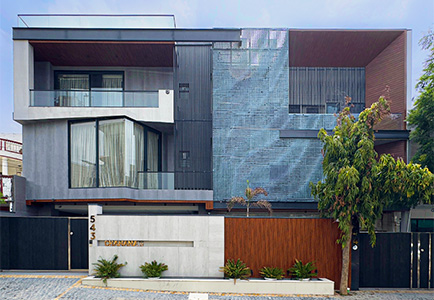
Living, Breathing Facades: The Science and Soul of MetaPatina
There’s something poetic about materials that age with grace. That shift color with time, deepen with exposure, and reveal new layers of beauty as they weather. MetaPatina, our living metal facade surface, is a tribute to that very idea - a facade that doesn’t just protect a building, but brings it to life...
06-04-25 | Material Spotlight
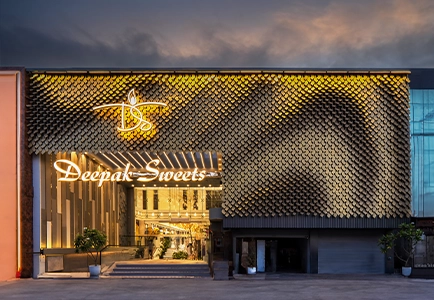
5 Reasons to Choose MetaSequin for Your Facade
At Metaguise, we believe the facade of a building isn’t just its outer layer - it’s its identity. And in today’s design landscape
10-11-25 | Material Spotlight
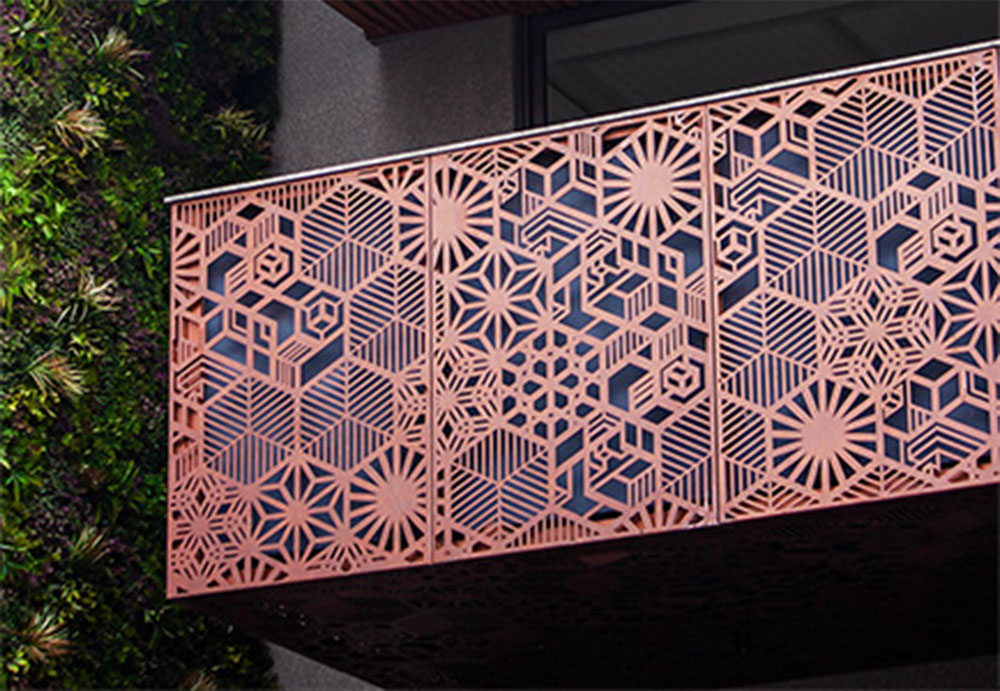
The Power of Perforation: Breathing Life, Light & Luxury into Metal Facades
At Metaguise, we believe the facade of a building isn’t just its outer layer - it’s its identity. And in today’s design landscape
17-11-25 | Material Spotlight
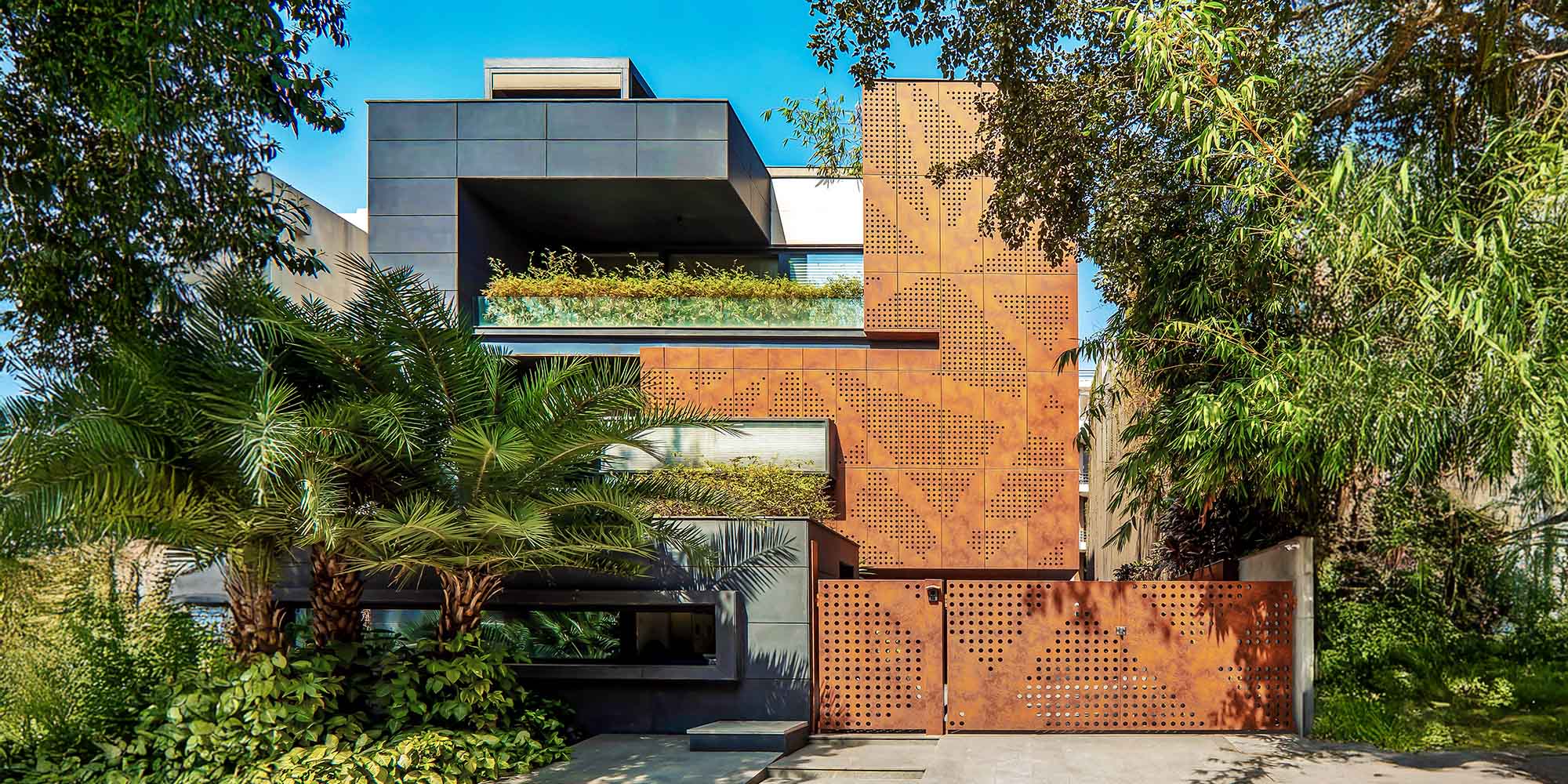
Perforated Metal Facade panels in 2026: Benefits, Design uses & Architectural Guide
Perforated metal facade panels are architectural cladding systems made from aluminium or steel sheets with precision-cut patterns.
09-12-25 | Material Spotlight
Social
Legal
Privacy Policy|Terms & Conditions