





How Much Does a Metal Facade Cost in India? Understanding Value and Getting It Right
24-06-26 | Facade Innovations
Key Takeaways
• Metal facade investment in India is not a commodity purchase — it is a project-specific calculation driven by system complexity, finish specification, building height, site access, and total facade area. Understanding what drives cost is more valuable than any per-sq-ft rate table. • The right question is not 'how much does a metal facade cost?' — it is 'what does a metal facade deliver relative to its alternatives over the building's life?' When maintenance savings, longevity, and asset value are included, the economics change decisively in metal's favour. • India's premium residential market is growing strongly in 2026 — consumer preferences are firmly favouring quality homes across every major metro. In this context, facade quality is a directly appreciating asset, not an optional upgrade. • This guide explains the eight key cost drivers, what belongs in a complete facade quotation, the ROI case for metal over painted masonry, and how to request a project-specific Metaguise quotation.
Why Metal Facade Investment Is Not a Simple Per-Sq-Ft Decision
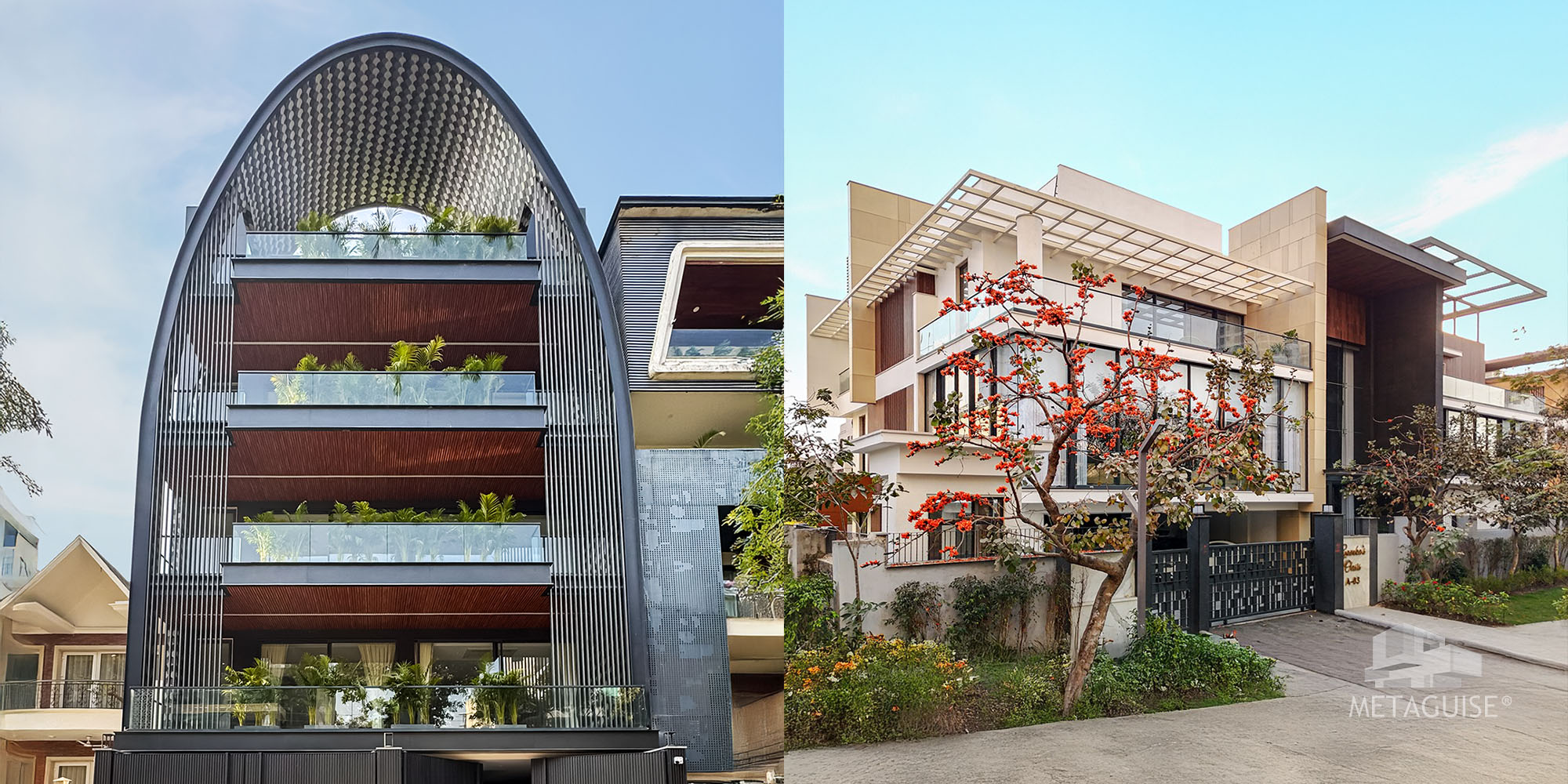
Every homeowner eventually asks the same first question: what does it cost per square foot? It is a reasonable question. It is also, in the context of metal facade specification, the wrong place to start. A MetaSequin parametric installation and a MetaCassette flat panel system are both metal facades in the same way that a Maruti and a BMW are both cars — the category tells you almost nothing about what the product actually costs or what it delivers. The honest answer to 'how much per square foot' is that it depends on eight variables, each of which can move the investment figure substantially, and none of which can be compressed into a catalogue rate. India's premium residential market is growing strongly — quality homes are commanding increasing premiums in every major metro — and in that context, the facade specification is a financial decision as much as an aesthetic one. The purpose of this guide is to give you the framework to make that decision intelligently: not with a number that sounds precise but is actually meaningless for your specific project, but with an understanding of what actually drives facade investment and where the real value lies.
Key Cost Factors Explained: The Eight Variables That Determine Your Facade Investment
| Cost Factor | What Drives It Higher | What Keeps It Lower |
|---|---|---|
| System Complexity | Parametric systems (MetaSequin, MetaCoin, MetaFold) — bespoke geometry, custom CNC tooling, and a longer design phase. | Modular MetaForm systems (MetaFlute, MetaCassette, SolidPanel) — standard panel geometry, faster fabrication, and lower design overhead. |
| Panel Size and Format | Small-module systems (dense MetaSequin or MetaCoin arrays) — more panels, more fixings, and greater installation labour per sq ft. | Large-format flat panels (MetaCassette, SolidPanel at maximum sizes) — fewer panels, fewer joints, and a faster installation cycle. |
| Finish Specification | MetaSurface special finishes (MetaWood, MetaCorten tone, MetaCopper, MetaPatina) and anodised finishes for coastal projects require premium coating processes. | Standard MetaSurface PVDF colours (white, grey, charcoal) provide the most cost-efficient finish specification. |
| Building Height | High-rise or multi-storey installations requiring MEWPs, scaffolding, or crane access significantly increase installation costs. | Ground-floor and single-storey projects accessible with standard scaffolding or mobile platforms offer the most efficient installation conditions. |
| Site Location and Access | Remote sites (hill stations, farmhouses, Tier 3 cities) involve higher logistics, travel, accommodation, and enhanced coastal specification costs. | Major metro projects within established logistics networks incur no location premium and benefit from existing Metaguise project teams. |
| Total Facade Area | Small projects (under 500 sq ft) carry proportionally higher design, engineering, and mobilisation costs. | Larger projects (above 3,000 sq ft) benefit from economies of scale as fixed overheads are spread across a greater area. |
| Sub-frame Condition | Existing walls with poor alignment, structural irregularities, or complex openings require additional engineering and site-specific detailing. | New-build projects with accurately designed structural walls and integrated sub-frame planning minimise site variation and detailing requirements. |
| Programme Urgency | Accelerated programmes requiring overtime fabrication, parallel production, or expedited installation attract a premium. | Standard project timelines aligned with fabrication capacity avoid acceleration costs. |
What Belongs in Your Facade Quotation — and What Is Often Left Out
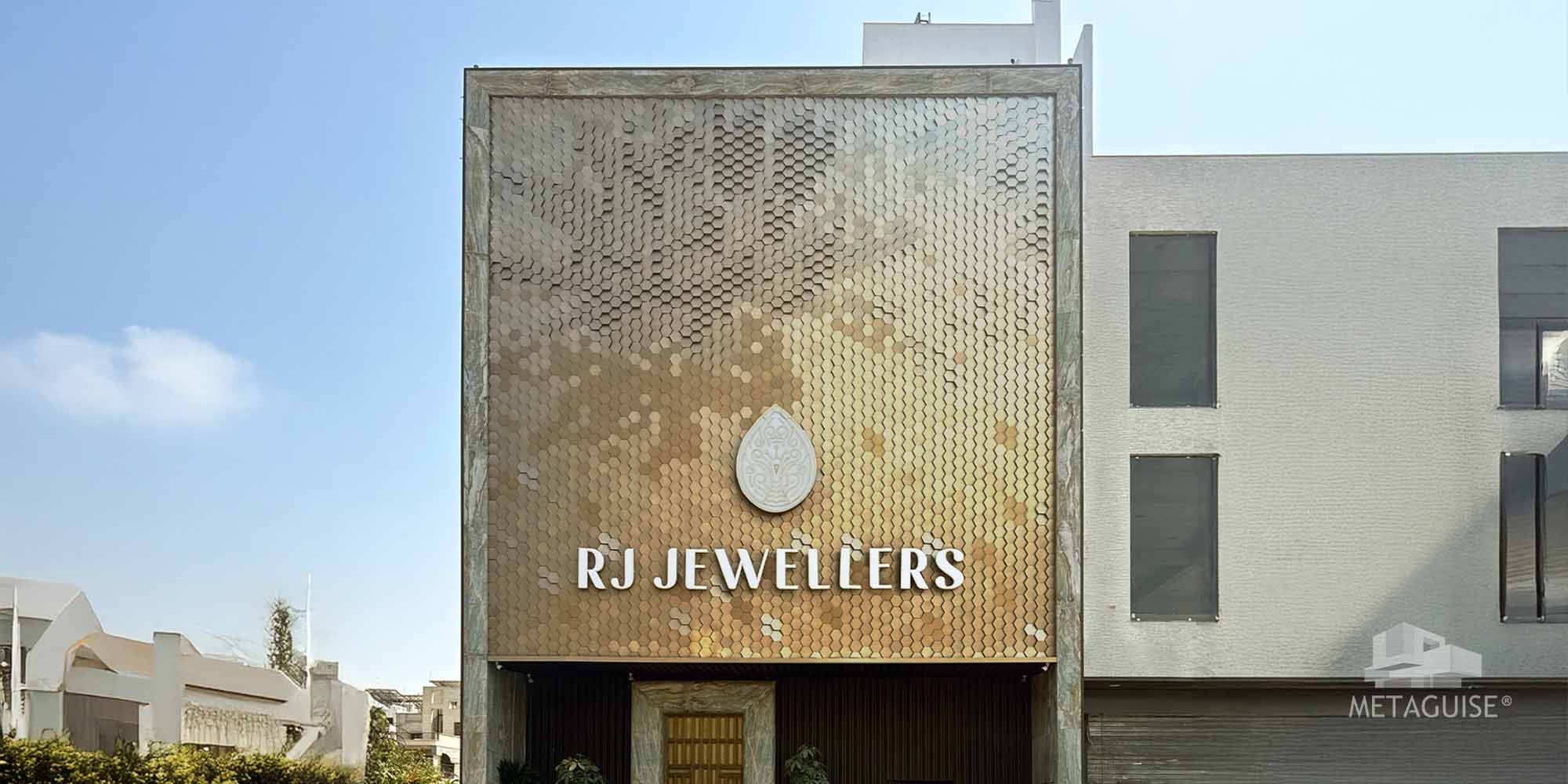
A facade quotation that looks competitive may be missing scope items that are essential to completing the installation correctly. The following explains what every complete Metaguise facade quotation includes — and what to watch for in quotations from other suppliers. What Every Metaguise Quotation Includes • Material supply: All facade panels fabricated in Metaguise's in-house CNC facility to the approved design specification, in the specified MetaSurface finish • Sub-frame supply and installation: Complete aluminium horizontal and vertical rail sub-frame with engineered brackets, anchors, and fixings (stainless steel Grade 316 for coastal projects) • Panel installation: Labour and all installation equipment for panel fixing by Metaguise's specialist installation team • Perimeter detailing: Corner pieces, parapet cappings, window reveal linings, and base termination profiles in the same material and finish specification as the primary panels • Sealant and weathersealing: All perimeter and inter-panel sealing to prevent water penetration at facade edges and junctions • Site clean and QA inspection: Complete facade clean, quality inspection against approved specification, and project handover documentation • Warranty documentation: Finish warranty certificate, structural warranty on fixing systems, and maintenance schedule What Is Commonly Excluded in Competitor Quotations (and Should Be Clarified) • Scaffolding and access equipment: Scaffold erection and dismantling, MEWP hire, or crane provision — often not included; confirm explicitly • Substrate preparation: Waterproofing, crack repair, and plumb correction of the existing wall before sub-frame installation • Window and door perimeter trims and reveals: Precision trims at window and door openings; sometimes described as 'PC Sum' (provisional cost) rather than fixed • Design development beyond initial concept: Additional visualisation rounds, material sample production, or physical mockup panels beyond the first standard set • Sundry logistics: Crane hire for oversized panels, storage facilities at congested urban sites, accommodation for installation teams at remote locations
Understanding Investment Differences Across Metaguise's System Range
Monsoon Performance: The Wetting and Drying Cycle India's monsoon creates a specific challenge for facade coatings that is different from both the sustained rainfall of temperate European climates and the year-round humidity of equatorial climates. The Indian monsoon pattern — intense rainfall concentrated over three to four months, followed by rapid drying in the post-monsoon season — creates repeated wetting-and-drying cycles that stress coating adhesion, expose any edge or joint vulnerability, and create conditions in which biological growth (algae, lichen, mould) can establish on surfaces that retain moisture even briefly. PVDF's chemical inertness to water, combined with its self-cleaning surface properties (the fluoropolymer surface has a very low surface energy that prevents dust and biological material from adhering effectively), makes it the coating most resistant to both the direct effects of monsoon exposure and the biological growth that follows. Powder coat, with a higher surface energy, shows measurably greater soiling and biological growth in monsoon-exposed applications — leading to the characteristic grey-green discolouration that is the most common visible maintenance indicator on powder-coated facades in India's monsoon zone after five to ten years of service. Salt Air Performance: The Critical Difference for Coastal India For coastal Indian projects, the PVDF vs powder coat decision is unambiguous: PVDF with sealed panel edges is the only appropriate exterior coating specification for buildings within three to five kilometres of the sea. Salt-laden coastal air carries chloride ions that attack the bond interface between coating and substrate at any coating vulnerability — chip, scratch, cut edge, or inadequately sealed joint. In powder coat systems, this attack initiates under-film corrosion that propagates laterally beneath the coating, lifting the film and eventually blistering the surface in a pattern that is irreversible without stripping and recoating. PVDF's chemical inertness extends to chloride ion attack — the fluorine-carbon bond has no susceptibility to the electrochemical processes that drive coastal corrosion. With properly sealed panel edges (sealing the cut aluminium edge where the factory PVDF coating ends), PVDF-coated aluminium has no accessible vulnerability to coastal salt-air attack. This is why Metaguise's Mumbai, Goa, Chennai, and Kerala coastal specifications use PVDF with sealed edges as a baseline requirement — not an optional upgrade.
ROI: Why a Metal Facade Pays Off Over the Building's Life
The return on investment case for a premium metal facade in India in 2026 operates across three distinct value dimensions — asset value premium, maintenance cost avoidance, and the intangible but real value of permanence and design pride. Asset Value Premium: What a Distinctive Facade Does to Property Value India's premium residential real estate market is characterised by a persistent and growing premium for properties with distinctive, well-maintained exteriors. Developer data consistently confirms that architecturally distinguished facades — metal panel systems, parametric cladding, premium materials with precision execution — command price premiums over comparable properties in the same micro-market with generic painted facades. For a homeowner in Gurgaon's Golf Course Road, South Delhi's premium bungalow belt, or Bengaluru's Whitefield villa corridor, the facade is the single most visible investment in the property's identity — and in markets where comparable ₹10–30 crore properties are differentiated primarily by exterior quality and architectural character, the facade premium is commercially significant. Maintenance Cost Avoidance: The Hidden Return A painted masonry facade on an Indian bungalow requires full repainting every three to five years in most climate zones — including scaffolding, surface preparation, and coating application. A powder-coated metal facade requires repainting every eight to fifteen years. A PVDF-coated Metaguise facade requires annual cleaning only, for its full 25-year design life. The cumulative maintenance cost avoided by a PVDF metal facade relative to painted masonry, over a 25-year building life, is substantial — not as supplementary arithmetic but as a genuine financial argument for specifying correctly from the outset. Beyond repainting, painted masonry and stone cladding facades in India's monsoon climate require additional maintenance categories — crack sealing, joint regrout, biological growth treatment, and localised replacement of damaged stone panels — that have no equivalent in a well-specified metal facade system. The labour cost, the disruption to the building's occupants, and the risk of cascading moisture damage if maintenance is deferred are all real costs that the facade specification decision either creates or eliminates. Design Pride and Permanence: The Value That Financial Analysis Doesn't Capture There is a dimension of facade investment that no ROI model captures accurately: the value of living in a building whose exterior is exactly what the architect designed, on the day it was installed, for the full duration of the occupant's ownership. This is not a luxury aspiration — it is a reasonable expectation for any homeowner who has made a significant investment in their home. A PVDF MetaFlute or MetaSequin facade, installed precisely to design, maintained by annual cleaning, and warranted for 25 years, delivers this expectation without compromise. The homeowner does not find themselves organising repainting campaigns, fielding quotations for facade maintenance contractors, or explaining to visiting clients why the building looks different from the opening photograph. The building looks as designed. Always.
Get a Custom Quote: How Metaguise Prices Your Specific Project
Because metal facade investment is project-specific — determined by the eight cost factors described above, not by a universal sq ft rate — every Metaguise quotation is prepared on the basis of a project consultation and design development phase. The process is as follows. Step 1: Project Consultation Contact Metaguise with your project's basic parameters: building location, building type, approximate facade area, design direction or reference images, and programme timeline. Metaguise's project team will schedule an initial consultation — in person for major metro projects, via video for Tier 2 city and remote projects — to assess the building and develop the brief. Step 2: System and Finish Recommendation Following the consultation, Metaguise's design team recommends the system tier and finish specification appropriate to the brief and budget direction. For clients with a defined budget framework, the team works within that framework — selecting the system and finish combination that delivers the strongest design result within the available investment. For clients without a defined budget, the team presents options across the system range with qualitative investment differentials. Step 3: Design Development and Visualisation 3D visualisations and physical finish samples are prepared and reviewed. For parametric systems, physical prototype panels are produced. The design is confirmed before fabrication costs are finalised. Step 4: Fixed-Price Proposal Following design approval, Metaguise prepares a fixed-price proposal covering all scope items described in Section 3 — material, sub-frame, installation, detailing, sealing, and handover. The proposal includes a project programme with confirmed milestones. There are no provisional rates or variable cost elements in the final Metaguise proposal — the price at proposal stage is the price at handover.
Frequently Asked Questions
1.Why doesn't Metaguise publish a standard price list for its systems?
Because a standard price list for a project-specific product is, by definition, inaccurate. The eight cost factors described in this guide mean that the same MetaFlute system can vary significantly in total installed cost between a single-storey residential retrofit in Bangalore and a multi-storey commercial installation in Mumbai with coastal specification, crane access, and a compressed programme. Publishing a single per-sq-ft rate that attempts to cover this range would either mislead clients whose projects are at the simpler end (understating the cost of more complex scenarios) or discourage clients whose projects are genuinely straightforward (overstating their cost). Metaguise provides a project-specific fixed-price quotation for every project after a design consultation — because this is the only figure that is accurate and actionable.2.Is a metal facade significantly more expensive than painting the building externally?
The upfront investment in a premium metal facade system is higher than the cost of repainting an existing facade. The correct comparison, however, is not the upfront cost but the total cost of ownership across the building's life — including all future maintenance cycles, the disruption and inconvenience of those cycles, and the asset value difference between a building with a premium metal facade and one with a repainted masonry surface at the point of sale. When evaluated on this basis, premium metal facade investment is consistently favourable relative to the lifetime cost of maintaining a painted facade in India's climate — particularly for homeowners intending to occupy or hold the property for more than ten years.3.Can I get a preliminary budget indication before committing to a full design consultation?
Yes. Metaguise can provide a preliminary budget indication on the basis of a brief project description — building location, approximate facade area, building height, and system direction (modular MetaForm vs parametric vs MetaFold/MetaSlider). This preliminary indication is not a quotation — it is a budget-orientation figure to help clients determine whether a full design consultation is worthwhile for their project scope and budget. Contact Metaguise with your project parameters for a preliminary budget orientation.4.What is included in Metaguise's post-handover warranty?
Metaguise provides two warranties on every completed project: a finish warranty covering the MetaSurface PVDF coating's colour retention performance, and a structural warranty covering the fixing system's structural integrity. The finish warranty period aligns with the AAMA 2605 standard — the highest performance classification for architectural aluminium coatings — and covers colour retention within specified tolerances under standard exposure conditions. The structural warranty covers the sub-frame, brackets, and panel fixing system against structural failure under normal wind and thermal loading. Metaguise provides both warranties in writing as part of the project handover documentation.How Much Does a Metal Facade Cost in India? Understanding Value and Getting It Right
24-06-26 | Facade Innovations
Key Takeaways
• Metal facade investment in India is not a commodity purchase — it is a project-specific calculation driven by system complexity, finish specification, building height, site access, and total facade area. Understanding what drives cost is more valuable than any per-sq-ft rate table. • The right question is not 'how much does a metal facade cost?' — it is 'what does a metal facade deliver relative to its alternatives over the building's life?' When maintenance savings, longevity, and asset value are included, the economics change decisively in metal's favour. • India's premium residential market is growing strongly in 2026 — consumer preferences are firmly favouring quality homes across every major metro. In this context, facade quality is a directly appreciating asset, not an optional upgrade. • This guide explains the eight key cost drivers, what belongs in a complete facade quotation, the ROI case for metal over painted masonry, and how to request a project-specific Metaguise quotation.
Why Metal Facade Investment Is Not a Simple Per-Sq-Ft Decision
Every homeowner eventually asks the same first question: what does it cost per square foot? It is a reasonable question. It is also, in the context of metal facade specification, the wrong place to start. A MetaSequin parametric installation and a MetaCassette flat panel system are both metal facades in the same way that a Maruti and a BMW are both cars — the category tells you almost nothing about what the product actually costs or what it delivers. The honest answer to 'how much per square foot' is that it depends on eight variables, each of which can move the investment figure substantially, and none of which can be compressed into a catalogue rate. India's premium residential market is growing strongly — quality homes are commanding increasing premiums in every major metro — and in that context, the facade specification is a financial decision as much as an aesthetic one. The purpose of this guide is to give you the framework to make that decision intelligently: not with a number that sounds precise but is actually meaningless for your specific project, but with an understanding of what actually drives facade investment and where the real value lies.
Key Cost Factors Explained: The Eight Variables That Determine Your Facade Investment
| Cost Factor | What Drives It Higher | What Keeps It Lower |
|---|---|---|
| System Complexity | Parametric systems (MetaSequin, MetaCoin, MetaFold) — bespoke geometry, custom CNC tooling, and a longer design phase. | Modular MetaForm systems (MetaFlute, MetaCassette, SolidPanel) — standard panel geometry, faster fabrication, and lower design overhead. |
| Panel Size and Format | Small-module systems (dense MetaSequin or MetaCoin arrays) — more panels, more fixings, and greater installation labour per sq ft. | Large-format flat panels (MetaCassette, SolidPanel at maximum sizes) — fewer panels, fewer joints, and a faster installation cycle. |
| Finish Specification | MetaSurface special finishes (MetaWood, MetaCorten tone, MetaCopper, MetaPatina) and anodised finishes for coastal projects require premium coating processes. | Standard MetaSurface PVDF colours (white, grey, charcoal) provide the most cost-efficient finish specification. |
| Building Height | High-rise or multi-storey installations requiring MEWPs, scaffolding, or crane access significantly increase installation costs. | Ground-floor and single-storey projects accessible with standard scaffolding or mobile platforms offer the most efficient installation conditions. |
| Site Location and Access | Remote sites (hill stations, farmhouses, Tier 3 cities) involve higher logistics, travel, accommodation, and enhanced coastal specification costs. | Major metro projects within established logistics networks incur no location premium and benefit from existing Metaguise project teams. |
| Total Facade Area | Small projects (under 500 sq ft) carry proportionally higher design, engineering, and mobilisation costs. | Larger projects (above 3,000 sq ft) benefit from economies of scale as fixed overheads are spread across a greater area. |
| Sub-frame Condition | Existing walls with poor alignment, structural irregularities, or complex openings require additional engineering and site-specific detailing. | New-build projects with accurately designed structural walls and integrated sub-frame planning minimise site variation and detailing requirements. |
| Programme Urgency | Accelerated programmes requiring overtime fabrication, parallel production, or expedited installation attract a premium. | Standard project timelines aligned with fabrication capacity avoid acceleration costs. |
What Belongs in Your Facade Quotation — and What Is Often Left Out
A facade quotation that looks competitive may be missing scope items that are essential to completing the installation correctly. The following explains what every complete Metaguise facade quotation includes — and what to watch for in quotations from other suppliers. What Every Metaguise Quotation Includes • Material supply: All facade panels fabricated in Metaguise's in-house CNC facility to the approved design specification, in the specified MetaSurface finish • Sub-frame supply and installation: Complete aluminium horizontal and vertical rail sub-frame with engineered brackets, anchors, and fixings (stainless steel Grade 316 for coastal projects) • Panel installation: Labour and all installation equipment for panel fixing by Metaguise's specialist installation team • Perimeter detailing: Corner pieces, parapet cappings, window reveal linings, and base termination profiles in the same material and finish specification as the primary panels • Sealant and weathersealing: All perimeter and inter-panel sealing to prevent water penetration at facade edges and junctions • Site clean and QA inspection: Complete facade clean, quality inspection against approved specification, and project handover documentation • Warranty documentation: Finish warranty certificate, structural warranty on fixing systems, and maintenance schedule What Is Commonly Excluded in Competitor Quotations (and Should Be Clarified) • Scaffolding and access equipment: Scaffold erection and dismantling, MEWP hire, or crane provision — often not included; confirm explicitly • Substrate preparation: Waterproofing, crack repair, and plumb correction of the existing wall before sub-frame installation • Window and door perimeter trims and reveals: Precision trims at window and door openings; sometimes described as 'PC Sum' (provisional cost) rather than fixed • Design development beyond initial concept: Additional visualisation rounds, material sample production, or physical mockup panels beyond the first standard set • Sundry logistics: Crane hire for oversized panels, storage facilities at congested urban sites, accommodation for installation teams at remote locations
Understanding Investment Differences Across Metaguise's System Range
Monsoon Performance: The Wetting and Drying Cycle India's monsoon creates a specific challenge for facade coatings that is different from both the sustained rainfall of temperate European climates and the year-round humidity of equatorial climates. The Indian monsoon pattern — intense rainfall concentrated over three to four months, followed by rapid drying in the post-monsoon season — creates repeated wetting-and-drying cycles that stress coating adhesion, expose any edge or joint vulnerability, and create conditions in which biological growth (algae, lichen, mould) can establish on surfaces that retain moisture even briefly. PVDF's chemical inertness to water, combined with its self-cleaning surface properties (the fluoropolymer surface has a very low surface energy that prevents dust and biological material from adhering effectively), makes it the coating most resistant to both the direct effects of monsoon exposure and the biological growth that follows. Powder coat, with a higher surface energy, shows measurably greater soiling and biological growth in monsoon-exposed applications — leading to the characteristic grey-green discolouration that is the most common visible maintenance indicator on powder-coated facades in India's monsoon zone after five to ten years of service. Salt Air Performance: The Critical Difference for Coastal India For coastal Indian projects, the PVDF vs powder coat decision is unambiguous: PVDF with sealed panel edges is the only appropriate exterior coating specification for buildings within three to five kilometres of the sea. Salt-laden coastal air carries chloride ions that attack the bond interface between coating and substrate at any coating vulnerability — chip, scratch, cut edge, or inadequately sealed joint. In powder coat systems, this attack initiates under-film corrosion that propagates laterally beneath the coating, lifting the film and eventually blistering the surface in a pattern that is irreversible without stripping and recoating. PVDF's chemical inertness extends to chloride ion attack — the fluorine-carbon bond has no susceptibility to the electrochemical processes that drive coastal corrosion. With properly sealed panel edges (sealing the cut aluminium edge where the factory PVDF coating ends), PVDF-coated aluminium has no accessible vulnerability to coastal salt-air attack. This is why Metaguise's Mumbai, Goa, Chennai, and Kerala coastal specifications use PVDF with sealed edges as a baseline requirement — not an optional upgrade.
ROI: Why a Metal Facade Pays Off Over the Building's Life
The return on investment case for a premium metal facade in India in 2026 operates across three distinct value dimensions — asset value premium, maintenance cost avoidance, and the intangible but real value of permanence and design pride. Asset Value Premium: What a Distinctive Facade Does to Property Value India's premium residential real estate market is characterised by a persistent and growing premium for properties with distinctive, well-maintained exteriors. Developer data consistently confirms that architecturally distinguished facades — metal panel systems, parametric cladding, premium materials with precision execution — command price premiums over comparable properties in the same micro-market with generic painted facades. For a homeowner in Gurgaon's Golf Course Road, South Delhi's premium bungalow belt, or Bengaluru's Whitefield villa corridor, the facade is the single most visible investment in the property's identity — and in markets where comparable ₹10–30 crore properties are differentiated primarily by exterior quality and architectural character, the facade premium is commercially significant. Maintenance Cost Avoidance: The Hidden Return A painted masonry facade on an Indian bungalow requires full repainting every three to five years in most climate zones — including scaffolding, surface preparation, and coating application. A powder-coated metal facade requires repainting every eight to fifteen years. A PVDF-coated Metaguise facade requires annual cleaning only, for its full 25-year design life. The cumulative maintenance cost avoided by a PVDF metal facade relative to painted masonry, over a 25-year building life, is substantial — not as supplementary arithmetic but as a genuine financial argument for specifying correctly from the outset. Beyond repainting, painted masonry and stone cladding facades in India's monsoon climate require additional maintenance categories — crack sealing, joint regrout, biological growth treatment, and localised replacement of damaged stone panels — that have no equivalent in a well-specified metal facade system. The labour cost, the disruption to the building's occupants, and the risk of cascading moisture damage if maintenance is deferred are all real costs that the facade specification decision either creates or eliminates. Design Pride and Permanence: The Value That Financial Analysis Doesn't Capture There is a dimension of facade investment that no ROI model captures accurately: the value of living in a building whose exterior is exactly what the architect designed, on the day it was installed, for the full duration of the occupant's ownership. This is not a luxury aspiration — it is a reasonable expectation for any homeowner who has made a significant investment in their home. A PVDF MetaFlute or MetaSequin facade, installed precisely to design, maintained by annual cleaning, and warranted for 25 years, delivers this expectation without compromise. The homeowner does not find themselves organising repainting campaigns, fielding quotations for facade maintenance contractors, or explaining to visiting clients why the building looks different from the opening photograph. The building looks as designed. Always.
Get a Custom Quote: How Metaguise Prices Your Specific Project
Because metal facade investment is project-specific — determined by the eight cost factors described above, not by a universal sq ft rate — every Metaguise quotation is prepared on the basis of a project consultation and design development phase. The process is as follows. Step 1: Project Consultation Contact Metaguise with your project's basic parameters: building location, building type, approximate facade area, design direction or reference images, and programme timeline. Metaguise's project team will schedule an initial consultation — in person for major metro projects, via video for Tier 2 city and remote projects — to assess the building and develop the brief. Step 2: System and Finish Recommendation Following the consultation, Metaguise's design team recommends the system tier and finish specification appropriate to the brief and budget direction. For clients with a defined budget framework, the team works within that framework — selecting the system and finish combination that delivers the strongest design result within the available investment. For clients without a defined budget, the team presents options across the system range with qualitative investment differentials. Step 3: Design Development and Visualisation 3D visualisations and physical finish samples are prepared and reviewed. For parametric systems, physical prototype panels are produced. The design is confirmed before fabrication costs are finalised. Step 4: Fixed-Price Proposal Following design approval, Metaguise prepares a fixed-price proposal covering all scope items described in Section 3 — material, sub-frame, installation, detailing, sealing, and handover. The proposal includes a project programme with confirmed milestones. There are no provisional rates or variable cost elements in the final Metaguise proposal — the price at proposal stage is the price at handover.
Frequently Asked Questions
1.Why doesn't Metaguise publish a standard price list for its systems?
Because a standard price list for a project-specific product is, by definition, inaccurate. The eight cost factors described in this guide mean that the same MetaFlute system can vary significantly in total installed cost between a single-storey residential retrofit in Bangalore and a multi-storey commercial installation in Mumbai with coastal specification, crane access, and a compressed programme. Publishing a single per-sq-ft rate that attempts to cover this range would either mislead clients whose projects are at the simpler end (understating the cost of more complex scenarios) or discourage clients whose projects are genuinely straightforward (overstating their cost). Metaguise provides a project-specific fixed-price quotation for every project after a design consultation — because this is the only figure that is accurate and actionable.2.Is a metal facade significantly more expensive than painting the building externally?
The upfront investment in a premium metal facade system is higher than the cost of repainting an existing facade. The correct comparison, however, is not the upfront cost but the total cost of ownership across the building's life — including all future maintenance cycles, the disruption and inconvenience of those cycles, and the asset value difference between a building with a premium metal facade and one with a repainted masonry surface at the point of sale. When evaluated on this basis, premium metal facade investment is consistently favourable relative to the lifetime cost of maintaining a painted facade in India's climate — particularly for homeowners intending to occupy or hold the property for more than ten years.3.Can I get a preliminary budget indication before committing to a full design consultation?
Yes. Metaguise can provide a preliminary budget indication on the basis of a brief project description — building location, approximate facade area, building height, and system direction (modular MetaForm vs parametric vs MetaFold/MetaSlider). This preliminary indication is not a quotation — it is a budget-orientation figure to help clients determine whether a full design consultation is worthwhile for their project scope and budget. Contact Metaguise with your project parameters for a preliminary budget orientation.4.What is included in Metaguise's post-handover warranty?
Metaguise provides two warranties on every completed project: a finish warranty covering the MetaSurface PVDF coating's colour retention performance, and a structural warranty covering the fixing system's structural integrity. The finish warranty period aligns with the AAMA 2605 standard — the highest performance classification for architectural aluminium coatings — and covers colour retention within specified tolerances under standard exposure conditions. The structural warranty covers the sub-frame, brackets, and panel fixing system against structural failure under normal wind and thermal loading. Metaguise provides both warranties in writing as part of the project handover documentation.Related Articles
Related Articles
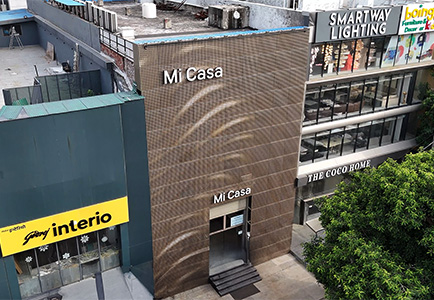
The Rise of Parametric facades: Designing with Algorithmic Elegance
A revolutionary parametric facade system designed to elevate architectural aesthetics. Crafted with premium metals and enhanced with MetaSurface finishes, MetaCoin offers unparalleled customizability, from the shape and size of each element to its color and arrangement. Its dynamic design reacts to light and perspective, creating ever-changing visual effects. Ideal for contemporary and iconic structures, MetaCoin transforms facades into captivating works of art that are sustainable, durable, and visually stunning.
01-04-25 | Facade Innovations
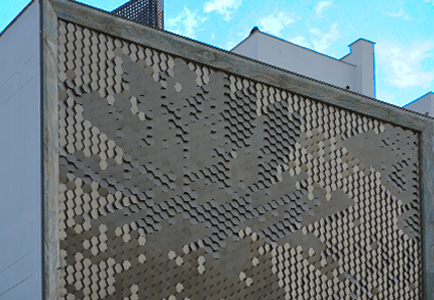
METABLOX™ by Metaguise: A Breakthrough in Parametric Facade Design
At the intersection of culture, craftsmanship, and cutting-edge geometry, METABLOX™ emerges as a bold new direction in architectural innovation. Introduced by Metaguise, this first-of-its-kind parametric facade technology makes its striking debut at the RJ Jewellers flagship store in Jaipur - setting a new benchmark in the world of metal design and modern Indian architecture.
09-04-25 | Facade Innovations
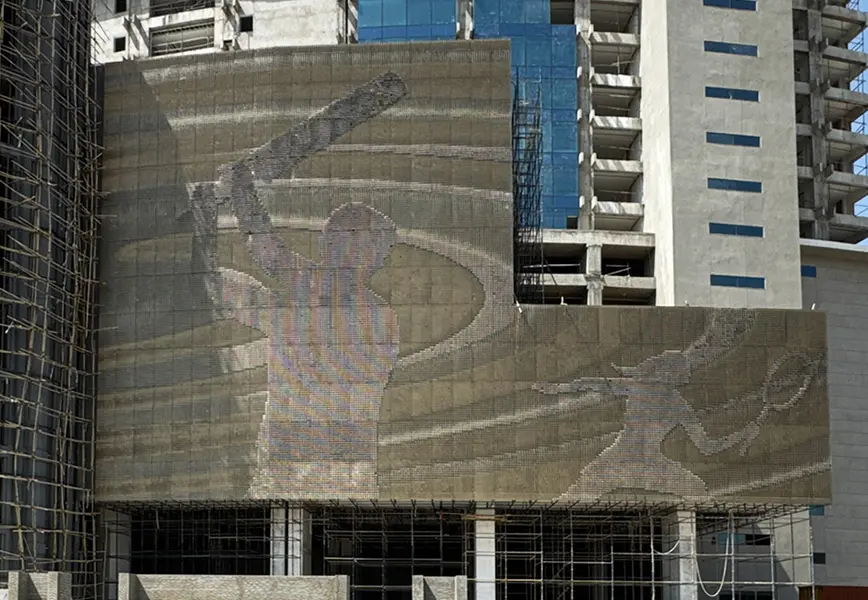
5 Landmark Projects That Used MetaCoin to Transform Facades
When it comes to parametric architecture, MetaCoin stands out as a revolutionary metal coin facade system. Crafted with precision, it offers dynamic aesthetics, adaptability, and a unique identity to structures. Let's delve into five notable projects where MetaCoin has redefined architectural facades.
13-05-25 | Facade Innovations
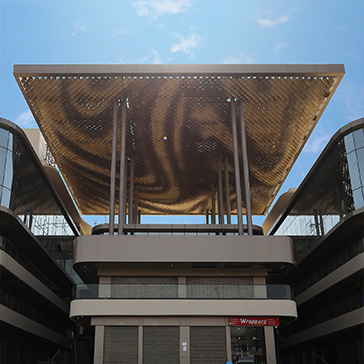
From Code to Construction: How Parametric Facades Are Built
Some buildings just make you look twice. Maybe it’s the way the facade curves. Or how the surface catches the light at different times of day. Often, what you’re seeing is more than just a design, it’s a parametric facade.
10-06-25 | Facade Innovations
Social
Legal
Privacy Policy|Terms & Conditions