




Metal Facade Company in Mumbai: Why Mumbai Builders Are Choosing Metaguise
09-06-26 | Facade Innovations
Key Takeaways
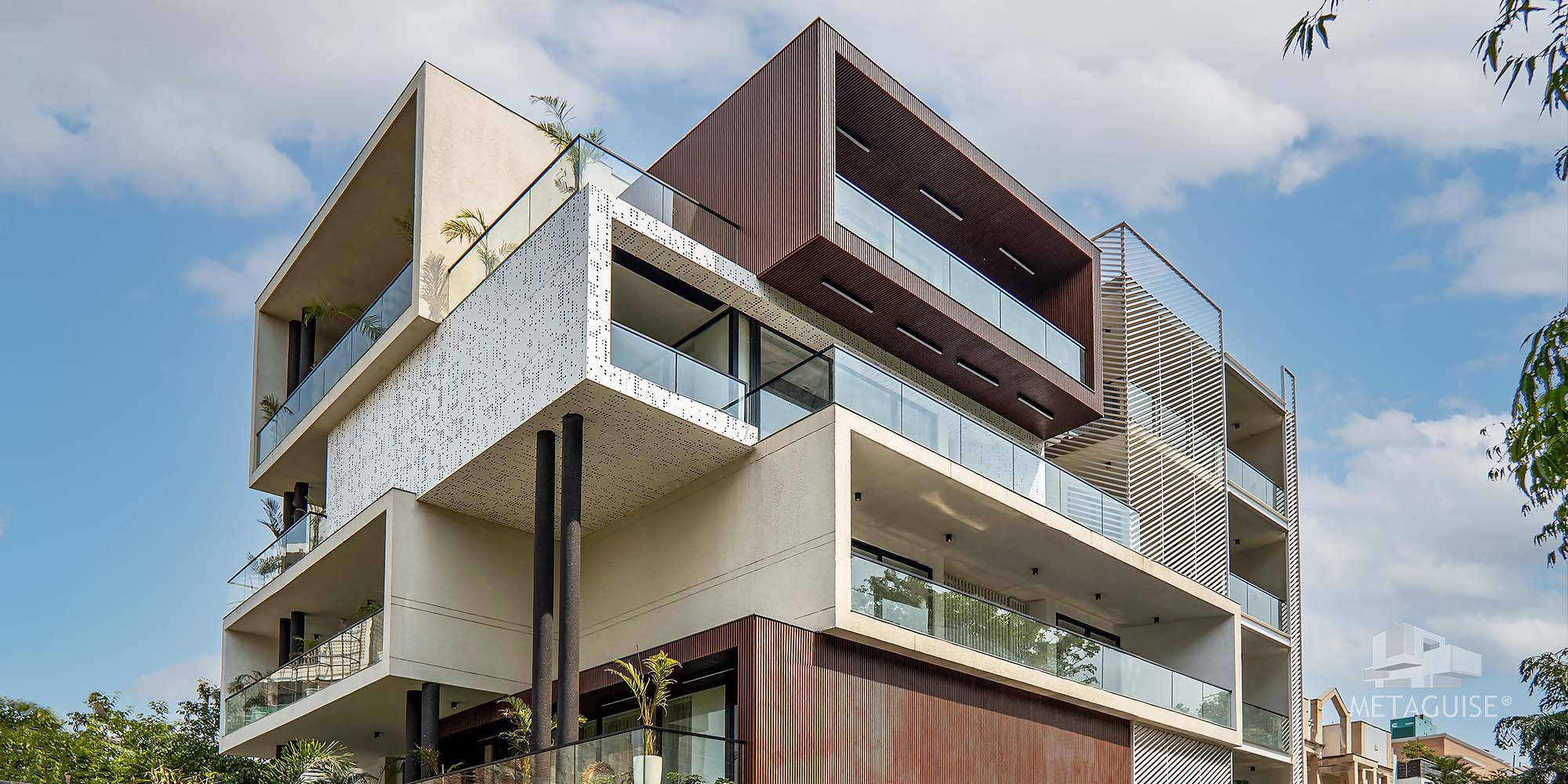
• Mumbai is in the middle of an extraordinary construction boom — 19,775 new residential units launched in Q1 2026, capital values at ₹27,009 per sq ft, and luxury projects commanding 27% of new supply. In this market, facade quality is the differentiator that tips the purchase decision. • Mumbai's coastal climate — salt-laden sea air within 15km of the coastline, monsoon rainfall exceeding 2,400mm annually, and intense west-facing UV from the open ocean horizon — is among the most demanding facade environments in India. The wrong material specification shows within 3 years. The right one lasts 40+. • Anodised aluminium is the coastal gold standard for Mumbai facades — the integral anodic oxide layer has no coating edges for salt air to attack, making it the non-negotiable specification for projects within close proximity of the sea in BKC, Worli, Bandra, Juhu, and South Mumbai. • Metaguise is the metal facade company Mumbai architects, developers, and homeowners specify by name — with completed projects across BKC, Worli, Lower Parel, Bandra West, Juhu, Andheri, and Navi Mumbai, all delivered in-house from design through coastal-grade installation.
Mumbai's Facade Boom: Why the Exterior Elevation Has Never Mattered More
Every city has a building climate that determines which materials last and which fail. Mumbai's is defined by three forces that no inland Indian city experiences at the same intensity: salt-laden marine air that deposits sodium chloride on every surface within fifteen kilometres of the coast — which includes Nariman Point, BKC, Worli, Bandra, Juhu, and Versova; monsoon rainfall exceeding 2,400mm annually that subjects every facade joint and panel edge to sustained wetting and drying cycles from June through September; and intense UV radiation from the western ocean horizon that reaches west-facing elevations in Worli and Bandra with no haze, dust, or building shadow to moderate it. A metal facade system that is not specifically engineered for these three conditions will show visible deterioration within three to five years in Mumbai. One that is correctly specified will perform for forty years without structural intervention.
Mumbai's Facade Boom: The Sea Air Challenge That Changes Everything
Every city has a building climate. Mumbai's is uniquely challenging — and uniquely specific in the demands it places on facade materials. Understanding why requires understanding what sea air actually does to unprotected or poorly specified metal. Salt-Laden Sea Air: The Primary Material Threat Mumbai is one of a handful of Indian cities where every building within fifteen kilometres of the coastline — which includes most of the city's most valuable real estate, from Nariman Point to Bandra to Juhu — is exposed to salt-laden marine air. This air carries microscopic sodium chloride particles that deposit on building surfaces with every sea breeze. On unprotected metal, these particles initiate electrochemical corrosion — a process in which the chloride ion penetrates coating defects or exposed metal edges and drives accelerated oxidation of the metal substrate. On mild steel, this manifests as visible rust within months in coastal Mumbai conditions. On aluminium, the base metal itself is highly corrosion-resistant — but any iron-based fasteners, galvanised fixings, or composite cores with steel components are vulnerable. For metal cladding systems in Mumbai, the specification response to salt air is anodised aluminium — the finish that forms a hard, integral oxide layer that has no susceptibility to salt-driven electrochemical attack — or PVDF-coated aluminium with coastal-grade sealed edges. Metaguise's coastal specification for all Mumbai projects uses anodised aluminium or coastal-grade PVDF with sealed panel edges, stainless steel fixings throughout the sub-frame, and drainage detailing that prevents salt-water pooling at any point in the system. This is not an optional premium — it is the baseline specification for any metal facade system in Mumbai that is expected to last. Monsoon Humidity: The Sustained Moisture Test Mumbai's monsoon season — June through September — brings some of the highest sustained rainfall intensities in India, with annual precipitation typically exceeding 2,400mm concentrated into four months. During this period, facade surfaces are subject to continuous wetting and drying cycles that stress every joint, penetration, and surface transition in the cladding assembly. Porous materials — painted masonry, natural stone in direct-bedded applications, uncoated metal — absorb moisture during wetting events and release it slowly, maintaining elevated moisture content within the wall assembly for extended periods. This drives biological growth (algae, moss, and mould colonise porous surfaces in Mumbai's humidity within a single monsoon season on poorly specified surfaces) and, in the worst cases, moisture ingress that damages structure and internal finishes. UV from the Western Ocean: Surface Degradation Without Shade Mumbai's west-facing facades — which includes some of the city's most prized sea-view elevations in Worli, Bandra, Juhu, and Versova — receive direct solar radiation from the western horizon with nothing between the building and the open ocean to moderate the UV intensity. Unlike inland cities where haze, dust, and building shadows reduce UV levels, coastal-facing elevations in Mumbai receive maximum solar radiation intensity. On conventional paint or powder coat systems, this UV exposure drives colour shift within five to seven years on west-facing elevations. Metaguise's PVDF MetaSurface finishes maintain colour stability for twenty-five-plus years in these conditions — the chemical stability of the fluorine-carbon bond that defines PVDF is precisely what coastal-facing Mumbai elevations demand.
Top Material Choices for Mumbai Buildings: What Survives the Climate
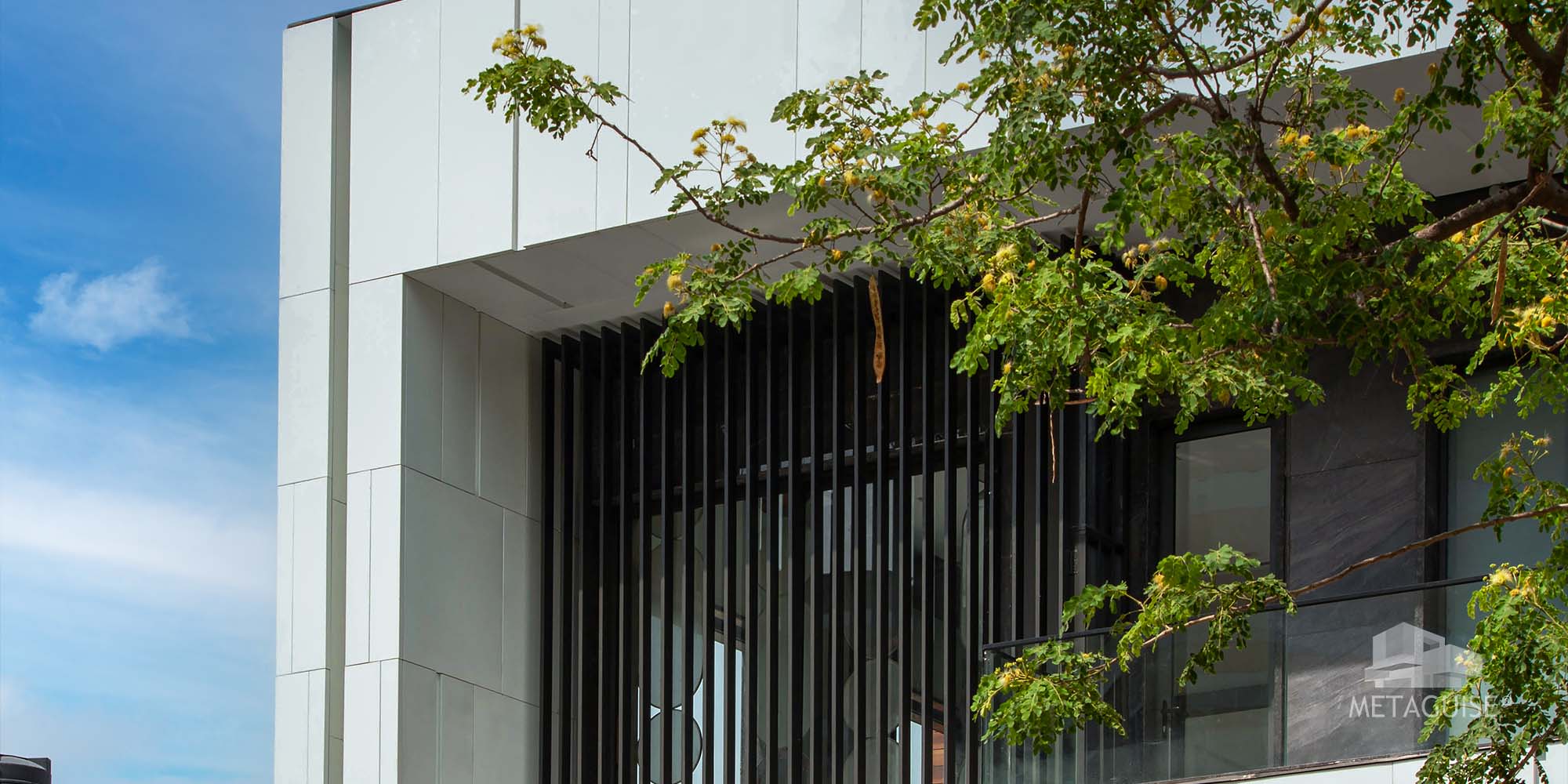
Mumbai's coastal climate narrows the field of viable premium facade materials significantly compared to inland Indian cities. The following is an honest assessment of the principal options. Anodised Aluminium: The Coastal Gold Standard For any Mumbai facade project within close proximity of the sea — which includes the vast majority of the city's premium residential and commercial real estate — anodised aluminium is Metaguise's primary specification. The anodic layer is integral to the metal; there are no coating edges, no bond interfaces, and no organic binder for salt-laden air to attack. Metaguise's full MetaFlute, MetaCassette, SolidPanel, MetaSequin, and MetaCoin systems are available in anodised finish — in natural silver, gold, bronze, and dark gunmetal tones. For Mumbai's luxury residential market, gold anodised MetaFlute on a Worli high-rise or natural anodised MetaCassette on a BKC commercial tower creates a facade of exceptional surface quality and coastal durability simultaneously. PVDF-Coated Aluminium with Coastal Detailing For Mumbai projects where a specific colour, texture, or finish is required that falls outside the anodised palette — a warm white MetaFlute residential facade, a deep charcoal SolidPanel commercial elevation, or a MetaWood finish on a hospitality property — PVDF-coated aluminium with Metaguise's coastal specification is the correct approach. Coastal PVDF specification includes sealed panel edges (preventing moisture ingress at the cut aluminium edge where the PVDF coating does not cover the raw metal), stainless steel sub-frame fixings throughout, and additional drainage detailing at base terminations and horizontal interruptions. With these specifications in place, PVDF-coated aluminium performs reliably in Mumbai's coastal conditions for its full design life. Natural Stone: Heritage Authority, Limited Modern Application Natural stone — granite, sandstone, basalt — carries an authority in Mumbai's architectural context that traces back to the city's Victorian Gothic and Edwardian heritage buildings, many of which are faced in the distinctive golden-yellow Porbandar stone or grey Kurla basalt. For premium residential projects seeking to reference this heritage, stone cladding remains a powerful architectural choice for plinths, accent features, and protected north-facing walls. However, the performance limitations of stone in Mumbai's monsoon context — moisture absorption, biological growth on porous surfaces, and the structural load implications of full-facade stone on new-build high-rises — limit its application as a whole-facade system on contemporary buildings. The most successful contemporary Mumbai facades use stone judiciously — as a plinth, as an accent band, as a boundary feature — against a primary metal cladding field. HPL and Composite Systems: Mid-Market Reality HPL (high-pressure laminate) and various composite panel systems are widely used across Mumbai's mid-tier commercial and residential construction — and perform adequately when specified and installed correctly on protected or north-facing elevations. In Mumbai's coastal UV environment, HPL on south and west-facing elevations experiences colour shift within five to seven years, and the organic resin core is vulnerable to moisture at poorly sealed edges during sustained monsoon exposure. For developers building luxury residential or institutional buildings in Mumbai, HPL is not the specified material. For Metaguise's Mumbai clients — who are invariably operating in the premium and luxury segments — the comparison is between metal and stone, not between metal and HPL.
Metaguise Projects in Mumbai: Portfolio Across the City's Premium Corridors
Metaguise's Mumbai project portfolio demonstrates the breadth of the city's architectural ambition and the range of contexts in which premium metal facade systems deliver their strongest results. BKC Commercial District: Corporate Identity Facades Bandra-Kurla Complex — Mumbai's primary financial district and the address of choice for India's largest domestic and multinational corporations — is home to some of Metaguise's most significant commercial facade commissions. Corporate headquarters and premium office buildings in BKC have specified Metaguise's MetaCassette and SolidPanel systems in anodised and PVDF finishes for primary building elevations — creating facades that communicate organisational authority and design ambition in India's most scrutinised business district. The coastal specification — anodised aluminium panels, stainless steel sub-frame fixings, and sealed edge detailing — is standard for all BKC Metaguise installations. Worli and Lower Parel: Luxury Residential and Hospitality The Worli-Lower Parel corridor — home to Mumbai's most expensive residential towers and a concentration of five-star hotel developments — represents Metaguise's most design-ambitious Mumbai market. Sea-facing elevations in this precinct have specified MetaSequin gold-anodised panels on lobby entrance features — creating an arrival sequence that matches the luxury of the lobbies within. MetaFlute in natural anodised has featured on residential tower podium elevations — the human-scale base of towers that residents and visitors experience directly. And MetaFin brise-soleil systems have been specified on west-facing penthouse terraces — addressing Mumbai's punishing western ocean sun exposure while creating a distinctive architectural feature visible from the Worli Sea Link approach. Bandra West and Juhu: Premium Residential and Retail Bandra West — Mumbai's most densely creative residential and retail neighbourhood — has generated some of Metaguise's most design-forward Mumbai residential commissions. Independent residential renovations in Bandstand and Hill Road have specified MetaFold origami-geometry entrance panels and MetaCoin perforated privacy screens — creating residential facades of genuine architectural authorship in a neighbourhood where design literacy and visual distinctiveness are highly valued. In Juhu, retail flagship commissions have featured MetaSequin gold-anodised entrance canopies that create maximum visual impact at the street level. Andheri and Western Suburbs: Commercial and Institutional Mumbai's western suburbs — Andheri, Goregaon, Malad, and the expanding Oshiwara District Centre — represent the city's commercial mid-market, where corporate offices, media production campuses, and institutional buildings represent a large and growing facade specification opportunity. Metaguise has delivered MetaFlute and MetaCassette commercial installations across this corridor — providing premium metal facade systems at the scale and budget efficiency that the commercial mid-market demands, while maintaining the quality standard that the Metaguise name implies. Navi Mumbai: The Emerging Premium Frontier Navi Mumbai — now directly connected to Mumbai via the MTHL (Atal Setu) and the developing Navi Mumbai International Airport corridor — is experiencing its own premium construction wave, with developers launching luxury residential and commercial projects across Vashi, Nerul, Belapur, and Kharghar. Metaguise is actively engaged in Navi Mumbai facade commissions as the corridor's premium construction pipeline expands — bringing the same in-house design-to-installation capability that serves South Mumbai's trophy properties to the city's emerging residential and commercial premium sector.
How to Start Your Mumbai Facade Project with Metaguise
Beginning a facade project with Metaguise in Mumbai is a straightforward process — designed to reduce uncertainty, establish clear expectations, and ensure that the design intent survives from the first conversation to the final installed panel. Step 1: Initial Consultation and Site Visit Contact Metaguise to schedule an initial consultation for your Mumbai project. The design team will conduct a site visit — assessing the building's facade geometry, orientation, floor-to-floor heights, and access conditions — and hold a design brief conversation with the architect or homeowner to understand the project's aspirations, budget framework, and programme requirements. For commercial projects in BKC or Worli, this typically includes a review of the project's architectural drawings and any existing facade specification documentation. Step 2: Coastal Specification Assessment For all Mumbai projects, Metaguise's coastal specification assessment is a standard part of the design development process. The team evaluates the building's distance from the sea, the specific facade orientations, and the salt-air exposure level to determine the appropriate finish specification — anodised or coastal-grade PVDF — and the corresponding sub-frame and fixing specification. This assessment is provided as part of the design consultation at no additional cost. Step 3: Design Development and Visualisation Metaguise's design team develops the facade composition in 3D — showing the proposed system in its finish and configuration against the building's elevation, in the specific light conditions of the Mumbai site (morning sea light, afternoon western exposure, monsoon diffuse light). Physical finish samples in the proposed specification are dispatched to the client and architect for tactile review. For parametric system proposals, physical panel prototypes are produced before full fabrication commitment. Step 4: Engineering, Proposal, and Programme The approved design is passed to Metaguise's engineering team for wind load calculation (Mumbai's coastal wind exposure requires site-specific structural engineering for all high-rise and exposed facade applications), fixing specification, and coastal detailing. A project proposal is prepared covering fabrication, delivery, and installation, with a programme aligned to the construction schedule. Step 5: Fabrication, Delivery, and Installation All Metaguise panels for Mumbai projects are fabricated in the company's in-house CNC facility, finished to the coastal specification, and delivered to the Mumbai site. Metaguise's installation team — experienced in Mumbai's site logistics, scaffolding requirements, and the specific conditions of high-rise coastal installation — executes the on-site work. Post-installation quality inspection and client handover complete the process.
Frequently Asked Questions
1.What makes a metal facade survive Mumbai's coastal climate — what should I insist on when specifying?
The three non-negotiable specification requirements for metal facades in Mumbai are: anodised aluminium or coastal-grade PVDF with fully sealed panel edges (the finish must have no exposed aluminium edge that salt air can attack); stainless steel fixings throughout the sub-frame (galvanised or mild steel fixings corrode in coastal salt air and will fail before the panel itself); and ventilated rainscreen installation with designed drainage at the base and horizontal interruptions (moisture accumulation behind panels in Mumbai's monsoon season is the primary long-term failure risk in direct-fixed systems). Metaguise's Mumbai specification standard addresses all three as baseline requirements, not upgrades.2. Does Metaguise work with Mumbai's mid-rise and low-rise residential buildings, or only with large commercial projects?
Metaguise serves the full range of Mumbai's premium building types — from individual bungalows and low-rise residential buildings in Bandra West and Juhu to mid-rise residential towers in Worli and commercial headquarters in BKC. The minimum project scope is determined by the design brief and the system being specified, not by building scale. For independent residences and smaller commercial projects in Mumbai, Metaguise's MetaForm modular systems — MetaFlute, MetaCassette, SolidPanel — provide the most efficient route to a premium metal facade at the scale and budget appropriate to the project.3.How does Metaguise manage logistics for Mumbai projects — particularly high-rise installations in dense urban areas?
Mumbai's urban density, traffic conditions, and construction site access constraints are well understood by Metaguise's Mumbai project team. Facade panel deliveries to high-rise Mumbai sites are planned with the site logistics team to align with site hoisting schedules and avoid peak traffic periods. For projects in dense urban locations — South Mumbai, BKC, the western suburbs — Metaguise's installation team coordinates directly with the structural contractor on scaffolding, MEWP, and access tower requirements. Experience on previous Mumbai high-rise and mid-rise projects means that the logistical challenges specific to the city are anticipated and managed from the programme planning stage, not resolved reactively on site.4.Which Metaguise systems are most specified for Mumbai luxury residential projects?
The systems most frequently specified on Mumbai luxury residential projects are: MetaFlute in natural or gold anodised (vertical fluted panels on the primary elevation — the most architecturally impactful and photographically distinctive system at residential scale); MetaSequin gold anodised (on entrance canopies and feature bays — creating the first-impression shimmer that luxury residential buildings demand); MetaCassette anodised (on service elevations and secondary facades — providing coastal-grade performance with a clean, flat aesthetic); and MetaFin (on west-facing terraces and penthouse elevations — combining solar control with a distinctive architectural fin rhythm). All specifications are confirmed as coastal-grade as standard for Mumbai projects.Metal Facade Company in Mumbai: Why Mumbai Builders Are Choosing Metaguise
09-06-26 | Facade Innovations
Key Takeaways
• Mumbai is in the middle of an extraordinary construction boom — 19,775 new residential units launched in Q1 2026, capital values at ₹27,009 per sq ft, and luxury projects commanding 27% of new supply. In this market, facade quality is the differentiator that tips the purchase decision. • Mumbai's coastal climate — salt-laden sea air within 15km of the coastline, monsoon rainfall exceeding 2,400mm annually, and intense west-facing UV from the open ocean horizon — is among the most demanding facade environments in India. The wrong material specification shows within 3 years. The right one lasts 40+. • Anodised aluminium is the coastal gold standard for Mumbai facades — the integral anodic oxide layer has no coating edges for salt air to attack, making it the non-negotiable specification for projects within close proximity of the sea in BKC, Worli, Bandra, Juhu, and South Mumbai. • Metaguise is the metal facade company Mumbai architects, developers, and homeowners specify by name — with completed projects across BKC, Worli, Lower Parel, Bandra West, Juhu, Andheri, and Navi Mumbai, all delivered in-house from design through coastal-grade installation.
Mumbai's Facade Boom: Why the Exterior Elevation Has Never Mattered More
Every city has a building climate that determines which materials last and which fail. Mumbai's is defined by three forces that no inland Indian city experiences at the same intensity: salt-laden marine air that deposits sodium chloride on every surface within fifteen kilometres of the coast — which includes Nariman Point, BKC, Worli, Bandra, Juhu, and Versova; monsoon rainfall exceeding 2,400mm annually that subjects every facade joint and panel edge to sustained wetting and drying cycles from June through September; and intense UV radiation from the western ocean horizon that reaches west-facing elevations in Worli and Bandra with no haze, dust, or building shadow to moderate it. A metal facade system that is not specifically engineered for these three conditions will show visible deterioration within three to five years in Mumbai. One that is correctly specified will perform for forty years without structural intervention.
Mumbai's Facade Boom: The Sea Air Challenge That Changes Everything
Every city has a building climate. Mumbai's is uniquely challenging — and uniquely specific in the demands it places on facade materials. Understanding why requires understanding what sea air actually does to unprotected or poorly specified metal. Salt-Laden Sea Air: The Primary Material Threat Mumbai is one of a handful of Indian cities where every building within fifteen kilometres of the coastline — which includes most of the city's most valuable real estate, from Nariman Point to Bandra to Juhu — is exposed to salt-laden marine air. This air carries microscopic sodium chloride particles that deposit on building surfaces with every sea breeze. On unprotected metal, these particles initiate electrochemical corrosion — a process in which the chloride ion penetrates coating defects or exposed metal edges and drives accelerated oxidation of the metal substrate. On mild steel, this manifests as visible rust within months in coastal Mumbai conditions. On aluminium, the base metal itself is highly corrosion-resistant — but any iron-based fasteners, galvanised fixings, or composite cores with steel components are vulnerable. For metal cladding systems in Mumbai, the specification response to salt air is anodised aluminium — the finish that forms a hard, integral oxide layer that has no susceptibility to salt-driven electrochemical attack — or PVDF-coated aluminium with coastal-grade sealed edges. Metaguise's coastal specification for all Mumbai projects uses anodised aluminium or coastal-grade PVDF with sealed panel edges, stainless steel fixings throughout the sub-frame, and drainage detailing that prevents salt-water pooling at any point in the system. This is not an optional premium — it is the baseline specification for any metal facade system in Mumbai that is expected to last. Monsoon Humidity: The Sustained Moisture Test Mumbai's monsoon season — June through September — brings some of the highest sustained rainfall intensities in India, with annual precipitation typically exceeding 2,400mm concentrated into four months. During this period, facade surfaces are subject to continuous wetting and drying cycles that stress every joint, penetration, and surface transition in the cladding assembly. Porous materials — painted masonry, natural stone in direct-bedded applications, uncoated metal — absorb moisture during wetting events and release it slowly, maintaining elevated moisture content within the wall assembly for extended periods. This drives biological growth (algae, moss, and mould colonise porous surfaces in Mumbai's humidity within a single monsoon season on poorly specified surfaces) and, in the worst cases, moisture ingress that damages structure and internal finishes. UV from the Western Ocean: Surface Degradation Without Shade Mumbai's west-facing facades — which includes some of the city's most prized sea-view elevations in Worli, Bandra, Juhu, and Versova — receive direct solar radiation from the western horizon with nothing between the building and the open ocean to moderate the UV intensity. Unlike inland cities where haze, dust, and building shadows reduce UV levels, coastal-facing elevations in Mumbai receive maximum solar radiation intensity. On conventional paint or powder coat systems, this UV exposure drives colour shift within five to seven years on west-facing elevations. Metaguise's PVDF MetaSurface finishes maintain colour stability for twenty-five-plus years in these conditions — the chemical stability of the fluorine-carbon bond that defines PVDF is precisely what coastal-facing Mumbai elevations demand.
Top Material Choices for Mumbai Buildings: What Survives the Climate
Mumbai's coastal climate narrows the field of viable premium facade materials significantly compared to inland Indian cities. The following is an honest assessment of the principal options. Anodised Aluminium: The Coastal Gold Standard For any Mumbai facade project within close proximity of the sea — which includes the vast majority of the city's premium residential and commercial real estate — anodised aluminium is Metaguise's primary specification. The anodic layer is integral to the metal; there are no coating edges, no bond interfaces, and no organic binder for salt-laden air to attack. Metaguise's full MetaFlute, MetaCassette, SolidPanel, MetaSequin, and MetaCoin systems are available in anodised finish — in natural silver, gold, bronze, and dark gunmetal tones. For Mumbai's luxury residential market, gold anodised MetaFlute on a Worli high-rise or natural anodised MetaCassette on a BKC commercial tower creates a facade of exceptional surface quality and coastal durability simultaneously. PVDF-Coated Aluminium with Coastal Detailing For Mumbai projects where a specific colour, texture, or finish is required that falls outside the anodised palette — a warm white MetaFlute residential facade, a deep charcoal SolidPanel commercial elevation, or a MetaWood finish on a hospitality property — PVDF-coated aluminium with Metaguise's coastal specification is the correct approach. Coastal PVDF specification includes sealed panel edges (preventing moisture ingress at the cut aluminium edge where the PVDF coating does not cover the raw metal), stainless steel sub-frame fixings throughout, and additional drainage detailing at base terminations and horizontal interruptions. With these specifications in place, PVDF-coated aluminium performs reliably in Mumbai's coastal conditions for its full design life. Natural Stone: Heritage Authority, Limited Modern Application Natural stone — granite, sandstone, basalt — carries an authority in Mumbai's architectural context that traces back to the city's Victorian Gothic and Edwardian heritage buildings, many of which are faced in the distinctive golden-yellow Porbandar stone or grey Kurla basalt. For premium residential projects seeking to reference this heritage, stone cladding remains a powerful architectural choice for plinths, accent features, and protected north-facing walls. However, the performance limitations of stone in Mumbai's monsoon context — moisture absorption, biological growth on porous surfaces, and the structural load implications of full-facade stone on new-build high-rises — limit its application as a whole-facade system on contemporary buildings. The most successful contemporary Mumbai facades use stone judiciously — as a plinth, as an accent band, as a boundary feature — against a primary metal cladding field. HPL and Composite Systems: Mid-Market Reality HPL (high-pressure laminate) and various composite panel systems are widely used across Mumbai's mid-tier commercial and residential construction — and perform adequately when specified and installed correctly on protected or north-facing elevations. In Mumbai's coastal UV environment, HPL on south and west-facing elevations experiences colour shift within five to seven years, and the organic resin core is vulnerable to moisture at poorly sealed edges during sustained monsoon exposure. For developers building luxury residential or institutional buildings in Mumbai, HPL is not the specified material. For Metaguise's Mumbai clients — who are invariably operating in the premium and luxury segments — the comparison is between metal and stone, not between metal and HPL.
Metaguise Projects in Mumbai: Portfolio Across the City's Premium Corridors
Metaguise's Mumbai project portfolio demonstrates the breadth of the city's architectural ambition and the range of contexts in which premium metal facade systems deliver their strongest results. BKC Commercial District: Corporate Identity Facades Bandra-Kurla Complex — Mumbai's primary financial district and the address of choice for India's largest domestic and multinational corporations — is home to some of Metaguise's most significant commercial facade commissions. Corporate headquarters and premium office buildings in BKC have specified Metaguise's MetaCassette and SolidPanel systems in anodised and PVDF finishes for primary building elevations — creating facades that communicate organisational authority and design ambition in India's most scrutinised business district. The coastal specification — anodised aluminium panels, stainless steel sub-frame fixings, and sealed edge detailing — is standard for all BKC Metaguise installations. Worli and Lower Parel: Luxury Residential and Hospitality The Worli-Lower Parel corridor — home to Mumbai's most expensive residential towers and a concentration of five-star hotel developments — represents Metaguise's most design-ambitious Mumbai market. Sea-facing elevations in this precinct have specified MetaSequin gold-anodised panels on lobby entrance features — creating an arrival sequence that matches the luxury of the lobbies within. MetaFlute in natural anodised has featured on residential tower podium elevations — the human-scale base of towers that residents and visitors experience directly. And MetaFin brise-soleil systems have been specified on west-facing penthouse terraces — addressing Mumbai's punishing western ocean sun exposure while creating a distinctive architectural feature visible from the Worli Sea Link approach. Bandra West and Juhu: Premium Residential and Retail Bandra West — Mumbai's most densely creative residential and retail neighbourhood — has generated some of Metaguise's most design-forward Mumbai residential commissions. Independent residential renovations in Bandstand and Hill Road have specified MetaFold origami-geometry entrance panels and MetaCoin perforated privacy screens — creating residential facades of genuine architectural authorship in a neighbourhood where design literacy and visual distinctiveness are highly valued. In Juhu, retail flagship commissions have featured MetaSequin gold-anodised entrance canopies that create maximum visual impact at the street level. Andheri and Western Suburbs: Commercial and Institutional Mumbai's western suburbs — Andheri, Goregaon, Malad, and the expanding Oshiwara District Centre — represent the city's commercial mid-market, where corporate offices, media production campuses, and institutional buildings represent a large and growing facade specification opportunity. Metaguise has delivered MetaFlute and MetaCassette commercial installations across this corridor — providing premium metal facade systems at the scale and budget efficiency that the commercial mid-market demands, while maintaining the quality standard that the Metaguise name implies. Navi Mumbai: The Emerging Premium Frontier Navi Mumbai — now directly connected to Mumbai via the MTHL (Atal Setu) and the developing Navi Mumbai International Airport corridor — is experiencing its own premium construction wave, with developers launching luxury residential and commercial projects across Vashi, Nerul, Belapur, and Kharghar. Metaguise is actively engaged in Navi Mumbai facade commissions as the corridor's premium construction pipeline expands — bringing the same in-house design-to-installation capability that serves South Mumbai's trophy properties to the city's emerging residential and commercial premium sector.
How to Start Your Mumbai Facade Project with Metaguise
Beginning a facade project with Metaguise in Mumbai is a straightforward process — designed to reduce uncertainty, establish clear expectations, and ensure that the design intent survives from the first conversation to the final installed panel. Step 1: Initial Consultation and Site Visit Contact Metaguise to schedule an initial consultation for your Mumbai project. The design team will conduct a site visit — assessing the building's facade geometry, orientation, floor-to-floor heights, and access conditions — and hold a design brief conversation with the architect or homeowner to understand the project's aspirations, budget framework, and programme requirements. For commercial projects in BKC or Worli, this typically includes a review of the project's architectural drawings and any existing facade specification documentation. Step 2: Coastal Specification Assessment For all Mumbai projects, Metaguise's coastal specification assessment is a standard part of the design development process. The team evaluates the building's distance from the sea, the specific facade orientations, and the salt-air exposure level to determine the appropriate finish specification — anodised or coastal-grade PVDF — and the corresponding sub-frame and fixing specification. This assessment is provided as part of the design consultation at no additional cost. Step 3: Design Development and Visualisation Metaguise's design team develops the facade composition in 3D — showing the proposed system in its finish and configuration against the building's elevation, in the specific light conditions of the Mumbai site (morning sea light, afternoon western exposure, monsoon diffuse light). Physical finish samples in the proposed specification are dispatched to the client and architect for tactile review. For parametric system proposals, physical panel prototypes are produced before full fabrication commitment. Step 4: Engineering, Proposal, and Programme The approved design is passed to Metaguise's engineering team for wind load calculation (Mumbai's coastal wind exposure requires site-specific structural engineering for all high-rise and exposed facade applications), fixing specification, and coastal detailing. A project proposal is prepared covering fabrication, delivery, and installation, with a programme aligned to the construction schedule. Step 5: Fabrication, Delivery, and Installation All Metaguise panels for Mumbai projects are fabricated in the company's in-house CNC facility, finished to the coastal specification, and delivered to the Mumbai site. Metaguise's installation team — experienced in Mumbai's site logistics, scaffolding requirements, and the specific conditions of high-rise coastal installation — executes the on-site work. Post-installation quality inspection and client handover complete the process.
Frequently Asked Questions
1.What makes a metal facade survive Mumbai's coastal climate — what should I insist on when specifying?
The three non-negotiable specification requirements for metal facades in Mumbai are: anodised aluminium or coastal-grade PVDF with fully sealed panel edges (the finish must have no exposed aluminium edge that salt air can attack); stainless steel fixings throughout the sub-frame (galvanised or mild steel fixings corrode in coastal salt air and will fail before the panel itself); and ventilated rainscreen installation with designed drainage at the base and horizontal interruptions (moisture accumulation behind panels in Mumbai's monsoon season is the primary long-term failure risk in direct-fixed systems). Metaguise's Mumbai specification standard addresses all three as baseline requirements, not upgrades.2. Does Metaguise work with Mumbai's mid-rise and low-rise residential buildings, or only with large commercial projects?
Metaguise serves the full range of Mumbai's premium building types — from individual bungalows and low-rise residential buildings in Bandra West and Juhu to mid-rise residential towers in Worli and commercial headquarters in BKC. The minimum project scope is determined by the design brief and the system being specified, not by building scale. For independent residences and smaller commercial projects in Mumbai, Metaguise's MetaForm modular systems — MetaFlute, MetaCassette, SolidPanel — provide the most efficient route to a premium metal facade at the scale and budget appropriate to the project.3.How does Metaguise manage logistics for Mumbai projects — particularly high-rise installations in dense urban areas?
Mumbai's urban density, traffic conditions, and construction site access constraints are well understood by Metaguise's Mumbai project team. Facade panel deliveries to high-rise Mumbai sites are planned with the site logistics team to align with site hoisting schedules and avoid peak traffic periods. For projects in dense urban locations — South Mumbai, BKC, the western suburbs — Metaguise's installation team coordinates directly with the structural contractor on scaffolding, MEWP, and access tower requirements. Experience on previous Mumbai high-rise and mid-rise projects means that the logistical challenges specific to the city are anticipated and managed from the programme planning stage, not resolved reactively on site.4.Which Metaguise systems are most specified for Mumbai luxury residential projects?
The systems most frequently specified on Mumbai luxury residential projects are: MetaFlute in natural or gold anodised (vertical fluted panels on the primary elevation — the most architecturally impactful and photographically distinctive system at residential scale); MetaSequin gold anodised (on entrance canopies and feature bays — creating the first-impression shimmer that luxury residential buildings demand); MetaCassette anodised (on service elevations and secondary facades — providing coastal-grade performance with a clean, flat aesthetic); and MetaFin (on west-facing terraces and penthouse elevations — combining solar control with a distinctive architectural fin rhythm). All specifications are confirmed as coastal-grade as standard for Mumbai projects.Related Articles
Related Articles
The Rise of Parametric facades: Designing with Algorithmic Elegance
A revolutionary parametric facade system designed to elevate architectural aesthetics. Crafted with premium metals and enhanced with MetaSurface finishes, MetaCoin offers unparalleled customizability, from the shape and size of each element to its color and arrangement. Its dynamic design reacts to light and perspective, creating ever-changing visual effects. Ideal for contemporary and iconic structures, MetaCoin transforms facades into captivating works of art that are sustainable, durable, and visually stunning.
01-04-25 | Facade Innovations
METABLOX™ by Metaguise: A Breakthrough in Parametric Facade Design
At the intersection of culture, craftsmanship, and cutting-edge geometry, METABLOX™ emerges as a bold new direction in architectural innovation. Introduced by Metaguise, this first-of-its-kind parametric facade technology makes its striking debut at the RJ Jewellers flagship store in Jaipur - setting a new benchmark in the world of metal design and modern Indian architecture.
09-04-25 | Facade Innovations
5 Landmark Projects That Used MetaCoin to Transform Facades
When it comes to parametric architecture, MetaCoin stands out as a revolutionary metal coin facade system. Crafted with precision, it offers dynamic aesthetics, adaptability, and a unique identity to structures. Let's delve into five notable projects where MetaCoin has redefined architectural facades.
13-05-25 | Facade Innovations
From Code to Construction: How Parametric Facades Are Built
Some buildings just make you look twice. Maybe it’s the way the facade curves. Or how the surface catches the light at different times of day. Often, what you’re seeing is more than just a design, it’s a parametric facade.
10-06-25 | Facade Innovations
Social
Legal
Privacy Policy|Terms & Conditions