





MetaFin Facade: Architectural Fins That Control Light and Define Building Identity
03-06-26 | Facade Innovations
Key Takeaways
• MetaFin is Metaguise's precision-engineered architectural fin system — aluminium brise-soleil fins that reduce solar heat gain on west and south-facing facades by 40–60%, improving thermal comfort and reducing cooling costs across India's hottest cities. • External solar shading fins are the most cost-effective performance upgrade for west-facing glazed facades in Delhi NCR, Gurgaon, Noida, Ahmedabad, and Hyderabad — delivering measurable cooling load reduction without replacing glazing or adding mechanical systems. • MetaFin qualifies for IGBC and GRIHA green building certification credits — making it a dual-value specification for commercial developers: architectural identity plus compliance documentation in a single system. • Fin projection depth, spacing, and angle are all calculated from site solar geometry — not estimated. Every MetaFin installation is engineered for the specific building orientation, latitude, and climate zone.
What Are Architectural Facade Fins? Understanding the Brise-Soleil Principle
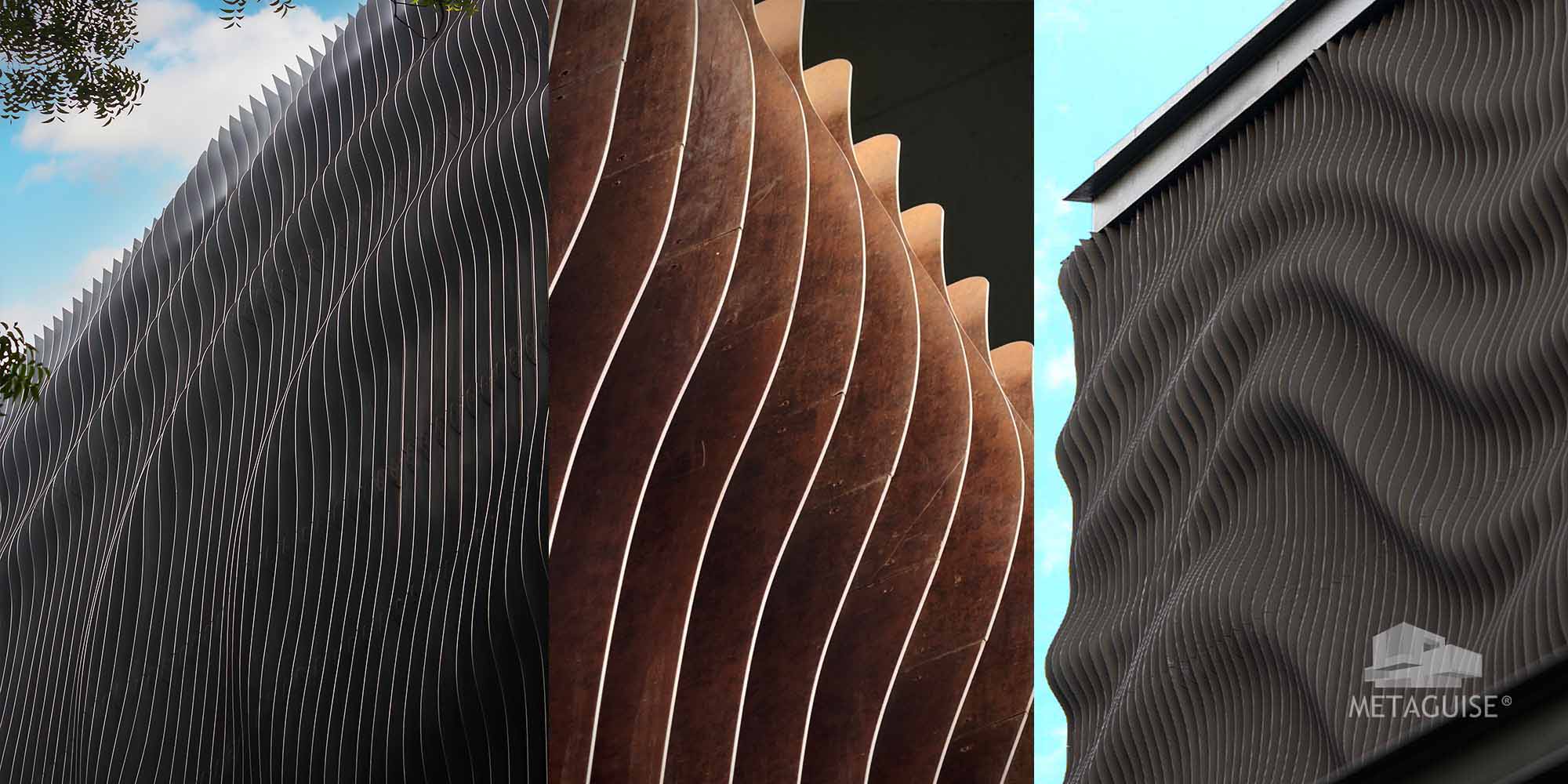
An architectural fin — also called a brise-soleil, sun fin, or external solar louver — is a blade of material that projects from a building's facade to cast shadow over the glazing or wall surface behind it during peak solar hours. The principle is straightforward: shade the surface before the sun reaches it, and the building stays cooler, the cooling system runs less, and the occupants are more comfortable. In India's climate, where west-facing facades in Delhi NCR, Gurgaon, Noida, Ahmedabad, and Hyderabad absorb direct afternoon solar radiation at temperatures above 45°C from April through October, external fin shading is not an optional upgrade — it is the correct engineering response to the site's solar geometry. MetaFin is Metaguise's precision-fabricated aluminium realisation of this principle: a fully engineered architectural fin system that is simultaneously a high-performance solar control tool and a primary facade design element, available in the complete MetaSurface PVDF finish range and specified for buildings across India's residential, commercial, institutional, and hospitality sectors.
MetaFin: Design and Engineering of the System
MetaFin: Design and Engineering of the System MetaFin is a fully engineered solar shading fin system — not a decorative element that happens to cast shadow. Every MetaFin installation across India begins with a site-specific solar geometry calculation that determines the optimal fin projection depth, fin spacing, and fin angle for that building's orientation, latitude, and climate zone. A MetaFin fin system on a west-facing bungalow in Gurgaon is engineered differently from one on a south-facing office tower in Hyderabad — because the sun angle, the peak radiation hour, and the required shading coefficient are different. This is what separates a climate-resilient metal facade from a facade that merely looks like it manages solar gain. Fin Projection Depth — How Far the Fin Must Reach Fin projection depth is the distance the fin blade extends outward from the facade plane. It is the single most performance-critical variable in any brise-soleil or architectural fin specification — because projection depth determines the size of the shadow zone cast on the wall or glazing behind the fin at the critical solar hour. Projection depth is calculated from four inputs: the building's latitude, the facade compass orientation (south, west, east, or intermediate), the floor-to-floor height, and the solar altitude angle at the peak radiation hour for that facade. For west-facing facades in Delhi NCR, Gurgaon, Noida, and Ahmedabad — where peak solar gain occurs between 2pm and 5pm when the sun is at a low western angle — longer projection depths are required to cast a shadow that covers the full glazing height during those hours. For south-facing facades in Bangalore and Pune — where the summer sun is near-vertical at midday — shorter projections are often sufficient because the high sun angle means even a modestly projecting fin casts a wide shadow on the surface below. Metaguise's design team calculates optimal projection depth for every MetaFin commission using site-specific solar path data — not generic tables. The output is a fin specification that delivers the required shading at the critical hour without over-engineering the fin beyond what the site demands. Fin Spacing — Engineering the Shadow Density Fin spacing — the centre-to-centre distance between adjacent fins — governs both the coverage of the shading system and its visual character from the street. It is simultaneously a thermal performance decision and an architectural design decision, and the two cannot be separated. Closely spaced fins — 300mm to 500mm centre-to-centre — create a near-continuous shadow band across the elevation. From a solar performance standpoint, this delivers maximum shading coefficient and the most consistent reduction in solar heat gain across the glazed surface. From a design standpoint, the closely spaced fin array reads from the street as a dense, screen-like texture — a surface with depth and shadow rather than individual readable elements. This configuration is most often specified on commercial office facades in Hyderabad's HITEC City, Bangalore's Outer Ring Road, and Gurgaon's Cyber City — where consistent solar control across large glazed areas is the primary brief. Fin Cross-Section — Four Structural Profiles The cross-sectional profile of each MetaFin blade affects both its structural performance under wind load and its visual character at close range: Flat fin (rectangular cross-section) is the most widely specified form — clean, graphic, and directional. Maximum shadow area per unit of projection depth. Suits all building types and scales from residential bungalows to commercial towers. Tapered fin (wedge cross-section) is wider at the wall connection and narrows to a sharp edge at the tip — a refined, blade-like appearance that reads as precision-engineered at close range. Specified on luxury residential and premium hospitality facades where the fin detail is visible at human scale. Aerofoil fin (curved cross-section) is aerodynamically profiled to reduce wind load pressure at the fin tip — specified for high-rise buildings and exposed coastal applications in Goa, Mumbai, Chennai, and Visakhapatnam where wind pressure on long-projection fins is a structural engineering concern. Custom cross-sections — including I-section fins for very long spans and hollow box sections for maximum structural efficiency at minimum weight — are available for monumental institutional facades, stadium applications, and large-scale civic buildings where standard sections do not meet the span or load requirements.
Solar Control Benefits of MetaFin in India's Climate
India's climate does not forgive an unshaded facade. A metal cladding system that ignores solar orientation is an incomplete specification — and for west and south-facing glazed elevations across NCR, Ahmedabad, Hyderabad, and Bangalore, MetaFin is the engineering answer that no glazing specification alone can replace. West-Facing Facades — The Highest Priority in NCR and Ahmedabad West-facing glass in Delhi, Gurgaon, Noida, and Ahmedabad is the single most thermally stressed surface in Indian residential and commercial architecture. From April through October, direct afternoon sun hits these surfaces at increasingly low angles — generating heat gain that makes adjacent rooms uncomfortable and forces air conditioning to compensate for hours every day. A properly engineered MetaFin system on a west-facing luxury home facade creates a calculated shadow zone over the glazing precisely during peak radiation hours — reducing solar heat gain measurably and sustaining that reduction every summer for the building's operational life. No blind, no film, and no tinted glass delivers the same performance at the same lifecycle cost. South-Facing Facades — Seasonal Intelligence Built In South-facing facades in India receive near-vertical solar radiation during summer (April–September) and lower-angle radiation in winter (November–February). MetaFin horizontal fins on south-facing elevations are calculated to block the high summer sun while allowing the lower winter sun to pass beneath the fins — warming the interior naturally when heating is welcome and blocking it when it is not. This differential seasonal performance is the reason architectural fins appeared on Le Corbusier's Chandigarh Secretariat and continue to appear on India's most climatically intelligent buildings today. One fixed element. Two seasonal outcomes. Zero operational maintenance. East-Facing Facades — Morning Glare Control in Bangalore and Pune East-facing glazing receives low-angle morning sun — the source of glare that makes east-facing living rooms and offices uncomfortable between 7am and 10am in Bangalore, Pune, Hyderabad, and Chennai. Vertical MetaFin fins spaced horizontally across east-facing elevations intercept this low-angle radiation from the side — blocking direct morning glare while preserving sky views and diffuse daylight from above. For premium residential projects in Bangalore's Sarjapur Road, Pune's Koregaon Park, and Hyderabad's Jubilee Hills, vertical MetaFin on east-facing living room glazing is an increasingly standard specification — one that pays back in daily comfort from the first morning of occupation.
MetaFin Customisation Options: Every Variable Is a Design Decision
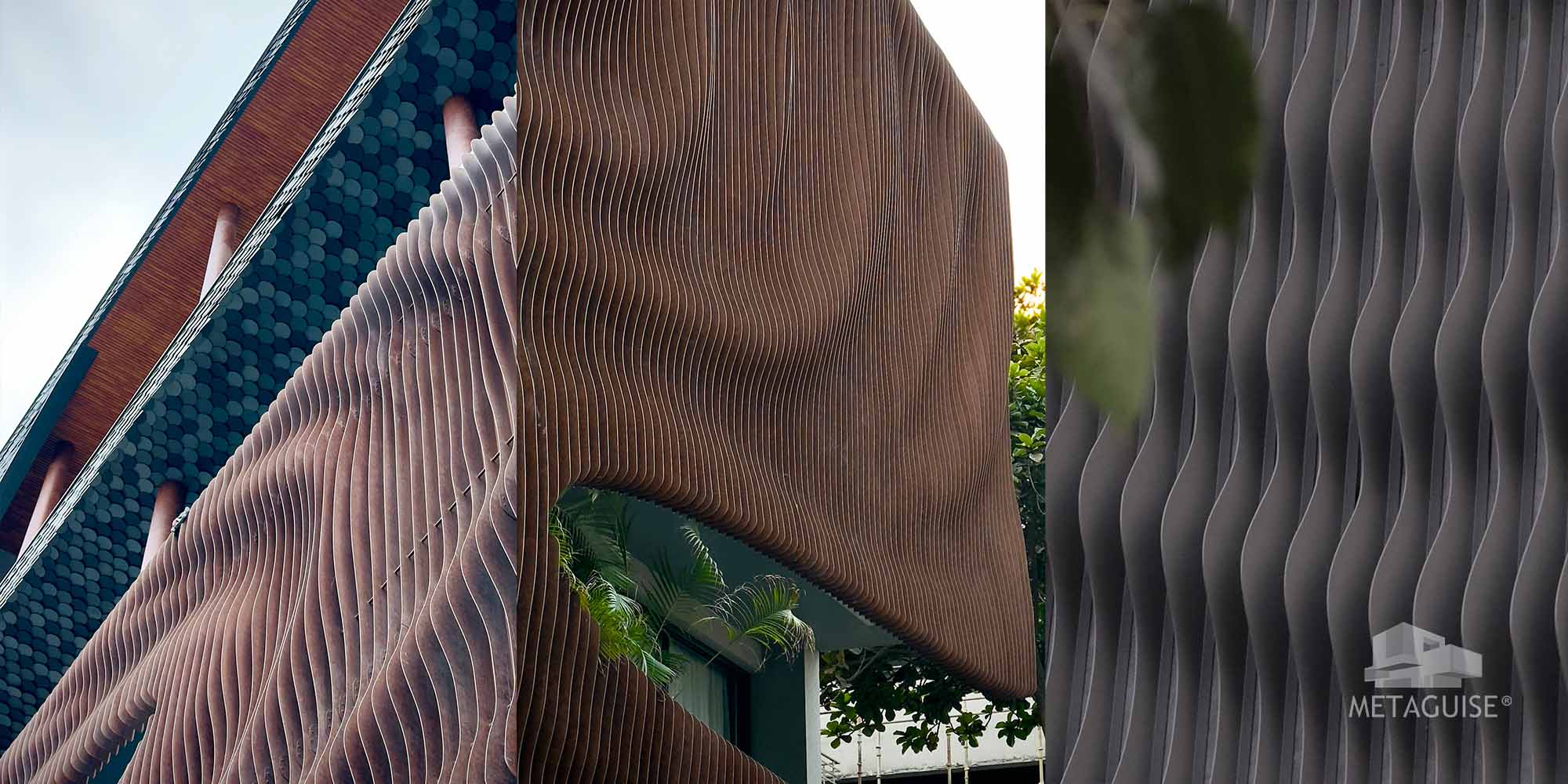
MetaFin's design variables — fin projection, spacing, angle, cross-section, finish, and colour — are all simultaneously engineering parameters and design decisions. The following covers the customisation options available within each variable. Projection Depth Options • Short-projection fins: Suited for moderate-climate applications, interior decorative installations, and east-facing facades where the low morning sun angle requires less projection to create effective shading • Medium-projection fins: The most common specification for residential west and south-facing facades in composite climate cities — Bangalore, Pune, Hyderabad; provides effective shading with a proportional visual element that suits mid-rise residential buildings • Long-projection fins: Specified for west-facing facades in India's hottest cities — Delhi, Ahmedabad, Jaipur, Jodhpur — where the intensity of afternoon solar radiation demands maximum projection for effective heat gain reduction; creates a bold, deeply shadowed facade composition • Custom projections: Available for institutional and commercial high-rise applications — Metaguise's engineering team specifies projection depth based on site solar analysis, building height, and wind load requirements Fin Spacing • Dense spacing: Continuous solar control across the full elevation; creates a screen-like visual character that reads from the street as a single textured surface rather than individual elements; suited for south-facing commercial facades where consistent shading coverage is the primary requirement • Standard spacing: The balanced specification for residential and mid-rise commercial — effective solar control with the individual fin readable as an architectural element; the most photographically distinctive MetaFin configuration • Open spacing: Selective shading with maximum view transparency; creates a bold, widely spaced fin rhythm suited for statement residential elevations and hospitality architecture where view and daylight quality compete with solar control Colour and Finish Options • PVDF finishes: Full MetaSurface range — matte white, warm grey, charcoal, champagne, custom RAL/NCS; matte finishes suppress specular reflection on fin surfaces, which is important when fins are at eye level in residential applications • MetaCorten finish: Warm rust-brown PVDF on fins; the most specified MetaFin special finish for residential and hospitality projects in Rajasthan, Gujarat, and Maharashtra; the weathered iron tone creates a material gravity that suits landscape-integrated architecture • MetaWood finish: Timber-grain PVDF on fins; provides the warmth and organic character of timber without timber's maintenance requirements in sun and rain; particularly suited for biophilic residential and resort architecture in Bangalore, Pune, and coastal markets • Anodised finishes: For coastal applications and projects where maximum fin surface durability is required; natural, dark, and bronze anodised available • MetaCopper / MetaPatina: Copper-look PVDF for boutique hospitality and luxury residential applications where the precious metal tone of the fin creates a specifically architectural precious material reference
How to Specify MetaFin for Your Project
MetaFin is a bespoke, project-specific system — the fin geometry, projection depth, spacing, and angle are all engineered for the specific building orientation, latitude, and brief. The following outlines the specification process. Step 1: Solar Geometry Assessment Metaguise's design team begins every MetaFin specification with a solar geometry assessment: the building's orientation (compass bearing of each facade), latitude, floor-to-floor heights, glazing proportions, and the critical hours of solar exposure that the brief requires the fin system to address. The assessment outputs a recommended fin specification — projection depth, spacing, and angle — that is then presented alongside 3D shadow studies showing the system's performance at the critical solar angles. Step 2: Design Integration and Visualisation The solar geometry recommendation is developed into a full facade design — showing the MetaFin system in its proposed finish and configuration within the context of the building's complete elevation. For projects where MetaFin is combined with other Metaguise systems (MetaFlute cladding on opaque walls, MetaCassette on the flanking elevations), the integrated facade design shows all systems in combination. Physical fin samples in the proposed finish are provided for client approval. Step 3: Structural Engineering and Quotation The approved MetaFin design is passed to Metaguise's engineering team for wind load calculation, fixing specification, and thermal movement detailing. A project proposal is prepared covering fabrication, delivery, and installation. For commercial projects requiring ECBC or green building certification documentation, Metaguise provides shading performance calculations in the required format as part of the design package. Step 4: Fabrication, Delivery, and Installation MetaFin fins are CNC-cut and formed from solid aluminium, finished with the specified MetaSurface coating, and delivered to site with all fixing components. Metaguise's installation team installs the carrier rail system first, followed by individual fin fixing at the specified spacing and angle. Installation is phased to align with the construction programme — typically following completion of the structural facade or curtain wall.
Frequently Asked Questions
1.How effectively does MetaFin reduce heat in a room — is it worth specifying?
The thermal performance of MetaFin varies by fin geometry, facade orientation, and climate zone — and is calculated specifically for each project as part of Metaguise's design process. For west-facing glazed facades in NCR, Ahmedabad, and Hyderabad, well-engineered external fin shading delivers a substantial and measurable reduction in solar heat gain through the shaded glazing area during peak summer hours. In practical terms, this translates to noticeably cooler interior temperatures during peak afternoon sun, reduced air conditioning runtime, and improved occupant comfort. The energy savings over the building's life consistently justify the specification — and the architectural identity MetaFin provides is a permanent additional return that no energy calculation fully captures. Contact Metaguise for a site-specific solar performance assessment.2.Can MetaFin be added to an existing building that already has glazing?
Yes. MetaFin is one of the most straightforward retrofit installations available for existing buildings with solar gain problems. The carrier rail system is anchored to the structural slab edge or existing masonry facade — no demolition, no glazing replacement. The entire MetaFin installation is external to the existing building envelope and does not require any interior access or work. For existing buildings in NCR and Ahmedabad where west-facing rooms are uncomfortably hot in summer, a MetaFin retrofit is a targeted and effective thermal comfort upgrade — more precise and less disruptive than replacing glazing, and more effective than internal blinds.3.What is the difference between MetaFin and MetaLouvers?
MetaFin comprises solid, opaque aluminium fins whose primary function is to cast shadow on the wall or glazing behind them. MetaLouvers are a related but distinct system: horizontal or vertical slats installed across a facade opening or as a screening element, where the slat angle and spacing control the balance between view, ventilation, privacy, and solar control simultaneously. Where MetaFin is specified as an external shading element projecting from the facade plane, MetaLouvers are typically specified as a screen element — covering a glazed bay or a void in the facade — where both solar control and visual filtering are required together. Metaguise's design team specifies the appropriate system based on the specific project brief.4.How long does a MetaFin installation last in India's climate?
MetaFin fins are fabricated from solid aluminium with PVDF or anodised MetaSurface finishes — the same materials used across all Metaguise facade systems, with a design life of 30–50 years in India's climate. The PVDF finish carries a 25-year colour retention warranty. Aluminium does not rust and is dimensionally stable across India's full temperature range. Individual fins can be replaced if damaged without disturbing adjacent fins or the carrier rail. Maintenance consists of annual washing with neutral detergent — no repainting, no resealing, no structural treatment required throughout the fin system's operational life.MetaFin Facade: Architectural Fins That Control Light and Define Building Identity
03-06-26 | Facade Innovations
Key Takeaways
• MetaFin is Metaguise's precision-engineered architectural fin system — aluminium brise-soleil fins that reduce solar heat gain on west and south-facing facades by 40–60%, improving thermal comfort and reducing cooling costs across India's hottest cities. • External solar shading fins are the most cost-effective performance upgrade for west-facing glazed facades in Delhi NCR, Gurgaon, Noida, Ahmedabad, and Hyderabad — delivering measurable cooling load reduction without replacing glazing or adding mechanical systems. • MetaFin qualifies for IGBC and GRIHA green building certification credits — making it a dual-value specification for commercial developers: architectural identity plus compliance documentation in a single system. • Fin projection depth, spacing, and angle are all calculated from site solar geometry — not estimated. Every MetaFin installation is engineered for the specific building orientation, latitude, and climate zone.
What Are Architectural Facade Fins? Understanding the Brise-Soleil Principle
An architectural fin — also called a brise-soleil, sun fin, or external solar louver — is a blade of material that projects from a building's facade to cast shadow over the glazing or wall surface behind it during peak solar hours. The principle is straightforward: shade the surface before the sun reaches it, and the building stays cooler, the cooling system runs less, and the occupants are more comfortable. In India's climate, where west-facing facades in Delhi NCR, Gurgaon, Noida, Ahmedabad, and Hyderabad absorb direct afternoon solar radiation at temperatures above 45°C from April through October, external fin shading is not an optional upgrade — it is the correct engineering response to the site's solar geometry. MetaFin is Metaguise's precision-fabricated aluminium realisation of this principle: a fully engineered architectural fin system that is simultaneously a high-performance solar control tool and a primary facade design element, available in the complete MetaSurface PVDF finish range and specified for buildings across India's residential, commercial, institutional, and hospitality sectors.
MetaFin: Design and Engineering of the System
MetaFin: Design and Engineering of the System MetaFin is a fully engineered solar shading fin system — not a decorative element that happens to cast shadow. Every MetaFin installation across India begins with a site-specific solar geometry calculation that determines the optimal fin projection depth, fin spacing, and fin angle for that building's orientation, latitude, and climate zone. A MetaFin fin system on a west-facing bungalow in Gurgaon is engineered differently from one on a south-facing office tower in Hyderabad — because the sun angle, the peak radiation hour, and the required shading coefficient are different. This is what separates a climate-resilient metal facade from a facade that merely looks like it manages solar gain. Fin Projection Depth — How Far the Fin Must Reach Fin projection depth is the distance the fin blade extends outward from the facade plane. It is the single most performance-critical variable in any brise-soleil or architectural fin specification — because projection depth determines the size of the shadow zone cast on the wall or glazing behind the fin at the critical solar hour. Projection depth is calculated from four inputs: the building's latitude, the facade compass orientation (south, west, east, or intermediate), the floor-to-floor height, and the solar altitude angle at the peak radiation hour for that facade. For west-facing facades in Delhi NCR, Gurgaon, Noida, and Ahmedabad — where peak solar gain occurs between 2pm and 5pm when the sun is at a low western angle — longer projection depths are required to cast a shadow that covers the full glazing height during those hours. For south-facing facades in Bangalore and Pune — where the summer sun is near-vertical at midday — shorter projections are often sufficient because the high sun angle means even a modestly projecting fin casts a wide shadow on the surface below. Metaguise's design team calculates optimal projection depth for every MetaFin commission using site-specific solar path data — not generic tables. The output is a fin specification that delivers the required shading at the critical hour without over-engineering the fin beyond what the site demands. Fin Spacing — Engineering the Shadow Density Fin spacing — the centre-to-centre distance between adjacent fins — governs both the coverage of the shading system and its visual character from the street. It is simultaneously a thermal performance decision and an architectural design decision, and the two cannot be separated. Closely spaced fins — 300mm to 500mm centre-to-centre — create a near-continuous shadow band across the elevation. From a solar performance standpoint, this delivers maximum shading coefficient and the most consistent reduction in solar heat gain across the glazed surface. From a design standpoint, the closely spaced fin array reads from the street as a dense, screen-like texture — a surface with depth and shadow rather than individual readable elements. This configuration is most often specified on commercial office facades in Hyderabad's HITEC City, Bangalore's Outer Ring Road, and Gurgaon's Cyber City — where consistent solar control across large glazed areas is the primary brief. Fin Cross-Section — Four Structural Profiles The cross-sectional profile of each MetaFin blade affects both its structural performance under wind load and its visual character at close range: Flat fin (rectangular cross-section) is the most widely specified form — clean, graphic, and directional. Maximum shadow area per unit of projection depth. Suits all building types and scales from residential bungalows to commercial towers. Tapered fin (wedge cross-section) is wider at the wall connection and narrows to a sharp edge at the tip — a refined, blade-like appearance that reads as precision-engineered at close range. Specified on luxury residential and premium hospitality facades where the fin detail is visible at human scale. Aerofoil fin (curved cross-section) is aerodynamically profiled to reduce wind load pressure at the fin tip — specified for high-rise buildings and exposed coastal applications in Goa, Mumbai, Chennai, and Visakhapatnam where wind pressure on long-projection fins is a structural engineering concern. Custom cross-sections — including I-section fins for very long spans and hollow box sections for maximum structural efficiency at minimum weight — are available for monumental institutional facades, stadium applications, and large-scale civic buildings where standard sections do not meet the span or load requirements.
Solar Control Benefits of MetaFin in India's Climate
India's climate does not forgive an unshaded facade. A metal cladding system that ignores solar orientation is an incomplete specification — and for west and south-facing glazed elevations across NCR, Ahmedabad, Hyderabad, and Bangalore, MetaFin is the engineering answer that no glazing specification alone can replace. West-Facing Facades — The Highest Priority in NCR and Ahmedabad West-facing glass in Delhi, Gurgaon, Noida, and Ahmedabad is the single most thermally stressed surface in Indian residential and commercial architecture. From April through October, direct afternoon sun hits these surfaces at increasingly low angles — generating heat gain that makes adjacent rooms uncomfortable and forces air conditioning to compensate for hours every day. A properly engineered MetaFin system on a west-facing luxury home facade creates a calculated shadow zone over the glazing precisely during peak radiation hours — reducing solar heat gain measurably and sustaining that reduction every summer for the building's operational life. No blind, no film, and no tinted glass delivers the same performance at the same lifecycle cost. South-Facing Facades — Seasonal Intelligence Built In South-facing facades in India receive near-vertical solar radiation during summer (April–September) and lower-angle radiation in winter (November–February). MetaFin horizontal fins on south-facing elevations are calculated to block the high summer sun while allowing the lower winter sun to pass beneath the fins — warming the interior naturally when heating is welcome and blocking it when it is not. This differential seasonal performance is the reason architectural fins appeared on Le Corbusier's Chandigarh Secretariat and continue to appear on India's most climatically intelligent buildings today. One fixed element. Two seasonal outcomes. Zero operational maintenance. East-Facing Facades — Morning Glare Control in Bangalore and Pune East-facing glazing receives low-angle morning sun — the source of glare that makes east-facing living rooms and offices uncomfortable between 7am and 10am in Bangalore, Pune, Hyderabad, and Chennai. Vertical MetaFin fins spaced horizontally across east-facing elevations intercept this low-angle radiation from the side — blocking direct morning glare while preserving sky views and diffuse daylight from above. For premium residential projects in Bangalore's Sarjapur Road, Pune's Koregaon Park, and Hyderabad's Jubilee Hills, vertical MetaFin on east-facing living room glazing is an increasingly standard specification — one that pays back in daily comfort from the first morning of occupation.
MetaFin Customisation Options: Every Variable Is a Design Decision
MetaFin's design variables — fin projection, spacing, angle, cross-section, finish, and colour — are all simultaneously engineering parameters and design decisions. The following covers the customisation options available within each variable. Projection Depth Options • Short-projection fins: Suited for moderate-climate applications, interior decorative installations, and east-facing facades where the low morning sun angle requires less projection to create effective shading • Medium-projection fins: The most common specification for residential west and south-facing facades in composite climate cities — Bangalore, Pune, Hyderabad; provides effective shading with a proportional visual element that suits mid-rise residential buildings • Long-projection fins: Specified for west-facing facades in India's hottest cities — Delhi, Ahmedabad, Jaipur, Jodhpur — where the intensity of afternoon solar radiation demands maximum projection for effective heat gain reduction; creates a bold, deeply shadowed facade composition • Custom projections: Available for institutional and commercial high-rise applications — Metaguise's engineering team specifies projection depth based on site solar analysis, building height, and wind load requirements Fin Spacing • Dense spacing: Continuous solar control across the full elevation; creates a screen-like visual character that reads from the street as a single textured surface rather than individual elements; suited for south-facing commercial facades where consistent shading coverage is the primary requirement • Standard spacing: The balanced specification for residential and mid-rise commercial — effective solar control with the individual fin readable as an architectural element; the most photographically distinctive MetaFin configuration • Open spacing: Selective shading with maximum view transparency; creates a bold, widely spaced fin rhythm suited for statement residential elevations and hospitality architecture where view and daylight quality compete with solar control Colour and Finish Options • PVDF finishes: Full MetaSurface range — matte white, warm grey, charcoal, champagne, custom RAL/NCS; matte finishes suppress specular reflection on fin surfaces, which is important when fins are at eye level in residential applications • MetaCorten finish: Warm rust-brown PVDF on fins; the most specified MetaFin special finish for residential and hospitality projects in Rajasthan, Gujarat, and Maharashtra; the weathered iron tone creates a material gravity that suits landscape-integrated architecture • MetaWood finish: Timber-grain PVDF on fins; provides the warmth and organic character of timber without timber's maintenance requirements in sun and rain; particularly suited for biophilic residential and resort architecture in Bangalore, Pune, and coastal markets • Anodised finishes: For coastal applications and projects where maximum fin surface durability is required; natural, dark, and bronze anodised available • MetaCopper / MetaPatina: Copper-look PVDF for boutique hospitality and luxury residential applications where the precious metal tone of the fin creates a specifically architectural precious material reference
How to Specify MetaFin for Your Project
MetaFin is a bespoke, project-specific system — the fin geometry, projection depth, spacing, and angle are all engineered for the specific building orientation, latitude, and brief. The following outlines the specification process. Step 1: Solar Geometry Assessment Metaguise's design team begins every MetaFin specification with a solar geometry assessment: the building's orientation (compass bearing of each facade), latitude, floor-to-floor heights, glazing proportions, and the critical hours of solar exposure that the brief requires the fin system to address. The assessment outputs a recommended fin specification — projection depth, spacing, and angle — that is then presented alongside 3D shadow studies showing the system's performance at the critical solar angles. Step 2: Design Integration and Visualisation The solar geometry recommendation is developed into a full facade design — showing the MetaFin system in its proposed finish and configuration within the context of the building's complete elevation. For projects where MetaFin is combined with other Metaguise systems (MetaFlute cladding on opaque walls, MetaCassette on the flanking elevations), the integrated facade design shows all systems in combination. Physical fin samples in the proposed finish are provided for client approval. Step 3: Structural Engineering and Quotation The approved MetaFin design is passed to Metaguise's engineering team for wind load calculation, fixing specification, and thermal movement detailing. A project proposal is prepared covering fabrication, delivery, and installation. For commercial projects requiring ECBC or green building certification documentation, Metaguise provides shading performance calculations in the required format as part of the design package. Step 4: Fabrication, Delivery, and Installation MetaFin fins are CNC-cut and formed from solid aluminium, finished with the specified MetaSurface coating, and delivered to site with all fixing components. Metaguise's installation team installs the carrier rail system first, followed by individual fin fixing at the specified spacing and angle. Installation is phased to align with the construction programme — typically following completion of the structural facade or curtain wall.
Frequently Asked Questions
1.How effectively does MetaFin reduce heat in a room — is it worth specifying?
The thermal performance of MetaFin varies by fin geometry, facade orientation, and climate zone — and is calculated specifically for each project as part of Metaguise's design process. For west-facing glazed facades in NCR, Ahmedabad, and Hyderabad, well-engineered external fin shading delivers a substantial and measurable reduction in solar heat gain through the shaded glazing area during peak summer hours. In practical terms, this translates to noticeably cooler interior temperatures during peak afternoon sun, reduced air conditioning runtime, and improved occupant comfort. The energy savings over the building's life consistently justify the specification — and the architectural identity MetaFin provides is a permanent additional return that no energy calculation fully captures. Contact Metaguise for a site-specific solar performance assessment.2.Can MetaFin be added to an existing building that already has glazing?
Yes. MetaFin is one of the most straightforward retrofit installations available for existing buildings with solar gain problems. The carrier rail system is anchored to the structural slab edge or existing masonry facade — no demolition, no glazing replacement. The entire MetaFin installation is external to the existing building envelope and does not require any interior access or work. For existing buildings in NCR and Ahmedabad where west-facing rooms are uncomfortably hot in summer, a MetaFin retrofit is a targeted and effective thermal comfort upgrade — more precise and less disruptive than replacing glazing, and more effective than internal blinds.3.What is the difference between MetaFin and MetaLouvers?
MetaFin comprises solid, opaque aluminium fins whose primary function is to cast shadow on the wall or glazing behind them. MetaLouvers are a related but distinct system: horizontal or vertical slats installed across a facade opening or as a screening element, where the slat angle and spacing control the balance between view, ventilation, privacy, and solar control simultaneously. Where MetaFin is specified as an external shading element projecting from the facade plane, MetaLouvers are typically specified as a screen element — covering a glazed bay or a void in the facade — where both solar control and visual filtering are required together. Metaguise's design team specifies the appropriate system based on the specific project brief.4.How long does a MetaFin installation last in India's climate?
MetaFin fins are fabricated from solid aluminium with PVDF or anodised MetaSurface finishes — the same materials used across all Metaguise facade systems, with a design life of 30–50 years in India's climate. The PVDF finish carries a 25-year colour retention warranty. Aluminium does not rust and is dimensionally stable across India's full temperature range. Individual fins can be replaced if damaged without disturbing adjacent fins or the carrier rail. Maintenance consists of annual washing with neutral detergent — no repainting, no resealing, no structural treatment required throughout the fin system's operational life.Related Articles
Related Articles
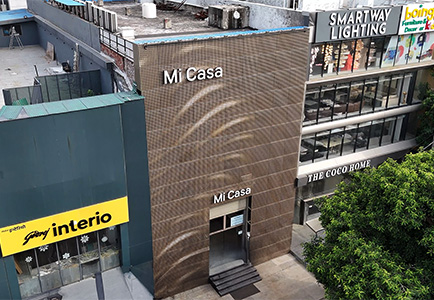
The Rise of Parametric facades: Designing with Algorithmic Elegance
A revolutionary parametric facade system designed to elevate architectural aesthetics. Crafted with premium metals and enhanced with MetaSurface finishes, MetaCoin offers unparalleled customizability, from the shape and size of each element to its color and arrangement. Its dynamic design reacts to light and perspective, creating ever-changing visual effects. Ideal for contemporary and iconic structures, MetaCoin transforms facades into captivating works of art that are sustainable, durable, and visually stunning.
01-04-25 | Facade Innovations
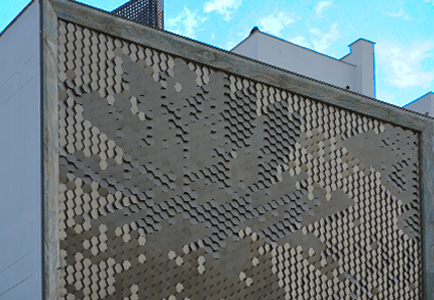
METABLOX™ by Metaguise: A Breakthrough in Parametric Facade Design
At the intersection of culture, craftsmanship, and cutting-edge geometry, METABLOX™ emerges as a bold new direction in architectural innovation. Introduced by Metaguise, this first-of-its-kind parametric facade technology makes its striking debut at the RJ Jewellers flagship store in Jaipur - setting a new benchmark in the world of metal design and modern Indian architecture.
09-04-25 | Facade Innovations
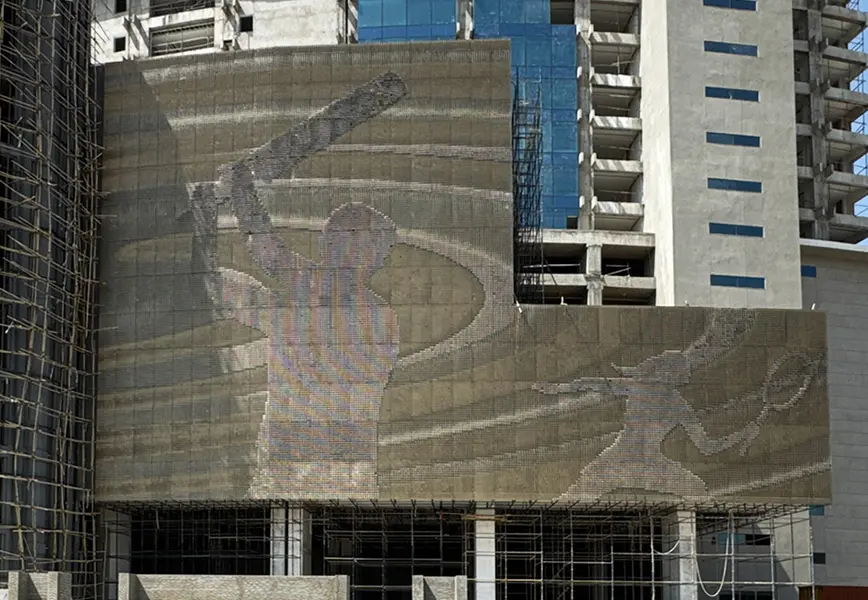
5 Landmark Projects That Used MetaCoin to Transform Facades
When it comes to parametric architecture, MetaCoin stands out as a revolutionary metal coin facade system. Crafted with precision, it offers dynamic aesthetics, adaptability, and a unique identity to structures. Let's delve into five notable projects where MetaCoin has redefined architectural facades.
13-05-25 | Facade Innovations
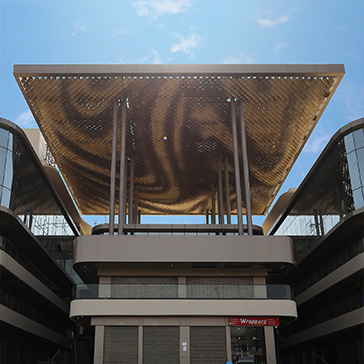
From Code to Construction: How Parametric Facades Are Built
Some buildings just make you look twice. Maybe it’s the way the facade curves. Or how the surface catches the light at different times of day. Often, what you’re seeing is more than just a design, it’s a parametric facade.
10-06-25 | Facade Innovations
Social
Legal
Privacy Policy|Terms & Conditions