





Kinetic Facade Price in India (2026): What Actually Drives the Cost
04-08-26 | Industry Trends
Key Takeaways
Ask five facade companies for a kinetic facade quote and you’ll get five very different numbers, and it’s rarely because someone is overcharging. Kinetic facades are engineered systems, not a fixed product you order off a catalogue, so the price genuinely does move based on decisions made during design. This piece breaks down what those decisions are, so you can read a quote and actually understand what’s driving it.
The four things that move the price the most
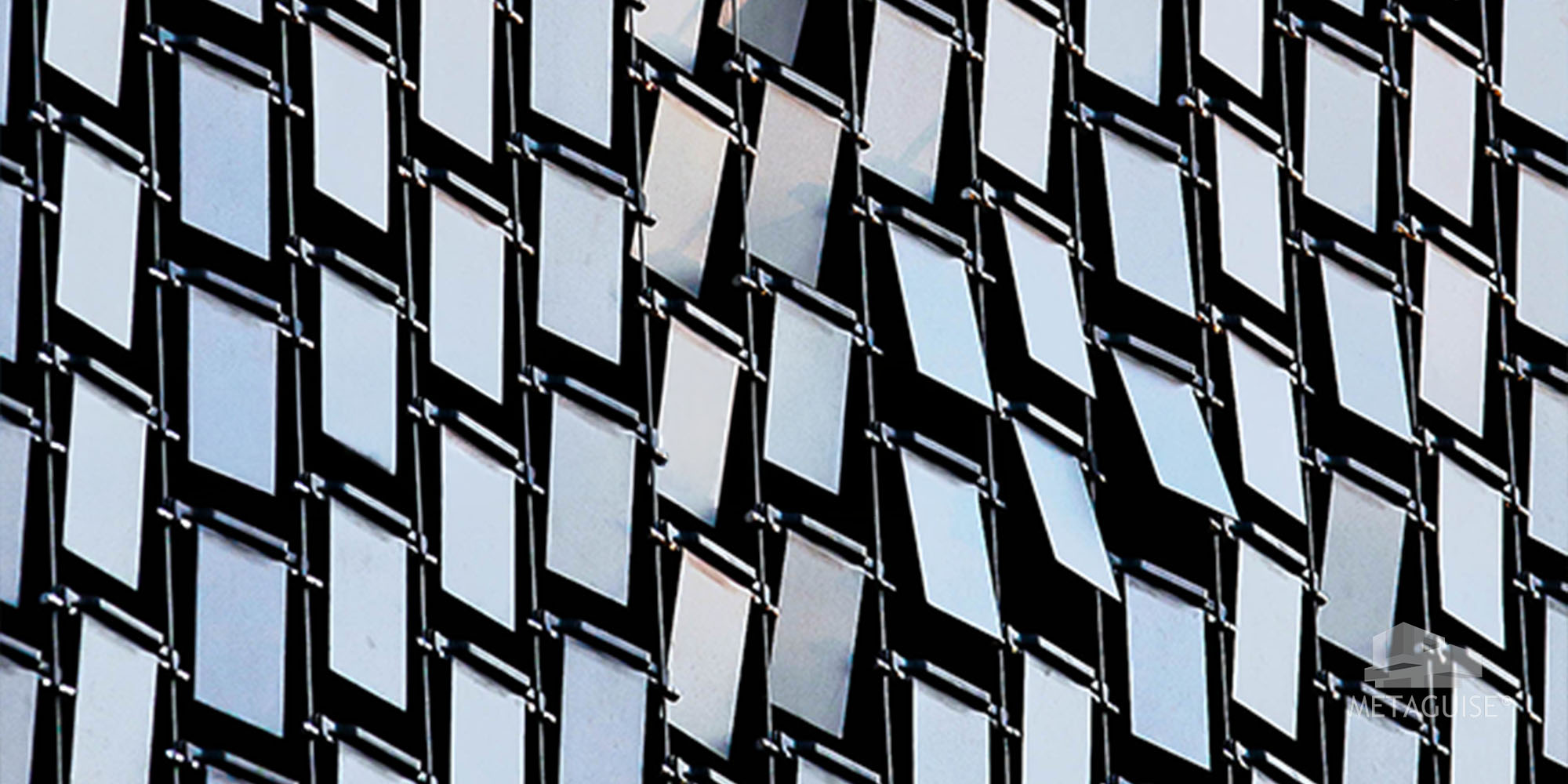
1. Whether the system moves on its own, or moves with a motor A manually adjusted kinetic system, where panels are repositioned a handful of times a season, costs a fraction of a fully motorised installation. The moment you add actuators, wiring, a control panel and sensors, you’re paying for a mechanical and electrical system on top of the metalwork itself. This single decision usually has the biggest impact on the final number. 2. Panel material and finish Aluminium is the standard material for kinetic panels because it balances strength and weight well, and weight matters enormously in a moving system, since every extra kilogram on a panel means a stronger, costlier actuator to move it. Within aluminium, the finish changes cost too. A standard powder coat is the most economical option. Anodised and PVDF finishes cost more but hold their colour and resist weathering for much longer, which matters on a facade that’s expected to look sharp for fifteen to twenty years. 3. Panel count and geometry complexity A facade made from 500 identical rectangular panels is cheaper to engineer and fabricate than one made from 500 uniquely shaped panels, even if the total covered area is the same. Parametric designs that vary each panel’s size or angle look extraordinary, but every unique panel adds design, tooling and quality-control time. If budget is a genuine constraint, ask your designer how many panel variations the geometry actually needs. Often a pattern can be simplified to a handful of repeating module types without losing the visual effect. 4. Control system sophistication A basic timer-driven system that opens and closes on a schedule is the least expensive control option. A solar-tracking system that reads sun position in real time costs more. A fully integrated system tied into the building management system, with wind sensors, rain sensors and manual override, costs the most, but it’s also the version that delivers the biggest energy performance gain, because it’s actually responding to real conditions rather than an assumed schedule.
Roughly what to expect, and why we’re not giving you one number
Any facade company that quotes you a flat per-square-foot number for a kinetic facade without seeing your drawings is guessing. A realistic range for fully motorised kinetic aluminium systems in India typically spans several multiples between the simplest timer-driven design and a fully sensor-integrated, complex-geometry installation. Static parametric metal facades (no moving parts, like our MetaCorten or MetaFin ranges) sit well below kinetic pricing, since you’re paying for the metalwork and design alone, without motors or sensors. The honest way to get a real number is a site-specific feasibility study, where your facade partner reviews the elevation, the client’s performance goals and the available structural support, and comes back with a costed proposal against a defined panel count and mechanism type.
Where the budget for a kinetic facade actually goes
It helps to know what you’re paying for beyond “the facade.” • Design and engineering. Parametric modelling, structural load calculations for wind and seismic conditions, and mechanism engineering happen before a single panel is cut. • Fabrication. Cutting, forming, finishing and quality-checking every panel to the design tolerance. • Mechanism and controls. Actuators, drive systems, wiring, sensors and the control panel, if the system is motorised. • Structural support. The substructure that holds the moving assembly to the building, engineered to handle repeated motion over years, not just a static load. • Installation and commissioning. On-site fitting, alignment, and testing the system through its full range of motion before handover. • Maintenance provisioning. A responsible quote includes a maintenance plan, since a kinetic system that isn’t serviced will eventually underperform, the same way a lift needs servicing.
A cheaper alternative worth considering: our Cascading Keys system
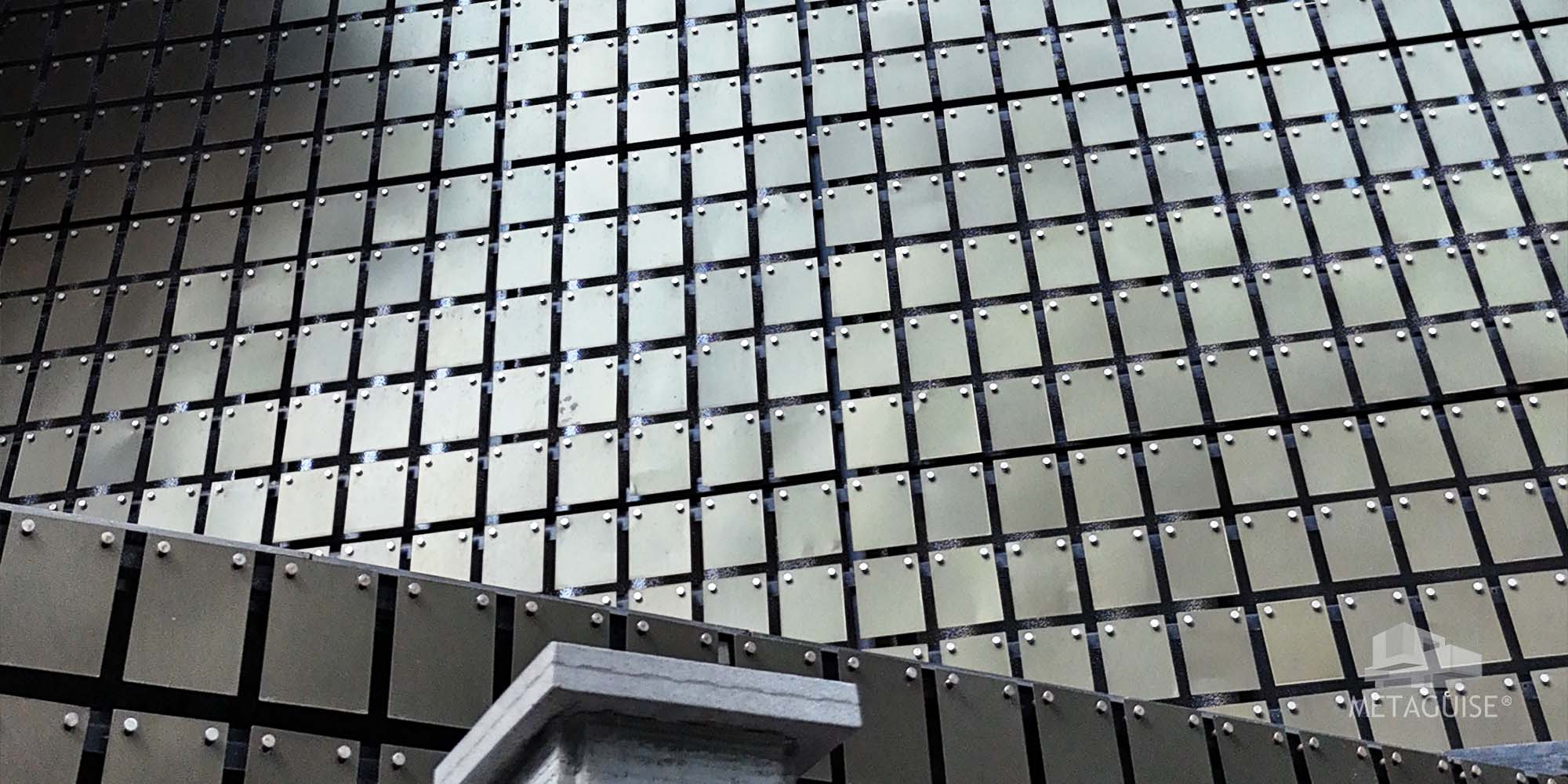
Not every project needs full motorisation to get a dynamic, light-responsive facade. Our Cascading Keys system uses a static but deeply three-dimensional module arrangement that creates a shifting visual effect purely through geometry and light, without a single motor. It’s a genuinely useful middle ground for clients who want the visual drama of a kinetic-style facade without the mechanical cost and ongoing maintenance load. It’s worth asking your facade designer whether your project’s goals can be met this way before committing to a fully motorised system.
Questions to ask before you sign off on a quote
• Does the price include structural engineering and load testing, or only the panels and mechanism. • What is the warranty on the actuators specifically, separate from the warranty on the metal panels. • How many unique panel types does the design actually require, and can that number be reduced without changing the look. • What does a maintenance visit cost, and how often is one recommended. • Has the system been engineered for this site’s specific wind loads, or is it a generic specification. A facade partner who answers these clearly, before you’ve asked twice, is generally the one worth trusting with the project.
Get a real number for your project
Every kinetic facade we’ve delivered, from stadiums to commercial towers, started with a feasibility conversation, not a price list. If you have drawings or even a rough elevation sketch, start your facade brief with our team and we’ll come back with a scoped, honest number based on your building, not a generic average.
Kinetic Facade Price in India (2026): What Actually Drives the Cost
04-08-26 | Industry Trends
Key Takeaways
Ask five facade companies for a kinetic facade quote and you’ll get five very different numbers, and it’s rarely because someone is overcharging. Kinetic facades are engineered systems, not a fixed product you order off a catalogue, so the price genuinely does move based on decisions made during design. This piece breaks down what those decisions are, so you can read a quote and actually understand what’s driving it.
The four things that move the price the most
1. Whether the system moves on its own, or moves with a motor A manually adjusted kinetic system, where panels are repositioned a handful of times a season, costs a fraction of a fully motorised installation. The moment you add actuators, wiring, a control panel and sensors, you’re paying for a mechanical and electrical system on top of the metalwork itself. This single decision usually has the biggest impact on the final number. 2. Panel material and finish Aluminium is the standard material for kinetic panels because it balances strength and weight well, and weight matters enormously in a moving system, since every extra kilogram on a panel means a stronger, costlier actuator to move it. Within aluminium, the finish changes cost too. A standard powder coat is the most economical option. Anodised and PVDF finishes cost more but hold their colour and resist weathering for much longer, which matters on a facade that’s expected to look sharp for fifteen to twenty years. 3. Panel count and geometry complexity A facade made from 500 identical rectangular panels is cheaper to engineer and fabricate than one made from 500 uniquely shaped panels, even if the total covered area is the same. Parametric designs that vary each panel’s size or angle look extraordinary, but every unique panel adds design, tooling and quality-control time. If budget is a genuine constraint, ask your designer how many panel variations the geometry actually needs. Often a pattern can be simplified to a handful of repeating module types without losing the visual effect. 4. Control system sophistication A basic timer-driven system that opens and closes on a schedule is the least expensive control option. A solar-tracking system that reads sun position in real time costs more. A fully integrated system tied into the building management system, with wind sensors, rain sensors and manual override, costs the most, but it’s also the version that delivers the biggest energy performance gain, because it’s actually responding to real conditions rather than an assumed schedule.
Roughly what to expect, and why we’re not giving you one number
Any facade company that quotes you a flat per-square-foot number for a kinetic facade without seeing your drawings is guessing. A realistic range for fully motorised kinetic aluminium systems in India typically spans several multiples between the simplest timer-driven design and a fully sensor-integrated, complex-geometry installation. Static parametric metal facades (no moving parts, like our MetaCorten or MetaFin ranges) sit well below kinetic pricing, since you’re paying for the metalwork and design alone, without motors or sensors. The honest way to get a real number is a site-specific feasibility study, where your facade partner reviews the elevation, the client’s performance goals and the available structural support, and comes back with a costed proposal against a defined panel count and mechanism type.
Where the budget for a kinetic facade actually goes
It helps to know what you’re paying for beyond “the facade.” • Design and engineering. Parametric modelling, structural load calculations for wind and seismic conditions, and mechanism engineering happen before a single panel is cut. • Fabrication. Cutting, forming, finishing and quality-checking every panel to the design tolerance. • Mechanism and controls. Actuators, drive systems, wiring, sensors and the control panel, if the system is motorised. • Structural support. The substructure that holds the moving assembly to the building, engineered to handle repeated motion over years, not just a static load. • Installation and commissioning. On-site fitting, alignment, and testing the system through its full range of motion before handover. • Maintenance provisioning. A responsible quote includes a maintenance plan, since a kinetic system that isn’t serviced will eventually underperform, the same way a lift needs servicing.
A cheaper alternative worth considering: our Cascading Keys system
Not every project needs full motorisation to get a dynamic, light-responsive facade. Our Cascading Keys system uses a static but deeply three-dimensional module arrangement that creates a shifting visual effect purely through geometry and light, without a single motor. It’s a genuinely useful middle ground for clients who want the visual drama of a kinetic-style facade without the mechanical cost and ongoing maintenance load. It’s worth asking your facade designer whether your project’s goals can be met this way before committing to a fully motorised system.
Questions to ask before you sign off on a quote
• Does the price include structural engineering and load testing, or only the panels and mechanism. • What is the warranty on the actuators specifically, separate from the warranty on the metal panels. • How many unique panel types does the design actually require, and can that number be reduced without changing the look. • What does a maintenance visit cost, and how often is one recommended. • Has the system been engineered for this site’s specific wind loads, or is it a generic specification. A facade partner who answers these clearly, before you’ve asked twice, is generally the one worth trusting with the project.
Get a real number for your project
Every kinetic facade we’ve delivered, from stadiums to commercial towers, started with a feasibility conversation, not a price list. If you have drawings or even a rough elevation sketch, start your facade brief with our team and we’ll come back with a scoped, honest number based on your building, not a generic average.
Related Articles
Related Articles
Why Aluminium Cladding Is the Future of Facade Design in Indian Architecture
India’s architecture is evolving - faster, smarter, and more performance-driven than ever before. As cities grow and climates shift, the facade is no longer just an exterior skin. It’s a functional envelope that must adapt, protect, and express.
12-09-25 | Industry Trends
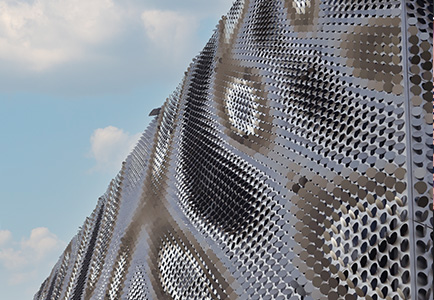
Parametric Architecture in India: Why It’s Shaping the Future of Facade Design
Architecture is evolving - and with it, the language of the façade. At the heart of this evolution lies a powerful design philosophy: parametric architecture.
03-11-25 | Industry Trends
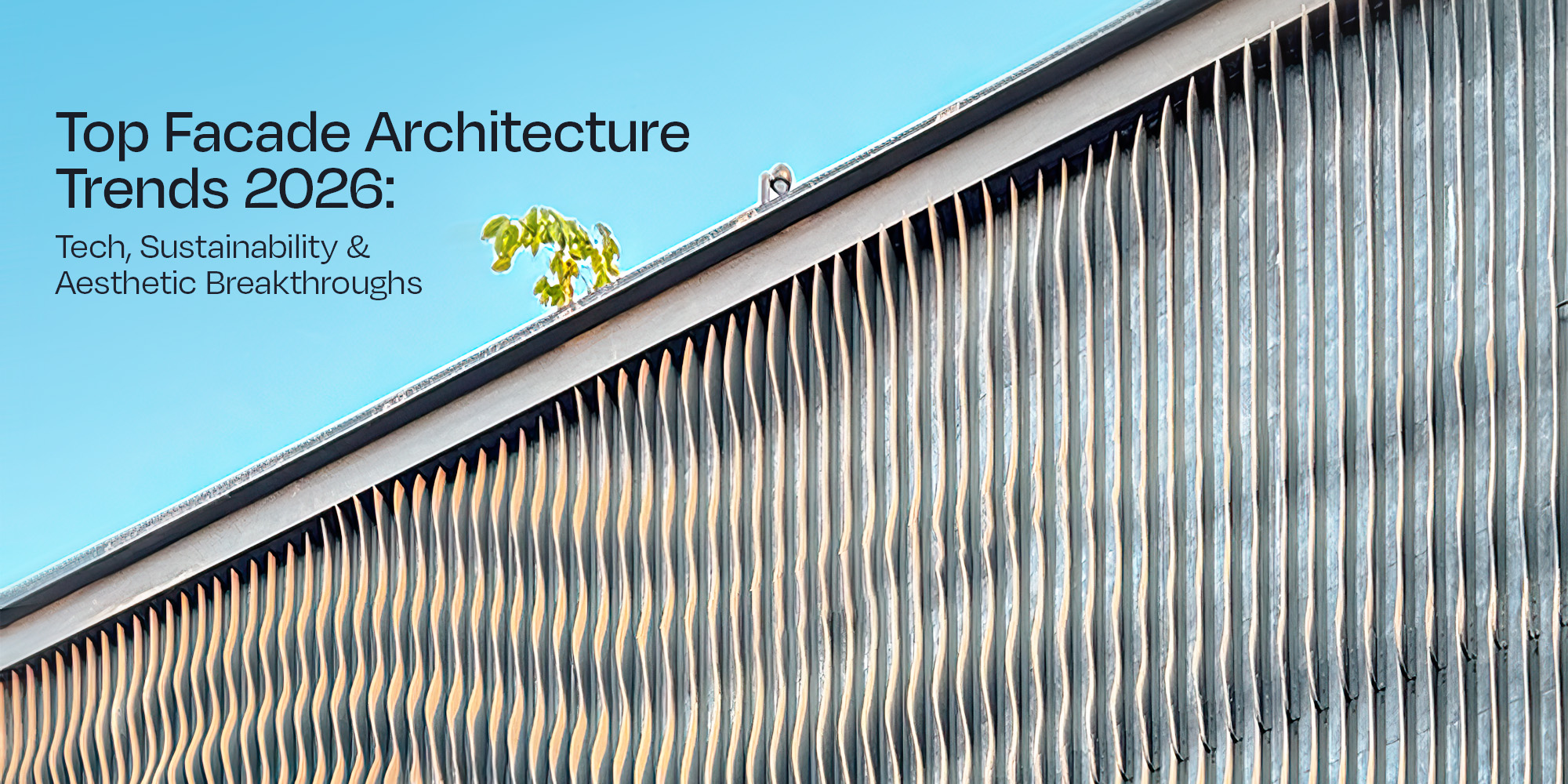
Top Facade Architecture Trends 2026 Tech Sustainability and Aesthetic Breakthroughs
The building envelope is undergoing a radical transformation. No longer just a 'skin,' it is now a performance-driven asset that breathes and adapts
12-02-26 | Industry Trends
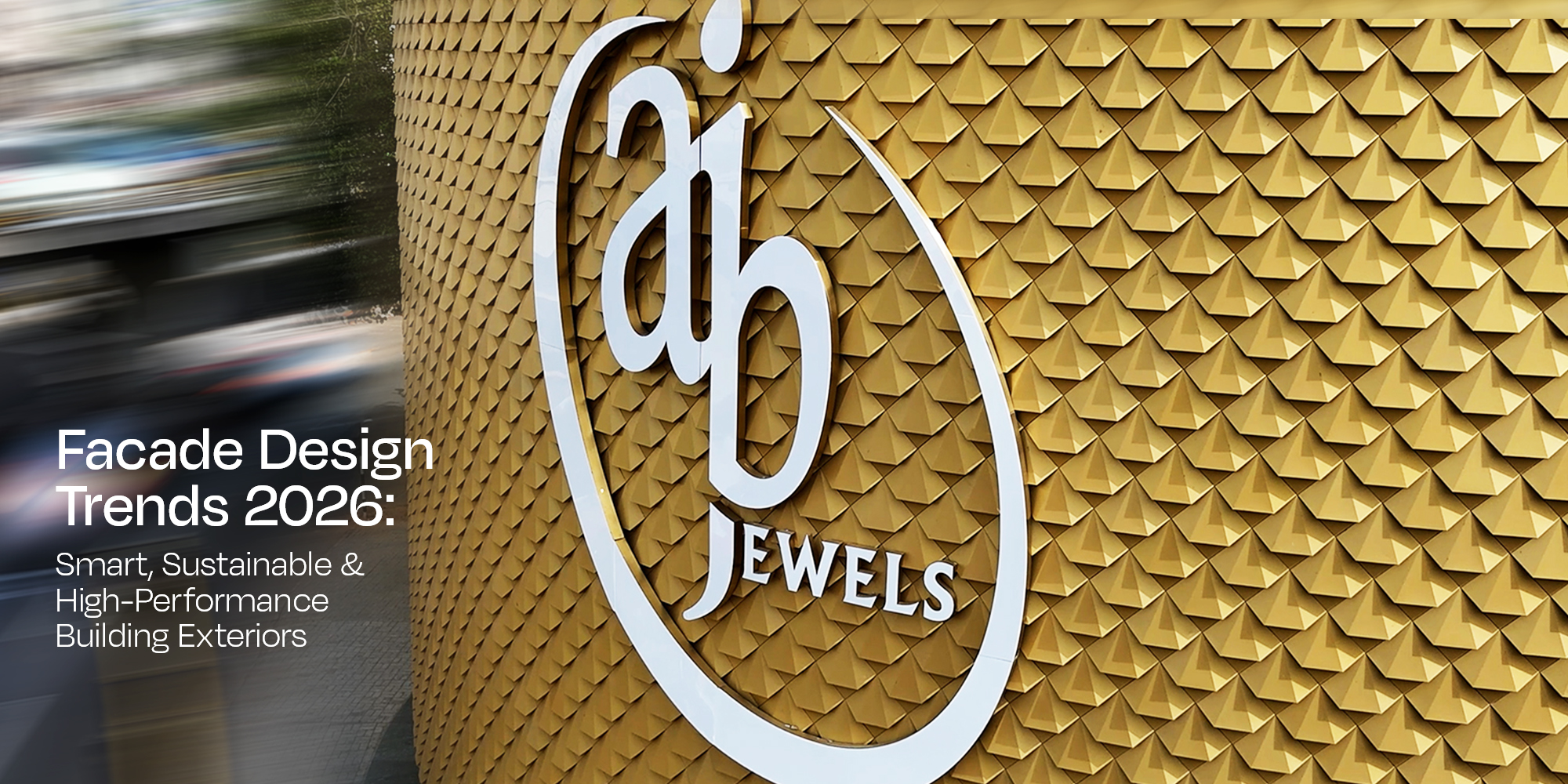
Facade Design Trends 2026 Smart Sustainable and High-Performance Building Exteriors
The building envelope is undergoing a radical transformation. No longer just a 'skin,' it is now a performance-driven asset that breathes and adapts
23-02-26 | Industry Trends
Social
Legal
Privacy Policy|Terms & Conditions