






India's Parametric Awakening: How Computational Design is Redefining Luxury Architecture in 2026
23-04-26 | Facade Innovations
When Buildings Start Speaking in Algorithms
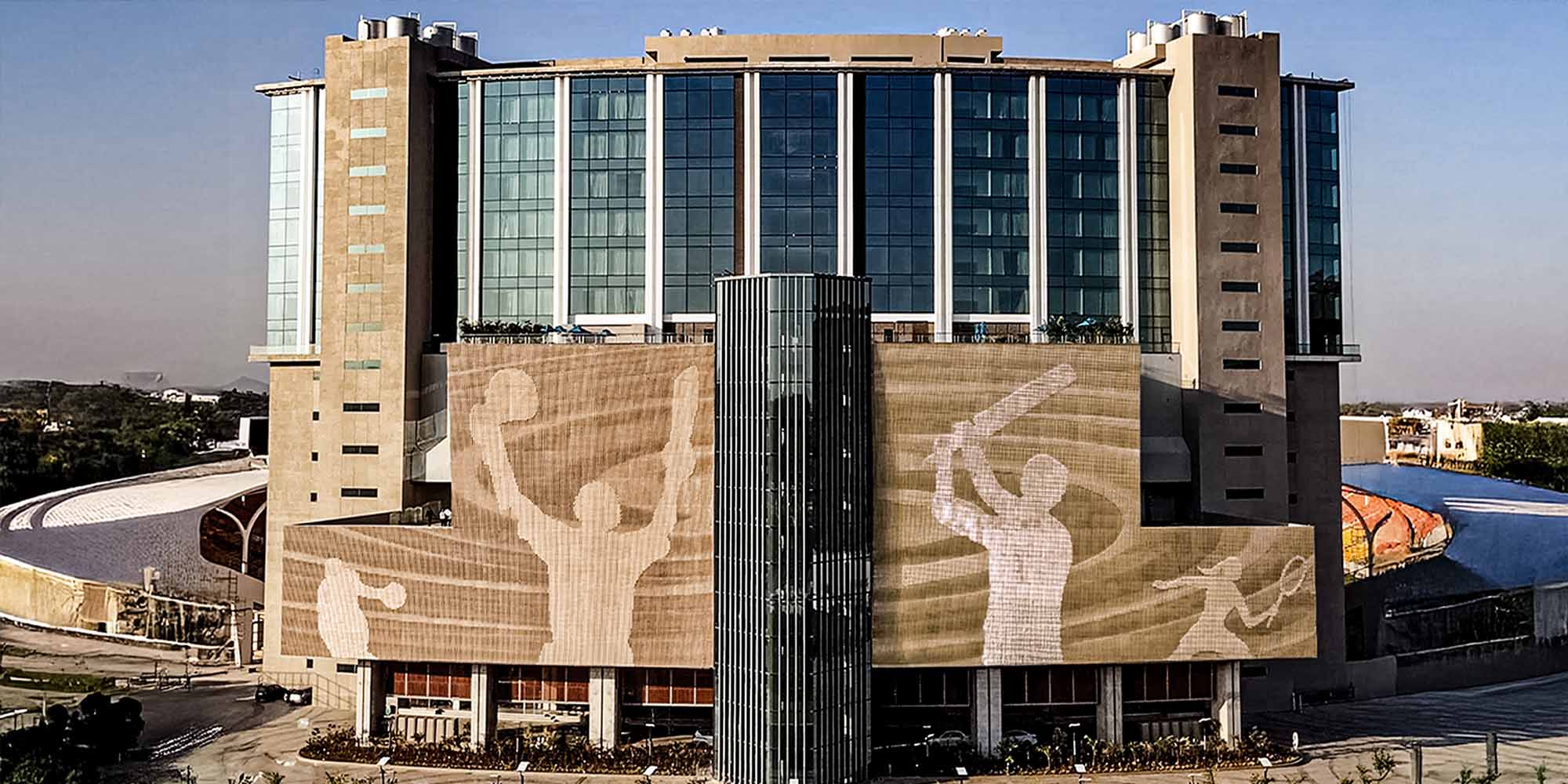
Picture this: you're walking past a cricket stadium in Rajasthan at dusk, and the entire facade appears to shimmer with golden movement. As you draw closer, the shimmer resolves into thousands of precisely choreographed metal coins, each catching light at a different angle, together depicting iconic sporting moments from India's cricketing history. This isn't decoration applied to architecture - this is architecture, born from computational logic that choreographs non-repetitive patterns across massive scales. Welcome to India's parametric awakening, where the country's luxury architecture sector is undergoing its most profound transformation since the introduction of steel and glass. We're witnessing the emergence of building facades that function as three-dimensional narratives - surfaces that breathe with light, shift with perspective, and encode cultural memory into their very geometry. For architects, developers, and discerning property owners commissioning landmark projects in 2026, understanding parametric design has shifted from optional knowledge to essential literacy. What makes this moment particularly significant is that India is no longer waiting for architectural innovation to trickle down from global markets. Instead, we're seeing the rise of indigenous parametric expertise that understands both the computational complexity demanded by contemporary design and the ground realities of Indian climate, supply chains, and execution timelines. The question facing luxury real estate developers planning a mixed-use tower in Gurgaon, architects designing a flagship retail space for premium brands, or homeowners envisioning a ₹10-crore residence in South Delhi is no longer "can we afford parametric design?" but rather "can we afford not to?"
The Architecture of Possibility: Understanding Parametric Design
At its core, parametric design represents a fundamental shift in how buildings are conceived. Traditional architecture works through repetition - standardised panels, modular units, predictable grids. Parametric architecture works through variation within logic - each element unique yet part of a mathematically choreographed whole. Think of it as the difference between a mass-produced print and an original painting where every brushstroke serves the composition. The technical reality is simultaneously simple and profound: parametric systems use algorithmic logic to generate building facades where parameters like panel size, orientation, perforation density, and three-dimensional depth are controlled by mathematical relationships rather than manual repetition. This enables gradients of expression impossible with traditional cladding - a facade that transitions from solid to transparent, from flat to deeply dimensional, from one pattern language to another, all while maintaining structural integrity and weatherproofing performance. "Advanced digital design and manufacturing techniques, including parametric modeling, are enabling construction productivity improvements of up to 60 percent while simultaneously expanding the boundaries of architectural possibility." - McKinsey & Company, The Next Normal in Construction Report What Parametric Systems Actually Deliver For the architect wrestling with how to make a building iconic without resorting to gimmickry, parametric facades offer something rare: monumentality with nuance. Consider what systems like MetaSequin enable - thousands of individual metal sequins, each rotated and positioned according to computational script, creating wave-like patterns that read as continuous shimmer from a distance while revealing intricate geometric logic up close. The implications cascade across every project stakeholder: For architects: The partner who says "yes" to previously unbuildable concepts, translating abstract curves and non-Euclidean geometries into fabrication-ready panels through parametric workflows For real estate developers: The insurance policy against mediocrity - a facade that stops traffic, anchors brand equity, and becomes the signature visual element in marketing campaigns For luxury homeowners: The visible proof that this residence exists outside catalog architecture, with a facade as unique as a bespoke suit For brand flagships: An exterior that mirrors the precision and sophistication of the products within - whether that's Tanishq jewellery or BMW automobiles
The Gap That Parametric Design Fills
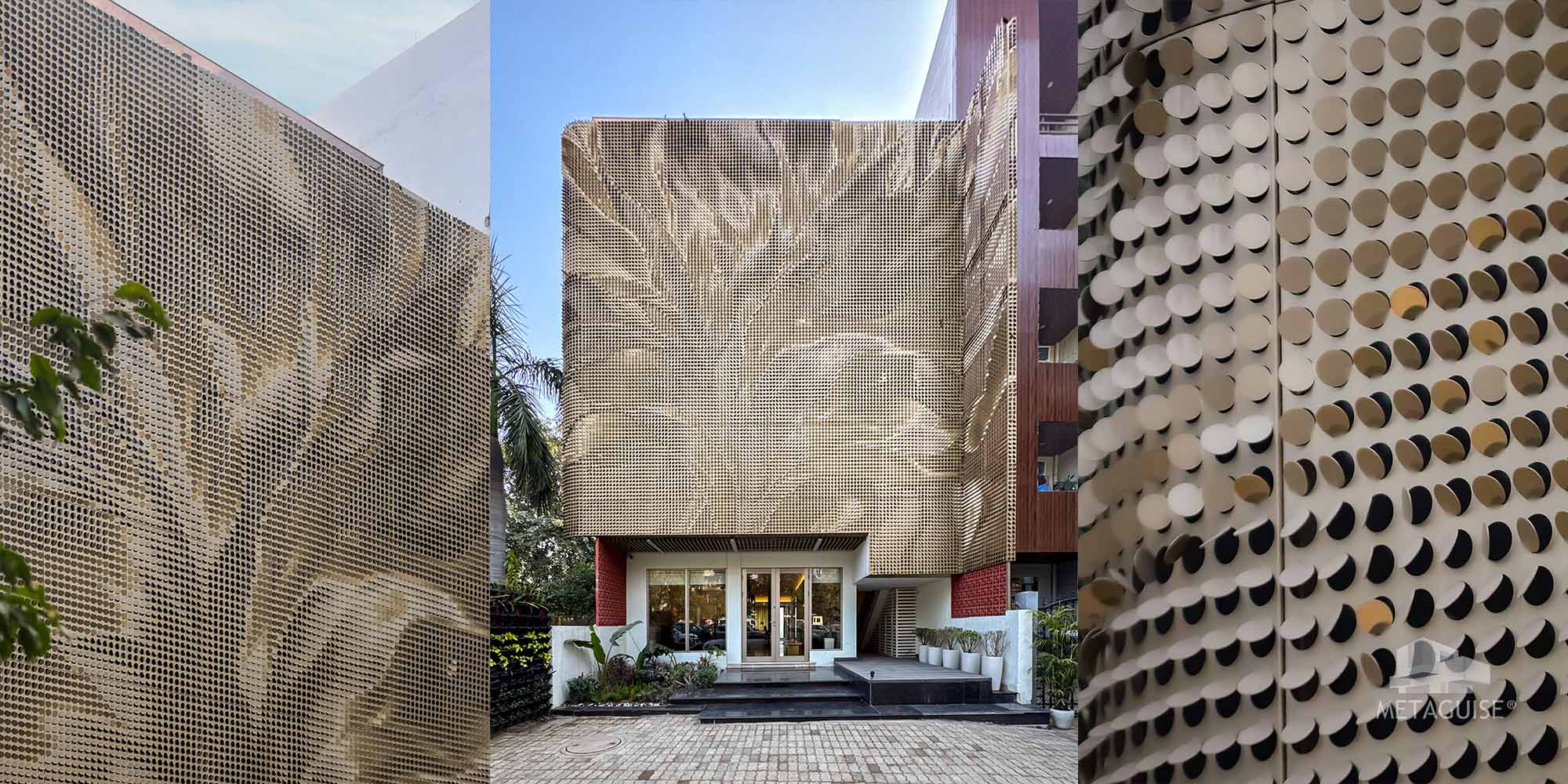
To understand why parametric facades matter in India's 2026 luxury architecture landscape, you need to understand the painful gap they address. For years, architects and developers faced an impossible choice: specify international facade systems at prohibitive costs (often 2-3x premium with import dependencies and localization headaches), or settle for local fabricators who could deliver basic metal cladding but lacked any design intelligence. The result was a skyline of missed potential. Buildings that looked imported but felt soulless - international aesthetics copy-pasted without cultural resonance or climate optimization. Or buildings that felt rooted but lacked the technical sophistication that contemporary architecture demands - well-intentioned but visually underwhelming, unable to compete on the global stage where Indian real estate increasingly operates. What Changed in India's Parametric Landscape The parametric awakening India is experiencing isn't about technology alone - it's about the convergence of computational capability with deep material craft and execution expertise. What distinguishes genuinely capable parametric facade providers from those who simply use the terminology is end-to-end integration: the ability to move seamlessly from early design sketches and mathematical scripting through engineering and fabrication to on-site installation, all in-house. This integration ensures something precious: design fidelity. When the architect who conceptualized the facade's algorithmic logic also controls its fabrication and installation, the built reality matches design intent. No translation loss across fragmented vendors. No value engineering that quietly murders the concept. No installation team improvising because they don't understand the geometric relationships. Systems like MetaFin, MetaCoin, MetaBlox, MetaSequin and MetaHydra represent different aesthetic languages within the parametric vocabulary - vertical fins that create rhythm and depth, circular elements that generate organic patterns, geometric blocks that build three-dimensional reliefs, and interlocking modules that suggest biological growth patterns. Each system supports extensive customization: curves, perforations, layering, dimensional variation, all choreographed through computational design.
Choosing Parametric Systems: What to Actually Look For
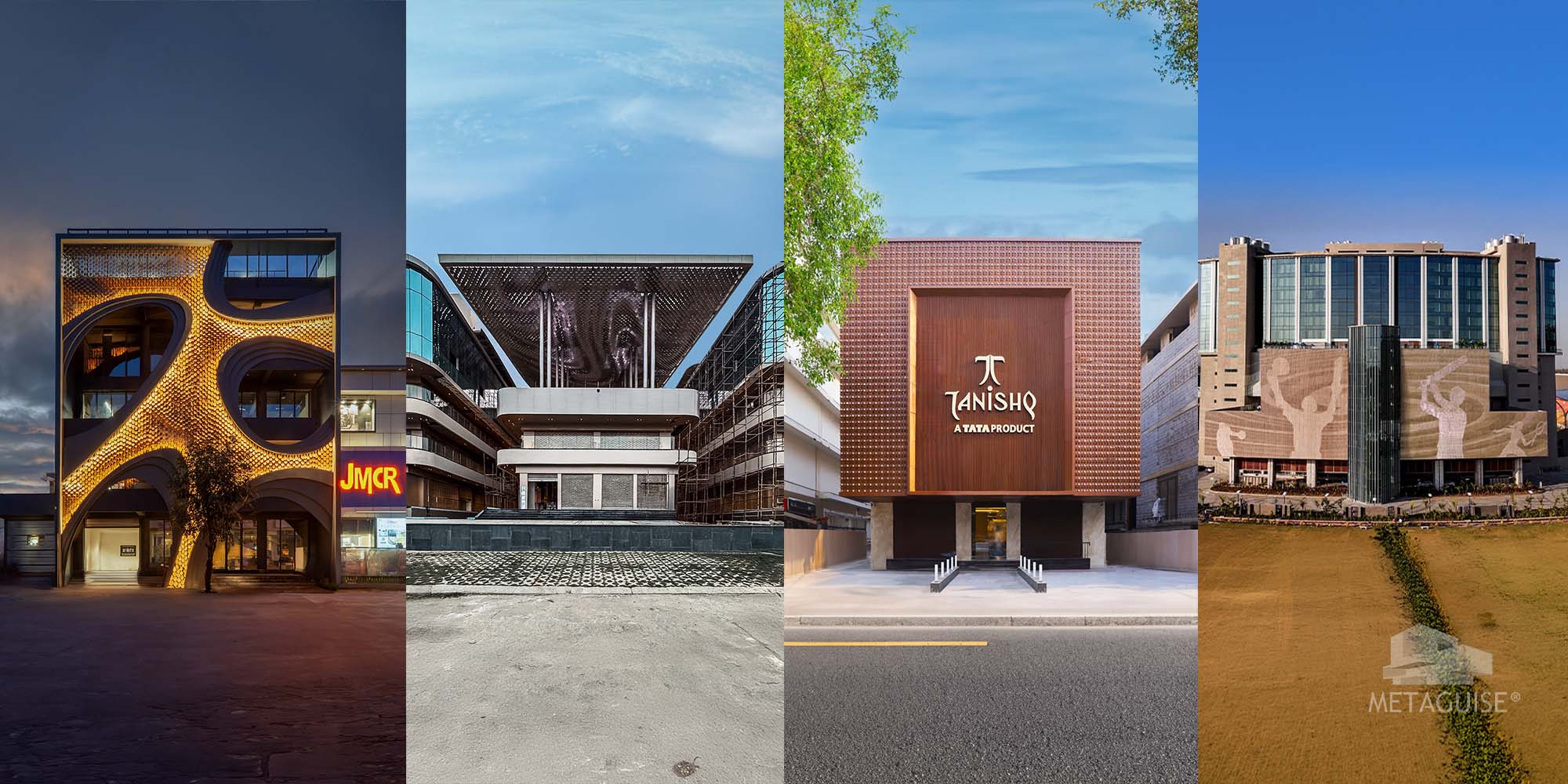
If you're an architect presenting facade options to a developer client, or a homeowner working with your design team on a landmark residence, here's what separates genuine parametric capability from sophisticated-looking marketing: Design-Stage Partnership Red flag: A facade contractor who wants to enter the conversation only after design is frozen, treating the project as pure execution. Green flag: A parametric partner who engages at concept stage with "what if" conversations - what if the building could change expression as you walk past it? What if the facade could tell a story through pattern rather than signage? This early involvement allows computational design to inform architectural concept rather than merely execute someone else's frozen vision. Portfolio Depth Across Typologies Parametric expertise isn't generic - it's built through project diversity. Look for demonstrated experience across: Monumental civic architecture: Stadiums, convention centers, cultural institutions where the facade must perform at urban scale Luxury retail flagships: Brand spaces where the exterior must embody product-level precision and sophistication High-end residential: Bungalows and apartments where the facade becomes personal signature, not developer template Institutional and campus buildings: Universities and corporate headquarters requiring both gravitas and contemporary expression A provider with 1800+ projects across these typologies has encountered and solved the full range of parametric design challenges - structural integration, weatherproofing complexity, installation logistics, client expectation management - that only come with extensive building. Material Innovation for Indian Conditions International parametric systems weren't engineered for Indian climate realities. Subcontinental weather patterns - extreme heat in Rajasthan, coastal salt exposure in Mumbai, monsoon intensity in Bangalore - demand material treatments that maintain aesthetic sophistication while delivering genuine durability. Look for proprietary finish systems specifically developed for these conditions, not simply imported specifications applied without localization. Premium metals enhanced with climate-engineered finishes deliver both the visual refinement luxury architecture demands and the performance longevity that protects long-term investment. The facade that looks stunning at ribbon-cutting but weathers poorly within three years represents failed value, no matter how sophisticated the initial design. Computational Design Capability True parametric design requires in-house computational expertise - teams who work in Grasshopper, Rhino, and custom scripting environments to translate architectural intent into algorithmic logic. This isn't about applying preset patterns from a catalog. It's about generating unique facade solutions where panel variations, pattern gradients, and three-dimensional choreography are mathematically derived from project-specific parameters. Ask potential partners to walk you through their computational workflow. How do they translate a conceptual sketch into parametric script? How do they optimize panel uniqueness against fabrication efficiency? How do they handle the transition from digital model to physical prototype? Providers who can articulate this process in detail possess genuine capability; those who speak only in finished-project imagery may be resellers rather than originators.
The Cultural Dimension: Facades That Tell Indian Stories
What makes India's parametric awakening particularly compelling is how computational design is being deployed to encode cultural narrative - not through applied decoration but through the facade's fundamental geometry. The Miraj Stadium example illustrates this perfectly: thousands of gold-toned metal coins algorithmically choreographed to depict sporting moments, turning the building envelope into a luminous tribute to India's cricketing heritage. This represents parametric design at its most sophisticated - where the system serves storytelling, where mathematics enables meaning. The facade doesn't represent sporting excellence through signage or murals; it embodies sporting excellence through the precision and coordination of its computational choreography. Visitors experience the narrative before consciously understanding it, responding first to the visual impact and only later recognizing the encoded content. For architects working on projects with strong cultural or brand identity requirements, this capability transforms the facade from building envelope to primary communication medium. A jewellery flagship can express the geometric complexity and precious material refinement that defines the products within. A university building can encode the institution's academic philosophy through pattern logic. A luxury residence can manifest the owner's personal aesthetic sensibility through bespoke computational design. Systems as Aesthetic Languages Understanding the different parametric systems available helps match facade expression to project intent: MetaSequin: Ideal for facades requiring shimmer and movement - luxury retail, hospitality, residences seeking drama without ostentation MetaFin: Vertical rhythm and depth - perfect for tall buildings where the facade needs to manage scale, create shadow play, and maintain visual interest across dozens of floors MetaCoin: Organic, cellular patterns - suited for projects requiring biomorphic expression or cultural storytelling through assembled elements MetaHive: Honeycomb and tessellated geometries - brings natural pattern logic to contemporary architecture, ideal for sustainability-focused projects MetaHydra: A fluid, copper-crafted parametric system that captures movement and transformation, creating living facades that evolve visually with light and time. Each system supports extensive variation through parameter adjustment, but understanding their core aesthetic DNA helps architects select the right foundation for computational customization.
The Economics of Parametric Investment
Let's address the question every developer asks: is parametric design worth the premium? The answer requires looking beyond initial cost to total project value creation. Yes, parametric facades represent investment above basic cladding. But they deliver returns across multiple dimensions that basic cladding cannot touch: Marketing differentiation: The facade becomes the primary visual asset in all project marketing - the image that stops scrolling, the building that gets photographed and shared Brand equity anchoring: For developers building portfolio reputation, the parametric project becomes the reference that elevates all subsequent work Pricing power: Luxury residential units in buildings with distinctive facades command premiums over comparable units in generic towers Architect loyalty: Architects who successfully execute parametric projects become repeat collaborators and peer referrers, expanding the network effect Longevity value: Properly engineered parametric facades maintain visual impact and structural performance across decades, protecting long-term asset value The gap between parametric investment and basic cladding cost narrows significantly when you account for these returns. For flagship projects - the developer's marquee building, the architect's portfolio-defining work, the homeowner's legacy residence - parametric design shifts from luxury consideration to strategic necessity.
Looking Forward: Where India's Parametric Journey Leads
We're still early in India's parametric awakening. The computational design literacy that's concentrated among leading architectural practices is beginning to diffuse more broadly. Real estate developers who initially approached parametric facades with skepticism are seeing the market response and reconsidering. Homeowners commissioning high-end residences are arriving at first meetings with reference images of parametric projects, having already decided they want non-catalog architecture. What we're witnessing is the democratization of architectural ambition - not through cheaper execution but through accessible expertise. The technical barriers that once made parametric design available only to practices with international budgets and global connections are dissolving as indigenous capability matures. An architect in Jaipur or Kochi can now specify truly sophisticated computational facades with confidence that local expertise can deliver design intent.
India's Parametric Awakening: How Computational Design is Redefining Luxury Architecture in 2026
23-04-26 | Facade Innovations
When Buildings Start Speaking in Algorithms
Picture this: you're walking past a cricket stadium in Rajasthan at dusk, and the entire facade appears to shimmer with golden movement. As you draw closer, the shimmer resolves into thousands of precisely choreographed metal coins, each catching light at a different angle, together depicting iconic sporting moments from India's cricketing history. This isn't decoration applied to architecture - this is architecture, born from computational logic that choreographs non-repetitive patterns across massive scales. Welcome to India's parametric awakening, where the country's luxury architecture sector is undergoing its most profound transformation since the introduction of steel and glass. We're witnessing the emergence of building facades that function as three-dimensional narratives - surfaces that breathe with light, shift with perspective, and encode cultural memory into their very geometry. For architects, developers, and discerning property owners commissioning landmark projects in 2026, understanding parametric design has shifted from optional knowledge to essential literacy. What makes this moment particularly significant is that India is no longer waiting for architectural innovation to trickle down from global markets. Instead, we're seeing the rise of indigenous parametric expertise that understands both the computational complexity demanded by contemporary design and the ground realities of Indian climate, supply chains, and execution timelines. The question facing luxury real estate developers planning a mixed-use tower in Gurgaon, architects designing a flagship retail space for premium brands, or homeowners envisioning a ₹10-crore residence in South Delhi is no longer "can we afford parametric design?" but rather "can we afford not to?"
The Architecture of Possibility: Understanding Parametric Design
At its core, parametric design represents a fundamental shift in how buildings are conceived. Traditional architecture works through repetition - standardised panels, modular units, predictable grids. Parametric architecture works through variation within logic - each element unique yet part of a mathematically choreographed whole. Think of it as the difference between a mass-produced print and an original painting where every brushstroke serves the composition. The technical reality is simultaneously simple and profound: parametric systems use algorithmic logic to generate building facades where parameters like panel size, orientation, perforation density, and three-dimensional depth are controlled by mathematical relationships rather than manual repetition. This enables gradients of expression impossible with traditional cladding - a facade that transitions from solid to transparent, from flat to deeply dimensional, from one pattern language to another, all while maintaining structural integrity and weatherproofing performance. "Advanced digital design and manufacturing techniques, including parametric modeling, are enabling construction productivity improvements of up to 60 percent while simultaneously expanding the boundaries of architectural possibility." - McKinsey & Company, The Next Normal in Construction Report What Parametric Systems Actually Deliver For the architect wrestling with how to make a building iconic without resorting to gimmickry, parametric facades offer something rare: monumentality with nuance. Consider what systems like MetaSequin enable - thousands of individual metal sequins, each rotated and positioned according to computational script, creating wave-like patterns that read as continuous shimmer from a distance while revealing intricate geometric logic up close. The implications cascade across every project stakeholder: For architects: The partner who says "yes" to previously unbuildable concepts, translating abstract curves and non-Euclidean geometries into fabrication-ready panels through parametric workflows For real estate developers: The insurance policy against mediocrity - a facade that stops traffic, anchors brand equity, and becomes the signature visual element in marketing campaigns For luxury homeowners: The visible proof that this residence exists outside catalog architecture, with a facade as unique as a bespoke suit For brand flagships: An exterior that mirrors the precision and sophistication of the products within - whether that's Tanishq jewellery or BMW automobiles
The Gap That Parametric Design Fills
To understand why parametric facades matter in India's 2026 luxury architecture landscape, you need to understand the painful gap they address. For years, architects and developers faced an impossible choice: specify international facade systems at prohibitive costs (often 2-3x premium with import dependencies and localization headaches), or settle for local fabricators who could deliver basic metal cladding but lacked any design intelligence. The result was a skyline of missed potential. Buildings that looked imported but felt soulless - international aesthetics copy-pasted without cultural resonance or climate optimization. Or buildings that felt rooted but lacked the technical sophistication that contemporary architecture demands - well-intentioned but visually underwhelming, unable to compete on the global stage where Indian real estate increasingly operates. What Changed in India's Parametric Landscape The parametric awakening India is experiencing isn't about technology alone - it's about the convergence of computational capability with deep material craft and execution expertise. What distinguishes genuinely capable parametric facade providers from those who simply use the terminology is end-to-end integration: the ability to move seamlessly from early design sketches and mathematical scripting through engineering and fabrication to on-site installation, all in-house. This integration ensures something precious: design fidelity. When the architect who conceptualized the facade's algorithmic logic also controls its fabrication and installation, the built reality matches design intent. No translation loss across fragmented vendors. No value engineering that quietly murders the concept. No installation team improvising because they don't understand the geometric relationships. Systems like MetaFin, MetaCoin, MetaBlox, MetaSequin and MetaHydra represent different aesthetic languages within the parametric vocabulary - vertical fins that create rhythm and depth, circular elements that generate organic patterns, geometric blocks that build three-dimensional reliefs, and interlocking modules that suggest biological growth patterns. Each system supports extensive customization: curves, perforations, layering, dimensional variation, all choreographed through computational design.
Choosing Parametric Systems: What to Actually Look For
If you're an architect presenting facade options to a developer client, or a homeowner working with your design team on a landmark residence, here's what separates genuine parametric capability from sophisticated-looking marketing: Design-Stage Partnership Red flag: A facade contractor who wants to enter the conversation only after design is frozen, treating the project as pure execution. Green flag: A parametric partner who engages at concept stage with "what if" conversations - what if the building could change expression as you walk past it? What if the facade could tell a story through pattern rather than signage? This early involvement allows computational design to inform architectural concept rather than merely execute someone else's frozen vision. Portfolio Depth Across Typologies Parametric expertise isn't generic - it's built through project diversity. Look for demonstrated experience across: Monumental civic architecture: Stadiums, convention centers, cultural institutions where the facade must perform at urban scale Luxury retail flagships: Brand spaces where the exterior must embody product-level precision and sophistication High-end residential: Bungalows and apartments where the facade becomes personal signature, not developer template Institutional and campus buildings: Universities and corporate headquarters requiring both gravitas and contemporary expression A provider with 1800+ projects across these typologies has encountered and solved the full range of parametric design challenges - structural integration, weatherproofing complexity, installation logistics, client expectation management - that only come with extensive building. Material Innovation for Indian Conditions International parametric systems weren't engineered for Indian climate realities. Subcontinental weather patterns - extreme heat in Rajasthan, coastal salt exposure in Mumbai, monsoon intensity in Bangalore - demand material treatments that maintain aesthetic sophistication while delivering genuine durability. Look for proprietary finish systems specifically developed for these conditions, not simply imported specifications applied without localization. Premium metals enhanced with climate-engineered finishes deliver both the visual refinement luxury architecture demands and the performance longevity that protects long-term investment. The facade that looks stunning at ribbon-cutting but weathers poorly within three years represents failed value, no matter how sophisticated the initial design. Computational Design Capability True parametric design requires in-house computational expertise - teams who work in Grasshopper, Rhino, and custom scripting environments to translate architectural intent into algorithmic logic. This isn't about applying preset patterns from a catalog. It's about generating unique facade solutions where panel variations, pattern gradients, and three-dimensional choreography are mathematically derived from project-specific parameters. Ask potential partners to walk you through their computational workflow. How do they translate a conceptual sketch into parametric script? How do they optimize panel uniqueness against fabrication efficiency? How do they handle the transition from digital model to physical prototype? Providers who can articulate this process in detail possess genuine capability; those who speak only in finished-project imagery may be resellers rather than originators.
The Cultural Dimension: Facades That Tell Indian Stories
What makes India's parametric awakening particularly compelling is how computational design is being deployed to encode cultural narrative - not through applied decoration but through the facade's fundamental geometry. The Miraj Stadium example illustrates this perfectly: thousands of gold-toned metal coins algorithmically choreographed to depict sporting moments, turning the building envelope into a luminous tribute to India's cricketing heritage. This represents parametric design at its most sophisticated - where the system serves storytelling, where mathematics enables meaning. The facade doesn't represent sporting excellence through signage or murals; it embodies sporting excellence through the precision and coordination of its computational choreography. Visitors experience the narrative before consciously understanding it, responding first to the visual impact and only later recognizing the encoded content. For architects working on projects with strong cultural or brand identity requirements, this capability transforms the facade from building envelope to primary communication medium. A jewellery flagship can express the geometric complexity and precious material refinement that defines the products within. A university building can encode the institution's academic philosophy through pattern logic. A luxury residence can manifest the owner's personal aesthetic sensibility through bespoke computational design. Systems as Aesthetic Languages Understanding the different parametric systems available helps match facade expression to project intent: MetaSequin: Ideal for facades requiring shimmer and movement - luxury retail, hospitality, residences seeking drama without ostentation MetaFin: Vertical rhythm and depth - perfect for tall buildings where the facade needs to manage scale, create shadow play, and maintain visual interest across dozens of floors MetaCoin: Organic, cellular patterns - suited for projects requiring biomorphic expression or cultural storytelling through assembled elements MetaHive: Honeycomb and tessellated geometries - brings natural pattern logic to contemporary architecture, ideal for sustainability-focused projects MetaHydra: A fluid, copper-crafted parametric system that captures movement and transformation, creating living facades that evolve visually with light and time. Each system supports extensive variation through parameter adjustment, but understanding their core aesthetic DNA helps architects select the right foundation for computational customization.
The Economics of Parametric Investment
Let's address the question every developer asks: is parametric design worth the premium? The answer requires looking beyond initial cost to total project value creation. Yes, parametric facades represent investment above basic cladding. But they deliver returns across multiple dimensions that basic cladding cannot touch: Marketing differentiation: The facade becomes the primary visual asset in all project marketing - the image that stops scrolling, the building that gets photographed and shared Brand equity anchoring: For developers building portfolio reputation, the parametric project becomes the reference that elevates all subsequent work Pricing power: Luxury residential units in buildings with distinctive facades command premiums over comparable units in generic towers Architect loyalty: Architects who successfully execute parametric projects become repeat collaborators and peer referrers, expanding the network effect Longevity value: Properly engineered parametric facades maintain visual impact and structural performance across decades, protecting long-term asset value The gap between parametric investment and basic cladding cost narrows significantly when you account for these returns. For flagship projects - the developer's marquee building, the architect's portfolio-defining work, the homeowner's legacy residence - parametric design shifts from luxury consideration to strategic necessity.
Looking Forward: Where India's Parametric Journey Leads
We're still early in India's parametric awakening. The computational design literacy that's concentrated among leading architectural practices is beginning to diffuse more broadly. Real estate developers who initially approached parametric facades with skepticism are seeing the market response and reconsidering. Homeowners commissioning high-end residences are arriving at first meetings with reference images of parametric projects, having already decided they want non-catalog architecture. What we're witnessing is the democratization of architectural ambition - not through cheaper execution but through accessible expertise. The technical barriers that once made parametric design available only to practices with international budgets and global connections are dissolving as indigenous capability matures. An architect in Jaipur or Kochi can now specify truly sophisticated computational facades with confidence that local expertise can deliver design intent.
Related Articles
Related Articles
The Rise of Parametric facades: Designing with Algorithmic Elegance
A revolutionary parametric facade system designed to elevate architectural aesthetics. Crafted with premium metals and enhanced with MetaSurface finishes, MetaCoin offers unparalleled customizability, from the shape and size of each element to its color and arrangement. Its dynamic design reacts to light and perspective, creating ever-changing visual effects. Ideal for contemporary and iconic structures, MetaCoin transforms facades into captivating works of art that are sustainable, durable, and visually stunning.
01-04-25 | Facade Innovations
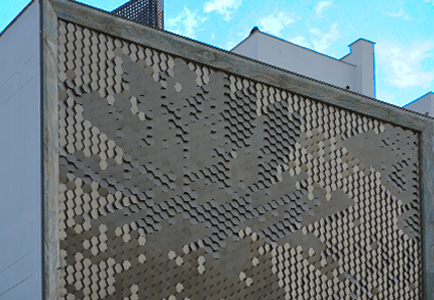
METABLOX™ by Metaguise: A Breakthrough in Parametric Facade Design
At the intersection of culture, craftsmanship, and cutting-edge geometry, METABLOX™ emerges as a bold new direction in architectural innovation. Introduced by Metaguise, this first-of-its-kind parametric facade technology makes its striking debut at the RJ Jewellers flagship store in Jaipur - setting a new benchmark in the world of metal design and modern Indian architecture.
09-04-25 | Facade Innovations
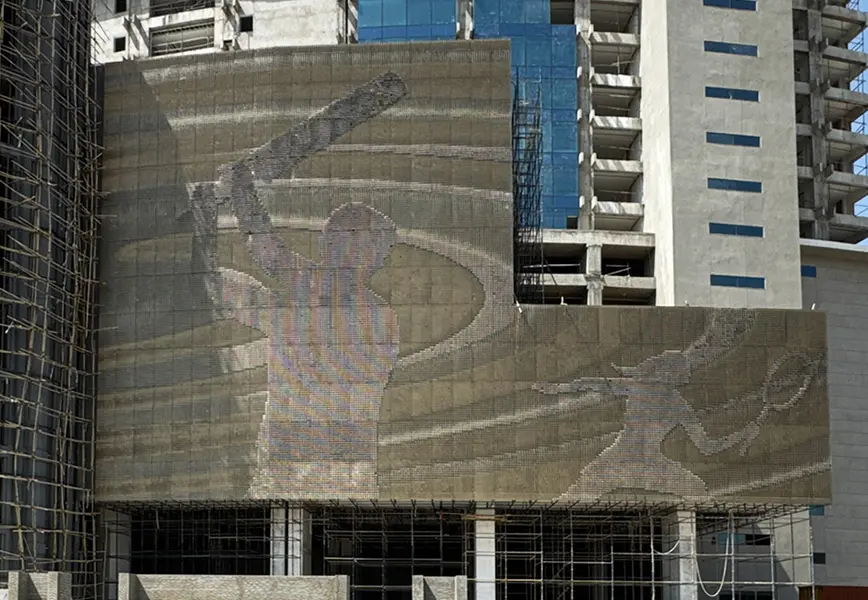
5 Landmark Projects That Used MetaCoin to Transform Facades
When it comes to parametric architecture, MetaCoin stands out as a revolutionary metal coin facade system. Crafted with precision, it offers dynamic aesthetics, adaptability, and a unique identity to structures. Let's delve into five notable projects where MetaCoin has redefined architectural facades.
13-05-25 | Facade Innovations
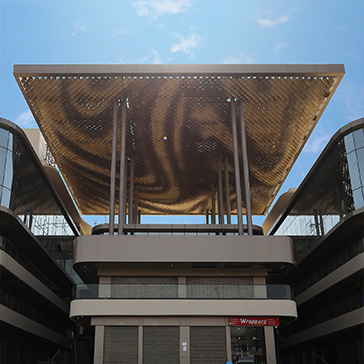
From Code to Construction: How Parametric Facades Are Built
Some buildings just make you look twice. Maybe it’s the way the facade curves. Or how the surface catches the light at different times of day. Often, what you’re seeing is more than just a design, it’s a parametric facade.
10-06-25 | Facade Innovations
Social
Legal
Privacy Policy|Terms & Conditions