






India’s Parametric Metal Facade Revolution: From European Imports to Indigenous Innovation (2026)
08-04-26 | Industry Trends
Key Takeaways
India’s parametric metal facade industry has crossed a defining threshold - and architects who haven’t noticed are already behind. The gap between prohibitively expensive international systems and unsophisticated local fabrication created the perfect conditions for homegrown computational design expertise Parametric metal facades now encode cultural narratives while meeting international performance standards, proving that technological sophistication and contextual storytelling aren't mutually exclusive End-to-end integration - from algorithmic design to on-site installation - has become India's competitive advantage over fragmented global supply chains Architects and developers increasingly choose Indian facade innovators not despite their origin but because of their unique ability to bridge global aesthetics with subcontinental realities The shift represents more than import substitution; it's the emergence of a genuinely differentiated design language that's beginning to influence global architecture
The Architecture of Economic Awakening
There's a moment every architect working in India remembers vividly: the moment they realised the building skin they'd envisioned, the one that would make the project sing, simply wasn't available. Not at any reasonable cost. Not without shipping containers from Germany or Italy. Not without timelines that stretched beyond client patience and budgets that required CFO intervention. For decades, India's architectural ambition was held hostage by a painful trilemma. You could have international sophistication, if you were willing to pay 2 - 3x premiums and wait through customs delays. You could have local affordability, if you were willing to accept basic cladding with zero design intelligence. Or you could compromise entirely, creating buildings that looked imported but felt soulless, or ones rooted in context but technically unsophisticated. The luxury real estate developer commissioning a mixed-use tower in Gurgaon faced the same impossible choice as the architect designing a flagship retail store for a heritage jewellery brand. The systems that could deliver the curved, light-responsive, three-dimensional facades their projects demanded were gatekept behind import economics that made no sense for the Indian market. "Advanced manufacturing and digital design technologies are fundamentally reshaping construction, with parametric design and integrated fabrication reducing costs by 20-30% while improving quality and customization capabilities." - McKinsey & Company, Modular Construction: From Projects to Products
The Replication Years: Beautiful Boxes with Borrowed DNA
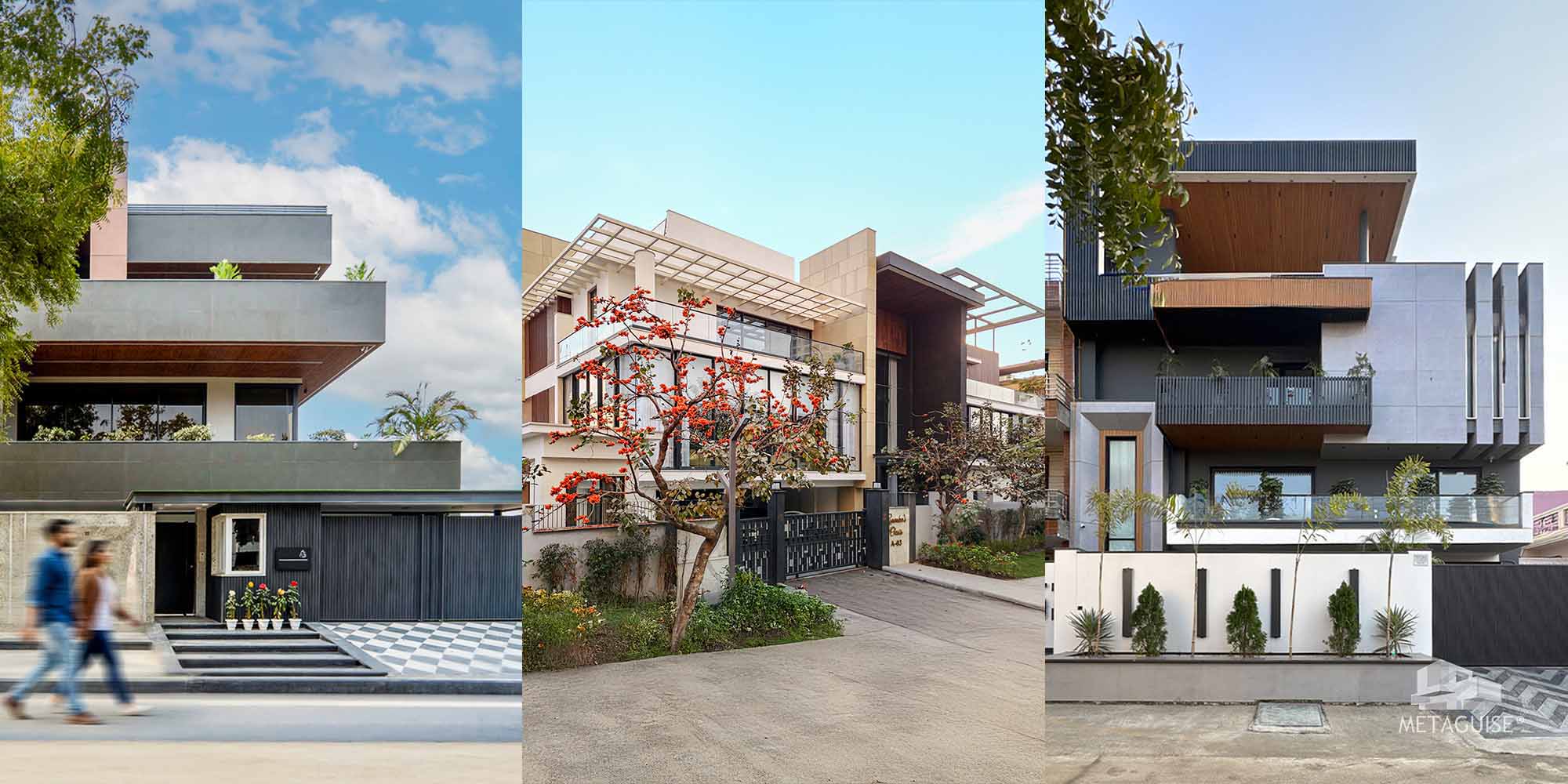
India's rapid urbanisation through the 2000s and early 2010s created a skyline of missed potential. International architectural firms would design stunning elevations in London or New York, specifying facade systems available only through European manufacturers. Then came the value engineering phase - the slow, painful dilution of design intent as local contractors tried to approximate the vision with whatever materials and techniques they had. The result was predictable: buildings that photographed well from certain angles but revealed their compromises up close. Flat metal panels mimicking the depth they couldn't achieve. Repetitive patterns standing in for computational complexity. Surface treatments that looked sophisticated at handover but degraded rapidly under India's extreme climate variations. What made this era particularly frustrating wasn't the lack of ambition - Indian architects were among the world's most creative, trained at the best institutions globally. The bottleneck was fabrication intelligence. Local metal shops could bend and cut and weld, but they couldn't translate parametric scripts into non-repetitive panel geometries. They couldn't engineer ventilated cavity systems that performed across monsoon humidity and desert heat. They couldn't deliver the tolerances that made curved facades read as continuous surfaces rather than approximated segments. The Hidden Cost of Dependency Import dependency wasn't just about money - though the economics were brutal. It was about creative constraints. When every facade decision had to factor in 90-day lead times and shipping contingencies, architects designed conservatively. The unbuildable sketch stayed in the drawer. The facade that would stop traffic and anchor brand equity remained a render, never realised. Design conversations happened in millimetres and material gauges rather than in light, rhythm, and cultural narrative Projects that should have been iconic settled for impressive enough Architects spent more time managing logistics than pushing creative boundaries Clients learned to expect beautiful renderings and compromised realities
The Computational Inflection Point
Something fundamental shifted around 2015-2017. It wasn't a single breakthrough but a confluence: computational design tools becoming accessible beyond academic labs, digital fabrication equipment entering attainable price ranges, and a critical mass of Indian architects who'd trained abroad returning home with parametric expertise and unwillingness to accept the status quo. The pioneers of India's parametric movement didn't wait for the market to mature - they actively shaped it. They invested in Grasshopper scripting capabilities when clients didn't know to ask for it. They brought CNC precision to metal fabrication when the competitive set was still relying on manual templating. They developed proprietary finishing systems engineered specifically for subcontinental weather patterns rather than adapting European solutions. What emerged wasn't import substitution in the traditional sense - cheaper versions of foreign products. It was the birth of a genuinely differentiated design language that could only have originated here: facades that encoded cricket's cultural memory into stadium skins, that translated Rajasthani craft logic into algorithmic metal patterns, that made Louis Vuitton - level sophistication accessible to Ahmedabad bungalow owners. From Fragments to Integration The real competitive advantage turned out to be integration. While international facade systems relied on fragmented supply chains - design consultants in one country, fabricators in another, installers local but disconnected from design intent - India's emerging facade innovators built end-to-end capabilities under one roof. Parametric scripting teams who could translate abstract curves into fabrication-ready geometries In-house engineering that solved for structural loads, thermal performance, and weatherproofing simultaneously Fabrication facilities with tolerance controls that made curved facades read as continuous surfaces Installation teams trained in the original design logic, not just mechanical assembly This integration meant something profound: design fidelity from concept to completion. The building that got built was the building that was envisioned, without the creative compromises that had defined the replication era.
The New Vocabulary of Indian Facades
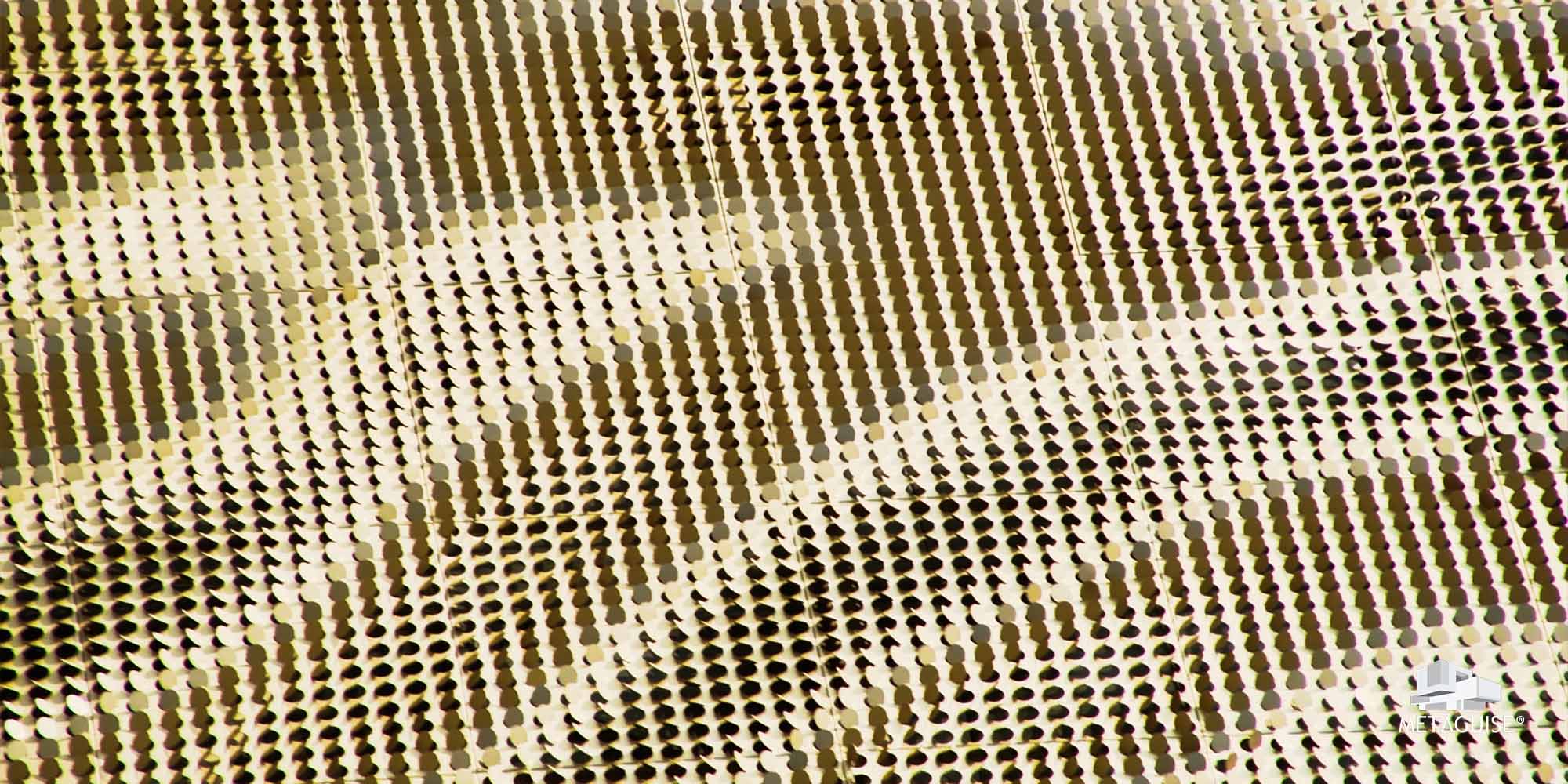
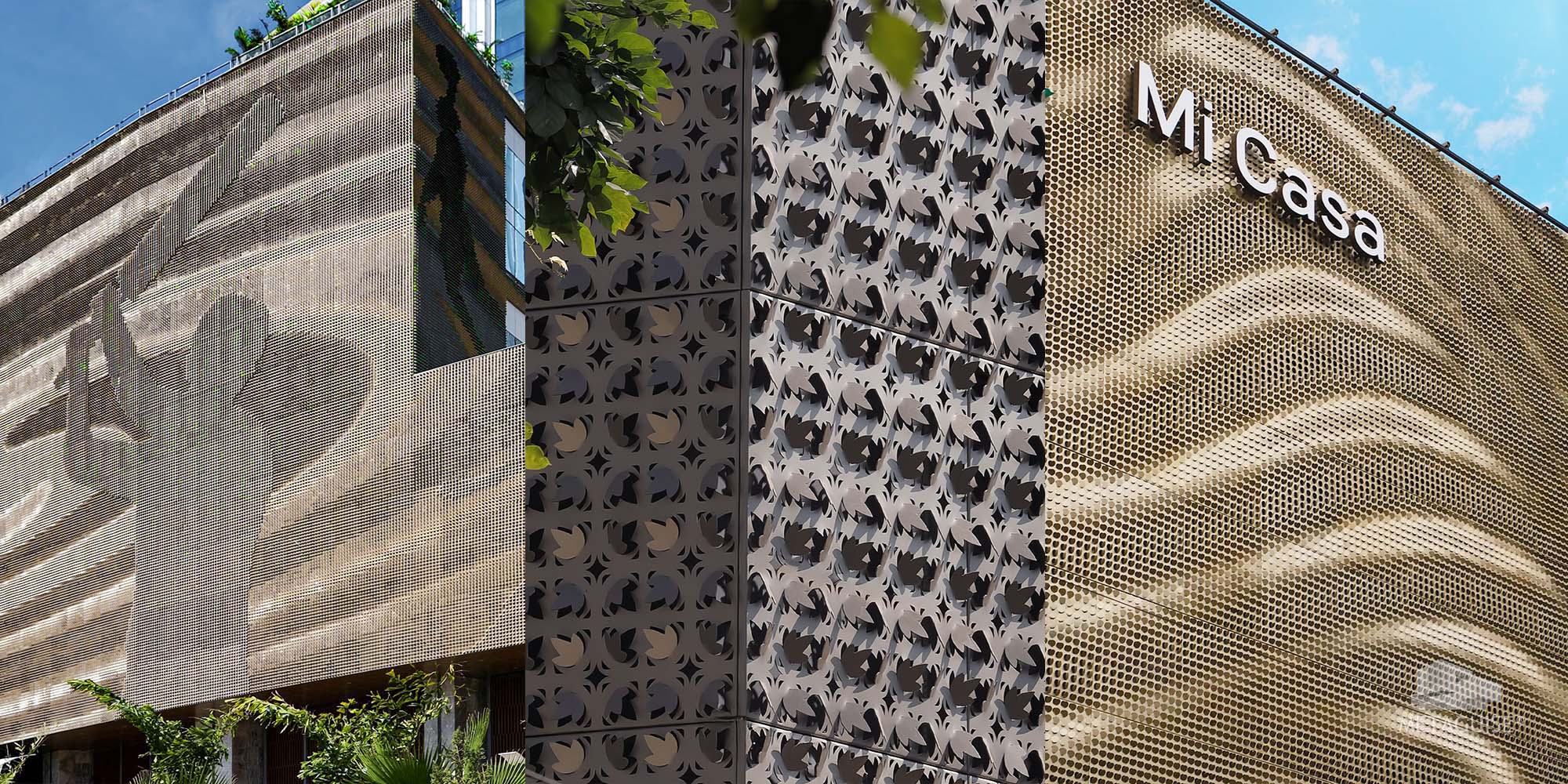
Walk past MetaSequin installations and you'll see what maturity looks like in this industry. Thousands of three-dimensional metal elements, each unique in size and orientation, choreographed through parametric logic to create gradients of light and shadow that shift as you move past the building. From a distance, a shimmering continuous field. Up close, intricate computational intelligence. This isn't replication - it's innovation that happens to use metal as its medium. Systems like MetaFin and MetaCoin represent entirely new facade typologies, impossible to source from international catalogs because they emerged from India's specific confluence of computational capability, craft memory, and climate demands. The emotional gravity is unmistakable. A BMW flagship wrapped in Perforations doesn't just house cars - it announces precision and performance through its very skin. A Tanishq jewellery store clad in parametric gold-toned metal doesn't need signage to signal luxury; the facade is the brand communication. Performance Meets Poetry What sets India's facade maturation apart is the refusal to separate technical performance from aesthetic ambition. MetaHydra and MetaHive systems don't choose between climate engineering and visual drama - they demand both. Ventilated cavity designs that manage heat gain across Delhi summers and Mumbai humidity MetaSurface finishes that maintain their sophistication through monsoon seasons and coastal salt exposure Structural geometries that resist wind loads while creating the depth and layering that makes facades read as three-dimensional Perforation patterns calculated for solar control that simultaneously generate visual rhythm and cultural storytelling
The Architect's New Posture
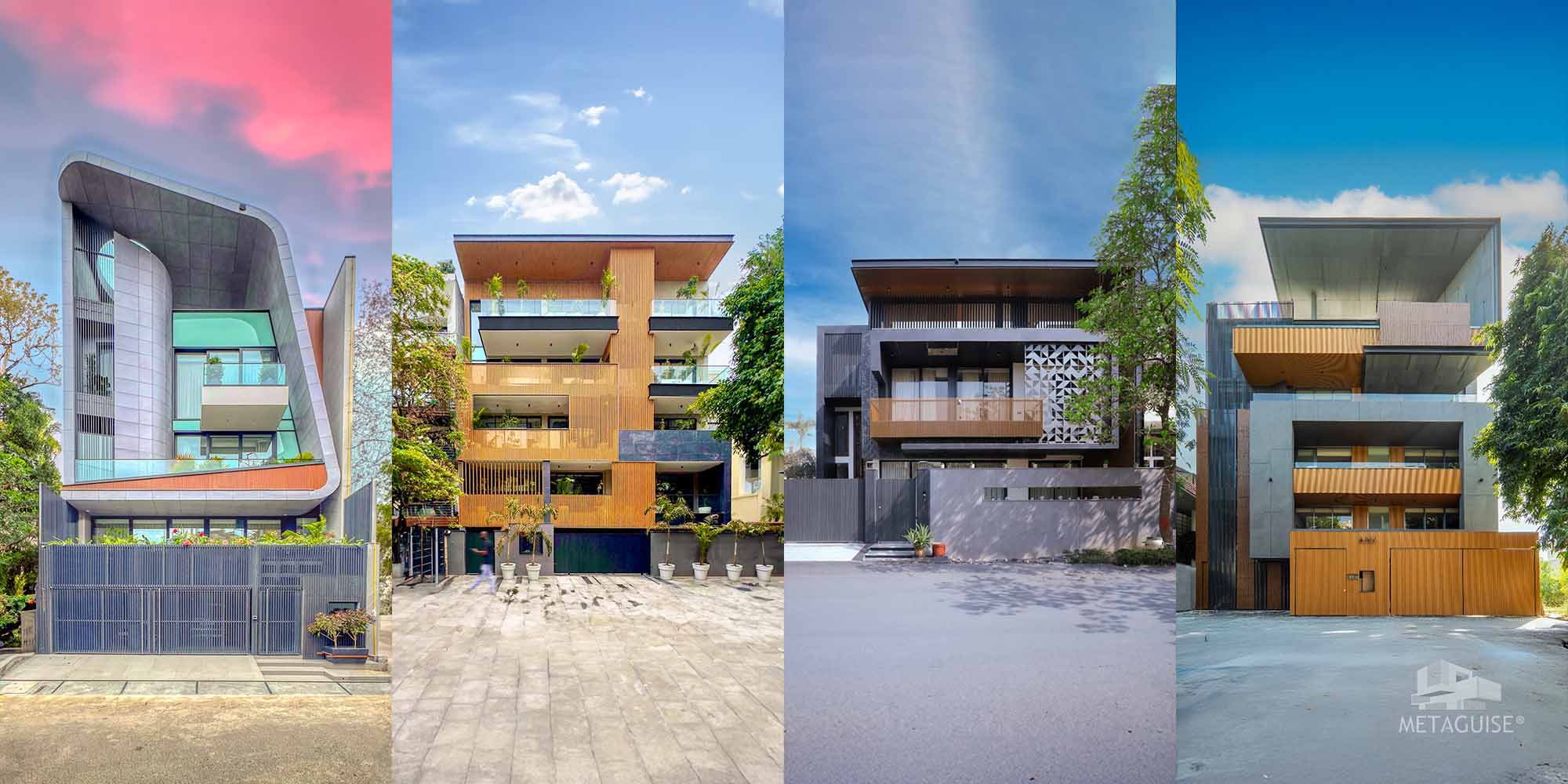
The most telling indicator of industry maturation isn't the technology - it's the relationship dynamic. Architects now engage facade partners at concept stage, not after design is frozen. The conversation begins with "what if" rather than "can you build this." What if the university library's facade could reference the geometry of knowledge networks? What if the cricket stadium could tell sporting stories through its metallic skin? What if the residential tower could create privacy without visual heaviness? These aren't hypothetical questions architects sketch alone and then bid out. They're collaborative design explorations where computational expertise shapes the vision from inception. The facade partner who can script the algorithm, engineer the structure, fabricate the panels, and install with millimetre precision becomes the design partner, not just the execution vendor. This shift has created something remarkable: architects who work with India's parametric facade pioneers once become advocates, referring peers and returning for their own studios and homes. Loyalty earned not through repeat transactions but through single transformative projects that couldn't have existed any other way.
Beyond Borders: India's Export of Innovation
The ultimate proof of maturation is when innovation begins flowing outward. India's parametric facade capabilities, born from necessity and refined through 1800+ projects across India, are increasingly sought by international projects. Not as cost-effective alternatives to European systems, but as genuinely superior solutions for complex geometries and contextual storytelling. The industry that spent decades importing design intelligence is now exporting it - not loudly, not through trade show spectacle, but through quiet advocacy from architects who've experienced the difference between fragmented international supply chains and India's integrated design -fabricate-install model.
The Quiet Confidence of Arrival
India's facade industry maturation isn't marked by dramatic announcements or industry association proclamations. It's visible in subtler indicators: the principal architect who no longer apologises for specifying Indian parametric systems on luxury projects, the developer who leads client tours by pointing to the building skin rather than hiding it, the international design firm that establishes Indian fabrication partnerships not for cost but for capability. The trilemma that defined the replication era - sophistication or affordability or availability - has dissolved. What's emerged is a mature ecosystem where MetaFold and MetaCassette systems deliver Zaha Hadid level complexity at economics that make sense for the Indian market, with timelines that respect project realities and performance engineering specific to subcontinental conditions. The buildings rising across India's metros no longer look apologetically local or expensively imported. They look like what they are: architecturally ambitious, technically sophisticated, and genuinely of this place - monuments to an industry that stopped replicating and started innovating. If you're an architect or developer navigating India's facade landscape, the maturation from import dependency to indigenous innovation represents more than procurement options - it's creative liberation. The unbuildable sketch in your drawer, the facade that would stop traffic, the elevation that encodes your project's soul: these are no longer hypothetical. Explore how parametric metal facades transform architectural vision into built reality at Metaguise, where computational design meets craft memory and every panel tells part of your building's story.
Frequently Asked Questions
1. What is the difference between parametric metal facade design and conventional cladding in India?
Conventional cladding is essentially a 2D skin. In India, we’ve spent decades seeing buildings wrapped in flat ACP sheets or stone slabs that offer little more than basic protection. It’s a repetitive, "off-the-shelf" approach where every panel looks identical. Parametric design changes the math. It uses algorithmic logic to turn a facade into a 3D narrative. Instead of flat surfaces, you get systems like MetaSequin or MetaHive where each panel can have a unique orientation, density, or curvature. While conventional cladding is a static layer, a parametric facade is a choreographed field that shifts as the light moves or as a person walks past it.
2. Why were Indian architects dependent on important European facade systems, and has that changed?
For a long time, there was a massive gap in the local market. If an architect wanted a complex, fluid design, local fabricators usually lacked the technical intelligence or the machinery to build it. This forced firms to look toward Europe, which came with a "luxury tax" of high shipping costs, long lead times, and systems that weren't always suited for our environment. That has shifted because brands like Metaguise brought that computational design out of the lab and into Indian workshops. By handling the mathematical scripting and fabrication locally, architects can now get international-grade sophistication without the logistical headaches of importing a facade from thousands of miles away.
3. What does “end-to-end integration” mean in parametric facade design, and why does it matter?
In a typical project, a design often dies a "death by a thousand cuts" as it passes from the architect to the engineer, then the fabricator, and finally the installer. Information gets lost, and the original vision is usually compromised to make it "buildable". End-to-end integration means one team owns the entire journey. At Metaguise, this starts with the early 3D sketches and Grasshopper scripts, moves into in-house fabrication, and finishes with the actual on-site installation. This matters because it ensures precision and continuity. When the person who wrote the code is also responsible for the person hanging the panel, the final building actually looks like the original render
4. Can parametric metal facades perform technically in Indian’s extreme climate condition?
Actually, they are often more practical than glass or stone. In a country with intense heat and heavy monsoons, a metal facade acts as a high-performance shield. Systems like MetaFin or MetaLouver aren't just for show; they provide sun control and reduce heat gain, which can keep interiors significantly cooler. Metal also handles the "expansion and contraction" of Indian summers better than many traditional materials. Finishes like MetaCorten or anodized aluminum are specifically chosen because they age with grace rather than fading or cracking under the UV index of a Delhi or Ahmedabad summer.
5. Are Parametric Facades only for large commercial projects, or can they be used for residential and retail buildings?
That’s a common misconception. While they definitely work for stadiums and tech campuses, some of the most exciting parametric work is happening in the luxury residential and retail sectors. For a homeowner in South Delhi or a jewelry flagship in Jaipur, a parametric facade is a signature. It transforms a private villa into a piece of art that stands out from the cookie-cutter luxury homes in the neighborhood. Whether it’s a sliding MetaFold system for a bedroom or a gold-toned MetaCoin facade for a retail store, these systems are about making a building feel "authored" rather than off-the-shelf.
India’s Parametric Metal Facade Revolution: From European Imports to Indigenous Innovation (2026)
08-04-26 | Industry Trends
Key Takeaways
India’s parametric metal facade industry has crossed a defining threshold - and architects who haven’t noticed are already behind. The gap between prohibitively expensive international systems and unsophisticated local fabrication created the perfect conditions for homegrown computational design expertise Parametric metal facades now encode cultural narratives while meeting international performance standards, proving that technological sophistication and contextual storytelling aren't mutually exclusive End-to-end integration - from algorithmic design to on-site installation - has become India's competitive advantage over fragmented global supply chains Architects and developers increasingly choose Indian facade innovators not despite their origin but because of their unique ability to bridge global aesthetics with subcontinental realities The shift represents more than import substitution; it's the emergence of a genuinely differentiated design language that's beginning to influence global architecture
The Architecture of Economic Awakening
There's a moment every architect working in India remembers vividly: the moment they realised the building skin they'd envisioned, the one that would make the project sing, simply wasn't available. Not at any reasonable cost. Not without shipping containers from Germany or Italy. Not without timelines that stretched beyond client patience and budgets that required CFO intervention. For decades, India's architectural ambition was held hostage by a painful trilemma. You could have international sophistication, if you were willing to pay 2 - 3x premiums and wait through customs delays. You could have local affordability, if you were willing to accept basic cladding with zero design intelligence. Or you could compromise entirely, creating buildings that looked imported but felt soulless, or ones rooted in context but technically unsophisticated. The luxury real estate developer commissioning a mixed-use tower in Gurgaon faced the same impossible choice as the architect designing a flagship retail store for a heritage jewellery brand. The systems that could deliver the curved, light-responsive, three-dimensional facades their projects demanded were gatekept behind import economics that made no sense for the Indian market. "Advanced manufacturing and digital design technologies are fundamentally reshaping construction, with parametric design and integrated fabrication reducing costs by 20-30% while improving quality and customization capabilities." - McKinsey & Company, Modular Construction: From Projects to Products
The Replication Years: Beautiful Boxes with Borrowed DNA
India's rapid urbanisation through the 2000s and early 2010s created a skyline of missed potential. International architectural firms would design stunning elevations in London or New York, specifying facade systems available only through European manufacturers. Then came the value engineering phase - the slow, painful dilution of design intent as local contractors tried to approximate the vision with whatever materials and techniques they had. The result was predictable: buildings that photographed well from certain angles but revealed their compromises up close. Flat metal panels mimicking the depth they couldn't achieve. Repetitive patterns standing in for computational complexity. Surface treatments that looked sophisticated at handover but degraded rapidly under India's extreme climate variations. What made this era particularly frustrating wasn't the lack of ambition - Indian architects were among the world's most creative, trained at the best institutions globally. The bottleneck was fabrication intelligence. Local metal shops could bend and cut and weld, but they couldn't translate parametric scripts into non-repetitive panel geometries. They couldn't engineer ventilated cavity systems that performed across monsoon humidity and desert heat. They couldn't deliver the tolerances that made curved facades read as continuous surfaces rather than approximated segments. The Hidden Cost of Dependency Import dependency wasn't just about money - though the economics were brutal. It was about creative constraints. When every facade decision had to factor in 90-day lead times and shipping contingencies, architects designed conservatively. The unbuildable sketch stayed in the drawer. The facade that would stop traffic and anchor brand equity remained a render, never realised. Design conversations happened in millimetres and material gauges rather than in light, rhythm, and cultural narrative Projects that should have been iconic settled for impressive enough Architects spent more time managing logistics than pushing creative boundaries Clients learned to expect beautiful renderings and compromised realities
The Computational Inflection Point
Something fundamental shifted around 2015-2017. It wasn't a single breakthrough but a confluence: computational design tools becoming accessible beyond academic labs, digital fabrication equipment entering attainable price ranges, and a critical mass of Indian architects who'd trained abroad returning home with parametric expertise and unwillingness to accept the status quo. The pioneers of India's parametric movement didn't wait for the market to mature - they actively shaped it. They invested in Grasshopper scripting capabilities when clients didn't know to ask for it. They brought CNC precision to metal fabrication when the competitive set was still relying on manual templating. They developed proprietary finishing systems engineered specifically for subcontinental weather patterns rather than adapting European solutions. What emerged wasn't import substitution in the traditional sense - cheaper versions of foreign products. It was the birth of a genuinely differentiated design language that could only have originated here: facades that encoded cricket's cultural memory into stadium skins, that translated Rajasthani craft logic into algorithmic metal patterns, that made Louis Vuitton - level sophistication accessible to Ahmedabad bungalow owners. From Fragments to Integration The real competitive advantage turned out to be integration. While international facade systems relied on fragmented supply chains - design consultants in one country, fabricators in another, installers local but disconnected from design intent - India's emerging facade innovators built end-to-end capabilities under one roof. Parametric scripting teams who could translate abstract curves into fabrication-ready geometries In-house engineering that solved for structural loads, thermal performance, and weatherproofing simultaneously Fabrication facilities with tolerance controls that made curved facades read as continuous surfaces Installation teams trained in the original design logic, not just mechanical assembly This integration meant something profound: design fidelity from concept to completion. The building that got built was the building that was envisioned, without the creative compromises that had defined the replication era.
The New Vocabulary of Indian Facades
Walk past MetaSequin installations and you'll see what maturity looks like in this industry. Thousands of three-dimensional metal elements, each unique in size and orientation, choreographed through parametric logic to create gradients of light and shadow that shift as you move past the building. From a distance, a shimmering continuous field. Up close, intricate computational intelligence. This isn't replication - it's innovation that happens to use metal as its medium. Systems like MetaFin and MetaCoin represent entirely new facade typologies, impossible to source from international catalogs because they emerged from India's specific confluence of computational capability, craft memory, and climate demands. The emotional gravity is unmistakable. A BMW flagship wrapped in Perforations doesn't just house cars - it announces precision and performance through its very skin. A Tanishq jewellery store clad in parametric gold-toned metal doesn't need signage to signal luxury; the facade is the brand communication. Performance Meets Poetry What sets India's facade maturation apart is the refusal to separate technical performance from aesthetic ambition. MetaHydra and MetaHive systems don't choose between climate engineering and visual drama - they demand both. Ventilated cavity designs that manage heat gain across Delhi summers and Mumbai humidity MetaSurface finishes that maintain their sophistication through monsoon seasons and coastal salt exposure Structural geometries that resist wind loads while creating the depth and layering that makes facades read as three-dimensional Perforation patterns calculated for solar control that simultaneously generate visual rhythm and cultural storytelling
The Architect's New Posture
The most telling indicator of industry maturation isn't the technology - it's the relationship dynamic. Architects now engage facade partners at concept stage, not after design is frozen. The conversation begins with "what if" rather than "can you build this." What if the university library's facade could reference the geometry of knowledge networks? What if the cricket stadium could tell sporting stories through its metallic skin? What if the residential tower could create privacy without visual heaviness? These aren't hypothetical questions architects sketch alone and then bid out. They're collaborative design explorations where computational expertise shapes the vision from inception. The facade partner who can script the algorithm, engineer the structure, fabricate the panels, and install with millimetre precision becomes the design partner, not just the execution vendor. This shift has created something remarkable: architects who work with India's parametric facade pioneers once become advocates, referring peers and returning for their own studios and homes. Loyalty earned not through repeat transactions but through single transformative projects that couldn't have existed any other way.
Beyond Borders: India's Export of Innovation
The ultimate proof of maturation is when innovation begins flowing outward. India's parametric facade capabilities, born from necessity and refined through 1800+ projects across India, are increasingly sought by international projects. Not as cost-effective alternatives to European systems, but as genuinely superior solutions for complex geometries and contextual storytelling. The industry that spent decades importing design intelligence is now exporting it - not loudly, not through trade show spectacle, but through quiet advocacy from architects who've experienced the difference between fragmented international supply chains and India's integrated design -fabricate-install model.
The Quiet Confidence of Arrival
India's facade industry maturation isn't marked by dramatic announcements or industry association proclamations. It's visible in subtler indicators: the principal architect who no longer apologises for specifying Indian parametric systems on luxury projects, the developer who leads client tours by pointing to the building skin rather than hiding it, the international design firm that establishes Indian fabrication partnerships not for cost but for capability. The trilemma that defined the replication era - sophistication or affordability or availability - has dissolved. What's emerged is a mature ecosystem where MetaFold and MetaCassette systems deliver Zaha Hadid level complexity at economics that make sense for the Indian market, with timelines that respect project realities and performance engineering specific to subcontinental conditions. The buildings rising across India's metros no longer look apologetically local or expensively imported. They look like what they are: architecturally ambitious, technically sophisticated, and genuinely of this place - monuments to an industry that stopped replicating and started innovating. If you're an architect or developer navigating India's facade landscape, the maturation from import dependency to indigenous innovation represents more than procurement options - it's creative liberation. The unbuildable sketch in your drawer, the facade that would stop traffic, the elevation that encodes your project's soul: these are no longer hypothetical. Explore how parametric metal facades transform architectural vision into built reality at Metaguise, where computational design meets craft memory and every panel tells part of your building's story.
Frequently Asked Questions
1. What is the difference between parametric metal facade design and conventional cladding in India?
Conventional cladding is essentially a 2D skin. In India, we’ve spent decades seeing buildings wrapped in flat ACP sheets or stone slabs that offer little more than basic protection. It’s a repetitive, "off-the-shelf" approach where every panel looks identical. Parametric design changes the math. It uses algorithmic logic to turn a facade into a 3D narrative. Instead of flat surfaces, you get systems like MetaSequin or MetaHive where each panel can have a unique orientation, density, or curvature. While conventional cladding is a static layer, a parametric facade is a choreographed field that shifts as the light moves or as a person walks past it.
2. Why were Indian architects dependent on important European facade systems, and has that changed?
For a long time, there was a massive gap in the local market. If an architect wanted a complex, fluid design, local fabricators usually lacked the technical intelligence or the machinery to build it. This forced firms to look toward Europe, which came with a "luxury tax" of high shipping costs, long lead times, and systems that weren't always suited for our environment. That has shifted because brands like Metaguise brought that computational design out of the lab and into Indian workshops. By handling the mathematical scripting and fabrication locally, architects can now get international-grade sophistication without the logistical headaches of importing a facade from thousands of miles away.
3. What does “end-to-end integration” mean in parametric facade design, and why does it matter?
In a typical project, a design often dies a "death by a thousand cuts" as it passes from the architect to the engineer, then the fabricator, and finally the installer. Information gets lost, and the original vision is usually compromised to make it "buildable". End-to-end integration means one team owns the entire journey. At Metaguise, this starts with the early 3D sketches and Grasshopper scripts, moves into in-house fabrication, and finishes with the actual on-site installation. This matters because it ensures precision and continuity. When the person who wrote the code is also responsible for the person hanging the panel, the final building actually looks like the original render
4. Can parametric metal facades perform technically in Indian’s extreme climate condition?
Actually, they are often more practical than glass or stone. In a country with intense heat and heavy monsoons, a metal facade acts as a high-performance shield. Systems like MetaFin or MetaLouver aren't just for show; they provide sun control and reduce heat gain, which can keep interiors significantly cooler. Metal also handles the "expansion and contraction" of Indian summers better than many traditional materials. Finishes like MetaCorten or anodized aluminum are specifically chosen because they age with grace rather than fading or cracking under the UV index of a Delhi or Ahmedabad summer.
5. Are Parametric Facades only for large commercial projects, or can they be used for residential and retail buildings?
That’s a common misconception. While they definitely work for stadiums and tech campuses, some of the most exciting parametric work is happening in the luxury residential and retail sectors. For a homeowner in South Delhi or a jewelry flagship in Jaipur, a parametric facade is a signature. It transforms a private villa into a piece of art that stands out from the cookie-cutter luxury homes in the neighborhood. Whether it’s a sliding MetaFold system for a bedroom or a gold-toned MetaCoin facade for a retail store, these systems are about making a building feel "authored" rather than off-the-shelf.
Related Articles
Related Articles
Why Aluminium Cladding Is the Future of Facade Design in Indian Architecture
India’s architecture is evolving - faster, smarter, and more performance-driven than ever before. As cities grow and climates shift, the facade is no longer just an exterior skin. It’s a functional envelope that must adapt, protect, and express.
12-09-25 | Industry Trends
Parametric Architecture in India: Why It’s Shaping the Future of Facade Design
Architecture is evolving - and with it, the language of the façade. At the heart of this evolution lies a powerful design philosophy: parametric architecture.
03-11-25 | Industry Trends
Top Facade Architecture Trends 2026 Tech Sustainability and Aesthetic Breakthroughs
The building envelope is undergoing a radical transformation. No longer just a 'skin,' it is now a performance-driven asset that breathes and adapts
12-02-26 | Industry Trends
Facade Design Trends 2026 Smart Sustainable and High-Performance Building Exteriors
The building envelope is undergoing a radical transformation. No longer just a 'skin,' it is now a performance-driven asset that breathes and adapts
23-02-26 | Industry Trends
Social
Legal
Privacy Policy|Terms & Conditions