





India’s Building Facade Market in 2026: Size, Growth and What’s Driving Demand
06-08-26 | Industry Trends
Key Takeaways
Ten years ago, a facade in most Indian cities meant plaster, paint and maybe some stone cladding on the ground floor. Today, walk through Gurugram, Bangalore’s outer ring road, or a new commercial stretch in Chennai, and metal and parametric facades are everywhere, on office towers, retail flagships, hospitals and increasingly on high-end residential projects too. This shift reflects a genuine structural change in how Indian real estate is being built and sold, and it’s worth understanding the actual drivers behind it.
Why the facade market is expanding
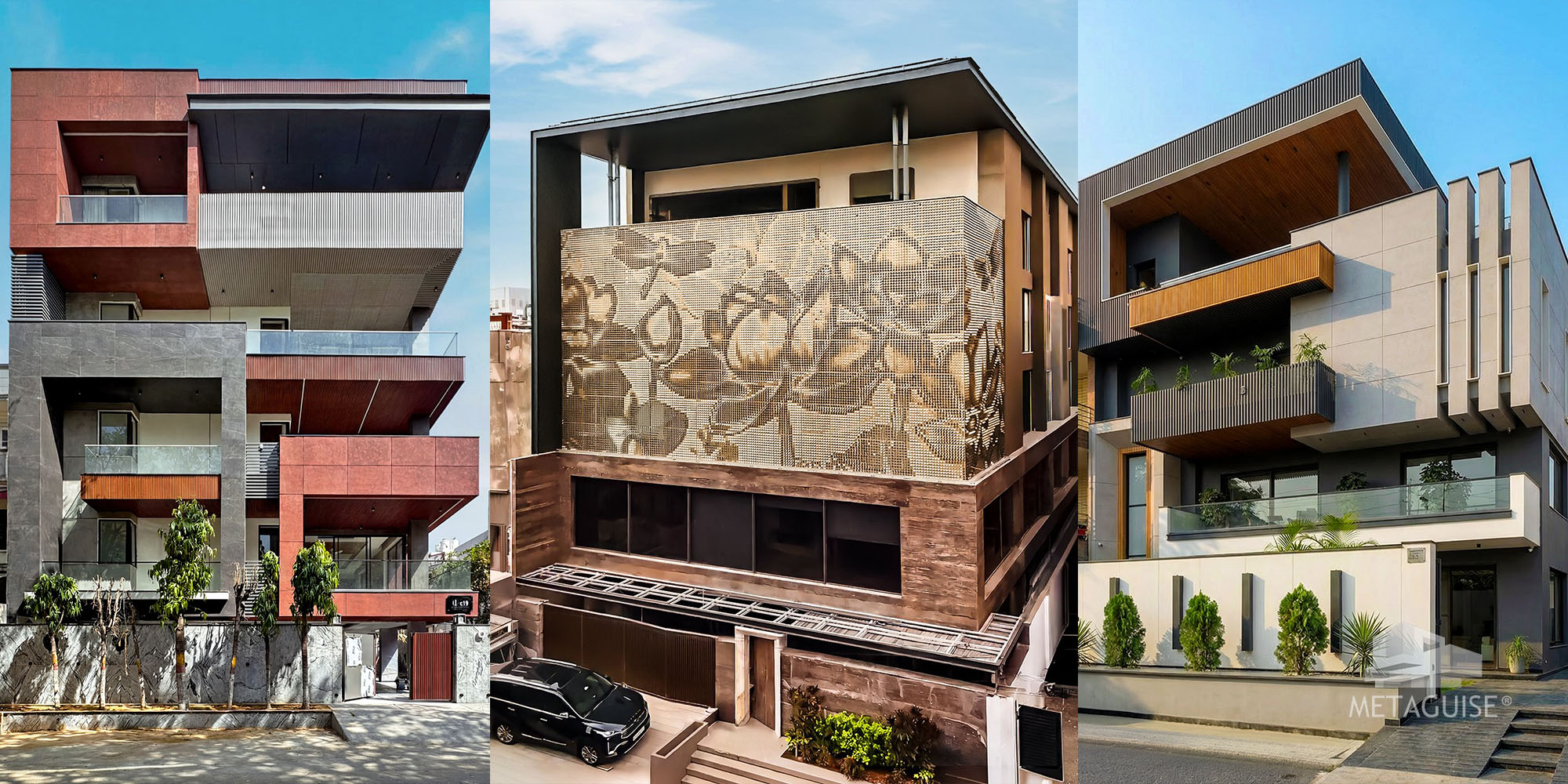
Commercial real estate is competing on visual identity. Grade A office space in India has multiplied over the last decade, and developers leasing to multinational tenants know that a building’s exterior is now part of the pitch. A tenant choosing between two comparable floor plates in the same business district will notice which building looks like it belongs to 2026 and which one looks like it was designed in 2005. Residential luxury has caught up to commercial standards. Homeowners investing in premium villas and bungalows, particularly in Delhi NCR, Gurugram, Bangalore and increasingly Tier 2 cities, are specifying facade materials that were previously seen only on commercial buildings. This has opened an entirely new client segment for metal facade companies that didn’t really exist at scale a decade ago. Retail and hospitality are treating the facade as a brand asset. Jewellery showrooms, flagship stores and hotel entrances increasingly commission custom facade work specifically because the building exterior functions as marketing. A striking facade generates organic photography and word of mouth in a way a plain storefront never will. Climate performance is now a genuine specification driver, not an afterthought. As energy costs and building certifications like GRIHA and IGBC gain traction, facades that reduce solar heat gain and cooling load are being specified for performance reasons, not just appearance. This is pulling parametric and perforated systems, which can be engineered for shading as well as looks, further into the mainstream. Material and fabrication capability inside India has matured. A decade ago, complex parametric metal facades often meant importing panels or working with foreign design consultants. Indian facade companies have since built the design software expertise, fabrication tooling and installation experience to deliver this work domestically, which has brought costs down and timelines in, making these systems accessible to a much wider range of projects.
Where the growth is concentrated
Delhi NCR remains the single largest market for premium metal facade work in India, driven by both commercial development and an unusually large luxury residential segment. Bangalore, Mumbai and Hyderabad follow closely, pulled by commercial and IT-sector construction. The more interesting trend for 2026 is the acceleration in Tier 2 demand: cities like Jaipur, Chandigarh, Pune, and increasingly South Indian centres such as Chennai, Coimbatore and Madurai are now generating real facade project volume, not just occasional one-off commissions.
What kind of facade systems are gaining the most ground
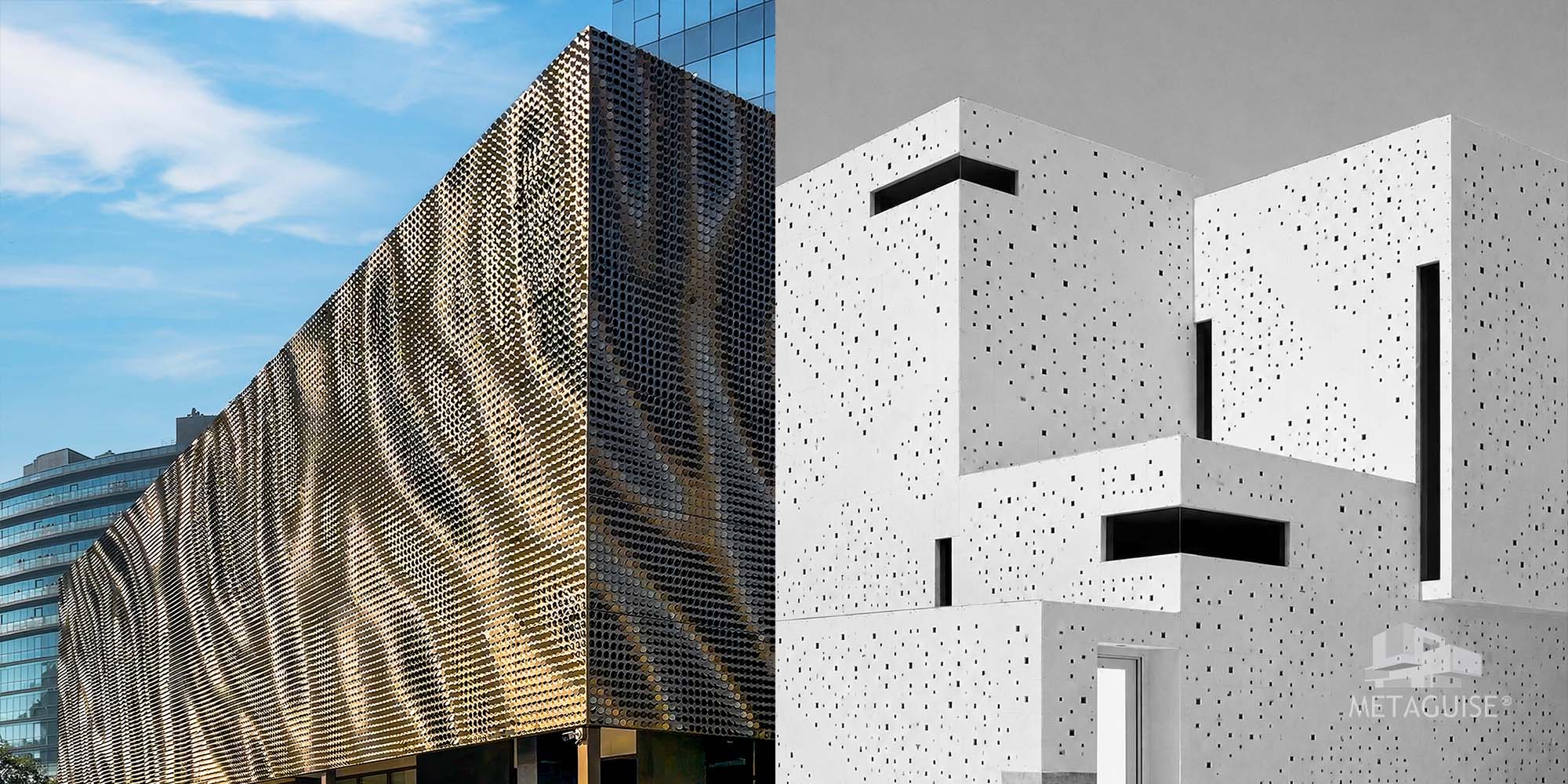
Parametric metal facades, where the pattern and geometry are computationally generated rather than manually drawn, have moved from a niche architectural statement to a mainstream specification option for mid-to-large commercial and hospitality projects. Perforated and cladding systems continue to grow steadily on the back of both aesthetic demand and genuine climate performance benefits. Kinetic and semi-kinetic systems remain a smaller but fast-growing segment, concentrated in landmark commercial and institutional projects where the facade doubles as a brand statement.
What this means if you’re planning a project in 2026
The practical takeaway for developers and homeowners entering this market now is that facade work has moved from a late-stage finishing decision to something that needs to be planned alongside the structural design. Projects that bring a facade partner in during the design stage, rather than after the shell is complete, consistently get better structural integration and lower costs, because the substructure and load paths for the facade can be planned into the building from the start rather than retrofitted later.
India’s Building Facade Market in 2026: Size, Growth and What’s Driving Demand
06-08-26 | Industry Trends
Key Takeaways
Ten years ago, a facade in most Indian cities meant plaster, paint and maybe some stone cladding on the ground floor. Today, walk through Gurugram, Bangalore’s outer ring road, or a new commercial stretch in Chennai, and metal and parametric facades are everywhere, on office towers, retail flagships, hospitals and increasingly on high-end residential projects too. This shift reflects a genuine structural change in how Indian real estate is being built and sold, and it’s worth understanding the actual drivers behind it.
Why the facade market is expanding
Commercial real estate is competing on visual identity. Grade A office space in India has multiplied over the last decade, and developers leasing to multinational tenants know that a building’s exterior is now part of the pitch. A tenant choosing between two comparable floor plates in the same business district will notice which building looks like it belongs to 2026 and which one looks like it was designed in 2005. Residential luxury has caught up to commercial standards. Homeowners investing in premium villas and bungalows, particularly in Delhi NCR, Gurugram, Bangalore and increasingly Tier 2 cities, are specifying facade materials that were previously seen only on commercial buildings. This has opened an entirely new client segment for metal facade companies that didn’t really exist at scale a decade ago. Retail and hospitality are treating the facade as a brand asset. Jewellery showrooms, flagship stores and hotel entrances increasingly commission custom facade work specifically because the building exterior functions as marketing. A striking facade generates organic photography and word of mouth in a way a plain storefront never will. Climate performance is now a genuine specification driver, not an afterthought. As energy costs and building certifications like GRIHA and IGBC gain traction, facades that reduce solar heat gain and cooling load are being specified for performance reasons, not just appearance. This is pulling parametric and perforated systems, which can be engineered for shading as well as looks, further into the mainstream. Material and fabrication capability inside India has matured. A decade ago, complex parametric metal facades often meant importing panels or working with foreign design consultants. Indian facade companies have since built the design software expertise, fabrication tooling and installation experience to deliver this work domestically, which has brought costs down and timelines in, making these systems accessible to a much wider range of projects.
Where the growth is concentrated
Delhi NCR remains the single largest market for premium metal facade work in India, driven by both commercial development and an unusually large luxury residential segment. Bangalore, Mumbai and Hyderabad follow closely, pulled by commercial and IT-sector construction. The more interesting trend for 2026 is the acceleration in Tier 2 demand: cities like Jaipur, Chandigarh, Pune, and increasingly South Indian centres such as Chennai, Coimbatore and Madurai are now generating real facade project volume, not just occasional one-off commissions.
What kind of facade systems are gaining the most ground
Parametric metal facades, where the pattern and geometry are computationally generated rather than manually drawn, have moved from a niche architectural statement to a mainstream specification option for mid-to-large commercial and hospitality projects. Perforated and cladding systems continue to grow steadily on the back of both aesthetic demand and genuine climate performance benefits. Kinetic and semi-kinetic systems remain a smaller but fast-growing segment, concentrated in landmark commercial and institutional projects where the facade doubles as a brand statement.
What this means if you’re planning a project in 2026
The practical takeaway for developers and homeowners entering this market now is that facade work has moved from a late-stage finishing decision to something that needs to be planned alongside the structural design. Projects that bring a facade partner in during the design stage, rather than after the shell is complete, consistently get better structural integration and lower costs, because the substructure and load paths for the facade can be planned into the building from the start rather than retrofitted later.
Related Articles
Related Articles
Why Aluminium Cladding Is the Future of Facade Design in Indian Architecture
India’s architecture is evolving - faster, smarter, and more performance-driven than ever before. As cities grow and climates shift, the facade is no longer just an exterior skin. It’s a functional envelope that must adapt, protect, and express.
12-09-25 | Industry Trends
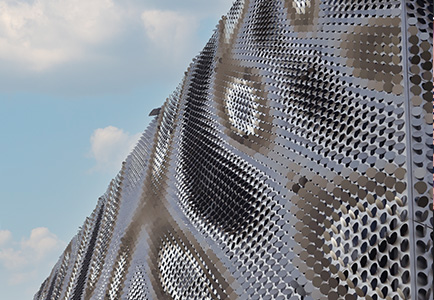
Parametric Architecture in India: Why It’s Shaping the Future of Facade Design
Architecture is evolving - and with it, the language of the façade. At the heart of this evolution lies a powerful design philosophy: parametric architecture.
03-11-25 | Industry Trends
Top Facade Architecture Trends 2026 Tech Sustainability and Aesthetic Breakthroughs
The building envelope is undergoing a radical transformation. No longer just a 'skin,' it is now a performance-driven asset that breathes and adapts
12-02-26 | Industry Trends
Facade Design Trends 2026 Smart Sustainable and High-Performance Building Exteriors
The building envelope is undergoing a radical transformation. No longer just a 'skin,' it is now a performance-driven asset that breathes and adapts
23-02-26 | Industry Trends
Social
Legal
Privacy Policy|Terms & Conditions