






How Parametric Metal Facade are Built in India: A 7-Stage Journey From Algorithm to Installation
14-04-26 | Facade Innovations
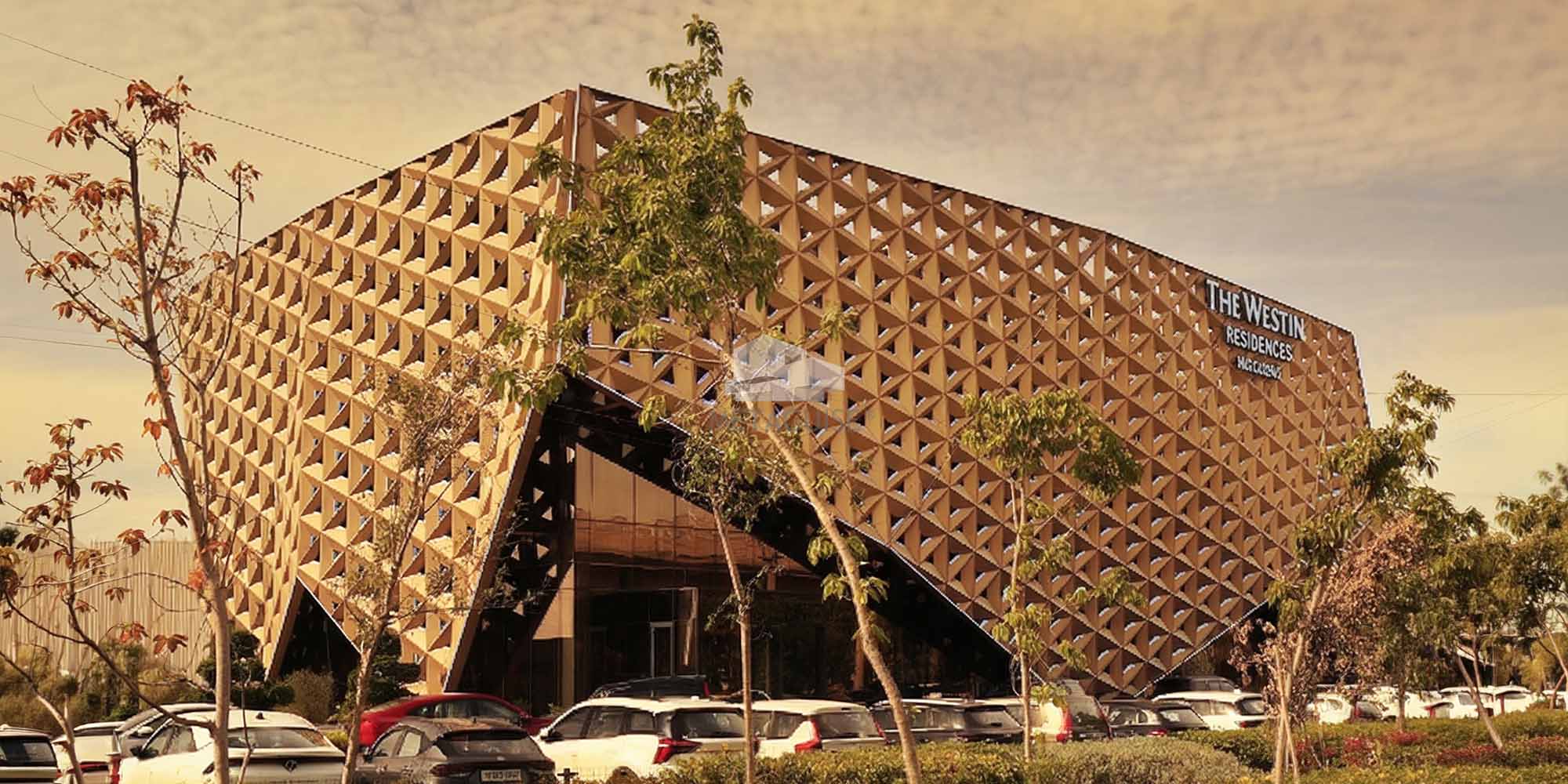
You've seen them - those renderings that make your chest tighten with architectural longing. A building facade that seems to breathe, where thousands of metallic elements cascade across the elevation like frozen water, catching light at every angle, transforming throughout the day. The architect presents it to the client, everyone nods in reverent silence, and then comes the question that has murdered more beautiful buildings than budget cuts ever could: "But can you actually build this?" For decades, the answer in India was a polite "not really." What existed in the architect's mind-that shimmering, three-dimensional poetry - would get flattened into something buildable, which usually meant something forgettable. The international facade systems that could deliver such complexity cost more than the building itself. Local fabricators would smile, nod, and then deliver flat panels in a grid because that's what their tools understood. The journey of a single MetaSequin panel from concept to installed reality is the story of how that gap finally closed. It's about the seven stages that preserve magic through the brutal realities of fabrication, logistics, and installation. And it starts not with metal, but with mathematics.
Stage One: The Algorithm Awakens
Picture an architect in Bangalore sketching a luxury retail flagship for a heritage jewellery brand. The brief calls for a facade that evokes the shimmer of traditional sequined fabrics-thousands of small metallic coins overlapping, creating depth and movement. This isn't a static pattern you can draw once and repeat. It's a field of variation, where each element responds to its neighbours, creating gradients of density and orientation across the elevation. This is where most facade projects would stall. But with parametric systems, the architect doesn't draw each of the 8,000 individual sequin elements. Instead, they define the rules: Panel diameter ranges from 40mm at the base to 120mm near the roofline, creating an upward gradient Overlap density increases around entrance zones, thinning toward the periphery Each element tilts between 5 and 25 degrees from the facade plane, determined by its position within a sine-wave function No two adjacent panels share identical dimensions or angles These rules are coded into Grasshopper, a visual programming plugin for Rhino 3D. The software becomes a collaborator, generating thousands of unique panel configurations that follow the architect's logic while producing non-repetitive variation. What emerges isn't chaos-it's choreography. Every sequin is different, yet the whole reads as a unified, shimmering field. "Digital design and construction technologies can reduce project delivery timelines by up to 20% and cut costs by up to 15%, primarily through improved coordination and reduced rework." - McKinsey & Company, Adopting Digital Tools in Construction
Stage Two: Engineering Translates Poetry into Physics
The algorithm has produced a beautiful dataset-thousands of coordinates, angles, and dimensions. Now comes the unglamorous work that makes the difference between a rendering and a building: engineering for reality. The facade engineering team asks questions the architect never had to consider: What wind loads will these angled panels experience at 40 metres above street level during monsoon season? How do we anchor each uniquely-sized element to the substrate without creating 8,000 different mounting details? Which gauge of aluminium maintains structural integrity while keeping weight within the building's load-bearing limits? How do panels expand and contract across a 60-degree temperature range without warping or creating acoustic resonance? This is where in-house integration becomes non-negotiable. When design, engineering, and fabrication live under separate roofs, this translation phase becomes a game of telephone-each handoff introducing compromises, simplifications, and departures from the original intent. By the time the drawings reach the fabricator, the shimmer has become a grid, the gradient has become uniform, and the architect is told "this is as close as we could get." With full integration, the engineering team sits ten desks away from the designers who wrote the algorithm. They run finite element analysis on the parametric model itself, adjusting anchor spacing and material thickness while preserving the visual logic. The panel dimensions might shift by 3mm here, an angle might reduce by 2 degrees there-but the character remains intact.
Stage Three: Fabrication Coordinates Become Metal
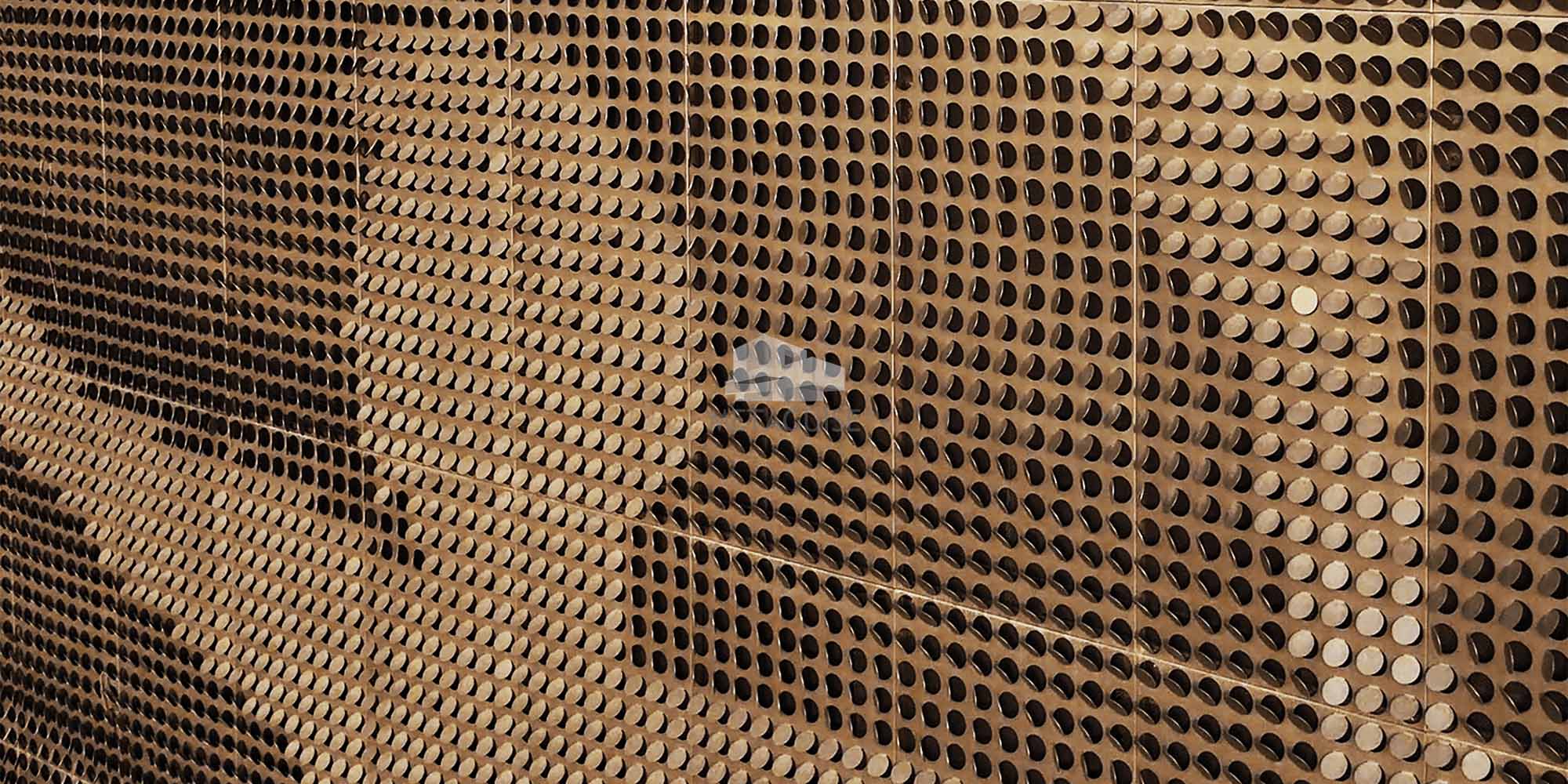
The engineered model now exports to fabrication files-digital instructions for CNC cutting tables, press brakes, and rolling machines. This is where algorithmic precision meets workshop reality, and it's messier than any rendering suggests. A single MetaSequin panel-let's call it Panel A-47 from the third-floor southeast cluster-begins as a 1.2mm aluminium sheet. The journey unfolds: CNC cutting: A high-pressure waterjet traces the panel's unique perimeter, accurate to 0.1mm. Unlike laser cutting, waterjet produces no heat-affected zone that could warp the thin material Forming: The flat disc travels to a press brake where custom dies shape it into a shallow dome or cone, depending on its position in the gradient field. Dies are calibrated for spring-back-metal's tendency to partially unbend after forming Edge treatment: Edges are deburred and radiused to prevent sharp corners that could fail weatherproofing or pose safety risks during installation MetaSurface finishing: This is where climate engineering happens. The panel receives a multi-layer treatment optimised for Indian conditions-primer for adhesion, colour coat for aesthetics, and a UV-resistant clear coat that prevents the chalking and fading that plague standard powder coatings under relentless subcontinental sun Mounting hardware installation: Threaded inserts or standoff anchors are installed at precisely calculated points, allowing the panel to be secured to the substrate while maintaining its designed tilt angle Each panel carries a laser-etched identifier linking it to its exact position in the overall assembly. Panel A-47 knows it belongs 3.2 metres east and 8.7 metres up from the ground-floor datum point. This isn't approximate-the parametric model has already accounted for the building's structural tolerances, ensuring the facade pattern aligns despite minor variations in the concrete substrate.
Stage Four: Quality Control as Design Fidelity
Before Panel A-47 leaves the fabrication facility, it undergoes verification that most facade contractors skip entirely: dimensional and visual comparison against the source algorithm. A quality control technician places the panel on a calibrated jig and measures: Diameter at four points (within ±0.5mm tolerance) Dome depth at centre (within ±0.3mm) Tilt angle when mounted on test substrate (within ±1 degree) Surface finish uniformity under standardised lighting (no streaking, orange peel, or contamination) If any parameter falls outside tolerance, the panel doesn't get marked as "close enough"-it goes back to fabrication. This fanaticism about fidelity is what separates parametric systems from cosmetic cladding. The shimmer effect the architect designed depends on precise variation, not approximate variation. If every panel is "pretty close," the cumulative error destroys the gradient, and the facade reads as chaotic rather than choreographed.
Stage Five: Logistics as Puzzle-Solving
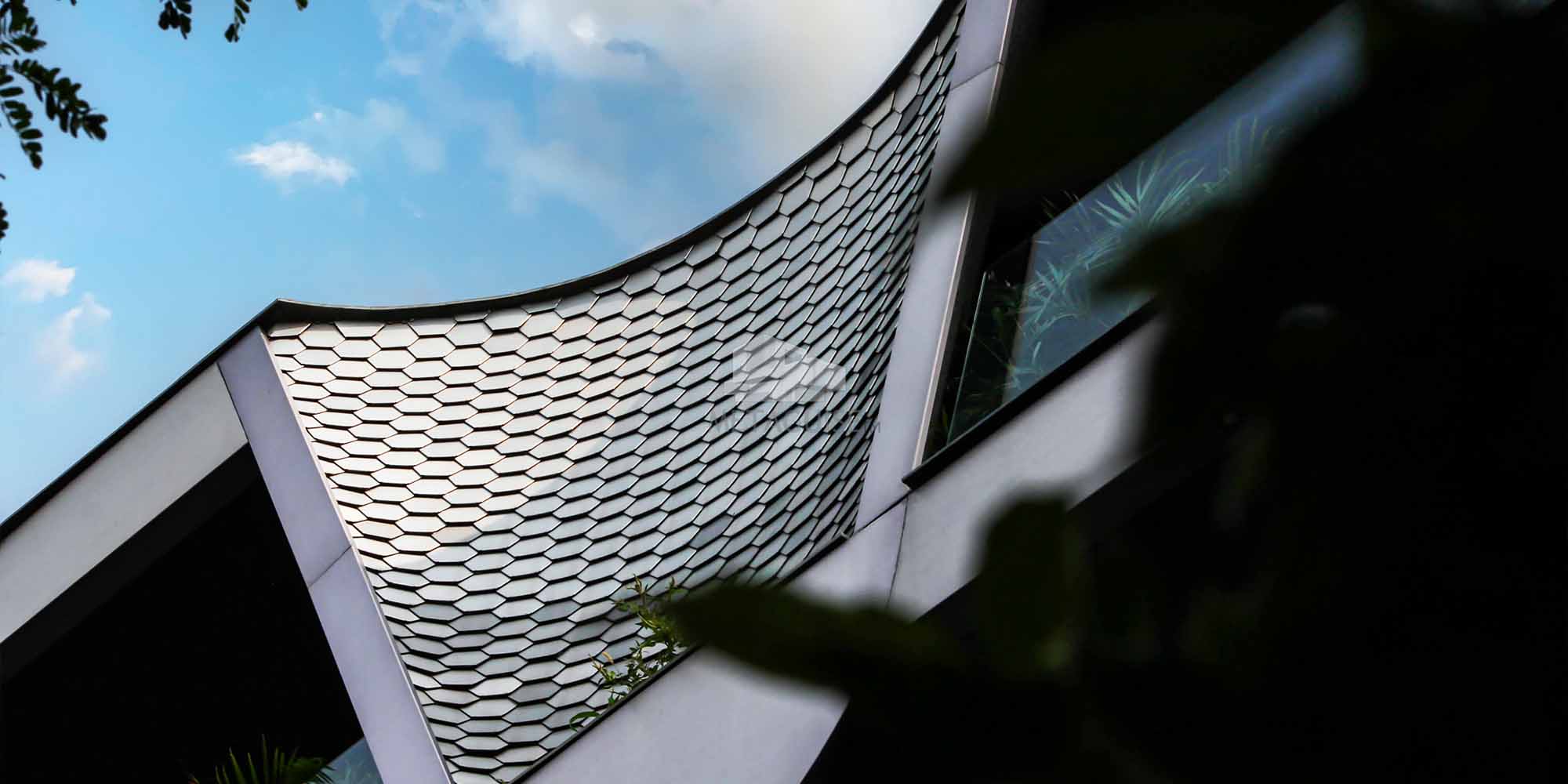
Panel A-47 is now complete, but it's one of 8,000. The site in Bangalore is ready for installation, but delivering thousands of unique elements in the correct sequence without damage or confusion requires logistics more complex than most manufacturing operations. Each panel is nested in custom foam packaging preventing contact between finished surfaces. Panels are batched by installation zone-the southeast third-floor cluster ships together, with Panel A-47 positioned in the crate sequence that matches its installation order. The truck arrives on site with panels already organised so installers don't need to hunt through hundreds of identical-looking pieces to find the right one. This seems obvious until you've watched a conventional facade installation where crews spend half their day matching unmarked panels to vague shop drawings, installing them in wrong positions, and then having to remove and reinstall when the error becomes visible three rows later.
Stage Six: Installation as Choreography
The installation crew isn't using tape measures and eyeballing alignment. They're working from the same parametric model that generated the panels, now loaded onto tablets showing augmented reality overlays. Point the device at the substrate, and it shows exactly where Panel A-47's mounting points should be, accurate to within 2mm. The installer drills anchor points at the specified coordinates, applies structural sealant to prevent water infiltration behind the panel, and secures Panel A-47 using the pre-installed mounting hardware. The panel's tilt angle is verified with a digital inclinometer before final tightening. As Panel A-47 locks into position, it joins its neighbours-A-46 to the left, A-38 below, A-55 above. Together, they begin to reveal the gradient the algorithm designed months ago. The density increases. The shimmer emerges. The building starts to speak.
Stage Seven: The Moment of Truth
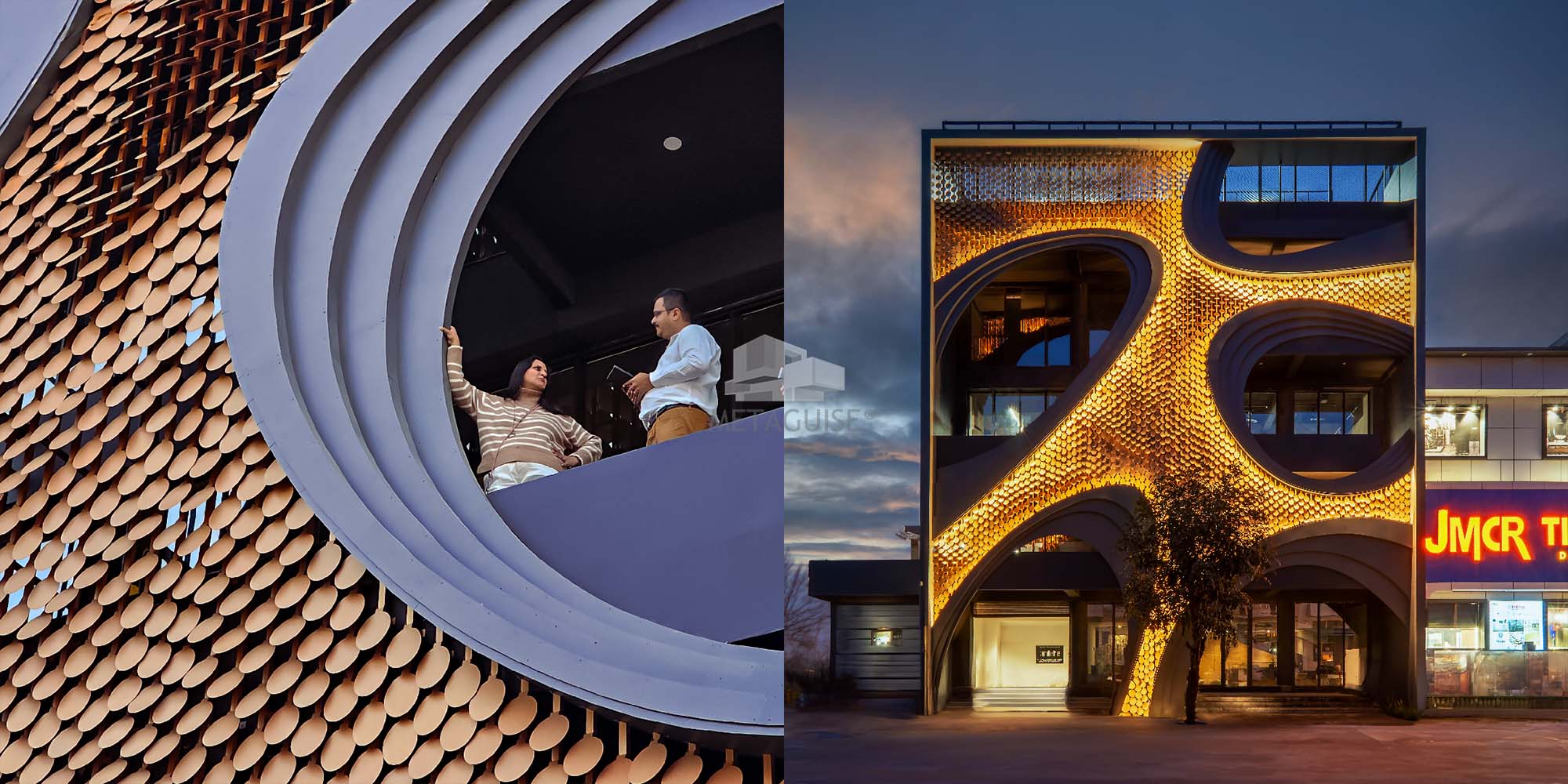
Three months later, the entire facade is installed. The scaffolding comes down. The architect, who sketched the shimmering sequin concept eighteen months ago, stands across the street at sunset. And there it is-not a compromise, not "close enough," but the actual vision. The gradient flows from dense to sparse exactly as designed. The panels catch the golden hour light at varying angles, creating depth and movement impossible with flat cladding. As you walk past the building, the facade transforms-some panels catching direct light while others fall into shadow, the pattern shifting with your perspective. This is the moment that justifies the seven-stage journey. This is why MetaSequin systems cost more than basic cladding but less than giving up on beauty entirely. Because Panel A-47 and its 7,999 siblings didn't just get installed-they preserved the design intent through fabrication reality.
Why Integration Isn't Optional Anymore
The traditional facade delivery model-where architects design, engineers calculate, fabricators build, and installers execute-worked fine when buildings were simple. But parametric architecture has made that fragmented workflow obsolete. Every handoff between disconnected parties is an opportunity for the vision to degrade. When computational design, structural engineering, precision fabrication, and skilled installation all happen within a single integrated operation, something changes. The algorithm that defined Panel A-47's dimensions can directly drive the CNC machine that cuts it. The engineer who calculated its wind loads can walk to the fabrication floor and verify the mounting detail. The installer receiving the panel has access to the same 3D model the architect sketched in. This isn't about control-it's about continuity of intent. The idea that sparked in the architect's mind doesn't get filtered through six different interpretations before becoming metal. It flows through a connected system where every stage understands and respects what came before.
The New Standard
India's architectural ambition has outgrown the limitations of conventional facade delivery. The buildings we need now-the ones that can anchor a luxury brand's identity, transform a university campus, or define a city skyline-demand facades that are as sophisticated as the structures they wrap. That sophistication isn't about decoration. It's about precision. It's about a single panel making a 3,200-kilometre journey from algorithm to building elevation while remaining faithful to the millisecond-accurate coordinates that define its place in the larger composition. The journey of Panel A-47 is the journey of contemporary Indian architecture itself-no longer choosing between beautiful or buildable, no longer accepting "close enough" as the price of ambition. It's the proof that what lives in the architect's imagination can live on the building, if the system connecting those two realities is designed with the same care as the facade itself. If you're an architect sketching facades that conventional fabricators keep telling you are "too complex," or a developer tired of buildings that look imported but feel soulless, the journey from design intent to fabrication reality doesn't have to mean compromise. Explore how integrated parametric systems like MetaSequin, MetaFin, and other precision-engineered solutions translate your vision into metal, light, and enduring architectural presence-without the gap that has historically killed India's most ambitious facades before they left the drawing board.
Frequently Asked Questions
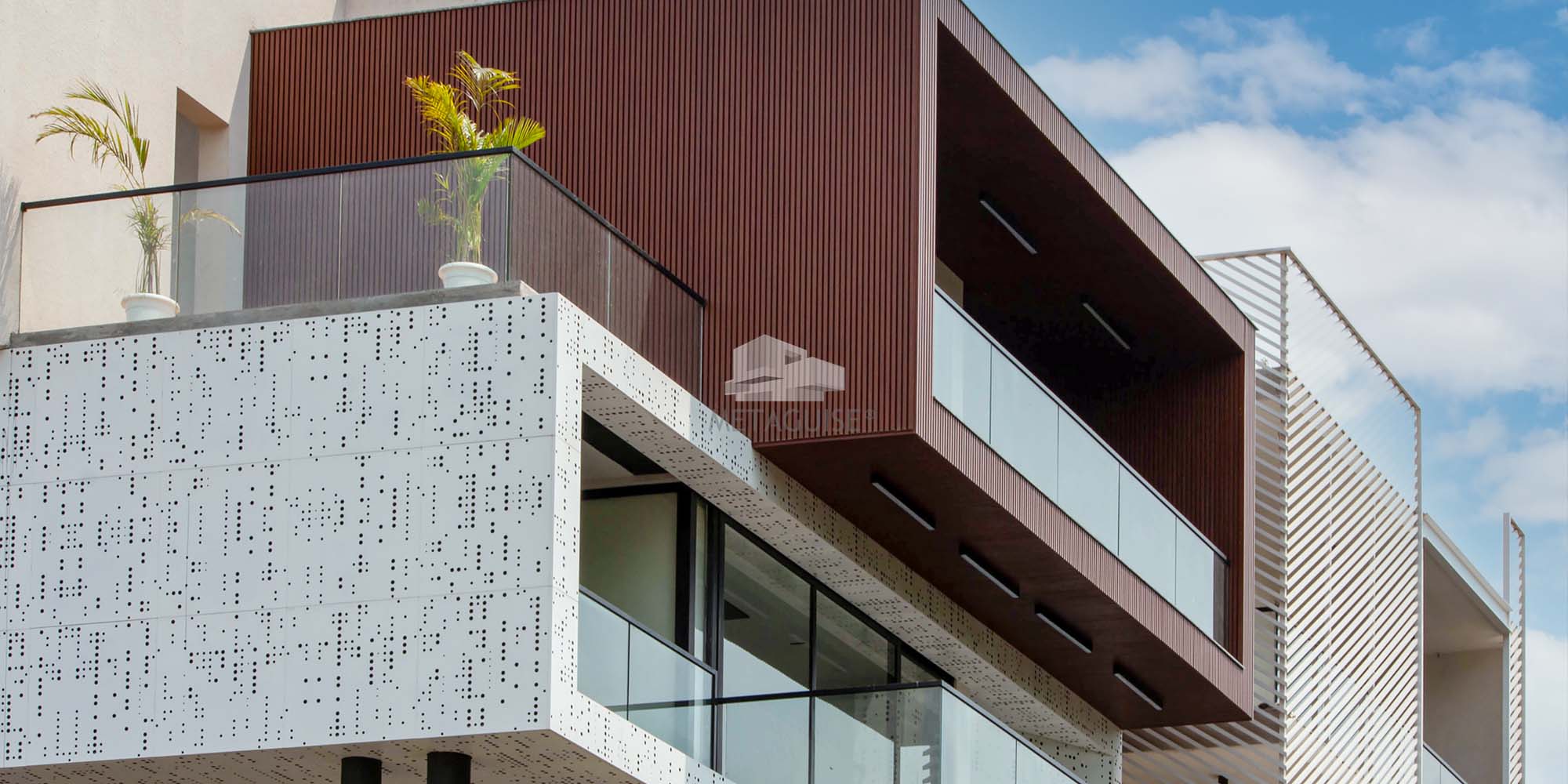
1.How are parametric metal facade panels like MetaSequin actually manufactured in India?
It starts with a script, not a sketch. We use computational tools like Grasshopper to define the logic of the facade. This data is then fed directly into high-precision CNC (Computer Numerical Control) machines in our workshop. For a system like MetaSequin, which involves thousands of individual "tiles," the machine cuts and folds each piece based on its unique coordinates in the 3D model. The manufacturing process is a loop. We aren't just punching out identical parts; we are fabricating a giant puzzle where every piece has a specific home. By keeping this entire process in-house in India, we eliminate the translation errors that usually happen when a design is handed off to a third-party factory that doesn't understand the original algorithm.
2.What is parametric facade design and how is it different from standard metal cladding?
Standard metal cladding is a "dumb" surface. It’s usually a flat ACP or zinc sheet that repeats the same pattern over and over. It’s predictable, two-dimensional, and doesn't really react to the building’s environment. It’s just skin. Parametric design is "intelligent" geometry. It treats the facade as a living system where variables like sunlight, wind, or privacy needs dictate the shape. Instead of a flat wall, you get a 3D field. For example, the panels might open up where you need a view and tighten where you need shade. It’s the difference between buying a suit off a rack and having one digitally mapped to your exact measurements.
3. Why does end-to-end integration matter in parametric facade fabrication?
In the traditional construction world, everyone likes to point fingers. The designer blames the fabricator, and the fabricator blames the installer. When you’re dealing with complex parametric shapes, even a five-millimeter error at the factory can ruin the entire alignment on-site. End-to-end integration means the team that writes the code is the same team that folds the metal and the same team that climbs the scaffolding. This continuity is vital. It ensures that the mathematical precision we achieve in the software isn't lost during the messy reality of a construction site. If something doesn't fit, we own the fix. It’s about accountability from the first line of code to the last bolt.
4. How do parametric facade systems handle India's extreme temperature swings without warping or failure?
Metal moves. In a place like Delhi or Rajasthan, a metal panel can expand and contract significantly between a 45-degree afternoon and a cool night. If a system is fixed too rigidly, it will eventually buckle, warp, or "oil-can." Our parametric systems are engineered with "floating" connections. We use the algorithm to calculate the necessary tolerances for thermal expansion at every joint. By using specialized sub-structures and ventilated cavities, the panels have the room to breathe and move without putting stress on the building’s main frame. It’s less like a solid shell and more like a flexible coat of armor.
5. How accurate is the installation of parametric facade panels, and how is that precision maintained on site?
Precision on-site is where most ambitious designs go to die. To prevent this, we use a "digital twin" approach. Before a single bracket is fixed, we map the actual "as-built" structure using laser scanning. This tells us exactly where the concrete is uneven or the beams are slightly off-plum. We then adjust our fabrication data to account for these real-world imperfections. On-site, we use custom-engineered docking systems and CNC-machined brackets that only allow the panels to be fitted in one specific way. It’s essentially a "fool-proof" assembly. By removing the need for on-site cutting or manual measurements, we keep the final result within a millimeter of the original digital vision.
How Parametric Metal Facade are Built in India: A 7-Stage Journey From Algorithm to Installation
14-04-26 | Facade Innovations
You've seen them - those renderings that make your chest tighten with architectural longing. A building facade that seems to breathe, where thousands of metallic elements cascade across the elevation like frozen water, catching light at every angle, transforming throughout the day. The architect presents it to the client, everyone nods in reverent silence, and then comes the question that has murdered more beautiful buildings than budget cuts ever could: "But can you actually build this?" For decades, the answer in India was a polite "not really." What existed in the architect's mind-that shimmering, three-dimensional poetry - would get flattened into something buildable, which usually meant something forgettable. The international facade systems that could deliver such complexity cost more than the building itself. Local fabricators would smile, nod, and then deliver flat panels in a grid because that's what their tools understood. The journey of a single MetaSequin panel from concept to installed reality is the story of how that gap finally closed. It's about the seven stages that preserve magic through the brutal realities of fabrication, logistics, and installation. And it starts not with metal, but with mathematics.
Stage One: The Algorithm Awakens
Picture an architect in Bangalore sketching a luxury retail flagship for a heritage jewellery brand. The brief calls for a facade that evokes the shimmer of traditional sequined fabrics-thousands of small metallic coins overlapping, creating depth and movement. This isn't a static pattern you can draw once and repeat. It's a field of variation, where each element responds to its neighbours, creating gradients of density and orientation across the elevation. This is where most facade projects would stall. But with parametric systems, the architect doesn't draw each of the 8,000 individual sequin elements. Instead, they define the rules: Panel diameter ranges from 40mm at the base to 120mm near the roofline, creating an upward gradient Overlap density increases around entrance zones, thinning toward the periphery Each element tilts between 5 and 25 degrees from the facade plane, determined by its position within a sine-wave function No two adjacent panels share identical dimensions or angles These rules are coded into Grasshopper, a visual programming plugin for Rhino 3D. The software becomes a collaborator, generating thousands of unique panel configurations that follow the architect's logic while producing non-repetitive variation. What emerges isn't chaos-it's choreography. Every sequin is different, yet the whole reads as a unified, shimmering field. "Digital design and construction technologies can reduce project delivery timelines by up to 20% and cut costs by up to 15%, primarily through improved coordination and reduced rework." - McKinsey & Company, Adopting Digital Tools in Construction
Stage Two: Engineering Translates Poetry into Physics
The algorithm has produced a beautiful dataset-thousands of coordinates, angles, and dimensions. Now comes the unglamorous work that makes the difference between a rendering and a building: engineering for reality. The facade engineering team asks questions the architect never had to consider: What wind loads will these angled panels experience at 40 metres above street level during monsoon season? How do we anchor each uniquely-sized element to the substrate without creating 8,000 different mounting details? Which gauge of aluminium maintains structural integrity while keeping weight within the building's load-bearing limits? How do panels expand and contract across a 60-degree temperature range without warping or creating acoustic resonance? This is where in-house integration becomes non-negotiable. When design, engineering, and fabrication live under separate roofs, this translation phase becomes a game of telephone-each handoff introducing compromises, simplifications, and departures from the original intent. By the time the drawings reach the fabricator, the shimmer has become a grid, the gradient has become uniform, and the architect is told "this is as close as we could get." With full integration, the engineering team sits ten desks away from the designers who wrote the algorithm. They run finite element analysis on the parametric model itself, adjusting anchor spacing and material thickness while preserving the visual logic. The panel dimensions might shift by 3mm here, an angle might reduce by 2 degrees there-but the character remains intact.
Stage Three: Fabrication Coordinates Become Metal
The engineered model now exports to fabrication files-digital instructions for CNC cutting tables, press brakes, and rolling machines. This is where algorithmic precision meets workshop reality, and it's messier than any rendering suggests. A single MetaSequin panel-let's call it Panel A-47 from the third-floor southeast cluster-begins as a 1.2mm aluminium sheet. The journey unfolds: CNC cutting: A high-pressure waterjet traces the panel's unique perimeter, accurate to 0.1mm. Unlike laser cutting, waterjet produces no heat-affected zone that could warp the thin material Forming: The flat disc travels to a press brake where custom dies shape it into a shallow dome or cone, depending on its position in the gradient field. Dies are calibrated for spring-back-metal's tendency to partially unbend after forming Edge treatment: Edges are deburred and radiused to prevent sharp corners that could fail weatherproofing or pose safety risks during installation MetaSurface finishing: This is where climate engineering happens. The panel receives a multi-layer treatment optimised for Indian conditions-primer for adhesion, colour coat for aesthetics, and a UV-resistant clear coat that prevents the chalking and fading that plague standard powder coatings under relentless subcontinental sun Mounting hardware installation: Threaded inserts or standoff anchors are installed at precisely calculated points, allowing the panel to be secured to the substrate while maintaining its designed tilt angle Each panel carries a laser-etched identifier linking it to its exact position in the overall assembly. Panel A-47 knows it belongs 3.2 metres east and 8.7 metres up from the ground-floor datum point. This isn't approximate-the parametric model has already accounted for the building's structural tolerances, ensuring the facade pattern aligns despite minor variations in the concrete substrate.
Stage Four: Quality Control as Design Fidelity
Before Panel A-47 leaves the fabrication facility, it undergoes verification that most facade contractors skip entirely: dimensional and visual comparison against the source algorithm. A quality control technician places the panel on a calibrated jig and measures: Diameter at four points (within ±0.5mm tolerance) Dome depth at centre (within ±0.3mm) Tilt angle when mounted on test substrate (within ±1 degree) Surface finish uniformity under standardised lighting (no streaking, orange peel, or contamination) If any parameter falls outside tolerance, the panel doesn't get marked as "close enough"-it goes back to fabrication. This fanaticism about fidelity is what separates parametric systems from cosmetic cladding. The shimmer effect the architect designed depends on precise variation, not approximate variation. If every panel is "pretty close," the cumulative error destroys the gradient, and the facade reads as chaotic rather than choreographed.
Stage Five: Logistics as Puzzle-Solving
Panel A-47 is now complete, but it's one of 8,000. The site in Bangalore is ready for installation, but delivering thousands of unique elements in the correct sequence without damage or confusion requires logistics more complex than most manufacturing operations. Each panel is nested in custom foam packaging preventing contact between finished surfaces. Panels are batched by installation zone-the southeast third-floor cluster ships together, with Panel A-47 positioned in the crate sequence that matches its installation order. The truck arrives on site with panels already organised so installers don't need to hunt through hundreds of identical-looking pieces to find the right one. This seems obvious until you've watched a conventional facade installation where crews spend half their day matching unmarked panels to vague shop drawings, installing them in wrong positions, and then having to remove and reinstall when the error becomes visible three rows later.
Stage Six: Installation as Choreography
The installation crew isn't using tape measures and eyeballing alignment. They're working from the same parametric model that generated the panels, now loaded onto tablets showing augmented reality overlays. Point the device at the substrate, and it shows exactly where Panel A-47's mounting points should be, accurate to within 2mm. The installer drills anchor points at the specified coordinates, applies structural sealant to prevent water infiltration behind the panel, and secures Panel A-47 using the pre-installed mounting hardware. The panel's tilt angle is verified with a digital inclinometer before final tightening. As Panel A-47 locks into position, it joins its neighbours-A-46 to the left, A-38 below, A-55 above. Together, they begin to reveal the gradient the algorithm designed months ago. The density increases. The shimmer emerges. The building starts to speak.
Stage Seven: The Moment of Truth
Three months later, the entire facade is installed. The scaffolding comes down. The architect, who sketched the shimmering sequin concept eighteen months ago, stands across the street at sunset. And there it is-not a compromise, not "close enough," but the actual vision. The gradient flows from dense to sparse exactly as designed. The panels catch the golden hour light at varying angles, creating depth and movement impossible with flat cladding. As you walk past the building, the facade transforms-some panels catching direct light while others fall into shadow, the pattern shifting with your perspective. This is the moment that justifies the seven-stage journey. This is why MetaSequin systems cost more than basic cladding but less than giving up on beauty entirely. Because Panel A-47 and its 7,999 siblings didn't just get installed-they preserved the design intent through fabrication reality.
Why Integration Isn't Optional Anymore
The traditional facade delivery model-where architects design, engineers calculate, fabricators build, and installers execute-worked fine when buildings were simple. But parametric architecture has made that fragmented workflow obsolete. Every handoff between disconnected parties is an opportunity for the vision to degrade. When computational design, structural engineering, precision fabrication, and skilled installation all happen within a single integrated operation, something changes. The algorithm that defined Panel A-47's dimensions can directly drive the CNC machine that cuts it. The engineer who calculated its wind loads can walk to the fabrication floor and verify the mounting detail. The installer receiving the panel has access to the same 3D model the architect sketched in. This isn't about control-it's about continuity of intent. The idea that sparked in the architect's mind doesn't get filtered through six different interpretations before becoming metal. It flows through a connected system where every stage understands and respects what came before.
The New Standard
India's architectural ambition has outgrown the limitations of conventional facade delivery. The buildings we need now-the ones that can anchor a luxury brand's identity, transform a university campus, or define a city skyline-demand facades that are as sophisticated as the structures they wrap. That sophistication isn't about decoration. It's about precision. It's about a single panel making a 3,200-kilometre journey from algorithm to building elevation while remaining faithful to the millisecond-accurate coordinates that define its place in the larger composition. The journey of Panel A-47 is the journey of contemporary Indian architecture itself-no longer choosing between beautiful or buildable, no longer accepting "close enough" as the price of ambition. It's the proof that what lives in the architect's imagination can live on the building, if the system connecting those two realities is designed with the same care as the facade itself. If you're an architect sketching facades that conventional fabricators keep telling you are "too complex," or a developer tired of buildings that look imported but feel soulless, the journey from design intent to fabrication reality doesn't have to mean compromise. Explore how integrated parametric systems like MetaSequin, MetaFin, and other precision-engineered solutions translate your vision into metal, light, and enduring architectural presence-without the gap that has historically killed India's most ambitious facades before they left the drawing board.
Frequently Asked Questions
1.How are parametric metal facade panels like MetaSequin actually manufactured in India?
It starts with a script, not a sketch. We use computational tools like Grasshopper to define the logic of the facade. This data is then fed directly into high-precision CNC (Computer Numerical Control) machines in our workshop. For a system like MetaSequin, which involves thousands of individual "tiles," the machine cuts and folds each piece based on its unique coordinates in the 3D model. The manufacturing process is a loop. We aren't just punching out identical parts; we are fabricating a giant puzzle where every piece has a specific home. By keeping this entire process in-house in India, we eliminate the translation errors that usually happen when a design is handed off to a third-party factory that doesn't understand the original algorithm.
2.What is parametric facade design and how is it different from standard metal cladding?
Standard metal cladding is a "dumb" surface. It’s usually a flat ACP or zinc sheet that repeats the same pattern over and over. It’s predictable, two-dimensional, and doesn't really react to the building’s environment. It’s just skin. Parametric design is "intelligent" geometry. It treats the facade as a living system where variables like sunlight, wind, or privacy needs dictate the shape. Instead of a flat wall, you get a 3D field. For example, the panels might open up where you need a view and tighten where you need shade. It’s the difference between buying a suit off a rack and having one digitally mapped to your exact measurements.
3. Why does end-to-end integration matter in parametric facade fabrication?
In the traditional construction world, everyone likes to point fingers. The designer blames the fabricator, and the fabricator blames the installer. When you’re dealing with complex parametric shapes, even a five-millimeter error at the factory can ruin the entire alignment on-site. End-to-end integration means the team that writes the code is the same team that folds the metal and the same team that climbs the scaffolding. This continuity is vital. It ensures that the mathematical precision we achieve in the software isn't lost during the messy reality of a construction site. If something doesn't fit, we own the fix. It’s about accountability from the first line of code to the last bolt.
4. How do parametric facade systems handle India's extreme temperature swings without warping or failure?
Metal moves. In a place like Delhi or Rajasthan, a metal panel can expand and contract significantly between a 45-degree afternoon and a cool night. If a system is fixed too rigidly, it will eventually buckle, warp, or "oil-can." Our parametric systems are engineered with "floating" connections. We use the algorithm to calculate the necessary tolerances for thermal expansion at every joint. By using specialized sub-structures and ventilated cavities, the panels have the room to breathe and move without putting stress on the building’s main frame. It’s less like a solid shell and more like a flexible coat of armor.
5. How accurate is the installation of parametric facade panels, and how is that precision maintained on site?
Precision on-site is where most ambitious designs go to die. To prevent this, we use a "digital twin" approach. Before a single bracket is fixed, we map the actual "as-built" structure using laser scanning. This tells us exactly where the concrete is uneven or the beams are slightly off-plum. We then adjust our fabrication data to account for these real-world imperfections. On-site, we use custom-engineered docking systems and CNC-machined brackets that only allow the panels to be fitted in one specific way. It’s essentially a "fool-proof" assembly. By removing the need for on-site cutting or manual measurements, we keep the final result within a millimeter of the original digital vision.
Related Articles
Related Articles
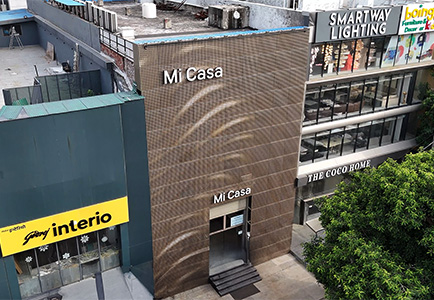
The Rise of Parametric facades: Designing with Algorithmic Elegance
A revolutionary parametric facade system designed to elevate architectural aesthetics. Crafted with premium metals and enhanced with MetaSurface finishes, MetaCoin offers unparalleled customizability, from the shape and size of each element to its color and arrangement. Its dynamic design reacts to light and perspective, creating ever-changing visual effects. Ideal for contemporary and iconic structures, MetaCoin transforms facades into captivating works of art that are sustainable, durable, and visually stunning.
01-04-25 | Facade Innovations
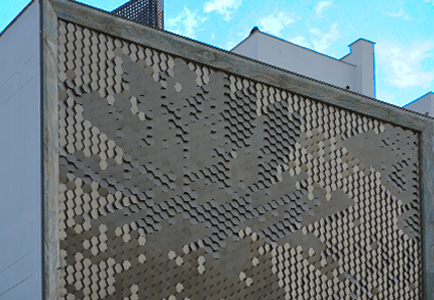
METABLOX™ by Metaguise: A Breakthrough in Parametric Facade Design
At the intersection of culture, craftsmanship, and cutting-edge geometry, METABLOX™ emerges as a bold new direction in architectural innovation. Introduced by Metaguise, this first-of-its-kind parametric facade technology makes its striking debut at the RJ Jewellers flagship store in Jaipur - setting a new benchmark in the world of metal design and modern Indian architecture.
09-04-25 | Facade Innovations
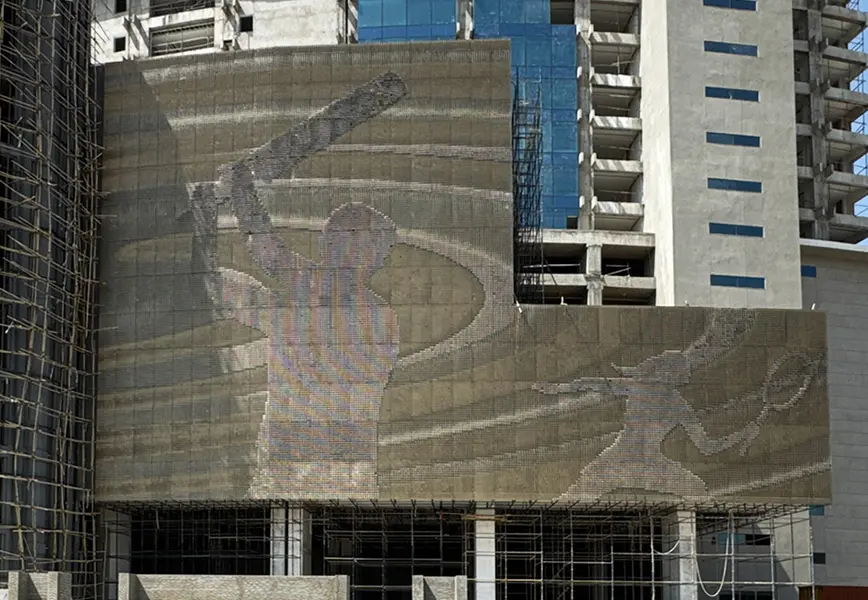
5 Landmark Projects That Used MetaCoin to Transform Facades
When it comes to parametric architecture, MetaCoin stands out as a revolutionary metal coin facade system. Crafted with precision, it offers dynamic aesthetics, adaptability, and a unique identity to structures. Let's delve into five notable projects where MetaCoin has redefined architectural facades.
13-05-25 | Facade Innovations
From Code to Construction: How Parametric Facades Are Built
Some buildings just make you look twice. Maybe it’s the way the facade curves. Or how the surface catches the light at different times of day. Often, what you’re seeing is more than just a design, it’s a parametric facade.
10-06-25 | Facade Innovations
Social
Legal
Privacy Policy|Terms & Conditions