






House Exterior Design India: 10 Materials That Look Premium and Last 30+ Years
11-05-26 | Material Spotlight
Key Takeaways
• House exterior design in India demands materials that survive decades of extreme heat, monsoon moisture, UV radiation, and coastal or industrial air — not just look good on day one. • This guide ranks 10 exterior materials by premium appearance, longevity, and performance across India's diverse climate zones — from coastal Chennai to arid Ahmedabad to composite Delhi NCR. • Metal systems — particularly PVDF-coated aluminium and weathering steel — consistently outperform stone, HPL, and painted surfaces on the combination of design freedom, durability, and total cost of ownership. • Each material is mapped to the Metaguise system that best delivers its aesthetic — with honest assessments of where each material excels and where it falls short in Indian conditions.
What Makes an Exterior Material Truly 'Premium' in the Indian Context?
The word 'premium' is among the most overused in Indian real estate and construction marketing. Every developer uses it; almost none defines it. For the purpose of choosing a house exterior design India material that genuinely earns the label, three criteria matter: visual quality at installation, performance across India's climatic extremes over decades, and total cost of ownership relative to alternatives. According to a January 2026 report by IBEF, India's construction sector is expected to build over 35 billion square feet of new built space by 2050 — double today's stock — and buildings already contribute 25% of the country's total emissions. Against that backdrop, material choice is not just an aesthetic decision. It is a structural one, a financial one, and — increasingly — a sustainability one. The 10 materials ranked in this guide are evaluated against all three criteria. Some score highest on visual drama; some on longevity; some on the combination of both. All are materials that real Indian homeowners, architects, and developers are specifying in 2026 — not theoretical options from an international design journal. And all are placed in the context of India's climatic reality: a country that subjects its buildings to some of the most demanding weather conditions on earth, including 45°C+ summer peaks, monsoon relative humidity above 90%, and coastal salt air that corrodes unprotected metal within months. Metaguise's decade of experience delivering 1,800+ facade projects across India — from coastal Kerala to landlocked Rajasthan, from South Delhi bungalows to Ahmedabad luxury compounds — gives it a uniquely comprehensive view of which materials deliver on their promises over time, and which do not. This guide reflects that accumulated knowledge.
Metal Cladding: The Top Choice for Premium Longevity in Indian House Exteriors
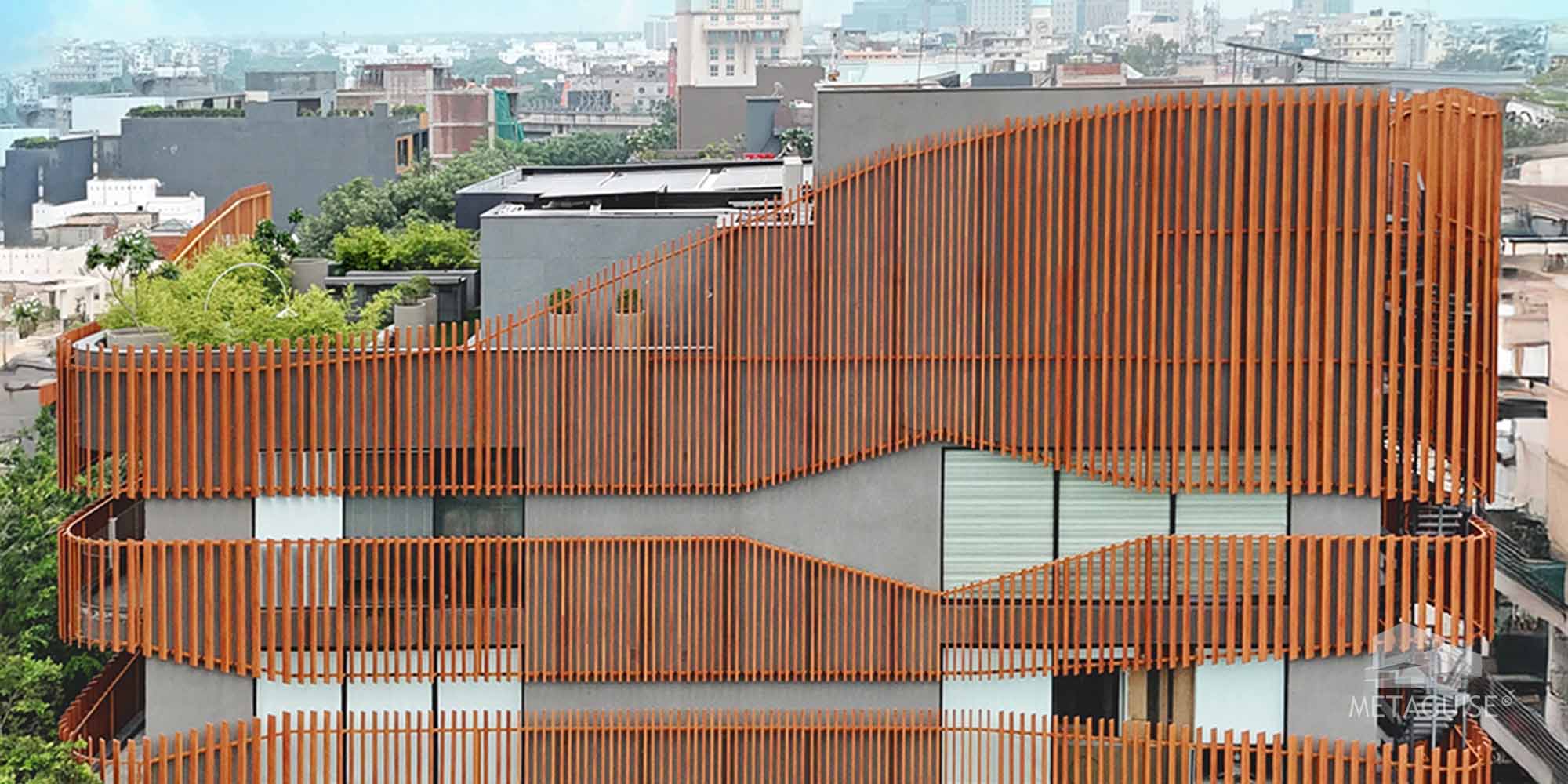
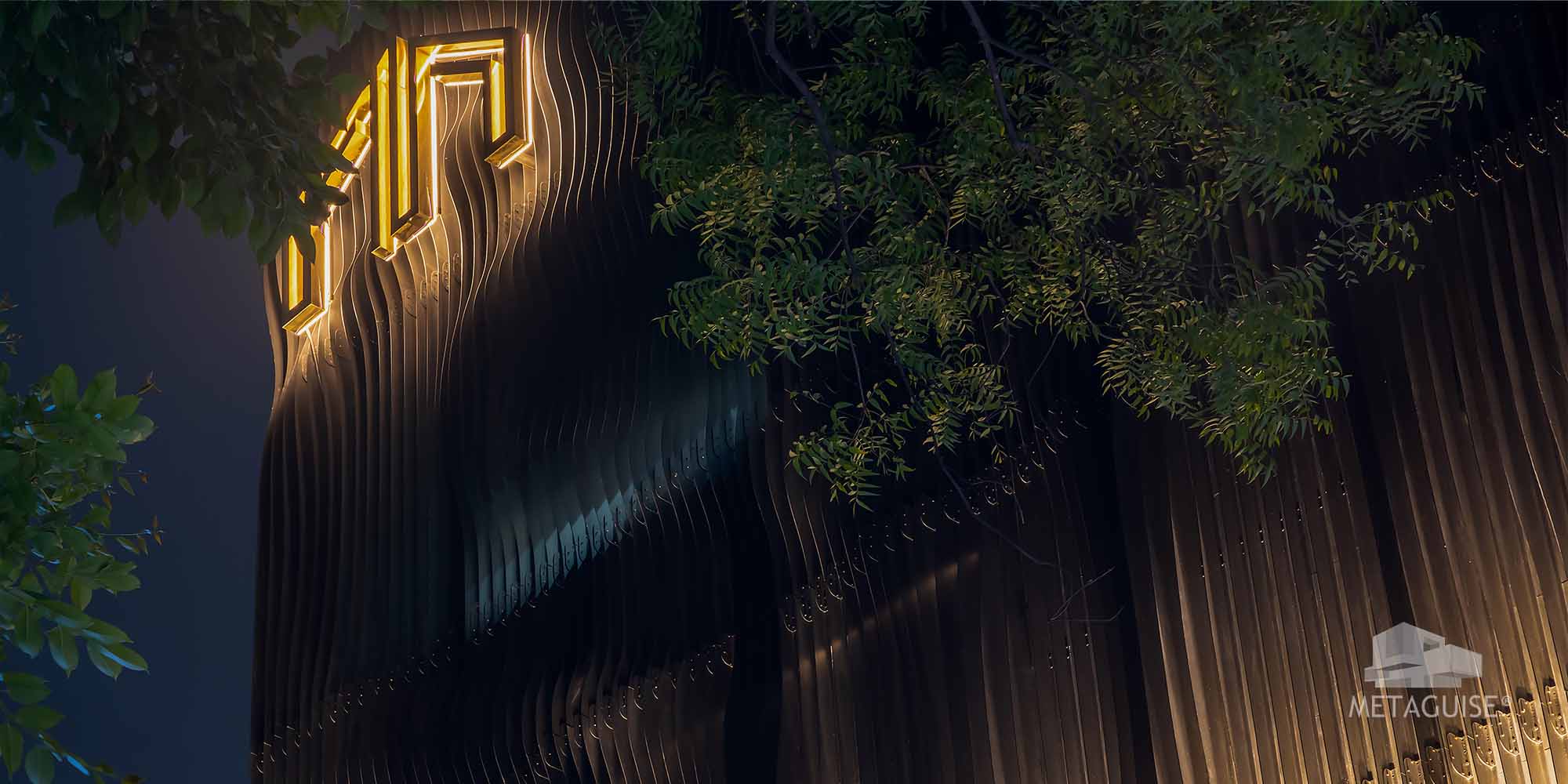
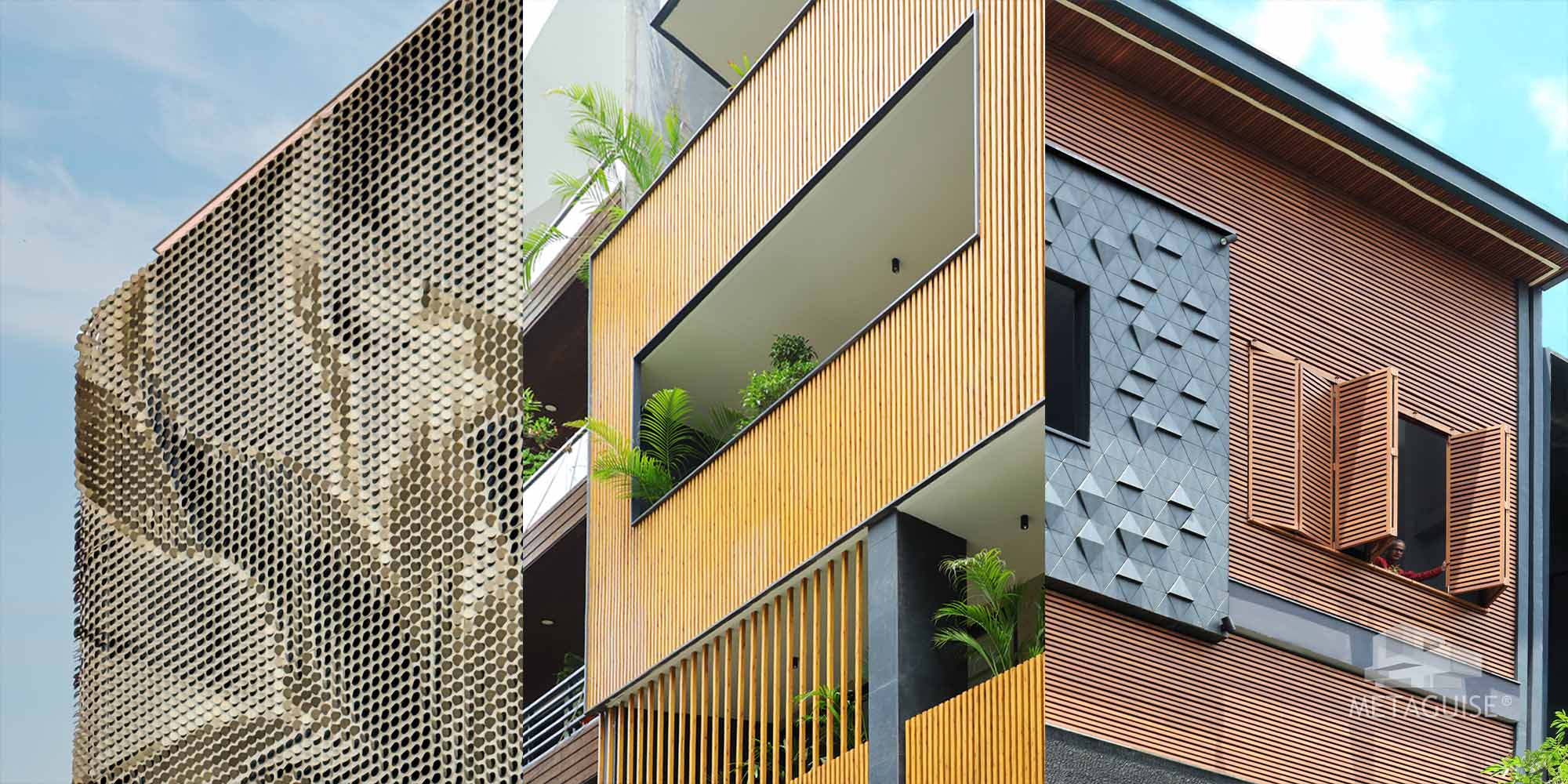
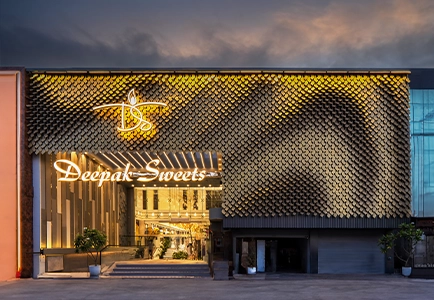
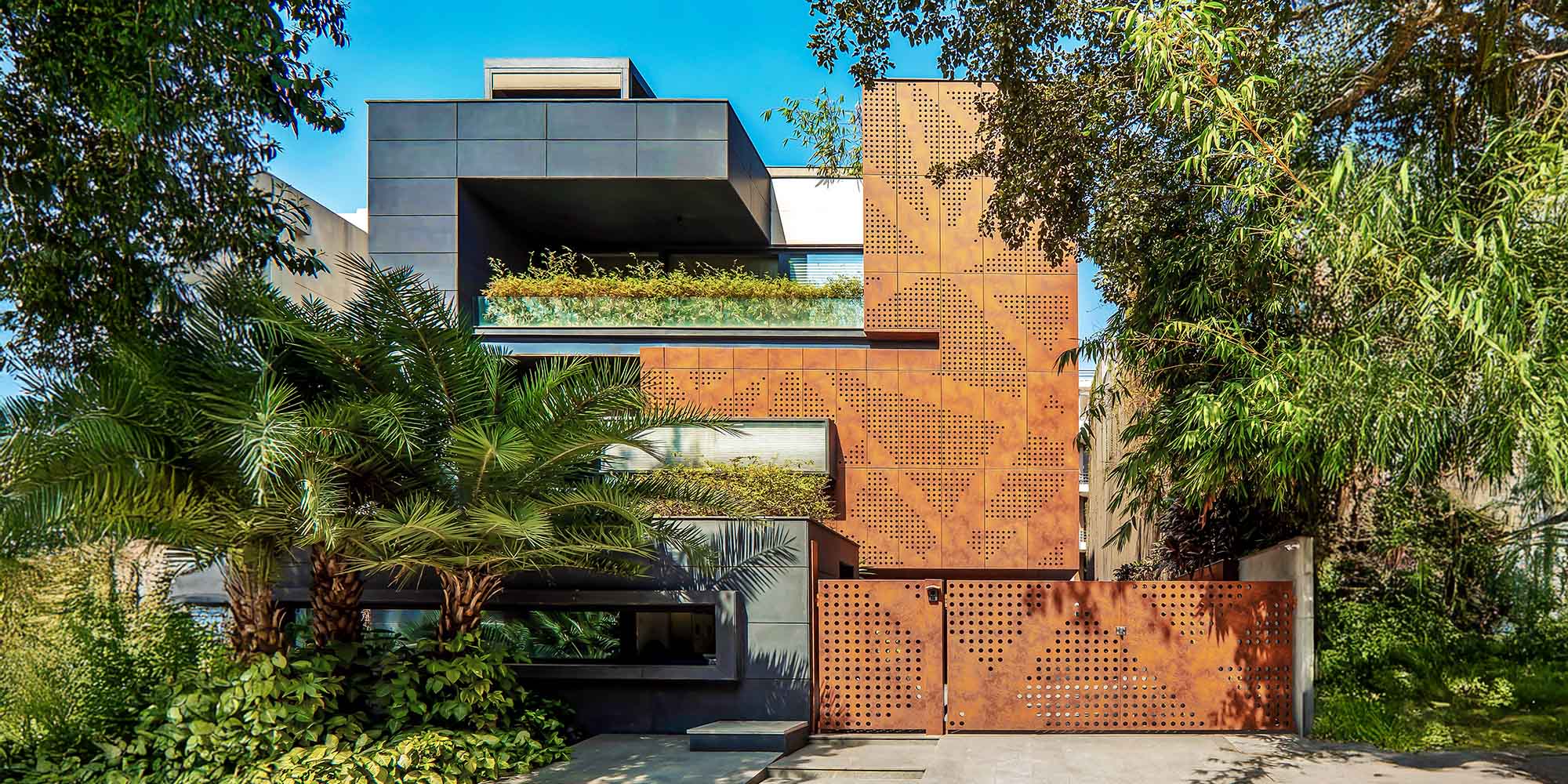
No other exterior material category matches the combination of design freedom, climate performance, and long-term durability that metal cladding delivers for Indian homes in 2026. Here is why — and how Metaguise's systems realise that potential: 1. PVDF-Coated Aluminium Panel Systems PVDF-coated aluminium is the benchmark material for premium home exterior design in India — and with good reason. It does not rust, does not crack under the thermal cycling that destroys stone-to-mortar bonds in Delhi and Ahmedabad, and maintains colour fidelity for 25–30 years in India's intense UV environment. Metaguise's MetaFlute (vertical fluted panels), MetaCassette (flat cassette panels), and SolidPanel (seamless flush surfaces) are all fabricated in high-grade aluminium with PVDF finish options across 50+ colours. Installed cost: ₹900–1,500 per sq ft. Design life: 40–50 years. Maintenance: annual cleaning only. This is the material that defines Gurgaon's Golf Course Road, Mumbai's BKC, and South Delhi's most architecturally intentional bungalows — for good reason. 2. Parametric Aluminium — Sequin, Coin, Fold, Pyramid Beyond flat or fluted panels, Metaguise's parametric product range — MetaSequin, MetaCoin, MetaFold, and MetaPyramid — delivers three-dimensional, computationally-generated surface compositions that are unique to each project. These are not just premium in appearance; they are architecturally irreproducible. No local contractor can copy a MetaSequin elevation because the geometry of each panel is the product of a mathematical script unique to the project. Premium longevity here is both material (same aluminium substrate, same PVDF warranty) and intellectual — the design cannot be devalued by a neighbour's cheaper imitation. 3. Weathering Corten Steel Metaguise's MetaCorten system brings weathering steel to Indian residential architecture in a controlled, architect-specified, structurally engineered application. Corten's distinguishing characteristic is its trajectory: it gets richer over time. The initial orange-rust patina deepens and stabilises within 2–3 years of installation, creating a warm, textured surface that is unmistakably material. Design life is 50+ years with near-zero maintenance in inland Indian climates. Installed cost: ₹1,100–1,800 per sq ft depending on application. Not suitable within 5 km of the coast. Best suited for inland villas, farmhouses, and statement residential projects in NCR, Gujarat, Maharashtra, and Rajasthan. 4. Anodised Aluminium — The Coastal Premium Standard For houses within the coastal influence zone — typically within 5–15 km of the sea in cities like Mumbai, Goa, Chennai, Kochi, and Visakhapatnam — anodised aluminium is the premium metal specification of choice. Anodising creates a hard, integral oxide layer on the aluminium surface that is significantly more resistant to salt-air corrosion than any coating-based system. Metaguise's anodised finish range is available across its full product portfolio, making the coastal upgrade for any system — MetaFlute, MetaCassette, MetaSequin — that would otherwise be specified in PVDF for an inland project. Design life with anodised finish in coastal conditions: 30–40 years.
Stone, HPL, and Glass: Pros and Cons for Indian Home Exteriors
The three principal alternatives to metal cladding in India's premium residential market each have genuine strengths — and specific limitations that are worth understanding honestly before specifying. 5. Natural Stone — Granite, Sandstone, Quartzite Natural stone carries a quality signal in the Indian market that is difficult to replicate: it reads as permanent, ancestral, and materially authoritative. Polished granite on a bungalow plinth says something that a painted surface cannot. The performance reality, however, is more complicated. Stone is heavy — granite cladding typically weighs 25–75 kg/m², placing significant additional structural load on walls and foundations. In Delhi NCR's thermal cycling (below 0°C in January, above 45°C in May), stone-to-mortar bonds experience cumulative stress that leads to delamination and spalling — particularly on south and west elevations. On south-facing granite cladding in NCR, this failure mode typically manifests within 8–15 years. Stone also absorbs moisture, and the grout lines that hold cladding panels are persistent failure points in monsoon-heavy climates. Best used as: plinth bands, accent features, and protected north-facing walls. Not recommended as the whole-facade solution on thermally exposed Indian homes. 6. High-Pressure Laminate (HPL) HPL panels have found a market in mid-tier residential and commercial projects across India — and their appeal is understandable. The price point is accessible (₹650–950 per sq ft installed), the visual range is wide (wood grain, stone texture, solid colour), and the installation is relatively simple. The honest performance assessment for Indian conditions is mixed. HPL performs adequately on north and east-facing facades where UV exposure is limited. On south and west exposures in NCR, Ahmedabad, or Hyderabad, UV-driven colour shift begins within 5–7 years, and the organic resin core can delaminate at panel edges if moisture sealing is not maintained. HPL is a genuine value option for budget-constrained residential projects. For luxury homeowners who intend to stay in their home for 20+ years, the 10–15 year replacement cycle makes the economics less compelling than they first appear. 7. Architectural Glass Glass on residential buildings creates a visual quality that is globally aspirational — lightness, transparency, and the impression of space. The challenge in India's residential context is thermal performance: unshaded single-skin glazing on west-facing elevations in Delhi, Ahmedabad, or Hyderabad produces solar heat gain that makes adjacent interior spaces functionally uncomfortable in summer. The solution — high-performance solar control glazing combined with external shading elements — is both technically correct and architecturally elegant. Metaguise's MetaFin architectural fin system is the most effective metal shading solution for glass-heavy Indian facades: fins projected from the facade plane at calculated angles create shadow zones on glazing during peak solar hours while retaining visual lightness. Glass + MetaFin is among the most sophisticated facade combinations available for Indian luxury homes. 8. Terracotta and Ceramic Cladding Terracotta and architectural ceramic tiles have seen a revival in Indian premium residential architecture — particularly in the South (where the material resonates with Dravidian temple building traditions) and in boutique hospitality projects across Rajasthan and Kerala. The material is genuinely beautiful: warm, textured, and rooted in Indian material culture. Performance limitations are worth noting: terracotta is heavy (15–25 kg/m²), requires skilled installation, and is vulnerable to cracking under thermal shock in NCR's extreme temperature cycling. It is best specified on protected or north-facing elevations, where sun exposure is limited and the material can be appreciated for its tactile and cultural richness without being stressed by thermal dynamics. 9. Fibre Cement Board Fibre cement is a legitimate workhorse material for residential exteriors in India's mid-tier market — durable, reasonably weather-resistant, fire-rated, and significantly lighter than stone. The premium ceiling, however, is low: fibre cement always reads as utilitarian rather than luxurious, and the colour fidelity of painted fibre cement in India's UV conditions follows the same 5–7 year cycle as painted masonry. It has its place in developer housing and contractor-led residential construction where budget is the primary constraint. It does not have a compelling argument in luxury residential projects, where the cost difference between fibre cement and premium metal cladding is marginal relative to total project investment. 10. Exposed Concrete and Board-Formed Surfaces The most design-forward option on this list — and the most demanding to execute well — exposed concrete and board-formed surfaces have become a marker of architectural seriousness in India's premium residential market. When executed by a skilled architect and contractor, board-formed concrete achieves a visual gravity and material honesty that no cladding can replicate: it is the building itself, not a skin applied to it. The performance challenges in India are significant: concrete requires specialist formwork, expert finishing, and diligent sealing to resist monsoon moisture ingress and biological growth. In high-humidity coastal cities, unsealed or poorly sealed exposed concrete facade surfaces can develop efflorescence and biological staining within 3–5 years. For projects where the architectural intent demands this material, the answer is an experienced contractor, appropriate sealants, and a maintenance plan. It is not a material for every homeowner — but in the right hands, it is among the most powerful.
Performance in Indian Weather Zones: What Works Where
India's climatic diversity means that no single material specification is universally optimal. The following framework maps the materials above to performance by climate zone: Hot-Arid (Rajasthan, Gujarat, Telangana): Best Choices PVDF-coated aluminium (high SRI, colour-stable in extreme UV), MetaCorten weathering steel (inland climate ideal for stable patina formation), terracotta accents on protected faces. Avoid: uncoated stone on south/west faces, dark HPL on exposed elevations. Warm-Humid and Coastal (Goa, Kerala, Tamil Nadu Coast, Mumbai): Best Choices Anodised aluminium (corrosion-resistant in salt air), glass with MetaFin shading (lightness + solar control), board-formed concrete with specialist sealing (architectural prestige). Avoid: MetaCorten within 5 km of sea, uncoated stone (moisture absorption + biological growth risk). Composite Climate (Delhi NCR, Pune, Bangalore, Hyderabad): Best Choices The broadest material palette applies here. PVDF-coated aluminium systems, MetaCorten (in DLF Phase bungalows and Sohna Road villas), architectural glass with MetaFin shading, and parametric metal systems all perform excellently. Natural stone is suitable for plinths and accent features. HPL is acceptable on north/east faces. Composite climate cities offer Metaguise's full system range — making them the ideal markets for the most architecturally ambitious residential facade commissions.
How to Mix Materials for Maximum Visual Impact on Indian Homes
The most sophisticated house exterior design India projects of 2026 are not single-material compositions. They are precisely weighted combinations — where each material is used where it performs best and reads most powerfully, and the transitions between materials are designed as intentional architectural moments rather than accidents. A highly effective combination for an NCR bungalow: a sandstone plinth (visual weight and cultural grounding at street level), a MetaFlute aluminium body (precision, depth, and contemporary language on the primary wall), dark-frame glazing at the ground floor living zone, and a MetaFin fin system shading the west-facing first-floor windows. This four-material composition achieves visual richness, climatic intelligence, and architectural clarity simultaneously — none of which a single-material specification could deliver as effectively. For a Sohna Road villa: MetaCorten on the boundary wall and primary mass, MetaWood finish (aluminium with a timber-look PVDF coating) on the entrance soffit and canopy, and clear glazing on the full-height living room face. The material palette reads as warm, natural, and materially rich — without the maintenance burden of actual timber or the structural weight of stone. Metaguise's MetaSurface finish range — MetaWood, MetaPatina, MetaGrey, MetaCopper, MetaCorten — is specifically designed to enable these multi-material compositions within a single coordinated system. The colour and material relationships between all finishes in the range have been developed to work in combination, ensuring that hybrid material elevations designed with Metaguise systems achieve visual coherence rather than arbitrary variety.
Frequently Asked Questions
1.Which exterior material lasts the longest on an Indian home?
PVDF-coated aluminium has the longest effective service life of any exterior cladding material in India's conditions — typically 40–50 years with no structural degradation and only annual cleaning required. Weathering Corten steel, in inland climates, has a similarly long design life of 50+ years. Both significantly outlast natural stone (which delaminates under thermal cycling within 8–20 years on exposed Indian elevations), HPL (which UV-degrades within 5–10 years on south/west-facing elevations), and painted surfaces (which require repainting every 3–5 years in NCR conditions). Metaguise systems carry a 10-year finish warranty and are engineered for a 40–50 year material service life.2.Is metal cladding suitable for a traditional or heritage-style Indian home?
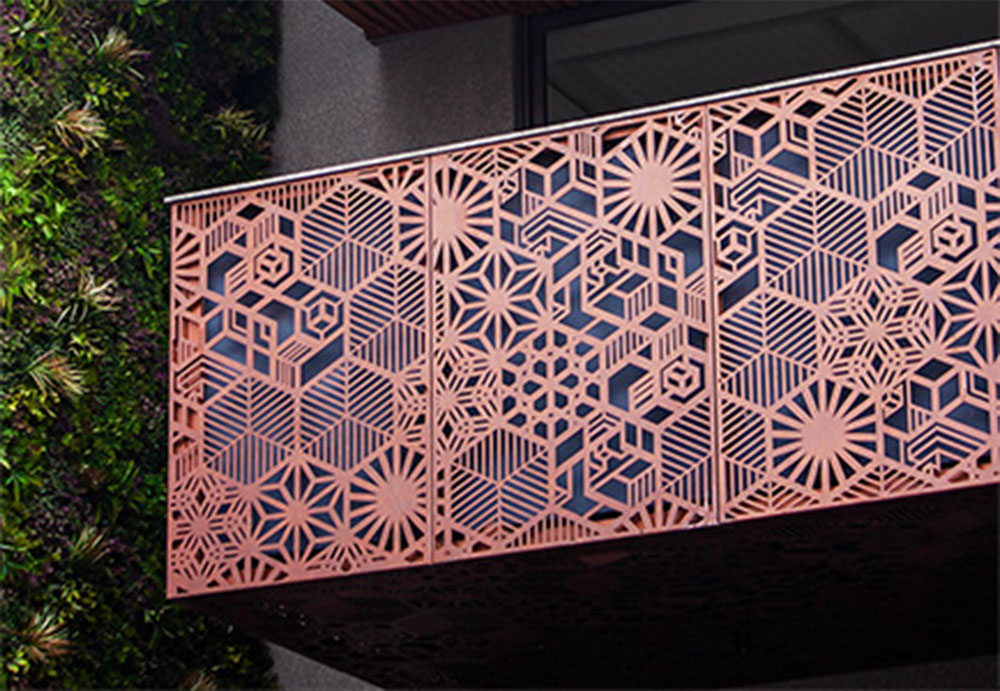
Yes — and some of Metaguise's most distinctive residential commissions have been on homes with traditional or Indo-contemporary architectural language. MetaCopper and MetaPatina finishes bring the warmth and craft associations of traditional precious metal to modern aluminium substrates. Parametric perforated screens in patterns derived from traditional jaali, rangoli, or geometric motifs are among the most powerful ways to combine contemporary material with cultural meaning. Metaguise's design team works with architects and homeowners to develop facade compositions that honour the cultural identity of the home while using materials that will perform for decades.3. How do I choose between 10 materials — where do I start?
Start with two questions: What climate zone is my home in? And what is the primary aesthetic intention — warm and material, or cool and precise? Climate zone determines which materials are appropriate (coastal vs inland, extreme heat vs moderate), and aesthetic intention narrows the field further. From there, Metaguise's design consultation maps your brief and budget to specific system recommendations. Most homeowners arrive at a shortlist of 2–3 systems within a single consultation, after which physical samples and 3D visualisations make the decision intuitive rather than analytical.4. Does Metaguise work across India, or only in major metros?
Metaguise delivers residential facade projects across India's Tier 1 and Tier 2 cities — including Delhi NCR, Mumbai, Bangalore, Ahmedabad, Pune, Hyderabad, Chennai, Chandigarh, Jaipur, Kochi, and Lucknow. The company's in-house fabrication facility produces panels that are delivered to any project site in India, and Metaguise's installation team travels to project locations as standard. For homeowners commissioning in Tier 2 cities or beyond major metro boundaries, the process begins with a video consultation and site documentation, followed by a site visit at design development stage. Metaguise also works with local architects in Tier 2 markets as facade specialists on their residential commissions.House Exterior Design India: 10 Materials That Look Premium and Last 30+ Years
11-05-26 | Material Spotlight
Key Takeaways
• House exterior design in India demands materials that survive decades of extreme heat, monsoon moisture, UV radiation, and coastal or industrial air — not just look good on day one. • This guide ranks 10 exterior materials by premium appearance, longevity, and performance across India's diverse climate zones — from coastal Chennai to arid Ahmedabad to composite Delhi NCR. • Metal systems — particularly PVDF-coated aluminium and weathering steel — consistently outperform stone, HPL, and painted surfaces on the combination of design freedom, durability, and total cost of ownership. • Each material is mapped to the Metaguise system that best delivers its aesthetic — with honest assessments of where each material excels and where it falls short in Indian conditions.
What Makes an Exterior Material Truly 'Premium' in the Indian Context?
The word 'premium' is among the most overused in Indian real estate and construction marketing. Every developer uses it; almost none defines it. For the purpose of choosing a house exterior design India material that genuinely earns the label, three criteria matter: visual quality at installation, performance across India's climatic extremes over decades, and total cost of ownership relative to alternatives. According to a January 2026 report by IBEF, India's construction sector is expected to build over 35 billion square feet of new built space by 2050 — double today's stock — and buildings already contribute 25% of the country's total emissions. Against that backdrop, material choice is not just an aesthetic decision. It is a structural one, a financial one, and — increasingly — a sustainability one. The 10 materials ranked in this guide are evaluated against all three criteria. Some score highest on visual drama; some on longevity; some on the combination of both. All are materials that real Indian homeowners, architects, and developers are specifying in 2026 — not theoretical options from an international design journal. And all are placed in the context of India's climatic reality: a country that subjects its buildings to some of the most demanding weather conditions on earth, including 45°C+ summer peaks, monsoon relative humidity above 90%, and coastal salt air that corrodes unprotected metal within months. Metaguise's decade of experience delivering 1,800+ facade projects across India — from coastal Kerala to landlocked Rajasthan, from South Delhi bungalows to Ahmedabad luxury compounds — gives it a uniquely comprehensive view of which materials deliver on their promises over time, and which do not. This guide reflects that accumulated knowledge.
Metal Cladding: The Top Choice for Premium Longevity in Indian House Exteriors
No other exterior material category matches the combination of design freedom, climate performance, and long-term durability that metal cladding delivers for Indian homes in 2026. Here is why — and how Metaguise's systems realise that potential: 1. PVDF-Coated Aluminium Panel Systems PVDF-coated aluminium is the benchmark material for premium home exterior design in India — and with good reason. It does not rust, does not crack under the thermal cycling that destroys stone-to-mortar bonds in Delhi and Ahmedabad, and maintains colour fidelity for 25–30 years in India's intense UV environment. Metaguise's MetaFlute (vertical fluted panels), MetaCassette (flat cassette panels), and SolidPanel (seamless flush surfaces) are all fabricated in high-grade aluminium with PVDF finish options across 50+ colours. Installed cost: ₹900–1,500 per sq ft. Design life: 40–50 years. Maintenance: annual cleaning only. This is the material that defines Gurgaon's Golf Course Road, Mumbai's BKC, and South Delhi's most architecturally intentional bungalows — for good reason. 2. Parametric Aluminium — Sequin, Coin, Fold, Pyramid Beyond flat or fluted panels, Metaguise's parametric product range — MetaSequin, MetaCoin, MetaFold, and MetaPyramid — delivers three-dimensional, computationally-generated surface compositions that are unique to each project. These are not just premium in appearance; they are architecturally irreproducible. No local contractor can copy a MetaSequin elevation because the geometry of each panel is the product of a mathematical script unique to the project. Premium longevity here is both material (same aluminium substrate, same PVDF warranty) and intellectual — the design cannot be devalued by a neighbour's cheaper imitation. 3. Weathering Corten Steel Metaguise's MetaCorten system brings weathering steel to Indian residential architecture in a controlled, architect-specified, structurally engineered application. Corten's distinguishing characteristic is its trajectory: it gets richer over time. The initial orange-rust patina deepens and stabilises within 2–3 years of installation, creating a warm, textured surface that is unmistakably material. Design life is 50+ years with near-zero maintenance in inland Indian climates. Installed cost: ₹1,100–1,800 per sq ft depending on application. Not suitable within 5 km of the coast. Best suited for inland villas, farmhouses, and statement residential projects in NCR, Gujarat, Maharashtra, and Rajasthan. 4. Anodised Aluminium — The Coastal Premium Standard For houses within the coastal influence zone — typically within 5–15 km of the sea in cities like Mumbai, Goa, Chennai, Kochi, and Visakhapatnam — anodised aluminium is the premium metal specification of choice. Anodising creates a hard, integral oxide layer on the aluminium surface that is significantly more resistant to salt-air corrosion than any coating-based system. Metaguise's anodised finish range is available across its full product portfolio, making the coastal upgrade for any system — MetaFlute, MetaCassette, MetaSequin — that would otherwise be specified in PVDF for an inland project. Design life with anodised finish in coastal conditions: 30–40 years.
Stone, HPL, and Glass: Pros and Cons for Indian Home Exteriors
The three principal alternatives to metal cladding in India's premium residential market each have genuine strengths — and specific limitations that are worth understanding honestly before specifying. 5. Natural Stone — Granite, Sandstone, Quartzite Natural stone carries a quality signal in the Indian market that is difficult to replicate: it reads as permanent, ancestral, and materially authoritative. Polished granite on a bungalow plinth says something that a painted surface cannot. The performance reality, however, is more complicated. Stone is heavy — granite cladding typically weighs 25–75 kg/m², placing significant additional structural load on walls and foundations. In Delhi NCR's thermal cycling (below 0°C in January, above 45°C in May), stone-to-mortar bonds experience cumulative stress that leads to delamination and spalling — particularly on south and west elevations. On south-facing granite cladding in NCR, this failure mode typically manifests within 8–15 years. Stone also absorbs moisture, and the grout lines that hold cladding panels are persistent failure points in monsoon-heavy climates. Best used as: plinth bands, accent features, and protected north-facing walls. Not recommended as the whole-facade solution on thermally exposed Indian homes. 6. High-Pressure Laminate (HPL) HPL panels have found a market in mid-tier residential and commercial projects across India — and their appeal is understandable. The price point is accessible (₹650–950 per sq ft installed), the visual range is wide (wood grain, stone texture, solid colour), and the installation is relatively simple. The honest performance assessment for Indian conditions is mixed. HPL performs adequately on north and east-facing facades where UV exposure is limited. On south and west exposures in NCR, Ahmedabad, or Hyderabad, UV-driven colour shift begins within 5–7 years, and the organic resin core can delaminate at panel edges if moisture sealing is not maintained. HPL is a genuine value option for budget-constrained residential projects. For luxury homeowners who intend to stay in their home for 20+ years, the 10–15 year replacement cycle makes the economics less compelling than they first appear. 7. Architectural Glass Glass on residential buildings creates a visual quality that is globally aspirational — lightness, transparency, and the impression of space. The challenge in India's residential context is thermal performance: unshaded single-skin glazing on west-facing elevations in Delhi, Ahmedabad, or Hyderabad produces solar heat gain that makes adjacent interior spaces functionally uncomfortable in summer. The solution — high-performance solar control glazing combined with external shading elements — is both technically correct and architecturally elegant. Metaguise's MetaFin architectural fin system is the most effective metal shading solution for glass-heavy Indian facades: fins projected from the facade plane at calculated angles create shadow zones on glazing during peak solar hours while retaining visual lightness. Glass + MetaFin is among the most sophisticated facade combinations available for Indian luxury homes. 8. Terracotta and Ceramic Cladding Terracotta and architectural ceramic tiles have seen a revival in Indian premium residential architecture — particularly in the South (where the material resonates with Dravidian temple building traditions) and in boutique hospitality projects across Rajasthan and Kerala. The material is genuinely beautiful: warm, textured, and rooted in Indian material culture. Performance limitations are worth noting: terracotta is heavy (15–25 kg/m²), requires skilled installation, and is vulnerable to cracking under thermal shock in NCR's extreme temperature cycling. It is best specified on protected or north-facing elevations, where sun exposure is limited and the material can be appreciated for its tactile and cultural richness without being stressed by thermal dynamics. 9. Fibre Cement Board Fibre cement is a legitimate workhorse material for residential exteriors in India's mid-tier market — durable, reasonably weather-resistant, fire-rated, and significantly lighter than stone. The premium ceiling, however, is low: fibre cement always reads as utilitarian rather than luxurious, and the colour fidelity of painted fibre cement in India's UV conditions follows the same 5–7 year cycle as painted masonry. It has its place in developer housing and contractor-led residential construction where budget is the primary constraint. It does not have a compelling argument in luxury residential projects, where the cost difference between fibre cement and premium metal cladding is marginal relative to total project investment. 10. Exposed Concrete and Board-Formed Surfaces The most design-forward option on this list — and the most demanding to execute well — exposed concrete and board-formed surfaces have become a marker of architectural seriousness in India's premium residential market. When executed by a skilled architect and contractor, board-formed concrete achieves a visual gravity and material honesty that no cladding can replicate: it is the building itself, not a skin applied to it. The performance challenges in India are significant: concrete requires specialist formwork, expert finishing, and diligent sealing to resist monsoon moisture ingress and biological growth. In high-humidity coastal cities, unsealed or poorly sealed exposed concrete facade surfaces can develop efflorescence and biological staining within 3–5 years. For projects where the architectural intent demands this material, the answer is an experienced contractor, appropriate sealants, and a maintenance plan. It is not a material for every homeowner — but in the right hands, it is among the most powerful.
Performance in Indian Weather Zones: What Works Where
India's climatic diversity means that no single material specification is universally optimal. The following framework maps the materials above to performance by climate zone: Hot-Arid (Rajasthan, Gujarat, Telangana): Best Choices PVDF-coated aluminium (high SRI, colour-stable in extreme UV), MetaCorten weathering steel (inland climate ideal for stable patina formation), terracotta accents on protected faces. Avoid: uncoated stone on south/west faces, dark HPL on exposed elevations. Warm-Humid and Coastal (Goa, Kerala, Tamil Nadu Coast, Mumbai): Best Choices Anodised aluminium (corrosion-resistant in salt air), glass with MetaFin shading (lightness + solar control), board-formed concrete with specialist sealing (architectural prestige). Avoid: MetaCorten within 5 km of sea, uncoated stone (moisture absorption + biological growth risk). Composite Climate (Delhi NCR, Pune, Bangalore, Hyderabad): Best Choices The broadest material palette applies here. PVDF-coated aluminium systems, MetaCorten (in DLF Phase bungalows and Sohna Road villas), architectural glass with MetaFin shading, and parametric metal systems all perform excellently. Natural stone is suitable for plinths and accent features. HPL is acceptable on north/east faces. Composite climate cities offer Metaguise's full system range — making them the ideal markets for the most architecturally ambitious residential facade commissions.
How to Mix Materials for Maximum Visual Impact on Indian Homes
The most sophisticated house exterior design India projects of 2026 are not single-material compositions. They are precisely weighted combinations — where each material is used where it performs best and reads most powerfully, and the transitions between materials are designed as intentional architectural moments rather than accidents. A highly effective combination for an NCR bungalow: a sandstone plinth (visual weight and cultural grounding at street level), a MetaFlute aluminium body (precision, depth, and contemporary language on the primary wall), dark-frame glazing at the ground floor living zone, and a MetaFin fin system shading the west-facing first-floor windows. This four-material composition achieves visual richness, climatic intelligence, and architectural clarity simultaneously — none of which a single-material specification could deliver as effectively. For a Sohna Road villa: MetaCorten on the boundary wall and primary mass, MetaWood finish (aluminium with a timber-look PVDF coating) on the entrance soffit and canopy, and clear glazing on the full-height living room face. The material palette reads as warm, natural, and materially rich — without the maintenance burden of actual timber or the structural weight of stone. Metaguise's MetaSurface finish range — MetaWood, MetaPatina, MetaGrey, MetaCopper, MetaCorten — is specifically designed to enable these multi-material compositions within a single coordinated system. The colour and material relationships between all finishes in the range have been developed to work in combination, ensuring that hybrid material elevations designed with Metaguise systems achieve visual coherence rather than arbitrary variety.
Frequently Asked Questions
1.Which exterior material lasts the longest on an Indian home?
PVDF-coated aluminium has the longest effective service life of any exterior cladding material in India's conditions — typically 40–50 years with no structural degradation and only annual cleaning required. Weathering Corten steel, in inland climates, has a similarly long design life of 50+ years. Both significantly outlast natural stone (which delaminates under thermal cycling within 8–20 years on exposed Indian elevations), HPL (which UV-degrades within 5–10 years on south/west-facing elevations), and painted surfaces (which require repainting every 3–5 years in NCR conditions). Metaguise systems carry a 10-year finish warranty and are engineered for a 40–50 year material service life.2.Is metal cladding suitable for a traditional or heritage-style Indian home?
Yes — and some of Metaguise's most distinctive residential commissions have been on homes with traditional or Indo-contemporary architectural language. MetaCopper and MetaPatina finishes bring the warmth and craft associations of traditional precious metal to modern aluminium substrates. Parametric perforated screens in patterns derived from traditional jaali, rangoli, or geometric motifs are among the most powerful ways to combine contemporary material with cultural meaning. Metaguise's design team works with architects and homeowners to develop facade compositions that honour the cultural identity of the home while using materials that will perform for decades.3. How do I choose between 10 materials — where do I start?
Start with two questions: What climate zone is my home in? And what is the primary aesthetic intention — warm and material, or cool and precise? Climate zone determines which materials are appropriate (coastal vs inland, extreme heat vs moderate), and aesthetic intention narrows the field further. From there, Metaguise's design consultation maps your brief and budget to specific system recommendations. Most homeowners arrive at a shortlist of 2–3 systems within a single consultation, after which physical samples and 3D visualisations make the decision intuitive rather than analytical.4. Does Metaguise work across India, or only in major metros?
Metaguise delivers residential facade projects across India's Tier 1 and Tier 2 cities — including Delhi NCR, Mumbai, Bangalore, Ahmedabad, Pune, Hyderabad, Chennai, Chandigarh, Jaipur, Kochi, and Lucknow. The company's in-house fabrication facility produces panels that are delivered to any project site in India, and Metaguise's installation team travels to project locations as standard. For homeowners commissioning in Tier 2 cities or beyond major metro boundaries, the process begins with a video consultation and site documentation, followed by a site visit at design development stage. Metaguise also works with local architects in Tier 2 markets as facade specialists on their residential commissions.Related Articles
Related Articles
Living, Breathing Facades: The Science and Soul of MetaPatina
There’s something poetic about materials that age with grace. That shift color with time, deepen with exposure, and reveal new layers of beauty as they weather. MetaPatina, our living metal facade surface, is a tribute to that very idea - a facade that doesn’t just protect a building, but brings it to life...
06-04-25 | Material Spotlight
5 Reasons to Choose MetaSequin for Your Facade
At Metaguise, we believe the facade of a building isn’t just its outer layer - it’s its identity. And in today’s design landscape
10-11-25 | Material Spotlight
The Power of Perforation: Breathing Life, Light & Luxury into Metal Facades
At Metaguise, we believe the facade of a building isn’t just its outer layer - it’s its identity. And in today’s design landscape
17-11-25 | Material Spotlight
Perforated Metal Facade panels in 2026: Benefits, Design uses & Architectural Guide
Perforated metal facade panels are architectural cladding systems made from aluminium or steel sheets with precision-cut patterns.
09-12-25 | Material Spotlight
Social
Legal
Privacy Policy|Terms & Conditions