.png)




.png)
Griha Pravesh in the Age of Parametric Design: When Your Bungalow's First Impression Costs ₹2 Crore
19-04-26 | Architectural Insights
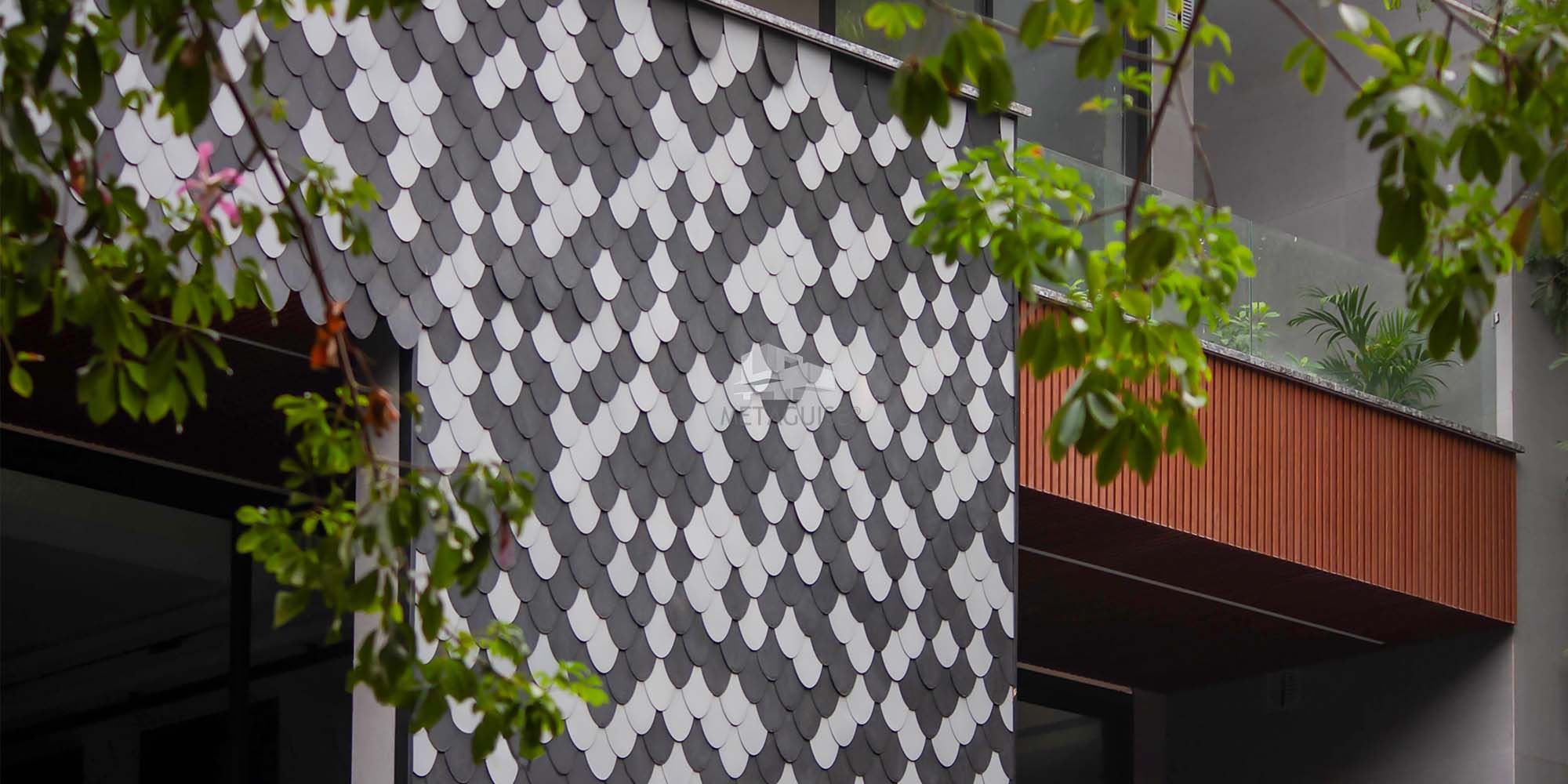
The WhatsApp message arrives at 11:47 PM. It's a photograph - shot on an iPhone 15 Pro Max, no filter needed - of a three-storey bungalow in Hyderabad, bathed in the amber glow of strategically placed uplights. The facade appears to move, even in a still image. Thousands of brushed-gold metal elements cascade across the elevation like a frozen waterfall, each panel catching light at a slightly different angle, creating depth that makes the building look alive. The caption reads: "Finally happening. Griha pravesh confirmed for Dhanteras. Can't believe we pulled this off." This is the new anxiety of India's affluent homeowners in 2025 - not whether the interiors will be ready, not whether the imported marble arrived on time, but whether the facade will photograph well enough for the single most documented moment in upper-middle-class Indian life: the housewarming ceremony. Griha pravesh has always been sacred. The rituals - the coconut breaking, the boiling of milk until it overflows, the first footsteps across the threshold carrying a kalash - remain unchanged across generations. But the context has shifted seismically. Your new home is no longer unveiled to a handful of relatives and neighbours who happen to walk past. It is announced to 847 Instagram followers, immortalised in a professionally shot drone video, and becomes the benchmark against which every subsequent family gathering, Diwali party, and daughter's engagement will be measured. And that announcement begins - before the guest even rings the bell - with what they see from the street.
When Architecture Becomes the Invitation
Rajesh Malhotra, a textile export business owner in Surat, had always imagined his retirement home would be "something different." He'd traveled extensively - Dubai, Singapore, London - and returned frustrated by how little his architect seemed to push beyond standard elevations. Stone cladding. Glass railings. Maybe some jaali work if he insisted on "Indian elements." The render looked fine. But fine wasn't why he was spending ₹18 crore. "I told my architect, I want people to stop their cars," Rajesh recalls. "Not because it's loud or garish, but because they've never seen a residential building do that before. I wanted the house to feel like it was designed, not just built." His architect introduced him to parametric facade systems - specifically, a combination of MetaCoin panels that would wrap the front and side elevations in a gradient of brass-toned metal scales. Each of the 2,847 panels was unique, oriented at algorithmically-determined angles to create a wave-like pattern that shifted as you moved past the building. During the day, it shimmered like molten gold. At dusk, it became a study in shadow and geometry. The facade budget: ₹2.1 crore. Nearly 12% of the total project cost. "My wife thought I'd lost my mind," Rajesh admits. "But the day we did the griha pravesh - Dussehra 2024 - and she saw 200 people gathered outside just staring at the building before they even entered, she got it. The pundit doing the ceremony kept pausing to take photos. That's when you know you've built something." "Luxury today is defined less by logos and more by the stories products tell about their owners - authenticity, craftsmanship, and the demonstration of taste have replaced overt displays of wealth." - McKinsey & Company, Luxe Redux: New Luxury Consumers and What They Want
The ₹2 Crore Question: Why Facades Command This Investment
To understand why discerning homeowners are allocating 15–20% of their construction budgets to the building envelope, you need to grasp what a parametric metal facade actually delivers - and it's far more than curb appeal.
The Unrepeatable First Impression
You get exactly one chance to reveal your home. Unlike interiors, which guests experience progressively over multiple visits, the exterior is consumed in a single glance - from the car, from the street, in the drone footage that will live on YouTube forever. That first impression doesn't just set a tone; it establishes whether your home is perceived as a custom commission or an expensive spec build. Traditional cladding - stone, glass, even conventional metal panels - reads as material application. Parametric systems read as authorship. The difference is the difference between buying a tailored suit and buying Tom Ford ready-to-wear. Both are expensive. Only one is made for you.
The Neighbour Benchmark Effect
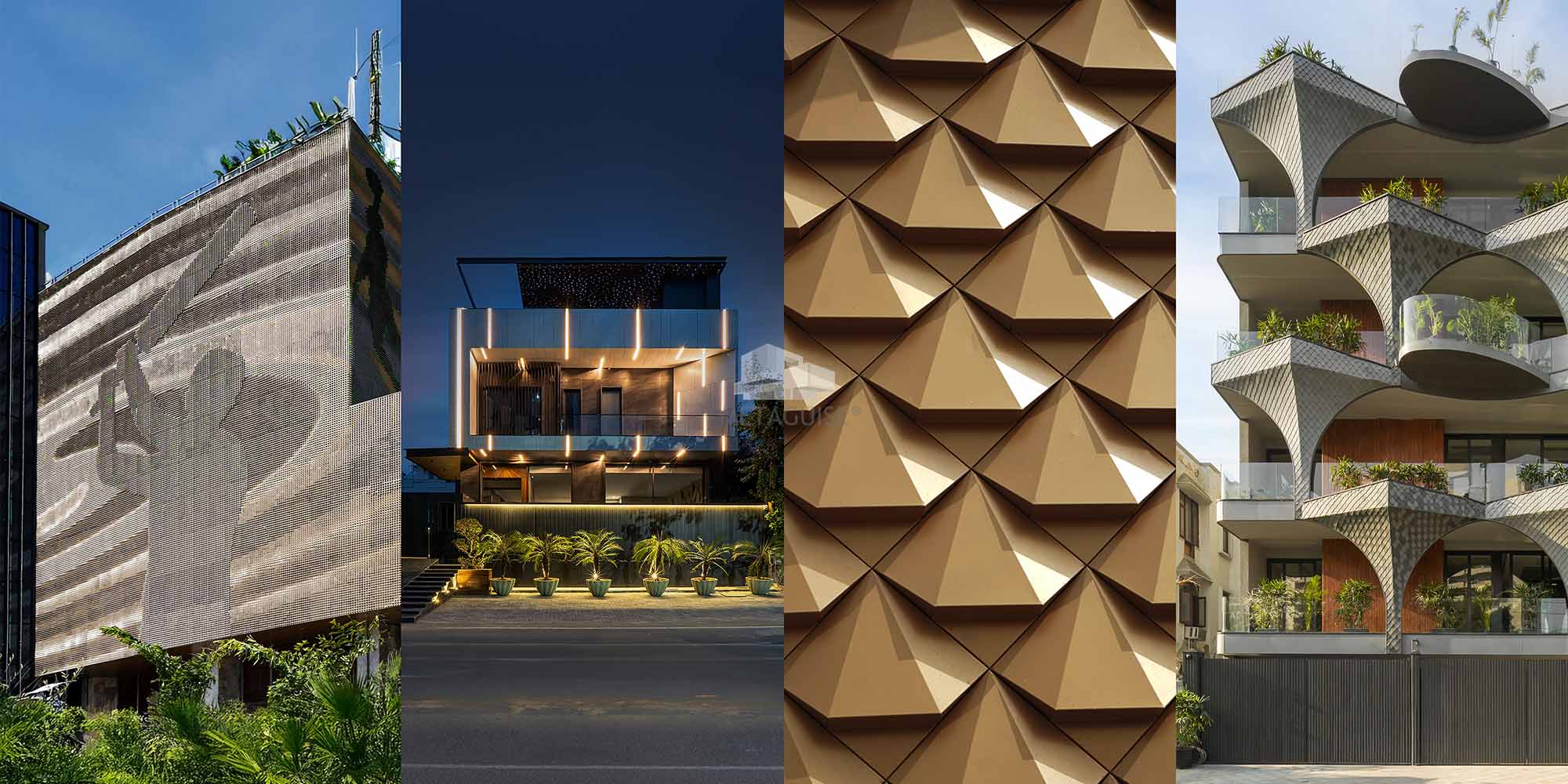
In gated communities and villa plots across Gurgaon, Bangalore, and Pune, there's an unspoken arms race. Not of size - plot sizes are fixed - but of architectural distinctiveness. When your neighbour's ₹12 crore bungalow looks like it could be in any upscale neighbourhood, and yours looks like it was designed by someone who studied at the Architectural Association, you've won a game you didn't even know you were playing. Systems like MetaHive and MetaBlox ensure non-replicability. The parametric logic generating the panel layout means even if your neighbour hires the same facade partner, their building will have an entirely different rhythm, density, and visual signature.
The Legacy Anchor
Conversations we've had with homeowners reveal a recurring theme: this is likely the last house they'll build. Not the last property they'll own, but the last one they'll personally conceptualise, supervise, and inhabit as a primary residence. It's the home their grandchildren will remember. The backdrop for every family photograph for the next 30 years. In that context, ₹2 crore stops being an expense and becomes an heirloom investment. The facade is the part of the house that doesn't get renovated, doesn't go out of style, and continues to perform its function - announcing that this family valued beauty and precision - long after you're gone.
Timing the Reveal: The New Griha Pravesh Season
There's a phenomenon happening that even seasoned architects have started noticing: construction timelines are being reverse-engineered from auspicious dates. Families aren't waiting for the house to be ready and then checking the panchang. They're picking Dhanteras, Dussehra, Akshaya Tritiya, or Makar Sankranti first, then building the schedule backward. This creates what one Delhi-based developer calls "the October Crunch" - a three-month window from Dussehra through Makar Sankranti when facade installations are running 24/6 to meet ceremony deadlines. The urgency isn't arbitrary. In India's luxury real estate social fabric, housewarming isn't just a ritual; it's a public debut. You can delay it, but you can't redo it. Priya and Kunal Mehta had their Bangalore villa's structure completed by May 2024. They could have moved in by August. But their griha pravesh was locked for Diwali - not the weekend before, not the weekend after, but on Dhanteras 2024. The facade installation - an intricate MetaCassette system with custom perforations depicting lotus motifs - was completed 36 hours before the ceremony. "We had the pundit, the caterers, the decorator all booked for months," Priya explains. "Delaying wasn't an option. Our facade partner understood that this wasn't a construction deadline - it was a family milestone. They made it happen."
What ₹2 Crore Actually Buys You
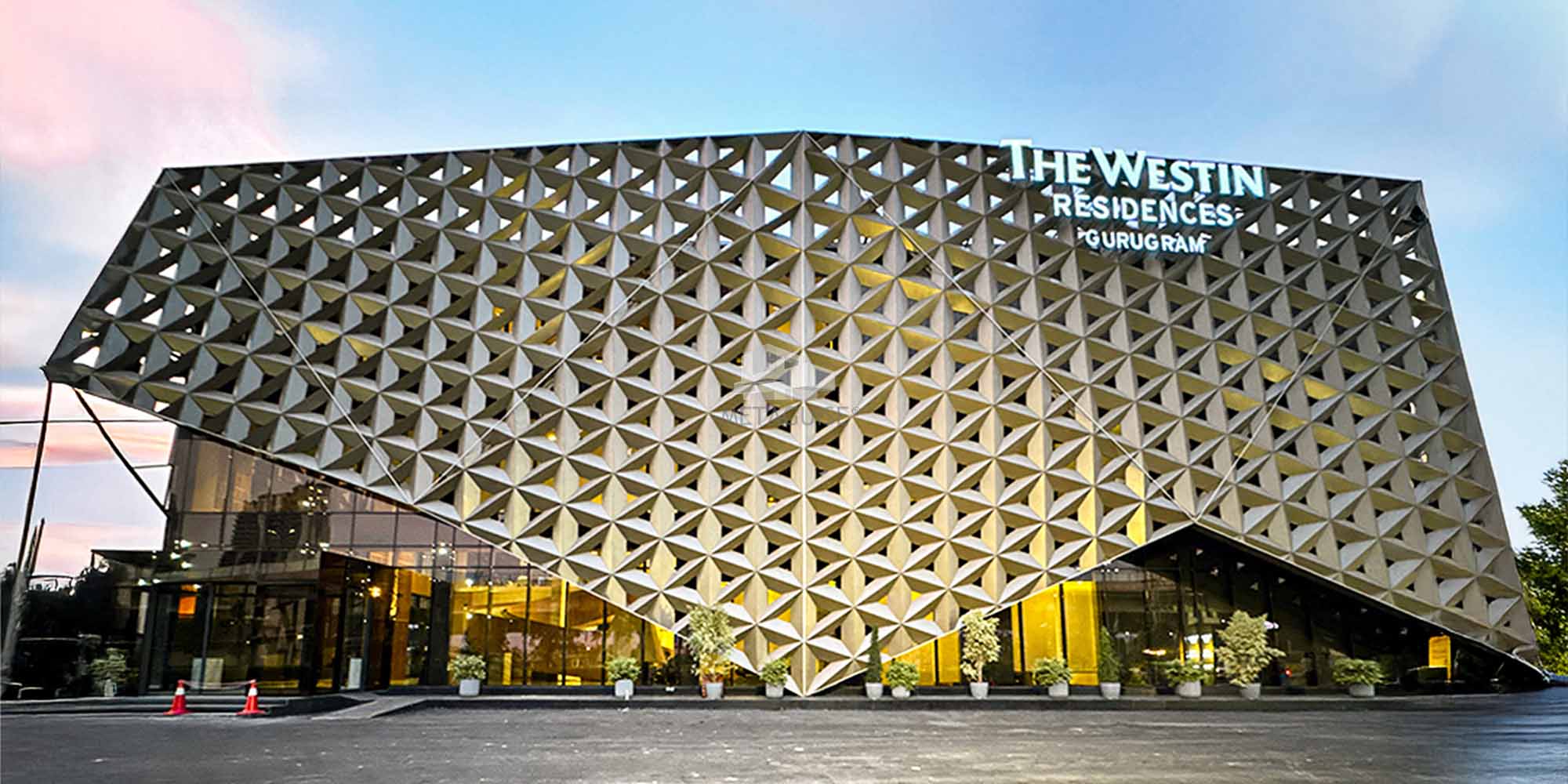
Let's be specific. For a 6,000-square-foot facade using parametric metal systems, a ₹1.8–2.5 crore investment typically includes: Computational design services: Architects and parametric designers translate your vision, site context, and personal story into algorithmic instructions that generate the panel geometry Custom panel fabrication: Each of 2,000–4,000 metal panels CNC-cut to unique specifications, not stamped from a template Premium metal selectionStructural engineering: The subframe, fixings, and wind-load calculations that ensure your shimmering facade survives monsoons and doesn't rattle in Delhi's summer dust storms Installation and integration: On-site assembly that aligns perfectly with fenestration, lighting, and landscaping - this is where computation meets craftsmanship Lighting design: Because a parametric facade that isn't lit at night is a ₹2 crore opportunity wasted; the interplay of uplights, grazing fixtures, and shadow becomes the home's evening identity For homeowners accustomed to interior design budgets where ₹40 lakh might furnish an entire floor, the facade number feels steep. Until you realise interiors are experienced by the 50 people who enter; the facade is experienced by the 5,000 who pass by.
Embedding Identity Into Metal
One of the most profound shifts parametric facades enable is the ability to encode meaning directly into the architecture - not through applied decoration, but through the structure itself. The Khanna family's Delhi farmhouse uses a custom MetaFold pattern where panel density increases and decreases when viewed from the main approach - visible only from a specific vantage point, invisible from others. It's not signage. It's woven into the building's geometry. A textile magnate in Ahmedabad commissioned a facade where the perforation pattern across 3,200 panels recreates the jacquard motif from his late father's first successful fabric design - a pattern visible only when backlit at night, turning the building into a private memorial that doubles as architectural innovation. These aren't decorations applied afterward. They're narratives embedded during the design computation phase, made possible only because parametric systems treat every panel as a variable, not a repetition.
The Conversation That Changes Everything
The difference between a bungalow that costs ₹18 crore and looks it versus one that costs ₹18 crore and feels priceless often comes down to a single conversation - the one where you stop asking "what does a luxury home look like?" and start asking "what should my home say about how we see beauty, craft, and permanence?" That conversation doesn't happen with a contractor. It happens with a facade partner who understands that they're not cladding a building - they're co-authoring the backdrop to your family's next chapter. Someone who has shepherded 1,800+ projects from sketch to unveiling and knows the difference between a griha pravesh and a construction handover. The families who invest ₹2 crore in their facade aren't doing it for strangers. They're doing it for the moment - three months after move-in - when their daughter's school friend's parents drop by, stand in the driveway, and ask, genuinely awed: "Who designed this?" That question, and the pride in answering it, is what the investment buys. If your bungalow's griha pravesh is approaching and you're wondering whether your elevation will live up to the milestone, start the conversation early. Explore how Metaguise's parametric facade systems can transform your vision into a building that doesn't just house your family - it announces them. Because the first impression isn't just what guests see. It's what you'll see every time you come home for the next thirty years.
Griha Pravesh in the Age of Parametric Design: When Your Bungalow's First Impression Costs ₹2 Crore
19-04-26 | Architectural Insights
The WhatsApp message arrives at 11:47 PM. It's a photograph - shot on an iPhone 15 Pro Max, no filter needed - of a three-storey bungalow in Hyderabad, bathed in the amber glow of strategically placed uplights. The facade appears to move, even in a still image. Thousands of brushed-gold metal elements cascade across the elevation like a frozen waterfall, each panel catching light at a slightly different angle, creating depth that makes the building look alive. The caption reads: "Finally happening. Griha pravesh confirmed for Dhanteras. Can't believe we pulled this off." This is the new anxiety of India's affluent homeowners in 2025 - not whether the interiors will be ready, not whether the imported marble arrived on time, but whether the facade will photograph well enough for the single most documented moment in upper-middle-class Indian life: the housewarming ceremony. Griha pravesh has always been sacred. The rituals - the coconut breaking, the boiling of milk until it overflows, the first footsteps across the threshold carrying a kalash - remain unchanged across generations. But the context has shifted seismically. Your new home is no longer unveiled to a handful of relatives and neighbours who happen to walk past. It is announced to 847 Instagram followers, immortalised in a professionally shot drone video, and becomes the benchmark against which every subsequent family gathering, Diwali party, and daughter's engagement will be measured. And that announcement begins - before the guest even rings the bell - with what they see from the street.
When Architecture Becomes the Invitation
Rajesh Malhotra, a textile export business owner in Surat, had always imagined his retirement home would be "something different." He'd traveled extensively - Dubai, Singapore, London - and returned frustrated by how little his architect seemed to push beyond standard elevations. Stone cladding. Glass railings. Maybe some jaali work if he insisted on "Indian elements." The render looked fine. But fine wasn't why he was spending ₹18 crore. "I told my architect, I want people to stop their cars," Rajesh recalls. "Not because it's loud or garish, but because they've never seen a residential building do that before. I wanted the house to feel like it was designed, not just built." His architect introduced him to parametric facade systems - specifically, a combination of MetaCoin panels that would wrap the front and side elevations in a gradient of brass-toned metal scales. Each of the 2,847 panels was unique, oriented at algorithmically-determined angles to create a wave-like pattern that shifted as you moved past the building. During the day, it shimmered like molten gold. At dusk, it became a study in shadow and geometry. The facade budget: ₹2.1 crore. Nearly 12% of the total project cost. "My wife thought I'd lost my mind," Rajesh admits. "But the day we did the griha pravesh - Dussehra 2024 - and she saw 200 people gathered outside just staring at the building before they even entered, she got it. The pundit doing the ceremony kept pausing to take photos. That's when you know you've built something." "Luxury today is defined less by logos and more by the stories products tell about their owners - authenticity, craftsmanship, and the demonstration of taste have replaced overt displays of wealth." - McKinsey & Company, Luxe Redux: New Luxury Consumers and What They Want
The ₹2 Crore Question: Why Facades Command This Investment
To understand why discerning homeowners are allocating 15–20% of their construction budgets to the building envelope, you need to grasp what a parametric metal facade actually delivers - and it's far more than curb appeal.
The Unrepeatable First Impression
You get exactly one chance to reveal your home. Unlike interiors, which guests experience progressively over multiple visits, the exterior is consumed in a single glance - from the car, from the street, in the drone footage that will live on YouTube forever. That first impression doesn't just set a tone; it establishes whether your home is perceived as a custom commission or an expensive spec build. Traditional cladding - stone, glass, even conventional metal panels - reads as material application. Parametric systems read as authorship. The difference is the difference between buying a tailored suit and buying Tom Ford ready-to-wear. Both are expensive. Only one is made for you.
The Neighbour Benchmark Effect
In gated communities and villa plots across Gurgaon, Bangalore, and Pune, there's an unspoken arms race. Not of size - plot sizes are fixed - but of architectural distinctiveness. When your neighbour's ₹12 crore bungalow looks like it could be in any upscale neighbourhood, and yours looks like it was designed by someone who studied at the Architectural Association, you've won a game you didn't even know you were playing. Systems like MetaHive and MetaBlox ensure non-replicability. The parametric logic generating the panel layout means even if your neighbour hires the same facade partner, their building will have an entirely different rhythm, density, and visual signature.
The Legacy Anchor
Conversations we've had with homeowners reveal a recurring theme: this is likely the last house they'll build. Not the last property they'll own, but the last one they'll personally conceptualise, supervise, and inhabit as a primary residence. It's the home their grandchildren will remember. The backdrop for every family photograph for the next 30 years. In that context, ₹2 crore stops being an expense and becomes an heirloom investment. The facade is the part of the house that doesn't get renovated, doesn't go out of style, and continues to perform its function - announcing that this family valued beauty and precision - long after you're gone.
Timing the Reveal: The New Griha Pravesh Season
There's a phenomenon happening that even seasoned architects have started noticing: construction timelines are being reverse-engineered from auspicious dates. Families aren't waiting for the house to be ready and then checking the panchang. They're picking Dhanteras, Dussehra, Akshaya Tritiya, or Makar Sankranti first, then building the schedule backward. This creates what one Delhi-based developer calls "the October Crunch" - a three-month window from Dussehra through Makar Sankranti when facade installations are running 24/6 to meet ceremony deadlines. The urgency isn't arbitrary. In India's luxury real estate social fabric, housewarming isn't just a ritual; it's a public debut. You can delay it, but you can't redo it. Priya and Kunal Mehta had their Bangalore villa's structure completed by May 2024. They could have moved in by August. But their griha pravesh was locked for Diwali - not the weekend before, not the weekend after, but on Dhanteras 2024. The facade installation - an intricate MetaCassette system with custom perforations depicting lotus motifs - was completed 36 hours before the ceremony. "We had the pundit, the caterers, the decorator all booked for months," Priya explains. "Delaying wasn't an option. Our facade partner understood that this wasn't a construction deadline - it was a family milestone. They made it happen."
What ₹2 Crore Actually Buys You
Let's be specific. For a 6,000-square-foot facade using parametric metal systems, a ₹1.8–2.5 crore investment typically includes: Computational design services: Architects and parametric designers translate your vision, site context, and personal story into algorithmic instructions that generate the panel geometry Custom panel fabrication: Each of 2,000–4,000 metal panels CNC-cut to unique specifications, not stamped from a template Premium metal selectionStructural engineering: The subframe, fixings, and wind-load calculations that ensure your shimmering facade survives monsoons and doesn't rattle in Delhi's summer dust storms Installation and integration: On-site assembly that aligns perfectly with fenestration, lighting, and landscaping - this is where computation meets craftsmanship Lighting design: Because a parametric facade that isn't lit at night is a ₹2 crore opportunity wasted; the interplay of uplights, grazing fixtures, and shadow becomes the home's evening identity For homeowners accustomed to interior design budgets where ₹40 lakh might furnish an entire floor, the facade number feels steep. Until you realise interiors are experienced by the 50 people who enter; the facade is experienced by the 5,000 who pass by.
Embedding Identity Into Metal
One of the most profound shifts parametric facades enable is the ability to encode meaning directly into the architecture - not through applied decoration, but through the structure itself. The Khanna family's Delhi farmhouse uses a custom MetaFold pattern where panel density increases and decreases when viewed from the main approach - visible only from a specific vantage point, invisible from others. It's not signage. It's woven into the building's geometry. A textile magnate in Ahmedabad commissioned a facade where the perforation pattern across 3,200 panels recreates the jacquard motif from his late father's first successful fabric design - a pattern visible only when backlit at night, turning the building into a private memorial that doubles as architectural innovation. These aren't decorations applied afterward. They're narratives embedded during the design computation phase, made possible only because parametric systems treat every panel as a variable, not a repetition.
The Conversation That Changes Everything
The difference between a bungalow that costs ₹18 crore and looks it versus one that costs ₹18 crore and feels priceless often comes down to a single conversation - the one where you stop asking "what does a luxury home look like?" and start asking "what should my home say about how we see beauty, craft, and permanence?" That conversation doesn't happen with a contractor. It happens with a facade partner who understands that they're not cladding a building - they're co-authoring the backdrop to your family's next chapter. Someone who has shepherded 1,800+ projects from sketch to unveiling and knows the difference between a griha pravesh and a construction handover. The families who invest ₹2 crore in their facade aren't doing it for strangers. They're doing it for the moment - three months after move-in - when their daughter's school friend's parents drop by, stand in the driveway, and ask, genuinely awed: "Who designed this?" That question, and the pride in answering it, is what the investment buys. If your bungalow's griha pravesh is approaching and you're wondering whether your elevation will live up to the milestone, start the conversation early. Explore how Metaguise's parametric facade systems can transform your vision into a building that doesn't just house your family - it announces them. Because the first impression isn't just what guests see. It's what you'll see every time you come home for the next thirty years.
Related Articles
Related Articles
Architectural Luxury, Within Reach: Why MetaFlutes and MetaLouvers Are the Smartest Investment in Metal Facades
In today’s built environment, luxury is no longer defined by extravagance - it’s defined by intention. It’s about refined details, enduring finishes, and design that performs as beautifully as it looks. At Metaguise, our metal facade systems - MetaFlutes, MetaLouvers, and MetaCassette Perforated - are crafted to bring that standard of architectural luxury within reach...
07-04-25 | Architectural Insights
Why Architects Are Turning to Custom Metal Louvers in 2025
There’s something quietly brilliant happening in architecture right now. As buildings become more responsive and designers look for ways to merge aesthetics with performance, one feature is making a serious comeback, custom metal louvers.
03-06-25 | Architectural Insights
The Science of Shadows: How Facade Design Shapes Light and Mood
Architecture has always been about more than structure - it’s about rhythm, reflection, and the way light interacts with space.At Metaguise, we see every innovative facade as a living canvas, one that transforms not just how a building looks, but how it feels. Light becomes our material, and shadow becomes our tool.This is the art and the science behind MetaLouvers, MetaCassette, and the entire Metaguise facade family.
13-10-25 | Architectural Insights
Custom Metal Facade Cladding in 2026: Design, Cost, Materials & Architect Guide
Explore how commercial spaces are using Metaguise facades to express identity and elevate perception.
24-11-25 | Architectural Insights
Social
Legal
Privacy Policy|Terms & Conditions