





From Sketch to Shimmer: The 18-Month Journey of Turning an Architect's Impossible Curve into 4,000 Unique Metal Panels
18-04-26 | Behind the Design
The architect's hand moved across the trace paper in one fluid gesture - a sweeping curve that seemed to defy gravity, a building elevation that breathed and undulated like fabric caught mid-billow. Beautiful. Evocative. And according to three fabricators she'd already consulted, completely impossible to build. "They kept telling me to simplify," she told us during our first meeting at her South Delhi studio. "Flatten the curve. Use repetitive panels. Make it 'practical.' But that curve was the design. Without it, the building was just another glass box." This is where most architectural visions die - in the gap between what the mind conceives and what the market believes it can deliver. But this is also precisely where we begin.
The Anatomy of "Impossible"
When architects approach us with sketches labelled "aspirational" or "international reference" by their own clients, we don't see obstacles. We see invitations. That particular curve - destined for a luxury mixed-use development in Gurgaon - would eventually become 4,247 individual metal panels, each one geometrically distinct, yet together forming a continuous shimmering surface that shifted expression as you walked past it. The 18-month journey from that first sketch to installation day is a story of translation - not compromise. Here's what actually happens when computational design meets Indian craftsmanship at scale.
Month 1-3: The Design Conversation
We don't start with "can we build this?" We start with "what are you really trying to say?" In those early weeks, our design team sat with the architect not to receive instructions, but to inhabit her vision. What did she want someone to feel when approaching the building at dusk? How should the facade read from the highway versus the pedestrian plaza? These conversations shape everything that follows. We learned that the curve wasn't arbitrary - it was choreographed to capture and reflect the evening sun back toward a planned outdoor amphitheater, creating a golden backdrop for cultural performances. Suddenly, the geometry had purpose beyond aesthetics. Parametric scripting begins: Our computational designers translate organic curves into mathematical relationships - algorithms that define how each panel varies in size, angle, and position Material mood-boarding: We explore finishes, patinas, and surface treatments that will amplify or soften the geometry's drama Performance integration: Thermal analysis, wind load calculations, and rainwater management get embedded into the design logic, not added as afterthoughts Budget calibration: We model different panel densities and fabrication approaches to find the sweet spot between impact and investment By month three, the architect had something she'd never had before: a design that was both exactly what she'd envisioned and buildable with precision.
Month 4-8: Engineering the Poetry
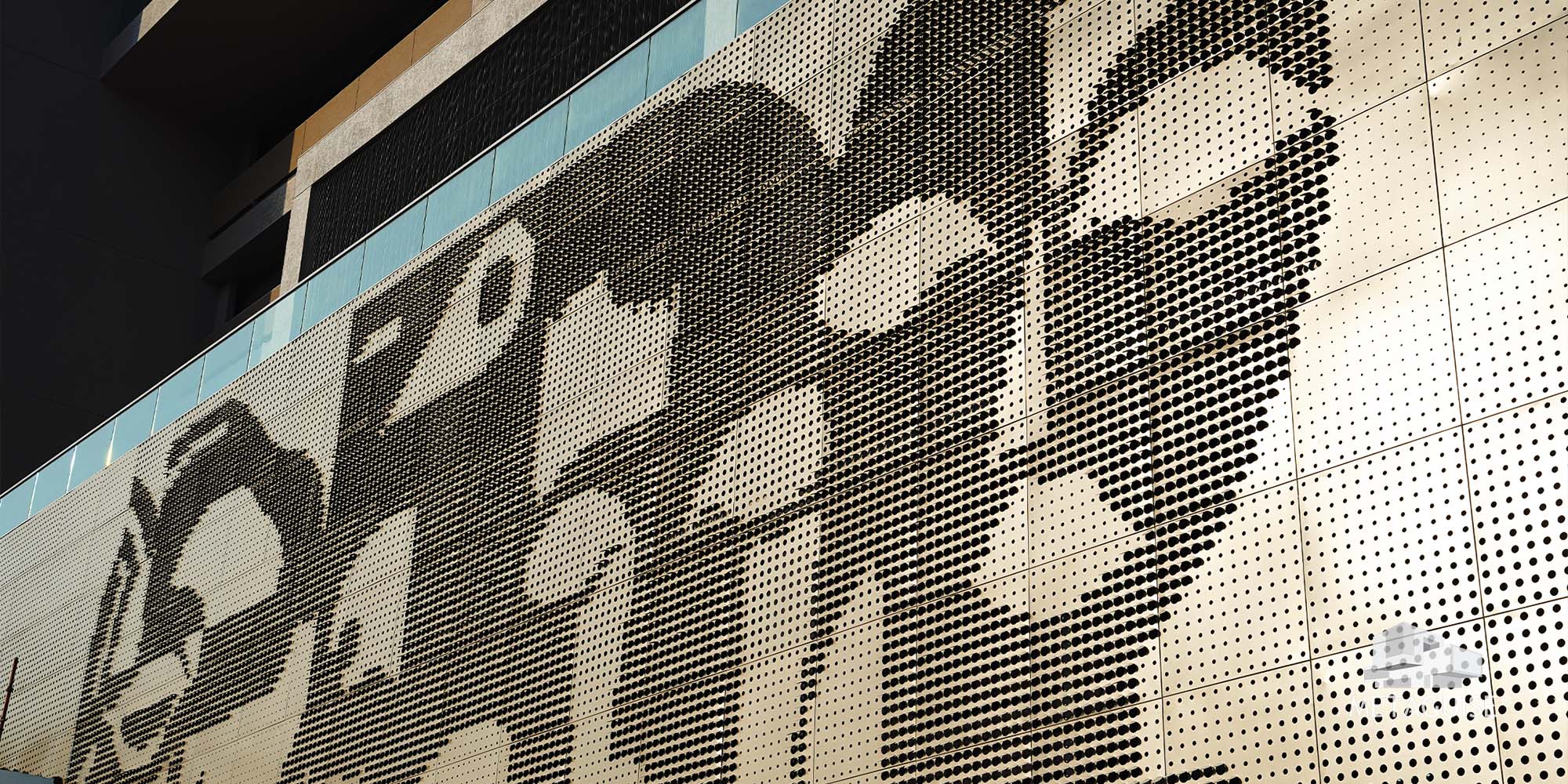
This is where art becomes engineering. Each of those 4,247 panels needed to be fabricated, tracked, and installed in perfect sequence. A single numbering error could throw off the entire gradient. Our in-house engineering team developed a digital twin of the entire facade - a virtual model where every bolt, bracket, and panel had a unique identity and GPS coordinate on the building surface. "Digital manufacturing and design-to-fabrication workflows can reduce production timelines by 30-50% while increasing geometric accuracy to sub-millimeter tolerances - capabilities that are transforming architecture from a craft of approximation to one of precision." - McKinsey & Company, Manufacturing Reimagined: The Digital Revolution in Production Our MetaCoin system became the foundation - a parametric facade solution specifically engineered for this kind of three-dimensional expression. But even within that system, customization was profound. We developed custom dies for the panel profiles, programmed CNC machines with unique cutting paths for each piece, and created a quality-control protocol that photographed and digitally verified every panel before it left the factory. You need to understand: this isn't mass production with variations. This is mass customization where variation is the system. When you're working with metals enhanced by MetaSurface finishes, every oxidation pattern, every micro-texture becomes part of the design vocabulary. We weren't just making panels. We were conducting an orchestra of 4,247 instruments, each playing a slightly different note in a composition only perceptible as a whole.
Month 9-14: Fabrication as Choreography
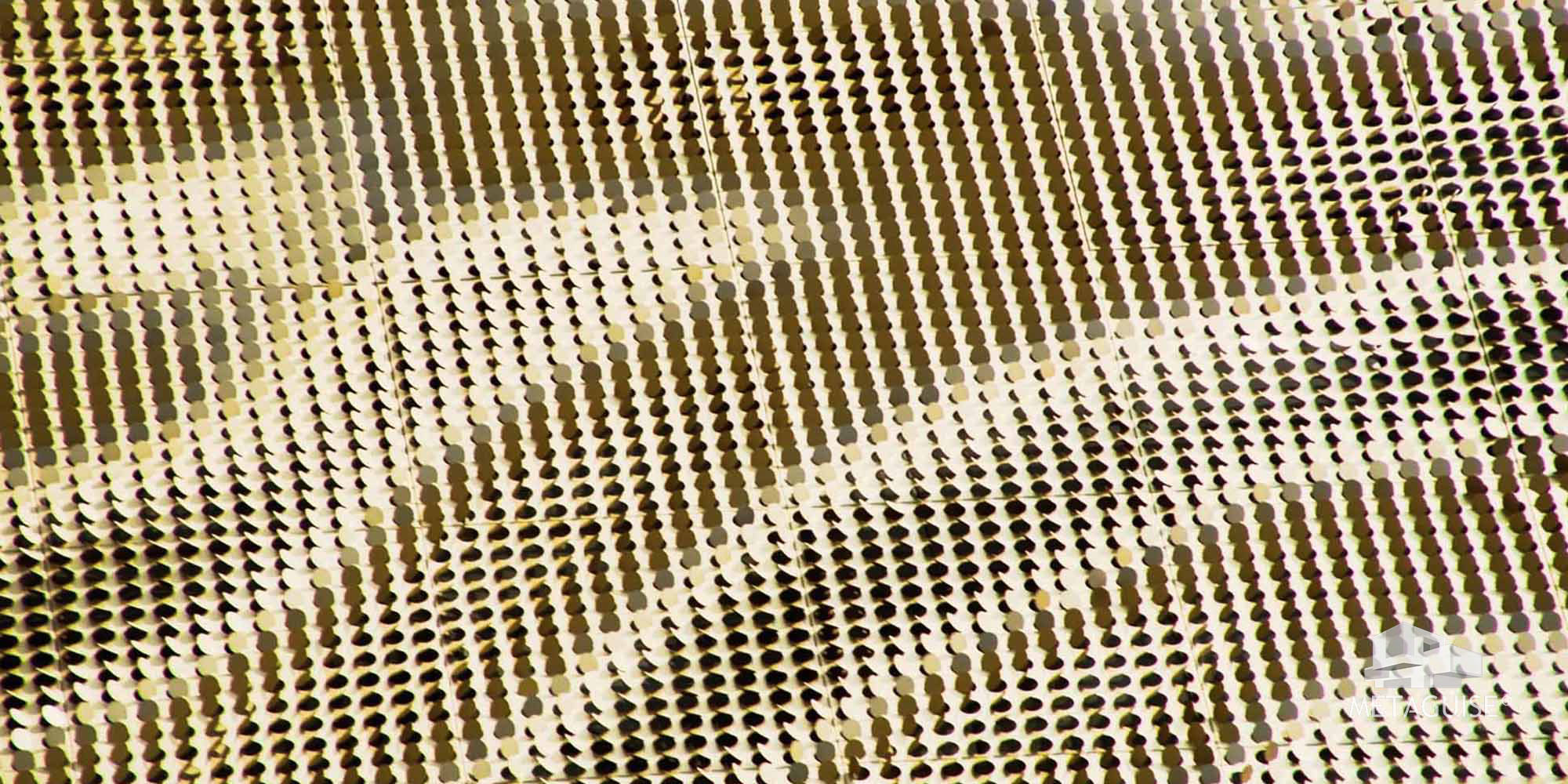
Inside our fabrication facility, the dance began. Raw metal sheets arrived. Algorithms directed cutting lasers. Press brakes folded each panel to its precise angle - some at 23 degrees, others at 31, still others at 18.7. The variation was intentional, creating depth gradients that would catch morning light differently than afternoon glow. Panel batching: We grouped panels by fabrication complexity, optimizing machine time without losing the installation sequence Finish application: Each panel received its surface treatment - some in brushed bronze, others in matte champagne gold, creating a subtle ombré effect across the elevation Pre-assembly testing: We built full-scale mockups of critical sections, testing how panels interlocked, how shadows fell, how weather would interact with the geometry Installation kitting: Panels were packaged in installation-day sequence, with each crate containing exactly what the on-site team would need for one vertical section The architect visited the factory during this phase. She walked among the racks of panels - seeing her curve fragmented into components, each one beautiful in isolation, all of them awaiting reunion. "It's like seeing the manuscript before it becomes the novel," she said.
Month 15-18: The Shimmer Emerges
Installation is reverse archaeology - you're not uncovering something buried, you're assembling something that will become permanent memory. Our site teams work from digital tablets loaded with the installation sequence. Panel MG-2047-A goes here. Panel MG-2048-B connects at this angle. The building's curve begins to emerge, one precise placement at a time. Watching a parametric facade take shape is unlike watching traditional cladding installation. With repetitive panels, you see the pattern immediately - your eye understands the logic in the first few rows. But with systems like MetaFold or MetaCassette, the magic reveals itself slowly. At 30% completion, it looks chaotic. At 60%, you start sensing rhythm. At 90%, the gradient clicks into coherence. And at 100% - when that final panel locks into place - the building exhales into its full expression. The day we completed installation, the architect stood across the street at sunset, exactly where she'd imagined this moment during that first sketch eighteen months prior. The facade caught the golden hour light and threw it back toward the amphitheater plaza in rippling waves. The curve she'd been told to abandon was now the building's defining signature, photographed and shared across architecture forums before the interior was even complete.
What Makes This Journey Different
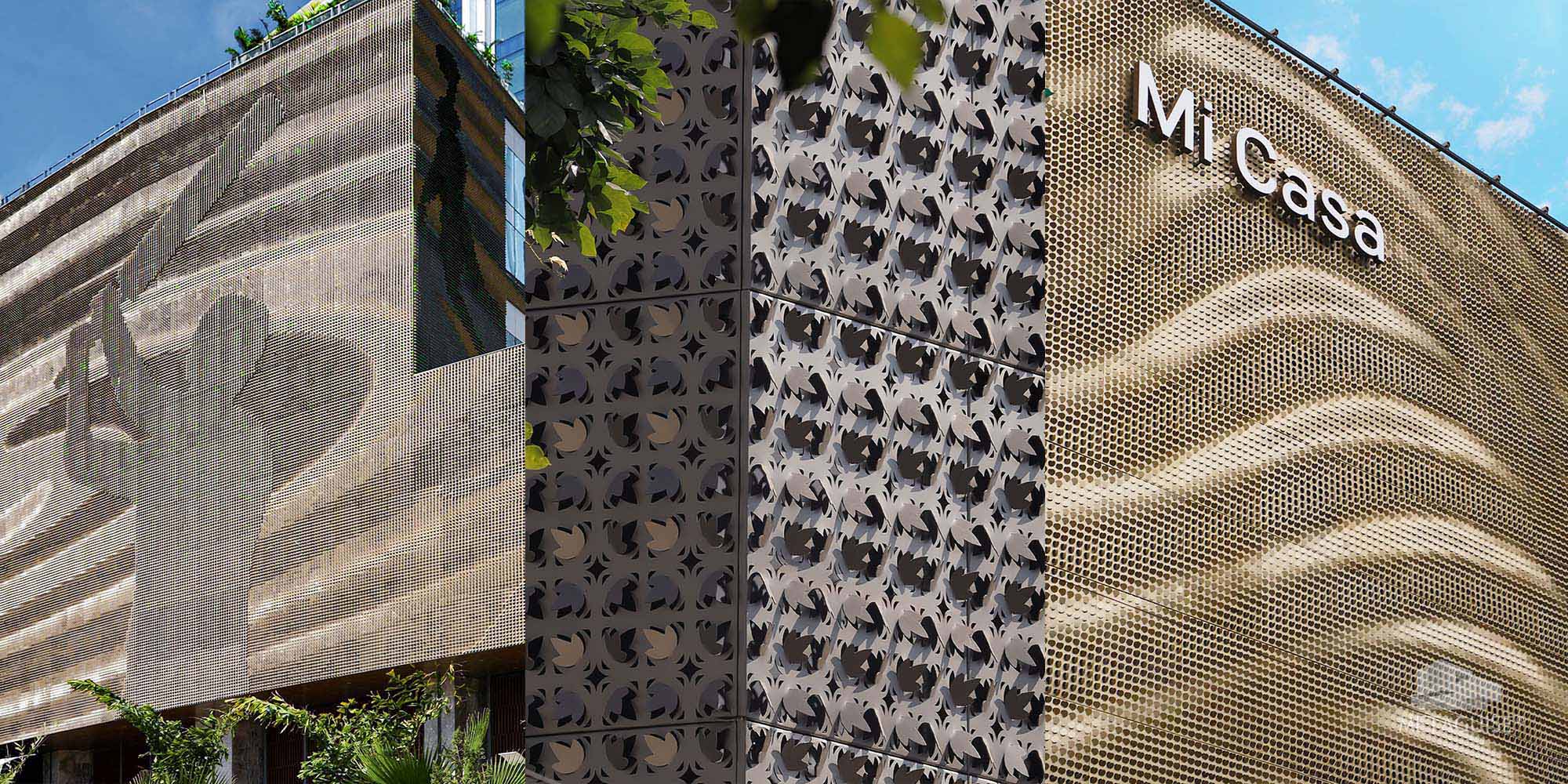
You might wonder why this process takes eighteen months when traditional facade cladding can be specified and installed in six. The answer is simple: we're not installing cladding. We're engineering architectural identity. Traditional facades treat the building skin as separate from design - something selected from a catalog after the architecture is finalized. Parametric facades are the architecture. The geometry, the performance, the visual narrative - all of it is embedded in the computational logic from day one. That integration requires time, collaboration, and a manufacturing ecosystem that doesn't exist in the conventional construction supply chain. This is why we built everything in-house. When design, engineering, and fabrication exist under one roof, the feedback loops that typically add months of delay become conversations that happen across the hallway. An installation challenge discovered on-site doesn't trigger change orders and redesign battles - it triggers a WhatsApp call between our site supervisor and our engineering lead, solved in real-time with digital model adjustments. No lost translation: Your design intent doesn't get filtered through vendor quotations and lowest-bidder interpretations Continuous optimization: We can adjust panel layouts mid-fabrication to improve installation efficiency without compromising aesthetics Quality continuity: The same team that modeled the facade digitally is the team certifying each panel before it ships Accountability singularity: You have one partner responsible for the entire outcome, not a chain of subcontractors pointing fingers when something misaligns
The Facades That Change How You See
Six months after installation, we visited the building again. It had become a local landmark - the place people gave directions relative to. "Turn left at the shimmer building." Residents in the luxury apartments above had discovered something unexpected: the facade's expression changed throughout the day, giving them a living artwork that never repeated the same light performance twice. This is what parametric design accomplishes that static architecture cannot. It creates buildings that participate in their environment - responding to sun angles, weather, viewing distance, even the speed at which you're moving past them. A facade designed with MetaCoin reads differently from a car on the highway than it does from the café across the street. That multiplicity of experience is intentional, encoded into the mathematics that generated those 4,247 unique panels. The architect told us something during the project handover that has stayed with us: "I used to think parametric design was about computers generating forms. Now I understand it's about computers enabling intentions that were previously impossible to execute."
Your Curve Is Waiting
If you're reading this, chances are you have a sketch in a drawer somewhere - a building elevation that felt too ambitious, a curve you were told to flatten, a facade concept that vendors called "international-only" or "not practical for India." We've heard those phrases before. We've built despite them. The journey from your sketch to shimmer doesn't require compromising your vision. It requires a partner who speaks both the language of design poetry and the discipline of engineering precision. Whether you're an architect guarding a geometry that defines your entire project, a developer seeking a facade that stops traffic and anchors brand equity, or a homeowner commissioning a residence that needs to be a signature, not a specification - we've turned impossible into installed over 1,800 times. Your curve isn't a problem to solve. It's a story waiting to be told in metal and light. Let's begin that conversation.
From Sketch to Shimmer: The 18-Month Journey of Turning an Architect's Impossible Curve into 4,000 Unique Metal Panels
18-04-26 | Behind the Design
The architect's hand moved across the trace paper in one fluid gesture - a sweeping curve that seemed to defy gravity, a building elevation that breathed and undulated like fabric caught mid-billow. Beautiful. Evocative. And according to three fabricators she'd already consulted, completely impossible to build. "They kept telling me to simplify," she told us during our first meeting at her South Delhi studio. "Flatten the curve. Use repetitive panels. Make it 'practical.' But that curve was the design. Without it, the building was just another glass box." This is where most architectural visions die - in the gap between what the mind conceives and what the market believes it can deliver. But this is also precisely where we begin.
The Anatomy of "Impossible"
When architects approach us with sketches labelled "aspirational" or "international reference" by their own clients, we don't see obstacles. We see invitations. That particular curve - destined for a luxury mixed-use development in Gurgaon - would eventually become 4,247 individual metal panels, each one geometrically distinct, yet together forming a continuous shimmering surface that shifted expression as you walked past it. The 18-month journey from that first sketch to installation day is a story of translation - not compromise. Here's what actually happens when computational design meets Indian craftsmanship at scale.
Month 1-3: The Design Conversation
We don't start with "can we build this?" We start with "what are you really trying to say?" In those early weeks, our design team sat with the architect not to receive instructions, but to inhabit her vision. What did she want someone to feel when approaching the building at dusk? How should the facade read from the highway versus the pedestrian plaza? These conversations shape everything that follows. We learned that the curve wasn't arbitrary - it was choreographed to capture and reflect the evening sun back toward a planned outdoor amphitheater, creating a golden backdrop for cultural performances. Suddenly, the geometry had purpose beyond aesthetics. Parametric scripting begins: Our computational designers translate organic curves into mathematical relationships - algorithms that define how each panel varies in size, angle, and position Material mood-boarding: We explore finishes, patinas, and surface treatments that will amplify or soften the geometry's drama Performance integration: Thermal analysis, wind load calculations, and rainwater management get embedded into the design logic, not added as afterthoughts Budget calibration: We model different panel densities and fabrication approaches to find the sweet spot between impact and investment By month three, the architect had something she'd never had before: a design that was both exactly what she'd envisioned and buildable with precision.
Month 4-8: Engineering the Poetry
This is where art becomes engineering. Each of those 4,247 panels needed to be fabricated, tracked, and installed in perfect sequence. A single numbering error could throw off the entire gradient. Our in-house engineering team developed a digital twin of the entire facade - a virtual model where every bolt, bracket, and panel had a unique identity and GPS coordinate on the building surface. "Digital manufacturing and design-to-fabrication workflows can reduce production timelines by 30-50% while increasing geometric accuracy to sub-millimeter tolerances - capabilities that are transforming architecture from a craft of approximation to one of precision." - McKinsey & Company, Manufacturing Reimagined: The Digital Revolution in Production Our MetaCoin system became the foundation - a parametric facade solution specifically engineered for this kind of three-dimensional expression. But even within that system, customization was profound. We developed custom dies for the panel profiles, programmed CNC machines with unique cutting paths for each piece, and created a quality-control protocol that photographed and digitally verified every panel before it left the factory. You need to understand: this isn't mass production with variations. This is mass customization where variation is the system. When you're working with metals enhanced by MetaSurface finishes, every oxidation pattern, every micro-texture becomes part of the design vocabulary. We weren't just making panels. We were conducting an orchestra of 4,247 instruments, each playing a slightly different note in a composition only perceptible as a whole.
Month 9-14: Fabrication as Choreography
Inside our fabrication facility, the dance began. Raw metal sheets arrived. Algorithms directed cutting lasers. Press brakes folded each panel to its precise angle - some at 23 degrees, others at 31, still others at 18.7. The variation was intentional, creating depth gradients that would catch morning light differently than afternoon glow. Panel batching: We grouped panels by fabrication complexity, optimizing machine time without losing the installation sequence Finish application: Each panel received its surface treatment - some in brushed bronze, others in matte champagne gold, creating a subtle ombré effect across the elevation Pre-assembly testing: We built full-scale mockups of critical sections, testing how panels interlocked, how shadows fell, how weather would interact with the geometry Installation kitting: Panels were packaged in installation-day sequence, with each crate containing exactly what the on-site team would need for one vertical section The architect visited the factory during this phase. She walked among the racks of panels - seeing her curve fragmented into components, each one beautiful in isolation, all of them awaiting reunion. "It's like seeing the manuscript before it becomes the novel," she said.
Month 15-18: The Shimmer Emerges
Installation is reverse archaeology - you're not uncovering something buried, you're assembling something that will become permanent memory. Our site teams work from digital tablets loaded with the installation sequence. Panel MG-2047-A goes here. Panel MG-2048-B connects at this angle. The building's curve begins to emerge, one precise placement at a time. Watching a parametric facade take shape is unlike watching traditional cladding installation. With repetitive panels, you see the pattern immediately - your eye understands the logic in the first few rows. But with systems like MetaFold or MetaCassette, the magic reveals itself slowly. At 30% completion, it looks chaotic. At 60%, you start sensing rhythm. At 90%, the gradient clicks into coherence. And at 100% - when that final panel locks into place - the building exhales into its full expression. The day we completed installation, the architect stood across the street at sunset, exactly where she'd imagined this moment during that first sketch eighteen months prior. The facade caught the golden hour light and threw it back toward the amphitheater plaza in rippling waves. The curve she'd been told to abandon was now the building's defining signature, photographed and shared across architecture forums before the interior was even complete.
What Makes This Journey Different
You might wonder why this process takes eighteen months when traditional facade cladding can be specified and installed in six. The answer is simple: we're not installing cladding. We're engineering architectural identity. Traditional facades treat the building skin as separate from design - something selected from a catalog after the architecture is finalized. Parametric facades are the architecture. The geometry, the performance, the visual narrative - all of it is embedded in the computational logic from day one. That integration requires time, collaboration, and a manufacturing ecosystem that doesn't exist in the conventional construction supply chain. This is why we built everything in-house. When design, engineering, and fabrication exist under one roof, the feedback loops that typically add months of delay become conversations that happen across the hallway. An installation challenge discovered on-site doesn't trigger change orders and redesign battles - it triggers a WhatsApp call between our site supervisor and our engineering lead, solved in real-time with digital model adjustments. No lost translation: Your design intent doesn't get filtered through vendor quotations and lowest-bidder interpretations Continuous optimization: We can adjust panel layouts mid-fabrication to improve installation efficiency without compromising aesthetics Quality continuity: The same team that modeled the facade digitally is the team certifying each panel before it ships Accountability singularity: You have one partner responsible for the entire outcome, not a chain of subcontractors pointing fingers when something misaligns
The Facades That Change How You See
Six months after installation, we visited the building again. It had become a local landmark - the place people gave directions relative to. "Turn left at the shimmer building." Residents in the luxury apartments above had discovered something unexpected: the facade's expression changed throughout the day, giving them a living artwork that never repeated the same light performance twice. This is what parametric design accomplishes that static architecture cannot. It creates buildings that participate in their environment - responding to sun angles, weather, viewing distance, even the speed at which you're moving past them. A facade designed with MetaCoin reads differently from a car on the highway than it does from the café across the street. That multiplicity of experience is intentional, encoded into the mathematics that generated those 4,247 unique panels. The architect told us something during the project handover that has stayed with us: "I used to think parametric design was about computers generating forms. Now I understand it's about computers enabling intentions that were previously impossible to execute."
Your Curve Is Waiting
If you're reading this, chances are you have a sketch in a drawer somewhere - a building elevation that felt too ambitious, a curve you were told to flatten, a facade concept that vendors called "international-only" or "not practical for India." We've heard those phrases before. We've built despite them. The journey from your sketch to shimmer doesn't require compromising your vision. It requires a partner who speaks both the language of design poetry and the discipline of engineering precision. Whether you're an architect guarding a geometry that defines your entire project, a developer seeking a facade that stops traffic and anchors brand equity, or a homeowner commissioning a residence that needs to be a signature, not a specification - we've turned impossible into installed over 1,800 times. Your curve isn't a problem to solve. It's a story waiting to be told in metal and light. Let's begin that conversation.
Related Articles
Related Articles
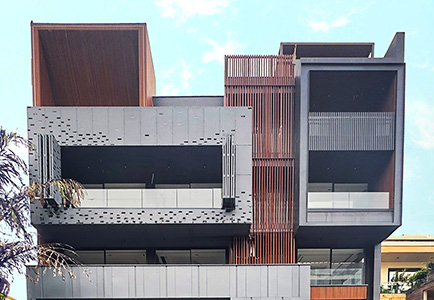
How our MetaFunction products Revolutionize Everyday Architecture
Not every building is a skyscraper or a museum. Most of the architecture we interact with daily - homes, offices, schools, stores - exists in a space that often prioritizes function over flair. But at Metaguise, we believe the two can and should coexist. That’s the vision behind MetaFunction - a product line that makes performance-driven design accessible to everyday architecture...
04-04-25 | Behind the Design
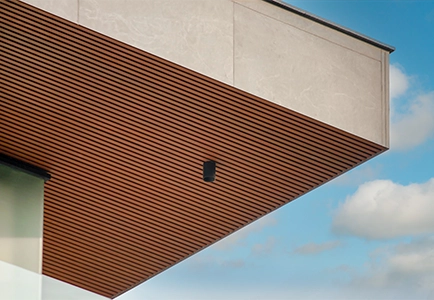
Why Facade Design Is More Than Just Aesthetic - The Role of Function, Climate, and Material
In the world of contemporary architecture, facade design is far more than a visual statement, it is a critical intersection of art, engineering, and environmental science. At Metaguise, this philosophy manifests through a dynamic portfolio of metal cladding solutions that transcend decorative appeal to deliver performance, sustainability, and contextual harmony.
15-05-25 | Behind the Design
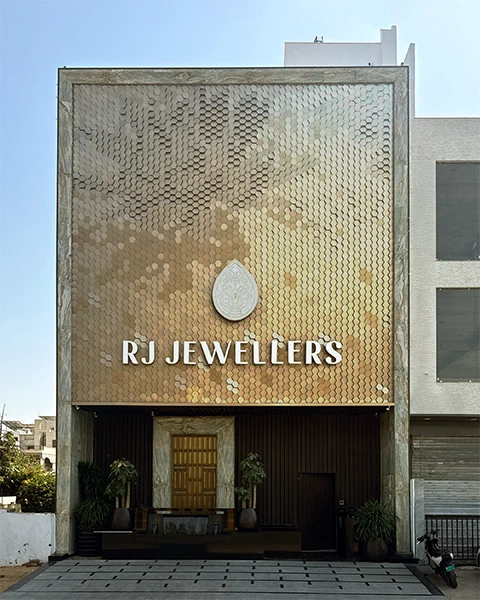
Your Facade is Your Brand: How Businesses Use Facades to Tell Their Story
In architecture, a facade is more than a face - it’s a voice. A building's elevation speaks volumesabout the brand it represents. At Metaguise, we don’t just clad buildings, we craft identities. Through metal, pattern, and parametric design, we help brands build a lasting first impression.
20-08-25 | Behind the Design
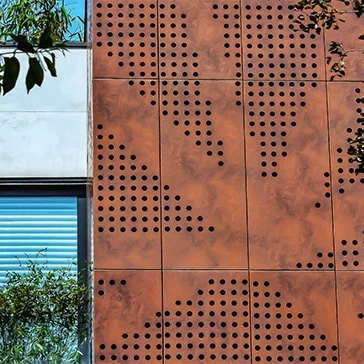
Beyond the Surface: The Emotional Intelligence of Architectural Materials
A philosophical take on how material textures — from MetaPatina’s evolving hues to MetaWood’s organic warmth — connect architecture with human emotion.
17-10-25 | Behind the Design
Social
Legal
Privacy Policy|Terms & Conditions