.png)




.png)
From Louis Vuitton Flagships to Ludhiana Bungalows: How Global Facade Language Became Hyperlocal in India
18-04-26 | Industry Trends

When the creative director of a French luxury maison walks past their new Mumbai flagship and sees the facade catching afternoon light in exactly the choreographed sequence it does on Rue Saint-Honoré, something profound has shifted. Not just in Indian architecture - but in the global understanding of where high design can live, who can execute it, and what "luxury" means when it's no longer tethered to geography. This is the story of how the visual language that once defined Zaha Hadid's London Aquatics Centre and Herzog & de Meuron's Allianz Arena found its way - not as imitation, but as evolution - onto the elevation of a textile magnate's bungalow in Punjab, a tech entrepreneur's villa in Whitefield, and a jewellery brand's flagship in Jaipur. It's the story of parametric facade design becoming hyperlocal without losing its global soul.
The Language Barrier That Wasn't About Words
For nearly two decades, India's architects returned from Milan, Basel, and Tokyo with sketchbooks full of buildings that seemed unbuildable back home. The facades they admired - undulating, light-responsive, computationally generated - required not just vision but an entire ecosystem: precision fabricators who understood algorithmic geometry, materials engineered for specific thermal performance, installers trained to handle non-repetitive panel systems where every piece was unique. The conventional wisdom was brutal: you can have global design or local execution, but not both. Import the system from Italy and watch your budget balloon by 300%. Work with local fabricators and watch your parametric curves become apologetic straight lines. The gap wasn't just technical - it was philosophical. International facade systems were designed for European climates, European labour costs, European tolerances. They spoke a language India's construction industry didn't yet understand. But here's what changed: a handful of Indian facade specialists - engineers who'd worked on international projects, architects frustrated by the import-or-compromise trap, materials scientists who saw opportunity in adaptation - began asking a different question. Not "How do we replicate what works in Paris?" but "How do we make it work better in Ahmedabad?"
Engineering Poetry for 48°C and 2,000mm Annual Rainfall
The breakthrough wasn't a single innovation - it was a systematic re-engineering of every assumption embedded in European parametric design. When you're designing a facade for Mumbai, the monsoon isn't a footnote in the specification document. It's the primary design constraint. When you're working in Rajasthan, dust ingress will destroy any system that wasn't purpose-built for it. When you're installing in Ludhiana, your contractor pool has never seen a building where Panel 4,287 is algorithmically different from Panel 4,288. The hyperlocal adaptation required solving for: Thermal performance in extreme heat: Metal facade systems engineered with air cavity designs and reflective finishes that don't just survive 48°C - they use India's intense sunlight as a design feature, creating shadow-play and depth that transforms throughout the day Monsoon resilience: Drainage channels, corrosion-resistant treatments, and joinery systems that handle 200mm of rainfall in a single day without compromising the facade's geometric integrity or aesthetic continuity Material sourcing and localisation: Aluminium, steel, and composite panels manufactured in India to international quality standards, reducing lead times from 16 weeks to 6 and cutting material costs by 40-60% without sacrificing precision Installation methodology: Training programs that taught local contractors to read parametric panel maps, handle non-repetitive systems, and install with the millimetre-level accuracy that computational design demands Maintenance accessibility: Designing for a reality where facade maintenance might not happen on European schedules - systems that age gracefully, where panel replacement is possible without dismantling entire elevations "India's luxury market is projected to grow at 12-15% annually through 2030, with consumers increasingly demanding global quality standards delivered through locally relevant experiences." - McKinsey & Company, The Future of Luxury in India What emerged from this adaptation wasn't Indian-ised luxury - a term that often means diluted or derivative. It was hyperlocal sophistication: facades that could achieve the same algorithmic complexity as a Rem Koolhaas building in Rotterdam while outperforming it in India's actual conditions. A MetaSequin facade in Gurgaon doesn't just look like its inspiration in Dubai - it functions better, lasts longer, and costs 35% less to maintain over its lifecycle.
When Your Neighbour's Bungalow Speaks Champs-Élysées
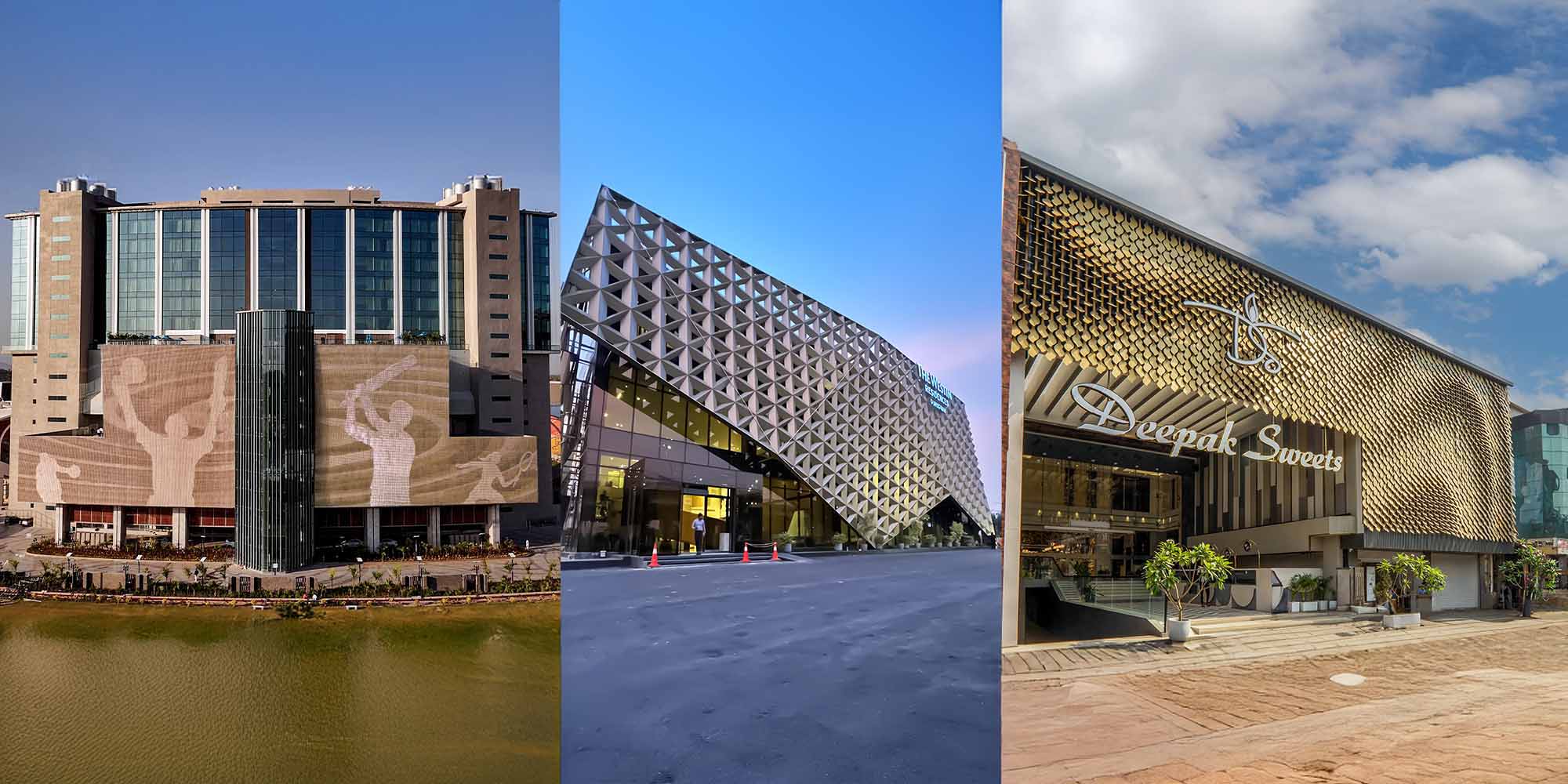
The real transformation happened when luxury residential clients - people commissioning ₹10-15 crore bungalows in South Delhi, Ludhiana, Ahmedabad - started asking their architects a new question: "Why can't my home have the same facade as the Louis Vuitton store?" And for the first time, the answer wasn't "Because it's impossible" or "Because it costs ₹8 crore just for the facade". The answer became: "It can. Here's how." This wasn't about copying a luxury flagship's aesthetic - it was about accessing the same design intelligence, material quality, and fabrication precision. When a textile industrialist in Punjab commissioned a residence with a MetaFold facade - 12,000 unique gold-toned aluminium panels arranged in a parametric gradient - he wasn't trying to transplant Paris to Ludhiana. He was making a statement that the global design language could be native to India, executed by Indian fabricators, installed by Indian teams, and performing better in Indian conditions than the original system would. The democratisation happened in layers: Design accessibility: Architects no longer needed to travel to Europe to find fabricators who understood Grasshopper scripts and parametric modelling - they could collaborate with Indian teams who spoke both the language of computational design and the reality of ISI standards Material availability: Premium aluminium composites, perforated metals, and specialty finishes became available domestically, with quality certifications matching international benchmarks but delivery timelines measured in weeks, not quarters Cost rationalisation: What once required a ₹5 crore facade budget could now be achieved at ₹1.8-2.2 crore - still a significant investment, but within reach of India's expanding luxury residential market Performance transparency: Clients could now see real-world performance data from facades that had survived three monsoons, five summers, and Diwali firecracker smoke - not just European test lab reports
The Cultural Translation That Made It Work
But here's what truly made hyperlocal adaptation successful - and it's the part that doesn't show up in technical specifications: understanding that Indian luxury clients don't just want global aesthetics, they want facades that perform during Diwali. When a family plans their bungalow's griha pravesh around Diwali, the facade isn't just background - it's the canvas for lighting, the surface that reflects traditional diyas and modern LED installations, the elevation that will be photographed and shared as part of the home's inaugural celebration. A facade designed for diffused Northern European light needed to be re-engineered to celebrate India's intense, directional sunlight - to create drama, not fight it. When a second-generation business family commissions a headquarters building in Surat or Coimbatore, they're not just buying a building - they're commissioning a legacy. The facade becomes the family's signature on the skyline, a piece of architecture that announces continuity and ambition in equal measure. Global design language had to be translated to speak in the vocabulary of Indian business culture: permanence, craftsmanship, visible quality. This cultural translation extended to how projects were sold, specified, and delivered: Relationship-first engagement: Unlike transactional European procurement, Indian luxury projects required architects and facade specialists to be partners from sketch stage through final installation - often 18-24 months of collaboration Family involvement in design: Where European projects might have a single decision-maker, Indian residential facades often involved three generations weighing in - requiring systems flexible enough to incorporate feedback without losing design integrity Auspicious timing: Installation schedules coordinated around muhurat, festival calendars, and family milestones - logistical complexity that demanded local teams who understood these weren't obstacles but essential context Visible craftsmanship: Indian clients wanted to see the precision - the millimetre-perfect panel alignment, the hand-finished edges, the quality of welding on the substructure. Facades had to reward close inspection, not just distant viewing
The Jaipur Moment
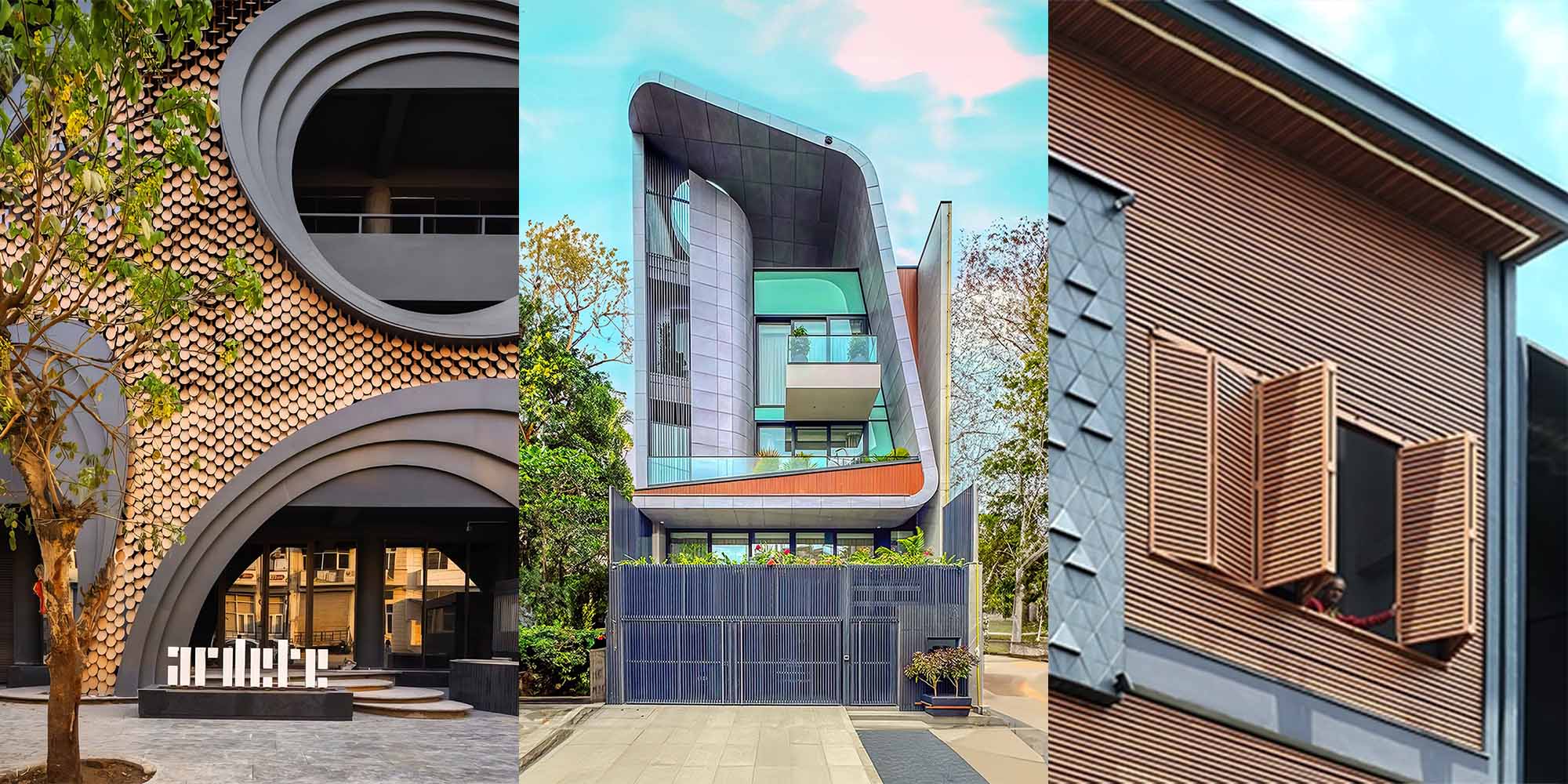
There's a bungalow inJaipur - a multi crore project, completed 2022 - that perfectly encapsulates this global-to-hyperlocal journey. The elevation features a MetaCassette system: 8,400 precision engineered perforations, creating a facade that plays with light and shadow, each panel oriented according to a solar-analysis algorithm that optimises shade and reflection. The design vocabulary is identical to facades you'd find on a Basel art museum. The computational logic would be at home on a London tech campus. But every aspect of execution was hyperlocal: aluminium sourced from Jindal, fabricated in a facility outside Pune, installed by a team trained in Gurgaon, engineered to handle summer temperatures that would make a Munich facade specialist nervous. The homeowner - a third-generation textile manufacturer - chose this facade after seeing a luxury watch boutique in Delhi that used similar parametric language. He didn't want to copy the boutique; he wanted his home to speak with the same level of design intelligence. His architect connected him with a facade specialist who'd worked on the boutique project, and what followed was an 18-month collaboration that included: Seven design iterations as the family refined the parametric script to create specific shadow patterns during morning puja hours Material testing in Jaipur’s actual climate - not laboratory approximations A mock-up installation of 40 panels on-site so the family could see the full-scale effect before committing to fabrication Installation phased around the family's daughter's wedding, ensuring the facade was complete for the home's debut during wedding celebrations When guests arrived for the wedding, they didn't just see a beautiful building - they experienced an elevation that performed: catching morning light during the haldi ceremony, creating geometric shadow-play during afternoon events, transforming under evening illumination during the reception. The facade wasn't decoration; it was choreography.
Why This Matters Beyond One Bungalow
The Jaipur project represents something larger than a successful residential commission. It's evidence that India has developed the complete ecosystem - design capability, fabrication infrastructure, installation expertise, and material supply chains - to deliver parametric facades that rival anything being built globally, while being optimised for Indian conditions and accessible at Indian price points. This ecosystem enables: Architects to design without compromise: No more sketching curves and then flattening them for fabrication - what's drawn can be built, at scale, on schedule Developers to differentiate without premium imports: Luxury residential towers can now feature facades with genuine design intelligence, not just expensive but generic cladding Homeowners to commission legacy architecture: The ₹10-15 crore bungalow market can access facade systems previously reserved for institutional or ultra-luxury commercial projects Commercial clients to express brand identity architecturally: From jewellery flagships to automotive showrooms, brands can now wrap their spaces in facades that communicate precision, luxury, and innovation - the same visual language they use globally The hyperlocal adaptation has also created unexpected innovations that are now influencxxing global parametric design. Indian facade specialists developed techniques for working with recycled aluminium that maintained precision tolerances - sustainability solutions born from local material constraints. Installation methods created for training local contractors in tier-2 cities became templates for faster, more efficient installation globally. Thermal performance innovations designed for Nagpur's heat are now being specified for projects in the Middle East.
The Design Democracy Nobody Expected
What started as adaptation has become innovation. India isn't just replicating global facade design - it's advancing it. The computational scripts being written in Bangalore and Ahmedabad are solving problems that European facade designers haven't had to consider: how do you create parametric complexity while designing for installation teams that might be encountering non-repetitive systems for the first time? How do you engineer beauty and durability when your facade will face conditions that swing from 8°C to 48°C in a single year? The result is a new category of facade design that's simultaneously global and hyperlocal - systems that could be installed anywhere in the world but are optimised for India's specific beauty, challenges, and aspirations. When a luxury developer in Gurgaon chooses a MetaSequin facade for their residential tower, they're not settling for an Indian version of global luxury. They're choosing a system that outperforms its international equivalents while costing 40% less and delivering in half the time. This is the real story of how Louis Vuitton's facade language became native to Ludhiana: not through copying, but through understanding, adapting, and ultimately advancing the fundamental principles of parametric design. The bungalow in Jaipur and the flagship on the Champs-Élys
From Louis Vuitton Flagships to Ludhiana Bungalows: How Global Facade Language Became Hyperlocal in India
18-04-26 | Industry Trends
When the creative director of a French luxury maison walks past their new Mumbai flagship and sees the facade catching afternoon light in exactly the choreographed sequence it does on Rue Saint-Honoré, something profound has shifted. Not just in Indian architecture - but in the global understanding of where high design can live, who can execute it, and what "luxury" means when it's no longer tethered to geography. This is the story of how the visual language that once defined Zaha Hadid's London Aquatics Centre and Herzog & de Meuron's Allianz Arena found its way - not as imitation, but as evolution - onto the elevation of a textile magnate's bungalow in Punjab, a tech entrepreneur's villa in Whitefield, and a jewellery brand's flagship in Jaipur. It's the story of parametric facade design becoming hyperlocal without losing its global soul.
The Language Barrier That Wasn't About Words
For nearly two decades, India's architects returned from Milan, Basel, and Tokyo with sketchbooks full of buildings that seemed unbuildable back home. The facades they admired - undulating, light-responsive, computationally generated - required not just vision but an entire ecosystem: precision fabricators who understood algorithmic geometry, materials engineered for specific thermal performance, installers trained to handle non-repetitive panel systems where every piece was unique. The conventional wisdom was brutal: you can have global design or local execution, but not both. Import the system from Italy and watch your budget balloon by 300%. Work with local fabricators and watch your parametric curves become apologetic straight lines. The gap wasn't just technical - it was philosophical. International facade systems were designed for European climates, European labour costs, European tolerances. They spoke a language India's construction industry didn't yet understand. But here's what changed: a handful of Indian facade specialists - engineers who'd worked on international projects, architects frustrated by the import-or-compromise trap, materials scientists who saw opportunity in adaptation - began asking a different question. Not "How do we replicate what works in Paris?" but "How do we make it work better in Ahmedabad?"
Engineering Poetry for 48°C and 2,000mm Annual Rainfall
The breakthrough wasn't a single innovation - it was a systematic re-engineering of every assumption embedded in European parametric design. When you're designing a facade for Mumbai, the monsoon isn't a footnote in the specification document. It's the primary design constraint. When you're working in Rajasthan, dust ingress will destroy any system that wasn't purpose-built for it. When you're installing in Ludhiana, your contractor pool has never seen a building where Panel 4,287 is algorithmically different from Panel 4,288. The hyperlocal adaptation required solving for: Thermal performance in extreme heat: Metal facade systems engineered with air cavity designs and reflective finishes that don't just survive 48°C - they use India's intense sunlight as a design feature, creating shadow-play and depth that transforms throughout the day Monsoon resilience: Drainage channels, corrosion-resistant treatments, and joinery systems that handle 200mm of rainfall in a single day without compromising the facade's geometric integrity or aesthetic continuity Material sourcing and localisation: Aluminium, steel, and composite panels manufactured in India to international quality standards, reducing lead times from 16 weeks to 6 and cutting material costs by 40-60% without sacrificing precision Installation methodology: Training programs that taught local contractors to read parametric panel maps, handle non-repetitive systems, and install with the millimetre-level accuracy that computational design demands Maintenance accessibility: Designing for a reality where facade maintenance might not happen on European schedules - systems that age gracefully, where panel replacement is possible without dismantling entire elevations "India's luxury market is projected to grow at 12-15% annually through 2030, with consumers increasingly demanding global quality standards delivered through locally relevant experiences." - McKinsey & Company, The Future of Luxury in India What emerged from this adaptation wasn't Indian-ised luxury - a term that often means diluted or derivative. It was hyperlocal sophistication: facades that could achieve the same algorithmic complexity as a Rem Koolhaas building in Rotterdam while outperforming it in India's actual conditions. A MetaSequin facade in Gurgaon doesn't just look like its inspiration in Dubai - it functions better, lasts longer, and costs 35% less to maintain over its lifecycle.
When Your Neighbour's Bungalow Speaks Champs-Élysées
The real transformation happened when luxury residential clients - people commissioning ₹10-15 crore bungalows in South Delhi, Ludhiana, Ahmedabad - started asking their architects a new question: "Why can't my home have the same facade as the Louis Vuitton store?" And for the first time, the answer wasn't "Because it's impossible" or "Because it costs ₹8 crore just for the facade". The answer became: "It can. Here's how." This wasn't about copying a luxury flagship's aesthetic - it was about accessing the same design intelligence, material quality, and fabrication precision. When a textile industrialist in Punjab commissioned a residence with a MetaFold facade - 12,000 unique gold-toned aluminium panels arranged in a parametric gradient - he wasn't trying to transplant Paris to Ludhiana. He was making a statement that the global design language could be native to India, executed by Indian fabricators, installed by Indian teams, and performing better in Indian conditions than the original system would. The democratisation happened in layers: Design accessibility: Architects no longer needed to travel to Europe to find fabricators who understood Grasshopper scripts and parametric modelling - they could collaborate with Indian teams who spoke both the language of computational design and the reality of ISI standards Material availability: Premium aluminium composites, perforated metals, and specialty finishes became available domestically, with quality certifications matching international benchmarks but delivery timelines measured in weeks, not quarters Cost rationalisation: What once required a ₹5 crore facade budget could now be achieved at ₹1.8-2.2 crore - still a significant investment, but within reach of India's expanding luxury residential market Performance transparency: Clients could now see real-world performance data from facades that had survived three monsoons, five summers, and Diwali firecracker smoke - not just European test lab reports
The Cultural Translation That Made It Work
But here's what truly made hyperlocal adaptation successful - and it's the part that doesn't show up in technical specifications: understanding that Indian luxury clients don't just want global aesthetics, they want facades that perform during Diwali. When a family plans their bungalow's griha pravesh around Diwali, the facade isn't just background - it's the canvas for lighting, the surface that reflects traditional diyas and modern LED installations, the elevation that will be photographed and shared as part of the home's inaugural celebration. A facade designed for diffused Northern European light needed to be re-engineered to celebrate India's intense, directional sunlight - to create drama, not fight it. When a second-generation business family commissions a headquarters building in Surat or Coimbatore, they're not just buying a building - they're commissioning a legacy. The facade becomes the family's signature on the skyline, a piece of architecture that announces continuity and ambition in equal measure. Global design language had to be translated to speak in the vocabulary of Indian business culture: permanence, craftsmanship, visible quality. This cultural translation extended to how projects were sold, specified, and delivered: Relationship-first engagement: Unlike transactional European procurement, Indian luxury projects required architects and facade specialists to be partners from sketch stage through final installation - often 18-24 months of collaboration Family involvement in design: Where European projects might have a single decision-maker, Indian residential facades often involved three generations weighing in - requiring systems flexible enough to incorporate feedback without losing design integrity Auspicious timing: Installation schedules coordinated around muhurat, festival calendars, and family milestones - logistical complexity that demanded local teams who understood these weren't obstacles but essential context Visible craftsmanship: Indian clients wanted to see the precision - the millimetre-perfect panel alignment, the hand-finished edges, the quality of welding on the substructure. Facades had to reward close inspection, not just distant viewing
The Jaipur Moment
There's a bungalow inJaipur - a multi crore project, completed 2022 - that perfectly encapsulates this global-to-hyperlocal journey. The elevation features a MetaCassette system: 8,400 precision engineered perforations, creating a facade that plays with light and shadow, each panel oriented according to a solar-analysis algorithm that optimises shade and reflection. The design vocabulary is identical to facades you'd find on a Basel art museum. The computational logic would be at home on a London tech campus. But every aspect of execution was hyperlocal: aluminium sourced from Jindal, fabricated in a facility outside Pune, installed by a team trained in Gurgaon, engineered to handle summer temperatures that would make a Munich facade specialist nervous. The homeowner - a third-generation textile manufacturer - chose this facade after seeing a luxury watch boutique in Delhi that used similar parametric language. He didn't want to copy the boutique; he wanted his home to speak with the same level of design intelligence. His architect connected him with a facade specialist who'd worked on the boutique project, and what followed was an 18-month collaboration that included: Seven design iterations as the family refined the parametric script to create specific shadow patterns during morning puja hours Material testing in Jaipur’s actual climate - not laboratory approximations A mock-up installation of 40 panels on-site so the family could see the full-scale effect before committing to fabrication Installation phased around the family's daughter's wedding, ensuring the facade was complete for the home's debut during wedding celebrations When guests arrived for the wedding, they didn't just see a beautiful building - they experienced an elevation that performed: catching morning light during the haldi ceremony, creating geometric shadow-play during afternoon events, transforming under evening illumination during the reception. The facade wasn't decoration; it was choreography.
Why This Matters Beyond One Bungalow
The Jaipur project represents something larger than a successful residential commission. It's evidence that India has developed the complete ecosystem - design capability, fabrication infrastructure, installation expertise, and material supply chains - to deliver parametric facades that rival anything being built globally, while being optimised for Indian conditions and accessible at Indian price points. This ecosystem enables: Architects to design without compromise: No more sketching curves and then flattening them for fabrication - what's drawn can be built, at scale, on schedule Developers to differentiate without premium imports: Luxury residential towers can now feature facades with genuine design intelligence, not just expensive but generic cladding Homeowners to commission legacy architecture: The ₹10-15 crore bungalow market can access facade systems previously reserved for institutional or ultra-luxury commercial projects Commercial clients to express brand identity architecturally: From jewellery flagships to automotive showrooms, brands can now wrap their spaces in facades that communicate precision, luxury, and innovation - the same visual language they use globally The hyperlocal adaptation has also created unexpected innovations that are now influencxxing global parametric design. Indian facade specialists developed techniques for working with recycled aluminium that maintained precision tolerances - sustainability solutions born from local material constraints. Installation methods created for training local contractors in tier-2 cities became templates for faster, more efficient installation globally. Thermal performance innovations designed for Nagpur's heat are now being specified for projects in the Middle East.
The Design Democracy Nobody Expected
What started as adaptation has become innovation. India isn't just replicating global facade design - it's advancing it. The computational scripts being written in Bangalore and Ahmedabad are solving problems that European facade designers haven't had to consider: how do you create parametric complexity while designing for installation teams that might be encountering non-repetitive systems for the first time? How do you engineer beauty and durability when your facade will face conditions that swing from 8°C to 48°C in a single year? The result is a new category of facade design that's simultaneously global and hyperlocal - systems that could be installed anywhere in the world but are optimised for India's specific beauty, challenges, and aspirations. When a luxury developer in Gurgaon chooses a MetaSequin facade for their residential tower, they're not settling for an Indian version of global luxury. They're choosing a system that outperforms its international equivalents while costing 40% less and delivering in half the time. This is the real story of how Louis Vuitton's facade language became native to Ludhiana: not through copying, but through understanding, adapting, and ultimately advancing the fundamental principles of parametric design. The bungalow in Jaipur and the flagship on the Champs-Élys
Related Articles
Related Articles
Why Aluminium Cladding Is the Future of Facade Design in Indian Architecture
India’s architecture is evolving - faster, smarter, and more performance-driven than ever before. As cities grow and climates shift, the facade is no longer just an exterior skin. It’s a functional envelope that must adapt, protect, and express.
12-09-25 | Industry Trends
Parametric Architecture in India: Why It’s Shaping the Future of Facade Design
Architecture is evolving - and with it, the language of the façade. At the heart of this evolution lies a powerful design philosophy: parametric architecture.
03-11-25 | Industry Trends
Top Facade Architecture Trends 2026 Tech Sustainability and Aesthetic Breakthroughs
The building envelope is undergoing a radical transformation. No longer just a 'skin,' it is now a performance-driven asset that breathes and adapts
12-02-26 | Industry Trends
Facade Design Trends 2026 Smart Sustainable and High-Performance Building Exteriors
The building envelope is undergoing a radical transformation. No longer just a 'skin,' it is now a performance-driven asset that breathes and adapts
23-02-26 | Industry Trends
Social
Legal
Privacy Policy|Terms & Conditions