






Farmhouse Exterior Design India: Metal Facade Ideas for Weekend Retreats (2026)
15-05-26 | Architectural Insights
Key Takeaways
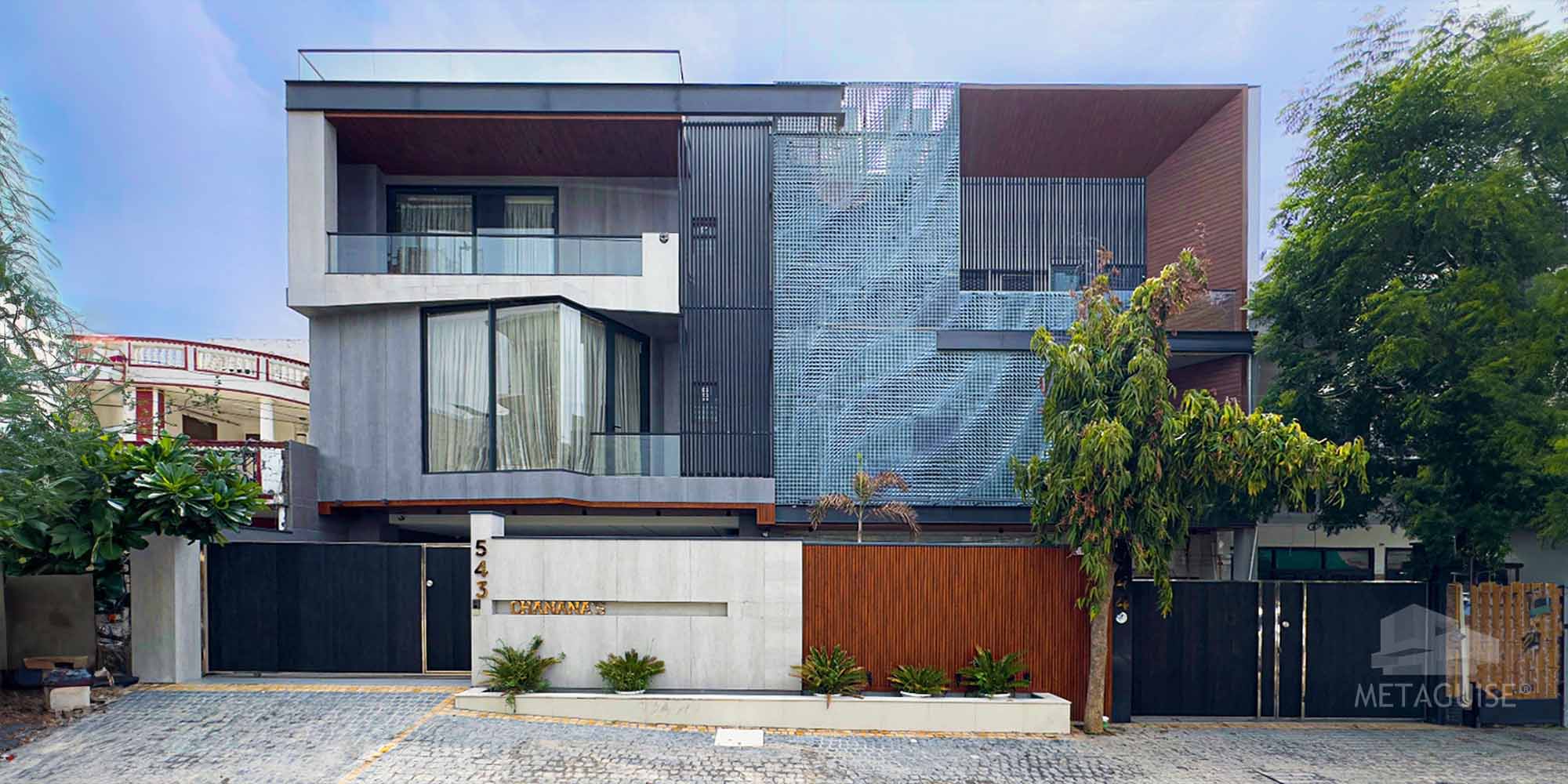
• India's farmhouse and second home market is booming in 2026 — affluent buyers are moving away from urban apartments toward land-based retreats in Goa, Alibaug, Dehradun, Karjat, Lonavala, Aravalli, and the Mehrauli-Gurgaon corridor. • Farmhouse exterior design India presents a unique creative opportunity: larger land parcels, landscape integration, and relaxed brief parameters allow bolder, more experimental facade choices than urban plots permit. • Weathering Corten steel, metal-and-wood hybrid compositions, biophilic screen systems, and copper patina finishes are the dominant facade trends for premium farmhouses and weekend retreats in 2026. • Metaguise's MetaCorten, MetaWood, MetaCopper, and parametric screen systems are purpose-built for the farmhouse design context — delivering facades that age with character, integrate with landscape, and perform across India's diverse retreat geographies. • This blog covers farmhouse facade trends, material choices by geography, the metal-and-wood composition approach, biophilic design principles, and Metaguise's completed farmhouse project portfolio.
Farmhouse Design Trends in India 2026: Why the Weekend Retreat Has Become a Design Statement
India's farmhouse and second home market has entered a sustained boom that shows no sign of moderating. According to a April 2026 report by IQI Global, affluent buyers across India are decisively moving away from urban apartments toward land-based farmhouse communities and managed second home developments, drawn by privacy, space, and long-term capital appreciation. Demand for plotted low-density developments has surged significantly, with lifestyle-focused factors — gated communities, green belts, curated amenities — now ranking ahead of purely financial motivations in buyer decision-making. India's ultra-high-net-worth population, which holds around 32% of portfolios in real estate, is expanding rapidly, and farmhouse properties in destinations like Alibaug, Goa, Karjat, Lonavala, Dehradun, and Aravalli are among the most sought-after assets in this bracket. What this means for farmhouse exterior design India is a dramatic elevation in aspiration and investment. The Indian farmhouse of 2016 was typically a brick compound on agricultural land, built quickly and practically, with no particular design brief. The Indian farmhouse of 2026 is a considered architectural statement — a building that responds to its landscape, expresses its owner's global design sensibility, and holds its material quality through decades of exposure to rain, heat, humidity, and the inevitable creative indifference of distant caretakers. The architectural design language of India's premium farmhouses has also matured. The references are now international: the rammed earth residences of Sonoma Valley, the Corten steel farm buildings of the English countryside, the volcanic stone villas of Santorini, the tropical timber retreats of Bali. Indian farmhouse owners and their architects are asking for the same material intelligence and landscape sensitivity in Karjat as exists in those international references — and Metaguise's MetaCorten, MetaWood, and biophilic screen systems are the closest thing available in India to delivering it.
Metal and Wood: The Perfect Material Combination for Indian Farmhouse Facades
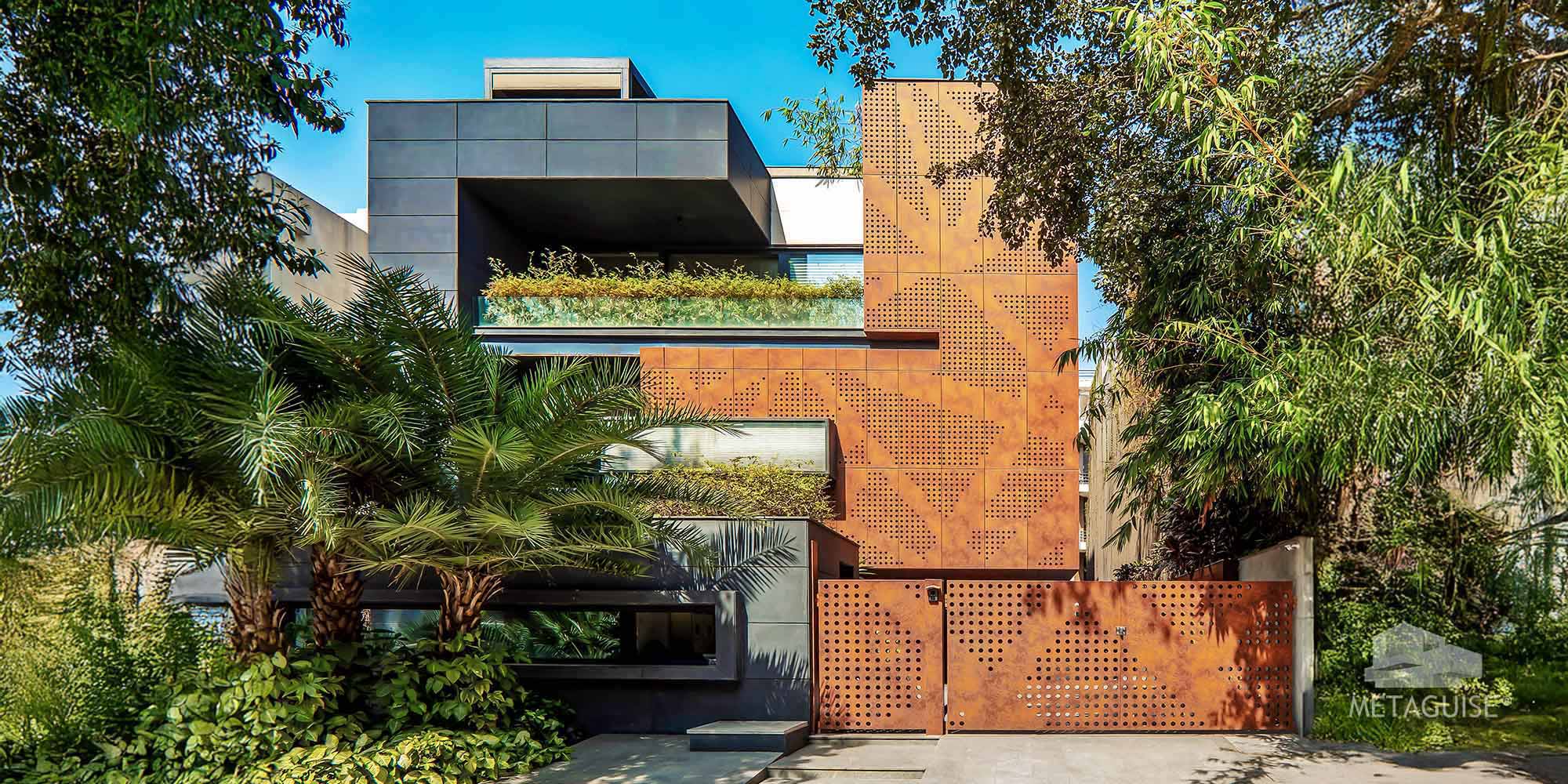
The single most compelling facade composition for Indian farmhouse and weekend retreat architecture in 2026 is the metal-and-wood combination — where weathering steel or textured metal panels anchor the primary mass, and timber or timber-look elements warm the transitions, canopies, soffits, and pergola structures. This pairing works for reasons that are both aesthetic and practical. Aesthetically, the combination achieves what neither material can alone. Metal is precise, industrial, and permanent — it signals that the building was engineered, not just constructed. Timber is warm, organic, and culturally rooted — it connects the building to the natural landscape around it. Together, they create a material conversation that is simultaneously sophisticated and grounded: a farmhouse that could be photographed for Architectural Digest, yet feels as though it belongs to its site. Practically, Metaguise's MetaWood finish — a PVDF coating applied to aluminium substrates that replicates the grain, tone, and texture of natural timber — solves the most persistent problem of real timber in Indian farmhouse contexts: maintenance. Natural timber in the Indian monsoon zone deteriorates rapidly without regular treatment. It warps, splits, bleaches, and supports biological growth in high-humidity environments. MetaWood delivers the visual warmth of timber in an aluminium substrate that requires no annual oiling, no sealing, no replacement — and maintains its appearance for 25+ years across India's full climatic range. For farmhouse owners who visit their retreat two weekends a month, MetaWood is the honest choice: it looks like timber and performs like metal. The complementary metal for farmhouse compositions is Metaguise's MetaCorten weathering steel finish. On the primary mass of a farmhouse — the main building volume, the boundary wall, the gate structure — MetaCorten creates a warm, textured presence that reads against landscape as though the building grew from the earth. In Rajasthan's ochre-red terrain, the rust-orange-brown patina of Corten resonates with the soil palette. In Maharashtra's black cotton country, the warm iron tones contrast beautifully with the green of post-monsoon grassland. In the Aravalli hills, a Corten-clad farmhouse boundary wall reads as a natural rock formation rather than a constructed barrier.
Weathering Steel (Corten) for Farmhouses: Why It Is the Premier Farmhouse Facade Material
Metaguise's system is, in many respects, the ideal farmhouse facade material for India. Its defining characteristic — the controlled development of a protective rust patina over the first 18–36 months of exposure — aligns perfectly with the farmhouse owner's relationship to their property: a building that changes and deepens over the seasons, that looks different in the winter sun than in the post-monsoon green, that accumulates character rather than losing it. The practical performance is equally well-suited to the farmhouse context. MetaCorten is structurally robust, requires no painting or coating maintenance after the patina stabilises, and is available in panel, sheet, and screen configurations that adapt to every farmhouse building element — from primary wall cladding to pergola screens, water feature surrounds, entrance gates, and boundary wall capping. Where MetaCorten works best across Indian farmhouse geographies: • Mehrauli-Gurgaon corridor and NCR farmhouse belt: Inland, low-salinity conditions ideal for stable patina formation. Warm rust tones suit the Aravalli foothills palette. • Rajasthan (Jaipur, Ajmer, Alwar farmhouses): Arid conditions with minimal humidity accelerate initial patina formation. Corten against sand and stone reads as materially authentic. • Maharashtra and Pune fringe (Karjat, Lonavala, Khandala): Moderate monsoon followed by dry season creates good Corten cycling conditions. Must be detailed to prevent water pooling. • Gujarat (farmhouses near Vadodara, Anand): Similar to NCR inland conditions. Works well with the Gujarat agricultural landscape palette. • Avoid within 5 km of the coast: Salt-laden coastal air (Alibaug, Goa beachfront, coastal Karnataka) interferes with stable protective oxide formation. Use anodised aluminium or PVDF-coated systems in these locations.
Biophilic Facade Design Concepts for Indian Farmhouses and Weekend Retreats
The single strongest design trend in premium Indian farmhouse architecture in 2026 is biophilic design — the deliberate integration of natural systems, materials, and patterns into the built form. For facade design specifically, biophilic principles translate into several distinct approaches that Metaguise's system range is uniquely positioned to deliver. Living Walls and Green Facade Integration Perforated metal screens integrated with climbing plant structures are among the most visually transformative biophilic facade elements available. At peak monsoon growth, a biophilic metal facade can disappear almost entirely behind a lush green canopy, transforming the building into something closer to a garden pavilion than a constructed wall. In the dry season, the metalwork emerges as the primary visual element — a different but equally compelling reading. Nature-Referencing Patterns in Perforated Metal Parametric perforated screens in patterns derived from nature — leaf venation, seed pod geometry, honeycomb structures, ripple and wave forms — create facades that carry the visual language of the surrounding landscape into the metal surface. At Metaguise, these patterns are generated computationally rather than drawn manually, producing compositions of extraordinary precision and visual complexity. On a farmhouse in the Sahyadri foothills, a MetaCoin circular module screen inspired by the local forest canopy creates a dialogue between the building and its setting that a painted or stone-clad wall cannot achieve. Solar Orientation and Passive Cooling Through Facade Design Biophilic design at its most practical is about buildings that respond intelligently to sun, wind, and rain — reducing mechanical cooling demands and increasing passive comfort. Metaguise's MetaFin architectural fin system, designed to calculate optimal fin projection and angle for each building's orientation, reduces solar heat gain on west and south-facing glazed surfaces by 40–60%. For a farmhouse in Rajasthan or Gujarat where summer temperatures regularly exceed 45°C, a MetaFin system on the primary west-facing elevation can measurably reduce interior temperatures in the living and sleeping rooms behind it — making the retreat genuinely comfortable for longer into the summer season without relying entirely on mechanical cooling.
Metaguise Farmhouse Projects Across India: Real Retreats, Real Results
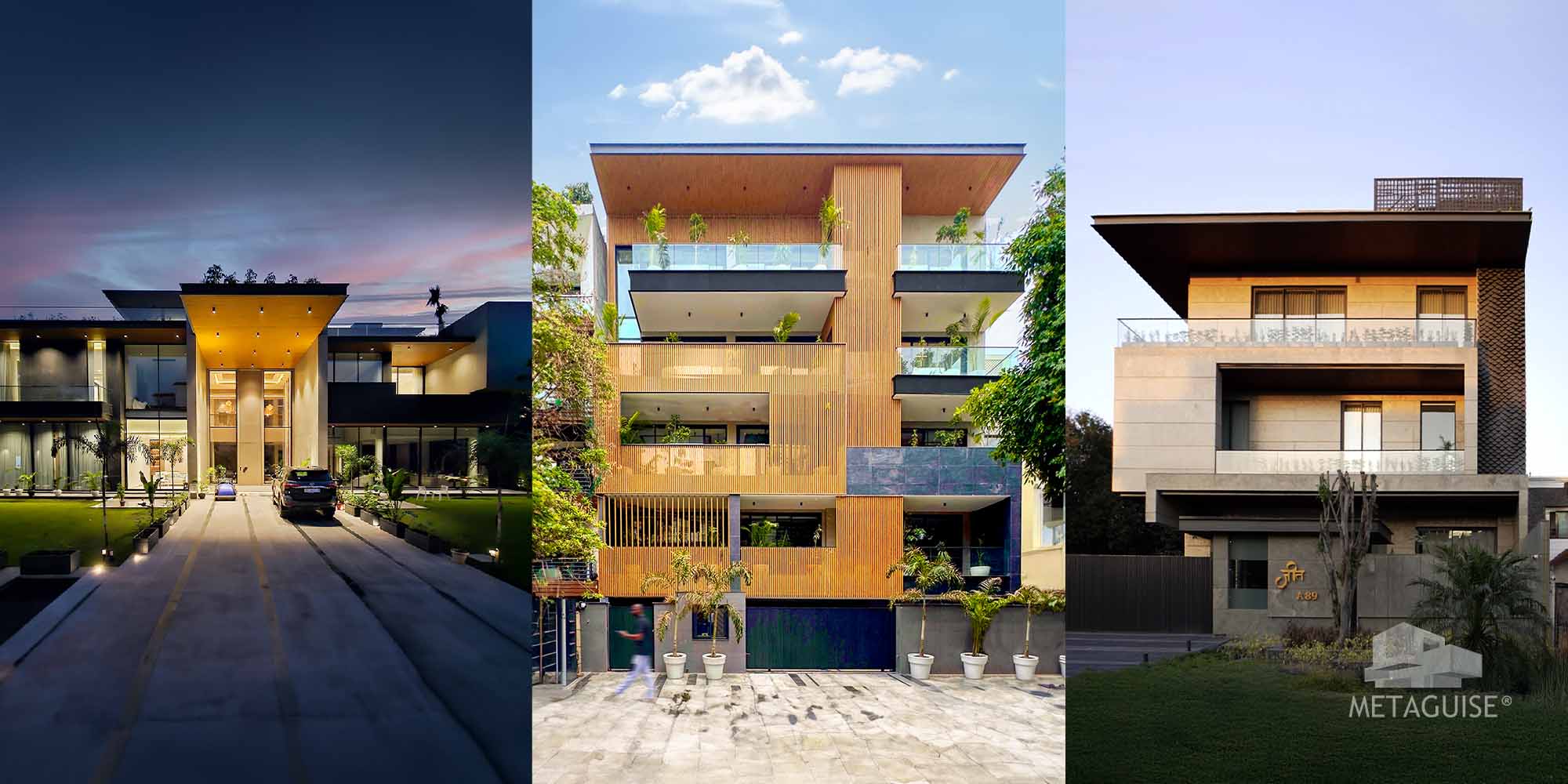
Metaguise's farmhouse and weekend retreat portfolio spans India's most active luxury second home markets — each project reflecting the specific landscape, climate, and design brief of its location. On the Mehrauli-Gurgaon corridor, a farmhouse compound for a Delhi-based industrial family used Metaguise's MetaCorten on the entire boundary wall and primary building elevation — a material choice that allowed the 4-acre compound to read as a single coherent composition from the approach road. MetaWood finish was used on the covered seating area soffits and the pool pavilion columns, adding warmth to the rust-and-earth Corten palette. The project took fourteen weeks from design approval to handover — and has since become a reference for the corridor's growing premium farmhouse community. In Karjat, Maharashtra, a weekend retreat for a Mumbai-based entrepreneur used a biophilic facade composition — MetaFlute vertical panels in deep forest green PVDF on the primary building mass, with custom parametric perforated screens on the west-facing verandah — allowing the afternoon light to filter through a computationally-generated leaf-pattern perforation that casts moving shadows across the interior stone floor as the sun travels. The project was designed in close collaboration with the client's Pune-based architect, with Metaguise contributing facade engineering and fabrication from design freeze through installation. In the Aravalli foothills near Alwar, a heritage-context farmhouse used MetaCorten on the primary building volume and MetaCopper finish on the entrance gate and boundary wall capping — a combination that resonated with the region's traditional Rajasthani red sandstone palette while anchoring the composition in contemporary material language. The copper-and-rust palette develops richer character over time, making the farmhouse an investment in material beauty that compounds with every season.
Frequently Asked Questions
1.What is the best metal facade material for an Indian farmhouse?
For inland farmhouses in NCR, Rajasthan, Maharashtra, and Gujarat, MetaCorten weathering steel is the premier choice — warm, material-honest, maintenance-free after initial patination, and uniquely well-suited to landscape integration. For coastal retreat locations — Alibaug, Goa, coastal Karnataka — PVDF-coated aluminium in earth and warm-neutral tones (MetaFlute, MetaCassette) or anodised aluminium is the preferred specification, as salt air prevents stable Corten patina formation. MetaWood finish on aluminium substrates is the ideal choice for all farmhouse locations where a timber aesthetic is desired without the maintenance burden of real wood.2.How does MetaCorten age in the Indian monsoon — does it rust and fail?
MetaCorten does not fail due to rusting — the rust is the protective mechanism. In weathering steel, the initial oxidation of the iron surface creates a dense, adherent rust layer (the patina) that seals the underlying steel from further oxygen and moisture penetration. In India's inland monsoon climates — NCR, Maharashtra hinterland, Rajasthan — this patina forms progressively through the first two monsoon cycles and stabilises within 18–36 months. After stabilisation, the surface is self-protecting and requires no maintenance. The key detailing requirement is preventing water pooling at horizontal surfaces and ensuring drainage pathways at the base of panels — which Metaguise's MetaCorten specification guidelines address as standard.3.Can Metaguise deliver a farmhouse facade project in a remote location?
Yes. Metaguise's fabrication-and-ship model means that panels are produced in the company's in-house facility, packaged for transport, and delivered to any project site in India — including remote farmhouse locations on hill roads, riverine routes, and agricultural access tracks. The installation team travels to site with all necessary tools and equipment. Site logistics — including crane and access equipment requirements — are assessed during the design phase and addressed in the installation planning. For very remote sites, Metaguise recommends a pre-installation site visit to confirm access conditions before fabrication is finalised.4.What is a realistic budget for a premium metal facade on an Indian farmhouse?
For a farmhouse with 3,000–5,000 sq ft of facade area — a typical weekend retreat main building — MetaForm system costs (MetaCorten, MetaFlute, MetaCassette, MetaWood) range from ₹900 to ₹1,600 per sq ft installed, representing a total investment of ₹27 lakh to ₹80 lakh depending on system and area. For farmhouses with additional facade elements — boundary walls, entrance gates, pool pavilions, pergola screens — each element is priced separately and typically falls within the same per-sq-ft range as the main building. For parametric perforated screen features or bespoke design elements, costs run from ₹1,500 to ₹2,500 per sq ft for those elements specifically. Metaguise provides a detailed cost framework at the design consultation stage, including breakdowns by building element and system tier.Farmhouse Exterior Design India: Metal Facade Ideas for Weekend Retreats (2026)
15-05-26 | Architectural Insights
Key Takeaways
• India's farmhouse and second home market is booming in 2026 — affluent buyers are moving away from urban apartments toward land-based retreats in Goa, Alibaug, Dehradun, Karjat, Lonavala, Aravalli, and the Mehrauli-Gurgaon corridor. • Farmhouse exterior design India presents a unique creative opportunity: larger land parcels, landscape integration, and relaxed brief parameters allow bolder, more experimental facade choices than urban plots permit. • Weathering Corten steel, metal-and-wood hybrid compositions, biophilic screen systems, and copper patina finishes are the dominant facade trends for premium farmhouses and weekend retreats in 2026. • Metaguise's MetaCorten, MetaWood, MetaCopper, and parametric screen systems are purpose-built for the farmhouse design context — delivering facades that age with character, integrate with landscape, and perform across India's diverse retreat geographies. • This blog covers farmhouse facade trends, material choices by geography, the metal-and-wood composition approach, biophilic design principles, and Metaguise's completed farmhouse project portfolio.
Farmhouse Design Trends in India 2026: Why the Weekend Retreat Has Become a Design Statement
India's farmhouse and second home market has entered a sustained boom that shows no sign of moderating. According to a April 2026 report by IQI Global, affluent buyers across India are decisively moving away from urban apartments toward land-based farmhouse communities and managed second home developments, drawn by privacy, space, and long-term capital appreciation. Demand for plotted low-density developments has surged significantly, with lifestyle-focused factors — gated communities, green belts, curated amenities — now ranking ahead of purely financial motivations in buyer decision-making. India's ultra-high-net-worth population, which holds around 32% of portfolios in real estate, is expanding rapidly, and farmhouse properties in destinations like Alibaug, Goa, Karjat, Lonavala, Dehradun, and Aravalli are among the most sought-after assets in this bracket. What this means for farmhouse exterior design India is a dramatic elevation in aspiration and investment. The Indian farmhouse of 2016 was typically a brick compound on agricultural land, built quickly and practically, with no particular design brief. The Indian farmhouse of 2026 is a considered architectural statement — a building that responds to its landscape, expresses its owner's global design sensibility, and holds its material quality through decades of exposure to rain, heat, humidity, and the inevitable creative indifference of distant caretakers. The architectural design language of India's premium farmhouses has also matured. The references are now international: the rammed earth residences of Sonoma Valley, the Corten steel farm buildings of the English countryside, the volcanic stone villas of Santorini, the tropical timber retreats of Bali. Indian farmhouse owners and their architects are asking for the same material intelligence and landscape sensitivity in Karjat as exists in those international references — and Metaguise's MetaCorten, MetaWood, and biophilic screen systems are the closest thing available in India to delivering it.
Metal and Wood: The Perfect Material Combination for Indian Farmhouse Facades
The single most compelling facade composition for Indian farmhouse and weekend retreat architecture in 2026 is the metal-and-wood combination — where weathering steel or textured metal panels anchor the primary mass, and timber or timber-look elements warm the transitions, canopies, soffits, and pergola structures. This pairing works for reasons that are both aesthetic and practical. Aesthetically, the combination achieves what neither material can alone. Metal is precise, industrial, and permanent — it signals that the building was engineered, not just constructed. Timber is warm, organic, and culturally rooted — it connects the building to the natural landscape around it. Together, they create a material conversation that is simultaneously sophisticated and grounded: a farmhouse that could be photographed for Architectural Digest, yet feels as though it belongs to its site. Practically, Metaguise's MetaWood finish — a PVDF coating applied to aluminium substrates that replicates the grain, tone, and texture of natural timber — solves the most persistent problem of real timber in Indian farmhouse contexts: maintenance. Natural timber in the Indian monsoon zone deteriorates rapidly without regular treatment. It warps, splits, bleaches, and supports biological growth in high-humidity environments. MetaWood delivers the visual warmth of timber in an aluminium substrate that requires no annual oiling, no sealing, no replacement — and maintains its appearance for 25+ years across India's full climatic range. For farmhouse owners who visit their retreat two weekends a month, MetaWood is the honest choice: it looks like timber and performs like metal. The complementary metal for farmhouse compositions is Metaguise's MetaCorten weathering steel finish. On the primary mass of a farmhouse — the main building volume, the boundary wall, the gate structure — MetaCorten creates a warm, textured presence that reads against landscape as though the building grew from the earth. In Rajasthan's ochre-red terrain, the rust-orange-brown patina of Corten resonates with the soil palette. In Maharashtra's black cotton country, the warm iron tones contrast beautifully with the green of post-monsoon grassland. In the Aravalli hills, a Corten-clad farmhouse boundary wall reads as a natural rock formation rather than a constructed barrier.
Weathering Steel (Corten) for Farmhouses: Why It Is the Premier Farmhouse Facade Material
Metaguise's system is, in many respects, the ideal farmhouse facade material for India. Its defining characteristic — the controlled development of a protective rust patina over the first 18–36 months of exposure — aligns perfectly with the farmhouse owner's relationship to their property: a building that changes and deepens over the seasons, that looks different in the winter sun than in the post-monsoon green, that accumulates character rather than losing it. The practical performance is equally well-suited to the farmhouse context. MetaCorten is structurally robust, requires no painting or coating maintenance after the patina stabilises, and is available in panel, sheet, and screen configurations that adapt to every farmhouse building element — from primary wall cladding to pergola screens, water feature surrounds, entrance gates, and boundary wall capping. Where MetaCorten works best across Indian farmhouse geographies: • Mehrauli-Gurgaon corridor and NCR farmhouse belt: Inland, low-salinity conditions ideal for stable patina formation. Warm rust tones suit the Aravalli foothills palette. • Rajasthan (Jaipur, Ajmer, Alwar farmhouses): Arid conditions with minimal humidity accelerate initial patina formation. Corten against sand and stone reads as materially authentic. • Maharashtra and Pune fringe (Karjat, Lonavala, Khandala): Moderate monsoon followed by dry season creates good Corten cycling conditions. Must be detailed to prevent water pooling. • Gujarat (farmhouses near Vadodara, Anand): Similar to NCR inland conditions. Works well with the Gujarat agricultural landscape palette. • Avoid within 5 km of the coast: Salt-laden coastal air (Alibaug, Goa beachfront, coastal Karnataka) interferes with stable protective oxide formation. Use anodised aluminium or PVDF-coated systems in these locations.
Biophilic Facade Design Concepts for Indian Farmhouses and Weekend Retreats
The single strongest design trend in premium Indian farmhouse architecture in 2026 is biophilic design — the deliberate integration of natural systems, materials, and patterns into the built form. For facade design specifically, biophilic principles translate into several distinct approaches that Metaguise's system range is uniquely positioned to deliver. Living Walls and Green Facade Integration Perforated metal screens integrated with climbing plant structures are among the most visually transformative biophilic facade elements available. At peak monsoon growth, a biophilic metal facade can disappear almost entirely behind a lush green canopy, transforming the building into something closer to a garden pavilion than a constructed wall. In the dry season, the metalwork emerges as the primary visual element — a different but equally compelling reading. Nature-Referencing Patterns in Perforated Metal Parametric perforated screens in patterns derived from nature — leaf venation, seed pod geometry, honeycomb structures, ripple and wave forms — create facades that carry the visual language of the surrounding landscape into the metal surface. At Metaguise, these patterns are generated computationally rather than drawn manually, producing compositions of extraordinary precision and visual complexity. On a farmhouse in the Sahyadri foothills, a MetaCoin circular module screen inspired by the local forest canopy creates a dialogue between the building and its setting that a painted or stone-clad wall cannot achieve. Solar Orientation and Passive Cooling Through Facade Design Biophilic design at its most practical is about buildings that respond intelligently to sun, wind, and rain — reducing mechanical cooling demands and increasing passive comfort. Metaguise's MetaFin architectural fin system, designed to calculate optimal fin projection and angle for each building's orientation, reduces solar heat gain on west and south-facing glazed surfaces by 40–60%. For a farmhouse in Rajasthan or Gujarat where summer temperatures regularly exceed 45°C, a MetaFin system on the primary west-facing elevation can measurably reduce interior temperatures in the living and sleeping rooms behind it — making the retreat genuinely comfortable for longer into the summer season without relying entirely on mechanical cooling.
Metaguise Farmhouse Projects Across India: Real Retreats, Real Results
Metaguise's farmhouse and weekend retreat portfolio spans India's most active luxury second home markets — each project reflecting the specific landscape, climate, and design brief of its location. On the Mehrauli-Gurgaon corridor, a farmhouse compound for a Delhi-based industrial family used Metaguise's MetaCorten on the entire boundary wall and primary building elevation — a material choice that allowed the 4-acre compound to read as a single coherent composition from the approach road. MetaWood finish was used on the covered seating area soffits and the pool pavilion columns, adding warmth to the rust-and-earth Corten palette. The project took fourteen weeks from design approval to handover — and has since become a reference for the corridor's growing premium farmhouse community. In Karjat, Maharashtra, a weekend retreat for a Mumbai-based entrepreneur used a biophilic facade composition — MetaFlute vertical panels in deep forest green PVDF on the primary building mass, with custom parametric perforated screens on the west-facing verandah — allowing the afternoon light to filter through a computationally-generated leaf-pattern perforation that casts moving shadows across the interior stone floor as the sun travels. The project was designed in close collaboration with the client's Pune-based architect, with Metaguise contributing facade engineering and fabrication from design freeze through installation. In the Aravalli foothills near Alwar, a heritage-context farmhouse used MetaCorten on the primary building volume and MetaCopper finish on the entrance gate and boundary wall capping — a combination that resonated with the region's traditional Rajasthani red sandstone palette while anchoring the composition in contemporary material language. The copper-and-rust palette develops richer character over time, making the farmhouse an investment in material beauty that compounds with every season.
Frequently Asked Questions
1.What is the best metal facade material for an Indian farmhouse?
For inland farmhouses in NCR, Rajasthan, Maharashtra, and Gujarat, MetaCorten weathering steel is the premier choice — warm, material-honest, maintenance-free after initial patination, and uniquely well-suited to landscape integration. For coastal retreat locations — Alibaug, Goa, coastal Karnataka — PVDF-coated aluminium in earth and warm-neutral tones (MetaFlute, MetaCassette) or anodised aluminium is the preferred specification, as salt air prevents stable Corten patina formation. MetaWood finish on aluminium substrates is the ideal choice for all farmhouse locations where a timber aesthetic is desired without the maintenance burden of real wood.2.How does MetaCorten age in the Indian monsoon — does it rust and fail?
MetaCorten does not fail due to rusting — the rust is the protective mechanism. In weathering steel, the initial oxidation of the iron surface creates a dense, adherent rust layer (the patina) that seals the underlying steel from further oxygen and moisture penetration. In India's inland monsoon climates — NCR, Maharashtra hinterland, Rajasthan — this patina forms progressively through the first two monsoon cycles and stabilises within 18–36 months. After stabilisation, the surface is self-protecting and requires no maintenance. The key detailing requirement is preventing water pooling at horizontal surfaces and ensuring drainage pathways at the base of panels — which Metaguise's MetaCorten specification guidelines address as standard.3.Can Metaguise deliver a farmhouse facade project in a remote location?
Yes. Metaguise's fabrication-and-ship model means that panels are produced in the company's in-house facility, packaged for transport, and delivered to any project site in India — including remote farmhouse locations on hill roads, riverine routes, and agricultural access tracks. The installation team travels to site with all necessary tools and equipment. Site logistics — including crane and access equipment requirements — are assessed during the design phase and addressed in the installation planning. For very remote sites, Metaguise recommends a pre-installation site visit to confirm access conditions before fabrication is finalised.4.What is a realistic budget for a premium metal facade on an Indian farmhouse?
For a farmhouse with 3,000–5,000 sq ft of facade area — a typical weekend retreat main building — MetaForm system costs (MetaCorten, MetaFlute, MetaCassette, MetaWood) range from ₹900 to ₹1,600 per sq ft installed, representing a total investment of ₹27 lakh to ₹80 lakh depending on system and area. For farmhouses with additional facade elements — boundary walls, entrance gates, pool pavilions, pergola screens — each element is priced separately and typically falls within the same per-sq-ft range as the main building. For parametric perforated screen features or bespoke design elements, costs run from ₹1,500 to ₹2,500 per sq ft for those elements specifically. Metaguise provides a detailed cost framework at the design consultation stage, including breakdowns by building element and system tier.Related Articles
Related Articles
Architectural Luxury, Within Reach: Why MetaFlutes and MetaLouvers Are the Smartest Investment in Metal Facades
In today’s built environment, luxury is no longer defined by extravagance - it’s defined by intention. It’s about refined details, enduring finishes, and design that performs as beautifully as it looks. At Metaguise, our metal facade systems - MetaFlutes, MetaLouvers, and MetaCassette Perforated - are crafted to bring that standard of architectural luxury within reach...
07-04-25 | Architectural Insights
Why Architects Are Turning to Custom Metal Louvers in 2025
There’s something quietly brilliant happening in architecture right now. As buildings become more responsive and designers look for ways to merge aesthetics with performance, one feature is making a serious comeback, custom metal louvers.
03-06-25 | Architectural Insights
The Science of Shadows: How Facade Design Shapes Light and Mood
Architecture has always been about more than structure - it’s about rhythm, reflection, and the way light interacts with space.At Metaguise, we see every innovative facade as a living canvas, one that transforms not just how a building looks, but how it feels. Light becomes our material, and shadow becomes our tool.This is the art and the science behind MetaLouvers, MetaCassette, and the entire Metaguise facade family.
13-10-25 | Architectural Insights
Custom Metal Facade Cladding in 2026: Design, Cost, Materials & Architect Guide
Explore how commercial spaces are using Metaguise facades to express identity and elevate perception.
24-11-25 | Architectural Insights
Social
Legal
Privacy Policy|Terms & Conditions