






Climate-Responsive Metal Facades in India: How to Specify Systems That Perform and Look Stunning for 15+years
08-04-26 | Industry Trends
Why Important Facade System Fail in India - And What Architects Get Wrong
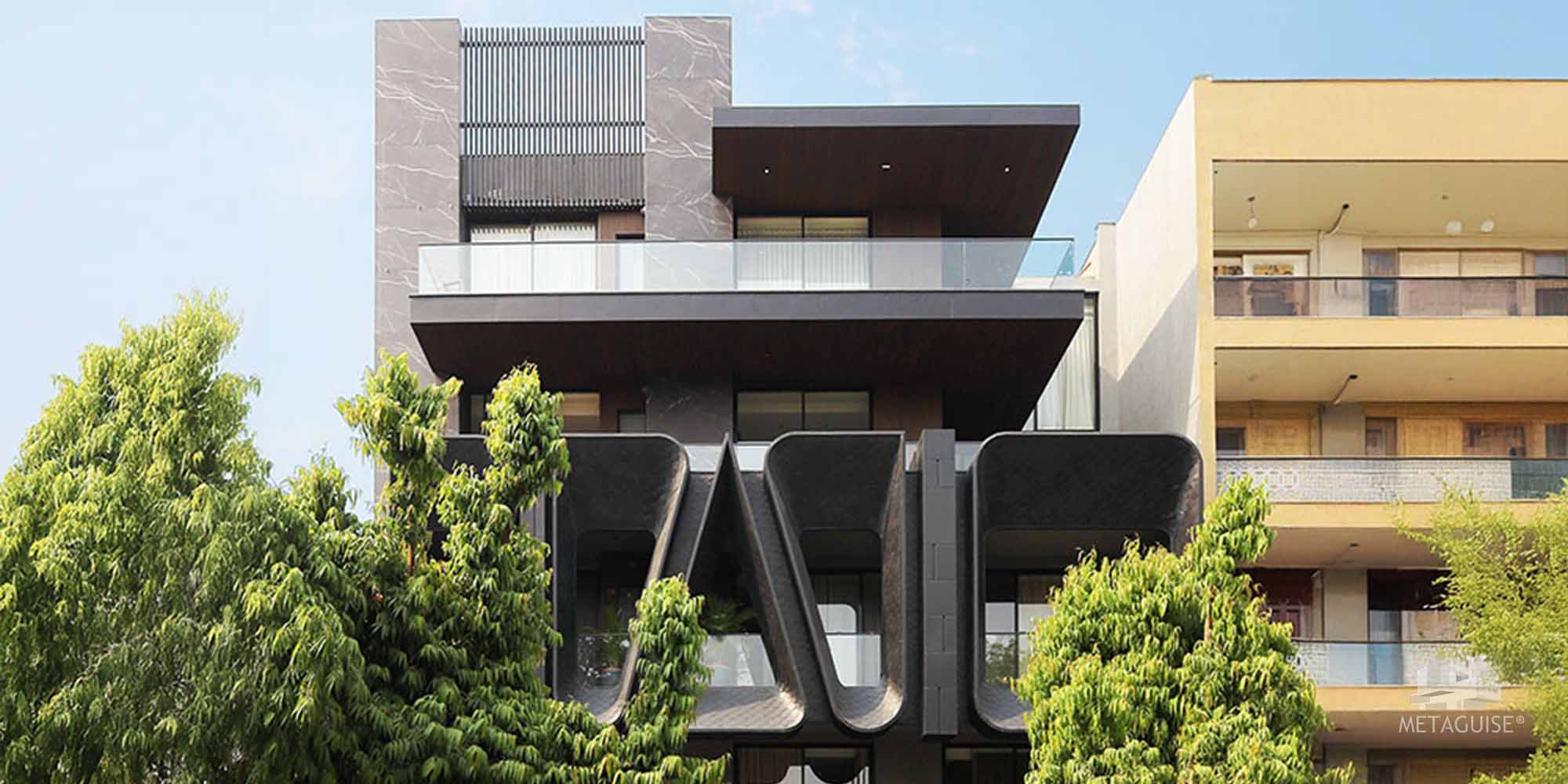
You stand in front of a luxury residential tower in Lower Parel, two years after handover. The imported Italian stone cladding that looked flawless in the German manufacturer's catalog now weeps rust stains from hidden fixings. Thermal expansion has cracked corner pieces. Monsoon moisture has seeped behind panels, creating bloom patterns the original architect never imagined. The client is furious. The contractor is pointing to specifications. And you're wondering why buildings that work beautifully in Milan become maintenance nightmares in Mumbai. This isn't a story about poor execution-it's about a fundamental disconnect between global aesthetic aspiration and local climatic reality. India's architectural ambition has outpaced its material honesty. We want the crisp minimalism of Herzog & de Meuron, the shimmering elegance of Jean Nouvel, but we're specifying for Basel when we should be engineering for Bangalore. The truth architects rarely admit in client presentations: most facade materials marketed as "premium" were developed for temperate European climates where temperature swings are gentle, humidity is moderate, and UV intensity is a fraction of what hits Ahmedabad in May. Specifying these systems for India without rigorous adaptation isn't sophistication-it's expensive wishful thinking.
Why Climate Kills Beautiful Buildings (And How We Pretend It Doesn't)
Let's map the battlefield. India doesn't have a climate-it has six distinct climate zones, each waging different wars on building envelopes: Hot-Dry (Rajasthan, Gujarat interiors): Surface temperatures exceeding 70°C, dust abrasion, extreme diurnal temperature swings causing rapid expansion-contraction cycles Warm-Humid (Mumbai, Kochi, Kolkata): Year-round high humidity, salt-laden coastal winds, mold and algae growth on any porous surface, relentless UV exposure Composite (Delhi, Jaipur): Summer heat approaching 48°C followed by winter fog and pollution particulates that chemically attack finishes Moderate (Pune, Bangalore): Deceptively benign until you factor in sudden intense monsoons and the red earth dust that infiltrates every joint Cold (Shimla, Srinagar): Freeze-thaw cycles, snow load, condensation issues foreign to 90% of Indian facade engineers Coastal (Goa, coastal Andhra): Chloride ion attack on metals, bio-fouling, wind-driven rain at pressures that overwhelm standard sealing systems The traditional "solutions" architects have relied on each carry hidden compromises. Natural stone offers thermal mass but weighs 90-120 kg/m², requires expensive structural upgrades, stains irreversibly, and becomes a maintenance liability the moment the first crack appears. Glass curtain walls deliver that international corporate aesthetic but turn buildings into solar ovens, driving HVAC loads through the roof-literally. Precast concrete panels work structurally but lock you into repetitive modularity; any curve or custom expression multiplies cost exponentially. And here's the part that keeps quantity surveyors awake: facade failure isn't always dramatic. It's the slow entropy of aesthetic death-the gradual dulling of anodized finishes, the creeping discoloration around fasteners, the invisible delamination that shows up as random panel failures five years post-occupancy. By the time the building looks tired, you're past warranty, past defects liability, and into a expensive renovation conversation nobody budgeted for. "Building facades in tropical climates experience 40-60% higher thermal stress and UV radiation exposure compared to temperate zones, leading to accelerated material degradation that conventional European testing standards fail to predict." - Building and Environment Journal, Facade Performance in Tropical Climates: A Systematic Review
What Makes a Facade Actually Climate-Responsive (Beyond Marketing)
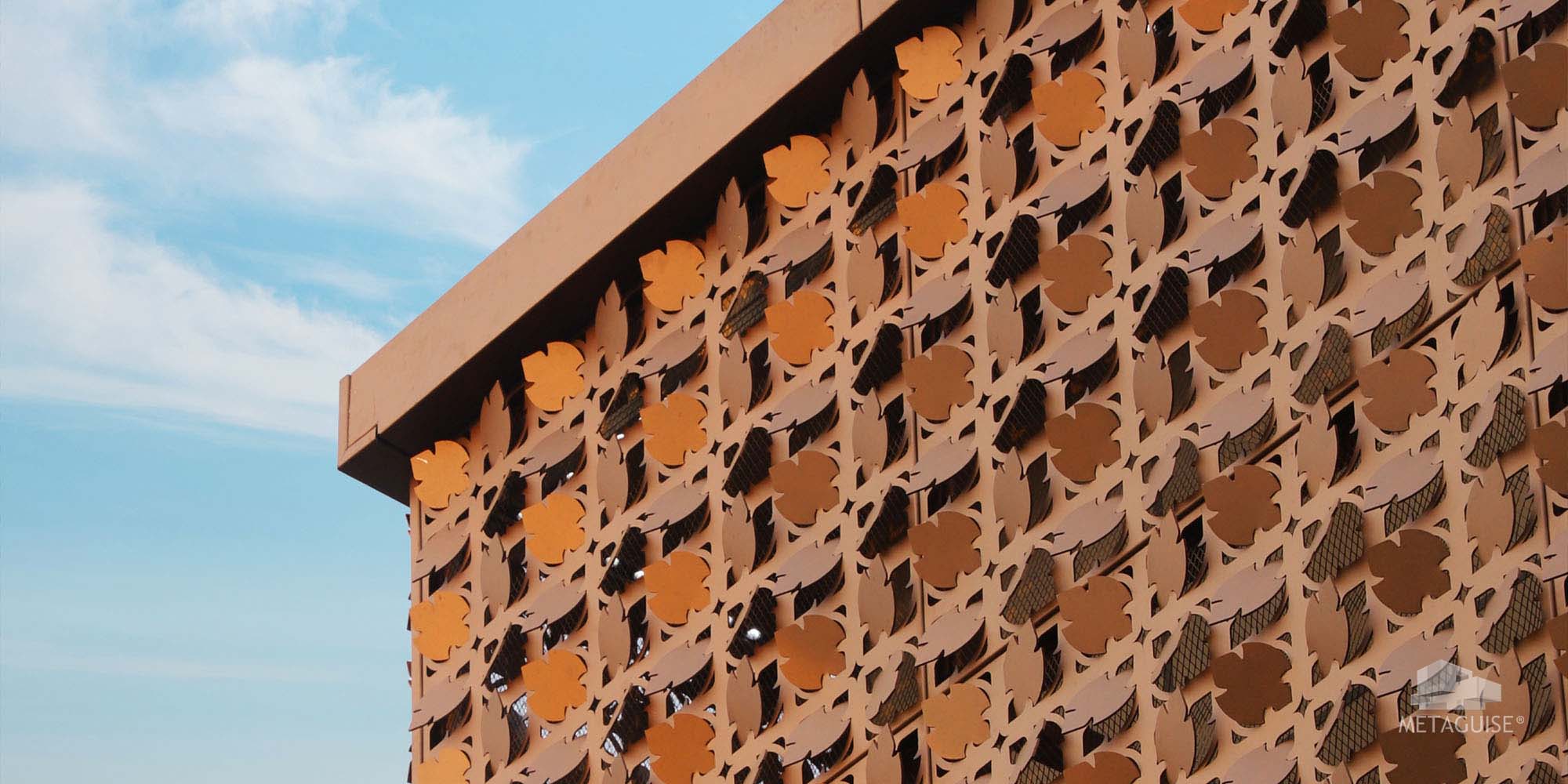
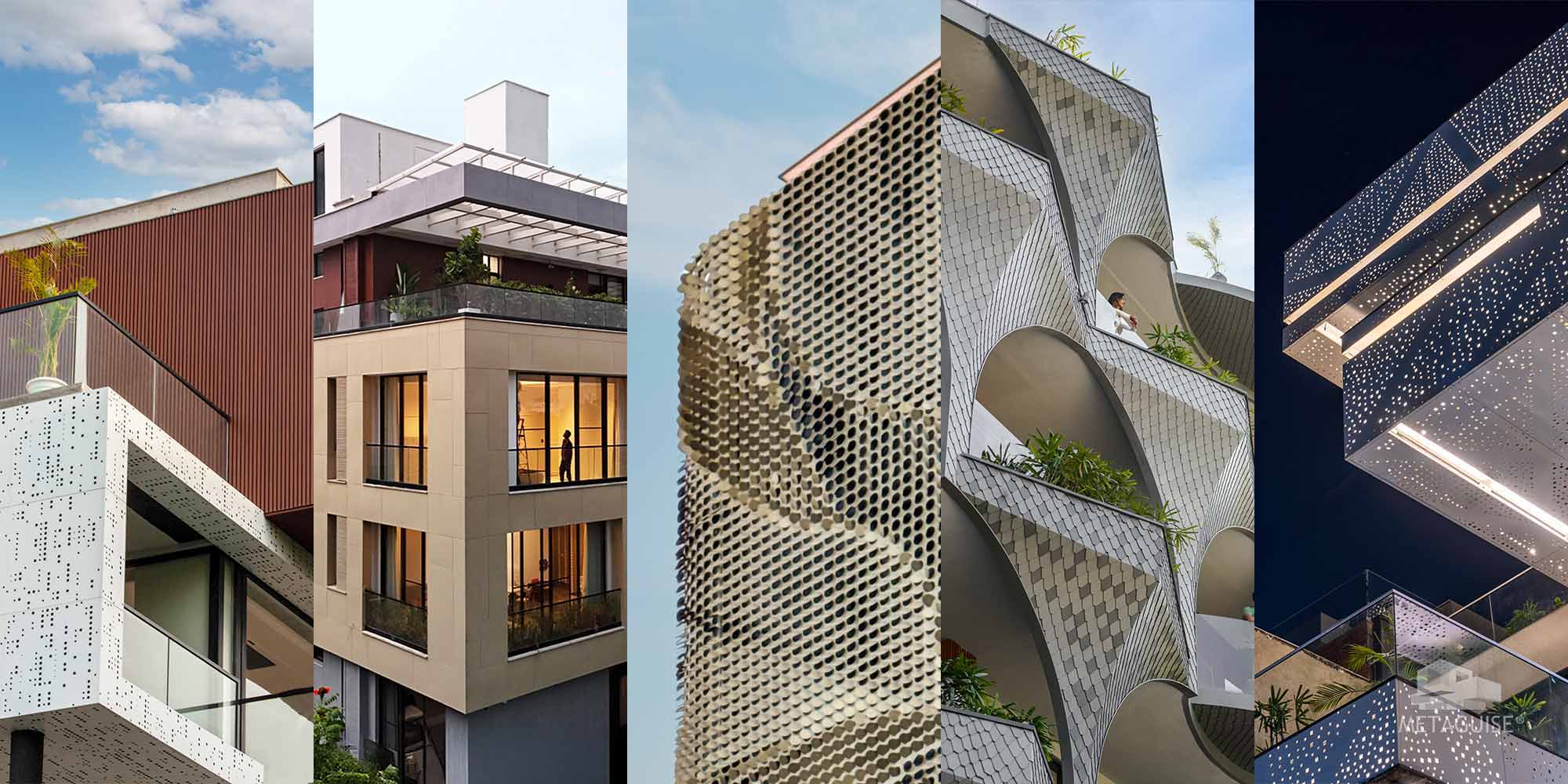
Climate-responsiveness isn't a material property-it's a system behavior. The facades that survive and thrive in India share four non-negotiable characteristics, regardless of aesthetic language: Thermal Intelligence Built Into Geometry This is where parametric design stops being an aesthetic indulgence and becomes an environmental strategy. When you can algorithmically control panel depth, perforation density, and surface angles across an elevation, you're not just creating visual interest-you're choreographing how heat, light, and air interact with the building envelope. Consider MetaSequin, where thousands of individual metal elements create a second skin that shades glazing while allowing ventilation. The parametric variation in sequin size and density isn't arbitrary-it responds to solar orientation, creating denser coverage on west facades while opening up on north faces. The result: buildings that breathe, not just stand there. Or take MetaFin systems, where vertical fins modulate to provide precisely calibrated shading at different hours and seasons. This isn't decorative-it's using geometry as climate control, reducing cooling loads by 20-30% compared to flush curtain walls while creating the kind of depth and movement that makes architecture memorable. Material Science That Respects Physics Aluminum and stainless steel aren't climate-responsive by default-they become so through sophisticated surface engineering. The metals used in MetaCassette and MetaFold systems undergo proprietary MetaSurface treatments that do four things simultaneously: Create micro-textured surfaces that resist dust accumulation and make rain-washing more effective Apply UV-stabilized coatings with 15-35 year colorfastness guarantees tested specifically in Indian tropical and desert conditions Engineer thermal expansion coefficients into the panel geometry itself, so movement is designed-in, not fought against Provide hydrophobic properties that prevent water ingress while allowing vapor transmission-keeping the wall assembly dry from both sides This is materials science meeting architectural ambition. You get the precision of Mies van der Rohe with the durability of a well-designed monsoon drain. Assembly Logic That Anticipates Movement Here's what separates sophisticated facade systems from decorated walls: how they accommodate the fact that buildings move. India's temperature swings mean a 50-meter-long metal facade can expand and contract by 15-20mm daily. Fight that movement with rigid connections, and you get buckling, fastener failure, and acoustic pops that terrify residents. Engineered systems like MetaHydra and MetaBlox use concealed clip systems with designed-in tolerance, allowing each panel to float within its zone while maintaining weathertight performance. The joints are the genius-they're where engineering trumps aesthetics, yet remain invisible to the casual eye. This is why these facades sound different when you tap them; there's internal logic, not just skin. Maintenance Honesty From Day One A truly climate-responsive facade doesn't pretend it will never need attention-it makes that attention possible without scaffolding the entire building. Accessibility for inspection, replaceability of individual components, cleaning strategies that don't require caustic chemicals or high-pressure washing that damages finishes-these aren't afterthoughts, they're fundamental to long-term performance. When Tanishq specifies a flagship store facade or when a ₹15-crore bungalow in Lutyens Delhi gets its exterior skin, the question isn't just "Will this look stunning?"- it's "Will this still look stunning in 2035, and what will it cost to keep it that way?"
The Specification Conversation You Should Be Having
If you're an architect or developer reading this, here's the uncomfortable truth: the typical specification process is backwards. Most teams select facade systems the way they choose light fixtures-late in the process, based on catalogs, filtered through cost and lead time. By then, structural design is frozen, MEP coordination is done, and the facade becomes an applied finish rather than an integrated building system. Climate-responsive facades demand front-end collaboration. The conversation should start when you're still sketching massing models, asking questions like: How can the facade geometry itself reduce solar heat gain without tinting every piece of glass dark? Can we use panel depth and perforation to create natural ventilation pathways that reduce mechanical system loads? What if the facade pattern encoded something culturally meaningful-not just for aesthetics, but as a wayfinding and identity strategy? How do we detail corners, parapets, and ground-level transitions so the system reads as continuous, not assembled? What's the real lifecycle cost when we factor in cleaning, maintenance access, and eventual panel replacement? This is the conversation that happens when you engage with partners who understand both computational design and Indian construction realities. It's why projects like the Miraj Stadium in Rajasthan, with its thousands of MetaCoin elements depicting sporting moments, work both as cultural landmarks and as technical achievements. The facade isn't decorating a building; it is the building's primary environmental and experiential interface.
When Aesthetics and Performance Stop Being Trade-offs
There's a persistent myth in Indian architecture that sophisticated facades are fragile facades-that if you want something that looks like it belongs in Architectural Digest, you're signing up for constant maintenance and eventual replacement. This was true when "sophisticated" meant imported systems engineered for Frankfurt being force-fit onto Faridabad. But parametric metal facades designed and fabricated specifically for subcontinental conditions have flipped that equation. The same algorithmic design that creates visual complexity also creates environmental responsiveness. The three-dimensionality isn't decorative-it's functional, creating self-shading, promoting airflow, and distributing thermal stress across the system rather than concentrating it. Consider the empirical evidence: over 1800 projects installed across every climate zone in India, from coastal Kochi to desert Jaisalmer to the humid cauldron of Chennai. These aren't controlled laboratory conditions-they're real buildings, with real budgets, facing real weather, occupied by real people who notice when things go wrong. The fact that architects return to specify these systems again, that developers build repeat projects using the same facade language, tells you something about long-term performance that no manufacturer's brochure can. The aesthetics you can achieve are no longer constrained by climate. Want the fluid curves that were previously only possible in renderings? MetaFin can deliver them in marine-grade aluminum that will still look pristine when your building gets its ten-year IGBC recertification. Need the crisp geometry of folded planes that read differently at every angle? MetaFold systems translate those surfaces into weather-sealed reality. Seeking the organic cell-like patterns that blur the line between architecture and nature? MetaBlox makes that possible without creating a maintenance nightmare.
The Real Question: Are You Ready to Spec Smarter?
Here's where we land: specifying facades for India is no longer about choosing between beautiful or durable, between international aesthetics or local resilience, between design ambition or budget reality. The tools exist-parametric design software, climate-responsive materials, integrated fabrication-to-installation processes to deliver all of it simultaneously. What's required is a shift in when and how facade decisions get made. Move that conversation upstream. Treat the facade as an environmental system, not a decorative wrapper. Partner with specialists who've actually built in Baroda's heat, survived Bombay's monsoons, and delivered in Delhi's punishing composite climate, not just theorized about it in European trade journals. The facades that will define India's next architectural era won't be the ones that look impressive in competition renderings. They'll be the ones that still look impressive fifteen years later, that age with dignity rather than degradation, that make building owners proud rather than resentful of maintenance costs. Climate-responsive design isn't a constraint on aesthetics-it's the foundation that makes lasting aesthetics possible. If you're specifying a facade system for a project where performance and poetry aren't negotiable-where the building needs to be both an environmental response and an architectural statement, the conversation starts with understanding what's actually possible when you design for India, not despite it. Explore how parametric metal facades engineered for subcontinental realities are reshaping expectations across luxury residential, flagship retail, and institutional architecture. Because the question isn't whether your building will face India's climate - it's whether your facade is ready for the conversation.
Frequently Asked Questions
1. Which facade materials work best in India's hot and humid climate without compromising on design quality?
In regions where high humidity and salt air can strip away standard finishes, premium metals are the most reliable choice over traditional stone or wood. Aluminum and weathering steels work particularly well because they don't rot or warp when moisture levels spike. To maintain a high design standard, these metals are treated with MetaSurface finishes like MetaCopper or MetaPatina. These provide the organic, tactile look of natural materials but offer the structural "armor" needed for the Indian coast. This allows an architect to get that high-end, weathered aesthetic without the maintenance headaches that come with timber or porous stone.
2.Why do European facade systems fail in Indian conditions, and what should architects specify instead?
Many European systems are engineered for thermal stresses that just don't exist in the same way here. In India, the mix of a high UV index, intense heat, and heavy monsoon cycles can cause imported seals to fail or finishes to fade way too early. These systems also rely on global supply chains, so a single damaged panel can stall a project for months. Architects should specify systems that are designed and fabricated locally using parametric logic. Systems like MetaSequin or MetaCassette are built with the Indian climate in mind. Since the fabrication data is handled in-house, the tolerances are specifically set to handle the expansion and contraction rates unique to our weather.
3. How does parametric facade design actually reduce heat gain and cooling costs in Indian buildings?
It really comes down to the science of shade. A flat wall absorbs sunlight all day, but a parametric facade uses algorithms to vary the density and angle of the panels based on the sun's path. By using perforated screens or deep-profile systems like MetaFin, the facade becomes a self-shading skin. This creates a "double-skin" effect that keeps the building in its own shadow. When the structure isn't fighting a massive thermal load on a west-facing wall, interior temperatures can drop, leading to much lower cooling costs.
4. What is MetaSurface finish and how is it different from standard anodizing or powder coating on facade panels?
Standard powder coating often produces a flat, one-dimensional color that can feel a bit clinical or "plasticky". While it works for basic needs, it usually lacks the depth required for luxury projects. MetaSurface is more of a material language than a simple coating. It uses specialized processes to create textures and tones that evolve with the light, such as the rusted warmth of MetaCorten or the verdigris of MetaPatina. It offers industrial-grade protection but with a sensory finish that mirrors the precision of a luxury brand.
5. At what stage of a building project should facade material specification happen for climate-responsive performance?
This conversation needs to start during the early design sketches, not after the plans are frozen. If you wait until the building is already topped out to think about the facade, you’re usually just trying to wrap a problem instead of solving it. When architects bring us in at the concept stage, we can use parametric logic to influence the building’s shape for better thermal performance. This early move allows for 3D visualizations and engineering checks that align the budget with the climate goals long before anything is actually fabricated.
Climate-Responsive Metal Facades in India: How to Specify Systems That Perform and Look Stunning for 15+years
08-04-26 | Industry Trends
Why Important Facade System Fail in India - And What Architects Get Wrong
You stand in front of a luxury residential tower in Lower Parel, two years after handover. The imported Italian stone cladding that looked flawless in the German manufacturer's catalog now weeps rust stains from hidden fixings. Thermal expansion has cracked corner pieces. Monsoon moisture has seeped behind panels, creating bloom patterns the original architect never imagined. The client is furious. The contractor is pointing to specifications. And you're wondering why buildings that work beautifully in Milan become maintenance nightmares in Mumbai. This isn't a story about poor execution-it's about a fundamental disconnect between global aesthetic aspiration and local climatic reality. India's architectural ambition has outpaced its material honesty. We want the crisp minimalism of Herzog & de Meuron, the shimmering elegance of Jean Nouvel, but we're specifying for Basel when we should be engineering for Bangalore. The truth architects rarely admit in client presentations: most facade materials marketed as "premium" were developed for temperate European climates where temperature swings are gentle, humidity is moderate, and UV intensity is a fraction of what hits Ahmedabad in May. Specifying these systems for India without rigorous adaptation isn't sophistication-it's expensive wishful thinking.
Why Climate Kills Beautiful Buildings (And How We Pretend It Doesn't)
Let's map the battlefield. India doesn't have a climate-it has six distinct climate zones, each waging different wars on building envelopes: Hot-Dry (Rajasthan, Gujarat interiors): Surface temperatures exceeding 70°C, dust abrasion, extreme diurnal temperature swings causing rapid expansion-contraction cycles Warm-Humid (Mumbai, Kochi, Kolkata): Year-round high humidity, salt-laden coastal winds, mold and algae growth on any porous surface, relentless UV exposure Composite (Delhi, Jaipur): Summer heat approaching 48°C followed by winter fog and pollution particulates that chemically attack finishes Moderate (Pune, Bangalore): Deceptively benign until you factor in sudden intense monsoons and the red earth dust that infiltrates every joint Cold (Shimla, Srinagar): Freeze-thaw cycles, snow load, condensation issues foreign to 90% of Indian facade engineers Coastal (Goa, coastal Andhra): Chloride ion attack on metals, bio-fouling, wind-driven rain at pressures that overwhelm standard sealing systems The traditional "solutions" architects have relied on each carry hidden compromises. Natural stone offers thermal mass but weighs 90-120 kg/m², requires expensive structural upgrades, stains irreversibly, and becomes a maintenance liability the moment the first crack appears. Glass curtain walls deliver that international corporate aesthetic but turn buildings into solar ovens, driving HVAC loads through the roof-literally. Precast concrete panels work structurally but lock you into repetitive modularity; any curve or custom expression multiplies cost exponentially. And here's the part that keeps quantity surveyors awake: facade failure isn't always dramatic. It's the slow entropy of aesthetic death-the gradual dulling of anodized finishes, the creeping discoloration around fasteners, the invisible delamination that shows up as random panel failures five years post-occupancy. By the time the building looks tired, you're past warranty, past defects liability, and into a expensive renovation conversation nobody budgeted for. "Building facades in tropical climates experience 40-60% higher thermal stress and UV radiation exposure compared to temperate zones, leading to accelerated material degradation that conventional European testing standards fail to predict." - Building and Environment Journal, Facade Performance in Tropical Climates: A Systematic Review
What Makes a Facade Actually Climate-Responsive (Beyond Marketing)
Climate-responsiveness isn't a material property-it's a system behavior. The facades that survive and thrive in India share four non-negotiable characteristics, regardless of aesthetic language: Thermal Intelligence Built Into Geometry This is where parametric design stops being an aesthetic indulgence and becomes an environmental strategy. When you can algorithmically control panel depth, perforation density, and surface angles across an elevation, you're not just creating visual interest-you're choreographing how heat, light, and air interact with the building envelope. Consider MetaSequin, where thousands of individual metal elements create a second skin that shades glazing while allowing ventilation. The parametric variation in sequin size and density isn't arbitrary-it responds to solar orientation, creating denser coverage on west facades while opening up on north faces. The result: buildings that breathe, not just stand there. Or take MetaFin systems, where vertical fins modulate to provide precisely calibrated shading at different hours and seasons. This isn't decorative-it's using geometry as climate control, reducing cooling loads by 20-30% compared to flush curtain walls while creating the kind of depth and movement that makes architecture memorable. Material Science That Respects Physics Aluminum and stainless steel aren't climate-responsive by default-they become so through sophisticated surface engineering. The metals used in MetaCassette and MetaFold systems undergo proprietary MetaSurface treatments that do four things simultaneously: Create micro-textured surfaces that resist dust accumulation and make rain-washing more effective Apply UV-stabilized coatings with 15-35 year colorfastness guarantees tested specifically in Indian tropical and desert conditions Engineer thermal expansion coefficients into the panel geometry itself, so movement is designed-in, not fought against Provide hydrophobic properties that prevent water ingress while allowing vapor transmission-keeping the wall assembly dry from both sides This is materials science meeting architectural ambition. You get the precision of Mies van der Rohe with the durability of a well-designed monsoon drain. Assembly Logic That Anticipates Movement Here's what separates sophisticated facade systems from decorated walls: how they accommodate the fact that buildings move. India's temperature swings mean a 50-meter-long metal facade can expand and contract by 15-20mm daily. Fight that movement with rigid connections, and you get buckling, fastener failure, and acoustic pops that terrify residents. Engineered systems like MetaHydra and MetaBlox use concealed clip systems with designed-in tolerance, allowing each panel to float within its zone while maintaining weathertight performance. The joints are the genius-they're where engineering trumps aesthetics, yet remain invisible to the casual eye. This is why these facades sound different when you tap them; there's internal logic, not just skin. Maintenance Honesty From Day One A truly climate-responsive facade doesn't pretend it will never need attention-it makes that attention possible without scaffolding the entire building. Accessibility for inspection, replaceability of individual components, cleaning strategies that don't require caustic chemicals or high-pressure washing that damages finishes-these aren't afterthoughts, they're fundamental to long-term performance. When Tanishq specifies a flagship store facade or when a ₹15-crore bungalow in Lutyens Delhi gets its exterior skin, the question isn't just "Will this look stunning?"- it's "Will this still look stunning in 2035, and what will it cost to keep it that way?"
The Specification Conversation You Should Be Having
If you're an architect or developer reading this, here's the uncomfortable truth: the typical specification process is backwards. Most teams select facade systems the way they choose light fixtures-late in the process, based on catalogs, filtered through cost and lead time. By then, structural design is frozen, MEP coordination is done, and the facade becomes an applied finish rather than an integrated building system. Climate-responsive facades demand front-end collaboration. The conversation should start when you're still sketching massing models, asking questions like: How can the facade geometry itself reduce solar heat gain without tinting every piece of glass dark? Can we use panel depth and perforation to create natural ventilation pathways that reduce mechanical system loads? What if the facade pattern encoded something culturally meaningful-not just for aesthetics, but as a wayfinding and identity strategy? How do we detail corners, parapets, and ground-level transitions so the system reads as continuous, not assembled? What's the real lifecycle cost when we factor in cleaning, maintenance access, and eventual panel replacement? This is the conversation that happens when you engage with partners who understand both computational design and Indian construction realities. It's why projects like the Miraj Stadium in Rajasthan, with its thousands of MetaCoin elements depicting sporting moments, work both as cultural landmarks and as technical achievements. The facade isn't decorating a building; it is the building's primary environmental and experiential interface.
When Aesthetics and Performance Stop Being Trade-offs
There's a persistent myth in Indian architecture that sophisticated facades are fragile facades-that if you want something that looks like it belongs in Architectural Digest, you're signing up for constant maintenance and eventual replacement. This was true when "sophisticated" meant imported systems engineered for Frankfurt being force-fit onto Faridabad. But parametric metal facades designed and fabricated specifically for subcontinental conditions have flipped that equation. The same algorithmic design that creates visual complexity also creates environmental responsiveness. The three-dimensionality isn't decorative-it's functional, creating self-shading, promoting airflow, and distributing thermal stress across the system rather than concentrating it. Consider the empirical evidence: over 1800 projects installed across every climate zone in India, from coastal Kochi to desert Jaisalmer to the humid cauldron of Chennai. These aren't controlled laboratory conditions-they're real buildings, with real budgets, facing real weather, occupied by real people who notice when things go wrong. The fact that architects return to specify these systems again, that developers build repeat projects using the same facade language, tells you something about long-term performance that no manufacturer's brochure can. The aesthetics you can achieve are no longer constrained by climate. Want the fluid curves that were previously only possible in renderings? MetaFin can deliver them in marine-grade aluminum that will still look pristine when your building gets its ten-year IGBC recertification. Need the crisp geometry of folded planes that read differently at every angle? MetaFold systems translate those surfaces into weather-sealed reality. Seeking the organic cell-like patterns that blur the line between architecture and nature? MetaBlox makes that possible without creating a maintenance nightmare.
The Real Question: Are You Ready to Spec Smarter?
Here's where we land: specifying facades for India is no longer about choosing between beautiful or durable, between international aesthetics or local resilience, between design ambition or budget reality. The tools exist-parametric design software, climate-responsive materials, integrated fabrication-to-installation processes to deliver all of it simultaneously. What's required is a shift in when and how facade decisions get made. Move that conversation upstream. Treat the facade as an environmental system, not a decorative wrapper. Partner with specialists who've actually built in Baroda's heat, survived Bombay's monsoons, and delivered in Delhi's punishing composite climate, not just theorized about it in European trade journals. The facades that will define India's next architectural era won't be the ones that look impressive in competition renderings. They'll be the ones that still look impressive fifteen years later, that age with dignity rather than degradation, that make building owners proud rather than resentful of maintenance costs. Climate-responsive design isn't a constraint on aesthetics-it's the foundation that makes lasting aesthetics possible. If you're specifying a facade system for a project where performance and poetry aren't negotiable-where the building needs to be both an environmental response and an architectural statement, the conversation starts with understanding what's actually possible when you design for India, not despite it. Explore how parametric metal facades engineered for subcontinental realities are reshaping expectations across luxury residential, flagship retail, and institutional architecture. Because the question isn't whether your building will face India's climate - it's whether your facade is ready for the conversation.
Frequently Asked Questions
1. Which facade materials work best in India's hot and humid climate without compromising on design quality?
In regions where high humidity and salt air can strip away standard finishes, premium metals are the most reliable choice over traditional stone or wood. Aluminum and weathering steels work particularly well because they don't rot or warp when moisture levels spike. To maintain a high design standard, these metals are treated with MetaSurface finishes like MetaCopper or MetaPatina. These provide the organic, tactile look of natural materials but offer the structural "armor" needed for the Indian coast. This allows an architect to get that high-end, weathered aesthetic without the maintenance headaches that come with timber or porous stone.
2.Why do European facade systems fail in Indian conditions, and what should architects specify instead?
Many European systems are engineered for thermal stresses that just don't exist in the same way here. In India, the mix of a high UV index, intense heat, and heavy monsoon cycles can cause imported seals to fail or finishes to fade way too early. These systems also rely on global supply chains, so a single damaged panel can stall a project for months. Architects should specify systems that are designed and fabricated locally using parametric logic. Systems like MetaSequin or MetaCassette are built with the Indian climate in mind. Since the fabrication data is handled in-house, the tolerances are specifically set to handle the expansion and contraction rates unique to our weather.
3. How does parametric facade design actually reduce heat gain and cooling costs in Indian buildings?
It really comes down to the science of shade. A flat wall absorbs sunlight all day, but a parametric facade uses algorithms to vary the density and angle of the panels based on the sun's path. By using perforated screens or deep-profile systems like MetaFin, the facade becomes a self-shading skin. This creates a "double-skin" effect that keeps the building in its own shadow. When the structure isn't fighting a massive thermal load on a west-facing wall, interior temperatures can drop, leading to much lower cooling costs.
4. What is MetaSurface finish and how is it different from standard anodizing or powder coating on facade panels?
Standard powder coating often produces a flat, one-dimensional color that can feel a bit clinical or "plasticky". While it works for basic needs, it usually lacks the depth required for luxury projects. MetaSurface is more of a material language than a simple coating. It uses specialized processes to create textures and tones that evolve with the light, such as the rusted warmth of MetaCorten or the verdigris of MetaPatina. It offers industrial-grade protection but with a sensory finish that mirrors the precision of a luxury brand.
5. At what stage of a building project should facade material specification happen for climate-responsive performance?
This conversation needs to start during the early design sketches, not after the plans are frozen. If you wait until the building is already topped out to think about the facade, you’re usually just trying to wrap a problem instead of solving it. When architects bring us in at the concept stage, we can use parametric logic to influence the building’s shape for better thermal performance. This early move allows for 3D visualizations and engineering checks that align the budget with the climate goals long before anything is actually fabricated.
Related Articles
Related Articles
Why Aluminium Cladding Is the Future of Facade Design in Indian Architecture
India’s architecture is evolving - faster, smarter, and more performance-driven than ever before. As cities grow and climates shift, the facade is no longer just an exterior skin. It’s a functional envelope that must adapt, protect, and express.
12-09-25 | Industry Trends
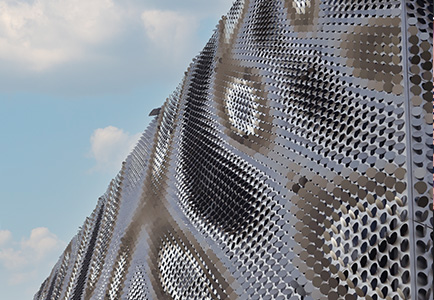
Parametric Architecture in India: Why It’s Shaping the Future of Facade Design
Architecture is evolving - and with it, the language of the façade. At the heart of this evolution lies a powerful design philosophy: parametric architecture.
03-11-25 | Industry Trends
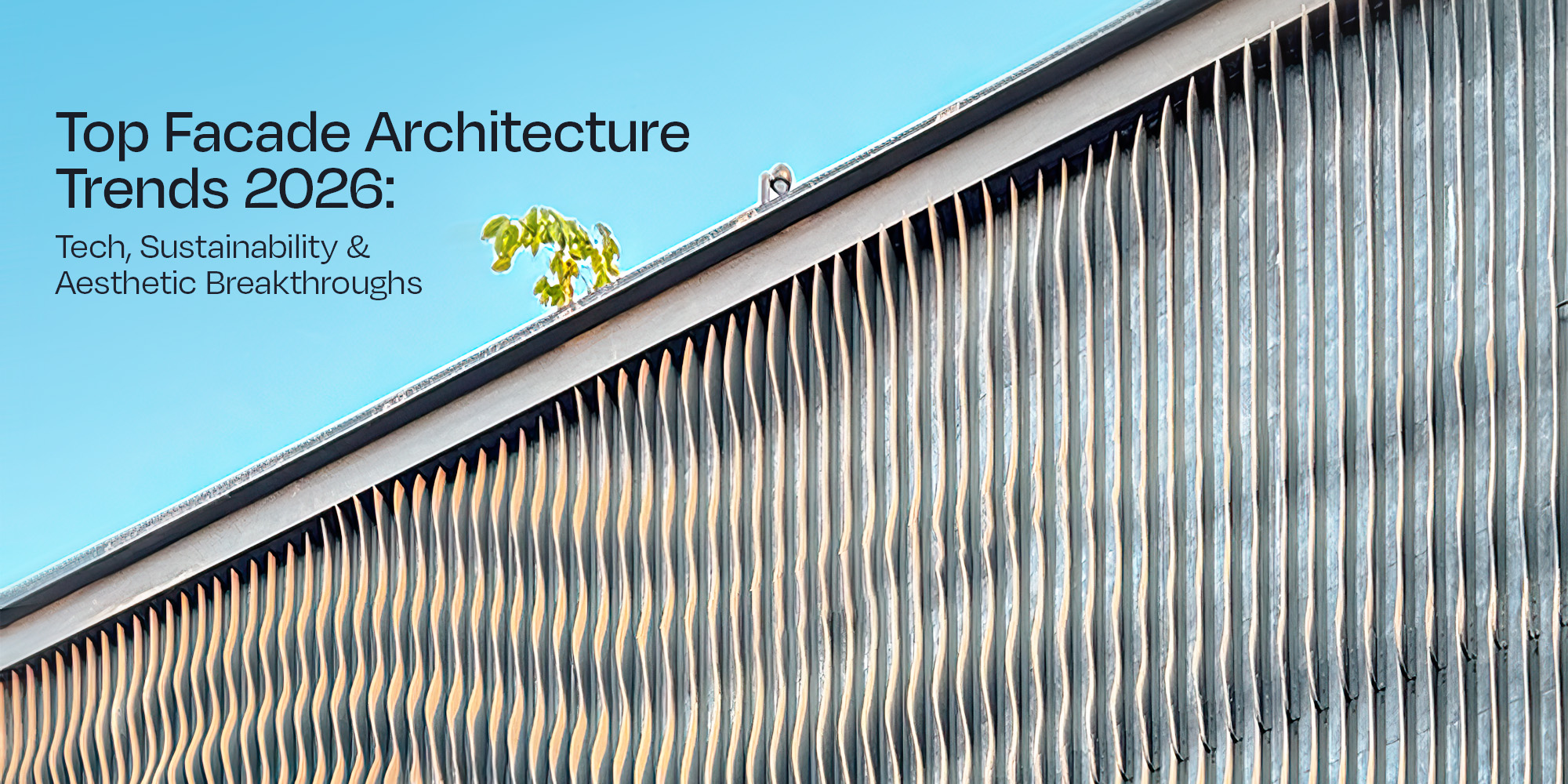
Top Facade Architecture Trends 2026 Tech Sustainability and Aesthetic Breakthroughs
The building envelope is undergoing a radical transformation. No longer just a 'skin,' it is now a performance-driven asset that breathes and adapts
12-02-26 | Industry Trends
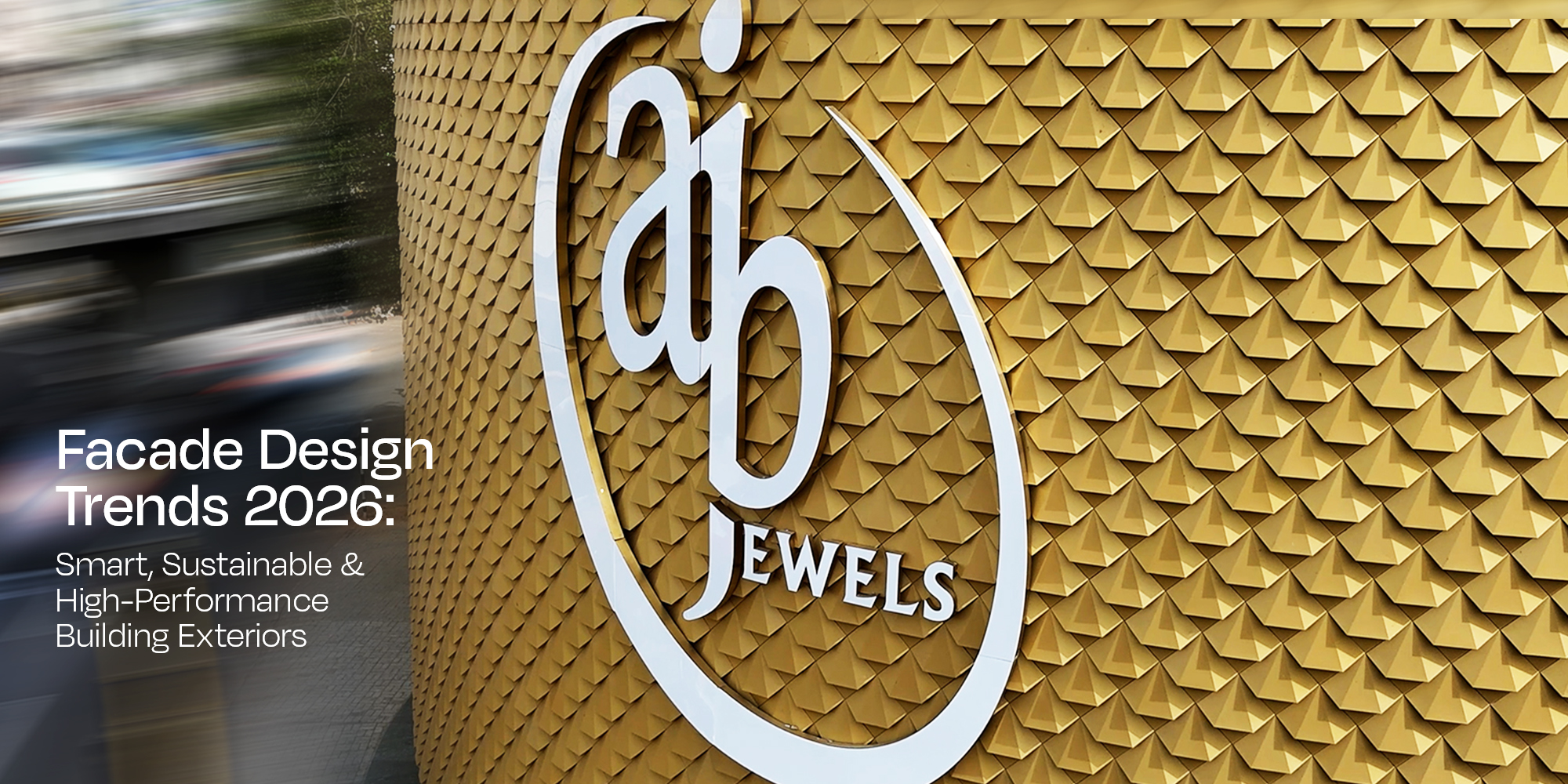
Facade Design Trends 2026 Smart Sustainable and High-Performance Building Exteriors
The building envelope is undergoing a radical transformation. No longer just a 'skin,' it is now a performance-driven asset that breathes and adapts
23-02-26 | Industry Trends
Social
Legal
Privacy Policy|Terms & Conditions