






Chennai Metal Facade: Coastal Climate Solutions for Sea-Facing Buildings
16-06-26 | Facade Innovations
Key Takeaways
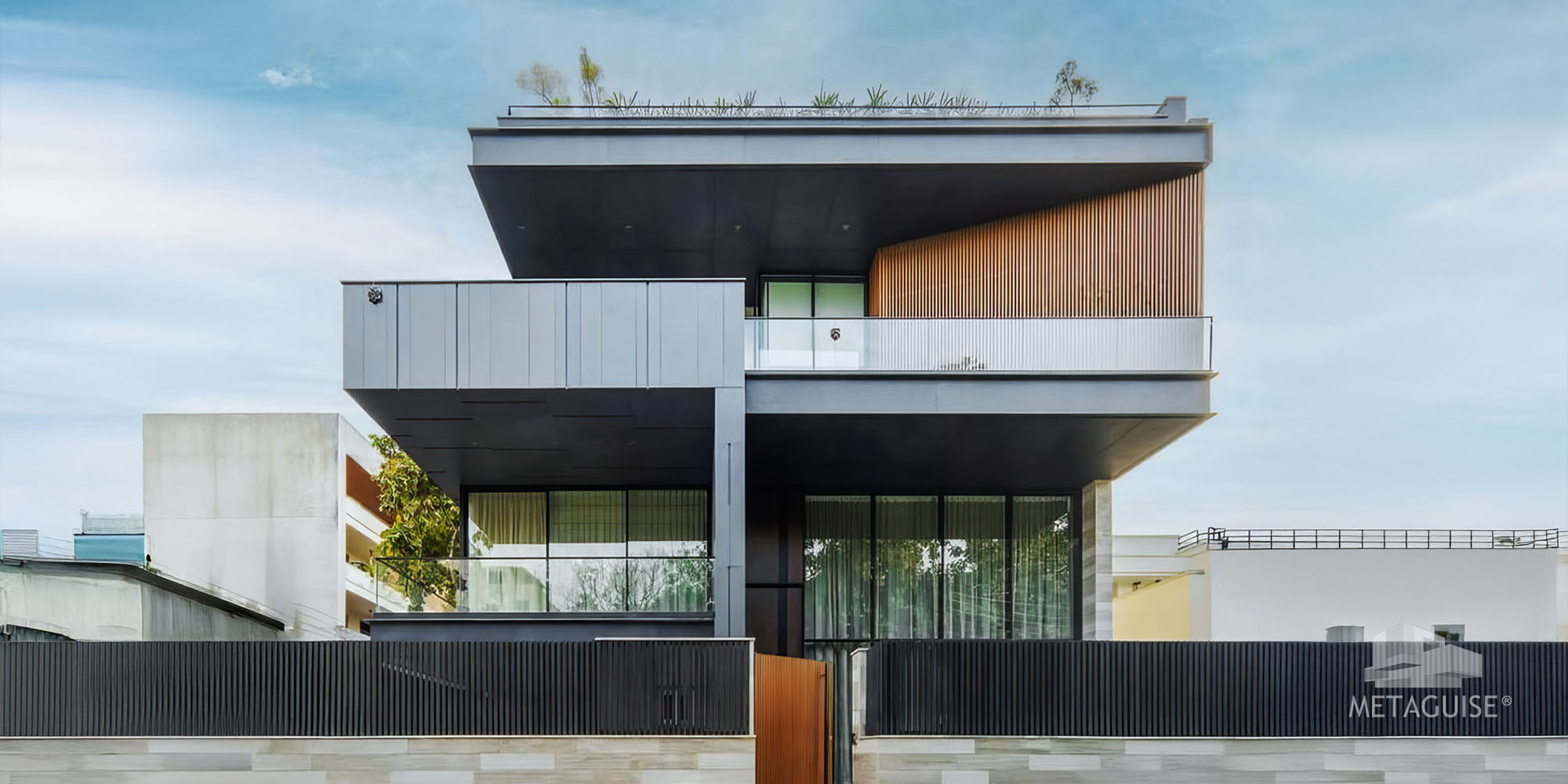
• Chennai's premium housing market surged 253% quarter-on-quarter in Q1 2026 — 3,700 residential launches with premium housing at 61% of supply, concentrated along the ECR, OMR, and Suburban South corridors where coastal climate conditions are most intense and facade material specification has the most direct consequences for building longevity. • Chennai's Bay of Bengal coastline places it in the most demanding facade climate category in India — salt-laden sea air within 5km carries chloride ions that corrode mild steel fixings within months, cause coating edge failure within 2–3 years on standard PVDF, and establish biological growth on porous surfaces within a single monsoon season. • Only two material specifications are genuinely robust in Chennai's coastal conditions: anodised aluminium — where the protective oxide layer is integral to the metal, with no coating edge for salt air to attack — and PVDF-coated aluminium with coastal-grade sealed edges, stainless steel Grade 316 fixings, and ventilated rainscreen installation. • Metaguise's coastal facade specification is engineered for Chennai's Bay of Bengal environment — available across the full product range including MetaFlute, MetaCassette, SolidPanel, MetaSequin, MetaCoin, and MetaFin — with completed projects on ECR beachfront, OMR corridor, Neelankarai, Adyar, and Sholinganallur.
Why Coastal Buildings Need Special Facades: The Chemistry of Sea Air Attack
Chennai's real estate market is growing faster than its architects and developers can specify correctly. According to the Cushman & Wakefield Chennai Real Estate MarketBeat Report Q1 2026, the city recorded approximately 3,700 residential unit launches in Q1 2026, with premium housing leading supply at a 61% share — a 253% quarter-on-quarter surge. Suburban South II, encompassing the East Coast Road corridor from Besant Nagar through Neelankarai to Sholinganallur, accounted for 38% of launches — precisely the zone where Chennai's coastal climate is most intense, and where a wrong facade material specification does not merely underperform. It fails. Corrosion staining within months. Biological growth within one monsoon season. Coating delamination within three years on poorly sealed systems. The chemistry of salt-air attack is not theoretical in Chennai — it is visible on every building on the ECR that was specified without understanding it. A coastal metal facade on a Chennai sea-facing building is not a design decision that can be corrected later. It is an engineering decision that must be correct from the first specification
Best Corrosion-Resistant Metals for Chennai's Coastal Climate
Not all metals are equal in Chennai's environment, and the differences between specification tiers are not marginal — they are the difference between a facade that looks pristine in fifteen years and one that requires remediation in five. The following covers the primary metal options and their performance in Chennai's specific coastal conditions. Anodised Aluminium: The Coastal Benchmark Anodised aluminium is the gold standard for Chennai coastal facades — and for a reason that goes deeper than surface performance. The anodic layer on anodised aluminium is not a coating applied to the metal surface; it is the aluminium surface itself, electrochemically converted into a hard aluminium oxide layer that is integral to the metal. There are no coating edges, no bond interfaces, and no organic binder for chloride ions to attack. The anodic oxide layer is chemically stable in salt-air environments — it does not react with the electrochemical processes that drive coastal corrosion of coated metals. For facades within direct coastal influence — Besant Nagar, ECR beachfront properties, Marina area buildings, and any project within approximately three kilometres of the Bay of Bengal — anodised aluminium is the baseline specification, not an upgrade. The aesthetic range of anodised aluminium is more constrained than PVDF — natural silver-grey, gold, bronze, and dark gunmetal are the primary available tones — but within these tones, the surface quality is exceptional: a hard, dense surface with a subtle metallic depth that reads as premium at close range and as architecturally precise from across the street. Metaguise's full MetaForm range — MetaFlute, MetaCassette, SolidPanel, MetaSequin, MetaCoin — is available in anodised finish for Chennai coastal specifications. PVDF-Coated Aluminium with Coastal Specification: The Colour-Versatile Premium For Chennai projects where a specific colour, texture, or finish is required that falls outside the anodised palette — a warm white MetaFlute residential facade on ECR, a deep charcoal SolidPanel commercial elevation in Sholinganallur, or a MetaWood finish on a boutique hotel near the beach — PVDF-coated aluminium with Metaguise's coastal specification is the correct approach. Coastal PVDF specification includes three non-negotiable elements: fully sealed panel edges (the cut aluminium edge where the PVDF coating does not cover raw metal must be sealed with a coastal-grade sealant to prevent chloride ion attack at this vulnerability point); stainless steel sub-frame fixings throughout (mild steel or even hot-dip galvanised fixings corrode in heavy salt-air environments; stainless steel Grade 316 is the minimum coastal fixing specification); and ventilated rainscreen installation with designed drainage at base terminations (moisture accumulation in the cavity is eliminated by the ventilated configuration, preventing saline water ponding at the system base). Aluminium vs Steel in Chennai: The Substrate Matters Any facade system using a steel substrate — galvanised steel, stainless steel, or any steel composite — must be evaluated carefully for Chennai coastal applications. Stainless steel Grade 316 (marine grade, with molybdenum in the alloy that significantly improves chloride resistance) performs well as a fixing and structural element in Chennai's coastal environment. Standard Grade 304 stainless steel — which is adequate for most Indian applications — can develop surface corrosion staining ('tea staining') in heavy salt-air environments within three to five years, though it retains structural integrity. Standard mild steel and hot-dip galvanised steel, once the zinc sacrificial layer is depleted, fail rapidly in coastal conditions. Aluminium's inherent corrosion resistance — the stable natural aluminium oxide layer that forms instantly when the metal is exposed to air — gives it a fundamental advantage over all steel variants in coastal environments for the structural panel substrate. This is why every Metaguise coastal facade system uses solid aluminium panels as the primary cladding substrate, regardless of finish specification. What to Absolutely Avoid for Chennai Coastal Buildings • Mild steel or hot-dip galvanised sub-frame components — corrode within months to years in heavy salt-air; must be replaced with stainless steel or powder-coated aluminium throughout • Standard powder coat without sealed edges on coastal exposures — coating edge vulnerability allows chloride attack at every panel edge; unacceptable within three kilometres of the sea • HPL panels with aluminium-composite or steel-core construction — the core material is the vulnerability; salt moisture ingress at panel edges leads to internal delamination invisible from the facade face until failure is complete • Painted masonry or unprotected concrete on seafront elevations — biological growth (algae, salt efflorescence) establishes rapidly in Chennai's conditions; requires aggressive annual maintenance to maintain appearance
Metaguise's Coastal Product Range: Engineered for Chennai's Bay of Bengal Environment
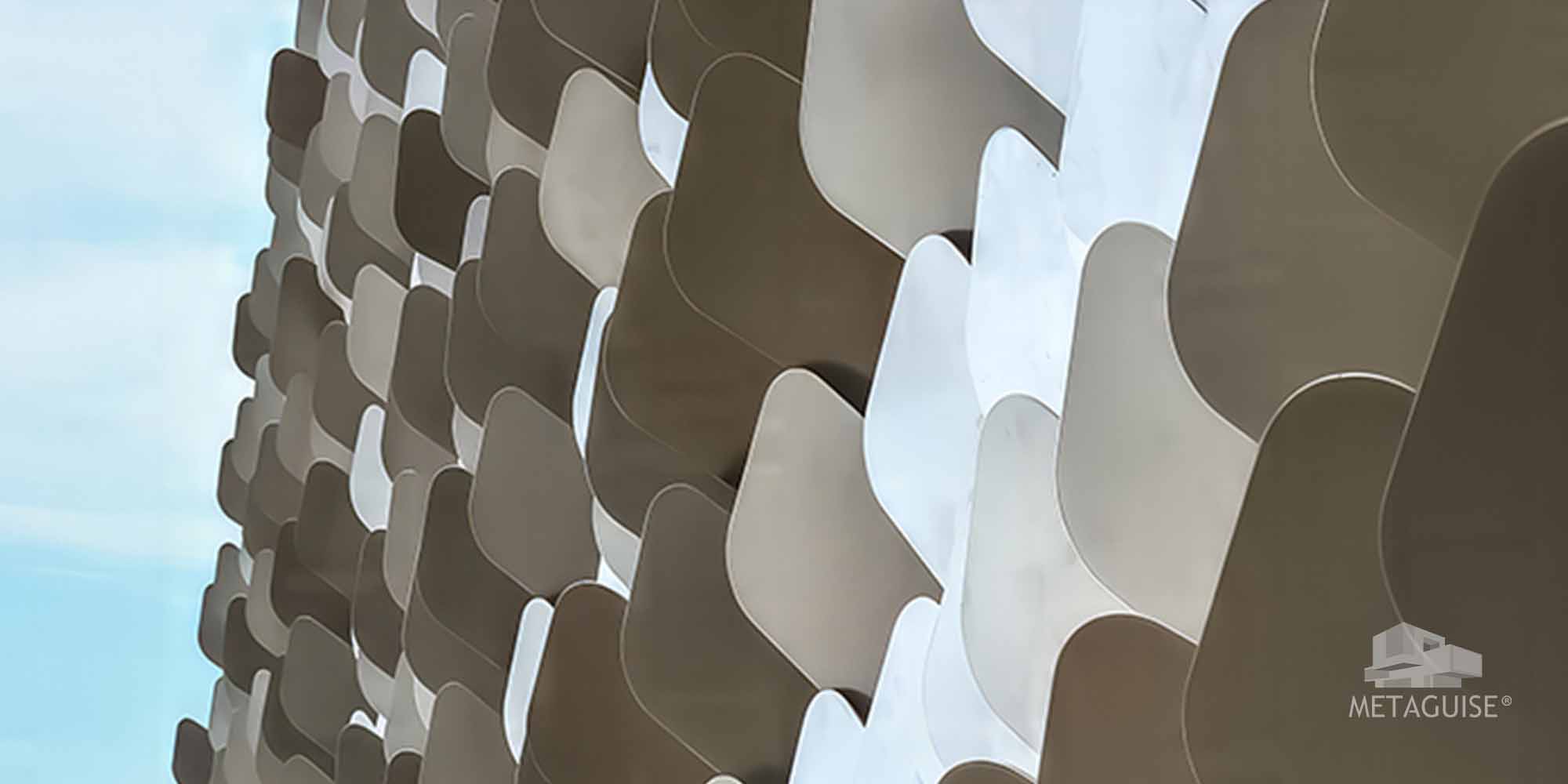
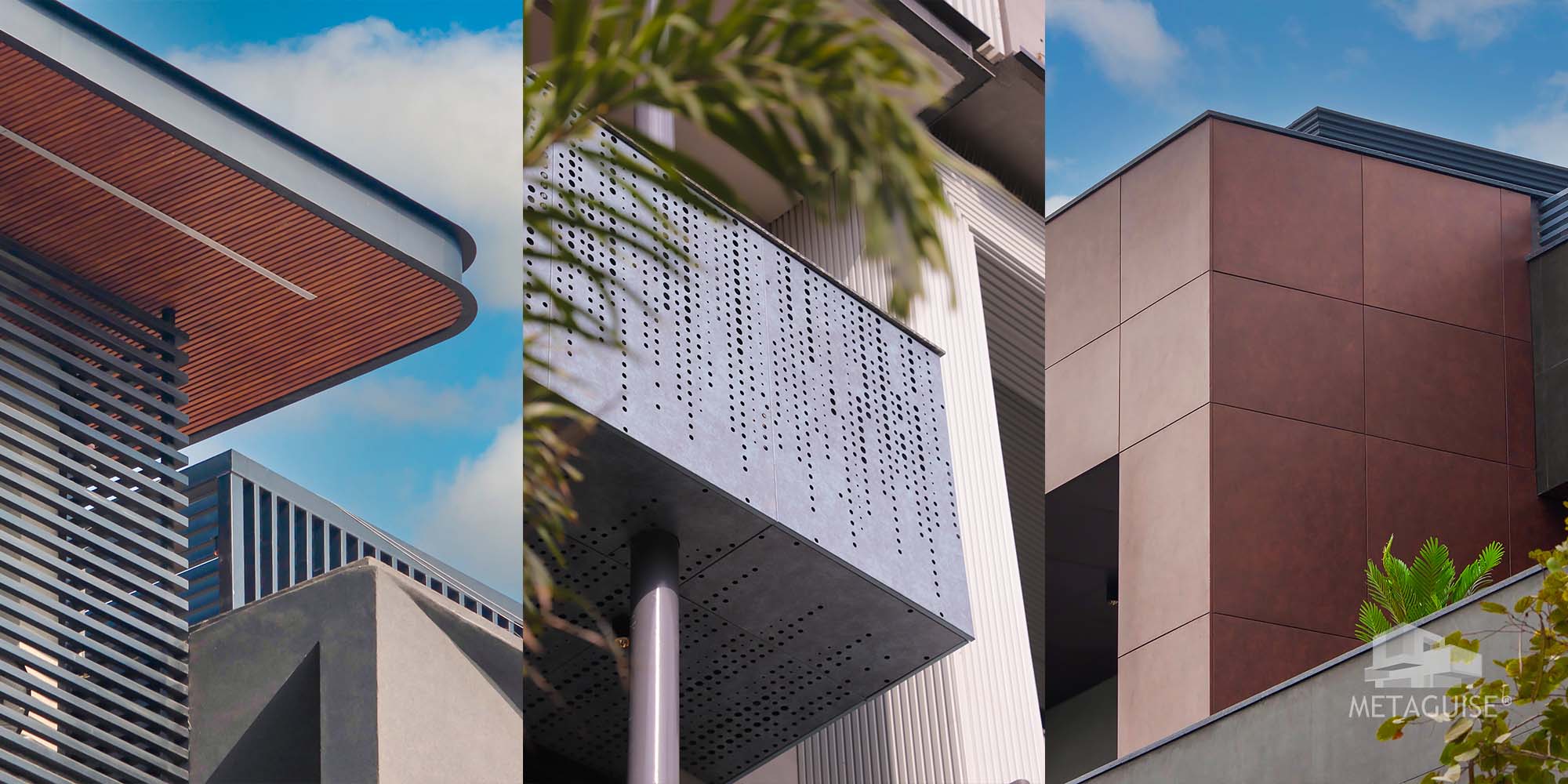
Every Metaguise system is available in a coastal specification configuration — the same products that are specified for inland Indian projects, upgraded with the detailing and material standards that Chennai's coastal environment demands. The following covers the key systems and their coastal-specific specifications. MetaFlute Coastal Grade Metaguise's MetaFlute vertical fluted panels in anodised finish are the most specified facade system for premium residential buildings on Chennai's ECR and along the Suburban South corridor. The combination of the vertical channel profile's architectural character, the anodised surface's intrinsic coastal resistance, and the system's lightweight retrofit compatibility makes MetaFlute anodised the default premium residential specification for the city's most expensive sea-facing addresses. For projects where a coloured PVDF finish is required, MetaFlute with coastal-grade PVDF and sealed edges is the alternative specification — available in warm white, champagne, and deep charcoal as the primary Chennai residential palette. MetaCassette Coastal Grade For commercial buildings, hospitality properties, and large-format residential towers in Chennai's premium coastal zones, MetaCassette in anodised or coastal-grade PVDF provides the flat, seamless surface precision that large-scale architecture demands at coastal exposure levels. Coastal MetaCassette specifies stainless steel Grade 316 fixings, sealed panel edges, and drainage details at horizontal interruptions — with the ventilated cavity maintained at a minimum 50mm clear depth to ensure continuous air movement and drainage even during Chennai's sustained monsoon periods. MetaSequin and MetaCoin: Parametric Coastal Grade Metaguise's parametric systems — MetaSequin dynamic sequin panels and MetaCoin circular module arrays — are available in anodised finish for coastal Chennai applications, making them the first parametric facade systems in India that can be specified with confidence for sea-facing buildings. Gold-anodised MetaSequin on a hospitality entrance canopy in Neelankarai or ECR achieves the shimmer and dynamism that the system is celebrated for, without compromising on the coastal material standard that the location demands. SolidPanel Coastal Grade Metaguise's SolidPanel system in coastal anodised specification is the premium minimalist choice for Chennai's most architecturally ambitious coastal projects — corporate headquarters in Sholinganallur, IT campus buildings on OMR, and luxury residential towers with direct sea frontage. The flat, seamless, hairline-jointed surface in natural or dark anodised achieves the clean, precise architectural language that contemporary commercial and premium residential architecture demands, in a material specification that performs without compromise in Chennai's environment. MetaFin Coastal Grade Metaguise's MetaFin architectural fin system in anodised aluminium is the coastal solar control specification for Chennai's west-facing and south-facing glazed elevations — providing the same calculated solar shading performance as MetaFin in any other climate, in a material that is intrinsically resistant to the salt-air conditions that make standard fin systems vulnerable over time. For Chennai's premium residential towers and IT campus buildings with significant glazed facades, MetaFin anodised provides solar control, architectural identity, and coastal durability as a unified specification.
Chennai Projects Portfolio: Metaguise Across the City's Premium Coastal Corridors
Metaguise's Chennai project portfolio demonstrates the breadth of facade specification demand across the city's diverse premium building types — from ECR sea-facing residences to OMR corporate campuses to the heritage bungalows of Boat Club Road. Luxury Residential, ECR Beachfront — MetaFlute Natural Anodised A luxury sea-facing villa on ECR commissioned Metaguise for a complete facade in MetaFlute natural anodised aluminium — vertical fluted panels with the inherent salt-air resistance of anodised aluminium on the primary building elevation, combined with coastal-grade MetaFin fins on the west-facing glazed living zone for afternoon solar control. The natural anodised finish, in Chennai's morning coastal light, reads as a warm silver-grey with subtle metallic depth — a material quality that complements both the sea setting and the building's contemporary architectural language. The project was completed within the construction programme and has shown no surface deterioration through two monsoon seasons. Corporate Headquarters, Sholinganallur — MetaCassette Dark Anodised A technology company's regional headquarters in Sholinganallur specified Metaguise's MetaCassette in dark anodised finish on the primary building elevations — a flat, seamless composition in gunmetal-dark that communicated corporate authority and precision while meeting the coastal specification requirements for a building within the OMR corridor's moderate coastal influence zone. Stainless steel Grade 316 fixings throughout, sealed panel edges, and ventilated rainscreen configuration were specified as standard for the project's coastal grade. Boutique Hotel, Neelankarai — MetaSequin Gold Anodised Entrance A boutique beach hotel in Neelankarai commissioned Metaguise's MetaSequin in gold anodised finish for the entrance canopy and porte-cochère facade — creating a shimmering, light-responsive arrival feature that resonated with the gold-and-blue palette of the Bay of Bengal at sunrise. The gold anodised specification — chosen precisely for its coastal durability — created the warmth and precious-metal reference that the hotel's luxury positioning demanded, while performing to the material standard that a direct-coastal building requires. Premium Residential Tower, Adyar — MetaFlute Champagne PVDF Coastal Grade A premium residential tower in Adyar — one of Chennai's most prestigious inland residential addresses — used Metaguise's MetaFlute in champagne PVDF coastal grade on the primary tower elevation and podium — vertical fluted channels in a warm gold-cream tone that read as simultaneously contemporary and warm against Adyar's mature tree canopy. The coastal-grade specification — sealed edges, stainless steel fixings, ventilated cavity — was applied as standard for the project's proximity to the Adyar River estuary and the city's coastal influence zone.
Maintenance Guide for Coastal Facades in Chennai: What Metaguise Recommends
A well-specified coastal facade from Metaguise requires significantly less maintenance than any conventional painted or stone cladding system. However, 'low maintenance' does not mean 'no maintenance' — and the specific maintenance tasks for Chennai coastal facades are different from those for inland projects. The following table provides a structured maintenance guide based on Metaguise's coastal project experience.
| Maintenance Task | Frequency for Chennai Coastal | Method | Why It Matters |
|---|---|---|---|
| Salt Deposit Removal | Every 3–4 months (more frequently within 500m of sea) | Rinse with fresh water, then wipe with diluted neutral detergent and a soft cloth. | Salt accumulation can concentrate on panel edges and joints; early removal prevents localized corrosion at any coating vulnerability points. |
| Full Panel Face Wash | Twice per year minimum | Use a soft-bristle brush or low-pressure hose with neutral detergent only. Avoid acid or alkali cleaners. | Biological growth such as algae and lichen establishes on salt-deposited surfaces in Chennai's humid conditions. Regular washing prevents staining and surface degradation. |
| Joint and Fixing Inspection | Annual | Conduct a visual inspection of all panel joints, perimeter seals, and visible fixing points. Check for sealant cracking or gap formation. | Joint sealants can degrade under UV exposure and thermal cycling. Early detection prevents water penetration behind the panel system. |
| Sub-frame and Fixing Check | Every 2–3 years (first check at 18 months for new installations) | Arrange a specialist inspection of stainless steel fixings and the aluminium sub-frame. Look for staining patterns that may indicate corrosion. | Even stainless steel fixings can develop surface staining in heavy salt-air environments. Early detection helps distinguish cosmetic staining from structural corrosion. |
| Drainage Clearance | Post each monsoon season | Remove debris, leaf matter, and biological growth from drainage channels and weep holes. | Blocked drainage channels allow water to pond at the base of the system. In coastal conditions, standing saline water accelerates corrosion processes. |
| Panel Finish Assessment | Every 5 years | Visually assess the PVDF finish, compare colour against the original reference sample, and inspect for chalking or micro-cracking. | PVDF carries a 25-year warranty. This assessment verifies coating performance and provides documentation for any potential warranty claims. |
Frequently Asked Questions
1.What is the most important thing to get right when specifying a metal facade for a Chennai coastal building?
The single most important specification decision is the fixing system. The most common failure mode in coastal metal facades in India is not the panel face — it is the fixings. Standard mild steel and hot-dip galvanised fixings corrode in heavy salt-air environments, and when fixings fail, panels become structurally unstable. Metaguise's coastal specification uses stainless steel Grade 316 (marine-grade) fixings throughout the sub-frame — at every bracket, every rail connection, and every panel fixing point. This is non-negotiable for any Chennai building within coastal influence. The second critical requirement is sealed panel edges — the cut aluminium edge where the PVDF coating ends is the coating's most vulnerable point to salt-air attack. Coastal-grade edge sealing with an appropriate marine sealant closes this vulnerability permanently.2. Can Metaguise's parametric systems — MetaSequin, MetaCoin, MetaFold — be specified for Chennai coastal buildings?
Yes. All Metaguise systems, including the parametric range, are available in coastal specification — anodised finish or coastal-grade PVDF with sealed edges and stainless steel fixings. This means Chennai's most design-ambitious buildings — luxury hotels on ECR, premium residential towers on the beachfront, boutique hospitality properties along the Coromandel Coast — can specify MetaSequin, MetaCoin, or MetaFold with the same confidence in coastal durability as the modular MetaForm systems. Anodised finish is the preferred specification for parametric systems in heavy coastal exposure zones — the integral anodic layer is more robust than any coating-based system at the complex three-dimensional geometries of parametric panels, where edge sealing is more complex than on flat cassette panels.3.How does Metaguise's coastal specification differ from its standard inland specification?
The differences are in four specific areas: finish selection (anodised aluminium or coastal-grade PVDF rather than standard PVDF for heavily exposed coastal zones); edge sealing (fully sealed panel edges with marine-grade sealant, applied factory-side before panel packaging); fixing specification (stainless steel Grade 316 throughout the sub-frame, replacing standard stainless Grade 304 or any galvanised components); and drainage detailing (additional drainage provision at horizontal interruptions, window reveals, and base terminations to prevent saline water ponding). The panel material, sub-frame engineering, installation process, and design capabilities are identical between coastal and inland specifications. The coastal upgrade is a targeted modification to the four vulnerability points that Chennai's environment exploits.4.Does Metaguise provide post-installation maintenance support for Chennai coastal projects?
Yes. Metaguise provides a project-specific coastal maintenance schedule as part of every Chennai project handover package — covering the recommended maintenance tasks, frequencies, approved cleaning agents, and inspection criteria for the specific system and finish specification installed. For Chennai projects where ongoing maintenance support is required, Metaguise can arrange periodic inspection visits — assessing the installation against the original specification standard and identifying any early intervention required before cumulative salt deposition or biological growth becomes a more significant issue. Contact Metaguise's Chennai project team to discuss post-installation maintenance arrangements for your specific project.Chennai Metal Facade: Coastal Climate Solutions for Sea-Facing Buildings
16-06-26 | Facade Innovations
Key Takeaways
• Chennai's premium housing market surged 253% quarter-on-quarter in Q1 2026 — 3,700 residential launches with premium housing at 61% of supply, concentrated along the ECR, OMR, and Suburban South corridors where coastal climate conditions are most intense and facade material specification has the most direct consequences for building longevity. • Chennai's Bay of Bengal coastline places it in the most demanding facade climate category in India — salt-laden sea air within 5km carries chloride ions that corrode mild steel fixings within months, cause coating edge failure within 2–3 years on standard PVDF, and establish biological growth on porous surfaces within a single monsoon season. • Only two material specifications are genuinely robust in Chennai's coastal conditions: anodised aluminium — where the protective oxide layer is integral to the metal, with no coating edge for salt air to attack — and PVDF-coated aluminium with coastal-grade sealed edges, stainless steel Grade 316 fixings, and ventilated rainscreen installation. • Metaguise's coastal facade specification is engineered for Chennai's Bay of Bengal environment — available across the full product range including MetaFlute, MetaCassette, SolidPanel, MetaSequin, MetaCoin, and MetaFin — with completed projects on ECR beachfront, OMR corridor, Neelankarai, Adyar, and Sholinganallur.
Why Coastal Buildings Need Special Facades: The Chemistry of Sea Air Attack
Chennai's real estate market is growing faster than its architects and developers can specify correctly. According to the Cushman & Wakefield Chennai Real Estate MarketBeat Report Q1 2026, the city recorded approximately 3,700 residential unit launches in Q1 2026, with premium housing leading supply at a 61% share — a 253% quarter-on-quarter surge. Suburban South II, encompassing the East Coast Road corridor from Besant Nagar through Neelankarai to Sholinganallur, accounted for 38% of launches — precisely the zone where Chennai's coastal climate is most intense, and where a wrong facade material specification does not merely underperform. It fails. Corrosion staining within months. Biological growth within one monsoon season. Coating delamination within three years on poorly sealed systems. The chemistry of salt-air attack is not theoretical in Chennai — it is visible on every building on the ECR that was specified without understanding it. A coastal metal facade on a Chennai sea-facing building is not a design decision that can be corrected later. It is an engineering decision that must be correct from the first specification
Best Corrosion-Resistant Metals for Chennai's Coastal Climate
Not all metals are equal in Chennai's environment, and the differences between specification tiers are not marginal — they are the difference between a facade that looks pristine in fifteen years and one that requires remediation in five. The following covers the primary metal options and their performance in Chennai's specific coastal conditions. Anodised Aluminium: The Coastal Benchmark Anodised aluminium is the gold standard for Chennai coastal facades — and for a reason that goes deeper than surface performance. The anodic layer on anodised aluminium is not a coating applied to the metal surface; it is the aluminium surface itself, electrochemically converted into a hard aluminium oxide layer that is integral to the metal. There are no coating edges, no bond interfaces, and no organic binder for chloride ions to attack. The anodic oxide layer is chemically stable in salt-air environments — it does not react with the electrochemical processes that drive coastal corrosion of coated metals. For facades within direct coastal influence — Besant Nagar, ECR beachfront properties, Marina area buildings, and any project within approximately three kilometres of the Bay of Bengal — anodised aluminium is the baseline specification, not an upgrade. The aesthetic range of anodised aluminium is more constrained than PVDF — natural silver-grey, gold, bronze, and dark gunmetal are the primary available tones — but within these tones, the surface quality is exceptional: a hard, dense surface with a subtle metallic depth that reads as premium at close range and as architecturally precise from across the street. Metaguise's full MetaForm range — MetaFlute, MetaCassette, SolidPanel, MetaSequin, MetaCoin — is available in anodised finish for Chennai coastal specifications. PVDF-Coated Aluminium with Coastal Specification: The Colour-Versatile Premium For Chennai projects where a specific colour, texture, or finish is required that falls outside the anodised palette — a warm white MetaFlute residential facade on ECR, a deep charcoal SolidPanel commercial elevation in Sholinganallur, or a MetaWood finish on a boutique hotel near the beach — PVDF-coated aluminium with Metaguise's coastal specification is the correct approach. Coastal PVDF specification includes three non-negotiable elements: fully sealed panel edges (the cut aluminium edge where the PVDF coating does not cover raw metal must be sealed with a coastal-grade sealant to prevent chloride ion attack at this vulnerability point); stainless steel sub-frame fixings throughout (mild steel or even hot-dip galvanised fixings corrode in heavy salt-air environments; stainless steel Grade 316 is the minimum coastal fixing specification); and ventilated rainscreen installation with designed drainage at base terminations (moisture accumulation in the cavity is eliminated by the ventilated configuration, preventing saline water ponding at the system base). Aluminium vs Steel in Chennai: The Substrate Matters Any facade system using a steel substrate — galvanised steel, stainless steel, or any steel composite — must be evaluated carefully for Chennai coastal applications. Stainless steel Grade 316 (marine grade, with molybdenum in the alloy that significantly improves chloride resistance) performs well as a fixing and structural element in Chennai's coastal environment. Standard Grade 304 stainless steel — which is adequate for most Indian applications — can develop surface corrosion staining ('tea staining') in heavy salt-air environments within three to five years, though it retains structural integrity. Standard mild steel and hot-dip galvanised steel, once the zinc sacrificial layer is depleted, fail rapidly in coastal conditions. Aluminium's inherent corrosion resistance — the stable natural aluminium oxide layer that forms instantly when the metal is exposed to air — gives it a fundamental advantage over all steel variants in coastal environments for the structural panel substrate. This is why every Metaguise coastal facade system uses solid aluminium panels as the primary cladding substrate, regardless of finish specification. What to Absolutely Avoid for Chennai Coastal Buildings • Mild steel or hot-dip galvanised sub-frame components — corrode within months to years in heavy salt-air; must be replaced with stainless steel or powder-coated aluminium throughout • Standard powder coat without sealed edges on coastal exposures — coating edge vulnerability allows chloride attack at every panel edge; unacceptable within three kilometres of the sea • HPL panels with aluminium-composite or steel-core construction — the core material is the vulnerability; salt moisture ingress at panel edges leads to internal delamination invisible from the facade face until failure is complete • Painted masonry or unprotected concrete on seafront elevations — biological growth (algae, salt efflorescence) establishes rapidly in Chennai's conditions; requires aggressive annual maintenance to maintain appearance
Metaguise's Coastal Product Range: Engineered for Chennai's Bay of Bengal Environment
Every Metaguise system is available in a coastal specification configuration — the same products that are specified for inland Indian projects, upgraded with the detailing and material standards that Chennai's coastal environment demands. The following covers the key systems and their coastal-specific specifications. MetaFlute Coastal Grade Metaguise's MetaFlute vertical fluted panels in anodised finish are the most specified facade system for premium residential buildings on Chennai's ECR and along the Suburban South corridor. The combination of the vertical channel profile's architectural character, the anodised surface's intrinsic coastal resistance, and the system's lightweight retrofit compatibility makes MetaFlute anodised the default premium residential specification for the city's most expensive sea-facing addresses. For projects where a coloured PVDF finish is required, MetaFlute with coastal-grade PVDF and sealed edges is the alternative specification — available in warm white, champagne, and deep charcoal as the primary Chennai residential palette. MetaCassette Coastal Grade For commercial buildings, hospitality properties, and large-format residential towers in Chennai's premium coastal zones, MetaCassette in anodised or coastal-grade PVDF provides the flat, seamless surface precision that large-scale architecture demands at coastal exposure levels. Coastal MetaCassette specifies stainless steel Grade 316 fixings, sealed panel edges, and drainage details at horizontal interruptions — with the ventilated cavity maintained at a minimum 50mm clear depth to ensure continuous air movement and drainage even during Chennai's sustained monsoon periods. MetaSequin and MetaCoin: Parametric Coastal Grade Metaguise's parametric systems — MetaSequin dynamic sequin panels and MetaCoin circular module arrays — are available in anodised finish for coastal Chennai applications, making them the first parametric facade systems in India that can be specified with confidence for sea-facing buildings. Gold-anodised MetaSequin on a hospitality entrance canopy in Neelankarai or ECR achieves the shimmer and dynamism that the system is celebrated for, without compromising on the coastal material standard that the location demands. SolidPanel Coastal Grade Metaguise's SolidPanel system in coastal anodised specification is the premium minimalist choice for Chennai's most architecturally ambitious coastal projects — corporate headquarters in Sholinganallur, IT campus buildings on OMR, and luxury residential towers with direct sea frontage. The flat, seamless, hairline-jointed surface in natural or dark anodised achieves the clean, precise architectural language that contemporary commercial and premium residential architecture demands, in a material specification that performs without compromise in Chennai's environment. MetaFin Coastal Grade Metaguise's MetaFin architectural fin system in anodised aluminium is the coastal solar control specification for Chennai's west-facing and south-facing glazed elevations — providing the same calculated solar shading performance as MetaFin in any other climate, in a material that is intrinsically resistant to the salt-air conditions that make standard fin systems vulnerable over time. For Chennai's premium residential towers and IT campus buildings with significant glazed facades, MetaFin anodised provides solar control, architectural identity, and coastal durability as a unified specification.
Chennai Projects Portfolio: Metaguise Across the City's Premium Coastal Corridors
Metaguise's Chennai project portfolio demonstrates the breadth of facade specification demand across the city's diverse premium building types — from ECR sea-facing residences to OMR corporate campuses to the heritage bungalows of Boat Club Road. Luxury Residential, ECR Beachfront — MetaFlute Natural Anodised A luxury sea-facing villa on ECR commissioned Metaguise for a complete facade in MetaFlute natural anodised aluminium — vertical fluted panels with the inherent salt-air resistance of anodised aluminium on the primary building elevation, combined with coastal-grade MetaFin fins on the west-facing glazed living zone for afternoon solar control. The natural anodised finish, in Chennai's morning coastal light, reads as a warm silver-grey with subtle metallic depth — a material quality that complements both the sea setting and the building's contemporary architectural language. The project was completed within the construction programme and has shown no surface deterioration through two monsoon seasons. Corporate Headquarters, Sholinganallur — MetaCassette Dark Anodised A technology company's regional headquarters in Sholinganallur specified Metaguise's MetaCassette in dark anodised finish on the primary building elevations — a flat, seamless composition in gunmetal-dark that communicated corporate authority and precision while meeting the coastal specification requirements for a building within the OMR corridor's moderate coastal influence zone. Stainless steel Grade 316 fixings throughout, sealed panel edges, and ventilated rainscreen configuration were specified as standard for the project's coastal grade. Boutique Hotel, Neelankarai — MetaSequin Gold Anodised Entrance A boutique beach hotel in Neelankarai commissioned Metaguise's MetaSequin in gold anodised finish for the entrance canopy and porte-cochère facade — creating a shimmering, light-responsive arrival feature that resonated with the gold-and-blue palette of the Bay of Bengal at sunrise. The gold anodised specification — chosen precisely for its coastal durability — created the warmth and precious-metal reference that the hotel's luxury positioning demanded, while performing to the material standard that a direct-coastal building requires. Premium Residential Tower, Adyar — MetaFlute Champagne PVDF Coastal Grade A premium residential tower in Adyar — one of Chennai's most prestigious inland residential addresses — used Metaguise's MetaFlute in champagne PVDF coastal grade on the primary tower elevation and podium — vertical fluted channels in a warm gold-cream tone that read as simultaneously contemporary and warm against Adyar's mature tree canopy. The coastal-grade specification — sealed edges, stainless steel fixings, ventilated cavity — was applied as standard for the project's proximity to the Adyar River estuary and the city's coastal influence zone.
Maintenance Guide for Coastal Facades in Chennai: What Metaguise Recommends
A well-specified coastal facade from Metaguise requires significantly less maintenance than any conventional painted or stone cladding system. However, 'low maintenance' does not mean 'no maintenance' — and the specific maintenance tasks for Chennai coastal facades are different from those for inland projects. The following table provides a structured maintenance guide based on Metaguise's coastal project experience.
| Maintenance Task | Frequency for Chennai Coastal | Method | Why It Matters |
|---|---|---|---|
| Salt Deposit Removal | Every 3–4 months (more frequently within 500m of sea) | Rinse with fresh water, then wipe with diluted neutral detergent and a soft cloth. | Salt accumulation can concentrate on panel edges and joints; early removal prevents localized corrosion at any coating vulnerability points. |
| Full Panel Face Wash | Twice per year minimum | Use a soft-bristle brush or low-pressure hose with neutral detergent only. Avoid acid or alkali cleaners. | Biological growth such as algae and lichen establishes on salt-deposited surfaces in Chennai's humid conditions. Regular washing prevents staining and surface degradation. |
| Joint and Fixing Inspection | Annual | Conduct a visual inspection of all panel joints, perimeter seals, and visible fixing points. Check for sealant cracking or gap formation. | Joint sealants can degrade under UV exposure and thermal cycling. Early detection prevents water penetration behind the panel system. |
| Sub-frame and Fixing Check | Every 2–3 years (first check at 18 months for new installations) | Arrange a specialist inspection of stainless steel fixings and the aluminium sub-frame. Look for staining patterns that may indicate corrosion. | Even stainless steel fixings can develop surface staining in heavy salt-air environments. Early detection helps distinguish cosmetic staining from structural corrosion. |
| Drainage Clearance | Post each monsoon season | Remove debris, leaf matter, and biological growth from drainage channels and weep holes. | Blocked drainage channels allow water to pond at the base of the system. In coastal conditions, standing saline water accelerates corrosion processes. |
| Panel Finish Assessment | Every 5 years | Visually assess the PVDF finish, compare colour against the original reference sample, and inspect for chalking or micro-cracking. | PVDF carries a 25-year warranty. This assessment verifies coating performance and provides documentation for any potential warranty claims. |
Frequently Asked Questions
1.What is the most important thing to get right when specifying a metal facade for a Chennai coastal building?
The single most important specification decision is the fixing system. The most common failure mode in coastal metal facades in India is not the panel face — it is the fixings. Standard mild steel and hot-dip galvanised fixings corrode in heavy salt-air environments, and when fixings fail, panels become structurally unstable. Metaguise's coastal specification uses stainless steel Grade 316 (marine-grade) fixings throughout the sub-frame — at every bracket, every rail connection, and every panel fixing point. This is non-negotiable for any Chennai building within coastal influence. The second critical requirement is sealed panel edges — the cut aluminium edge where the PVDF coating ends is the coating's most vulnerable point to salt-air attack. Coastal-grade edge sealing with an appropriate marine sealant closes this vulnerability permanently.2. Can Metaguise's parametric systems — MetaSequin, MetaCoin, MetaFold — be specified for Chennai coastal buildings?
Yes. All Metaguise systems, including the parametric range, are available in coastal specification — anodised finish or coastal-grade PVDF with sealed edges and stainless steel fixings. This means Chennai's most design-ambitious buildings — luxury hotels on ECR, premium residential towers on the beachfront, boutique hospitality properties along the Coromandel Coast — can specify MetaSequin, MetaCoin, or MetaFold with the same confidence in coastal durability as the modular MetaForm systems. Anodised finish is the preferred specification for parametric systems in heavy coastal exposure zones — the integral anodic layer is more robust than any coating-based system at the complex three-dimensional geometries of parametric panels, where edge sealing is more complex than on flat cassette panels.3.How does Metaguise's coastal specification differ from its standard inland specification?
The differences are in four specific areas: finish selection (anodised aluminium or coastal-grade PVDF rather than standard PVDF for heavily exposed coastal zones); edge sealing (fully sealed panel edges with marine-grade sealant, applied factory-side before panel packaging); fixing specification (stainless steel Grade 316 throughout the sub-frame, replacing standard stainless Grade 304 or any galvanised components); and drainage detailing (additional drainage provision at horizontal interruptions, window reveals, and base terminations to prevent saline water ponding). The panel material, sub-frame engineering, installation process, and design capabilities are identical between coastal and inland specifications. The coastal upgrade is a targeted modification to the four vulnerability points that Chennai's environment exploits.4.Does Metaguise provide post-installation maintenance support for Chennai coastal projects?
Yes. Metaguise provides a project-specific coastal maintenance schedule as part of every Chennai project handover package — covering the recommended maintenance tasks, frequencies, approved cleaning agents, and inspection criteria for the specific system and finish specification installed. For Chennai projects where ongoing maintenance support is required, Metaguise can arrange periodic inspection visits — assessing the installation against the original specification standard and identifying any early intervention required before cumulative salt deposition or biological growth becomes a more significant issue. Contact Metaguise's Chennai project team to discuss post-installation maintenance arrangements for your specific project.Related Articles
Related Articles
The Rise of Parametric facades: Designing with Algorithmic Elegance
A revolutionary parametric facade system designed to elevate architectural aesthetics. Crafted with premium metals and enhanced with MetaSurface finishes, MetaCoin offers unparalleled customizability, from the shape and size of each element to its color and arrangement. Its dynamic design reacts to light and perspective, creating ever-changing visual effects. Ideal for contemporary and iconic structures, MetaCoin transforms facades into captivating works of art that are sustainable, durable, and visually stunning.
01-04-25 | Facade Innovations
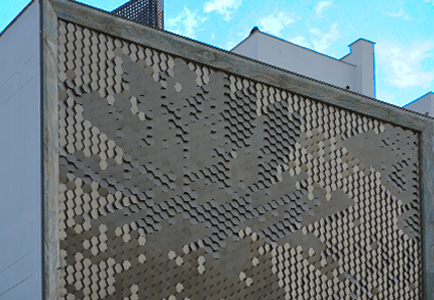
METABLOX™ by Metaguise: A Breakthrough in Parametric Facade Design
At the intersection of culture, craftsmanship, and cutting-edge geometry, METABLOX™ emerges as a bold new direction in architectural innovation. Introduced by Metaguise, this first-of-its-kind parametric facade technology makes its striking debut at the RJ Jewellers flagship store in Jaipur - setting a new benchmark in the world of metal design and modern Indian architecture.
09-04-25 | Facade Innovations
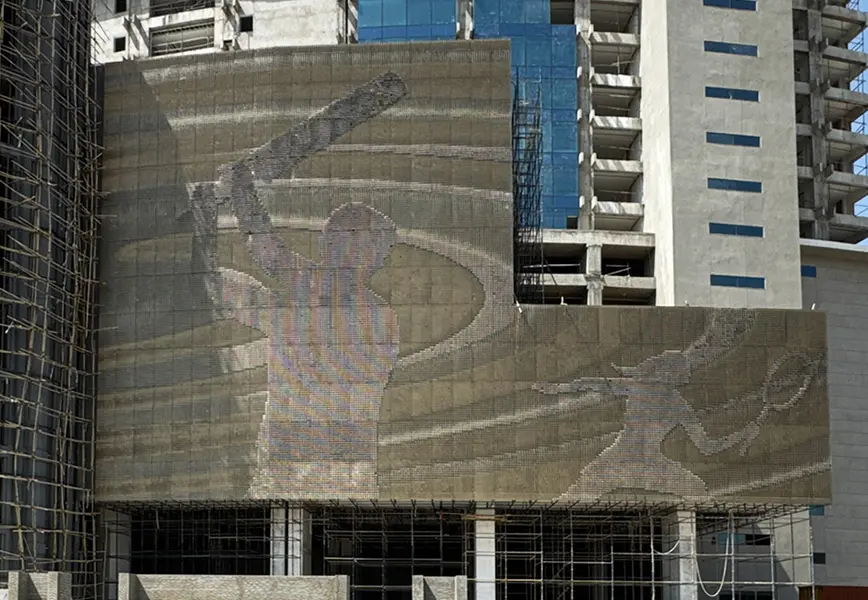
5 Landmark Projects That Used MetaCoin to Transform Facades
When it comes to parametric architecture, MetaCoin stands out as a revolutionary metal coin facade system. Crafted with precision, it offers dynamic aesthetics, adaptability, and a unique identity to structures. Let's delve into five notable projects where MetaCoin has redefined architectural facades.
13-05-25 | Facade Innovations
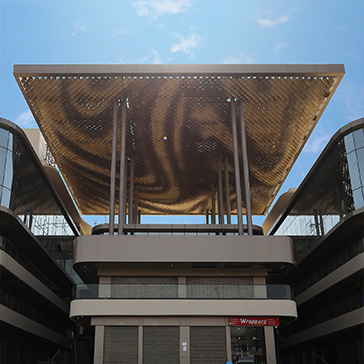
From Code to Construction: How Parametric Facades Are Built
Some buildings just make you look twice. Maybe it’s the way the facade curves. Or how the surface catches the light at different times of day. Often, what you’re seeing is more than just a design, it’s a parametric facade.
10-06-25 | Facade Innovations
Social
Legal
Privacy Policy|Terms & Conditions