





Best Exterior Cladding for Residential Buildings in Delhi NCR (2026 Guide)
06-05-26 | Material Spotlight
• Exterior cladding for residential Delhi NCR buildings must perform across Delhi's extreme heat (45°C+), monsoon humidity, and winter fog - material choice is as much science as aesthetics. • India's cladding sector is projected to grow at an 8.83% CAGR through 2030, with metal facade systems leading residential premium adoption in NCR. • Metal, stone, HPL, and glass each have distinct performance profiles - this guide gives you an honest comparison for NCR conditions. • Metaguise delivers premium aluminium and metal cladding systems for home cladding materials Delhi projects, with 1,800+ completed installations and a fully in-house process. • Cost comparisons, climate performance data, and a clear decision framework are included - along with real Metaguise project references from Delhi NCR.
Why Cladding Matters for NCR Homes - More Than You Might Think
In a city-region that routinely records summer temperatures above 45°C, monsoon downpours that saturate exposed masonry for three consecutive months, and winter fog that carries industrial particulates into every unprotected surface, the choice of exterior cladding residential Delhi NCR is one of the most consequential decisions a homeowner can make. Yet it remains one of the most under-researched. According to the Bonafide Research India Cladding Market Overview 2030, India's cladding sector is forecast to grow at over 8.83% CAGR through 2030 - driven specifically by the need for facade solutions that manage intense heat, monsoon moisture, and increasing urban noise levels in metro hubs like Delhi NCR. For homeowners in Gurgaon's Golf Course Road belt, Noida's Sector 44 enclaves, South Delhi's Lutyens-adjacent bungalow neighbourhoods, or Faridabad's growing villa corridors, the cladding question is not merely aesthetic. It affects thermal comfort inside the home - a poorly chosen west-facing cladding can raise adjacent interior temperatures by 6-8°C in peak summer. It affects structural longevity - moisture ingress through failed stone or painted surfaces is the leading cause of spalling and reinforcement corrosion in NCR homes. And it affects long-term asset value - a building that retains its exterior quality over 20+ years commands a demonstrable premium when sold. This guide cuts through the confusion. It explains what works, what fails, what it costs, and how Metaguise's metal panel systems for homes in Gurgaon, Delhi, and Noida compare against the alternatives - so that the next facade decision made in Delhi NCR is the right one.
Metal vs Stone vs HPL: Which Cladding Wins for NCR Homes?
Every cladding material makes promises in a showroom. The question is which promises survive a Delhi summer, a Delhi monsoon, and a Delhi winter - repeated over twenty years. Here is the honest comparison: Metal Cladding (Aluminium, Corten Steel) Premium aluminium panels - such as Metaguise's MetaFlute, MetaCassette, MetaCoin, and Solid Panel systems - are the top-performing cladding material for residential buildings in Delhi NCR by almost every metric. Aluminium does not rust, does not crack under thermal expansion (critical in a city with a 50°C+ annual temperature swing), does not absorb moisture, and does not require repainting. With PVDF coatings, colour retention is guaranteed for 25+ years. With anodised finishes, surface integrity is essentially permanent. Weight is low - typically 3-6 kg/m² - placing minimal additional load on existing structures, which matters for retrofit projects. Metal panels also have the highest design flexibility of any cladding material: they can be flat, fluted, perforated, folded, three-dimensional, or parametrically patterned. The one genuine limitation of metal cladding for NCR homes is thermal conductivity - without insulation or a ventilated cavity behind the panel, metal can transmit heat. Metaguise's systems are all designed for installation with a ventilated sub-frame, which eliminates this concern and additionally provides a drainage pathway for any monsoon moisture that penetrates behind the panel. Natural Stone Cladding (Granite, Sandstone, Slate) Stone carries a quality signal that resonates deeply in Delhi NCR's HNI homeowner market - it reads as permanent, weighty, and culturally rooted. Granite and sandstone are the most commonly specified. However, the performance story is more complicated. Natural stone is heavy (25-75 kg/m² for most cladding grades), placing significant additional structural load, particularly on older buildings or those with limited foundation capacity. In Delhi's extreme thermal cycling - below 0°C in January, above 45°C in May - stone-to-mortar interfaces experience cumulative stress that leads to delamination and spalling on southern and western faces exposed to maximum sun. Maintenance costs are higher: annual sealing is recommended to prevent moisture absorption, and any piece that fails requires replacement of a matching natural stone piece, which is often impossible to source precisely. Stone remains the right choice for plinths, boundary walls, and architectural accent bands - where its visual weight and cultural authority genuinely add value. As a whole-facade cladding system for Delhi NCR's climate, its performance envelope is inferior to metal. High-Pressure Laminate (HPL) HPL panels have found a market in mid-tier residential projects in NCR - particularly for retail, apartment building podiums, and commercial facades - because they offer good visual variety, reasonable weather resistance, and lower installed cost than stone or premium metal. In Delhi NCR's residential context, HPL performs adequately on north and east-facing facades where UV exposure is moderate. On south and west faces, UV-induced colour shift begins within 5-7 years in direct sun, and the organic resin core can delaminate in extended moisture exposure if panel edges and joints are not properly sealed. HPL is a valid choice for budget-conscious residential projects, but for luxury bungalows and premium villas, the 10-15-year replacement cycle undermines the economics. Glass Facades Full glass facades - curtain walls and glazed cladding systems - perform magnificently in terms of visual lightness and urban sophistication but introduce serious thermal comfort challenges in Delhi NCR without additional high-performance solar control coatings. Unshaded single-skin glass facades on west-facing elevations in Gurgaon or Noida produce interior surface temperatures that make adjacent spaces functionally unusable in summer afternoon hours. Double-skin or thermally broken glazing systems significantly improve performance but at costs per sq ft that typically exceed premium metal cladding. Glass is best used in combination with metal screens or fins - a MetaFin or MetaFlute band that shades the glazed zone - rather than as a standalone whole-facade cladding solution for residential NCR buildings.
Climate Performance: How Cladding Systems Cope with Delhi's Heat and Monsoon
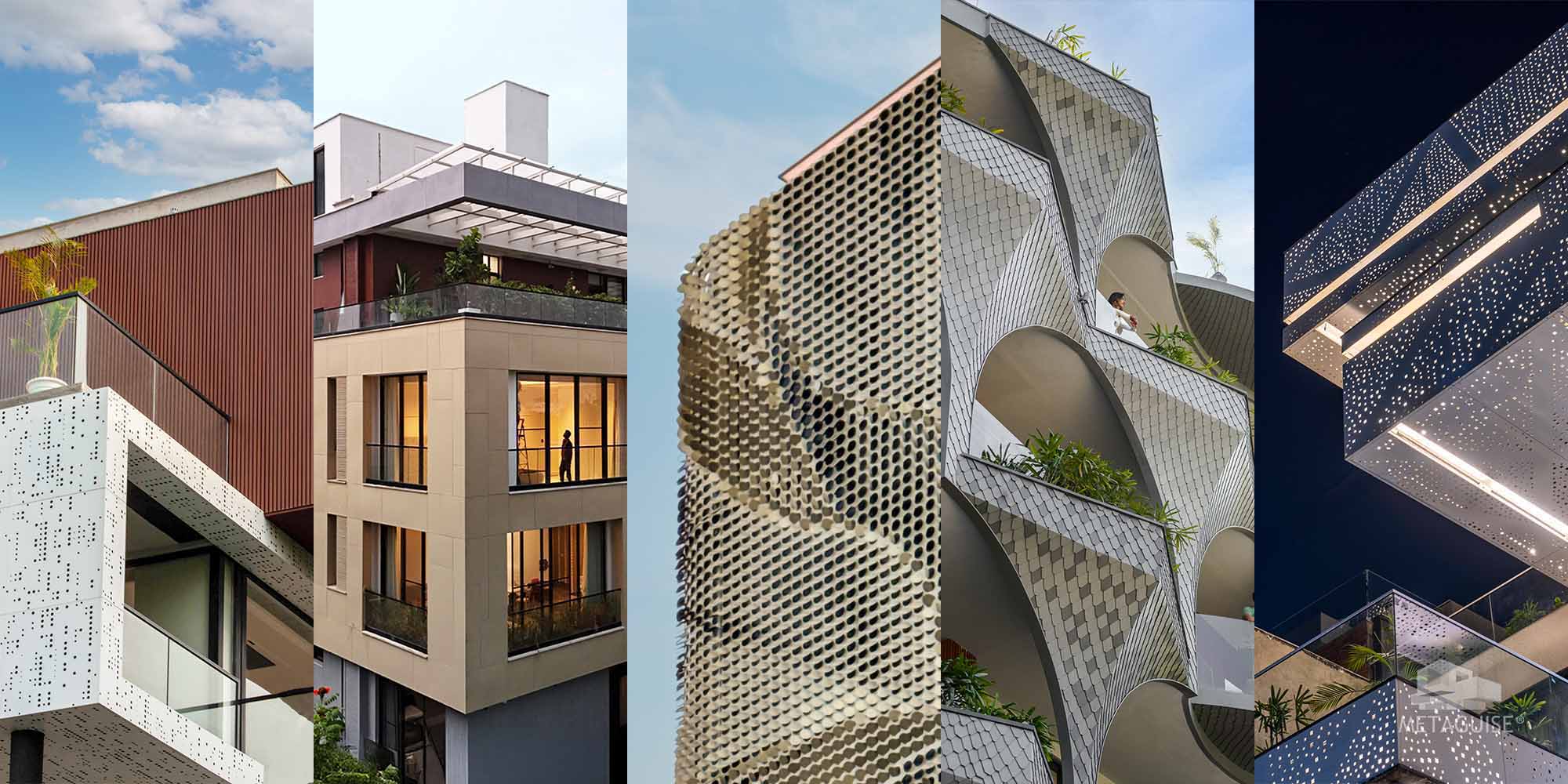
Delhi NCR's climate is a composite stress test for building materials. Understanding how each cladding type responds to its specific demands shapes every sound specification decision. Peak summer heat (April-June, 42-47°C) is the primary challenge for west and south-facing elevations. The key metric is solar reflectance index (SRI): cladding with high SRI absorbs less solar radiation and transmits less heat to the wall behind it. Light-coloured PVDF-coated aluminium panels score SRI values of 85–95, among the highest of any opaque cladding material. Dark stone, uncoated metal, and dark HPL score 20-40, meaning they absorb substantially more radiation and transfer that heat inward. For NCR homes, high-SRI cladding on south and west elevations is a measurable energy-efficiency and comfort decision. Monsoon moisture (July-September, 85–95% relative humidity) tests every material's water management - particularly at joints, fixings, and penetrations. Metal panels in a ventilated rainscreen configuration - the installation method Metaguise uses for all residential systems - are inherently suited to this environment. Water that penetrates the outer panel plane drains freely through the ventilated cavity and out at the base, without reaching the structural wall behind. Stone in direct-bedded applications, and HPL in poorly sealed configurations, are vulnerable to moisture tracking at grout lines and panel edges, leading to progressive staining, biological growth, and - in the worst cases - behind-panel moisture damage to the structure. Wall cladding for houses in NCR must also account for air pollution - Delhi consistently ranks among the world's most polluted urban environments. Particulate deposition discolours porous materials rapidly: sandstone and painted surfaces require regular cleaning to prevent permanent greying. PVDF-coated aluminium, anodised surfaces, and powder-coated metals repel particulate adhesion significantly better than porous materials, maintaining appearance with simple annual cleaning.
Top Metaguise Projects in Delhi NCR - Real Installations, Real Results
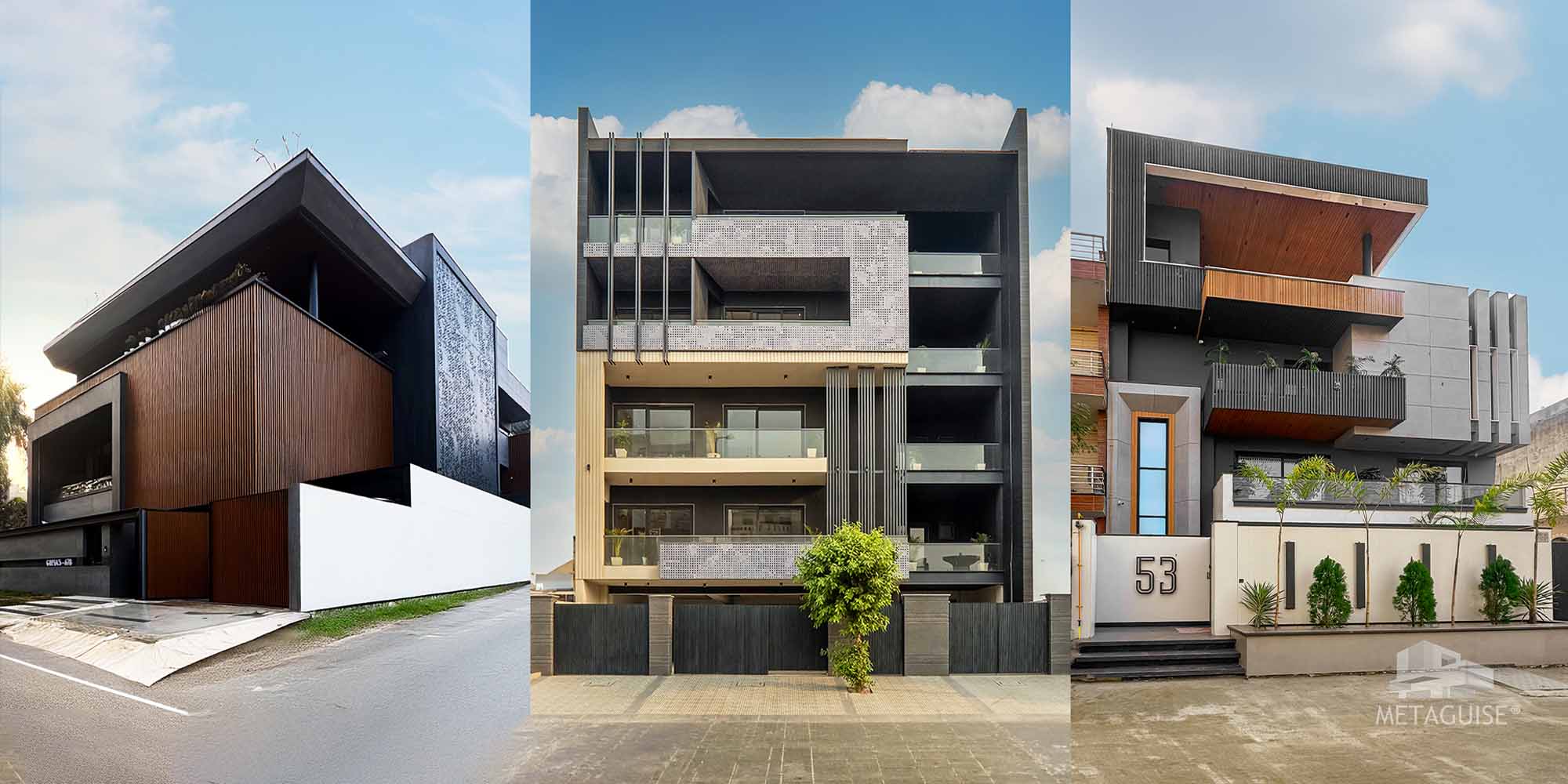
Metaguise's portfolio of completed projects across Delhi NCR demonstrates the breadth of what high-performance residential metal cladding can achieve across different property types, budgets, and architectural languages. In South Delhi's Vasant Vihar, Metaguise delivered a comprehensive facade transformation for a luxury bungalow using MetaCassette panels in a matte charcoal PVDF finish combined with MetaFlute accent columns - an elevation that went from dated painted masonry to a precision-crafted metal composition, without any structural demolition. In Gurgaon's DLF Phase corridor, a developer commissioned Metaguise for a row of luxury independent floors using MetaSequin on the entrance canopy and MetaCoin perforated screens on the privacy walls - a pairing that created an address that became instantly distinctive on a street of otherwise similar buildings. In Noida's Sector 44, a private villa commission used Metaguise's MetaCorten weathering steel finish on the boundary wall and primary facade - a rare and striking choice in a neighbourhood dominated by white painted stone that immediately established the property as architecturally authored. Each of these projects began with a site visit and a design conversation. The process - from initial consultation through design development, material approval, fabrication, and installation - was managed entirely in-house by Metaguise. The client had a single point of accountability from the first meeting to the final panel fixed in place.
Aluminium Panel Price India - What Does Metal Cladding Cost in Delhi NCR?
Understanding the cost of residential metal cladding in Delhi NCR requires separating the three components that make up total installed cost: material, fabrication, and installation. For Metaguise's MetaForm modular systems - MetaCassette, MetaFlute, MetaLouvers, SolidPanel - installed costs typically range from ₹850 to ₹1,400 per sq ft in Delhi NCR. This bracket covers standard custom sizes and panel orientations, with a full range of MetaSurface powder-coat and PVDF finishes. A 5,000 sq ft bungalow facade in this bracket represents a total investment of ₹42.5–70 lakh. For parametric and bespoke systems - MetaSequin, MetaCoin, MetaFin, MetaBlox - the investment typically runs from ₹1,400 to ₹2,500 per sq ft, reflecting the computational design work, custom tooling, and precision fabrication involved. A 5,000 sq ft elevation in this bracket ranges from ₹70 lakh to ₹1.25 crore. For context: an equivalent area of premium imported granite cladding, fully installed, typically costs ₹1,200–1,800 per sq ft but carries higher structural and long-term maintenance costs. HPL installed ranges from ₹650–950 per sq ft but carries a shorter effective service life in NCR's climate. Metal cladding, evaluated on a total cost of ownership basis over 25+ years, represents the most efficient investment of the three.
Frequently Asked Questions
1.What is the best wall cladding for a house in Delhi NCR's climate?
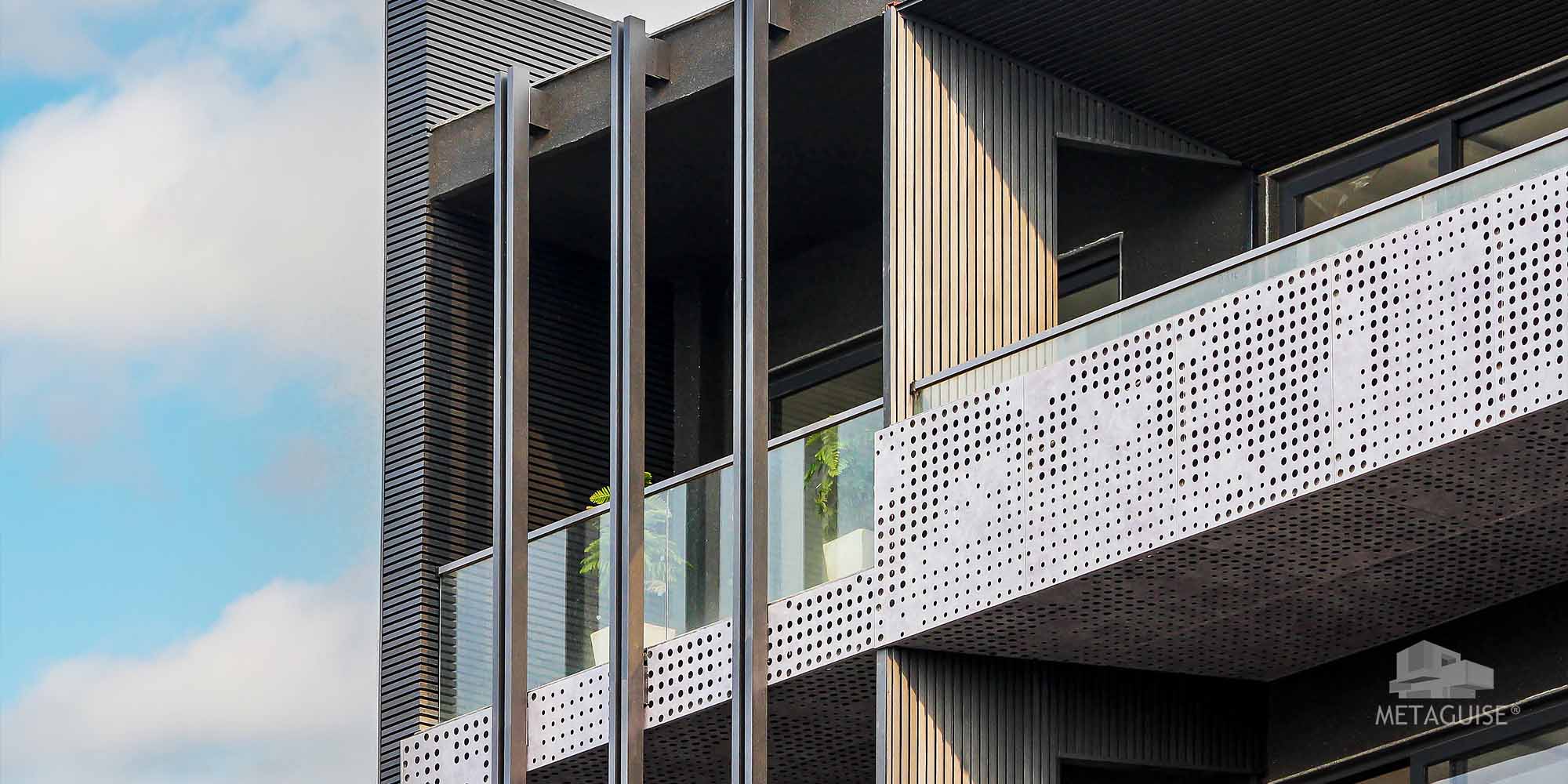
PVDF-coated aluminium metal panels are the best-performing cladding material for Delhi NCR residential buildings - combining heat reflectance, moisture resistance, dimensional stability across extreme temperature swings, and design flexibility. Metaguise's MetaFlute, MetaCassette, and parametric systems deliver these performance characteristics in a range of styles from minimalist to sculptural. For homeowners seeking a warmer, patinating material, MetaCorten weathering steel is ideal for NCR's inland climate - where the absence of coastal salt air allows the protective rust layer to form cleanly.2.Can I add cladding to an existing Delhi NCR bungalow without structural changes?
Yes. Metaguise's MetaForm systems - MetaCassette, MetaFlute, MetaLouvers - are lightweight (3-6 kg/m²) and fix to a sub-frame anchored to existing masonry without requiring structural reinforcement in the overwhelming majority of residential applications. This makes them the ideal retrofit solution for NCR homeowners who want to transform the appearance of an existing home without the disruption and cost of demolition.3. How do metal panels handle Delhi's extreme heat - do they transfer heat indoors?
When installed in a ventilated rainscreen configuration - which is the standard for all Metaguise residential systems - metal panels do not transfer significant heat to the wall behind them. The ventilated air gap behind the panel acts as a thermal buffer, carrying away heat before it can conduct to the structural wall. PVDF-coated light-coloured panels also have high solar reflectance indices (SRI 85-95), meaning they absorb substantially less radiation than dark or porous materials. The combination of high SRI and ventilated cavity makes metal cladding one of the most thermally intelligent choices for Delhi NCR's hot summers.4. How do I start a cladding project with Metaguise in Delhi NCR?
Contact Metaguise for a free site visit and design consultation. The team will assess your elevation, understand your brief and budget, and prepare 3D visualisations and physical finish samples before any commitment is required. For most residential projects in NCR, design development takes 4-6 weeks, fabrication 4-8 weeks, and installation 2-6 weeks depending on project scale - a total timeline of 10-20 weeks from first meeting to completed facade.Best Exterior Cladding for Residential Buildings in Delhi NCR (2026 Guide)
06-05-26 | Material Spotlight
• Exterior cladding for residential Delhi NCR buildings must perform across Delhi's extreme heat (45°C+), monsoon humidity, and winter fog - material choice is as much science as aesthetics. • India's cladding sector is projected to grow at an 8.83% CAGR through 2030, with metal facade systems leading residential premium adoption in NCR. • Metal, stone, HPL, and glass each have distinct performance profiles - this guide gives you an honest comparison for NCR conditions. • Metaguise delivers premium aluminium and metal cladding systems for home cladding materials Delhi projects, with 1,800+ completed installations and a fully in-house process. • Cost comparisons, climate performance data, and a clear decision framework are included - along with real Metaguise project references from Delhi NCR.
Why Cladding Matters for NCR Homes - More Than You Might Think
In a city-region that routinely records summer temperatures above 45°C, monsoon downpours that saturate exposed masonry for three consecutive months, and winter fog that carries industrial particulates into every unprotected surface, the choice of exterior cladding residential Delhi NCR is one of the most consequential decisions a homeowner can make. Yet it remains one of the most under-researched. According to the Bonafide Research India Cladding Market Overview 2030, India's cladding sector is forecast to grow at over 8.83% CAGR through 2030 - driven specifically by the need for facade solutions that manage intense heat, monsoon moisture, and increasing urban noise levels in metro hubs like Delhi NCR. For homeowners in Gurgaon's Golf Course Road belt, Noida's Sector 44 enclaves, South Delhi's Lutyens-adjacent bungalow neighbourhoods, or Faridabad's growing villa corridors, the cladding question is not merely aesthetic. It affects thermal comfort inside the home - a poorly chosen west-facing cladding can raise adjacent interior temperatures by 6-8°C in peak summer. It affects structural longevity - moisture ingress through failed stone or painted surfaces is the leading cause of spalling and reinforcement corrosion in NCR homes. And it affects long-term asset value - a building that retains its exterior quality over 20+ years commands a demonstrable premium when sold. This guide cuts through the confusion. It explains what works, what fails, what it costs, and how Metaguise's metal panel systems for homes in Gurgaon, Delhi, and Noida compare against the alternatives - so that the next facade decision made in Delhi NCR is the right one.
Metal vs Stone vs HPL: Which Cladding Wins for NCR Homes?
Every cladding material makes promises in a showroom. The question is which promises survive a Delhi summer, a Delhi monsoon, and a Delhi winter - repeated over twenty years. Here is the honest comparison: Metal Cladding (Aluminium, Corten Steel) Premium aluminium panels - such as Metaguise's MetaFlute, MetaCassette, MetaCoin, and Solid Panel systems - are the top-performing cladding material for residential buildings in Delhi NCR by almost every metric. Aluminium does not rust, does not crack under thermal expansion (critical in a city with a 50°C+ annual temperature swing), does not absorb moisture, and does not require repainting. With PVDF coatings, colour retention is guaranteed for 25+ years. With anodised finishes, surface integrity is essentially permanent. Weight is low - typically 3-6 kg/m² - placing minimal additional load on existing structures, which matters for retrofit projects. Metal panels also have the highest design flexibility of any cladding material: they can be flat, fluted, perforated, folded, three-dimensional, or parametrically patterned. The one genuine limitation of metal cladding for NCR homes is thermal conductivity - without insulation or a ventilated cavity behind the panel, metal can transmit heat. Metaguise's systems are all designed for installation with a ventilated sub-frame, which eliminates this concern and additionally provides a drainage pathway for any monsoon moisture that penetrates behind the panel. Natural Stone Cladding (Granite, Sandstone, Slate) Stone carries a quality signal that resonates deeply in Delhi NCR's HNI homeowner market - it reads as permanent, weighty, and culturally rooted. Granite and sandstone are the most commonly specified. However, the performance story is more complicated. Natural stone is heavy (25-75 kg/m² for most cladding grades), placing significant additional structural load, particularly on older buildings or those with limited foundation capacity. In Delhi's extreme thermal cycling - below 0°C in January, above 45°C in May - stone-to-mortar interfaces experience cumulative stress that leads to delamination and spalling on southern and western faces exposed to maximum sun. Maintenance costs are higher: annual sealing is recommended to prevent moisture absorption, and any piece that fails requires replacement of a matching natural stone piece, which is often impossible to source precisely. Stone remains the right choice for plinths, boundary walls, and architectural accent bands - where its visual weight and cultural authority genuinely add value. As a whole-facade cladding system for Delhi NCR's climate, its performance envelope is inferior to metal. High-Pressure Laminate (HPL) HPL panels have found a market in mid-tier residential projects in NCR - particularly for retail, apartment building podiums, and commercial facades - because they offer good visual variety, reasonable weather resistance, and lower installed cost than stone or premium metal. In Delhi NCR's residential context, HPL performs adequately on north and east-facing facades where UV exposure is moderate. On south and west faces, UV-induced colour shift begins within 5-7 years in direct sun, and the organic resin core can delaminate in extended moisture exposure if panel edges and joints are not properly sealed. HPL is a valid choice for budget-conscious residential projects, but for luxury bungalows and premium villas, the 10-15-year replacement cycle undermines the economics. Glass Facades Full glass facades - curtain walls and glazed cladding systems - perform magnificently in terms of visual lightness and urban sophistication but introduce serious thermal comfort challenges in Delhi NCR without additional high-performance solar control coatings. Unshaded single-skin glass facades on west-facing elevations in Gurgaon or Noida produce interior surface temperatures that make adjacent spaces functionally unusable in summer afternoon hours. Double-skin or thermally broken glazing systems significantly improve performance but at costs per sq ft that typically exceed premium metal cladding. Glass is best used in combination with metal screens or fins - a MetaFin or MetaFlute band that shades the glazed zone - rather than as a standalone whole-facade cladding solution for residential NCR buildings.
Climate Performance: How Cladding Systems Cope with Delhi's Heat and Monsoon
Delhi NCR's climate is a composite stress test for building materials. Understanding how each cladding type responds to its specific demands shapes every sound specification decision. Peak summer heat (April-June, 42-47°C) is the primary challenge for west and south-facing elevations. The key metric is solar reflectance index (SRI): cladding with high SRI absorbs less solar radiation and transmits less heat to the wall behind it. Light-coloured PVDF-coated aluminium panels score SRI values of 85–95, among the highest of any opaque cladding material. Dark stone, uncoated metal, and dark HPL score 20-40, meaning they absorb substantially more radiation and transfer that heat inward. For NCR homes, high-SRI cladding on south and west elevations is a measurable energy-efficiency and comfort decision. Monsoon moisture (July-September, 85–95% relative humidity) tests every material's water management - particularly at joints, fixings, and penetrations. Metal panels in a ventilated rainscreen configuration - the installation method Metaguise uses for all residential systems - are inherently suited to this environment. Water that penetrates the outer panel plane drains freely through the ventilated cavity and out at the base, without reaching the structural wall behind. Stone in direct-bedded applications, and HPL in poorly sealed configurations, are vulnerable to moisture tracking at grout lines and panel edges, leading to progressive staining, biological growth, and - in the worst cases - behind-panel moisture damage to the structure. Wall cladding for houses in NCR must also account for air pollution - Delhi consistently ranks among the world's most polluted urban environments. Particulate deposition discolours porous materials rapidly: sandstone and painted surfaces require regular cleaning to prevent permanent greying. PVDF-coated aluminium, anodised surfaces, and powder-coated metals repel particulate adhesion significantly better than porous materials, maintaining appearance with simple annual cleaning.
Top Metaguise Projects in Delhi NCR - Real Installations, Real Results
Metaguise's portfolio of completed projects across Delhi NCR demonstrates the breadth of what high-performance residential metal cladding can achieve across different property types, budgets, and architectural languages. In South Delhi's Vasant Vihar, Metaguise delivered a comprehensive facade transformation for a luxury bungalow using MetaCassette panels in a matte charcoal PVDF finish combined with MetaFlute accent columns - an elevation that went from dated painted masonry to a precision-crafted metal composition, without any structural demolition. In Gurgaon's DLF Phase corridor, a developer commissioned Metaguise for a row of luxury independent floors using MetaSequin on the entrance canopy and MetaCoin perforated screens on the privacy walls - a pairing that created an address that became instantly distinctive on a street of otherwise similar buildings. In Noida's Sector 44, a private villa commission used Metaguise's MetaCorten weathering steel finish on the boundary wall and primary facade - a rare and striking choice in a neighbourhood dominated by white painted stone that immediately established the property as architecturally authored. Each of these projects began with a site visit and a design conversation. The process - from initial consultation through design development, material approval, fabrication, and installation - was managed entirely in-house by Metaguise. The client had a single point of accountability from the first meeting to the final panel fixed in place.
Aluminium Panel Price India - What Does Metal Cladding Cost in Delhi NCR?
Understanding the cost of residential metal cladding in Delhi NCR requires separating the three components that make up total installed cost: material, fabrication, and installation. For Metaguise's MetaForm modular systems - MetaCassette, MetaFlute, MetaLouvers, SolidPanel - installed costs typically range from ₹850 to ₹1,400 per sq ft in Delhi NCR. This bracket covers standard custom sizes and panel orientations, with a full range of MetaSurface powder-coat and PVDF finishes. A 5,000 sq ft bungalow facade in this bracket represents a total investment of ₹42.5–70 lakh. For parametric and bespoke systems - MetaSequin, MetaCoin, MetaFin, MetaBlox - the investment typically runs from ₹1,400 to ₹2,500 per sq ft, reflecting the computational design work, custom tooling, and precision fabrication involved. A 5,000 sq ft elevation in this bracket ranges from ₹70 lakh to ₹1.25 crore. For context: an equivalent area of premium imported granite cladding, fully installed, typically costs ₹1,200–1,800 per sq ft but carries higher structural and long-term maintenance costs. HPL installed ranges from ₹650–950 per sq ft but carries a shorter effective service life in NCR's climate. Metal cladding, evaluated on a total cost of ownership basis over 25+ years, represents the most efficient investment of the three.
Frequently Asked Questions
1.What is the best wall cladding for a house in Delhi NCR's climate?
PVDF-coated aluminium metal panels are the best-performing cladding material for Delhi NCR residential buildings - combining heat reflectance, moisture resistance, dimensional stability across extreme temperature swings, and design flexibility. Metaguise's MetaFlute, MetaCassette, and parametric systems deliver these performance characteristics in a range of styles from minimalist to sculptural. For homeowners seeking a warmer, patinating material, MetaCorten weathering steel is ideal for NCR's inland climate - where the absence of coastal salt air allows the protective rust layer to form cleanly.2.Can I add cladding to an existing Delhi NCR bungalow without structural changes?
Yes. Metaguise's MetaForm systems - MetaCassette, MetaFlute, MetaLouvers - are lightweight (3-6 kg/m²) and fix to a sub-frame anchored to existing masonry without requiring structural reinforcement in the overwhelming majority of residential applications. This makes them the ideal retrofit solution for NCR homeowners who want to transform the appearance of an existing home without the disruption and cost of demolition.3. How do metal panels handle Delhi's extreme heat - do they transfer heat indoors?
When installed in a ventilated rainscreen configuration - which is the standard for all Metaguise residential systems - metal panels do not transfer significant heat to the wall behind them. The ventilated air gap behind the panel acts as a thermal buffer, carrying away heat before it can conduct to the structural wall. PVDF-coated light-coloured panels also have high solar reflectance indices (SRI 85-95), meaning they absorb substantially less radiation than dark or porous materials. The combination of high SRI and ventilated cavity makes metal cladding one of the most thermally intelligent choices for Delhi NCR's hot summers.4. How do I start a cladding project with Metaguise in Delhi NCR?
Contact Metaguise for a free site visit and design consultation. The team will assess your elevation, understand your brief and budget, and prepare 3D visualisations and physical finish samples before any commitment is required. For most residential projects in NCR, design development takes 4-6 weeks, fabrication 4-8 weeks, and installation 2-6 weeks depending on project scale - a total timeline of 10-20 weeks from first meeting to completed facade.Related Articles
Related Articles
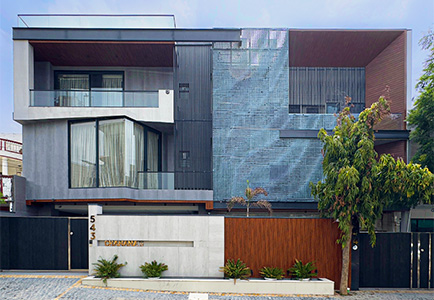
Living, Breathing Facades: The Science and Soul of MetaPatina
There’s something poetic about materials that age with grace. That shift color with time, deepen with exposure, and reveal new layers of beauty as they weather. MetaPatina, our living metal facade surface, is a tribute to that very idea - a facade that doesn’t just protect a building, but brings it to life...
06-04-25 | Material Spotlight
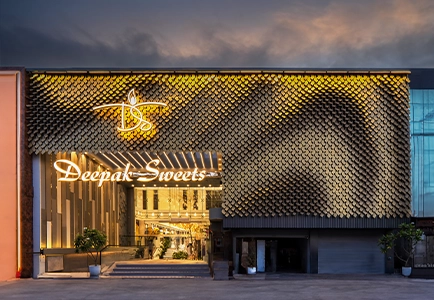
5 Reasons to Choose MetaSequin for Your Facade
At Metaguise, we believe the facade of a building isn’t just its outer layer - it’s its identity. And in today’s design landscape
10-11-25 | Material Spotlight
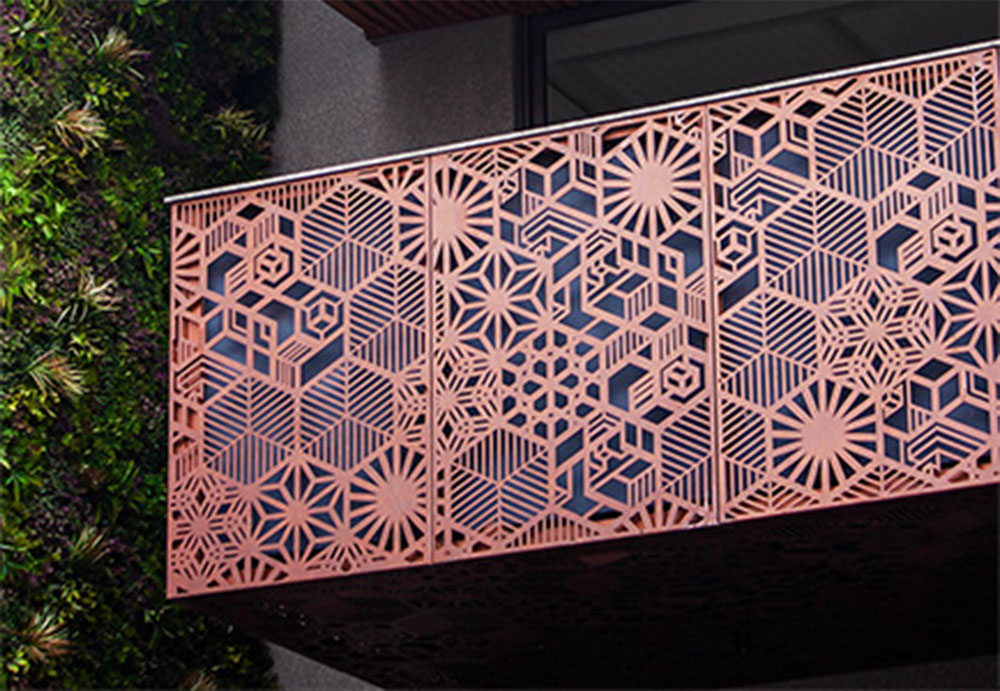
The Power of Perforation: Breathing Life, Light & Luxury into Metal Facades
At Metaguise, we believe the facade of a building isn’t just its outer layer - it’s its identity. And in today’s design landscape
17-11-25 | Material Spotlight
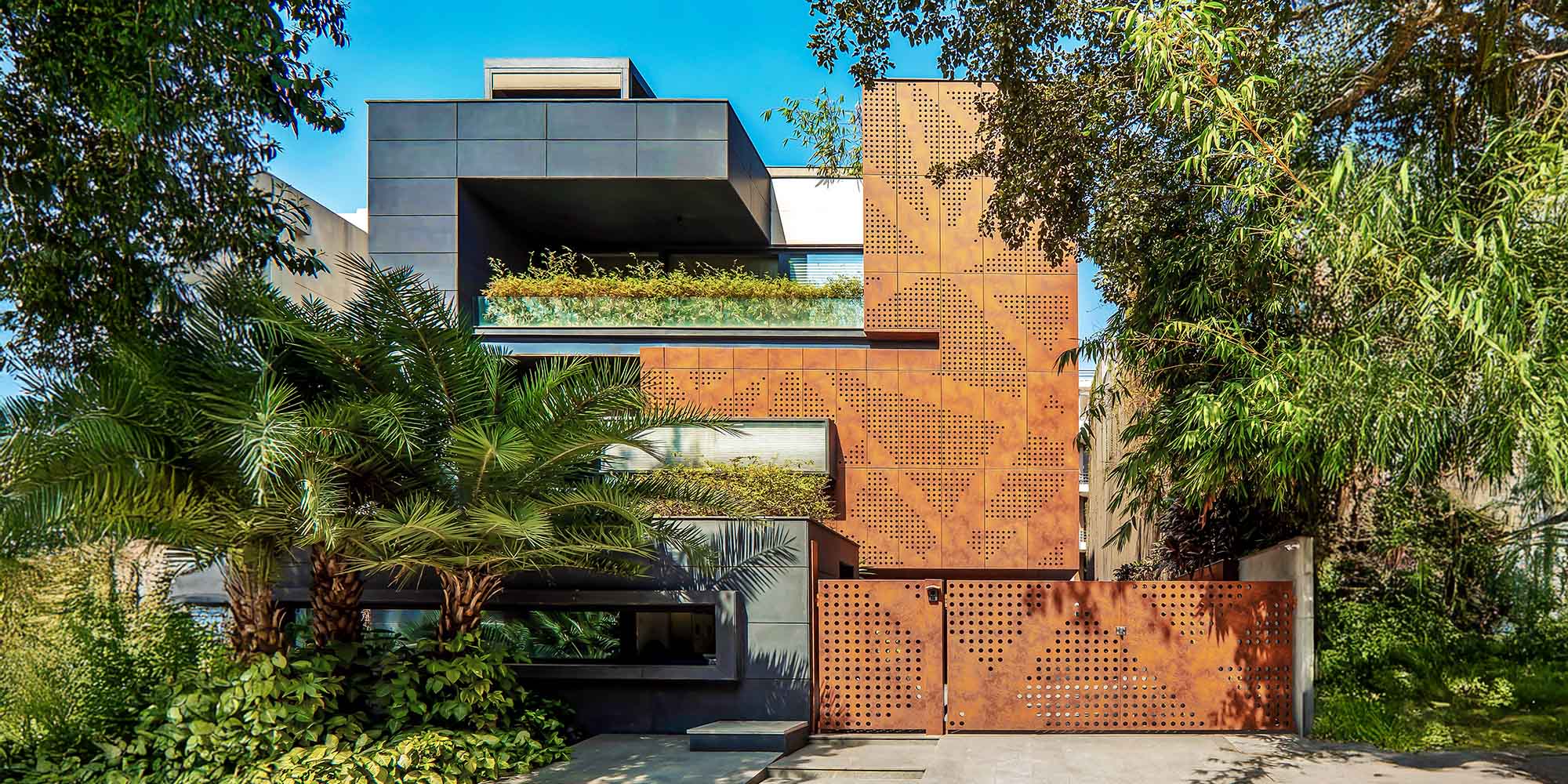
Perforated Metal Facade panels in 2026: Benefits, Design uses & Architectural Guide
Perforated metal facade panels are architectural cladding systems made from aluminium or steel sheets with precision-cut patterns.
09-12-25 | Material Spotlight
Social
Legal
Privacy Policy|Terms & Conditions