





Aluminium vs Corten Steel vs Zinc: Which Metal Facade Is Right for India?
20-06-26 | Facade Innovations
Key Takeaways
• Aluminium, Corten steel, and zinc are the three primary metal facade materials for Indian buildings in 2026 — each with distinct performance profiles, aesthetic characters, and specific climate-zone applications. Choosing wrong costs more than choosing right from the start. • The single most important rule in Indian metal facade specification: within 5km of any coastline — Mumbai, Goa, Chennai, Kochi, Visakhapatnam — anodised aluminium is the only fully appropriate metal. Corten steel and zinc both have performance limitations in salt-air environments that make them inappropriate for coastal locations. • Aluminium is the most versatile metal facade material for India — suitable for every climate zone, every building type, and every design language. Corten is the material of character for inland projects where warmth and landscape resonance are brief. Zinc is the material of ultra-premium refinement for the most discerning international-reference commissions. • Metaguise's product range covers all three material families — MetaForm and parametric aluminium systems, the MetaCorten weathering steel finish system, and architect-specified zinc integration — with in-house design, fabrication, and installation across India.
Why Metal Facade Material Choice Matters: The Decision That Lasts Decades
Most decisions in a building project can be revisited. You can change the paint colour six months after moving in. You can upgrade the kitchen a few years. The facade material is not one of those decisions. Once the panels are fixed, the sub-frame is anchored, and the scaffolding comes down, you are committed for the building's life — which, depending on the material, means somewhere between thirty and a hundred years. Pick the wrong metal, and the failure is visible, expensive, and irreversible without stripping everything back to the structure. Pick the right one, and it performs quietly and beautifully for decades without asking for anything beyond an annual wash. The problem is that 'metal facade' has become a category that contains genuinely different materials — aluminium, Corten steel, and zinc — with different performance profiles, different aesthetic characters, and critically different rules about where each belongs. In India's climate, getting these rules right is not optional. It is the specification. This guide provides the complete comparison that allows architects and homeowners in India to make that decision correctly, once.
Performance in Indian Climate: Which Metal Survives Which Conditions
India's climatic diversity — from the coastal salt-air of Chennai and Mumbai to the arid UV-intensity of Rajasthan and Gujarat, from the composite thermal cycling of Delhi NCR to the humid mountain conditions of the Western Ghats — means that no single material specification is optimal for every Indian project. The following table assesses each metal's performance across India's principal climate conditions.
| Property | Aluminium | Corten Steel | Zinc |
|---|---|---|---|
| Base Material | Aluminium alloy (AA3003 / AA5052 / AA6063) | Weathering steel (low-alloy, high-strength) | Rolled zinc (99.5–99.995% purity) |
| Surface Protection | Applied coating (PVDF, anodised) or natural oxide | Self-forming protective rust patina | Natural patina (zinc carbonate — blue-grey to dark grey) |
| Primary Strength | Corrosion resistance + design flexibility + lightweight | Long design life + warm aesthetic + patina character | Premium aesthetic depth + low thermal movement + very long life |
| Primary Limitation | Requires quality finish specification for UV performance | Not suitable for coastal salt-air; requires drainage detailing | Higher material cost; limited colour flexibility; specialist installation |
| Weight (Approx.) | 3–6 kg/m² (panel systems) | 10–25 kg/m² (panel/sheet applications) | 5–10 kg/m² (standing seam / cassette applications) |
| Typical Design Life | 30–50 years (PVDF); 25–35 years (anodised) | 50+ years (inland climates) | 80–100+ years (European standard; 40–60 years in Indian conditions) |
| Fire Rating | A1 (non-combustible solid aluminium) | A1 (non-combustible steel) | A1 (non-combustible zinc) |
| Recyclability | Highly recyclable; high scrap value | Recyclable; moderate scrap value | Highly recyclable; significant scrap value |
| Primary Applications in India | Premium residential, commercial, institutional — full range | Luxury bungalows, farmhouses, resorts (inland India) | Ultra-premium residential, high-end hospitality (limited deployment) |
| Metaguise System | Full MetaForm and parametric range | MetaCorten finish system | Not a primary Metaguise product — architect-specified material |
Performance in Indian Climate: Which Metal Survives Which Conditions
India's climatic diversity — from the coastal salt-air of Chennai and Mumbai to the arid UV-intensity of Rajasthan and Gujarat, from the composite thermal cycling of Delhi NCR to the humid mountain conditions of the Western Ghats — means that no single material specification is optimal for every Indian project. The following table assesses each metal's performance across India's principal climate conditions.
| Climate Condition | Aluminium (PVDF / Anodised) | Corten Steel | Zinc |
|---|---|---|---|
| Intense UV (Rajasthan, Gujarat, Delhi NCR) | Excellent — PVDF maintains colour for 25+ years; anodised requires no maintenance. | Excellent — protective patina is UV-stable; warm rust tone does not fade. | Good — zinc patina is UV-stable; initial patina formation may be slow in low-humidity zones. |
| Heavy Monsoon (Mumbai, Chennai, Kerala, Pune) | Excellent — ventilated rainscreen drains freely; PVDF/anodised repels moisture. | Acceptable (inland); requires drainage detailing to prevent staining; not recommended for coastal monsoon. | Good — zinc carbonate patina is water-stable; drainage detailing is important. |
| Salt Air / Coastal (< 5 km from Sea) | Excellent with anodised finish or coastal-grade PVDF; the definitive coastal specification. | Not recommended — salt-laden air interferes with stable protective oxide formation, leading to accelerated pitting corrosion. | Not recommended within 1–2 km of the sea — zinc patina can be disrupted by heavy chloride exposure. |
| Extreme Thermal Cycling (Delhi, Chandigarh, Ahmedabad) | Excellent — aluminium's thermal expansion is consistent and predictable; expansion joints are accommodated by the Metaguise sub-frame. | Acceptable — steel expands more than aluminium; movement must be designed into the fixing system and rigid fixing should be avoided. | Requires careful detailing — zinc has higher thermal expansion than aluminium; expansion joints are essential at 3-metre intervals. |
| Industrial Pollution (NCR, Pune Industrial Zones) | Excellent — PVDF/anodised surfaces repel particulate adhesion; annual cleaning is generally sufficient. | Good — the patina layer resists mild acid rain, though heavy industrial SO₂ can accelerate corrosion in some environments. | Sensitive — zinc can react with acid rain in heavily industrial areas; assess local air quality before specification. |
| Hill / High Altitude (Shimla, Mussoorie, Coorg) | Excellent — freeze-thaw cycling does not affect aluminium; PVDF performs well under high-altitude UV exposure. | Good — inland mountain climates suit Corten; persistent mist should be evaluated with appropriate drainage design. | Good — zinc performs well in cool, humid mountain climates and has extensive European architectural precedent. |
Aesthetic Differences: How Each Metal Reads on a Building
Maintenance requirements differ significantly between the three metals — both in the type of maintenance required and the frequency at which it must be executed to maintain the facade's performance and appearance.
| Maintenance Task | Aluminium | Corten Steel | Zinc |
|---|---|---|---|
| Routine Cleaning | Annual wash with neutral detergent — sufficient for PVDF and anodised surfaces. | Annual wash — important to remove debris that may cause localised staining beyond the natural patina. | Annual wash — zinc is largely self-cleaning; debris removal prevents biological growth at drainage points. |
| Surface Treatment | None required after installation — PVDF and anodised finishes are maintenance-free. | None required after patina stabilisation — no sealing, painting, or chemical treatment required. | None required — the zinc carbonate patina is self-protective and requires no additional treatment. |
| Fixing Inspection | Every 5 years — standard aluminium inspection; stainless steel fixings are low-maintenance. | Every 3 years — inspect for staining patterns that may indicate fixing corrosion beneath the patina. | Every 3 years — inspect the zinc-to-fixing interface and ensure proper isolation to prevent bimetallic corrosion. |
| Damaged Panel Replacement | Individual panels can be replaced without disturbing adjacent panels; replacement panels are available in matching finishes. | Individual panels are replaceable, but new panels will not immediately match the patina of aged panels and will weather naturally over time. | Individual panels are replaceable, though new panels will initially appear different from aged zinc until the patina develops. |
| Warranty | 25-year colour retention warranty (PVDF) plus structural warranty on Metaguise fixing systems. | No coating warranty — the naturally formed patina provides protection; structural warranty applies to the fixing system. | Material warranties typically range from 25–40 years (European standard); India-specific warranties are project dependent. |
Aesthetic Differences: How Each Metal Reads on a Building
Given the detailed comparison across performance, aesthetics, and maintenance, the following framework provides clear guidance for the most common Indian project contexts. Choose Aluminium (PVDF / Anodised) if: • Your project is in a coastal location (Mumbai, Goa, Chennai, Kochi, coastal Karnataka) — anodised aluminium is the only fully appropriate specification • You need a specific colour, texture, or finish that is not the natural palette of Corten or zinc — aluminium's full MetaSurface PVDF range provides unlimited specification flexibility • Your design brief calls for parametric, three-dimensional, or geometrically complex facade systems — aluminium is the only metal that CNC fabrication can form into MetaSequin, MetaCoin, MetaFold, or custom parametric geometries • You want a consistent, predictable facade appearance through the building's life — PVDF's 25-year colour stability means the facade looks the same in 2045 as at handover • The project is a retrofit on an existing building — aluminium's lightweight (3–6 kg/m²) makes it the only metal that can be added to existing structures without structural assessment in most cases Choose Corten Steel if: • Your project is in an inland climate zone — NCR, Ahmedabad, Rajasthan, Maharashtra interior, Deccan plateau — where the wet-dry seasonal cycling supports stable patina formation • The design brief calls for a warm, earthy, landscape-resonant material — a farmhouse, a rural retreat, a villa in red-laterite countryside — where Corten's rust-brown palette reads as materially authentic to its site • You want a facade that accumulates character over time rather than maintaining consistency — Corten's patination journey is a design feature, not a defect • The project involves boundary walls, entrance gate structures, or large-format flat surfaces where Corten's limited geometry range is not a constraint • The project is NOT within five kilometres of the sea and NOT in a location where industrial sulphur dioxide or chloride pollution is at high concentration Consider Zinc if: • The project is ultra-premium residential or boutique hospitality where the architect's brief is the grey mineral refinement of European or Japanese modernism • The design language is restrained, precise, and roof-integrated — zinc's standing seam and flat-lock traditional formats suit projects where wall and roof are in the same material • The architect is experienced in zinc specification and installation — zinc requires specialist installation knowledge that is not universally available in the Indian market • The project is NOT in a coastal zone and NOT in a heavy industrial pollution area — zinc's performance limitations in these environments are more significant than aluminium's • Budget accommodates a material premium — zinc's higher base material cost relative to aluminium should be assessed against the specific aesthetic and design value it provides for the project
Frequently Asked Questions
1.Can Corten steel be used in Mumbai or Goa?
No — and this is one of the most important specification decisions Metaguise assists architects and homeowners with in India's coastal markets. Corten steel's protective rust layer forms through a process that requires alternating wet and dry cycles to develop the stable, adherent patina that gives the material its weatherproofing. In heavy salt-air environments within five kilometres of the sea — Mumbai, Goa, Chennai, coastal Karnataka — the chloride ions in the air disrupt this process, causing the rust to remain active (pitting corrosion) rather than forming a stable protective layer. The result is an accelerating deterioration of the steel substrate, not a protective patina. For coastal locations, Metaguise specifies MetaCorten tone PVDF on aluminium — the warm rust-brown aesthetic of Corten on a substrate that performs without constraint in coastal conditions.2.Is zinc available through Metaguise, and does the company install it?
Metaguise's primary product range is aluminium — MetaForm, MetaFunction, and MetaSurface — with MetaCorten as the weathering steel finish system applied to aluminium substrates. Zinc as a primary facade material is not a standard Metaguise product; it is an architect-specified material that Metaguise can incorporate into a project where the design brief requires it, working with specialist zinc fabricators and using Metaguise's sub-frame engineering and installation expertise. Architects who wish to specify zinc as part of a project that also includes Metaguise aluminium systems should discuss this as part of the initial design consultation — the company can advise on how the two materials integrate structurally and aesthetically.3.Is Corten steel more expensive than aluminium?
Corten steel's material cost varies with steel market pricing and is typically comparable to mid-range aluminium system costs — neither significantly more nor less expensive as a material in isolation. The total installed cost of a Corten steel facade relative to aluminium depends more on the specific system complexity, panel size, and installation requirements than on the base material cost differential. Where Corten does carry a genuine cost implication is in detailing: Corten requires specific drainage provision, clearance from adjacent materials it might stain, and fixing system design that accommodates differential expansion — detailing work that adds to the engineering scope. Metaguise provides project-specific material and system cost guidance at the design consultation stage for every project, allowing accurate comparison of the Corten and aluminium specification options for the specific brief.4.Which metal facade material does Metaguise most often recommend?
Metaguise's recommendation is always project-specific — there is no universally 'best' metal facade material. For the majority of Indian residential and commercial projects across the country's full geographic range, PVDF-coated aluminium is the recommendation that best balances design flexibility, climate performance, installation efficiency, and long-term reliability. For inland projects with a specific brief for material warmth and landscape resonance — farmhouses, rural retreats, villas in red-earth landscapes — MetaCorten is a compelling and often preferred specification. For the exceptional projects where the brief and budget support zinc's premium aesthetic — ultra-luxury hospitality, internationally published residential architecture — the material is worth serious consideration. Metaguise's design consultation process is specifically designed to navigate this choice for every project: understanding the brief, the site, and the budget before recommending the material that best serves all three.Aluminium vs Corten Steel vs Zinc: Which Metal Facade Is Right for India?
20-06-26 | Facade Innovations
Key Takeaways
• Aluminium, Corten steel, and zinc are the three primary metal facade materials for Indian buildings in 2026 — each with distinct performance profiles, aesthetic characters, and specific climate-zone applications. Choosing wrong costs more than choosing right from the start. • The single most important rule in Indian metal facade specification: within 5km of any coastline — Mumbai, Goa, Chennai, Kochi, Visakhapatnam — anodised aluminium is the only fully appropriate metal. Corten steel and zinc both have performance limitations in salt-air environments that make them inappropriate for coastal locations. • Aluminium is the most versatile metal facade material for India — suitable for every climate zone, every building type, and every design language. Corten is the material of character for inland projects where warmth and landscape resonance are brief. Zinc is the material of ultra-premium refinement for the most discerning international-reference commissions. • Metaguise's product range covers all three material families — MetaForm and parametric aluminium systems, the MetaCorten weathering steel finish system, and architect-specified zinc integration — with in-house design, fabrication, and installation across India.
Why Metal Facade Material Choice Matters: The Decision That Lasts Decades
Most decisions in a building project can be revisited. You can change the paint colour six months after moving in. You can upgrade the kitchen a few years. The facade material is not one of those decisions. Once the panels are fixed, the sub-frame is anchored, and the scaffolding comes down, you are committed for the building's life — which, depending on the material, means somewhere between thirty and a hundred years. Pick the wrong metal, and the failure is visible, expensive, and irreversible without stripping everything back to the structure. Pick the right one, and it performs quietly and beautifully for decades without asking for anything beyond an annual wash. The problem is that 'metal facade' has become a category that contains genuinely different materials — aluminium, Corten steel, and zinc — with different performance profiles, different aesthetic characters, and critically different rules about where each belongs. In India's climate, getting these rules right is not optional. It is the specification. This guide provides the complete comparison that allows architects and homeowners in India to make that decision correctly, once.
Performance in Indian Climate: Which Metal Survives Which Conditions
India's climatic diversity — from the coastal salt-air of Chennai and Mumbai to the arid UV-intensity of Rajasthan and Gujarat, from the composite thermal cycling of Delhi NCR to the humid mountain conditions of the Western Ghats — means that no single material specification is optimal for every Indian project. The following table assesses each metal's performance across India's principal climate conditions.
| Property | Aluminium | Corten Steel | Zinc |
|---|---|---|---|
| Base Material | Aluminium alloy (AA3003 / AA5052 / AA6063) | Weathering steel (low-alloy, high-strength) | Rolled zinc (99.5–99.995% purity) |
| Surface Protection | Applied coating (PVDF, anodised) or natural oxide | Self-forming protective rust patina | Natural patina (zinc carbonate — blue-grey to dark grey) |
| Primary Strength | Corrosion resistance + design flexibility + lightweight | Long design life + warm aesthetic + patina character | Premium aesthetic depth + low thermal movement + very long life |
| Primary Limitation | Requires quality finish specification for UV performance | Not suitable for coastal salt-air; requires drainage detailing | Higher material cost; limited colour flexibility; specialist installation |
| Weight (Approx.) | 3–6 kg/m² (panel systems) | 10–25 kg/m² (panel/sheet applications) | 5–10 kg/m² (standing seam / cassette applications) |
| Typical Design Life | 30–50 years (PVDF); 25–35 years (anodised) | 50+ years (inland climates) | 80–100+ years (European standard; 40–60 years in Indian conditions) |
| Fire Rating | A1 (non-combustible solid aluminium) | A1 (non-combustible steel) | A1 (non-combustible zinc) |
| Recyclability | Highly recyclable; high scrap value | Recyclable; moderate scrap value | Highly recyclable; significant scrap value |
| Primary Applications in India | Premium residential, commercial, institutional — full range | Luxury bungalows, farmhouses, resorts (inland India) | Ultra-premium residential, high-end hospitality (limited deployment) |
| Metaguise System | Full MetaForm and parametric range | MetaCorten finish system | Not a primary Metaguise product — architect-specified material |
Performance in Indian Climate: Which Metal Survives Which Conditions
India's climatic diversity — from the coastal salt-air of Chennai and Mumbai to the arid UV-intensity of Rajasthan and Gujarat, from the composite thermal cycling of Delhi NCR to the humid mountain conditions of the Western Ghats — means that no single material specification is optimal for every Indian project. The following table assesses each metal's performance across India's principal climate conditions.
| Climate Condition | Aluminium (PVDF / Anodised) | Corten Steel | Zinc |
|---|---|---|---|
| Intense UV (Rajasthan, Gujarat, Delhi NCR) | Excellent — PVDF maintains colour for 25+ years; anodised requires no maintenance. | Excellent — protective patina is UV-stable; warm rust tone does not fade. | Good — zinc patina is UV-stable; initial patina formation may be slow in low-humidity zones. |
| Heavy Monsoon (Mumbai, Chennai, Kerala, Pune) | Excellent — ventilated rainscreen drains freely; PVDF/anodised repels moisture. | Acceptable (inland); requires drainage detailing to prevent staining; not recommended for coastal monsoon. | Good — zinc carbonate patina is water-stable; drainage detailing is important. |
| Salt Air / Coastal (< 5 km from Sea) | Excellent with anodised finish or coastal-grade PVDF; the definitive coastal specification. | Not recommended — salt-laden air interferes with stable protective oxide formation, leading to accelerated pitting corrosion. | Not recommended within 1–2 km of the sea — zinc patina can be disrupted by heavy chloride exposure. |
| Extreme Thermal Cycling (Delhi, Chandigarh, Ahmedabad) | Excellent — aluminium's thermal expansion is consistent and predictable; expansion joints are accommodated by the Metaguise sub-frame. | Acceptable — steel expands more than aluminium; movement must be designed into the fixing system and rigid fixing should be avoided. | Requires careful detailing — zinc has higher thermal expansion than aluminium; expansion joints are essential at 3-metre intervals. |
| Industrial Pollution (NCR, Pune Industrial Zones) | Excellent — PVDF/anodised surfaces repel particulate adhesion; annual cleaning is generally sufficient. | Good — the patina layer resists mild acid rain, though heavy industrial SO₂ can accelerate corrosion in some environments. | Sensitive — zinc can react with acid rain in heavily industrial areas; assess local air quality before specification. |
| Hill / High Altitude (Shimla, Mussoorie, Coorg) | Excellent — freeze-thaw cycling does not affect aluminium; PVDF performs well under high-altitude UV exposure. | Good — inland mountain climates suit Corten; persistent mist should be evaluated with appropriate drainage design. | Good — zinc performs well in cool, humid mountain climates and has extensive European architectural precedent. |
Aesthetic Differences: How Each Metal Reads on a Building
Maintenance requirements differ significantly between the three metals — both in the type of maintenance required and the frequency at which it must be executed to maintain the facade's performance and appearance.
| Maintenance Task | Aluminium | Corten Steel | Zinc |
|---|---|---|---|
| Routine Cleaning | Annual wash with neutral detergent — sufficient for PVDF and anodised surfaces. | Annual wash — important to remove debris that may cause localised staining beyond the natural patina. | Annual wash — zinc is largely self-cleaning; debris removal prevents biological growth at drainage points. |
| Surface Treatment | None required after installation — PVDF and anodised finishes are maintenance-free. | None required after patina stabilisation — no sealing, painting, or chemical treatment required. | None required — the zinc carbonate patina is self-protective and requires no additional treatment. |
| Fixing Inspection | Every 5 years — standard aluminium inspection; stainless steel fixings are low-maintenance. | Every 3 years — inspect for staining patterns that may indicate fixing corrosion beneath the patina. | Every 3 years — inspect the zinc-to-fixing interface and ensure proper isolation to prevent bimetallic corrosion. |
| Damaged Panel Replacement | Individual panels can be replaced without disturbing adjacent panels; replacement panels are available in matching finishes. | Individual panels are replaceable, but new panels will not immediately match the patina of aged panels and will weather naturally over time. | Individual panels are replaceable, though new panels will initially appear different from aged zinc until the patina develops. |
| Warranty | 25-year colour retention warranty (PVDF) plus structural warranty on Metaguise fixing systems. | No coating warranty — the naturally formed patina provides protection; structural warranty applies to the fixing system. | Material warranties typically range from 25–40 years (European standard); India-specific warranties are project dependent. |
Aesthetic Differences: How Each Metal Reads on a Building
Given the detailed comparison across performance, aesthetics, and maintenance, the following framework provides clear guidance for the most common Indian project contexts. Choose Aluminium (PVDF / Anodised) if: • Your project is in a coastal location (Mumbai, Goa, Chennai, Kochi, coastal Karnataka) — anodised aluminium is the only fully appropriate specification • You need a specific colour, texture, or finish that is not the natural palette of Corten or zinc — aluminium's full MetaSurface PVDF range provides unlimited specification flexibility • Your design brief calls for parametric, three-dimensional, or geometrically complex facade systems — aluminium is the only metal that CNC fabrication can form into MetaSequin, MetaCoin, MetaFold, or custom parametric geometries • You want a consistent, predictable facade appearance through the building's life — PVDF's 25-year colour stability means the facade looks the same in 2045 as at handover • The project is a retrofit on an existing building — aluminium's lightweight (3–6 kg/m²) makes it the only metal that can be added to existing structures without structural assessment in most cases Choose Corten Steel if: • Your project is in an inland climate zone — NCR, Ahmedabad, Rajasthan, Maharashtra interior, Deccan plateau — where the wet-dry seasonal cycling supports stable patina formation • The design brief calls for a warm, earthy, landscape-resonant material — a farmhouse, a rural retreat, a villa in red-laterite countryside — where Corten's rust-brown palette reads as materially authentic to its site • You want a facade that accumulates character over time rather than maintaining consistency — Corten's patination journey is a design feature, not a defect • The project involves boundary walls, entrance gate structures, or large-format flat surfaces where Corten's limited geometry range is not a constraint • The project is NOT within five kilometres of the sea and NOT in a location where industrial sulphur dioxide or chloride pollution is at high concentration Consider Zinc if: • The project is ultra-premium residential or boutique hospitality where the architect's brief is the grey mineral refinement of European or Japanese modernism • The design language is restrained, precise, and roof-integrated — zinc's standing seam and flat-lock traditional formats suit projects where wall and roof are in the same material • The architect is experienced in zinc specification and installation — zinc requires specialist installation knowledge that is not universally available in the Indian market • The project is NOT in a coastal zone and NOT in a heavy industrial pollution area — zinc's performance limitations in these environments are more significant than aluminium's • Budget accommodates a material premium — zinc's higher base material cost relative to aluminium should be assessed against the specific aesthetic and design value it provides for the project
Frequently Asked Questions
1.Can Corten steel be used in Mumbai or Goa?
No — and this is one of the most important specification decisions Metaguise assists architects and homeowners with in India's coastal markets. Corten steel's protective rust layer forms through a process that requires alternating wet and dry cycles to develop the stable, adherent patina that gives the material its weatherproofing. In heavy salt-air environments within five kilometres of the sea — Mumbai, Goa, Chennai, coastal Karnataka — the chloride ions in the air disrupt this process, causing the rust to remain active (pitting corrosion) rather than forming a stable protective layer. The result is an accelerating deterioration of the steel substrate, not a protective patina. For coastal locations, Metaguise specifies MetaCorten tone PVDF on aluminium — the warm rust-brown aesthetic of Corten on a substrate that performs without constraint in coastal conditions.2.Is zinc available through Metaguise, and does the company install it?
Metaguise's primary product range is aluminium — MetaForm, MetaFunction, and MetaSurface — with MetaCorten as the weathering steel finish system applied to aluminium substrates. Zinc as a primary facade material is not a standard Metaguise product; it is an architect-specified material that Metaguise can incorporate into a project where the design brief requires it, working with specialist zinc fabricators and using Metaguise's sub-frame engineering and installation expertise. Architects who wish to specify zinc as part of a project that also includes Metaguise aluminium systems should discuss this as part of the initial design consultation — the company can advise on how the two materials integrate structurally and aesthetically.3.Is Corten steel more expensive than aluminium?
Corten steel's material cost varies with steel market pricing and is typically comparable to mid-range aluminium system costs — neither significantly more nor less expensive as a material in isolation. The total installed cost of a Corten steel facade relative to aluminium depends more on the specific system complexity, panel size, and installation requirements than on the base material cost differential. Where Corten does carry a genuine cost implication is in detailing: Corten requires specific drainage provision, clearance from adjacent materials it might stain, and fixing system design that accommodates differential expansion — detailing work that adds to the engineering scope. Metaguise provides project-specific material and system cost guidance at the design consultation stage for every project, allowing accurate comparison of the Corten and aluminium specification options for the specific brief.4.Which metal facade material does Metaguise most often recommend?
Metaguise's recommendation is always project-specific — there is no universally 'best' metal facade material. For the majority of Indian residential and commercial projects across the country's full geographic range, PVDF-coated aluminium is the recommendation that best balances design flexibility, climate performance, installation efficiency, and long-term reliability. For inland projects with a specific brief for material warmth and landscape resonance — farmhouses, rural retreats, villas in red-earth landscapes — MetaCorten is a compelling and often preferred specification. For the exceptional projects where the brief and budget support zinc's premium aesthetic — ultra-luxury hospitality, internationally published residential architecture — the material is worth serious consideration. Metaguise's design consultation process is specifically designed to navigate this choice for every project: understanding the brief, the site, and the budget before recommending the material that best serves all three.Related Articles
Related Articles
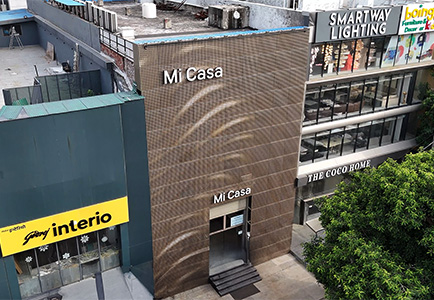
The Rise of Parametric facades: Designing with Algorithmic Elegance
A revolutionary parametric facade system designed to elevate architectural aesthetics. Crafted with premium metals and enhanced with MetaSurface finishes, MetaCoin offers unparalleled customizability, from the shape and size of each element to its color and arrangement. Its dynamic design reacts to light and perspective, creating ever-changing visual effects. Ideal for contemporary and iconic structures, MetaCoin transforms facades into captivating works of art that are sustainable, durable, and visually stunning.
01-04-25 | Facade Innovations
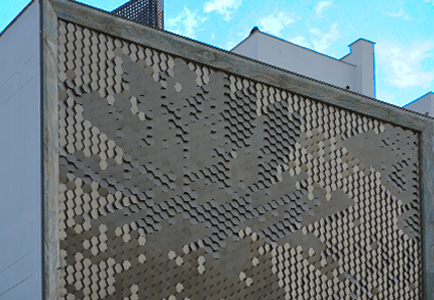
METABLOX™ by Metaguise: A Breakthrough in Parametric Facade Design
At the intersection of culture, craftsmanship, and cutting-edge geometry, METABLOX™ emerges as a bold new direction in architectural innovation. Introduced by Metaguise, this first-of-its-kind parametric facade technology makes its striking debut at the RJ Jewellers flagship store in Jaipur - setting a new benchmark in the world of metal design and modern Indian architecture.
09-04-25 | Facade Innovations
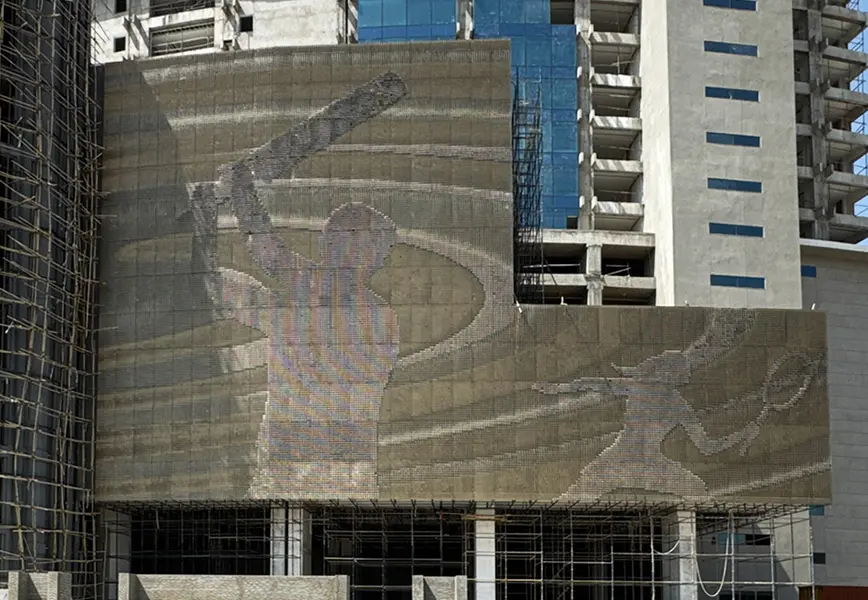
5 Landmark Projects That Used MetaCoin to Transform Facades
When it comes to parametric architecture, MetaCoin stands out as a revolutionary metal coin facade system. Crafted with precision, it offers dynamic aesthetics, adaptability, and a unique identity to structures. Let's delve into five notable projects where MetaCoin has redefined architectural facades.
13-05-25 | Facade Innovations
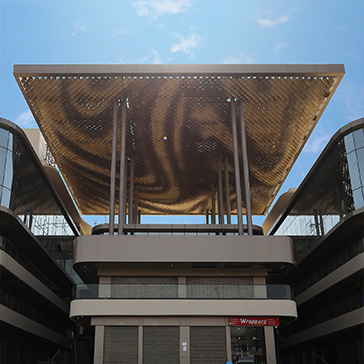
From Code to Construction: How Parametric Facades Are Built
Some buildings just make you look twice. Maybe it’s the way the facade curves. Or how the surface catches the light at different times of day. Often, what you’re seeing is more than just a design, it’s a parametric facade.
10-06-25 | Facade Innovations
Social
Legal
Privacy Policy|Terms & Conditions