





When Your Building Turns One Why Facade Ageing is Now a Luxury Home Anniversary Conversation
21-04-26 | Behind the Design
Key Takeaways
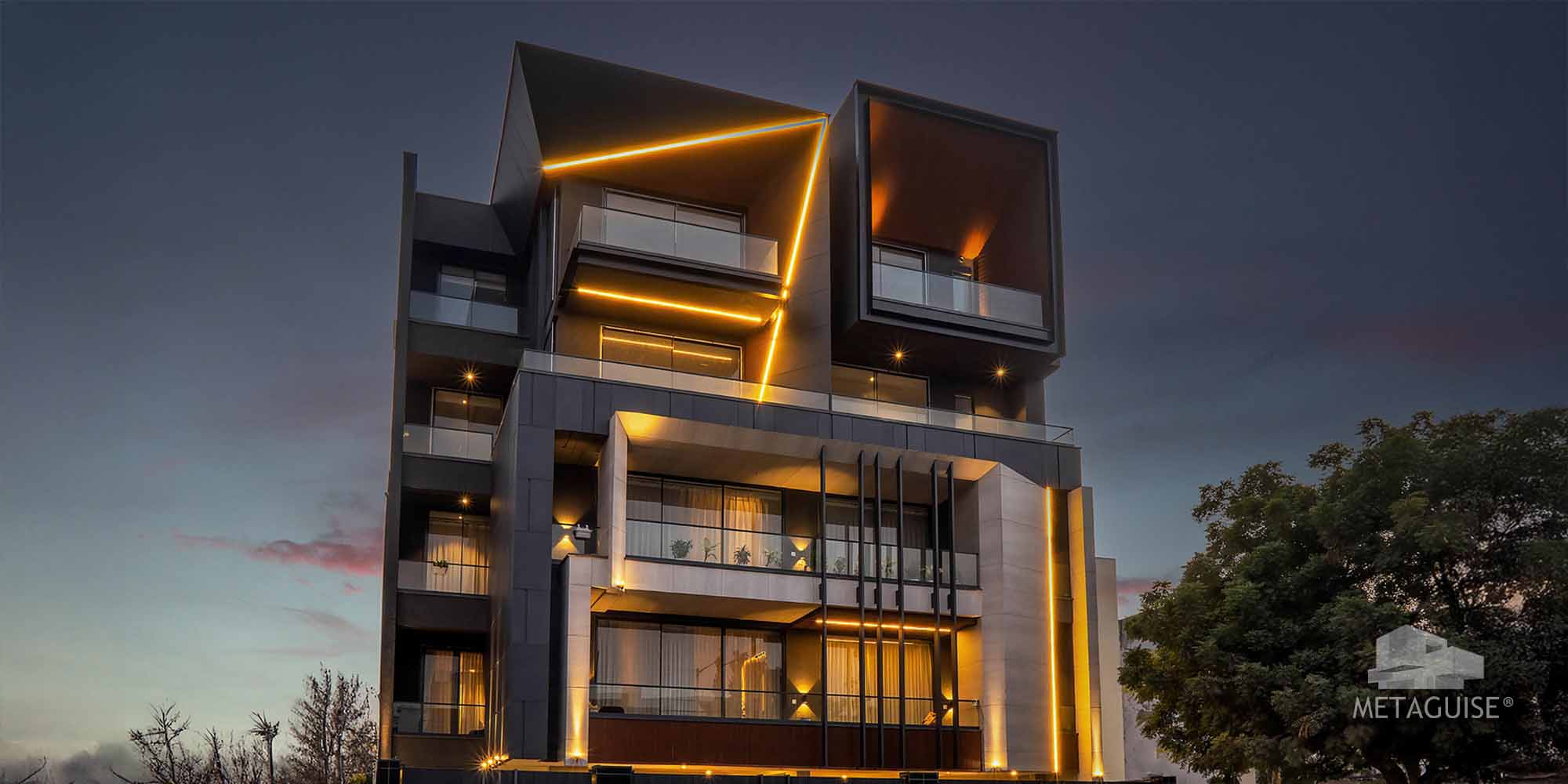
The first year after facade installation reveals how metal surfaces evolve with India's climate - and why that evolution is now a mark of architectural maturity, not deterioration Premium metal facade systems develop a patina and character over 12 months that enhances, rather than diminishes, their visual impact and property value Understanding the difference between natural weathering and poor installation quality protects your ₹2-5 crore facade investment India's luxury homeowners are celebrating one-year facade anniversaries as milestones, documenting seasonal transformations through photography and maintenance rituals Advanced surface treatments and parametric designs actually improve in appearance after exposure to sun, rain, and atmospheric changes Post-installation care in year one sets the foundation for decades of low-maintenance, high-impact architectural presence Twelve months ago, Arvind stood in his South Delhi driveway as the last scaffolding came down, revealing the sinuous bronze-toned metal facade he'd commissioned for his family's legacy bungalow. The surface gleamed under October sun, every perforation casting precise shadows, the entire elevation reading like frozen liquid metal. Today, he's standing in the same spot, camera in hand, comparing photos from that first unveiling to what he sees now - and he's smiling wider than he did a year ago. Because something extraordinary happened in those twelve months. The facade didn't just survive Delhi's punishing summer, monsoon fury, and winter fog. It evolved. The bronze developed subtle depth variations where rain patterns followed the precise geometry. The perforations that looked sharp and industrial last October now frame pockets of shadow with softness. The building didn't age - it matured. This is the conversation happening in India's luxury real estate circles right now, and it's rewriting everything we thought we knew about facade longevity.
The Anxiety Nobody Warned You About
When you invest ₹2.5 crore in a metal facade system, the emotional journey doesn't end at installation. For most homeowners and developers, the first twelve months bring a quiet, persistent worry that architects rarely prepare you for: Is this supposed to look like this? Was that streak there before? Should metal change colour? Priya, an architect who commissioned MetaSequin for her own studio in Bangalore, remembers the panic she felt four months post-installation when she noticed the champagne-gold finish looking slightly different in certain panels. "I thought something had gone wrong. I was ready to call the contractor. Then I looked at it from across the street during golden hour, and I understood - it wasn't damage. It was dialogue. The facade was responding to Bangalore's light." This anxiety is universal because we've been conditioned by decades of painted surfaces and glass curtain walls to expect static perfection. We measure building exteriors the way we measure new cars - any deviation from showroom condition feels like depreciation. But premium metal facades operate on an entirely different logic, one borrowed from fine leather, raw denim, and heritage architecture: they're designed to acquire character, not resist it.
What Actually Happens in Year One
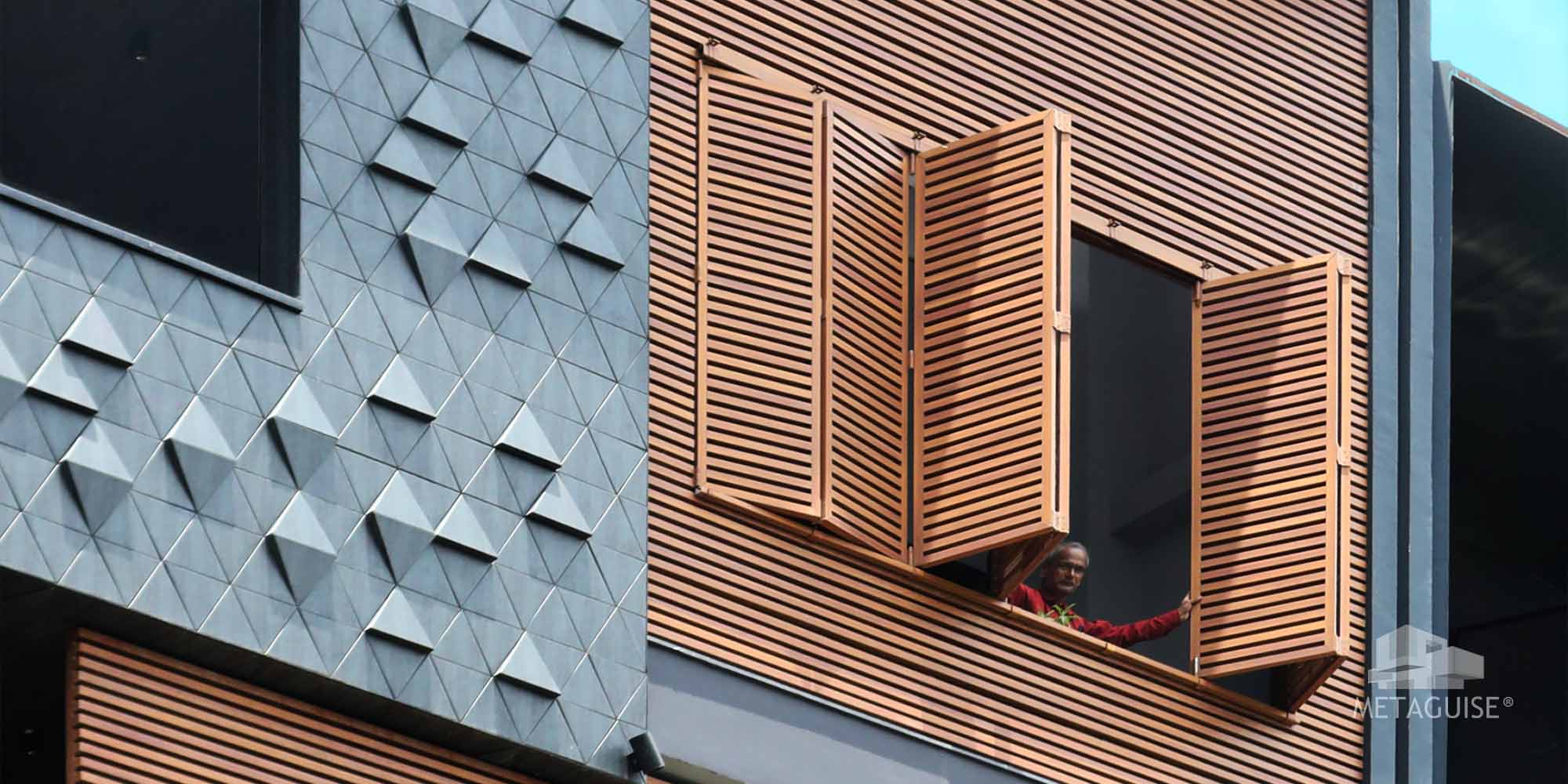
Understanding facade ageing requires separating natural material evolution from installation failures. Here's what luxury metal cladding systems experience during their first twelve months in India's diverse climate zones: Surface oxidation development - A microscopic protective layer forms on metals like aluminium and copper alloys, creating subtle tonal shifts that enhance depth perception Light-pattern memory - South-facing panels develop different micro-textures than north-facing ones, creating nuanced variation across the elevation that makes parametric geometries more legible Rain-tracking on 3D surfaces - Water follows the curves, folds, and angles of your parametric design, leaving ephemeral trails that highlight the mathematical precision of the system Atmospheric response in industrial zones - Cities like Mumbai and Delhi expose facades to pollution, which interacts with advanced surface treatments to create unique, location-specific patinas Thermal expansion-contraction calibration - Metal panels subtly adjust to local temperature swings, and by month twelve, they've "learned" your building's microclimate According to research published by the Facade Tectonics Institute, premium metal cladding systems can take between 9-18 months to reach what they call "aesthetic equilibrium" - the point where material properties stabilize and the facade expresses its mature visual identity. "Contemporary metal facade systems are engineered not just to withstand environmental exposure, but to aesthetically benefit from it. The first year of weathering often reveals design subtleties that were invisible at installation." - Facade Tectonics Institute, Longevity and Performance of Advanced Metal Cladding Systems
The Anniversary Ritual: Documenting Transformation
Something quietly revolutionary is happening among India's architectural elite: they're celebrating facade anniversaries. Nikhil, who commissioned a MetaFold system for his Ahmedabad residence, has turned his building's one-year mark into an annual tradition. He hired the same architectural photographer who documented the installation to shoot the facade again - same angles, same time of day, same lens. The comparison portfolio now sits in his drawing room, a visual essay on how bronze-toned aluminium responds to Gujarat's intense summer sun. "People ask if I regret not choosing something more permanent, like stone," Nikhil says. "I show them these photos and ask - which version is more permanent? The one that looks identical to every other granite-clad bungalow in the city, or the one that's uniquely mine, that recorded a year of my family's life in metal and light?" This shift in mindset - from preservation to evolution - is central to understanding why facade ageing is now a luxury conversation. In the same way that a Hermès Birkin bag or a raw selvedge denim jacket gains value through use and patina, contemporary metal facades are designed to reward time.
What to Expect (And What to Investigate)
Not all changes are desirable, and part of sophisticated facade ownership is knowing when natural ageing crosses into maintenance territory. Here's how to read your building during year one: Normal Evolution (Celebrate These) Subtle tonal shifts in metallic finishes, especially golds, coppers, and bronzes Micro-variation in sheen between panels exposed to different sun angles Fine water-tracking lines on parametric curves after monsoon - these wash away but leave trace memory in the metal's micro-texture Deeper shadow pockets in perforated or 3D-relief panels as ambient dirt settles in recesses (easily cleaned, but many owners choose to retain for added depth) Seasonal colour temperature shifts - your facade will read warmer in summer light, cooler in monsoon diffusion Red Flags (Contact Your Installer) Panel warping or visible buckling, especially on large-format cassettes Corrosion spots, white oxidation powder, or rust stains (indicates coating failure or water ingress) Fastener staining - brown or black streaks running down from attachment points Sealant degradation around panel joints, windows, or interfaces with other materials Delamination of surface treatments or visible peeling The distinction is crucial. Systems like MetaCassette and MetaHydra are engineered with advanced surface treatments - PVDF coatings, anodized finishes, powder-coated protections - that make true degradation extremely rare when properly installed. What most homeowners interpret as "ageing damage" is almost always the material doing exactly what it was designed to do: respond, adapt, and deepen.
The Maintenance Ritual: Year One Care
Luxury facade ownership in India requires a light-touch maintenance approach during the first year. Think of it as seasonal grooming rather than intensive repair: Post-monsoon inspection and rinse - Use low-pressure water (never high-pressure washing) to remove accumulated dust and organic matter from perforations and folds Bi-annual photography documentation - Capture the same angles every six months to build your visual record of transformation Touch-point cleaning around entrances - Areas near main doors see more handling and benefit from gentle cleaning with pH-neutral solutions Fastener inspection - Visual check of all visible attachment points for any movement or corrosion Professional facade audit at 12 months - A detailed assessment by your installation partner ensures all systems remain within performance parameters This isn't the weekly window-cleaning regimen that glass facades demand. It's closer to the care you'd give a fine watch or a classic car - periodic, informed attention that respects the material's inherent qualities.
When the Building Becomes a Legacy Object
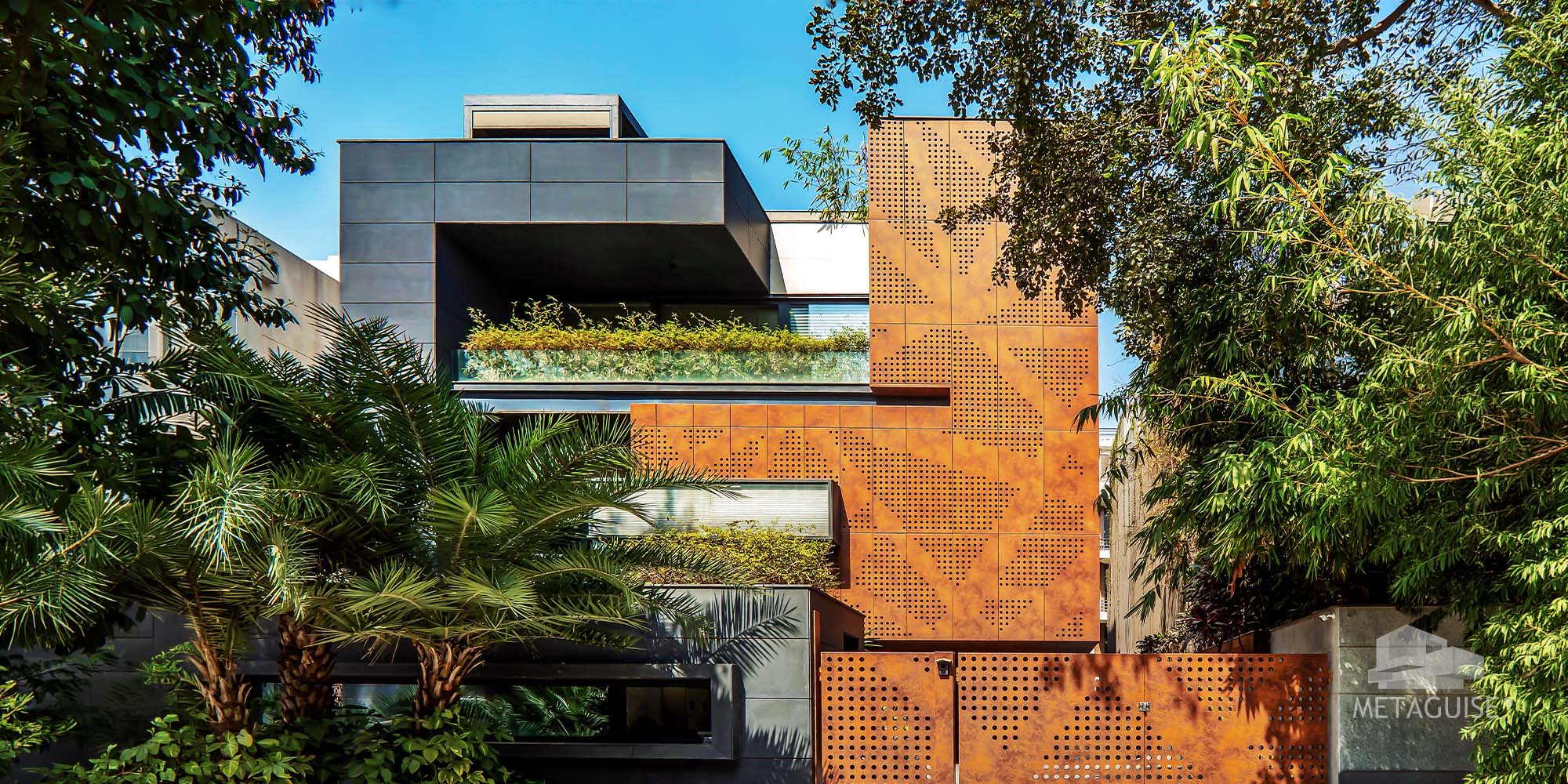
By the time your metal facade completes its first year, something deeper has happened beyond material stabilization. The building has become a legacy object - an architectural signature that records time, responds to place, and carries memory forward. Kavita, whose family commissioned a parametric facade design for their multi-generational home in Pune, put it this way during her building's first anniversary gathering: "My daughter was six months old when they installed this. Now she's eighteen months old, learning to walk, and this facade has been with us through her first monsoon, her first Diwali, her first birthday. When she's twenty and brings friends home, this building won't look 'twenty years old.' It'll look like it's been alive for twenty years. There's a difference." That difference is what separates commodity construction from architectural investment. It's why resale properties with mature, well-maintained metal facades in markets like Gurgaon and Mumbai command premiums over newer glass-and-paint neighbours. Buyers aren't just purchasing square footage - they're acquiring a building with documented character, proven resilience, and aesthetic credibility.
The Wisdom of Waiting
If there's one insight that emerges from hundreds of facade anniversary conversations, it's this: trust the timeline. The impulse to intervene, to "restore" the facade to its installation-day appearance, almost always fades once homeowners understand what they're witnessing. Your metal facade's first year is not a countdown to obsolescence. It's an unveiling - a gradual revelation of how your specific building, in your specific location, wearing your specific parametric design, responds to the world around it. The micro-patinas, the shadow variations, the way light reads differently in July than in February - these aren't flaws to correct. They're the building's autobiography, written in aluminium, bronze, and time. If you're approaching your facade's first anniversary - or designing a building that will carry your family's architectural legacy for decades - the conversation starts with understanding how premium materials age with dignity. Explore Metaguise's parametric facade systems, engineered not just to endure India's climate, but to be transformed by it into something more compelling than the day it was installed. Because the best buildings don't fight time - they collaborate with it.
21-04-26 | Behind the Design
Key Takeaways
The first year after facade installation reveals how metal surfaces evolve with India's climate - and why that evolution is now a mark of architectural maturity, not deterioration Premium metal facade systems develop a patina and character over 12 months that enhances, rather than diminishes, their visual impact and property value Understanding the difference between natural weathering and poor installation quality protects your ₹2-5 crore facade investment India's luxury homeowners are celebrating one-year facade anniversaries as milestones, documenting seasonal transformations through photography and maintenance rituals Advanced surface treatments and parametric designs actually improve in appearance after exposure to sun, rain, and atmospheric changes Post-installation care in year one sets the foundation for decades of low-maintenance, high-impact architectural presence Twelve months ago, Arvind stood in his South Delhi driveway as the last scaffolding came down, revealing the sinuous bronze-toned metal facade he'd commissioned for his family's legacy bungalow. The surface gleamed under October sun, every perforation casting precise shadows, the entire elevation reading like frozen liquid metal. Today, he's standing in the same spot, camera in hand, comparing photos from that first unveiling to what he sees now - and he's smiling wider than he did a year ago. Because something extraordinary happened in those twelve months. The facade didn't just survive Delhi's punishing summer, monsoon fury, and winter fog. It evolved. The bronze developed subtle depth variations where rain patterns followed the precise geometry. The perforations that looked sharp and industrial last October now frame pockets of shadow with softness. The building didn't age - it matured. This is the conversation happening in India's luxury real estate circles right now, and it's rewriting everything we thought we knew about facade longevity.
The Anxiety Nobody Warned You About
When you invest ₹2.5 crore in a metal facade system, the emotional journey doesn't end at installation. For most homeowners and developers, the first twelve months bring a quiet, persistent worry that architects rarely prepare you for: Is this supposed to look like this? Was that streak there before? Should metal change colour? Priya, an architect who commissioned MetaSequin for her own studio in Bangalore, remembers the panic she felt four months post-installation when she noticed the champagne-gold finish looking slightly different in certain panels. "I thought something had gone wrong. I was ready to call the contractor. Then I looked at it from across the street during golden hour, and I understood - it wasn't damage. It was dialogue. The facade was responding to Bangalore's light." This anxiety is universal because we've been conditioned by decades of painted surfaces and glass curtain walls to expect static perfection. We measure building exteriors the way we measure new cars - any deviation from showroom condition feels like depreciation. But premium metal facades operate on an entirely different logic, one borrowed from fine leather, raw denim, and heritage architecture: they're designed to acquire character, not resist it.
What Actually Happens in Year One
Understanding facade ageing requires separating natural material evolution from installation failures. Here's what luxury metal cladding systems experience during their first twelve months in India's diverse climate zones: Surface oxidation development - A microscopic protective layer forms on metals like aluminium and copper alloys, creating subtle tonal shifts that enhance depth perception Light-pattern memory - South-facing panels develop different micro-textures than north-facing ones, creating nuanced variation across the elevation that makes parametric geometries more legible Rain-tracking on 3D surfaces - Water follows the curves, folds, and angles of your parametric design, leaving ephemeral trails that highlight the mathematical precision of the system Atmospheric response in industrial zones - Cities like Mumbai and Delhi expose facades to pollution, which interacts with advanced surface treatments to create unique, location-specific patinas Thermal expansion-contraction calibration - Metal panels subtly adjust to local temperature swings, and by month twelve, they've "learned" your building's microclimate According to research published by the Facade Tectonics Institute, premium metal cladding systems can take between 9-18 months to reach what they call "aesthetic equilibrium" - the point where material properties stabilize and the facade expresses its mature visual identity. "Contemporary metal facade systems are engineered not just to withstand environmental exposure, but to aesthetically benefit from it. The first year of weathering often reveals design subtleties that were invisible at installation." - Facade Tectonics Institute, Longevity and Performance of Advanced Metal Cladding Systems
The Anniversary Ritual: Documenting Transformation
Something quietly revolutionary is happening among India's architectural elite: they're celebrating facade anniversaries. Nikhil, who commissioned a MetaFold system for his Ahmedabad residence, has turned his building's one-year mark into an annual tradition. He hired the same architectural photographer who documented the installation to shoot the facade again - same angles, same time of day, same lens. The comparison portfolio now sits in his drawing room, a visual essay on how bronze-toned aluminium responds to Gujarat's intense summer sun. "People ask if I regret not choosing something more permanent, like stone," Nikhil says. "I show them these photos and ask - which version is more permanent? The one that looks identical to every other granite-clad bungalow in the city, or the one that's uniquely mine, that recorded a year of my family's life in metal and light?" This shift in mindset - from preservation to evolution - is central to understanding why facade ageing is now a luxury conversation. In the same way that a Hermès Birkin bag or a raw selvedge denim jacket gains value through use and patina, contemporary metal facades are designed to reward time.
What to Expect (And What to Investigate)
Not all changes are desirable, and part of sophisticated facade ownership is knowing when natural ageing crosses into maintenance territory. Here's how to read your building during year one: Normal Evolution (Celebrate These) Subtle tonal shifts in metallic finishes, especially golds, coppers, and bronzes Micro-variation in sheen between panels exposed to different sun angles Fine water-tracking lines on parametric curves after monsoon - these wash away but leave trace memory in the metal's micro-texture Deeper shadow pockets in perforated or 3D-relief panels as ambient dirt settles in recesses (easily cleaned, but many owners choose to retain for added depth) Seasonal colour temperature shifts - your facade will read warmer in summer light, cooler in monsoon diffusion Red Flags (Contact Your Installer) Panel warping or visible buckling, especially on large-format cassettes Corrosion spots, white oxidation powder, or rust stains (indicates coating failure or water ingress) Fastener staining - brown or black streaks running down from attachment points Sealant degradation around panel joints, windows, or interfaces with other materials Delamination of surface treatments or visible peeling The distinction is crucial. Systems like MetaCassette and MetaHydra are engineered with advanced surface treatments - PVDF coatings, anodized finishes, powder-coated protections - that make true degradation extremely rare when properly installed. What most homeowners interpret as "ageing damage" is almost always the material doing exactly what it was designed to do: respond, adapt, and deepen.
The Maintenance Ritual: Year One Care
Luxury facade ownership in India requires a light-touch maintenance approach during the first year. Think of it as seasonal grooming rather than intensive repair: Post-monsoon inspection and rinse - Use low-pressure water (never high-pressure washing) to remove accumulated dust and organic matter from perforations and folds Bi-annual photography documentation - Capture the same angles every six months to build your visual record of transformation Touch-point cleaning around entrances - Areas near main doors see more handling and benefit from gentle cleaning with pH-neutral solutions Fastener inspection - Visual check of all visible attachment points for any movement or corrosion Professional facade audit at 12 months - A detailed assessment by your installation partner ensures all systems remain within performance parameters This isn't the weekly window-cleaning regimen that glass facades demand. It's closer to the care you'd give a fine watch or a classic car - periodic, informed attention that respects the material's inherent qualities.
When the Building Becomes a Legacy Object
By the time your metal facade completes its first year, something deeper has happened beyond material stabilization. The building has become a legacy object - an architectural signature that records time, responds to place, and carries memory forward. Kavita, whose family commissioned a parametric facade design for their multi-generational home in Pune, put it this way during her building's first anniversary gathering: "My daughter was six months old when they installed this. Now she's eighteen months old, learning to walk, and this facade has been with us through her first monsoon, her first Diwali, her first birthday. When she's twenty and brings friends home, this building won't look 'twenty years old.' It'll look like it's been alive for twenty years. There's a difference." That difference is what separates commodity construction from architectural investment. It's why resale properties with mature, well-maintained metal facades in markets like Gurgaon and Mumbai command premiums over newer glass-and-paint neighbours. Buyers aren't just purchasing square footage - they're acquiring a building with documented character, proven resilience, and aesthetic credibility.
The Wisdom of Waiting
If there's one insight that emerges from hundreds of facade anniversary conversations, it's this: trust the timeline. The impulse to intervene, to "restore" the facade to its installation-day appearance, almost always fades once homeowners understand what they're witnessing. Your metal facade's first year is not a countdown to obsolescence. It's an unveiling - a gradual revelation of how your specific building, in your specific location, wearing your specific parametric design, responds to the world around it. The micro-patinas, the shadow variations, the way light reads differently in July than in February - these aren't flaws to correct. They're the building's autobiography, written in aluminium, bronze, and time. If you're approaching your facade's first anniversary - or designing a building that will carry your family's architectural legacy for decades - the conversation starts with understanding how premium materials age with dignity. Explore Metaguise's parametric facade systems, engineered not just to endure India's climate, but to be transformed by it into something more compelling than the day it was installed. Because the best buildings don't fight time - they collaborate with it.
Related Articles
How our MetaFunction products Revolutionize Everyday Architecture
Not every building is a skyscraper or a museum. Most of the architecture we interact with daily - homes, offices, schools, stores - exists in a space that often prioritizes function over flair. But at Metaguise, we believe the two can and should coexist. That’s the vision behind MetaFunction - a product line that makes performance-driven design accessible to everyday architecture...
04-04-25 | Behind the Design
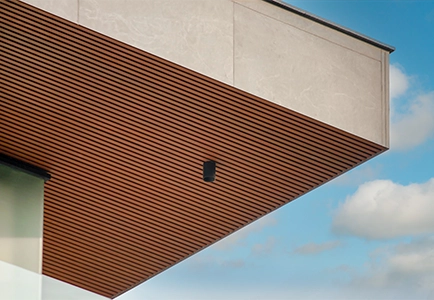
Why Facade Design Is More Than Just Aesthetic - The Role of Function, Climate, and Material
In the world of contemporary architecture, facade design is far more than a visual statement, it is a critical intersection of art, engineering, and environmental science. At Metaguise, this philosophy manifests through a dynamic portfolio of metal cladding solutions that transcend decorative appeal to deliver performance, sustainability, and contextual harmony.
15-05-25 | Behind the Design
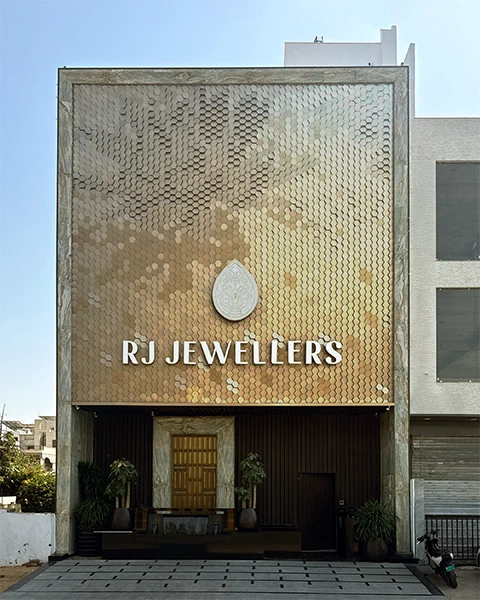
Your Facade is Your Brand: How Businesses Use Facades to Tell Their Story
In architecture, a facade is more than a face - it’s a voice. A building's elevation speaks volumesabout the brand it represents. At Metaguise, we don’t just clad buildings, we craft identities. Through metal, pattern, and parametric design, we help brands build a lasting first impression.
20-08-25 | Behind the Design
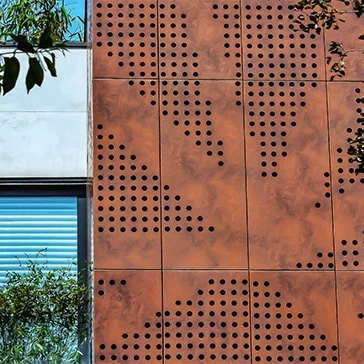
Beyond the Surface: The Emotional Intelligence of Architectural Materials
A philosophical take on how material textures — from MetaPatina’s evolving hues to MetaWood’s organic warmth — connect architecture with human emotion.
17-10-25 | Behind the Design
Social
Legal
Privacy Policy|Terms & Conditions