



MetaSurface Finish Guide: Choosing the Right Coating for Your Indian Climate
08-06-26 | Material Spotlight
Key Takeaways
• The finish on a metal facade is the primary defence against India's climate - UV radiation above 45°C in Rajasthan and NCR, monsoon humidity above 90% in coastal Mumbai and Kerala, salt air within 5km of India's coastlines, and industrial particulates in Delhi NCR. The wrong finish specification shows within 5 years. The right one lasts 25-50 years without repainting. • PVDF (polyvinylidene fluoride) coating is the global benchmark for architectural metal facades - its fluorine-carbon bond resists UV photodegradation that causes powder coat to chalk and fade on south and west-facing facades across India within 5-7 years. Metaguise specifies PVDF as the standard exterior finish across all MetaForm systems. • Anodised aluminium is the correct specification for coastal projects within 5km of the sea - Mumbai, Goa, Kochi, Chennai, Visakhapatnam - where salt-laden air attacks coating edges but cannot penetrate an integral anodic oxide layer. • MetaSurface special finishes - MetaWood, MetaCorten, MetaCopper, MetaPatina - translate traditional Indian material references into PVDF-coated aluminium substrates that perform for 25+ years without the maintenance burden of actual timber, weathering steel, or copper.
Why Finish Choice Is Critical: The Science of What Happens to Unprotected Metal in India
Metal corrodes. Aluminium oxidises. Every architectural coating exists to delay these processes - but in India's climate, delay is not enough. The finish on a facade panel must actively perform across UV radiation that bleaches painted surfaces in five years in Jaipur and Hyderabad, monsoon humidity that drives moisture into every unprotected coating edge in Mumbai and Kerala, salt air that accelerates electrochemical corrosion within eighteen months in coastal zones, and industrial particulates in Delhi NCR that permanently discolour porous surfaces without regular intervention. A facade finish that handles one of these threats while failing against another is not a premium specification - it is a liability that compounds with every season. Metaguise's MetaSurface finish range is engineered specifically for India's climate diversity - with PVDF as the benchmark exterior coating for inland projects, anodised aluminium for coastal applications, and the MetaSurface special finish range delivering design identity across every architectural brief from farmhouse retreats to corporate headquarters.
MetaSurface Finishes Explained: The Complete Range
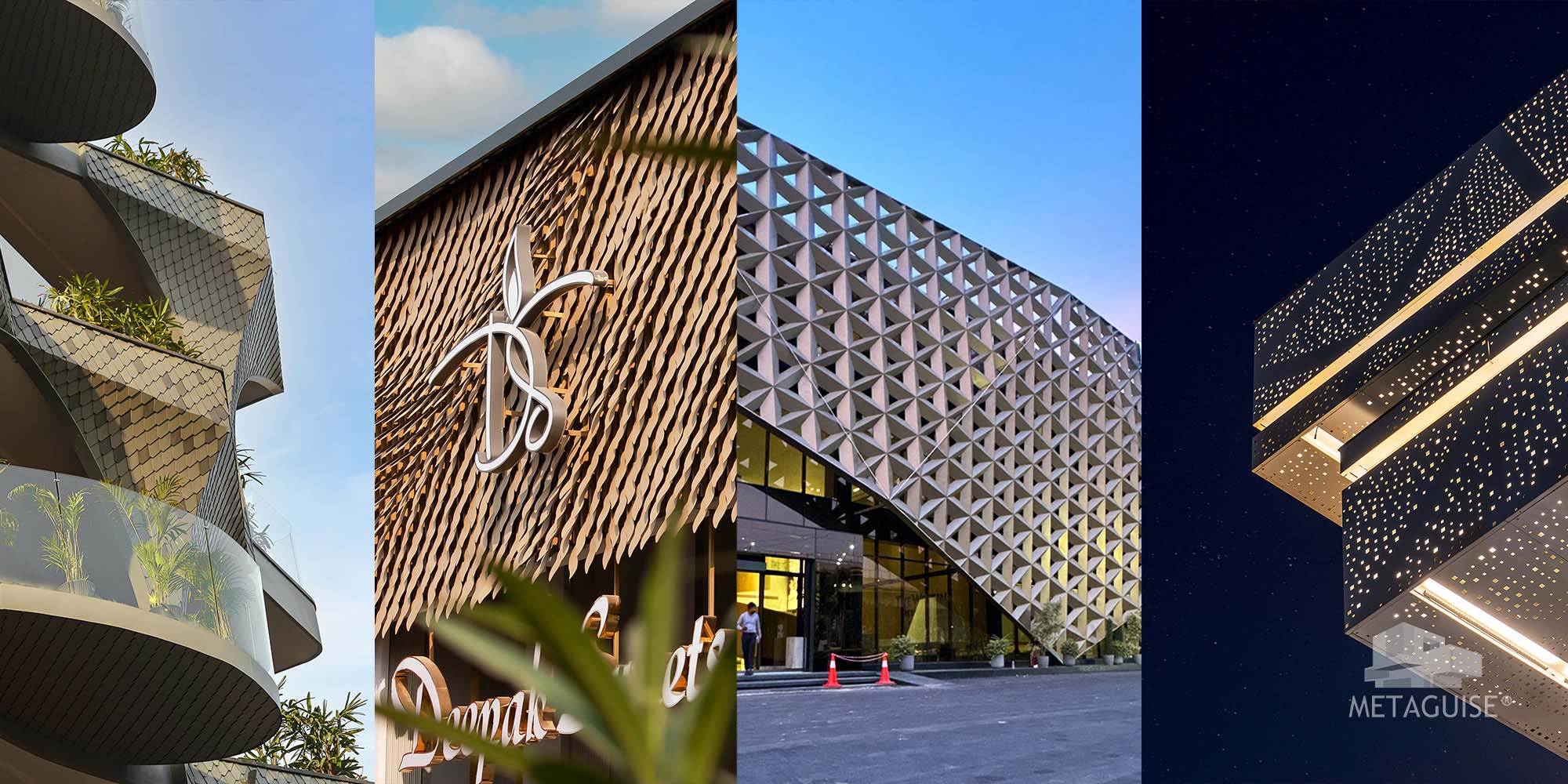
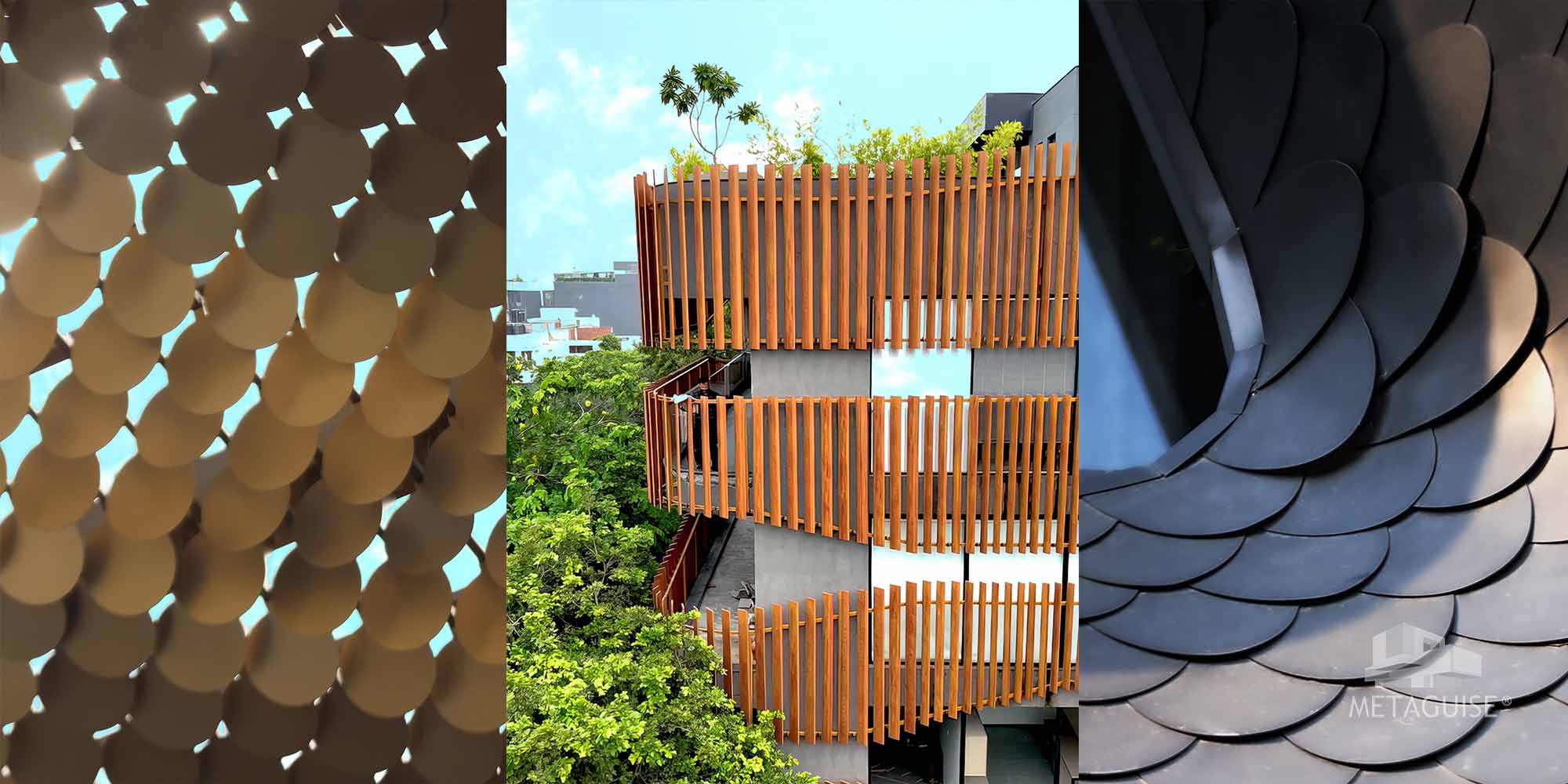
Metaguise's MetaSurface finish range spans four primary coating technologies - PVDF, powder coat, anodised, and special-effect finishes - each with specific performance characteristics, aesthetic properties, and application contexts. Understanding the distinction between these technologies is the foundation of any intelligent facade finish specification. PVDF (Polyvinylidene Fluoride) - The Premium Standard PVDF is the global benchmark for high-performance architectural metal coatings - the coating system specified on every premium building facade where long-term colour retention, UV resistance, and low maintenance are non-negotiable. The chemistry that makes PVDF exceptional is the fluorine-carbon bond - one of the strongest in organic chemistry. This bond is highly resistant to UV photodegradation, which means PVDF-coated surfaces retain their colour, gloss, and adhesion over decades of intense solar exposure without the chalking or colour shift that conventional paint systems exhibit. Metaguise applies PVDF to all MetaForm system panels - MetaFlute, MetaCassette, SolidPanel, MetaSequin, MetaCoin, and the full product range - as a factory-applied coating before panel fabrication. The PVDF is applied by coil-coating or spray application to the flat aluminium sheet, then cured at high temperature, before the sheet enters the fabrication process. This factory application ensures full coverage of all surfaces - including cut edges and fold lines - that would be exposed to the environment in a site-applied coating. Metaguise's PVDF finishes carry a 25-year colour retention warranty under standard Indian climatic conditions. Powder Coat - The Interior and Protected Application Standard Powder coat is a thermosetting polymer coating applied electrostatically to the panel surface and cured in an oven - producing a hard, smooth surface that is significantly more durable than liquid paint. Powder coat provides good UV resistance and weather protection for interior applications and exterior applications on protected or north-facing facades where UV exposure is limited. However, for south and west-facing exterior facades in India's high-UV climate zones - Delhi, Ahmedabad, Rajasthan, Hyderabad - powder coat's colour retention is materially inferior to PVDF over a 10-15 year horizon. Metaguise specifies powder coat primarily for interior metal cladding applications, protected exterior elements, and projects where the budget framework does not accommodate PVDF and the facade orientation reduces UV exposure to acceptable levels. Anodised Aluminium - The Coastal and High-Durability Standard Anodising is not a coating applied to the aluminium surface - it is an electrochemical process that converts the surface of the aluminium itself into a hard, integral aluminium oxide layer. This distinction matters profoundly for performance: because the anodic layer is part of the metal rather than applied to it, it cannot peel, chip, or delaminate. The anodic layer is transparent (allowing the metallic silver-grey of the aluminium to show through) or can be dyed before sealing to produce gold, bronze, black, and other metallic tones. The surface hardness of anodised aluminium is significantly greater than any applied coating - making it resistant to abrasion, scratching, and the aggressive cleaning agents that maintenance staff sometimes use on building facades. For facade applications within the salt-air influence zone of India's coastlines - Mumbai, Goa, Kochi, Chennai, Visakhapatnam - anodised aluminium is Metaguise's primary finish specification. Salt particles in coastal air attack the zinc and iron that coatings must protect against, but the integral aluminium oxide of an anodised surface has no susceptibility to the same electrochemical attack. For interior feature walls, premium retail environments, and any application where the highest surface quality and hardness are priorities, anodised finishes in natural, gold, bronze, or dark tones deliver a material quality that PVDF cannot replicate. MetaSurface Special Finishes - Design Identity in Material Form Beyond the technical performance of the primary coating technologies, MetaSurface includes a range of special finishes that translate specific material references - timber, weathered steel, aged copper, brushed metal - into PVDF-coated aluminium substrates. These finishes enable facade compositions that carry the warmth and cultural resonance of traditional Indian materials within the performance envelope of contemporary aluminium cladding. • MetaWood: Timber-grain PVDF - the visual warmth and grain texture of natural timber in a surface that does not warp, split, bleach, or require treatment in India's monsoon climate. Available in light oak, dark teak, warm walnut, and weathered driftwood tones. • MetaCorten: Weathering steel tone PVDF - the warm rust-orange-brown patina of oxidising iron, applied to aluminium substrates. Delivers the Corten aesthetic without Corten's coastal detailing constraints. Particularly suited for inland farmhouse, resort, and heritage-context projects. • MetaCopper: Copper-look PVDF - the warm rose-gold of polished copper, available in both fresh-copper and verdigris (MetaPatina) variants. Suited for boutique hospitality, jewellery retail, and luxury residential entrance features where precious metal reference is the architectural intent. • MetaGrey Brushed: Brushed directional texture in a warm mid-grey PVDF - the aesthetic of brushed stainless steel in a lightweight, non-rusting aluminium substrate. Particularly effective on commercial podium elevations and high-end retail facades. • MetaPatina: Aged verdigris green - the blue-green oxidised copper tone, applied to aluminium. Particularly effective on boutique hotel and cultural institution facades where the aged material reference creates a sense of architectural history and permanence.
PVDF vs Powder Coat vs Anodised: Head-to-Head Comparison
| Criterion | PVDF Coating | Powder Coat | Anodised |
|---|---|---|---|
| UV Resistance | Excellent - 25+ year colour retention in Indian UV; chemically bonded to substrate | Good - colour shift starts within 5–7 years on south/west exposures in India | Excellent - integral oxide layer; no coating to fade or peel |
| Salt Air / Coastal | Very Good - PVDF with sealed edges performs in coastal zones when specified correctly | Moderate - moisture ingress at chips or cuts leads to corrosion spread | Best-in-class - hard anodic oxide is inherently salt-air resistant; coastal-grade specification |
| Colour Range | Unlimited - any RAL, NCS, or custom reference; consistent batch-to-batch | Wide - standard RAL range; batch variation possible on large projects | Limited - silvers, golds, bronzes, and darks; no full-spectrum colour |
| Surface Hardness | High - resists abrasion, graffiti, and biological staining better than paint systems | Moderate - harder than liquid paint; chips under impact | Very High - hardest surface available; scratch and abrasion resistant |
| Maintenance | Annual cleaning only; no repainting or resealing over design life | Periodic repainting required, especially on sun-exposed elevations | Annual cleaning only; no recoating required |
| Fire Rating | Non-combustible aluminium substrate; A1 fire rating maintained | Non-combustible aluminium substrate; A1 fire rating maintained | Non-combustible aluminium substrate; A1 fire rating maintained |
| Best-Fit Application | Premium exterior facades across all Indian climate zones; the universal specification | Interior and protected exterior applications where budget is the primary constraint | Coastal facades, interior feature walls, high-traffic surfaces, premium metal accents |
Performance in Coastal, Hot, and Humid Zones: Which Finish for Which Climate
| Climate Zone | Primary Stressor | Recommended Finish | Avoid |
|---|---|---|---|
| Hot-Arid (Rajasthan, Gujarat, parts of Telangana) | Intense UV radiation; extreme thermal cycling; dust and particulate deposition | High-SRI PVDF in light colours (white, cream, warm grey) - maximum heat reflectance and UV stability | Dark powder coat on south/west faces - absorbs heat; fades under UV |
| Warm-Humid / Coastal (Goa, Kerala, coastal Tamil Nadu, Mumbai) | Salt-laden air; sustained monsoon humidity; biological growth on porous surfaces | Anodised aluminium - integral oxide layer, no coating edges for salt attack; or PVDF with coastal-grade sealed edges | Standard powder coat - moisture ingress at coating breaks leads to under-film corrosion |
| Composite (Delhi NCR, Pune, Bangalore, Hyderabad) | Extreme thermal cycling (near-0°C to 46°C); monsoon humidity; industrial particulates in NCR | PVDF across full colour range - dimensional stability and colour retention in both UV and particulate-heavy conditions | Uncoated or poorly sealed metal - particulate deposition discolours porous surfaces rapidly in NCR |
| High-Altitude / Hill Stations (Shimla, Mussoorie, Munnar, Ooty) | UV intensity increases with altitude; freeze-thaw cycling; persistent moisture and mist | PVDF or anodised - both resist UV at altitude and do not absorb moisture; freeze-thaw cycling does not affect aluminium substrates | Timber or painted masonry - moisture absorption and freeze-thaw cycling cause rapid deterioration |
MetaSurface Colour Palette Showcase: From Matte White to Aged Copper
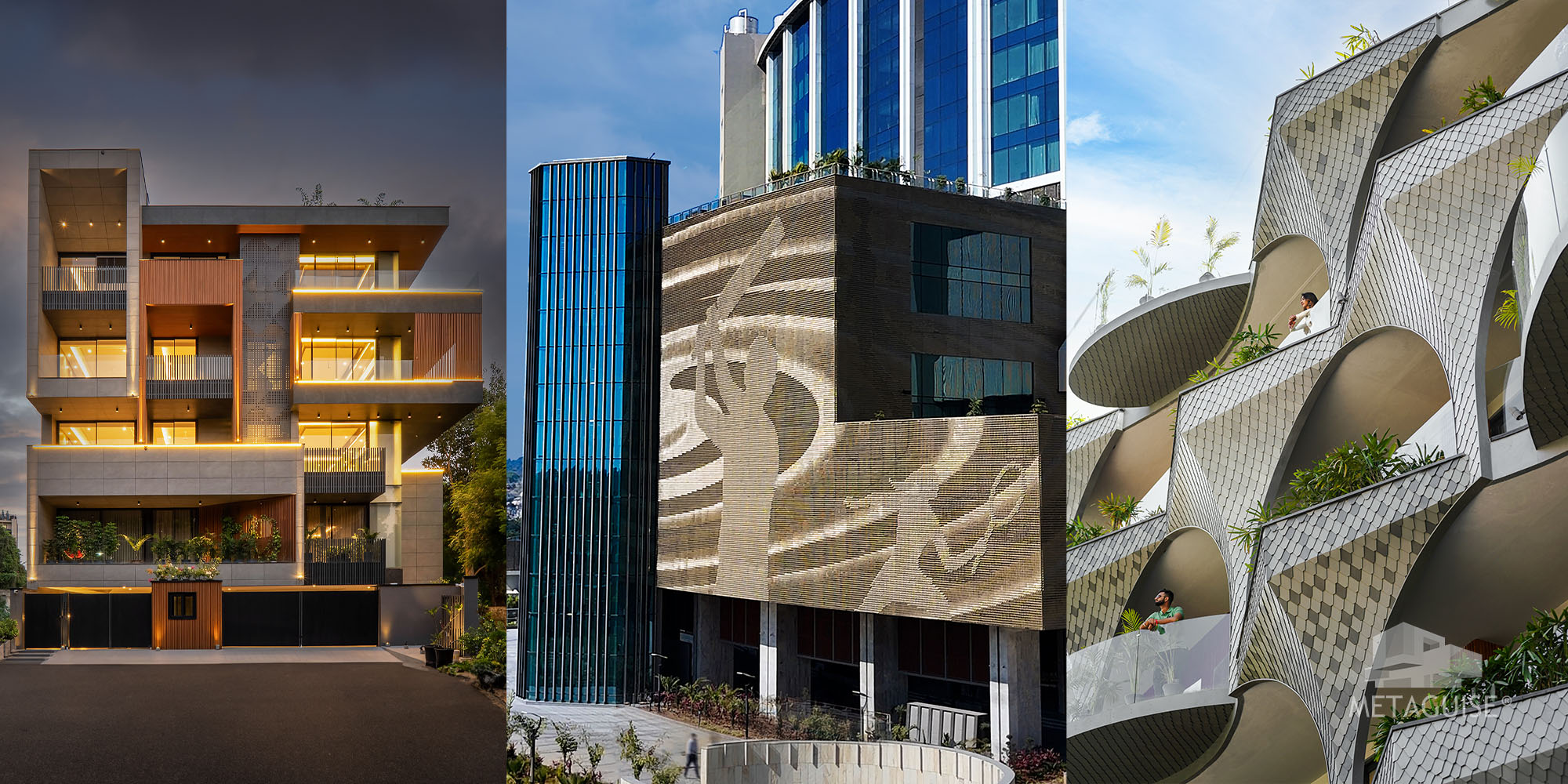
The MetaSurface colour palette is not a fixed catalogue - it is a design tool. Every colour in the standard PVDF and anodised range can be specified directly; any colour outside the standard range can be matched to a RAL or NCS reference on request. The following describes the palette families and the architectural contexts in which each reads most powerfully. Whites and Off-Whites: The Timeless Neutral Pure Matte White, Warm White (with a barely-there cream undertone), and Linen (a warm, pale off-white with subtle grey warmth) are collectively the most specified MetaSurface colours across India's premium residential and institutional market. These tones work in every Indian climate, at every building scale, and in every neighbourhood context - they do not date, do not clash with adjacent materials, and read as architecturally serious rather than decorative. On south and west-facing facades in high-UV zones, light-coloured PVDF also provides the highest Solar Reflectance Index of any opaque cladding colour - minimising solar heat absorption and reducing cooling loads. Greys: The Contemporary Premium Palette Warm Grey (Greige), Mid Architectural Grey, and Deep Charcoal constitute the contemporary premium palette across India's commercial and design-forward residential markets. Warm grey reads as refined without the starkness of pure white; mid grey reads as serious and urban without the visual intensity of charcoal; deep charcoal is the specification that makes buildings read as unambiguously designed. For commercial headquarters, premium retail, and luxury residential projects where the brief is architecturally authoritative rather than friendly or inviting, the grey palette is the default specification across Metaguise's most acclaimed recent projects. Warm Tones: Champagne, Bronze, Terracotta The warm tone palette - Champagne (a soft, warm gold-beige), Light Bronze (a warm brown-gold with metallic depth), and Terracotta (a warm red-earth tone that references India's traditional ceramic roofing tradition) - is increasingly specified on luxury residential and resort projects where the design brief calls for warmth and material richness rather than cool precision. Champagne PVDF on a MetaFlute residential facade reads as quietly prestigious from across the road; Terracotta MetaShingles on a farmhouse boundary wall reads as deeply contextual to the Indian landscape. These tones pair naturally with natural stone plinths, warm timber soffits, and lush garden planting. Special Effect Finishes: MetaWood, MetaCorten, MetaCopper The special effect finishes - described in detail in Section 2 - constitute a design palette that no standard PVDF or anodised range can replicate. MetaWood in dark teak on a residential entrance tower; MetaCorten in rust-orange on a Rajasthan farmhouse boundary wall; MetaCopper in rose-gold on a jewellery retail flagship - each creates an architectural identity that is inseparable from its material reference. These finishes are specified when the design brief demands not just a colour but a material story - when the facade is meant to evoke something specific about craft, time, landscape, or cultural identity. Custom RAL and NCS Matching For architects and clients who require a specific project colour - a brand colour for a retail flagship, a colour derived from a site-specific reference, or a shade that precisely matches another element of the building's material palette - MetaSurface PVDF is available in any RAL or NCS reference. Custom colour PVDF specifications require a minimum batch quantity (discussed at the design consultation stage) and a lead time typically two to three weeks longer than standard colour specifications. Physical colour reference panels are produced and approved before full production begins.
How to Order a Custom MetaSurface Finish
Ordering a custom MetaSurface finish is a straightforward process that Metaguise manages entirely in-house - from colour specification through production, QA, and delivery. The following describes the process. Step 1: Colour and Finish Direction At the design consultation stage, the client or architect provides a finish direction - either a specific RAL or NCS reference, a material reference (a timber tone, a stone colour, a metal reference), or a general palette direction (warm white, warm grey, champagne, etc.). For MetaSurface standard colours, physical sample panels are dispatched within one to two weeks. For custom colour specifications, a colour-match sample is produced and dispatched for approval before production begins. Step 2: Physical Sample Approval MetaSurface physical samples - typically 300mm × 300mm panels of the specified system in the proposed finish - are produced and dispatched to the client and architect for approval. Physical samples are essential for PVDF finish specification: the appearance of PVDF in different light conditions (daylight, shade, artificial light) differs significantly from how it reads on screen. Samples can be assessed in the actual light conditions of the project site before any fabrication commitment is made. Step 3: Finish Specification Lock-In Following physical sample approval, the finish specification is locked into the production order - the coating reference, batch specification, and approved sample become the quality standard against which every panel produced for the project is measured. For large projects involving thousands of square feet of facade panels, Metaguise's QA process includes colour consistency checking across the full production run, ensuring that the first panel installed and the last panel installed are visually identical. Step 4: Production, QA, and Delivery Panels are produced, finished, and QA-inspected in Metaguise's in-house facility before packaging and delivery to site. For special-effect finishes (MetaWood, MetaCorten, MetaCopper), the finish application includes both the base PVDF colour and the effect coating layer - each requiring separate quality inspection. Metaguise retains a reference panel from every production run, allowing any on-site finish discrepancy to be assessed against the original production standard.
Frequently Asked Questions
1.What is the difference between PVDF and powder coat - and why does it matter for Indian facades?
The fundamental difference is in the chemistry and how that chemistry responds to UV radiation. Powder coat is a thermosetting polymer - its organic binder is susceptible to UV photodegradation, which causes chalking and colour shift on south and west-facing facades in India's high-UV climate within five to seven years. PVDF (polyvinylidene fluoride) is a fluoropolymer - the fluorine-carbon bond at the heart of its chemistry is among the most UV-stable in organic chemistry, which is why PVDF maintains colour and gloss for more than twenty-five years in the same conditions that degrade powder coat. For exterior facades in India, PVDF is the correct specification wherever long-term colour retention is required. Powder coat is appropriate for interior applications and protected exterior elements where UV exposure is limited.2.I want a timber-look facade but I've been told timber doesn't last in India - what are my options?
MetaWood is the direct answer to this brief. It is a PVDF coating with a precisely rendered timber grain texture and colour applied to solid aluminium panels - delivering the visual warmth and grain character of natural timber in a substrate that does not warp, split, bleach, or require annual oiling in India's monsoon climate. MetaWood is available in a range of timber tones - from light oak to dark teak to weathered driftwood - and can be specified on any MetaFlute, MetaCassette, or SolidPanel system. The result is a facade that reads as timber from the street - warm, organic, and materially rich - with a 25-year finish warranty and zero maintenance beyond annual cleaning.3.Can I specify a colour that exactly matches my brand's corporate colour?
Yes. MetaSurface PVDF is available in any RAL or NCS colour reference - including Pantone references that can be cross-matched to the nearest PVDF-compatible equivalent. Custom colour specifications are regularly produced for corporate headquarters, retail flagships, and hospitality brands where facade colour is part of a defined brand identity. Metaguise produces physical colour-match samples for client approval before any production begins, ensuring that the installed facade matches the approved reference precisely. Contact Metaguise's specification team with your RAL, NCS, or Pantone reference to initiate the custom colour process.4.How do I know which MetaSurface finish is right for my specific building and location?
The decision matrix is straightforward once you know the building's location, facade orientation, and design intent. For inland projects in NCR, Ahmedabad, Rajasthan, Hyderabad, Bangalore, and Pune - PVDF across the full MetaSurface colour range, with high-SRI light colours recommended for south and west-facing facades in hot-arid zones. For coastal projects within five kilometres of the sea - anodised aluminium, or PVDF with coastal-grade sealed edge detailing. For any project where a special material reference (timber, weathered steel, copper) is the design intent - the MetaSurface special finish range. Metaguise's design team provides a finish recommendation as part of every project consultation, taking into account the project's specific site, orientation, climate zone, and design brief. Contact Metaguise to begin the conversation.08-06-26 | Material Spotlight
Key Takeaways
• The finish on a metal facade is the primary defence against India's climate - UV radiation above 45°C in Rajasthan and NCR, monsoon humidity above 90% in coastal Mumbai and Kerala, salt air within 5km of India's coastlines, and industrial particulates in Delhi NCR. The wrong finish specification shows within 5 years. The right one lasts 25-50 years without repainting. • PVDF (polyvinylidene fluoride) coating is the global benchmark for architectural metal facades - its fluorine-carbon bond resists UV photodegradation that causes powder coat to chalk and fade on south and west-facing facades across India within 5-7 years. Metaguise specifies PVDF as the standard exterior finish across all MetaForm systems. • Anodised aluminium is the correct specification for coastal projects within 5km of the sea - Mumbai, Goa, Kochi, Chennai, Visakhapatnam - where salt-laden air attacks coating edges but cannot penetrate an integral anodic oxide layer. • MetaSurface special finishes - MetaWood, MetaCorten, MetaCopper, MetaPatina - translate traditional Indian material references into PVDF-coated aluminium substrates that perform for 25+ years without the maintenance burden of actual timber, weathering steel, or copper.
Why Finish Choice Is Critical: The Science of What Happens to Unprotected Metal in India
Metal corrodes. Aluminium oxidises. Every architectural coating exists to delay these processes - but in India's climate, delay is not enough. The finish on a facade panel must actively perform across UV radiation that bleaches painted surfaces in five years in Jaipur and Hyderabad, monsoon humidity that drives moisture into every unprotected coating edge in Mumbai and Kerala, salt air that accelerates electrochemical corrosion within eighteen months in coastal zones, and industrial particulates in Delhi NCR that permanently discolour porous surfaces without regular intervention. A facade finish that handles one of these threats while failing against another is not a premium specification - it is a liability that compounds with every season. Metaguise's MetaSurface finish range is engineered specifically for India's climate diversity - with PVDF as the benchmark exterior coating for inland projects, anodised aluminium for coastal applications, and the MetaSurface special finish range delivering design identity across every architectural brief from farmhouse retreats to corporate headquarters.
MetaSurface Finishes Explained: The Complete Range
Metaguise's MetaSurface finish range spans four primary coating technologies - PVDF, powder coat, anodised, and special-effect finishes - each with specific performance characteristics, aesthetic properties, and application contexts. Understanding the distinction between these technologies is the foundation of any intelligent facade finish specification. PVDF (Polyvinylidene Fluoride) - The Premium Standard PVDF is the global benchmark for high-performance architectural metal coatings - the coating system specified on every premium building facade where long-term colour retention, UV resistance, and low maintenance are non-negotiable. The chemistry that makes PVDF exceptional is the fluorine-carbon bond - one of the strongest in organic chemistry. This bond is highly resistant to UV photodegradation, which means PVDF-coated surfaces retain their colour, gloss, and adhesion over decades of intense solar exposure without the chalking or colour shift that conventional paint systems exhibit. Metaguise applies PVDF to all MetaForm system panels - MetaFlute, MetaCassette, SolidPanel, MetaSequin, MetaCoin, and the full product range - as a factory-applied coating before panel fabrication. The PVDF is applied by coil-coating or spray application to the flat aluminium sheet, then cured at high temperature, before the sheet enters the fabrication process. This factory application ensures full coverage of all surfaces - including cut edges and fold lines - that would be exposed to the environment in a site-applied coating. Metaguise's PVDF finishes carry a 25-year colour retention warranty under standard Indian climatic conditions. Powder Coat - The Interior and Protected Application Standard Powder coat is a thermosetting polymer coating applied electrostatically to the panel surface and cured in an oven - producing a hard, smooth surface that is significantly more durable than liquid paint. Powder coat provides good UV resistance and weather protection for interior applications and exterior applications on protected or north-facing facades where UV exposure is limited. However, for south and west-facing exterior facades in India's high-UV climate zones - Delhi, Ahmedabad, Rajasthan, Hyderabad - powder coat's colour retention is materially inferior to PVDF over a 10-15 year horizon. Metaguise specifies powder coat primarily for interior metal cladding applications, protected exterior elements, and projects where the budget framework does not accommodate PVDF and the facade orientation reduces UV exposure to acceptable levels. Anodised Aluminium - The Coastal and High-Durability Standard Anodising is not a coating applied to the aluminium surface - it is an electrochemical process that converts the surface of the aluminium itself into a hard, integral aluminium oxide layer. This distinction matters profoundly for performance: because the anodic layer is part of the metal rather than applied to it, it cannot peel, chip, or delaminate. The anodic layer is transparent (allowing the metallic silver-grey of the aluminium to show through) or can be dyed before sealing to produce gold, bronze, black, and other metallic tones. The surface hardness of anodised aluminium is significantly greater than any applied coating - making it resistant to abrasion, scratching, and the aggressive cleaning agents that maintenance staff sometimes use on building facades. For facade applications within the salt-air influence zone of India's coastlines - Mumbai, Goa, Kochi, Chennai, Visakhapatnam - anodised aluminium is Metaguise's primary finish specification. Salt particles in coastal air attack the zinc and iron that coatings must protect against, but the integral aluminium oxide of an anodised surface has no susceptibility to the same electrochemical attack. For interior feature walls, premium retail environments, and any application where the highest surface quality and hardness are priorities, anodised finishes in natural, gold, bronze, or dark tones deliver a material quality that PVDF cannot replicate. MetaSurface Special Finishes - Design Identity in Material Form Beyond the technical performance of the primary coating technologies, MetaSurface includes a range of special finishes that translate specific material references - timber, weathered steel, aged copper, brushed metal - into PVDF-coated aluminium substrates. These finishes enable facade compositions that carry the warmth and cultural resonance of traditional Indian materials within the performance envelope of contemporary aluminium cladding. • MetaWood: Timber-grain PVDF - the visual warmth and grain texture of natural timber in a surface that does not warp, split, bleach, or require treatment in India's monsoon climate. Available in light oak, dark teak, warm walnut, and weathered driftwood tones. • MetaCorten: Weathering steel tone PVDF - the warm rust-orange-brown patina of oxidising iron, applied to aluminium substrates. Delivers the Corten aesthetic without Corten's coastal detailing constraints. Particularly suited for inland farmhouse, resort, and heritage-context projects. • MetaCopper: Copper-look PVDF - the warm rose-gold of polished copper, available in both fresh-copper and verdigris (MetaPatina) variants. Suited for boutique hospitality, jewellery retail, and luxury residential entrance features where precious metal reference is the architectural intent. • MetaGrey Brushed: Brushed directional texture in a warm mid-grey PVDF - the aesthetic of brushed stainless steel in a lightweight, non-rusting aluminium substrate. Particularly effective on commercial podium elevations and high-end retail facades. • MetaPatina: Aged verdigris green - the blue-green oxidised copper tone, applied to aluminium. Particularly effective on boutique hotel and cultural institution facades where the aged material reference creates a sense of architectural history and permanence.
PVDF vs Powder Coat vs Anodised: Head-to-Head Comparison
| Criterion | PVDF Coating | Powder Coat | Anodised |
|---|---|---|---|
| UV Resistance | Excellent - 25+ year colour retention in Indian UV; chemically bonded to substrate | Good - colour shift starts within 5–7 years on south/west exposures in India | Excellent - integral oxide layer; no coating to fade or peel |
| Salt Air / Coastal | Very Good - PVDF with sealed edges performs in coastal zones when specified correctly | Moderate - moisture ingress at chips or cuts leads to corrosion spread | Best-in-class - hard anodic oxide is inherently salt-air resistant; coastal-grade specification |
| Colour Range | Unlimited - any RAL, NCS, or custom reference; consistent batch-to-batch | Wide - standard RAL range; batch variation possible on large projects | Limited - silvers, golds, bronzes, and darks; no full-spectrum colour |
| Surface Hardness | High - resists abrasion, graffiti, and biological staining better than paint systems | Moderate - harder than liquid paint; chips under impact | Very High - hardest surface available; scratch and abrasion resistant |
| Maintenance | Annual cleaning only; no repainting or resealing over design life | Periodic repainting required, especially on sun-exposed elevations | Annual cleaning only; no recoating required |
| Fire Rating | Non-combustible aluminium substrate; A1 fire rating maintained | Non-combustible aluminium substrate; A1 fire rating maintained | Non-combustible aluminium substrate; A1 fire rating maintained |
| Best-Fit Application | Premium exterior facades across all Indian climate zones; the universal specification | Interior and protected exterior applications where budget is the primary constraint | Coastal facades, interior feature walls, high-traffic surfaces, premium metal accents |
Performance in Coastal, Hot, and Humid Zones: Which Finish for Which Climate
| Climate Zone | Primary Stressor | Recommended Finish | Avoid |
|---|---|---|---|
| Hot-Arid (Rajasthan, Gujarat, parts of Telangana) | Intense UV radiation; extreme thermal cycling; dust and particulate deposition | High-SRI PVDF in light colours (white, cream, warm grey) - maximum heat reflectance and UV stability | Dark powder coat on south/west faces - absorbs heat; fades under UV |
| Warm-Humid / Coastal (Goa, Kerala, coastal Tamil Nadu, Mumbai) | Salt-laden air; sustained monsoon humidity; biological growth on porous surfaces | Anodised aluminium - integral oxide layer, no coating edges for salt attack; or PVDF with coastal-grade sealed edges | Standard powder coat - moisture ingress at coating breaks leads to under-film corrosion |
| Composite (Delhi NCR, Pune, Bangalore, Hyderabad) | Extreme thermal cycling (near-0°C to 46°C); monsoon humidity; industrial particulates in NCR | PVDF across full colour range - dimensional stability and colour retention in both UV and particulate-heavy conditions | Uncoated or poorly sealed metal - particulate deposition discolours porous surfaces rapidly in NCR |
| High-Altitude / Hill Stations (Shimla, Mussoorie, Munnar, Ooty) | UV intensity increases with altitude; freeze-thaw cycling; persistent moisture and mist | PVDF or anodised - both resist UV at altitude and do not absorb moisture; freeze-thaw cycling does not affect aluminium substrates | Timber or painted masonry - moisture absorption and freeze-thaw cycling cause rapid deterioration |
MetaSurface Colour Palette Showcase: From Matte White to Aged Copper
The MetaSurface colour palette is not a fixed catalogue - it is a design tool. Every colour in the standard PVDF and anodised range can be specified directly; any colour outside the standard range can be matched to a RAL or NCS reference on request. The following describes the palette families and the architectural contexts in which each reads most powerfully. Whites and Off-Whites: The Timeless Neutral Pure Matte White, Warm White (with a barely-there cream undertone), and Linen (a warm, pale off-white with subtle grey warmth) are collectively the most specified MetaSurface colours across India's premium residential and institutional market. These tones work in every Indian climate, at every building scale, and in every neighbourhood context - they do not date, do not clash with adjacent materials, and read as architecturally serious rather than decorative. On south and west-facing facades in high-UV zones, light-coloured PVDF also provides the highest Solar Reflectance Index of any opaque cladding colour - minimising solar heat absorption and reducing cooling loads. Greys: The Contemporary Premium Palette Warm Grey (Greige), Mid Architectural Grey, and Deep Charcoal constitute the contemporary premium palette across India's commercial and design-forward residential markets. Warm grey reads as refined without the starkness of pure white; mid grey reads as serious and urban without the visual intensity of charcoal; deep charcoal is the specification that makes buildings read as unambiguously designed. For commercial headquarters, premium retail, and luxury residential projects where the brief is architecturally authoritative rather than friendly or inviting, the grey palette is the default specification across Metaguise's most acclaimed recent projects. Warm Tones: Champagne, Bronze, Terracotta The warm tone palette - Champagne (a soft, warm gold-beige), Light Bronze (a warm brown-gold with metallic depth), and Terracotta (a warm red-earth tone that references India's traditional ceramic roofing tradition) - is increasingly specified on luxury residential and resort projects where the design brief calls for warmth and material richness rather than cool precision. Champagne PVDF on a MetaFlute residential facade reads as quietly prestigious from across the road; Terracotta MetaShingles on a farmhouse boundary wall reads as deeply contextual to the Indian landscape. These tones pair naturally with natural stone plinths, warm timber soffits, and lush garden planting. Special Effect Finishes: MetaWood, MetaCorten, MetaCopper The special effect finishes - described in detail in Section 2 - constitute a design palette that no standard PVDF or anodised range can replicate. MetaWood in dark teak on a residential entrance tower; MetaCorten in rust-orange on a Rajasthan farmhouse boundary wall; MetaCopper in rose-gold on a jewellery retail flagship - each creates an architectural identity that is inseparable from its material reference. These finishes are specified when the design brief demands not just a colour but a material story - when the facade is meant to evoke something specific about craft, time, landscape, or cultural identity. Custom RAL and NCS Matching For architects and clients who require a specific project colour - a brand colour for a retail flagship, a colour derived from a site-specific reference, or a shade that precisely matches another element of the building's material palette - MetaSurface PVDF is available in any RAL or NCS reference. Custom colour PVDF specifications require a minimum batch quantity (discussed at the design consultation stage) and a lead time typically two to three weeks longer than standard colour specifications. Physical colour reference panels are produced and approved before full production begins.
How to Order a Custom MetaSurface Finish
Ordering a custom MetaSurface finish is a straightforward process that Metaguise manages entirely in-house - from colour specification through production, QA, and delivery. The following describes the process. Step 1: Colour and Finish Direction At the design consultation stage, the client or architect provides a finish direction - either a specific RAL or NCS reference, a material reference (a timber tone, a stone colour, a metal reference), or a general palette direction (warm white, warm grey, champagne, etc.). For MetaSurface standard colours, physical sample panels are dispatched within one to two weeks. For custom colour specifications, a colour-match sample is produced and dispatched for approval before production begins. Step 2: Physical Sample Approval MetaSurface physical samples - typically 300mm × 300mm panels of the specified system in the proposed finish - are produced and dispatched to the client and architect for approval. Physical samples are essential for PVDF finish specification: the appearance of PVDF in different light conditions (daylight, shade, artificial light) differs significantly from how it reads on screen. Samples can be assessed in the actual light conditions of the project site before any fabrication commitment is made. Step 3: Finish Specification Lock-In Following physical sample approval, the finish specification is locked into the production order - the coating reference, batch specification, and approved sample become the quality standard against which every panel produced for the project is measured. For large projects involving thousands of square feet of facade panels, Metaguise's QA process includes colour consistency checking across the full production run, ensuring that the first panel installed and the last panel installed are visually identical. Step 4: Production, QA, and Delivery Panels are produced, finished, and QA-inspected in Metaguise's in-house facility before packaging and delivery to site. For special-effect finishes (MetaWood, MetaCorten, MetaCopper), the finish application includes both the base PVDF colour and the effect coating layer - each requiring separate quality inspection. Metaguise retains a reference panel from every production run, allowing any on-site finish discrepancy to be assessed against the original production standard.
Frequently Asked Questions
1.What is the difference between PVDF and powder coat - and why does it matter for Indian facades?
The fundamental difference is in the chemistry and how that chemistry responds to UV radiation. Powder coat is a thermosetting polymer - its organic binder is susceptible to UV photodegradation, which causes chalking and colour shift on south and west-facing facades in India's high-UV climate within five to seven years. PVDF (polyvinylidene fluoride) is a fluoropolymer - the fluorine-carbon bond at the heart of its chemistry is among the most UV-stable in organic chemistry, which is why PVDF maintains colour and gloss for more than twenty-five years in the same conditions that degrade powder coat. For exterior facades in India, PVDF is the correct specification wherever long-term colour retention is required. Powder coat is appropriate for interior applications and protected exterior elements where UV exposure is limited.2.I want a timber-look facade but I've been told timber doesn't last in India - what are my options?
MetaWood is the direct answer to this brief. It is a PVDF coating with a precisely rendered timber grain texture and colour applied to solid aluminium panels - delivering the visual warmth and grain character of natural timber in a substrate that does not warp, split, bleach, or require annual oiling in India's monsoon climate. MetaWood is available in a range of timber tones - from light oak to dark teak to weathered driftwood - and can be specified on any MetaFlute, MetaCassette, or SolidPanel system. The result is a facade that reads as timber from the street - warm, organic, and materially rich - with a 25-year finish warranty and zero maintenance beyond annual cleaning.3.Can I specify a colour that exactly matches my brand's corporate colour?
Yes. MetaSurface PVDF is available in any RAL or NCS colour reference - including Pantone references that can be cross-matched to the nearest PVDF-compatible equivalent. Custom colour specifications are regularly produced for corporate headquarters, retail flagships, and hospitality brands where facade colour is part of a defined brand identity. Metaguise produces physical colour-match samples for client approval before any production begins, ensuring that the installed facade matches the approved reference precisely. Contact Metaguise's specification team with your RAL, NCS, or Pantone reference to initiate the custom colour process.4.How do I know which MetaSurface finish is right for my specific building and location?
The decision matrix is straightforward once you know the building's location, facade orientation, and design intent. For inland projects in NCR, Ahmedabad, Rajasthan, Hyderabad, Bangalore, and Pune - PVDF across the full MetaSurface colour range, with high-SRI light colours recommended for south and west-facing facades in hot-arid zones. For coastal projects within five kilometres of the sea - anodised aluminium, or PVDF with coastal-grade sealed edge detailing. For any project where a special material reference (timber, weathered steel, copper) is the design intent - the MetaSurface special finish range. Metaguise's design team provides a finish recommendation as part of every project consultation, taking into account the project's specific site, orientation, climate zone, and design brief. Contact Metaguise to begin the conversation.Related Articles
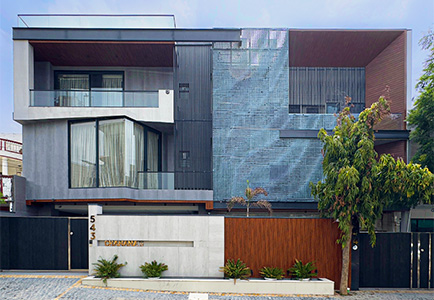
Living, Breathing Facades: The Science and Soul of MetaPatina
There’s something poetic about materials that age with grace. That shift color with time, deepen with exposure, and reveal new layers of beauty as they weather. MetaPatina, our living metal facade surface, is a tribute to that very idea - a facade that doesn’t just protect a building, but brings it to life...
06-04-25 | Material Spotlight
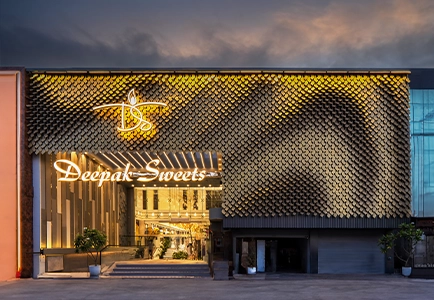
5 Reasons to Choose MetaSequin for Your Facade
At Metaguise, we believe the facade of a building isn’t just its outer layer - it’s its identity. And in today’s design landscape
10-11-25 | Material Spotlight
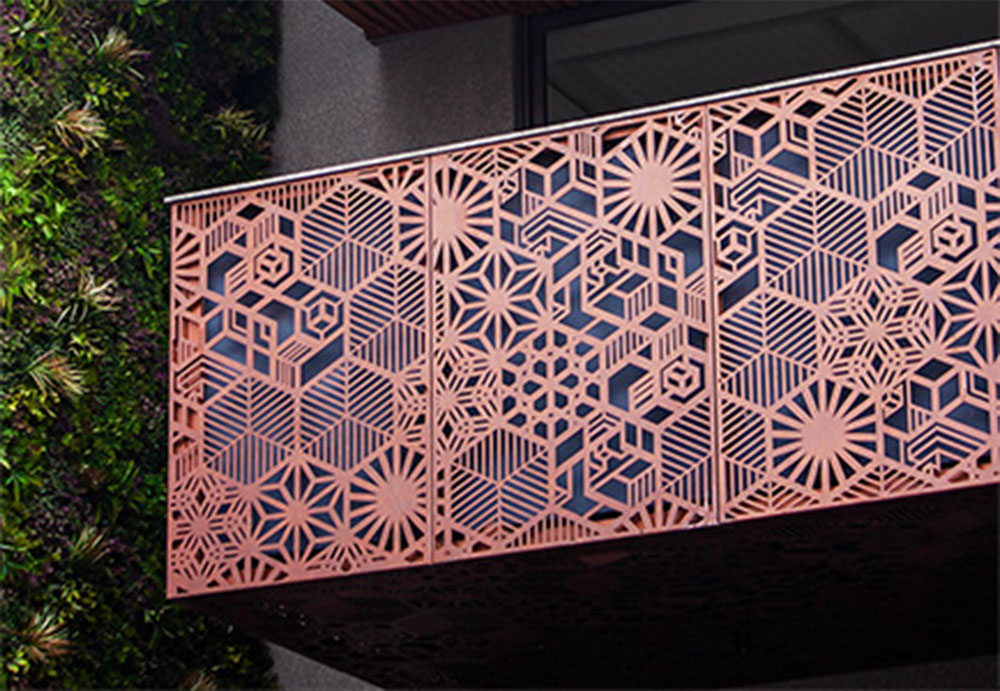
The Power of Perforation: Breathing Life, Light & Luxury into Metal Facades
At Metaguise, we believe the facade of a building isn’t just its outer layer - it’s its identity. And in today’s design landscape
17-11-25 | Material Spotlight
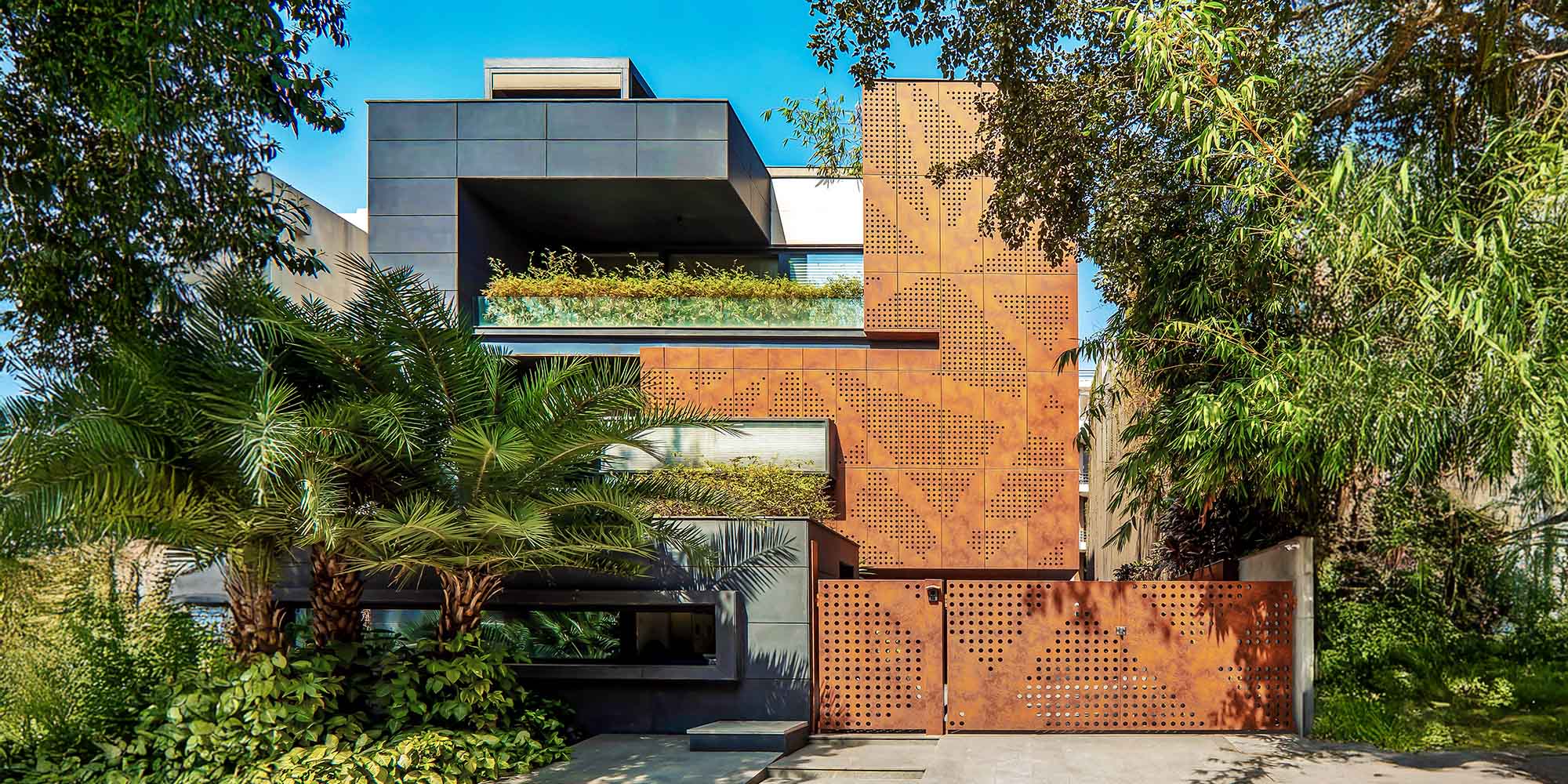
Perforated Metal Facade panels in 2026: Benefits, Design uses & Architectural Guide
Perforated metal facade panels are architectural cladding systems made from aluminium or steel sheets with precision-cut patterns.
09-12-25 | Material Spotlight
Social
Legal
Privacy Policy|Terms & Conditions