



Metal Facade Cladding Cost in India: A 2026 Price Guide by Material and Project Type
10-08-26 | Industry Trends
Metal facade cladding cost is one of the first questions every client asks, and one of the hardest to answer with a single number, since the price depends on material, system type, project scale and finish, all decided at the design stage. This guide covers what actually moves the number for standard, non-kinetic metal cladding, so you know what to expect before requesting quotes. If your project involves moving elements, our separate guide to kinetic facade pricing covers those specific cost drivers instead.
The material you choose sets the baseline
Aluminium is the most cost-effective option for large-scale cladding coverage, combining lower raw material cost with lighter weight that also reduces substructure requirements. It’s the default starting point for most commercial and residential facade budgets. Corten steel, used in our MetaCorten range, sits above standard aluminium cladding in cost, reflecting both the material itself and the specific weathering performance it’s chosen for. Copper, covered in detail in our guide to copper facade cladding, is generally the most expensive of the common facade metals, driven largely by raw material pricing rather than fabrication complexity.
System type changes the price as much as material does
Flat solid panels, like our SolidPanel range, are the most economical cladding format, since fabrication is straightforward and installation is relatively simple compared to textured or parametric systems. Perforated panels cost somewhat more than solid panels of the same material, since perforation adds a manufacturing step, with the exact increase depending on hole density and pattern complexity. Parametric and textured systems, such as Cascading Keys or Meta Coin, cost more than flat cladding primarily based on how many unique panel types the design requires, not just the total covered area. A design using a small number of repeating module types is meaningfully more economical than one using continuous unique variation, even at the same total square footage.
Finish is a real cost lever, not a minor detail
Standard powder coating is the most economical finish option and performs well for most standard applications. Anodised finishes cost more but offer better long-term colour stability. PVDF coatings sit at the top of the finish cost range, offering the strongest resistance to UV fading and weathering, which matters most on facades expected to hold their appearance for fifteen to twenty years without needing repainting.
What’s actually included in a proper quote
A complete metal facade cladding quote should include design and engineering, fabrication, the substructure, installation and site supervision, and a stated warranty. Quotes that only cover panels and delivery, without installation or structural engineering, will look cheaper on paper but leave major costs to be added later as the project proceeds. This is the single most common reason two quotes for the “same” facade look wildly different.
Project scale affects per-unit pricing
Larger projects generally achieve better per-square-foot pricing than small ones, since fixed costs like design and tooling get spread across more coverage area. This is worth keeping in mind when comparing a quote for a small residential elevation against a benchmark price you may have seen quoted for a large commercial project, since they’re not directly comparable even using the same material and system.
City and logistics matter more than most clients expect
Where the project is located affects transport and installation logistics cost, particularly for cities further from major fabrication hubs. We’ve covered this specifically for South Indian cities in our guide to facade contractors in Chennai, Coimbatore, Madurai, Trichy, Vellore and Pondicherry, where logistics planning is a real part of an honest quote.
A realistic way to get an accurate number
Any facade company that quotes a flat per-square-foot price without seeing your elevation drawings is estimating, not quoting. A genuine quote requires your building’s basic dimensions, orientation, target material and finish, and system type, at minimum, before a facade partner can give you a scoped, defensible number rather than a placeholder figure that changes significantly once design begins.
Frequently Asked Questions
1.What’s the cheapest metal facade cladding option?
Flat solid aluminium panels with a standard powder coat finish are generally the most economical metal cladding option for large-scale coverage, balancing material and fabrication cost.2.Why do parametric facade quotes vary so much between projects of similar size?
Parametric pricing depends heavily on how many unique panel types the design requires, not just total coverage area, so two projects of the same size can have very different costs based on pattern complexity alone.3.Does the finish really make a big difference to facade cladding cost?
Yes, finish type is a genuine cost lever. PVDF and anodised finishes cost more than standard powder coating but offer significantly better long-term colour stability and weathering resistance.4.Should a facade cladding quote include installation?
Yes, a complete quote should include design, engineering, fabrication, substructure, installation and warranty. Quotes covering only panels and delivery will look cheaper but leave major costs to be added later.5.Does project location affect facade cladding cost?
Yes, transport and installation logistics vary by city, particularly for locations further from major fabrication hubs, and a proper quote should account for this rather than applying a flat national rate.Get an accurate quote for your project
If you have elevation drawings, even preliminary ones, share your project brief with our team and we’ll return a scoped quote based on your building’s actual specifications rather than a generic estimate.
10-08-26 | Industry Trends
Metal facade cladding cost is one of the first questions every client asks, and one of the hardest to answer with a single number, since the price depends on material, system type, project scale and finish, all decided at the design stage. This guide covers what actually moves the number for standard, non-kinetic metal cladding, so you know what to expect before requesting quotes. If your project involves moving elements, our separate guide to kinetic facade pricing covers those specific cost drivers instead.
The material you choose sets the baseline
Aluminium is the most cost-effective option for large-scale cladding coverage, combining lower raw material cost with lighter weight that also reduces substructure requirements. It’s the default starting point for most commercial and residential facade budgets. Corten steel, used in our MetaCorten range, sits above standard aluminium cladding in cost, reflecting both the material itself and the specific weathering performance it’s chosen for. Copper, covered in detail in our guide to copper facade cladding, is generally the most expensive of the common facade metals, driven largely by raw material pricing rather than fabrication complexity.
System type changes the price as much as material does
Flat solid panels, like our SolidPanel range, are the most economical cladding format, since fabrication is straightforward and installation is relatively simple compared to textured or parametric systems. Perforated panels cost somewhat more than solid panels of the same material, since perforation adds a manufacturing step, with the exact increase depending on hole density and pattern complexity. Parametric and textured systems, such as Cascading Keys or Meta Coin, cost more than flat cladding primarily based on how many unique panel types the design requires, not just the total covered area. A design using a small number of repeating module types is meaningfully more economical than one using continuous unique variation, even at the same total square footage.
Finish is a real cost lever, not a minor detail
Standard powder coating is the most economical finish option and performs well for most standard applications. Anodised finishes cost more but offer better long-term colour stability. PVDF coatings sit at the top of the finish cost range, offering the strongest resistance to UV fading and weathering, which matters most on facades expected to hold their appearance for fifteen to twenty years without needing repainting.
What’s actually included in a proper quote
A complete metal facade cladding quote should include design and engineering, fabrication, the substructure, installation and site supervision, and a stated warranty. Quotes that only cover panels and delivery, without installation or structural engineering, will look cheaper on paper but leave major costs to be added later as the project proceeds. This is the single most common reason two quotes for the “same” facade look wildly different.
Project scale affects per-unit pricing
Larger projects generally achieve better per-square-foot pricing than small ones, since fixed costs like design and tooling get spread across more coverage area. This is worth keeping in mind when comparing a quote for a small residential elevation against a benchmark price you may have seen quoted for a large commercial project, since they’re not directly comparable even using the same material and system.
City and logistics matter more than most clients expect
Where the project is located affects transport and installation logistics cost, particularly for cities further from major fabrication hubs. We’ve covered this specifically for South Indian cities in our guide to facade contractors in Chennai, Coimbatore, Madurai, Trichy, Vellore and Pondicherry, where logistics planning is a real part of an honest quote.
A realistic way to get an accurate number
Any facade company that quotes a flat per-square-foot price without seeing your elevation drawings is estimating, not quoting. A genuine quote requires your building’s basic dimensions, orientation, target material and finish, and system type, at minimum, before a facade partner can give you a scoped, defensible number rather than a placeholder figure that changes significantly once design begins.
Frequently Asked Questions
1.What’s the cheapest metal facade cladding option?
Flat solid aluminium panels with a standard powder coat finish are generally the most economical metal cladding option for large-scale coverage, balancing material and fabrication cost.2.Why do parametric facade quotes vary so much between projects of similar size?
Parametric pricing depends heavily on how many unique panel types the design requires, not just total coverage area, so two projects of the same size can have very different costs based on pattern complexity alone.3.Does the finish really make a big difference to facade cladding cost?
Yes, finish type is a genuine cost lever. PVDF and anodised finishes cost more than standard powder coating but offer significantly better long-term colour stability and weathering resistance.4.Should a facade cladding quote include installation?
Yes, a complete quote should include design, engineering, fabrication, substructure, installation and warranty. Quotes covering only panels and delivery will look cheaper but leave major costs to be added later.5.Does project location affect facade cladding cost?
Yes, transport and installation logistics vary by city, particularly for locations further from major fabrication hubs, and a proper quote should account for this rather than applying a flat national rate.Get an accurate quote for your project
If you have elevation drawings, even preliminary ones, share your project brief with our team and we’ll return a scoped quote based on your building’s actual specifications rather than a generic estimate.
Related Articles
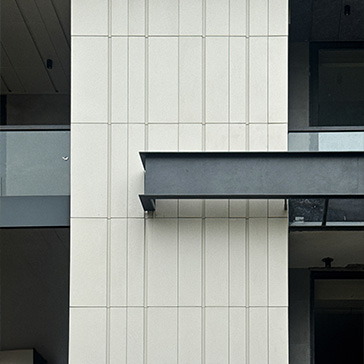
Why Aluminium Cladding Is the Future of Facade Design in Indian Architecture
India’s architecture is evolving - faster, smarter, and more performance-driven than ever before. As cities grow and climates shift, the facade is no longer just an exterior skin. It’s a functional envelope that must adapt, protect, and express.
12-09-25 | Industry Trends
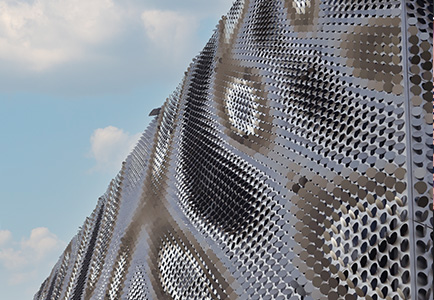
Parametric Architecture in India: Why It’s Shaping the Future of Facade Design
Architecture is evolving - and with it, the language of the façade. At the heart of this evolution lies a powerful design philosophy: parametric architecture.
03-11-25 | Industry Trends
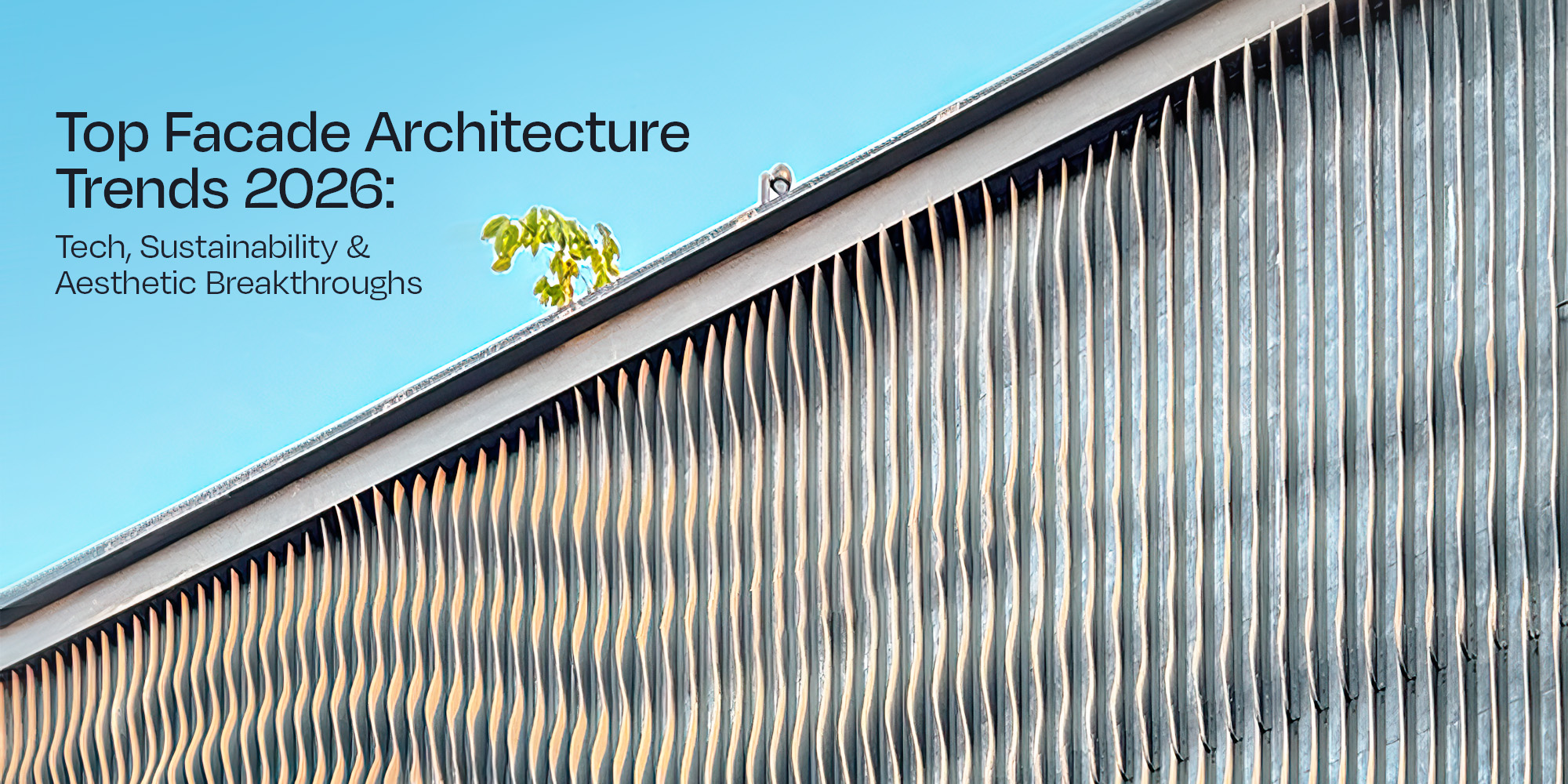
Top Facade Architecture Trends 2026 Tech Sustainability and Aesthetic Breakthroughs
The building envelope is undergoing a radical transformation. No longer just a 'skin,' it is now a performance-driven asset that breathes and adapts
12-02-26 | Industry Trends
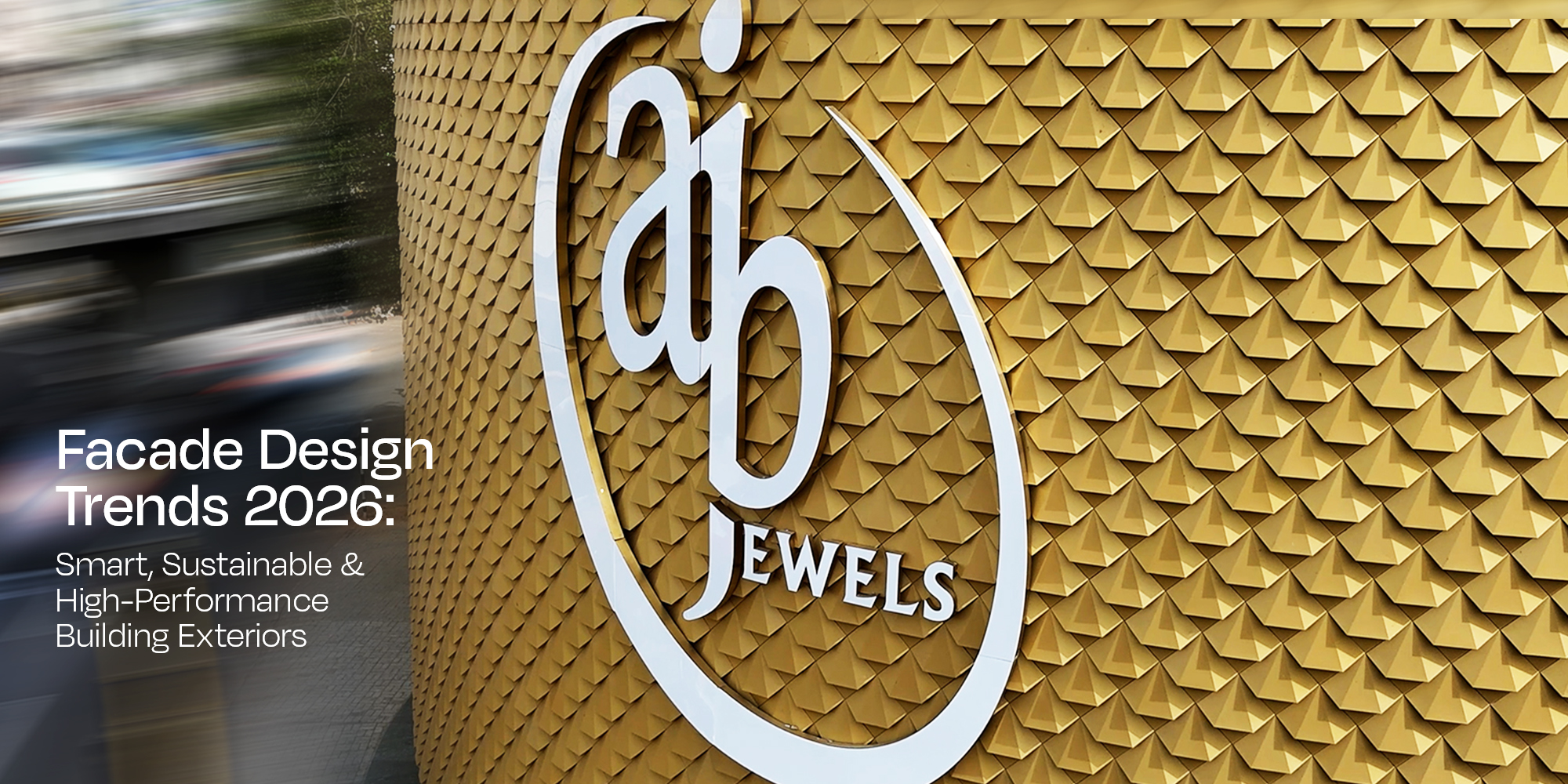
Facade Design Trends 2026 Smart Sustainable and High-Performance Building Exteriors
The building envelope is undergoing a radical transformation. No longer just a 'skin,' it is now a performance-driven asset that breathes and adapts
23-02-26 | Industry Trends
Social
Legal
Privacy Policy|Terms & Conditions