





Meta Coin Facade: The Complete Guide to Metaguise’s Coin Cladding System
11-08-26 | Material Spotlight
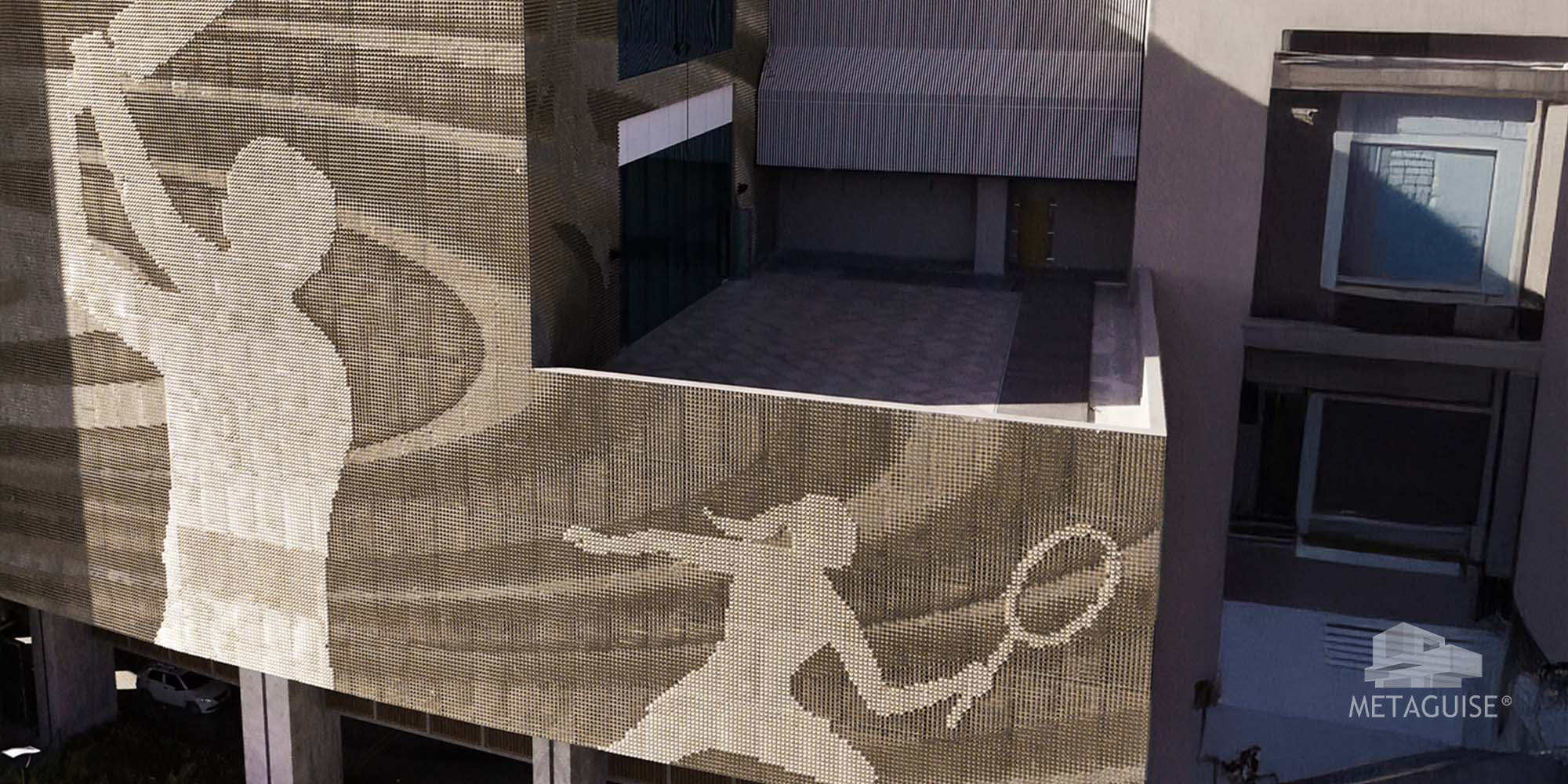
Meta Coin is one of our most recognised facade products, built from small circular disc modules arranged across the building surface in a pattern that catches light differently at every angle. From a distance it reads almost like scales or fish skin, rippling gently across the wall. Up close, each disc is a precisely engineered metal component. This guide covers how the system works, where it performs best, and how it compares to our other textured facade products.
How Meta Coin is built
Each coin module is fabricated from aluminium, formed and finished before being mounted on an engineered substructure. The discs are typically overlapped in a shingle-like arrangement, which is what creates the rippling visual effect and also gives the surface genuine weather performance, since each layer sheds water onto the one below it, similar to how roof tiles work. The pattern density and disc size can be varied across a single elevation, which lets designers create gradient effects, denser coin coverage in one zone fading to a sparser pattern elsewhere, without switching to a completely different product.
Why architects specify Meta Coin
Light response. The slightly curved surface of each disc catches and reflects light differently depending on the viewing angle and time of day, so the facade genuinely looks different in morning light versus late afternoon, without any moving parts. Texture at scale. Meta Coin gives large flat elevations a sense of depth and movement that a flat panel simply can’t achieve, which is why it’s frequently chosen for prominent street-facing walls on commercial and retail buildings. Weather performance. The overlapping installation method means Meta Coin functions as a genuine rainscreen, shedding water effectively while still allowing ventilation behind the panel layer.
Where Meta Coin works best
Meta Coin is most effective on large, relatively flat surfaces with good viewing distance, since the rippling effect needs room to read properly. It’s a strong choice for commercial towers, retail flagships, and feature walls where the goal is a dynamic, eye-catching surface rather than a quiet, minimal one. It’s less suited to small residential elevations viewed only up close, where the individual discs can look busy rather than fluid.
Meta Coin vs Cascading Keys
Both are textured, non-perforated Metaguise systems, but they create very different visual effects. Cascading Keys uses key-shaped modules with straight edges and a directional cascade, giving a sharper, more architectural read. Meta Coin uses circular discs and reads softer and more organic, closer to a rippling or scaled texture. If your project brief calls for strong geometric rhythm, Cascading Keys is usually the better fit. If it calls for a fluid, almost liquid surface quality, Meta Coin tends to win.
What drives the cost
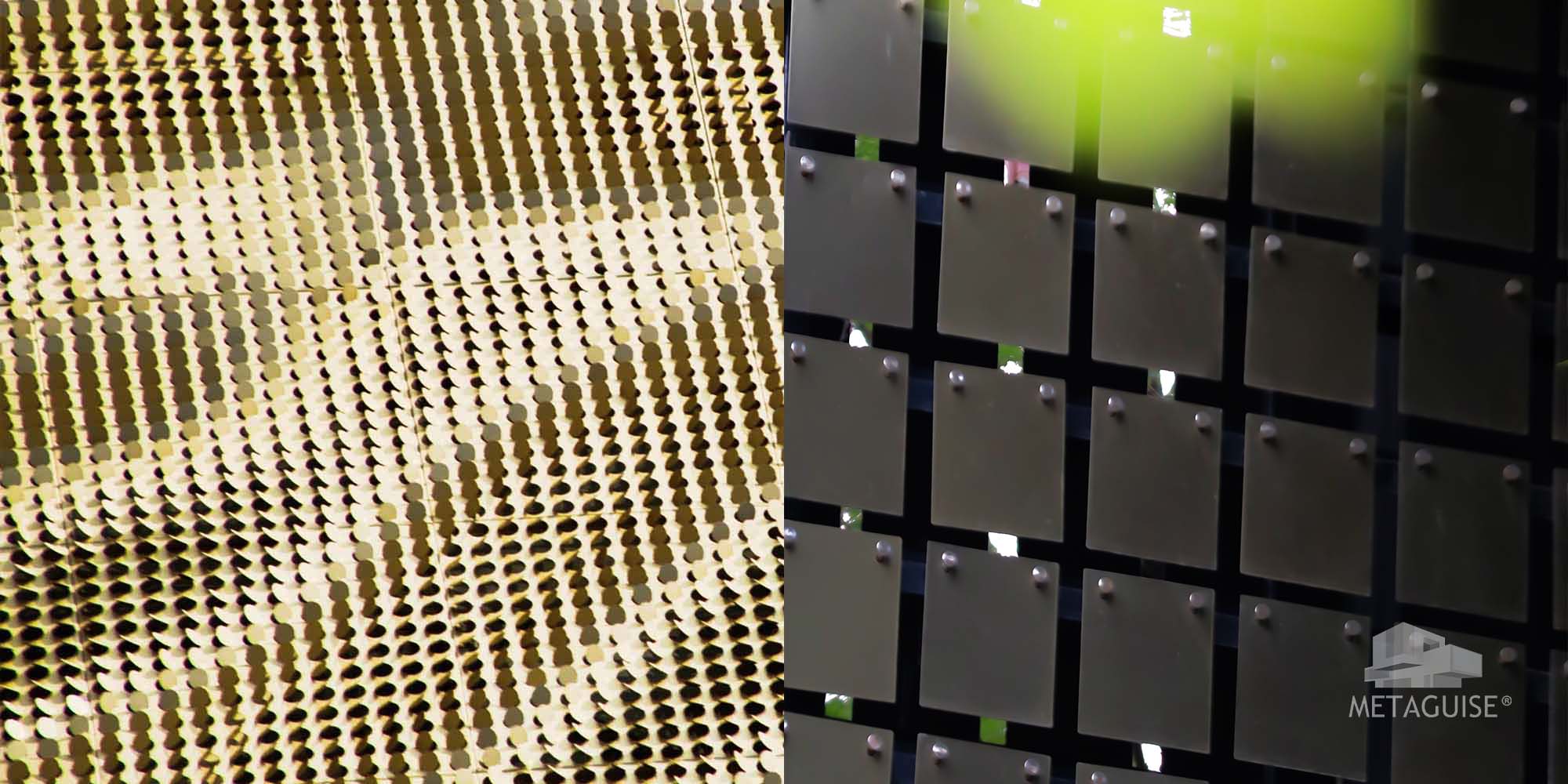
Meta Coin pricing follows the same core drivers as our other parametric systems: total covered area, disc size and density, and the finish specified. A uniform coin pattern across the elevation is more economical than a design with continuously varying density, since variation adds engineering and quality-control time. Powder coat finishes keep costs lower, while anodised or PVDF finishes cost more but hold their appearance significantly longer in harsh weather.
Frequently Asked Questions
1.What is Meta Coin facade made of?
Meta Coin is fabricated from aluminium discs, formed and finished before installation. The alloy grade and finish can be adjusted based on your project’s climate exposure and budget.2.Is Meta Coin waterproof on its own?
The overlapping shingle-style installation sheds water effectively, similar to roof tiles, but like most rainscreen systems it should be installed with proper waterproofing on the structural wall behind it for full weather protection.3.How is Meta Coin different from a flat metal panel facade?
A flat panel is a single continuous surface, while Meta Coin is built from hundreds of individual overlapping discs, which is what creates its rippling, light-responsive texture instead of a uniform flat finish.4.Can Meta Coin be used on residential buildings?
Yes, though it works best on larger elevations with enough viewing distance for the rippling pattern to read clearly. On compact villa facades, a simpler texture often gives a cleaner result.5.How long does a Meta Coin facade last?
With the correct alloy and finish specified for your climate, a well-installed Meta Coin facade typically performs for fifteen to twenty years with minimal maintenance beyond periodic cleaning and inspection.See Meta Coin in person
Photographs only capture one angle of light, and Meta Coin is a product best understood in motion, as you walk past it. Visit our Metaland experience center in Gurugram to see the material and finish options directly, or share your project brief with our design team for a render on your specific building.
11-08-26 | Material Spotlight
Meta Coin is one of our most recognised facade products, built from small circular disc modules arranged across the building surface in a pattern that catches light differently at every angle. From a distance it reads almost like scales or fish skin, rippling gently across the wall. Up close, each disc is a precisely engineered metal component. This guide covers how the system works, where it performs best, and how it compares to our other textured facade products.
How Meta Coin is built
Each coin module is fabricated from aluminium, formed and finished before being mounted on an engineered substructure. The discs are typically overlapped in a shingle-like arrangement, which is what creates the rippling visual effect and also gives the surface genuine weather performance, since each layer sheds water onto the one below it, similar to how roof tiles work. The pattern density and disc size can be varied across a single elevation, which lets designers create gradient effects, denser coin coverage in one zone fading to a sparser pattern elsewhere, without switching to a completely different product.
Why architects specify Meta Coin
Light response. The slightly curved surface of each disc catches and reflects light differently depending on the viewing angle and time of day, so the facade genuinely looks different in morning light versus late afternoon, without any moving parts. Texture at scale. Meta Coin gives large flat elevations a sense of depth and movement that a flat panel simply can’t achieve, which is why it’s frequently chosen for prominent street-facing walls on commercial and retail buildings. Weather performance. The overlapping installation method means Meta Coin functions as a genuine rainscreen, shedding water effectively while still allowing ventilation behind the panel layer.
Where Meta Coin works best
Meta Coin is most effective on large, relatively flat surfaces with good viewing distance, since the rippling effect needs room to read properly. It’s a strong choice for commercial towers, retail flagships, and feature walls where the goal is a dynamic, eye-catching surface rather than a quiet, minimal one. It’s less suited to small residential elevations viewed only up close, where the individual discs can look busy rather than fluid.
Meta Coin vs Cascading Keys
Both are textured, non-perforated Metaguise systems, but they create very different visual effects. Cascading Keys uses key-shaped modules with straight edges and a directional cascade, giving a sharper, more architectural read. Meta Coin uses circular discs and reads softer and more organic, closer to a rippling or scaled texture. If your project brief calls for strong geometric rhythm, Cascading Keys is usually the better fit. If it calls for a fluid, almost liquid surface quality, Meta Coin tends to win.
What drives the cost
Meta Coin pricing follows the same core drivers as our other parametric systems: total covered area, disc size and density, and the finish specified. A uniform coin pattern across the elevation is more economical than a design with continuously varying density, since variation adds engineering and quality-control time. Powder coat finishes keep costs lower, while anodised or PVDF finishes cost more but hold their appearance significantly longer in harsh weather.
Frequently Asked Questions
1.What is Meta Coin facade made of?
Meta Coin is fabricated from aluminium discs, formed and finished before installation. The alloy grade and finish can be adjusted based on your project’s climate exposure and budget.2.Is Meta Coin waterproof on its own?
The overlapping shingle-style installation sheds water effectively, similar to roof tiles, but like most rainscreen systems it should be installed with proper waterproofing on the structural wall behind it for full weather protection.3.How is Meta Coin different from a flat metal panel facade?
A flat panel is a single continuous surface, while Meta Coin is built from hundreds of individual overlapping discs, which is what creates its rippling, light-responsive texture instead of a uniform flat finish.4.Can Meta Coin be used on residential buildings?
Yes, though it works best on larger elevations with enough viewing distance for the rippling pattern to read clearly. On compact villa facades, a simpler texture often gives a cleaner result.5.How long does a Meta Coin facade last?
With the correct alloy and finish specified for your climate, a well-installed Meta Coin facade typically performs for fifteen to twenty years with minimal maintenance beyond periodic cleaning and inspection.See Meta Coin in person
Photographs only capture one angle of light, and Meta Coin is a product best understood in motion, as you walk past it. Visit our Metaland experience center in Gurugram to see the material and finish options directly, or share your project brief with our design team for a render on your specific building.
Related Articles
Living, Breathing Facades: The Science and Soul of MetaPatina
There’s something poetic about materials that age with grace. That shift color with time, deepen with exposure, and reveal new layers of beauty as they weather. MetaPatina, our living metal facade surface, is a tribute to that very idea - a facade that doesn’t just protect a building, but brings it to life...
06-04-25 | Material Spotlight
5 Reasons to Choose MetaSequin for Your Facade
At Metaguise, we believe the facade of a building isn’t just its outer layer - it’s its identity. And in today’s design landscape
10-11-25 | Material Spotlight
The Power of Perforation: Breathing Life, Light & Luxury into Metal Facades
At Metaguise, we believe the facade of a building isn’t just its outer layer - it’s its identity. And in today’s design landscape
17-11-25 | Material Spotlight
Perforated Metal Facade panels in 2026: Benefits, Design uses & Architectural Guide
Perforated metal facade panels are architectural cladding systems made from aluminium or steel sheets with precision-cut patterns.
09-12-25 | Material Spotlight
Social
Legal
Privacy Policy|Terms & Conditions