





Laser Cut Metal Facade Panels: Design Possibilities and Real Challenges
13-08-26 | Facade Innovations
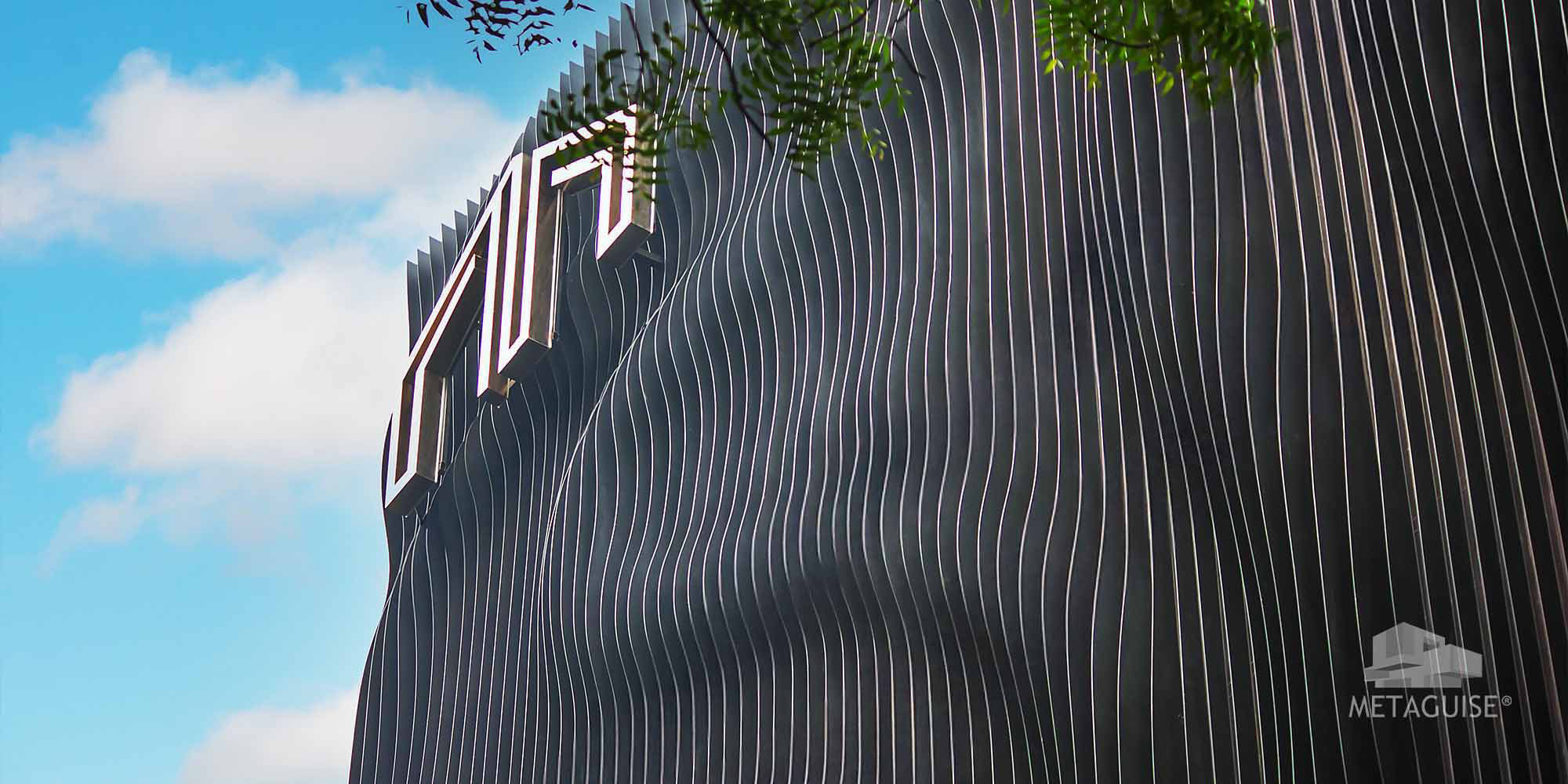
Laser cutting lets a facade designer put almost any pattern into a metal panel, from geometric grids to intricate organic motifs to a client’s own brand imagery. It’s one of the most flexible tools in facade design, which is exactly why it also comes with trade-offs that don’t show up until fabrication and installation. This piece covers both sides honestly.
What laser cutting actually enables
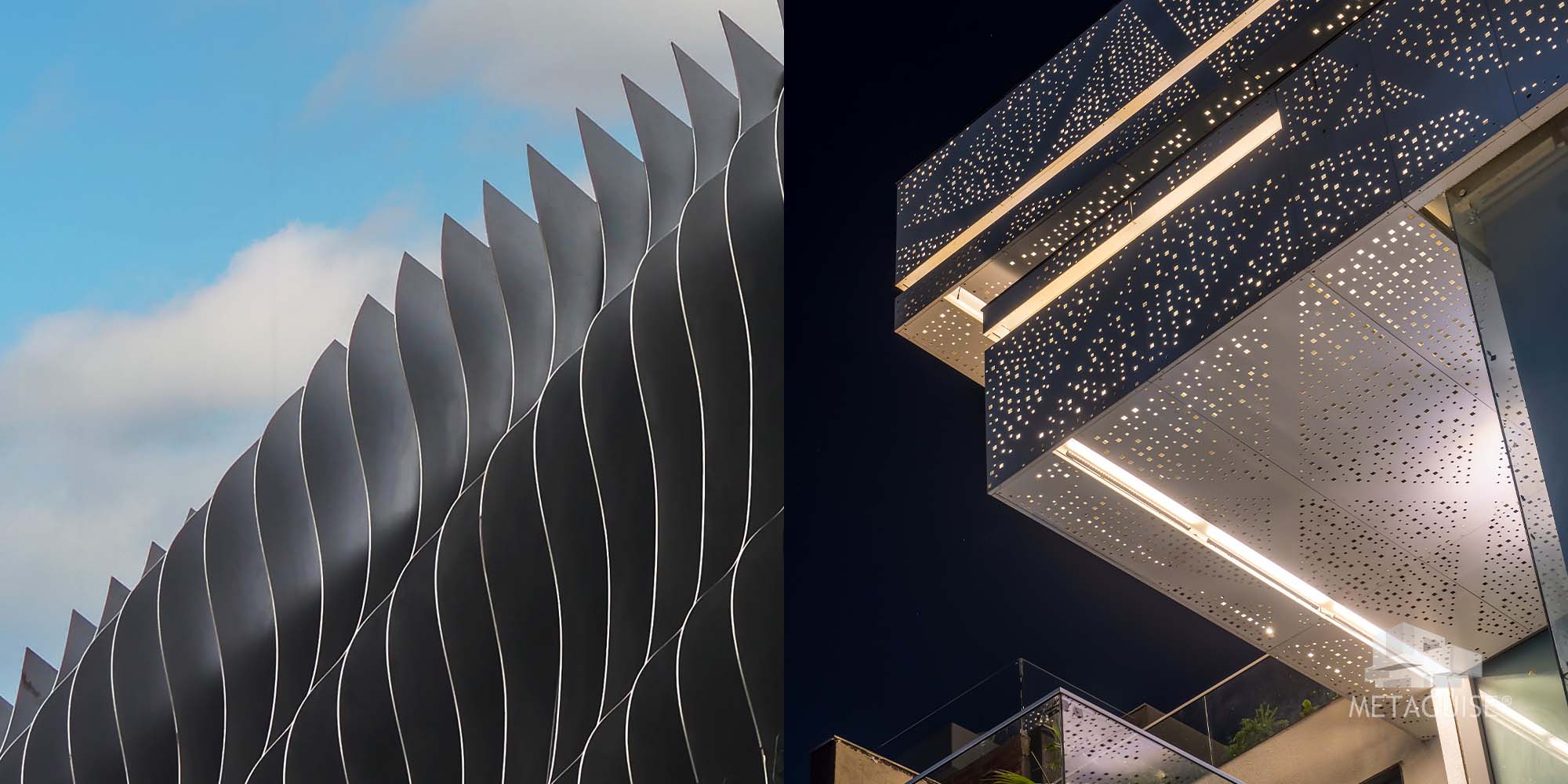
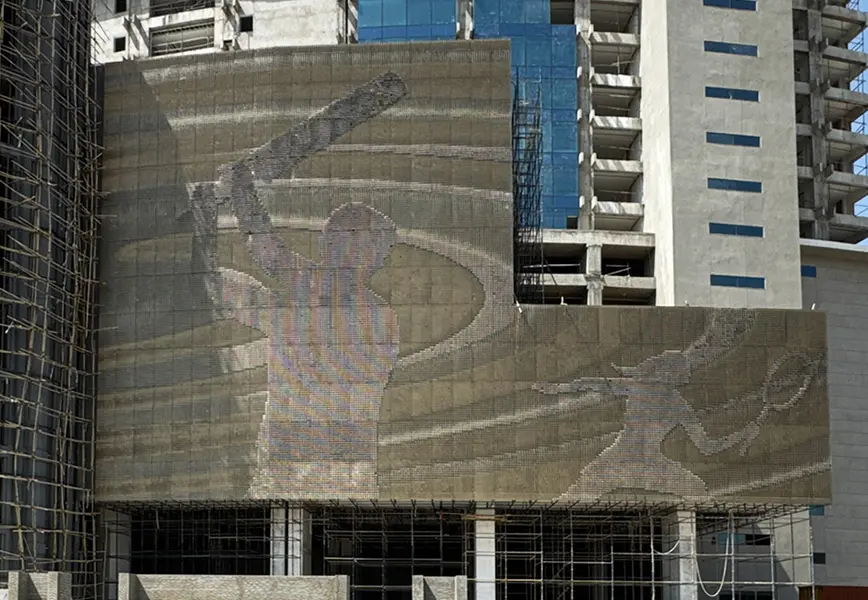
A laser cutting machine follows a digital file with extreme precision, which means the pattern possibilities are limited by design imagination far more than by manufacturing constraints. Fine detail, complex curves, varying hole density across a single panel to create gradient or shading effects, custom motifs tied to a brand identity, all of this is achievable in a way that mechanical punching or stamping can’t match. This is why laser cut panels are frequently chosen when a facade needs to carry specific visual meaning: a pattern derived from a cultural motif, a brand’s logo abstracted into a repeating texture, or a design that needs to solve both shading and storytelling at once.
The real design challenges
Structural integrity drops as pattern density rises. Every cut removes material, and a highly perforated laser cut design can leave a panel structurally weaker than a solid or lightly perforated one. This means an intricate, delicate-looking pattern often needs a thicker base material or additional structural reinforcement to perform safely, which changes both the cost and the final panel weight. Fine details don’t always survive real-world viewing distances. A pattern that looks stunning in a close-up render can disappear into visual noise from across a street, or conversely, a pattern designed for distance viewing can look imprecise up close. Laser cut designs need to be modelled and reviewed at the actual distances the facade will be seen from, not just as a flat close-up graphic. Cutting time scales directly with pattern complexity. Unlike stamping or punching, which can process simple repeated shapes quickly, laser cutting time is a direct function of total cut length. A highly intricate pattern with long, winding cut lines takes meaningfully longer to fabricate than a simple geometric grid of the same hole count, which shows up directly in cost and lead time. Edge quality and heat effects need managing. Laser cutting generates localised heat at the cut edge, which on certain finishes can cause slight discolouration if not properly managed during fabrication. A fabricator experienced with laser cut facade work will account for this in their process, but it’s worth asking about specifically if the finish’s edge appearance matters to your design. Water and dust behaviour changes with pattern. A dense, fine laser cut pattern behaves differently for water shedding and dust accumulation than a sparser one. Patterns intended purely for decoration on a rain-exposed elevation still need to be checked against how water will move across and through the cut surface.
How to brief a laser cut facade project well
Bring your facade designer a clear sense of viewing distance and primary purpose from the start, whether the pattern is meant to be read from the street, from a specific approach angle, or up close at an entrance. This single piece of information shapes almost every downstream decision about cut density, panel thickness and pattern scale. It’s also worth asking early whether the design intent can be achieved with a slightly less intricate pattern that’s meaningfully cheaper and faster to fabricate without visibly compromising the final look.
Laser cut panels vs perforated panels
Laser cutting is technically a method for creating perforation, but it’s worth distinguishing from standard mechanically punched perforated panels, which we’ve covered separately in our guide comparing perforated and solid metal panels. Mechanical punching is faster and more economical for simple, repeating hole patterns at scale. Laser cutting is the better tool specifically when the pattern is complex, irregular, or carries specific representational meaning that punching tooling can’t replicate.
Frequently Asked Questions
1.Are laser cut metal facade panels weaker than solid panels?
Yes, structurally, since material is removed to create the pattern. The impact depends on cut density and pattern design, and can be addressed with correct material thickness and structural engineering at the design stage.2.How long does it take to fabricate laser cut facade panels?
Fabrication time depends directly on the total length of cut lines in the pattern, not just the panel size, so intricate patterns take longer than simple geometric ones of similar coverage.3.Can laser cut panels include a company logo or custom design?
Yes, laser cutting is well suited to custom, brand-specific patterns since it works from a precise digital file rather than fixed tooling, making one-off or unique designs practical.4.Do laser cut panels need extra structural support?
Highly perforated laser cut designs often need thicker base material or reinforcement compared to solid panels, since removing material for the pattern reduces the panel’s inherent strength.5.What’s the difference between laser cutting and mechanical perforation?
Laser cutting uses a precise digital-controlled beam and suits complex, irregular or custom patterns. Mechanical punching uses fixed tooling and is faster and more economical for simple, repeating hole patterns at scale.Planning a laser cut facade
If you’re considering a laser cut pattern for your project, share your design intent and viewing conditions with our team and we’ll advise on what’s structurally and visually achievable within your budget before the design goes further.
13-08-26 | Facade Innovations
Laser cutting lets a facade designer put almost any pattern into a metal panel, from geometric grids to intricate organic motifs to a client’s own brand imagery. It’s one of the most flexible tools in facade design, which is exactly why it also comes with trade-offs that don’t show up until fabrication and installation. This piece covers both sides honestly.
What laser cutting actually enables
A laser cutting machine follows a digital file with extreme precision, which means the pattern possibilities are limited by design imagination far more than by manufacturing constraints. Fine detail, complex curves, varying hole density across a single panel to create gradient or shading effects, custom motifs tied to a brand identity, all of this is achievable in a way that mechanical punching or stamping can’t match. This is why laser cut panels are frequently chosen when a facade needs to carry specific visual meaning: a pattern derived from a cultural motif, a brand’s logo abstracted into a repeating texture, or a design that needs to solve both shading and storytelling at once.
The real design challenges
Structural integrity drops as pattern density rises. Every cut removes material, and a highly perforated laser cut design can leave a panel structurally weaker than a solid or lightly perforated one. This means an intricate, delicate-looking pattern often needs a thicker base material or additional structural reinforcement to perform safely, which changes both the cost and the final panel weight. Fine details don’t always survive real-world viewing distances. A pattern that looks stunning in a close-up render can disappear into visual noise from across a street, or conversely, a pattern designed for distance viewing can look imprecise up close. Laser cut designs need to be modelled and reviewed at the actual distances the facade will be seen from, not just as a flat close-up graphic. Cutting time scales directly with pattern complexity. Unlike stamping or punching, which can process simple repeated shapes quickly, laser cutting time is a direct function of total cut length. A highly intricate pattern with long, winding cut lines takes meaningfully longer to fabricate than a simple geometric grid of the same hole count, which shows up directly in cost and lead time. Edge quality and heat effects need managing. Laser cutting generates localised heat at the cut edge, which on certain finishes can cause slight discolouration if not properly managed during fabrication. A fabricator experienced with laser cut facade work will account for this in their process, but it’s worth asking about specifically if the finish’s edge appearance matters to your design. Water and dust behaviour changes with pattern. A dense, fine laser cut pattern behaves differently for water shedding and dust accumulation than a sparser one. Patterns intended purely for decoration on a rain-exposed elevation still need to be checked against how water will move across and through the cut surface.
How to brief a laser cut facade project well
Bring your facade designer a clear sense of viewing distance and primary purpose from the start, whether the pattern is meant to be read from the street, from a specific approach angle, or up close at an entrance. This single piece of information shapes almost every downstream decision about cut density, panel thickness and pattern scale. It’s also worth asking early whether the design intent can be achieved with a slightly less intricate pattern that’s meaningfully cheaper and faster to fabricate without visibly compromising the final look.
Laser cut panels vs perforated panels
Laser cutting is technically a method for creating perforation, but it’s worth distinguishing from standard mechanically punched perforated panels, which we’ve covered separately in our guide comparing perforated and solid metal panels. Mechanical punching is faster and more economical for simple, repeating hole patterns at scale. Laser cutting is the better tool specifically when the pattern is complex, irregular, or carries specific representational meaning that punching tooling can’t replicate.
Frequently Asked Questions
1.Are laser cut metal facade panels weaker than solid panels?
Yes, structurally, since material is removed to create the pattern. The impact depends on cut density and pattern design, and can be addressed with correct material thickness and structural engineering at the design stage.2.How long does it take to fabricate laser cut facade panels?
Fabrication time depends directly on the total length of cut lines in the pattern, not just the panel size, so intricate patterns take longer than simple geometric ones of similar coverage.3.Can laser cut panels include a company logo or custom design?
Yes, laser cutting is well suited to custom, brand-specific patterns since it works from a precise digital file rather than fixed tooling, making one-off or unique designs practical.4.Do laser cut panels need extra structural support?
Highly perforated laser cut designs often need thicker base material or reinforcement compared to solid panels, since removing material for the pattern reduces the panel’s inherent strength.5.What’s the difference between laser cutting and mechanical perforation?
Laser cutting uses a precise digital-controlled beam and suits complex, irregular or custom patterns. Mechanical punching uses fixed tooling and is faster and more economical for simple, repeating hole patterns at scale.Planning a laser cut facade
If you’re considering a laser cut pattern for your project, share your design intent and viewing conditions with our team and we’ll advise on what’s structurally and visually achievable within your budget before the design goes further.
Related Articles
The Rise of Parametric facades: Designing with Algorithmic Elegance
A revolutionary parametric facade system designed to elevate architectural aesthetics. Crafted with premium metals and enhanced with MetaSurface finishes, MetaCoin offers unparalleled customizability, from the shape and size of each element to its color and arrangement. Its dynamic design reacts to light and perspective, creating ever-changing visual effects. Ideal for contemporary and iconic structures, MetaCoin transforms facades into captivating works of art that are sustainable, durable, and visually stunning.
01-04-25 | Facade Innovations
METABLOX™ by Metaguise: A Breakthrough in Parametric Facade Design
At the intersection of culture, craftsmanship, and cutting-edge geometry, METABLOX™ emerges as a bold new direction in architectural innovation. Introduced by Metaguise, this first-of-its-kind parametric facade technology makes its striking debut at the RJ Jewellers flagship store in Jaipur - setting a new benchmark in the world of metal design and modern Indian architecture.
09-04-25 | Facade Innovations
5 Landmark Projects That Used MetaCoin to Transform Facades
When it comes to parametric architecture, MetaCoin stands out as a revolutionary metal coin facade system. Crafted with precision, it offers dynamic aesthetics, adaptability, and a unique identity to structures. Let's delve into five notable projects where MetaCoin has redefined architectural facades.
13-05-25 | Facade Innovations
From Code to Construction: How Parametric Facades Are Built
Some buildings just make you look twice. Maybe it’s the way the facade curves. Or how the surface catches the light at different times of day. Often, what you’re seeing is more than just a design, it’s a parametric facade.
10-06-25 | Facade Innovations
Social
Legal
Privacy Policy|Terms & Conditions