



How to Choose a Facade Company for Your Home or Office in India
26-09-26 | Architectural Insights
Start with a Clear Picture of the Project
Before contacting any facade company, it helps to have basic clarity on the project itself, since this shapes which companies are even worth shortlisting. A homeowner adding a single accent panel to an existing house has very different needs from a business fitting out a new corporate office facade, and approaching both types of company with a vague brief usually produces vague, hard-to-compare quotes. At minimum, it is worth knowing the approximate facade area involved, whether this is new construction or a renovation, a rough budget range, and a general sense of the desired look, even if that is just two or three reference images rather than a finished design.
Step 1: Build a Shortlist
Start by identifying three to five facade companies that have genuine experience with projects similar in scale and type to yours, whether that is residential homes, office buildings, retail spaces or institutional structures. A general online search combined with checking a company's own project portfolio is a reasonable starting point, but it is worth going one step further and looking specifically for projects that are several years old rather than only recent installations, since this reveals how the company's work actually holds up over time rather than how it looks on installation day.
Step 2: Check Track Record and In-House Capability
Once you have a shortlist, dig into how each company actually operates rather than just how their marketing presents them. A company that designs, engineers and fabricates panels in-house is generally more accountable and consistent than one that outsources fabrication to a third party, since there are fewer parties involved if quality issues arise later. Ask how many total projects the company has completed, and if possible, how many of those are comparable in scale to your own project, since a company experienced primarily in small residential accents may not be the right fit for a large commercial facade, and vice versa.
Step 3: Request Detailed, Comparable Quotes
- Give every shortlisted company the same brief, area measurements and reference images, so their quotes are responding to the same scope.
- Ask for a breakdown of material, fabrication and installation costs rather than a single combined number.
- Confirm the exact material, thickness and coating type included in the quote, since these details drive most of the price difference between companies.
- Ask whether waterproofing and substructure work is included or billed separately.
- Request the proposed project timeline in writing, from design finalisation through to installation completion.
Step 4: Verify Coating and Warranty Terms
The single most important technical detail to confirm before choosing a facade company is the coating specification and its written warranty period, since this determines how the facade will actually look in five, ten and twenty years, far more than the pattern or colour chosen at the outset. PVDF coatings from established manufacturers commonly carry warranties in the range of 15 to 30 years against fading and chalking, while lower grade powder coatings may only be rated for a fraction of that period. Ask specifically what the warranty covers, colour retention, coating integrity, or both, and whether it is backed by the coating manufacturer, the facade company, or both, since this affects what recourse is available if a problem arises after installation.
Step 5: Visit an Experience Centre or Completed Project
Wherever possible, see the material in person before finalising a decision, either at a company's experience centre or showroom, or by visiting a completed project with the company's permission. Photographs and renders, however polished, cannot fully convey how a metal panel catches light, how a colour reads under direct sun compared to indoor lighting, or how a texture feels at close range. This step is particularly important for larger projects or full facade treatments, where a material choice that looks slightly different than expected across an entire building is a far more consequential mistake than the same gap on a small accent panel.
Step 6: Clarify the Contract and After-Sales Terms
Before signing, make sure the contract explicitly states the material specification, coating type and warranty terms, not just the total price and payment schedule, since verbal assurances given during sales conversations do not carry weight if they are not reflected in the written agreement. It is also worth clarifying what happens if a panel is damaged after installation, whether due to an accident, extreme weather or a manufacturing defect that only becomes apparent later. A company confident in its own work should be able to explain a clear process for individual panel replacement without hesitation, since a well-engineered system is generally designed to allow this without disturbing the surrounding facade.
Payment schedules for facade projects typically follow project milestones, such as an advance on order confirmation, a payment on fabrication completion, and a final payment on installation completion, rather than a single upfront lump sum. Being cautious of any company requesting the full payment before fabrication even begins is a reasonable and common-sense precaution.
Timeline Expectations from First Meeting to Installation
Understanding a realistic project timeline helps set expectations and spot companies that are either overpromising or underprepared. The initial consultation and brief development typically takes one to two weeks. Design concept and material selection, including any sampling or mockups, generally takes another two to four weeks depending on project complexity. Detailed engineering and fabrication can range from three to eight weeks depending on the system and whether it is a standard product line or a fully custom parametric design. Installation itself is usually the shortest phase for small to medium projects, often completed within one to three weeks, though larger commercial facades naturally take longer given the volume of panels and coordination involved with other ongoing construction work on site.
For Homeowners: What to Prioritise
Homeowners generally benefit most from prioritising design flexibility and a company's ability to work at a smaller scale, since many residential facade projects involve an accent wall, balcony front or entrance feature rather than a full building treatment. It is worth confirming that a company is genuinely willing to take on a smaller project with the same engineering rigour as a larger one, since some facade companies focus primarily on large commercial contracts and treat residential accents as a lower priority, which can show up in slower response times or less design attention.
For Businesses: What to Prioritise
Business owners and facility managers evaluating a facade company for an office or commercial space should prioritise the company's experience with fire rating compliance, structural load requirements and project timeline reliability, since commercial facades are often tied to a broader construction or fit-out schedule where delays carry real financial cost. It is also worth asking about a company's experience with branding-led design, where the facade needs to reinforce a specific corporate identity or stand out in a commercial corridor, a use case covered in more depth in our guide to commercial elevation design and why it matters for business.
Mistakes to Avoid When Choosing a Facade Company
- Choosing based on price alone without confirming that competing quotes specify the same material grade, thickness and coating.
- Skipping a site visit or physical sample review and relying only on digital renders before making a final decision.
- Not asking who is responsible for waterproofing, assuming it is automatically included when it may be billed separately.
- Finalising a facade company only after construction is already complete, which limits design options and can complicate substructure planning.
- Overlooking after-sales support and panel replacement policy, which only becomes relevant, and important, years after installation.
Frequently Asked Questions
How many quotes should I get before choosing a facade company?
Three to five detailed quotes from companies with relevant experience is generally enough to compare pricing and approach without the process becoming unmanageable.
What is a reasonable timeline for a facade project in India?
A small residential accent can often be designed and installed within four to eight weeks, while a larger commercial facade may take several months from design finalisation through to completed installation, depending on complexity and project scale.
Is it worth paying more for an established facade company over a local fabricator?
For anything beyond very small or temporary applications, an established company with in-house engineering, a written warranty and a verifiable track record typically reduces long-term risk enough to justify a higher upfront cost.
Choosing with Confidence
Choosing a facade company does not need to be complicated once the project is clearly defined and each shortlisted company is evaluated against the same set of concrete questions around track record, in-house capability and warranty terms. Metaguise has delivered more than 1,800 projects across India, from single residential accents to large commercial facades, using 23 named systems finished with VOC-free European grade PVDF, anodised and powder-coat options carrying warranties of 15 to 30 years. You can view the full product range, build your facade for a project-specific estimate, or contact the team to start the conversation.
26-09-26 | Architectural Insights
Start with a Clear Picture of the Project
Before contacting any facade company, it helps to have basic clarity on the project itself, since this shapes which companies are even worth shortlisting. A homeowner adding a single accent panel to an existing house has very different needs from a business fitting out a new corporate office facade, and approaching both types of company with a vague brief usually produces vague, hard-to-compare quotes. At minimum, it is worth knowing the approximate facade area involved, whether this is new construction or a renovation, a rough budget range, and a general sense of the desired look, even if that is just two or three reference images rather than a finished design.
Step 1: Build a Shortlist
Start by identifying three to five facade companies that have genuine experience with projects similar in scale and type to yours, whether that is residential homes, office buildings, retail spaces or institutional structures. A general online search combined with checking a company's own project portfolio is a reasonable starting point, but it is worth going one step further and looking specifically for projects that are several years old rather than only recent installations, since this reveals how the company's work actually holds up over time rather than how it looks on installation day.
Step 2: Check Track Record and In-House Capability
Once you have a shortlist, dig into how each company actually operates rather than just how their marketing presents them. A company that designs, engineers and fabricates panels in-house is generally more accountable and consistent than one that outsources fabrication to a third party, since there are fewer parties involved if quality issues arise later. Ask how many total projects the company has completed, and if possible, how many of those are comparable in scale to your own project, since a company experienced primarily in small residential accents may not be the right fit for a large commercial facade, and vice versa.
Step 3: Request Detailed, Comparable Quotes
- Give every shortlisted company the same brief, area measurements and reference images, so their quotes are responding to the same scope.
- Ask for a breakdown of material, fabrication and installation costs rather than a single combined number.
- Confirm the exact material, thickness and coating type included in the quote, since these details drive most of the price difference between companies.
- Ask whether waterproofing and substructure work is included or billed separately.
- Request the proposed project timeline in writing, from design finalisation through to installation completion.
Step 4: Verify Coating and Warranty Terms
The single most important technical detail to confirm before choosing a facade company is the coating specification and its written warranty period, since this determines how the facade will actually look in five, ten and twenty years, far more than the pattern or colour chosen at the outset. PVDF coatings from established manufacturers commonly carry warranties in the range of 15 to 30 years against fading and chalking, while lower grade powder coatings may only be rated for a fraction of that period. Ask specifically what the warranty covers, colour retention, coating integrity, or both, and whether it is backed by the coating manufacturer, the facade company, or both, since this affects what recourse is available if a problem arises after installation.
Step 5: Visit an Experience Centre or Completed Project
Wherever possible, see the material in person before finalising a decision, either at a company's experience centre or showroom, or by visiting a completed project with the company's permission. Photographs and renders, however polished, cannot fully convey how a metal panel catches light, how a colour reads under direct sun compared to indoor lighting, or how a texture feels at close range. This step is particularly important for larger projects or full facade treatments, where a material choice that looks slightly different than expected across an entire building is a far more consequential mistake than the same gap on a small accent panel.
Step 6: Clarify the Contract and After-Sales Terms
Before signing, make sure the contract explicitly states the material specification, coating type and warranty terms, not just the total price and payment schedule, since verbal assurances given during sales conversations do not carry weight if they are not reflected in the written agreement. It is also worth clarifying what happens if a panel is damaged after installation, whether due to an accident, extreme weather or a manufacturing defect that only becomes apparent later. A company confident in its own work should be able to explain a clear process for individual panel replacement without hesitation, since a well-engineered system is generally designed to allow this without disturbing the surrounding facade.
Payment schedules for facade projects typically follow project milestones, such as an advance on order confirmation, a payment on fabrication completion, and a final payment on installation completion, rather than a single upfront lump sum. Being cautious of any company requesting the full payment before fabrication even begins is a reasonable and common-sense precaution.
Timeline Expectations from First Meeting to Installation
Understanding a realistic project timeline helps set expectations and spot companies that are either overpromising or underprepared. The initial consultation and brief development typically takes one to two weeks. Design concept and material selection, including any sampling or mockups, generally takes another two to four weeks depending on project complexity. Detailed engineering and fabrication can range from three to eight weeks depending on the system and whether it is a standard product line or a fully custom parametric design. Installation itself is usually the shortest phase for small to medium projects, often completed within one to three weeks, though larger commercial facades naturally take longer given the volume of panels and coordination involved with other ongoing construction work on site.
For Homeowners: What to Prioritise
Homeowners generally benefit most from prioritising design flexibility and a company's ability to work at a smaller scale, since many residential facade projects involve an accent wall, balcony front or entrance feature rather than a full building treatment. It is worth confirming that a company is genuinely willing to take on a smaller project with the same engineering rigour as a larger one, since some facade companies focus primarily on large commercial contracts and treat residential accents as a lower priority, which can show up in slower response times or less design attention.
For Businesses: What to Prioritise
Business owners and facility managers evaluating a facade company for an office or commercial space should prioritise the company's experience with fire rating compliance, structural load requirements and project timeline reliability, since commercial facades are often tied to a broader construction or fit-out schedule where delays carry real financial cost. It is also worth asking about a company's experience with branding-led design, where the facade needs to reinforce a specific corporate identity or stand out in a commercial corridor, a use case covered in more depth in our guide to commercial elevation design and why it matters for business.
Mistakes to Avoid When Choosing a Facade Company
- Choosing based on price alone without confirming that competing quotes specify the same material grade, thickness and coating.
- Skipping a site visit or physical sample review and relying only on digital renders before making a final decision.
- Not asking who is responsible for waterproofing, assuming it is automatically included when it may be billed separately.
- Finalising a facade company only after construction is already complete, which limits design options and can complicate substructure planning.
- Overlooking after-sales support and panel replacement policy, which only becomes relevant, and important, years after installation.
Frequently Asked Questions
How many quotes should I get before choosing a facade company?
Three to five detailed quotes from companies with relevant experience is generally enough to compare pricing and approach without the process becoming unmanageable.
What is a reasonable timeline for a facade project in India?
A small residential accent can often be designed and installed within four to eight weeks, while a larger commercial facade may take several months from design finalisation through to completed installation, depending on complexity and project scale.
Is it worth paying more for an established facade company over a local fabricator?
For anything beyond very small or temporary applications, an established company with in-house engineering, a written warranty and a verifiable track record typically reduces long-term risk enough to justify a higher upfront cost.
Choosing with Confidence
Choosing a facade company does not need to be complicated once the project is clearly defined and each shortlisted company is evaluated against the same set of concrete questions around track record, in-house capability and warranty terms. Metaguise has delivered more than 1,800 projects across India, from single residential accents to large commercial facades, using 23 named systems finished with VOC-free European grade PVDF, anodised and powder-coat options carrying warranties of 15 to 30 years. You can view the full product range, build your facade for a project-specific estimate, or contact the team to start the conversation.
Related Articles
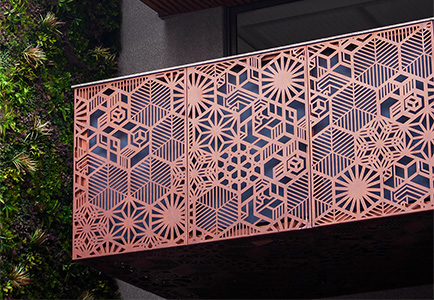
Architectural Luxury, Within Reach: Why MetaFlutes and MetaLouvers Are the Smartest Investment in Metal Facades
In today’s built environment, luxury is no longer defined by extravagance - it’s defined by intention. It’s about refined details, enduring finishes, and design that performs as beautifully as it looks. At Metaguise, our metal facade systems - MetaFlutes, MetaLouvers, and MetaCassette Perforated - are crafted to bring that standard of architectural luxury within reach...
07-04-25 | Architectural Insights
Why Architects Are Turning to Custom Metal Louvers in 2025
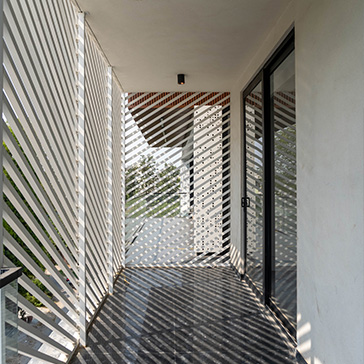
There’s something quietly brilliant happening in architecture right now. As buildings become more responsive and designers look for ways to merge aesthetics with performance, one feature is making a serious comeback, custom metal louvers.
03-06-25 | Architectural Insights
The Science of Shadows: How Facade Design Shapes Light and Mood
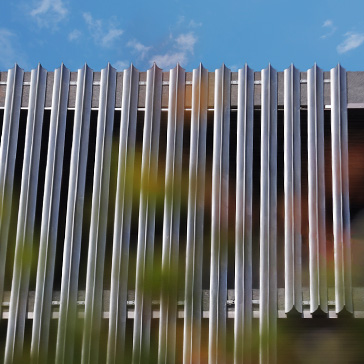
Architecture has always been about more than structure - it’s about rhythm, reflection, and the way light interacts with space.At Metaguise, we see every innovative facade as a living canvas, one that transforms not just how a building looks, but how it feels. Light becomes our material, and shadow becomes our tool.This is the art and the science behind MetaLouvers, MetaCassette, and the entire Metaguise facade family.
13-10-25 | Architectural Insights
Custom Metal Facade Cladding in 2026: Design, Cost, Materials & Architect Guide
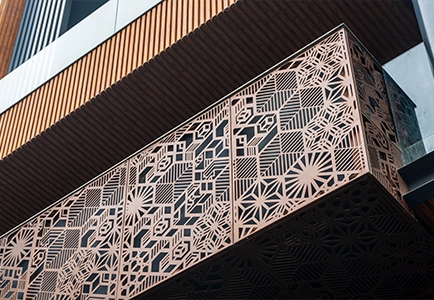
Explore how commercial spaces are using Metaguise facades to express identity and elevate perception.
24-11-25 | Architectural Insights
Social
Legal
Privacy Policy|Terms & Conditions