



How Facade Panels Are Manufactured in India: The Process Nobody Shows You
01-09-26 | Behind the Design
Facade manufacturers in India have quietly built genuine, world-class fabrication capability over the last decade, and almost none of it is visible to the client who eventually walks past the finished building. Most people interact with a facade only once, after installation, without ever seeing the raw metal, the cutting, the finishing, or the quality checks that actually determined whether that panel will still look good in fifteen years. Understanding this process changes how you evaluate a facade quote, because the difference between a reliable manufacturer and a weak one almost never shows up until the finish starts failing years later.
Why the Raw Material Stage Decides Everything Downstream
Every facade panel begins as raw sheet metal, almost always aluminium for Indian projects, sourced to a specific alloy grade suited to the building's climate and structural demands. This is the stage where quality either gets built in or quietly compromised, since a panel made from an incorrect or lower-grade alloy can look identical to a correctly specified one on day one and still fail years earlier than expected. Reputable manufacturers verify every incoming batch of metal against mill certificates before it ever reaches the production floor. This single checkpoint, invisible in the finished building, is genuinely one of the most important quality signals a manufacturer can offer, and it's worth asking about directly rather than assuming it happens automatically.What Actually Happens When a Panel Gets Cut and Formed
Depending on the panel's design, sheets move through one of a few cutting methods. CNC routing and laser cutting handle intricate, custom, or highly detailed patterns with real precision, cutting exactly what a digital design file specifies. Mechanical punching is faster and considerably more economical for simple, repeating perforation patterns produced at scale, which is why it remains the standard choice for straightforward projects without complex geometry. Forming comes next, folding cassette edges, creating profiled ribs, or shaping curved panels, using calibrated press brakes that need to hold tight tolerances throughout the run. This matters more than it sounds. A single panel that's a few millimetres out of tolerance might be invisible on its own, but once dozens or hundreds of panels go up together on a real elevation, small errors compound into visible misalignment that's expensive and disruptive to fix after installation.The Finishing Stage Is Where Facades Actually Live or Die
If there's one stage that determines how a facade performs over its real lifetime, it's finishing. This is where a panel gets its colour and its weather protection, and the choice here has more impact on long-term appearance than almost any other manufacturing decision. Powder coating is the most common and most economical option, a dry powder applied and cured under heat to form a durable protective layer, suitable for most standard applications. Anodising takes a different approach entirely, using an electrochemical process to build a hard oxide layer directly into the aluminium itself, which is why anodised finishes hold their colour so much longer than a surface coating alone. PVDF coating sits at the top of the range, delivering the strongest resistance to UV fading and weathering, and it's the finish most consistently specified for elevations facing intense, sustained sun exposure across most of the day. A manufacturer with a genuine quality process tests finish adhesion and thickness against defined standards before panels ever leave the factory. Skipping this step is exactly how a finish that looks perfect on installation day starts peeling or fading within two years, a defect that's far more expensive to correct once panels are already mounted at height on a building.How Manufacturers Catch Problems Before They Reach Your Building
Before dispatch, finished panels get checked against the original design specification for dimensional accuracy, finish consistency, and any visible surface defects. This step matters enormously on large projects using many repeating panels, since even a small percentage of out-of-tolerance panels creates visible misalignment once installed across a full elevation. Manufacturers with genuine quality control document these checks at each stage, rather than relying on a rushed visual inspection right before loading panels for delivery. This documentation is exactly what separates a manufacturer you can trust with a large project from one whose quality claims are essentially unverifiable marketing language.Why Packaging and Delivery Deserve More Attention Than They Get
Panels need to be packaged specifically to prevent surface scratching and denting during transport, since a damaged panel discovered on site means real delay while a replacement gets fabricated and shipped. For projects located far from the manufacturing facility, logistics planning becomes a genuinely important part of the overall process, not something handled as an afterthought by whichever transport happens to be available that week. This is particularly relevant for projects outside India's major metro cities, where transport time and handling conditions can differ significantly from a straightforward local delivery.In-House Manufacturing Versus Outsourced Fabrication
One distinction worth understanding before you sign a facade contract is whether the company you're hiring actually manufactures its own panels or outsources fabrication to a third party while managing the design and installation themselves. Neither model is automatically better, but they carry genuinely different risk profiles. A company with in-house manufacturing has direct control over every stage covered in this piece, material sourcing, cutting tolerance, finish quality, and dispatch inspection, which means accountability sits in one place if something goes wrong. A company that outsources fabrication is dependent on a third-party factory's own quality standards, and the client rarely has visibility into how rigorous that factory's process actually is. If a facade company can't clearly tell you where their panels are actually made, that's worth asking about directly, since the answer materially affects how much control they genuinely have over the final quality of your project.What This Means for Comparing Quotes From Different Manufacturers
When two facade quotes look similar on paper, the manufacturing process described here is usually where the real difference lies. A lower quote that skips material verification, uses a faster but less controlled cutting method for a complex pattern, or applies a thinner, untested finish coat will often look identical to a higher quote on the day of installation, and only reveal the difference two or three years later when fading, corrosion, or misalignment starts to show. Asking manufacturing-specific questions upfront, rather than comparing headline prices alone, is the single most effective way to avoid this outcome.What Actually Separates a Strong Manufacturer From a Weak One
The manufacturers who consistently deliver reliable, long-lasting facades share a handful of specific traits. They name the exact alloy grade and finish type rather than hiding behind vague marketing language like premium or weather resistant. They document quality checks at each production stage, not just at final inspection. And they can point you to projects that are several years old, since that's the real test of whether their material sourcing and finishing process genuinely holds up, not just how impressive the panels looked on the day they were installed.
How to Actually Evaluate a Facade Manufacturer Before You Commit
If you're evaluating a facade manufacturer, ask specifically how they handle each stage covered here, material verification against mill certificates, the cutting method appropriate for your specific pattern, finish adhesion testing, and quality control before panels are dispatched to site. A manufacturer confident in their process will walk you through it in real detail without hesitation. One that can't explain their own quality control beyond general reassurance is telling you something important, and it's worth taking that signal seriously before committing to a large project where the mistakes only become visible years later.Frequently Asked Questions
What material is most commonly used for facade panels in India?
Aluminium is the most widely used material, valued for its light weight, natural corrosion resistance, and its ability to take a wide range of finishes suited to different climate conditions across the country.What's the difference between laser cutting and mechanical punching for facade panels?
Laser cutting handles intricate, custom, or highly detailed patterns with real precision, while mechanical punching is faster and more economical for simple, repeating perforation patterns fabricated at scale.Which finish lasts longest on a facade panel?
PVDF coating generally offers the strongest resistance to UV fading and weathering, followed by anodising, with standard powder coating being the most economical but least weather stable of the three options.How can I tell if a facade manufacturer has genuine quality control?
Ask whether they document checks at each production stage, material verification, dimensional tolerance, and finish testing, rather than relying only on a quick final visual inspection before dispatch.Does the manufacturing process really affect how long a facade lasts?
Significantly. Correct material verification, cutting tolerance, and finish quality at the manufacturing stage are what actually determine whether a facade performs reliably for fifteen to twenty years or starts showing problems within a few.See Our Manufacturing Process for Yourself
If you'd like to understand exactly how your project's panels would be manufactured, book a factory walkthrough with our team or visit our Metaland facility in Gurugram to see the process firsthand, from raw material through to finished panel. If you're still comparing facade partners, our guide on what to check before hiring a facade company in India covers the questions worth asking beyond manufacturing alone.01-09-26 | Behind the Design
Facade manufacturers in India have quietly built genuine, world-class fabrication capability over the last decade, and almost none of it is visible to the client who eventually walks past the finished building. Most people interact with a facade only once, after installation, without ever seeing the raw metal, the cutting, the finishing, or the quality checks that actually determined whether that panel will still look good in fifteen years. Understanding this process changes how you evaluate a facade quote, because the difference between a reliable manufacturer and a weak one almost never shows up until the finish starts failing years later.
Why the Raw Material Stage Decides Everything Downstream
Every facade panel begins as raw sheet metal, almost always aluminium for Indian projects, sourced to a specific alloy grade suited to the building's climate and structural demands. This is the stage where quality either gets built in or quietly compromised, since a panel made from an incorrect or lower-grade alloy can look identical to a correctly specified one on day one and still fail years earlier than expected. Reputable manufacturers verify every incoming batch of metal against mill certificates before it ever reaches the production floor. This single checkpoint, invisible in the finished building, is genuinely one of the most important quality signals a manufacturer can offer, and it's worth asking about directly rather than assuming it happens automatically.What Actually Happens When a Panel Gets Cut and Formed
Depending on the panel's design, sheets move through one of a few cutting methods. CNC routing and laser cutting handle intricate, custom, or highly detailed patterns with real precision, cutting exactly what a digital design file specifies. Mechanical punching is faster and considerably more economical for simple, repeating perforation patterns produced at scale, which is why it remains the standard choice for straightforward projects without complex geometry. Forming comes next, folding cassette edges, creating profiled ribs, or shaping curved panels, using calibrated press brakes that need to hold tight tolerances throughout the run. This matters more than it sounds. A single panel that's a few millimetres out of tolerance might be invisible on its own, but once dozens or hundreds of panels go up together on a real elevation, small errors compound into visible misalignment that's expensive and disruptive to fix after installation.The Finishing Stage Is Where Facades Actually Live or Die
If there's one stage that determines how a facade performs over its real lifetime, it's finishing. This is where a panel gets its colour and its weather protection, and the choice here has more impact on long-term appearance than almost any other manufacturing decision. Powder coating is the most common and most economical option, a dry powder applied and cured under heat to form a durable protective layer, suitable for most standard applications. Anodising takes a different approach entirely, using an electrochemical process to build a hard oxide layer directly into the aluminium itself, which is why anodised finishes hold their colour so much longer than a surface coating alone. PVDF coating sits at the top of the range, delivering the strongest resistance to UV fading and weathering, and it's the finish most consistently specified for elevations facing intense, sustained sun exposure across most of the day. A manufacturer with a genuine quality process tests finish adhesion and thickness against defined standards before panels ever leave the factory. Skipping this step is exactly how a finish that looks perfect on installation day starts peeling or fading within two years, a defect that's far more expensive to correct once panels are already mounted at height on a building.How Manufacturers Catch Problems Before They Reach Your Building
Before dispatch, finished panels get checked against the original design specification for dimensional accuracy, finish consistency, and any visible surface defects. This step matters enormously on large projects using many repeating panels, since even a small percentage of out-of-tolerance panels creates visible misalignment once installed across a full elevation. Manufacturers with genuine quality control document these checks at each stage, rather than relying on a rushed visual inspection right before loading panels for delivery. This documentation is exactly what separates a manufacturer you can trust with a large project from one whose quality claims are essentially unverifiable marketing language.Why Packaging and Delivery Deserve More Attention Than They Get
Panels need to be packaged specifically to prevent surface scratching and denting during transport, since a damaged panel discovered on site means real delay while a replacement gets fabricated and shipped. For projects located far from the manufacturing facility, logistics planning becomes a genuinely important part of the overall process, not something handled as an afterthought by whichever transport happens to be available that week. This is particularly relevant for projects outside India's major metro cities, where transport time and handling conditions can differ significantly from a straightforward local delivery.In-House Manufacturing Versus Outsourced Fabrication
One distinction worth understanding before you sign a facade contract is whether the company you're hiring actually manufactures its own panels or outsources fabrication to a third party while managing the design and installation themselves. Neither model is automatically better, but they carry genuinely different risk profiles. A company with in-house manufacturing has direct control over every stage covered in this piece, material sourcing, cutting tolerance, finish quality, and dispatch inspection, which means accountability sits in one place if something goes wrong. A company that outsources fabrication is dependent on a third-party factory's own quality standards, and the client rarely has visibility into how rigorous that factory's process actually is. If a facade company can't clearly tell you where their panels are actually made, that's worth asking about directly, since the answer materially affects how much control they genuinely have over the final quality of your project.What This Means for Comparing Quotes From Different Manufacturers
When two facade quotes look similar on paper, the manufacturing process described here is usually where the real difference lies. A lower quote that skips material verification, uses a faster but less controlled cutting method for a complex pattern, or applies a thinner, untested finish coat will often look identical to a higher quote on the day of installation, and only reveal the difference two or three years later when fading, corrosion, or misalignment starts to show. Asking manufacturing-specific questions upfront, rather than comparing headline prices alone, is the single most effective way to avoid this outcome.What Actually Separates a Strong Manufacturer From a Weak One
The manufacturers who consistently deliver reliable, long-lasting facades share a handful of specific traits. They name the exact alloy grade and finish type rather than hiding behind vague marketing language like premium or weather resistant. They document quality checks at each production stage, not just at final inspection. And they can point you to projects that are several years old, since that's the real test of whether their material sourcing and finishing process genuinely holds up, not just how impressive the panels looked on the day they were installed.How to Actually Evaluate a Facade Manufacturer Before You Commit
If you're evaluating a facade manufacturer, ask specifically how they handle each stage covered here, material verification against mill certificates, the cutting method appropriate for your specific pattern, finish adhesion testing, and quality control before panels are dispatched to site. A manufacturer confident in their process will walk you through it in real detail without hesitation. One that can't explain their own quality control beyond general reassurance is telling you something important, and it's worth taking that signal seriously before committing to a large project where the mistakes only become visible years later.Frequently Asked Questions
What material is most commonly used for facade panels in India?
Aluminium is the most widely used material, valued for its light weight, natural corrosion resistance, and its ability to take a wide range of finishes suited to different climate conditions across the country.What's the difference between laser cutting and mechanical punching for facade panels?
Laser cutting handles intricate, custom, or highly detailed patterns with real precision, while mechanical punching is faster and more economical for simple, repeating perforation patterns fabricated at scale.Which finish lasts longest on a facade panel?
PVDF coating generally offers the strongest resistance to UV fading and weathering, followed by anodising, with standard powder coating being the most economical but least weather stable of the three options.How can I tell if a facade manufacturer has genuine quality control?
Ask whether they document checks at each production stage, material verification, dimensional tolerance, and finish testing, rather than relying only on a quick final visual inspection before dispatch.Does the manufacturing process really affect how long a facade lasts?
Significantly. Correct material verification, cutting tolerance, and finish quality at the manufacturing stage are what actually determine whether a facade performs reliably for fifteen to twenty years or starts showing problems within a few.See Our Manufacturing Process for Yourself
If you'd like to understand exactly how your project's panels would be manufactured, book a factory walkthrough with our team or visit our Metaland facility in Gurugram to see the process firsthand, from raw material through to finished panel. If you're still comparing facade partners, our guide on what to check before hiring a facade company in India covers the questions worth asking beyond manufacturing alone.Related Articles
How our MetaFunction products Revolutionize Everyday Architecture
Not every building is a skyscraper or a museum. Most of the architecture we interact with daily - homes, offices, schools, stores - exists in a space that often prioritizes function over flair. But at Metaguise, we believe the two can and should coexist. That’s the vision behind MetaFunction - a product line that makes performance-driven design accessible to everyday architecture...
04-04-25 | Behind the Design
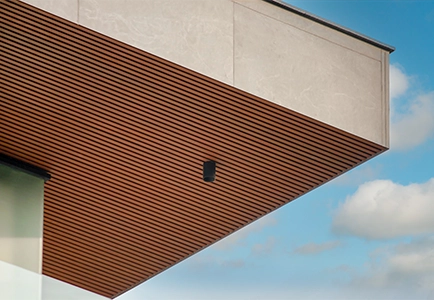
Why Facade Design Is More Than Just Aesthetic - The Role of Function, Climate, and Material
In the world of contemporary architecture, facade design is far more than a visual statement, it is a critical intersection of art, engineering, and environmental science. At Metaguise, this philosophy manifests through a dynamic portfolio of metal cladding solutions that transcend decorative appeal to deliver performance, sustainability, and contextual harmony.
15-05-25 | Behind the Design
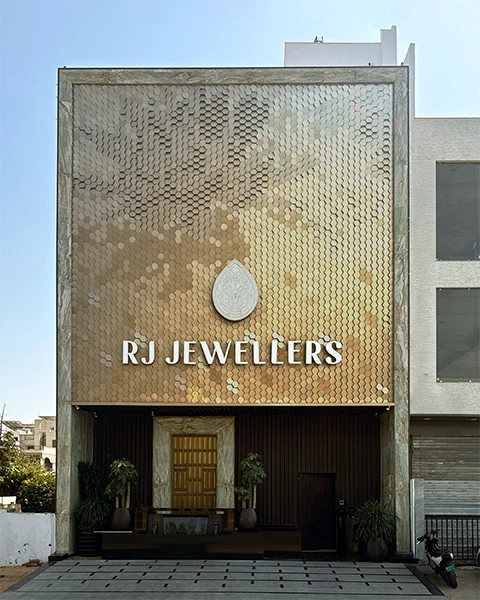
Your Facade is Your Brand: How Businesses Use Facades to Tell Their Story
In architecture, a facade is more than a face - it’s a voice. A building's elevation speaks volumesabout the brand it represents. At Metaguise, we don’t just clad buildings, we craft identities. Through metal, pattern, and parametric design, we help brands build a lasting first impression.
20-08-25 | Behind the Design
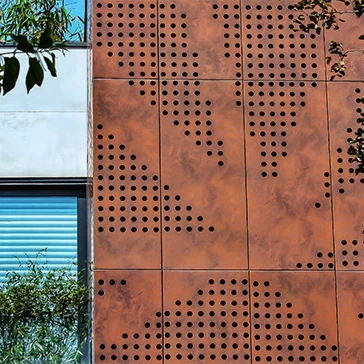
Beyond the Surface: The Emotional Intelligence of Architectural Materials
A philosophical take on how material textures — from MetaPatina’s evolving hues to MetaWood’s organic warmth — connect architecture with human emotion.
17-10-25 | Behind the Design
Social
Legal
Privacy Policy|Terms & Conditions