



Best Facade Company in India: How to Choose the Right One (2026 Guide)
24-09-26 | Architectural Insights
Why Choosing the Right Facade Company Matters
A facade is one of the few parts of a building that is judged from the outside every single day, by owners, visitors and passers-by, for the entire life of the structure. Unlike an interior finish that can be redone relatively easily if it disappoints, a facade is expensive and disruptive to replace once installed, which makes the choice of facade company one of the highest-stakes decisions in any construction or renovation project. India now has a wide range of companies offering facade design and installation, from small local fabricators to specialised national brands, and the gap in quality, engineering and after-sales accountability between them is often far larger than the gap in their quoted prices.
What a Facade Company Actually Does
A genuine facade company handles far more than simply supplying and fixing panels to a wall. The scope typically includes design consultation to translate an architect's vision or a homeowner's brief into a buildable system, structural engineering of the substructure that the cladding will be mounted on, precision fabrication of the panels themselves, factory-applied finishing and coating, and on-site installation with proper waterproofing and drainage detailing. Companies that only handle one or two parts of this chain, for example a fabricator who does not engineer the substructure, or an installer who buys pre-made panels from an unknown source, tend to produce less consistent results because no single party is accountable for how all the pieces work together over time.
Key Factors to Evaluate Before Hiring a Facade Company
- Track record and project count: a company with hundreds or thousands of completed projects across different building types has been tested across far more real-world conditions than one with a handful of jobs.
- In-house fabrication: companies that design and manufacture panels in their own facility, rather than outsourcing to third-party fabricators, generally offer tighter tolerances and clearer accountability if something goes wrong.
- Material and finish range: a company offering multiple metals and finish types, rather than a single fixed product, can genuinely match the right system to a project rather than pushing whatever they happen to stock.
- Coating warranty in writing: a verbal promise of durability means little; a written warranty period, typically 15 to 30 years for a quality PVDF finish, is what actually protects the client.
- Architect and enterprise client references: companies trusted by established architecture practices and large institutional clients have generally been through a more rigorous vetting process than one relying purely on retail walk-in business.
- Physical experience centres or showrooms: being able to see and touch actual finished panels, rather than relying only on renders or photographs, makes a significant difference to how confidently a material decision can be made.
Questions to Ask Any Facade Company Before Signing
- Is fabrication done in-house, and can we visit the facility or see photographs of the manufacturing process.
- What specific coating is used, and what is the written warranty period covering colour retention and coating integrity.
- Can you show completed projects that are at least three to five years old, not only recent installations.
- Who is responsible for waterproofing and substructure detailing, and is this included in the quoted price or handled separately by another contractor.
- What is the expected timeline from design finalisation to installation completion, and what happens if there are delays.
- What is the process if a panel is damaged after installation; can it be individually replaced without disturbing the surrounding facade.
How to Compare Quotes from Different Facade Companies
- Ask every company to quote on the exact same material, thickness and coating specification, so the numbers are actually comparable rather than quietly quoting different quality tiers.
- Request a breakdown showing material cost, substructure and fabrication cost, and installation cost separately, rather than a single combined figure.
- Confirm whether the quote includes waterproofing and drainage detailing or treats it as a separate line item handled by another contractor.
- Check whether the warranty covers the coating specifically, or only the physical installation workmanship, since these are two very different guarantees.
- Factor in the company's typical project timeline, since a significantly faster promised timeline than competitors sometimes signals a less thorough engineering process.
Red Flags to Watch For
A few warning signs tend to separate less reliable facade companies from established ones. Be cautious of a company that cannot show any installed project older than a year, since this makes it impossible to judge how their material and workmanship actually age. Be equally cautious of quotes that are dramatically lower than every other bid received, since this price gap is usually explained by thinner material, a lower grade coating, or the absence of proper substructure and waterproofing detailing, none of which is visible in a quotation line item. Vague answers to specific questions about coating type, warranty terms or fabrication location are also worth treating seriously, since a company confident in its own quality is generally happy to be specific about these details rather than deflecting the question.
Facade Companies for Residential vs Commercial Projects
Not every facade company serves both markets equally well, and it is worth asking specifically about experience in the relevant category. Residential facade work tends to prioritise design flexibility, smaller project scale and closer coordination with the homeowner or their architect through the design process. Commercial and institutional facade work, covering offices, hospitals, hotels and retail spaces, usually involves larger volumes, tighter project timelines tied to a broader construction schedule, and stricter compliance requirements around fire rating and structural load, which is explored further in our guide to commercial elevation design and why it matters for business. A company with genuine, demonstrated experience across both categories is generally a safer choice than one that has only worked in a single segment, since the underlying engineering discipline transfers well between the two.
How the Facade Company Process Typically Works
Understanding the general sequence a reputable facade company follows helps set realistic expectations before a project begins. It usually starts with a site visit and brief, where the company assesses the building's orientation, structural condition and the client's design intent and budget range. This is followed by concept design, where initial material and pattern options are proposed, often supported by renders or physical samples. Once a direction is approved, detailed engineering follows, where the substructure, panel dimensions and fixing methodology are finalised to the specific building's measurements, sometimes using 3D scanning for complex or irregular facades. Fabrication then takes place, ideally in-house, followed by quality checks before panels are transported to site. Installation is the final stage, typically involving substructure fixing first, followed by panel mounting, joint sealing and a final quality inspection.
Knowing this sequence helps when comparing quotes, since a company that skips detailed engineering and moves straight from concept to fabrication is more likely to encounter costly on-site adjustments, delays, or a final result that does not match the original design intent as closely as expected.
Facade Companies by City: What Changes and What Does Not
The core evaluation criteria for a facade company, track record, in-house fabrication, coating warranty and references, hold true regardless of which Indian city a project is based in. What does change from city to city is the local climate exposure the facade will face and the availability of a company's physical presence for site visits and after-sales support. In coastal cities, it is worth specifically asking about corrosion resistance and marine-grade specifications. In cities with intense summer heat, questions about heat-reflective coatings and UV resistance become more relevant. A facade company with a genuine multi-city presence and experience across different climate zones, rather than one that has only worked in a single region, is generally better positioned to specify the right system for a project's specific location rather than applying a one-size-fits-all approach.
What Sets Metaguise Apart as a Facade Company in India
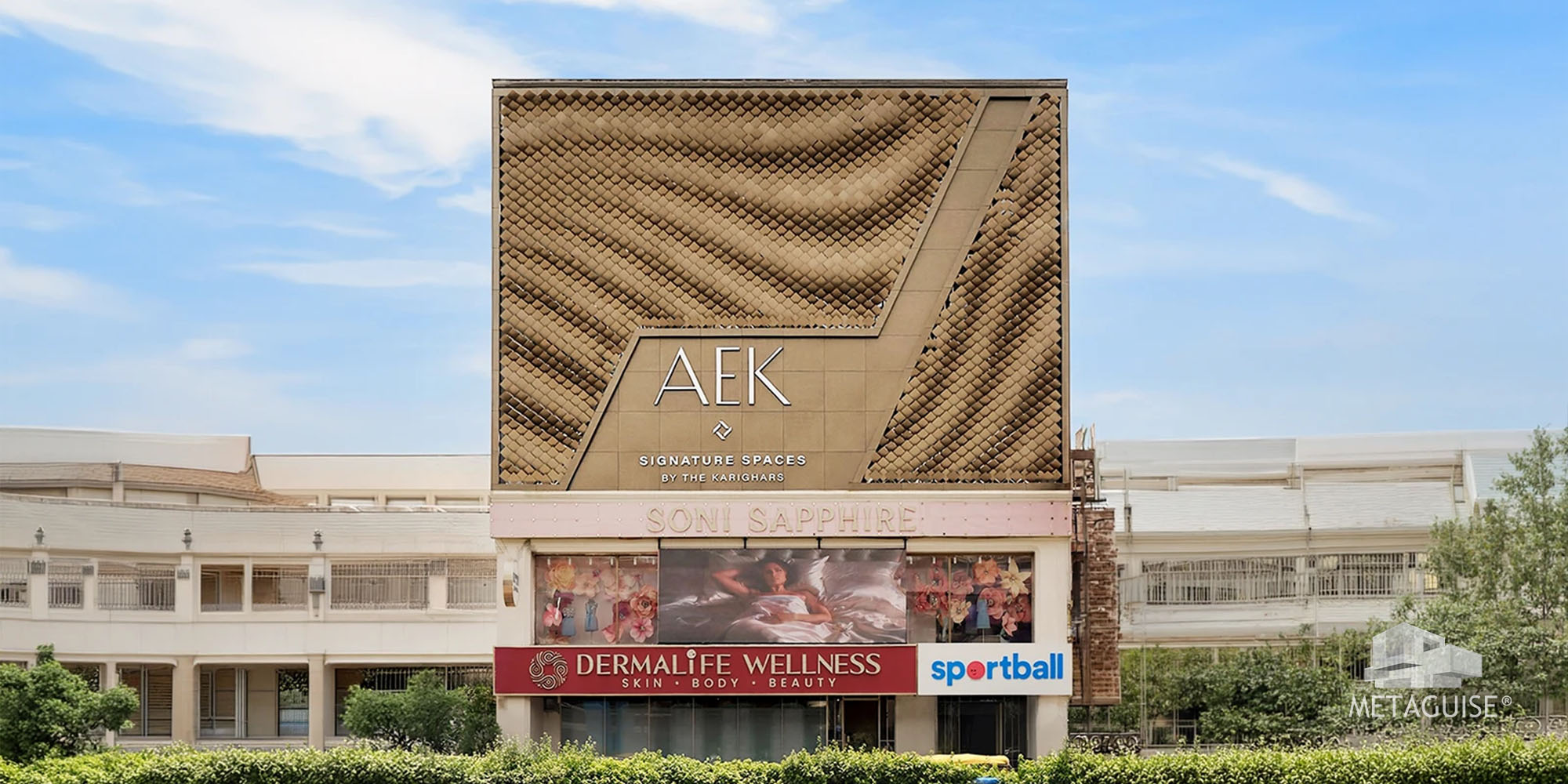
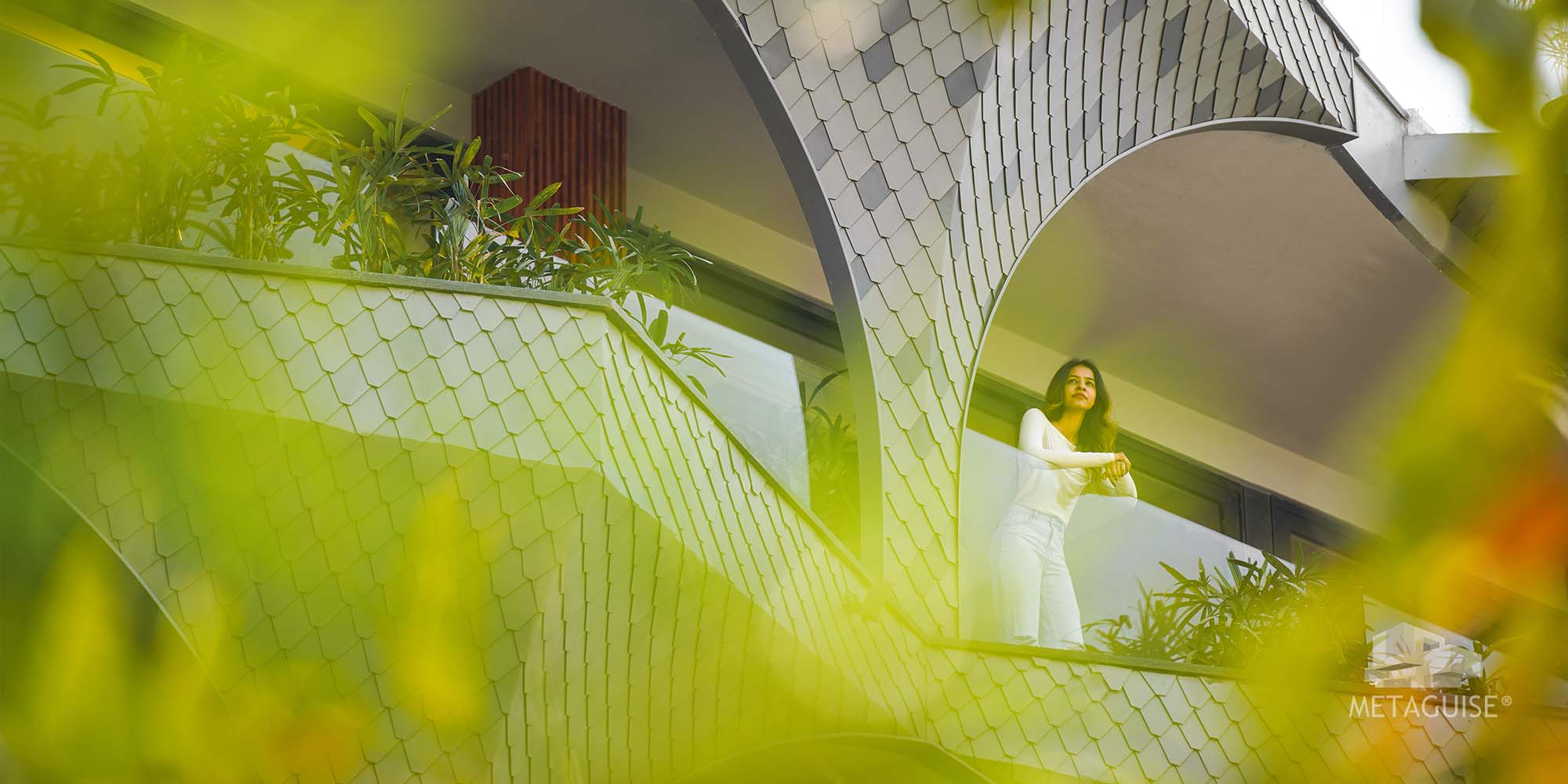
Metaguise was founded in 2019 and is headquartered in Gurugram, and has since delivered more than 1,800 projects across India using 23 named facade systems in aluminium, stainless steel, brass, copper and zinc. Every system is engineered to 3mm precision using SolidWorks, Rhino, Grasshopper and AutoCAD, fabricated in-house, and finished with VOC-free European grade PVDF, anodised and powder-coat options carrying coating warranties of 15 to 30 years. The company is specified by leading architecture practices including Hafeez Contractor, Morphogenesis, Studio Lotus, Studio Ardete and Cityspace'82 Architects, and its facade systems appear on projects for clients including Indian Railways, BMW, Reliance Industries, Apollo Hospitals, Radisson and Tanishq. Homeowners and architects can view finished panels in person at Metaguise's experience centres in Gurugram and Kolkata, and the company has also delivered projects internationally, including in Sri Lanka and Israel.
For a closer look at the process behind how projects move from brief to installation, see our piece on why the Metaguise facade process is the benchmark for architectural excellence.
Frequently Asked Questions
How do I find a reliable facade company near me in India?
Look for a company with a substantial completed project count, in-house fabrication, a written coating warranty and references from established architects, rather than relying only on proximity or the lowest quoted price.
How much does hiring a facade company cost in India?
Costs vary widely by material and system, generally ranging from around ₹800 to ₹2,500 per square foot for engineered metal facade systems, depending on the complexity of the design and the finish specified.
Should I hire a facade company or an architect for my building exterior?
For a new build, an architect typically leads the overall design and may bring in a facade specialist for cladding execution. For a facade-only upgrade or renovation, many owners work directly with a facade company since the structural design is already fixed.
What is the difference between a facade company and a contractor?
A general contractor manages overall construction, while a facade company specialises specifically in the design, engineering, fabrication and installation of the building's exterior cladding system, often with in-house manufacturing capability a general contractor does not have.
Choosing a Facade Company with Confidence
The right facade company for a project is the one that can demonstrate real engineering discipline, a track record across relevant project types, and clear, written accountability for material quality and installation. If you are evaluating facade companies in India for a home, office or commercial project, you can explore Metaguise's facade systems, view completed projects, or contact the team to discuss your specific requirements.
24-09-26 | Architectural Insights
Why Choosing the Right Facade Company Matters
A facade is one of the few parts of a building that is judged from the outside every single day, by owners, visitors and passers-by, for the entire life of the structure. Unlike an interior finish that can be redone relatively easily if it disappoints, a facade is expensive and disruptive to replace once installed, which makes the choice of facade company one of the highest-stakes decisions in any construction or renovation project. India now has a wide range of companies offering facade design and installation, from small local fabricators to specialised national brands, and the gap in quality, engineering and after-sales accountability between them is often far larger than the gap in their quoted prices.
What a Facade Company Actually Does
A genuine facade company handles far more than simply supplying and fixing panels to a wall. The scope typically includes design consultation to translate an architect's vision or a homeowner's brief into a buildable system, structural engineering of the substructure that the cladding will be mounted on, precision fabrication of the panels themselves, factory-applied finishing and coating, and on-site installation with proper waterproofing and drainage detailing. Companies that only handle one or two parts of this chain, for example a fabricator who does not engineer the substructure, or an installer who buys pre-made panels from an unknown source, tend to produce less consistent results because no single party is accountable for how all the pieces work together over time.
Key Factors to Evaluate Before Hiring a Facade Company
- Track record and project count: a company with hundreds or thousands of completed projects across different building types has been tested across far more real-world conditions than one with a handful of jobs.
- In-house fabrication: companies that design and manufacture panels in their own facility, rather than outsourcing to third-party fabricators, generally offer tighter tolerances and clearer accountability if something goes wrong.
- Material and finish range: a company offering multiple metals and finish types, rather than a single fixed product, can genuinely match the right system to a project rather than pushing whatever they happen to stock.
- Coating warranty in writing: a verbal promise of durability means little; a written warranty period, typically 15 to 30 years for a quality PVDF finish, is what actually protects the client.
- Architect and enterprise client references: companies trusted by established architecture practices and large institutional clients have generally been through a more rigorous vetting process than one relying purely on retail walk-in business.
- Physical experience centres or showrooms: being able to see and touch actual finished panels, rather than relying only on renders or photographs, makes a significant difference to how confidently a material decision can be made.
Questions to Ask Any Facade Company Before Signing
- Is fabrication done in-house, and can we visit the facility or see photographs of the manufacturing process.
- What specific coating is used, and what is the written warranty period covering colour retention and coating integrity.
- Can you show completed projects that are at least three to five years old, not only recent installations.
- Who is responsible for waterproofing and substructure detailing, and is this included in the quoted price or handled separately by another contractor.
- What is the expected timeline from design finalisation to installation completion, and what happens if there are delays.
- What is the process if a panel is damaged after installation; can it be individually replaced without disturbing the surrounding facade.
How to Compare Quotes from Different Facade Companies
- Ask every company to quote on the exact same material, thickness and coating specification, so the numbers are actually comparable rather than quietly quoting different quality tiers.
- Request a breakdown showing material cost, substructure and fabrication cost, and installation cost separately, rather than a single combined figure.
- Confirm whether the quote includes waterproofing and drainage detailing or treats it as a separate line item handled by another contractor.
- Check whether the warranty covers the coating specifically, or only the physical installation workmanship, since these are two very different guarantees.
- Factor in the company's typical project timeline, since a significantly faster promised timeline than competitors sometimes signals a less thorough engineering process.
Red Flags to Watch For
A few warning signs tend to separate less reliable facade companies from established ones. Be cautious of a company that cannot show any installed project older than a year, since this makes it impossible to judge how their material and workmanship actually age. Be equally cautious of quotes that are dramatically lower than every other bid received, since this price gap is usually explained by thinner material, a lower grade coating, or the absence of proper substructure and waterproofing detailing, none of which is visible in a quotation line item. Vague answers to specific questions about coating type, warranty terms or fabrication location are also worth treating seriously, since a company confident in its own quality is generally happy to be specific about these details rather than deflecting the question.
Facade Companies for Residential vs Commercial Projects
Not every facade company serves both markets equally well, and it is worth asking specifically about experience in the relevant category. Residential facade work tends to prioritise design flexibility, smaller project scale and closer coordination with the homeowner or their architect through the design process. Commercial and institutional facade work, covering offices, hospitals, hotels and retail spaces, usually involves larger volumes, tighter project timelines tied to a broader construction schedule, and stricter compliance requirements around fire rating and structural load, which is explored further in our guide to commercial elevation design and why it matters for business. A company with genuine, demonstrated experience across both categories is generally a safer choice than one that has only worked in a single segment, since the underlying engineering discipline transfers well between the two.
How the Facade Company Process Typically Works
Understanding the general sequence a reputable facade company follows helps set realistic expectations before a project begins. It usually starts with a site visit and brief, where the company assesses the building's orientation, structural condition and the client's design intent and budget range. This is followed by concept design, where initial material and pattern options are proposed, often supported by renders or physical samples. Once a direction is approved, detailed engineering follows, where the substructure, panel dimensions and fixing methodology are finalised to the specific building's measurements, sometimes using 3D scanning for complex or irregular facades. Fabrication then takes place, ideally in-house, followed by quality checks before panels are transported to site. Installation is the final stage, typically involving substructure fixing first, followed by panel mounting, joint sealing and a final quality inspection.
Knowing this sequence helps when comparing quotes, since a company that skips detailed engineering and moves straight from concept to fabrication is more likely to encounter costly on-site adjustments, delays, or a final result that does not match the original design intent as closely as expected.
Facade Companies by City: What Changes and What Does Not
The core evaluation criteria for a facade company, track record, in-house fabrication, coating warranty and references, hold true regardless of which Indian city a project is based in. What does change from city to city is the local climate exposure the facade will face and the availability of a company's physical presence for site visits and after-sales support. In coastal cities, it is worth specifically asking about corrosion resistance and marine-grade specifications. In cities with intense summer heat, questions about heat-reflective coatings and UV resistance become more relevant. A facade company with a genuine multi-city presence and experience across different climate zones, rather than one that has only worked in a single region, is generally better positioned to specify the right system for a project's specific location rather than applying a one-size-fits-all approach.
What Sets Metaguise Apart as a Facade Company in India
Metaguise was founded in 2019 and is headquartered in Gurugram, and has since delivered more than 1,800 projects across India using 23 named facade systems in aluminium, stainless steel, brass, copper and zinc. Every system is engineered to 3mm precision using SolidWorks, Rhino, Grasshopper and AutoCAD, fabricated in-house, and finished with VOC-free European grade PVDF, anodised and powder-coat options carrying coating warranties of 15 to 30 years. The company is specified by leading architecture practices including Hafeez Contractor, Morphogenesis, Studio Lotus, Studio Ardete and Cityspace'82 Architects, and its facade systems appear on projects for clients including Indian Railways, BMW, Reliance Industries, Apollo Hospitals, Radisson and Tanishq. Homeowners and architects can view finished panels in person at Metaguise's experience centres in Gurugram and Kolkata, and the company has also delivered projects internationally, including in Sri Lanka and Israel.
For a closer look at the process behind how projects move from brief to installation, see our piece on why the Metaguise facade process is the benchmark for architectural excellence.
Frequently Asked Questions
How do I find a reliable facade company near me in India?
Look for a company with a substantial completed project count, in-house fabrication, a written coating warranty and references from established architects, rather than relying only on proximity or the lowest quoted price.
How much does hiring a facade company cost in India?
Costs vary widely by material and system, generally ranging from around ₹800 to ₹2,500 per square foot for engineered metal facade systems, depending on the complexity of the design and the finish specified.
Should I hire a facade company or an architect for my building exterior?
For a new build, an architect typically leads the overall design and may bring in a facade specialist for cladding execution. For a facade-only upgrade or renovation, many owners work directly with a facade company since the structural design is already fixed.
What is the difference between a facade company and a contractor?
A general contractor manages overall construction, while a facade company specialises specifically in the design, engineering, fabrication and installation of the building's exterior cladding system, often with in-house manufacturing capability a general contractor does not have.
Choosing a Facade Company with Confidence
The right facade company for a project is the one that can demonstrate real engineering discipline, a track record across relevant project types, and clear, written accountability for material quality and installation. If you are evaluating facade companies in India for a home, office or commercial project, you can explore Metaguise's facade systems, view completed projects, or contact the team to discuss your specific requirements.
Related Articles
Architectural Luxury, Within Reach: Why MetaFlutes and MetaLouvers Are the Smartest Investment in Metal Facades
In today’s built environment, luxury is no longer defined by extravagance - it’s defined by intention. It’s about refined details, enduring finishes, and design that performs as beautifully as it looks. At Metaguise, our metal facade systems - MetaFlutes, MetaLouvers, and MetaCassette Perforated - are crafted to bring that standard of architectural luxury within reach...
07-04-25 | Architectural Insights
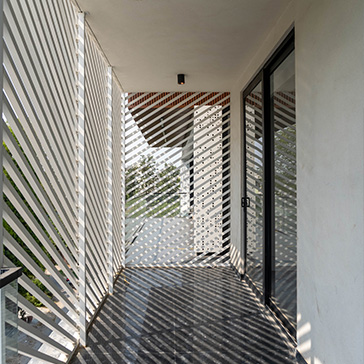
Why Architects Are Turning to Custom Metal Louvers in 2025
There’s something quietly brilliant happening in architecture right now. As buildings become more responsive and designers look for ways to merge aesthetics with performance, one feature is making a serious comeback, custom metal louvers.
03-06-25 | Architectural Insights
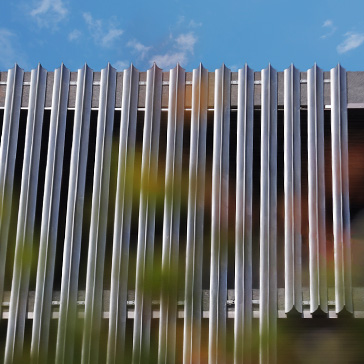
The Science of Shadows: How Facade Design Shapes Light and Mood
Architecture has always been about more than structure - it’s about rhythm, reflection, and the way light interacts with space.At Metaguise, we see every innovative facade as a living canvas, one that transforms not just how a building looks, but how it feels. Light becomes our material, and shadow becomes our tool.This is the art and the science behind MetaLouvers, MetaCassette, and the entire Metaguise facade family.
13-10-25 | Architectural Insights
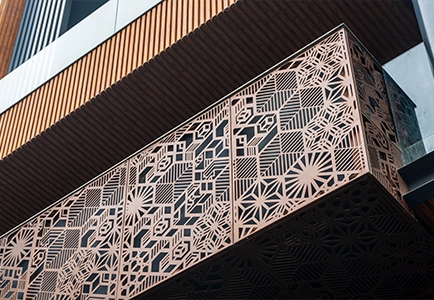
Custom Metal Facade Cladding in 2026: Design, Cost, Materials & Architect Guide
Explore how commercial spaces are using Metaguise facades to express identity and elevate perception.
24-11-25 | Architectural Insights
Social
Legal
Privacy Policy|Terms & Conditions