



Aluminium Elevation Design: Complete Guide for Indian Homes and Commercial Buildings
14-09-26 | Facade Innovations
Why Aluminium Is Used So Widely in Elevation Design
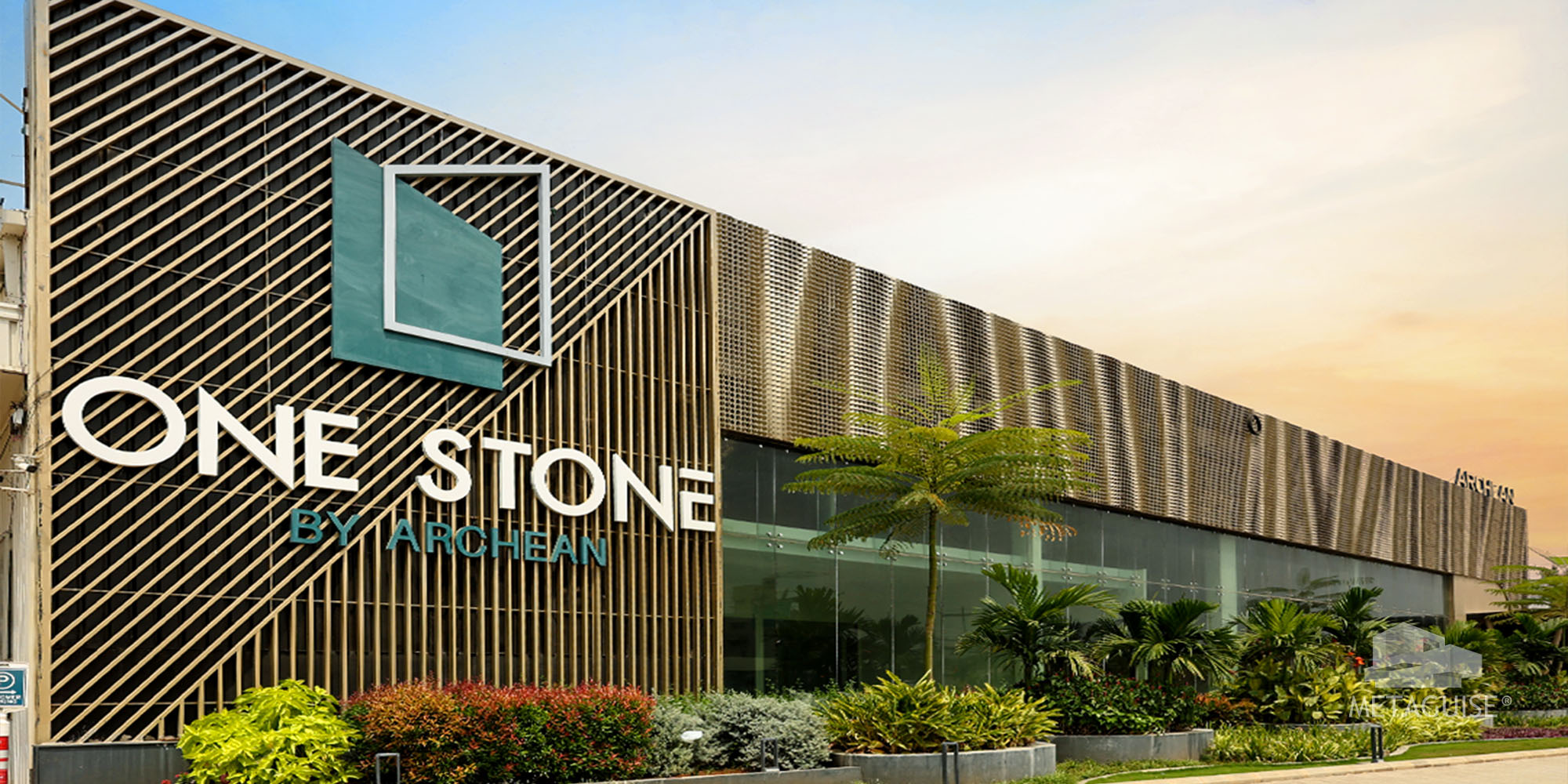
Aluminium has become the default metal for Indian elevation design for a simple combination of reasons: it is light enough to install without heavy structural support, it does not rust the way untreated steel does, it can be extruded, folded, perforated or cast into an enormous range of profiles, and it accepts factory-applied coatings that hold colour and finish for decades. For a country with intense UV exposure, coastal salinity in many major cities and a monsoon that tests every joint and seam, those properties matter more than they might in a milder climate.
It is also a material that scales well across project types. The same underlying aluminium substrate and coating technology used on a boutique home's entrance accent is the same technology used on stadium facades and large commercial towers, which means homeowners benefit from manufacturing quality and testing standards that were originally developed for much larger, higher-stakes commercial projects.
Types of Aluminium Elevation Systems
- Solid aluminium panels: single-sheet, seamless flush panels engineered for long-term dimensional stability and a premium, solid feel, used for flat facade surfaces and larger elevation areas.
- Fluted and cassette aluminium panels: linear or rectilinear panel systems that add rhythm and clean geometry to a facade, among the most widely specified formats for Indian homes and commercial buildings.
- Extruded aluminium fins and louvers: linear profiles used for sun shading, privacy screening and vertical rhythm on a facade, common on balconies and window bands.
- Perforated aluminium screens: sheets punched with a repeating pattern, used for shading, ventilation and privacy while allowing filtered light and airflow through.
- Parametric aluminium systems: computationally generated three-dimensional panel arrangements, such as coin, pyramid, fold or sequin patterns, where each panel is engineered individually to build a unique, non-repeating surface texture.
Aluminium Finishes Explained
The finish applied to aluminium determines how long it holds its colour and resists weathering, and it is where the biggest quality difference between a cheap and a well-engineered facade actually lives, since the base metal itself is broadly similar across grades. PVDF, or polyvinylidene fluoride, coating is the premium standard, offering strong colour retention and chalking resistance under intense UV exposure, commonly carrying warranties in the range of 15 to 30 years. Powder coating is more affordable and performs well for a shorter service life, typically suited to interior-facing or less sun-exposed applications. Anodising, an electrochemical process rather than a paint coating, produces a distinctive metallic finish with excellent durability, often used where a natural metal look rather than a painted colour is desired. Metaguise applies VOC-free European grade PVDF, anodised and powder-coat finishes across its 23 facade systems, which is why coating specification, not just the choice of metal, should be a specific question asked of any facade supplier.
Aluminium vs Other Elevation Materials
Compared with untreated or basic coated steel, aluminium does not rust, which removes an entire category of long-term maintenance risk, though steel systems such as Corten weathering steel offer a different aesthetic that some architects specifically want and that aluminium cannot replicate. Compared with natural stone, aluminium is dramatically lighter, which reduces structural load and installation complexity, and offers far more design flexibility in terms of pattern and colour, though stone retains an unmatched natural texture that some clients prioritise for specific parts of a facade such as the plinth. Compared with glass, aluminium offers better control over heat gain and privacy while still allowing striking, light-catching patterns through perforation or folded profiles, making it a common complement to glazing rather than a strict substitute for it.
Aluminium Elevation Design Ideas by Building Type
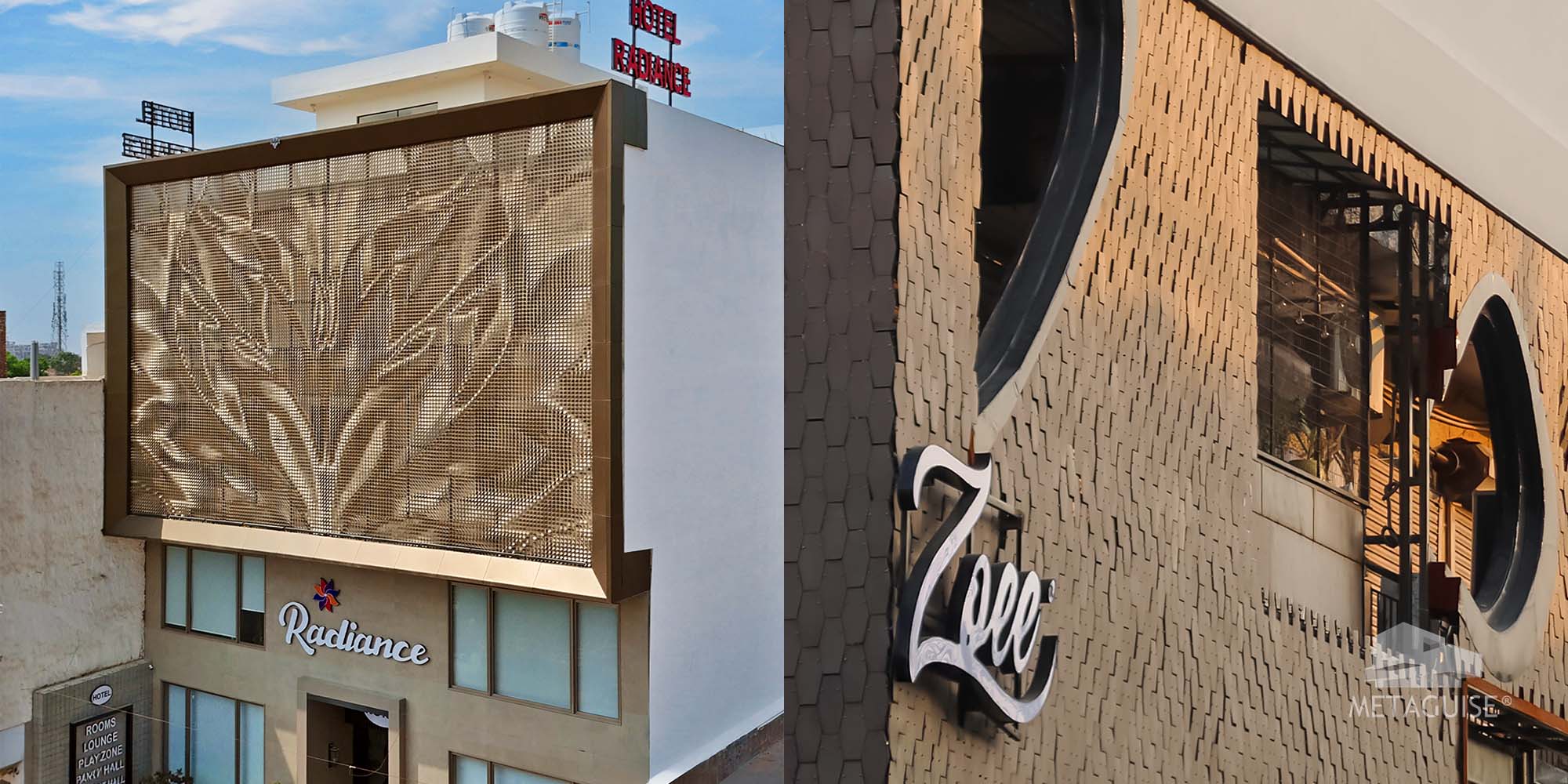
For independent homes, aluminium is most often used as fluted or cassette panelling on an accent wall, a balcony front, or the full front elevation on smaller footprints where the total quantity required stays within budget. For villas and larger bungalows, parametric aluminium systems such as coin or pyramid patterns are increasingly used as a signature feature, often at the entrance or a double-height wall, where the scale of the building gives the pattern room to read properly. For commercial buildings, aluminium cladding is used both for its performance, including weather protection and reduced maintenance, and for brand expression, since a distinctive metal pattern can make a retail showroom or office building recognisable from a distance, a use case covered in more depth in our guide to commercial elevation design for retail and offices.
Cost of Aluminium Elevation Design in India
Pricing depends heavily on the specific system, panel complexity and finish grade. Engineered aluminium systems, including solid panel, fluted, cassette and perforated formats with a proper substructure and PVDF finish, generally range from ₹800 to ₹1,800 per square foot installed. Fully custom parametric aluminium systems, where each panel is individually engineered to build a non-repeating pattern, sit at the higher end, commonly ₹1,500 to ₹2,500 per square foot or more depending on complexity, reflecting the design and fabrication effort involved rather than the raw material cost alone. This range reflects genuinely engineered systems with a full substructure and factory-applied coating, rather than lighter, thinner composite boards sold at a lower price point elsewhere in the market, which typically carry a shorter effective service life.
Durability and Maintenance in Indian Conditions
A properly specified aluminium facade with a genuine PVDF or comparable coating requires very little maintenance beyond periodic cleaning, typically an annual wash to remove dust and pollution buildup, since the coating itself is designed to resist fading, chalking and corrosion for its rated lifespan. The failures that do occur in the field almost always trace back to one of two causes: a lower grade coating that was not rated for the intensity of Indian UV exposure, or poor detailing at joints and fixing points that allowed water ingress behind the panel. This is why asking a supplier specifically about coating grade, warranty terms and joint detailing matters more than comparing headline prices alone, since two aluminium facades that look identical on installation day can perform very differently five years later.
Colour and Pattern Choices in Aluminium Elevation Design
One of the underrated advantages of aluminium is the breadth of colour and pattern options available without a significant cost penalty, since PVDF coating can be produced in dozens of standard shades and custom colours can often be matched for larger projects. Neutral tones, including charcoal grey, bronze, champagne and matte black, remain the most requested colours for Indian residential facades because they age gracefully and pair well with plaster, stone and glass. Metallic and dual-tone finishes, where a panel shifts subtly in colour depending on the viewing angle, are increasingly popular for feature walls and entrance accents, since they add a sense of movement to an otherwise static material without relying on an elaborate pattern.
Pattern choice should generally follow the scale of the building rather than personal preference alone. Fine perforation patterns and delicate fluting read well on smaller facades viewed at close range, such as G+1 homes, while bolder parametric patterns with larger individual panel sizes are better suited to bigger facades or buildings viewed from a distance, where a finer pattern would simply blur into a flat texture from the road.
Questions to Ask an Aluminium Facade Supplier
- What grade and thickness of aluminium is used, and is this specified in writing in the quotation.
- What coating type is applied, PVDF, powder coat or anodised, and what warranty period covers colour and coating integrity.
- How is the substructure fixed to the building, and what waterproofing or drainage detailing is used behind the panels.
- Can the supplier show completed projects at least three to five years old, not only recent installations or renders.
- Is fabrication done in-house or outsourced, since in-house fabrication generally allows tighter tolerances and better accountability if an issue arises.
How Metaguise Engineers Aluminium Elevation Systems
Metaguise, founded in 2019 and headquartered in Gurugram, has delivered more than 1,800 projects across India using 23 named facade systems in aluminium, stainless steel, brass, copper and zinc. Its aluminium systems, including fluted, cassette, perforated and parametric product lines, are engineered to 3mm precision using SolidWorks, Rhino, Grasshopper and AutoCAD before fabrication begins, and finished in-house with VOC-free European grade PVDF, anodised and powder-coat options carrying coating warranties of 15 to 30 years. The company's work is specified by leading architecture practices including Hafeez Contractor, Morphogenesis, Studio Lotus and Studio Ardete, and has been used on projects for clients ranging from Indian Railways and BMW to Apollo Hospitals and Tanishq. Homeowners can view finished panels and finish options at Metaguise's experience centres in Gurugram and Kolkata. For a wider material comparison, see the guide on house exterior design materials that last 30+ years.
Getting Started with an Aluminium Elevation
Aluminium remains one of the most reliable starting points for Indian elevation design because it offers genuine design range, from a simple flat cassette panel to a fully custom parametric surface, without compromising on durability when specified correctly. If you are considering an aluminium elevation system for your home or commercial project, you can explore Metaguise's full range at all products, build your facade to get a project-specific estimate, or contact the team to discuss finish options.
14-09-26 | Facade Innovations
Why Aluminium Is Used So Widely in Elevation Design
Aluminium has become the default metal for Indian elevation design for a simple combination of reasons: it is light enough to install without heavy structural support, it does not rust the way untreated steel does, it can be extruded, folded, perforated or cast into an enormous range of profiles, and it accepts factory-applied coatings that hold colour and finish for decades. For a country with intense UV exposure, coastal salinity in many major cities and a monsoon that tests every joint and seam, those properties matter more than they might in a milder climate.
It is also a material that scales well across project types. The same underlying aluminium substrate and coating technology used on a boutique home's entrance accent is the same technology used on stadium facades and large commercial towers, which means homeowners benefit from manufacturing quality and testing standards that were originally developed for much larger, higher-stakes commercial projects.
Types of Aluminium Elevation Systems
- Solid aluminium panels: single-sheet, seamless flush panels engineered for long-term dimensional stability and a premium, solid feel, used for flat facade surfaces and larger elevation areas.
- Fluted and cassette aluminium panels: linear or rectilinear panel systems that add rhythm and clean geometry to a facade, among the most widely specified formats for Indian homes and commercial buildings.
- Extruded aluminium fins and louvers: linear profiles used for sun shading, privacy screening and vertical rhythm on a facade, common on balconies and window bands.
- Perforated aluminium screens: sheets punched with a repeating pattern, used for shading, ventilation and privacy while allowing filtered light and airflow through.
- Parametric aluminium systems: computationally generated three-dimensional panel arrangements, such as coin, pyramid, fold or sequin patterns, where each panel is engineered individually to build a unique, non-repeating surface texture.
Aluminium Finishes Explained
The finish applied to aluminium determines how long it holds its colour and resists weathering, and it is where the biggest quality difference between a cheap and a well-engineered facade actually lives, since the base metal itself is broadly similar across grades. PVDF, or polyvinylidene fluoride, coating is the premium standard, offering strong colour retention and chalking resistance under intense UV exposure, commonly carrying warranties in the range of 15 to 30 years. Powder coating is more affordable and performs well for a shorter service life, typically suited to interior-facing or less sun-exposed applications. Anodising, an electrochemical process rather than a paint coating, produces a distinctive metallic finish with excellent durability, often used where a natural metal look rather than a painted colour is desired. Metaguise applies VOC-free European grade PVDF, anodised and powder-coat finishes across its 23 facade systems, which is why coating specification, not just the choice of metal, should be a specific question asked of any facade supplier.
Aluminium vs Other Elevation Materials
Compared with untreated or basic coated steel, aluminium does not rust, which removes an entire category of long-term maintenance risk, though steel systems such as Corten weathering steel offer a different aesthetic that some architects specifically want and that aluminium cannot replicate. Compared with natural stone, aluminium is dramatically lighter, which reduces structural load and installation complexity, and offers far more design flexibility in terms of pattern and colour, though stone retains an unmatched natural texture that some clients prioritise for specific parts of a facade such as the plinth. Compared with glass, aluminium offers better control over heat gain and privacy while still allowing striking, light-catching patterns through perforation or folded profiles, making it a common complement to glazing rather than a strict substitute for it.
Aluminium Elevation Design Ideas by Building Type
For independent homes, aluminium is most often used as fluted or cassette panelling on an accent wall, a balcony front, or the full front elevation on smaller footprints where the total quantity required stays within budget. For villas and larger bungalows, parametric aluminium systems such as coin or pyramid patterns are increasingly used as a signature feature, often at the entrance or a double-height wall, where the scale of the building gives the pattern room to read properly. For commercial buildings, aluminium cladding is used both for its performance, including weather protection and reduced maintenance, and for brand expression, since a distinctive metal pattern can make a retail showroom or office building recognisable from a distance, a use case covered in more depth in our guide to commercial elevation design for retail and offices.
Cost of Aluminium Elevation Design in India
Pricing depends heavily on the specific system, panel complexity and finish grade. Engineered aluminium systems, including solid panel, fluted, cassette and perforated formats with a proper substructure and PVDF finish, generally range from ₹800 to ₹1,800 per square foot installed. Fully custom parametric aluminium systems, where each panel is individually engineered to build a non-repeating pattern, sit at the higher end, commonly ₹1,500 to ₹2,500 per square foot or more depending on complexity, reflecting the design and fabrication effort involved rather than the raw material cost alone. This range reflects genuinely engineered systems with a full substructure and factory-applied coating, rather than lighter, thinner composite boards sold at a lower price point elsewhere in the market, which typically carry a shorter effective service life.
Durability and Maintenance in Indian Conditions
A properly specified aluminium facade with a genuine PVDF or comparable coating requires very little maintenance beyond periodic cleaning, typically an annual wash to remove dust and pollution buildup, since the coating itself is designed to resist fading, chalking and corrosion for its rated lifespan. The failures that do occur in the field almost always trace back to one of two causes: a lower grade coating that was not rated for the intensity of Indian UV exposure, or poor detailing at joints and fixing points that allowed water ingress behind the panel. This is why asking a supplier specifically about coating grade, warranty terms and joint detailing matters more than comparing headline prices alone, since two aluminium facades that look identical on installation day can perform very differently five years later.
Colour and Pattern Choices in Aluminium Elevation Design
One of the underrated advantages of aluminium is the breadth of colour and pattern options available without a significant cost penalty, since PVDF coating can be produced in dozens of standard shades and custom colours can often be matched for larger projects. Neutral tones, including charcoal grey, bronze, champagne and matte black, remain the most requested colours for Indian residential facades because they age gracefully and pair well with plaster, stone and glass. Metallic and dual-tone finishes, where a panel shifts subtly in colour depending on the viewing angle, are increasingly popular for feature walls and entrance accents, since they add a sense of movement to an otherwise static material without relying on an elaborate pattern.
Pattern choice should generally follow the scale of the building rather than personal preference alone. Fine perforation patterns and delicate fluting read well on smaller facades viewed at close range, such as G+1 homes, while bolder parametric patterns with larger individual panel sizes are better suited to bigger facades or buildings viewed from a distance, where a finer pattern would simply blur into a flat texture from the road.
Questions to Ask an Aluminium Facade Supplier
- What grade and thickness of aluminium is used, and is this specified in writing in the quotation.
- What coating type is applied, PVDF, powder coat or anodised, and what warranty period covers colour and coating integrity.
- How is the substructure fixed to the building, and what waterproofing or drainage detailing is used behind the panels.
- Can the supplier show completed projects at least three to five years old, not only recent installations or renders.
- Is fabrication done in-house or outsourced, since in-house fabrication generally allows tighter tolerances and better accountability if an issue arises.
How Metaguise Engineers Aluminium Elevation Systems
Metaguise, founded in 2019 and headquartered in Gurugram, has delivered more than 1,800 projects across India using 23 named facade systems in aluminium, stainless steel, brass, copper and zinc. Its aluminium systems, including fluted, cassette, perforated and parametric product lines, are engineered to 3mm precision using SolidWorks, Rhino, Grasshopper and AutoCAD before fabrication begins, and finished in-house with VOC-free European grade PVDF, anodised and powder-coat options carrying coating warranties of 15 to 30 years. The company's work is specified by leading architecture practices including Hafeez Contractor, Morphogenesis, Studio Lotus and Studio Ardete, and has been used on projects for clients ranging from Indian Railways and BMW to Apollo Hospitals and Tanishq. Homeowners can view finished panels and finish options at Metaguise's experience centres in Gurugram and Kolkata. For a wider material comparison, see the guide on house exterior design materials that last 30+ years.
Getting Started with an Aluminium Elevation
Aluminium remains one of the most reliable starting points for Indian elevation design because it offers genuine design range, from a simple flat cassette panel to a fully custom parametric surface, without compromising on durability when specified correctly. If you are considering an aluminium elevation system for your home or commercial project, you can explore Metaguise's full range at all products, build your facade to get a project-specific estimate, or contact the team to discuss finish options.
Related Articles
The Rise of Parametric facades: Designing with Algorithmic Elegance
A revolutionary parametric facade system designed to elevate architectural aesthetics. Crafted with premium metals and enhanced with MetaSurface finishes, MetaCoin offers unparalleled customizability, from the shape and size of each element to its color and arrangement. Its dynamic design reacts to light and perspective, creating ever-changing visual effects. Ideal for contemporary and iconic structures, MetaCoin transforms facades into captivating works of art that are sustainable, durable, and visually stunning.
01-04-25 | Facade Innovations
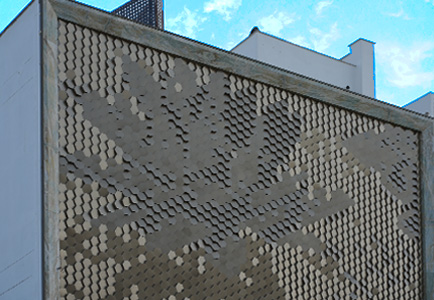
METABLOX™ by Metaguise: A Breakthrough in Parametric Facade Design
At the intersection of culture, craftsmanship, and cutting-edge geometry, METABLOX™ emerges as a bold new direction in architectural innovation. Introduced by Metaguise, this first-of-its-kind parametric facade technology makes its striking debut at the RJ Jewellers flagship store in Jaipur - setting a new benchmark in the world of metal design and modern Indian architecture.
09-04-25 | Facade Innovations
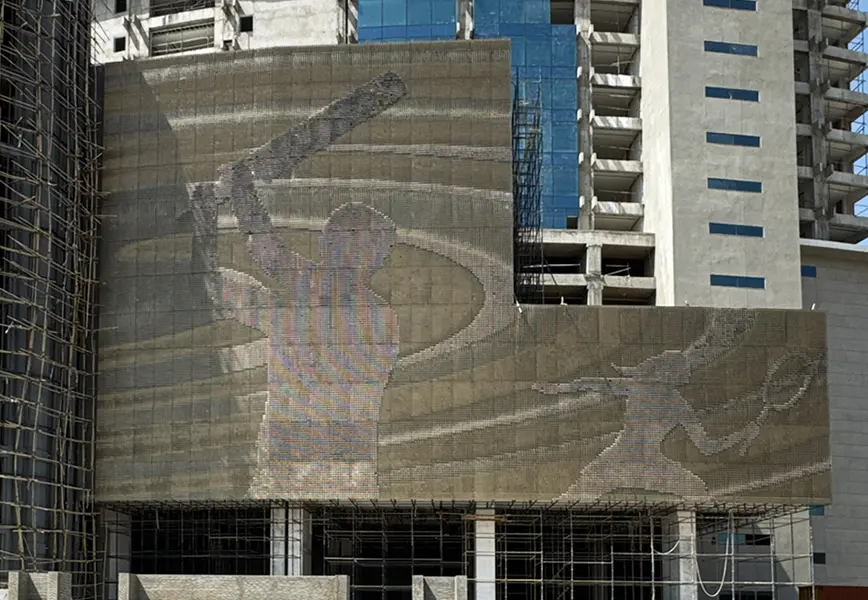
5 Landmark Projects That Used MetaCoin to Transform Facades
When it comes to parametric architecture, MetaCoin stands out as a revolutionary metal coin facade system. Crafted with precision, it offers dynamic aesthetics, adaptability, and a unique identity to structures. Let's delve into five notable projects where MetaCoin has redefined architectural facades.
13-05-25 | Facade Innovations
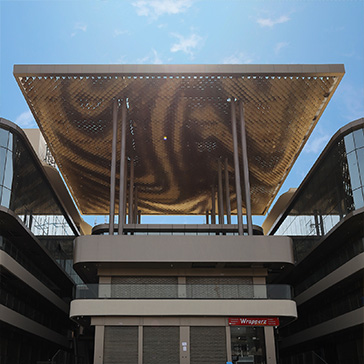
From Code to Construction: How Parametric Facades Are Built
Some buildings just make you look twice. Maybe it’s the way the facade curves. Or how the surface catches the light at different times of day. Often, what you’re seeing is more than just a design, it’s a parametric facade.
10-06-25 | Facade Innovations
Social
Legal
Privacy Policy|Terms & Conditions